By He Yin, People’s Daily
China’s latest renewable energy figures offer a clear snapshot of the country’s speeding ahead in its green energy transition.
According to statistics released by China’s National Energy Administration on April 27, as of the end of this March, China’s installed renewable energy capacity had reached 2.395 billion kilowatts, up 22 percent year on year and accounting for roughly 60.4 percent of the nation’s total installed power capacity. Renewable energy generation also continued to grow steadily, providing strong support for the country’s overall electricity supply.
As green power takes up an ever-larger share of China’s energy mix, the country’s strides in energy transformation are impossible to ignore. By embracing greener growth and nurturing new economic drivers, China is not only fueling its own high-quality development but also injecting strong impetus into the global shift toward clean energy.
Today, the world faces mounting climate risks and sweeping changes to the global energy landscape. A recent report by the International Energy Agency showed that global carbon emissions from the energy sector reached a record high in 2025, highlighting just how urgent and challenging the global energy transition has become. At the same time, geopolitical conflicts and regional instability have further exposed the vulnerability of traditional fossil fuel supplies.
Against the dual challenges of climate change and energy security, the international community is reaching an undeniable consensus: developing clean energy is no longer a discretionary option — it is an indispensable mission critical to humanity’s sustainable future.
Recognizing these broader trends, China has approached energy transformation with long-term strategic resolve and systematic planning.
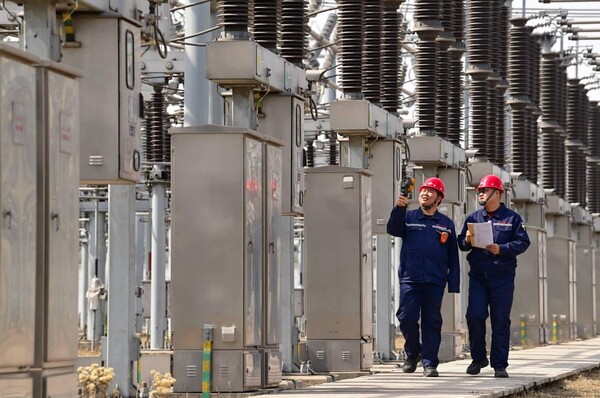
From accelerating the construction of large-scale renewable energy bases in desert regions, to expanding green power transmission corridors via ultra-high-voltage projects including Ningxia-to-Hunan, Gansu-to-Zhejiang, and Xizang-to-Guangdong. It is accelerating the development of a unified national electricity market and promoting new business models such as direct green electricity supply and smart microgrid. These targeted, practical intiatives have delivered real, tangible results.
After years of development, China has built the world’s largest and fastest-growing renewable energy system. Its installed hydropower, wind power, and solar power capacities all rank first globally.
German daily Der Tagesspiegel commented that China’s green development efforts have become an important force supporting the world’s low-carbon transition.
The value of green transformation goes far beyond adjusting the energy mix. More importantly, it provides low-carbon momentum for industrial upgrading and accumulates new drivers for high-quality development.
A report released by British energy think tank Ember noted that many developing economies have long struggled to balance economic growth with environmental protection, while China’s green development journey offer them a viable path forward.
By drawing on its comprehensive industrial system, maintaining a strong commitment to technological innovation, and planning for long-term growth, China has demonstrated that green and low-carbon transformation can advance in tandem with industrial upgrading and improvements in people’s livelihoods.
Ulanqab in north China’s Inner Mongolia autonomous region stands as a vivid epitome of such transformation. Endowed with exceptional wind and solar resources, the city has built a computing hub, empowering the digital economy with clean energy and drawing investments from multinational corporations.
The integration of green electricity and intelligent computing has enabled the rapid growth of a “cloud valley” on the grasslands, providing a practical model for aligning energy transition with industrial development.
While advancing its own green development, China has consistently upheld the principles of openness, inclusiveness, mutual benefit, and win-win cooperation, ensuring that the benefits of green progress are shared globally.
In Syria, Chinese-built photovoltaic installations are providing stable electricity to communities affected by years of conflict. In Laos, a China-Laos 500-kilovolt interconnection project has officially gone into operation, delivering around 3 billion kilowatt-hours of clean electricity annually. In Cameroon, the Memve’ele Hydroelectric Power Station, constructed by Chinese enterprises, has not only brought electricity to local communities but also trained a new generation of hydropower professionals.
Through such cooperation, China is helping other developing countries strengthen their capacity in energy transition and making clean energy a global public good that benefits all.
Where wind rises, green electricity surges to life. Across mountains and seas, new momentum global green growth continues is gathering.
Every kilowatt-hour of green electricity reflects China’s steady progress in energy transformation and carries the shared aspiration of building a clean and beautiful world together.
As China enters the 15th Five-Year Plan period (2026-2030), it will continue to uphold the principles of openness, inclusiveness, mutual benefit, and win-win cooperation, deepen international collaboration on green energy transition, and work with all countries to build a clean, beautiful, and sustainable world.