Galatasaray’s manager, Okan Buruk, has confirmed that the club is determined to keep Nigerian striker Victor Osimhen until the end of the current season, despite a January release clause in his contract. Speaking to the media on Sunday, Buruk acknowledged that while the contract does allow Osimhen to transfer to another club during the January window, the final decision will ultimately rest with the player.
Osimhen, who is currently on loan from Napoli, has expressed a clear desire to remain with Galatasaray until the season’s conclusion. Buruk reiterated that the club is ready to make significant financial efforts to ensure the 25-year-old forward stays in Turkey, even if it means stretching the club’s budget.
“There is a clause in his contract that permits a January transfer, but the most important factor is what the player wants,” Buruk explained. “Osimhen has been consistent in his intention to stay with us until the end of the season. Galatasaray is prepared to go above and beyond to keep him, although a move could still happen at the end of the season if he chooses.”
Osimhen’s impressive performance since joining Galatasaray has been a major asset for the team. The Nigerian striker, who arrived on the final day of the transfer window after failed negotiations with Al-Ahli and Chelsea, has scored eight goals and contributed four assists in just nine matches across all competitions. His impact has solidified him as a key player for Galatasaray, and the club is eager to maintain his presence as they pursue their goals this season.
Retired Colonel Babatunde Bello-Fadile, Nigeria’s first military lawyer, has shared a dramatic episode from his military career involving former President Muhammadu Buhari. In his recently published memoir, Nine Lives: The Bello-Fadile Memoirs, the retired colonel described a confrontation with Buhari, who was then a senior military officer, over a contentious letter written in 1981.
At the time of the incident, Buhari served as the General Officer Commanding (GOC) of the Infantry Division in Ibadan, Oyo State. Bello-Fadile recounted that the disagreement stemmed from a letter he wrote concerning the treatment of officers who had been found guilty in a general court-martial.
According to Bello-Fadile, the court-martial’s proceedings were reviewed, with recommendations sent to the Chief of Army Staff, Lt General Mohammed Inuwa Wushishi, for final approval. During this process, petitions from officers held in the guardroom were forwarded for review. In his response, Bello-Fadile, acting in his capacity as a military lawyer, requested that the records be sent to higher authorities and that the detained officers be relocated to a more dignified setting, the Officers’ Mess.
However, the retired colonel’s letter used a comparison that caused tension. He described the treatment of the detained officers as akin to being in “Germany’s gestapo custody,” which reportedly angered Buhari. When Bello-Fadile was summoned to explain the letter, Buhari, visibly upset, allegedly told Wushishi’s assistant, “Is this the captain? Either I leave the army, or he will leave the army.”
Realizing the gravity of the situation, Bello-Fadile withdrew his letter and apologized for the “gestapo” remark, managing to defuse the conflict. He described this incident as his first encounter with Buhari, which ended without severe consequences.
Years later, when Buhari became the head of state, Bello-Fadile sensed that the animosity from their earlier encounter lingered. To avoid further conflict, he relocated from Lagos to Kaduna to pursue a PhD in international law, keeping his distance from the then military leader’s sphere of influence.
This account, as revealed in Bello-Fadile’s memoir, highlights the complexities of military politics in Nigeria’s history and offers a glimpse into the challenges faced by those navigating the armed forces during a turbulent period.
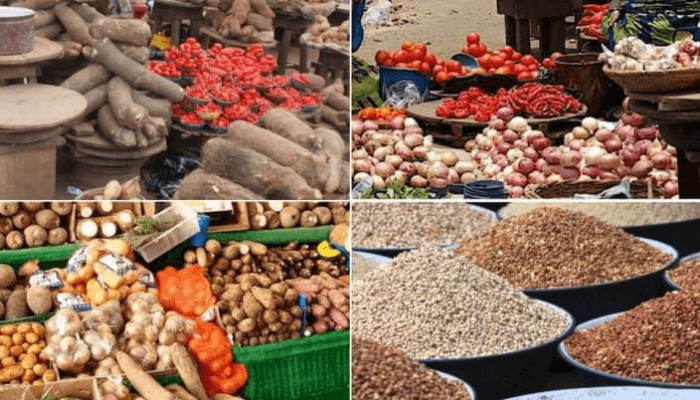
As the Christmas season approaches, many Nigerians are bracing for a potential rise in the prices of essential food commodities like rice, beans, and tomatoes. It’s common for the festive season to prompt panic buying and bulk purchases, leading to increased demand and potential supply chain issues.
Market traders across Nigeria are already expressing concerns about anticipated price hikes, attributing them to higher demand and possible disruptions in supply. As a result, there are calls for the government and relevant stakeholders to closely monitor market activities and prevent unfair pricing to keep food accessible.
Below are the current prices for major food commodities this week:
Rice Prices
My Choice Bag of Rice – ₦96,000
Mama’s Pride Rice – ₦95,000
Khemji Bag of Rice – ₦103,000
25kg Bag of Rice – ₦47,500
Beans Prices
Sweet Pure Butter Beans 50kg – ₦160,000
Soyabeans Very Dried – ₦130,000
Peeled Beans for Moi Moi 20kg – ₦80,000
Neat and Picked Pure Oloyin Sweet Beans 2.5kg – ₦8,500
Garri Prices
50kg Bag of Garri – ₦55,000
100kg Bag of Garri – ₦100,000
Tomatoes Prices
Fresh Derica Tomatoes (Big Basket) – ₦180,000
Medium Basket of Fresh Tomatoes – ₦95,000
Small Basket of Fresh Tomatoes – ₦40,000
Royal Sun Plum Tomatoes (24 Cans) – ₦32,000
Spaghetti Prices
Golden Penny Spaghetti (500g × 20 Carton) – ₦28,000
Palm Oil Prices
5-litre Gallon – ₦7,500
25-litre Gallon – ₦55,000
As the holiday season draws closer, shoppers are encouraged to plan ahead and make informed purchases to navigate the potential changes in food prices effectively.
The ice and snow economy is characterized by a long industrial chain, significant spillover effects, and high social benefits.
In recent years, with the deepening promotion of the concept that abundant snow and ice provided by the climate are also invaluable assets, and China’s continuous efforts to get 300 million people involved in winter sports, China’s high-quality “cold resources” of ice and snow have accelerated their transformation into the “hot power” of economic development.
Recently, the Chinese government issued policy measures for stimulating the vitality of the ice and snow economy through the high-quality development of winter sports, which clearly state that the total scale of China’s ice and snow economy will reach an economic scaleof1.2 trillion yuan (about $169 billion) by 2027, and1.5 trillion yuan by 2030.
The successful hosting of the Beijing 2022 Winter Olympics and Paralympics has driven the rapid development of ice and snow tourism, competition and performances, sports training, and ice and snow equipment manufacturing, fully demonstrating the strong momentum of the ice and snow economy.
During the 14th National Winter Games held earlier in Hulun Buir, north China’s Inner Mongolia autonomous region this year, Hulun Buir received a total of 1.774 million tourist visits, generating 32 billion yuan in sports and other consumption.
In recent years, winter tourism in China has been gaining popularity. Itplays an important role in promoting winter consumption and driving economic growth.
According to data from the China Tourism Academy[2] , the number of ice and snow tourists increased by 38 percent year on year during the last snow season, and revenues increased by 50 percent. Data from online travel companies showed that the total consumption of ice and snow tourism increased by 132.5 percent compared to the 2019-2020 snow season.
During the last snow season, an ice and snow fever swept across various regions in China. The booming tourism in Harbin, northeast China’s Heilongjiang province gave a significant boost to local catering, accommodation, entertainment, and shopping industries. Harbin received over 87 million visitors, a 300 percent increase year on year, and reported tourism revenue of 124.8 billion yuan, a 500 percent increase.
Jilin province, which neighbors Heilongjiang province, received 125 million tourist visits, up 121 percent from a year ago. The province’s tourism revenue surged 140 percent year on year to 241.9 billion yuan.
Altay in northwest China’s Xinjiang Uygur autonomous region welcomed nearly 4.89 million visitors, a 36 percent increase year on year, and its tourism revenue reached 5.1 billion yuan, up 45.8 percent compared with that in the same period last year.
After the Beijing 2022 Winter Olympics and Paralympics, winter sports have received wider attention and been joined by more people across China.
Ice and snow equipment are the foundation for the development of winter sports and are also a crucial component of the ice and snow economy. Currently, China has developed a product system consisting of 15 major categories of ice and snow equipment, with the industry rapidly expanding and the technical quality of products steadily improving.
The number of enterprises in this field has grown from around 300 in 2015 to approximately 900 in 2023, and sales revenue from less than 5 billion yuan to around 22 billion yuan during the same period.
New technologies represented by 5G, artificial intelligence, and virtual reality have given rise to many new products and models, enhancing the overall sports experience.
For instance, the ski simulators utilize virtual reality technology to recreate real-life skiing scenarios, allowing users to experience skiing without leaving their homes. Intelligent skiing insoles can collect data such as foot pressure, motion acceleration, and skiing paths. Heating snow sports shoes with flexible batteries and elastic heating elements can provide continuous heating for 2.5 to 5 hours in snow at temperatures as low as -25 degrees Celsius.
As future technologies further integrate with ice and snow equipment, they will better cater to diverse and personalized consumer demands.
Winter sports venues are essential infrastructure for the advancement of ice and snow sports. Driven by the Beijing Winter Olympics, the construction of ice and snow facilities in China has maintained rapid growth. In 2015, there were only over 700 ice and snow sports venues nationwide, and by the end of 2023, this number reached 2,847.
However, due to the relatively late start of China’s ice and snow economy, there are not many high-quality ice and snow venues. The construction of outdoor sports camps is relatively lagging, and the supporting public service facilities are not yet perfect.
Peng Fuwei, head of the Department of Social Development [3] under the National Development and Reform Commission, said that China will fully leverage the efforts of local governments and various sectors of society to enhance the level of supporting services for ice and snow venues.
Segun Showunmi, a former governorship aspirant from the Peoples Democratic Party (PDP) in Ogun State, has called for a major overhaul of the party, citing recent election losses as evidence of internal failure. In a post on his X (formerly Twitter) account on Monday, Showunmi expressed concerns that the PDP has become its own worst enemy after three consecutive election defeats.
Showunmi’s comments highlight the need for the PDP to conduct a thorough internal review, from local wards to the national level, to regain relevance and power. He criticized the party’s reliance on outdated methods and a lack of accountability, emphasizing that the PDP’s core principles have been compromised.
“It is time to truly reform. After three consecutive elections without forming a government, particularly the most recent one, it’s clear we have become our own enemies. There is no point playing the blame game. We must get serious and fix our party,” Showunmi stated.
He pointed out that the party’s failures are not due to external factors but a breakdown in internal structure and strategy. According to him, the PDP must reassess how it campaigns and manages election activities, criticizing the habit of using resources carelessly and failing to properly engage potential voters.
“We can’t keep doing the same things and expect different results. Our election management framework needs a strict audit. We cannot pretend not to know that resources are being diverted, and day-of-the-vote activities are poorly handled. This careless attitude has to stop,” he said.
Showunmi called for a more strategic approach to campaigning, noting that gathering party loyalists at rallies is insufficient. He urged the PDP to reach out to a broader audience, including students, civil society, and local influencers, rather than relying on familiar methods that have repeatedly failed.
“The business of assumption is over. We are losing because we are not doing the right things. Winning an election requires more than tribal appeals; it requires a smart, stylized campaign that can attract the critical northern votes,” he emphasized.
He also criticized the attitudes of current PDP governors toward elections, suggesting that their engagement should be compared to that of rival parties to identify weaknesses. Showunmi insisted that the party must forge better relationships with key election stakeholders, including the Independent National Electoral Commission (INEC) and security agencies, to level the playing field.
To turn things around, Showunmi urged the PDP to entrust election responsibilities to those with passion and expertise, warning that failure to adapt will lead to continued defeat. He concluded by asserting that the party’s rivals are not invincible and can be defeated if the PDP reforms and adopts a more disciplined approach.
“The era of assumptions is over. Let’s yield responsibility to those who are knowledgeable and watch our rivals crumble. They may seem strong, but they have clay feet. With the right preparation, we can win. That’s why I continue to preach for the reformation of our party,” he said.
The Presidency has criticized former President Olusegun Obasanjo for failing to establish a strong democratic foundation during his tenure as the first president of Nigeria’s fourth republic. Sunday Dare, the Special Adviser to President Bola Tinubu on Public Communication and Orientation, accused Obasanjo of having a “tremendous capacity for mischief.”
Dare’s remarks were in response to Obasanjo’s recent criticism of President Tinubu’s leadership style, which he voiced during a speech at Yale University.
“Former President Obasanjo is a man with a tremendous capacity for mischief, and Nigerians know it. His journey along the path of hallucinations has never been in doubt. So is his descent into muddling facts, forgetting that he ran a Presidency on record as the most corrupt,” Dare said.
The Adviser highlighted the $16 billion that went unaccounted for under Obasanjo’s administration, originally allocated to improve Nigeria’s electricity supply. He asserted that Obasanjo’s record undermines his right to criticize any current or future Nigerian government.
“It is laughable that Obasanjo’s pretentious stance on fighting corruption has no credibility in the eyes of the general public. We all remember what happened under his watch and the lack of transparency around how $16 billion was spent, resulting in no significant improvement in electricity,” Dare noted.
Dare further argued that Nigeria’s democracy suffered significant setbacks during Obasanjo’s presidency, including his controversial attempt to secure a third term, which he described as “murderous rage.” He stated that successive administrations have struggled to repair the damage Obasanjo left behind, a task that President Tinubu is currently tackling.
“Democracy suffered mortal wounds under his watch, culminating in his failed attempt for a third term. Successive administrations have had to deal with the mess Obasanjo left, and President Tinubu is now making progress in rectifying these issues. Obasanjo has no moral ground to criticize any government; he owes Nigerians an apology for not laying down the foundational infrastructure the nation needed to move forward,” Dare emphasized.
Dare concluded by urging Obasanjo to reflect on his own contributions to Nigeria’s current challenges rather than criticizing his successors. He highlighted President Tinubu’s efforts to return Nigeria to a path of sustainable development.
“Obasanjo should move away from his habit of tearing down leaders, especially his successors, and instead assess how his actions have contributed to Nigeria’s current state. President Bola Ahmed Tinubu is actively working to put Nigeria back on the development track,” he added.
In recent years, under the strategic guidance of the heads of state of the two countries, cooperation between China and Peru has yielded fruitful results in various fields, with a series of pragmatic cooperation projects contributing to Peru’s economic development and livelihood improvement.
About 500 kilometers from Lima, Peru’s capital, a busy harvest scene unfolds at a blueberry farm owned by Camposol, a company based in the city of Trujillo. Since entering the Chinese market in 2009, Camposol has steadily increased both the variety and volume of its exports to China, with products like blueberries, avocados, and grapes gaining growing popularity among Chinese consumers.
In April 2009, China and Peru signed a free trade agreement (FTA), which officially came into effect in 2010 and serves as a catalyst for bilateral trade growth. In June of this year, the two countries announced the completion of negotiations on upgrading the FTA.
Thanks to the FTA, Peru’s non-traditional products have begun to reach Chinese households. Peru has become the largest supplier of blueberries and avocados to China, with products such as quinoa, grapes, maca, alpaca wool, among others, gaining popularity in the Chinese market.
It is reported that China and Peru are actively negotiating on issues such as the export of high-quality Peruvian frozen fruits to China, and positive progress has been made.
“The Peru-China FTA has provided significant impetus for Peruvian agricultural products to enter the Chinese market. By reducing trade barriers and lowering market access, the FTA has created new opportunities for Peruvian producers, driving the development of Peruvian agriculture,” said Luis Baanante, general manager of Camposol China.
In recent years, China has become the company’s fastest-growing and most promising market. In order to further expand exports to China, the company established an office in Shanghai in 2017, Baanante said. Currently, the company’s sales network covers most regions in China.
The Chinese and Peruvian economies are highly complementary. With joint efforts from both sides, China has become Peru’s largest trading partner for 10 consecutive years, and Peru is the second largest investment destination of China in Latin America. In 2023, the bilateral trade volume reached $37.69 billion. According to Peruvian statistics, over the past 14 years, Peru’s exports to China have grown by 325.9 percent, with an average annual growth of 13.2 percent.
Teresa Mera, vice-minister for Foreign Trade of Peru’s Ministry of Foreign Trade and Tourism, said that the increasing market demand in China has driven the vigorous development of Peru’s export industry. The signing of the FTA has greatly enhanced the level of trade between Peru and China. Since the agreement came into effect, Peru’s non-traditional exports to China have increased by 227 percent, making Peru the second largest fruit supplier to China in Latin America.
The increasing economic and trade exchanges between China and Peru are bringing new opportunities to more and more Peruvian small and medium-sized enterprises. The Peruvian alpaca wool product brand Warmpaca has joined the China International Import Expo for seven consecutive years and has gained popularity among Chinese consumers.
Today, Warmpaca products are sold in more than 30 shopping malls in China. The brand has also expanded to e-commerce platforms, selling over 30,000 products each year.
Julio Perez Alvan, president of the Peruvian Association of Exporters, said that since 2010, China has grown into the fifth largest export market for Peruvian non-traditional products, up from the ninth place, which demonstrates the enormous potential for economic and trade cooperation between the two countries.
The association will promote more high-quality Peruvian products to China, aiming to achieve mutual benefit and win-win outcomes, the president added.
The Philippines recently signed into law the so-called “Maritime Zones Act” and “Archipelagic Sea Lanes Act.” These acts severely violate China’s territorial sovereignty and maritime rights and interests in the South China Sea, as well as international law including the United Nations Convention on the Law of the Sea (UNCLOS).
Theseegregiousacts will inevitably complicate the situation in the South China Sea. China’s adoption of necessary measures to defend its legitimate and lawful sovereignty, rights and interests is a justifiable move to keep the South China Sea peaceful and stable.
The two acts are egregiousbecause they seriously infringe upon China’s territorial sovereignty and maritime rights and interests in the South China Sea. The so-called “Maritime Zones Act” illegally includes China’s Huangyan Dao, most of the islands and reefs of China’s Nansha Qundao, and their relevant waters into the Philippines’ maritime zones. It attempts to further solidify the illegal arbitral award on the South China Sea in the form of domestic legislation.
China has sovereignty over Nansha Qundao and the adjacent waters, and Zhongsha Qundao, including Huangyan Dao, and the adjacent waters, and has sovereign rights and jurisdictions over relevant waters. The aforementioned territorial sovereignty and maritime rights and interests of China have solid historical and legal basis, and are compliant with international law including the UNCLOS.
The Philippines arbitrarily advancing the legislation of the so-called “Maritime Zones Act”has once again exposed its true intention to seize illegal gains in the South China Sea by the manipulation of domestic laws, which reveals its expansionist goals in the South China Sea.
The two acts are egregiousbecause they violate international law and the basic norms governing international relationsin the name ofimplementing UNCLOS.
The so-called “Maritime Zones Act” cites the illegal award of the South China Sea arbitration as a basis for defining the Philippines’maritime boundaries, which serves only to compound lies and fallacies to legitimatize its own illicit maritime claims.
The illegal award of the South China Sea arbitration has been widely questioned by the international community. This international arbitration was unilaterally initiated by the Philippineswithout the Chinese government’s prior consent, which violated international law, including UNCLOS.
China has repeatedly lodged stern representations that it neither accepts nor participates in the arbitration, nor does it accept or recognize the illegal award, and will never accept any claim or action based on the award.
China’s territorial sovereignty and maritime rights and interests in the South China Sea shall under no circumstances be affected by the award.The Philippines’endorsement of the arbitral award is nothing but justification for its infringing and provocative moves and illegal claims and actions, which reveals its true intention to “expand its powers” in the South China Sea.
The two acts are egregiousbecause they impact the freedom and security of navigation, threaten regional peace and stability, and further complicate the situation in the South China Sea.
Theycontravene the Declaration on the Conduct of Parties in the South China Sea(DOC), which emphasizes the importance of exercising self-restraint in the conduct of activities that would complicate or escalate disputes and affect peace and stability. This not only hampers dispute resolution efforts but also exacerbates tensions in the South China Sea.
Many provisions containedin thePhilippines’ “Archipelagic Sea Lanes Act” are incompatible with international law and resolutions of the International Maritime Organization (IMO).
For instance, the waterways designated by the act fail to include all commonly utilized international waterways within the waters of the Philippine archipelago. Such provisions are evidently inconsistent with Article 53 of UNCLOS, whichstipulates that the sea lanes and air routes designated by an archipelagic state shall include all normal passage routes used as routes for international navigation or overflight through or over archipelagic waters.
Furthermore, the specified sea lanes are all in close proximity to U.S. military bases in the Philippines, raising concerns about potential collusion between the Philippines and foreign powers to monitor passing vessels,thereby jeopardizing the navigationalsafety of all countries.
As suchacts exceed the authority granted by international law, consequently, they unlawfully restrict the legitimate rights of othercountries, including China, and have no binding force on them.
China asks the Philippinesto earnestly abide by international law and not to undermine other countries’ lawful rights under UNCLOS and other international law.Chinese ships and aircraft will continue to pass through all normal channels as needed and in accordance with international law.
Huangyan Dao has always been China’s territory. In accordance with international law, such as the UNCLOS, and the Law of the People’s Republic of China on the Territorial Sea and the Contiguous Zone, the Chinese government delimited and announced the baselines of the territorial sea adjacent to Huangyan Dao.
This is a natural step by the Chinese government to lawfully strengthen marine management and is consistent with international law and common practices,demonstrating China’s firm determination and will to defend its territorial sovereignty and maritime rights and interestsin the South China Sea.
On maritime disputes, China has been exercising a high degree of restraint. China maintains that parties should find solutions that are acceptable to each and all by working in the spirit of good-neighborliness and friendship, and on the basis of respecting historical and legal facts.
But abusing such good faith should not be allowed.China does not accept any unilateral action attempting to enforce maritime claims against China. Nor does China recognize any action that may jeopardize its maritime rights and interests in the South China Sea.
The Philippines shall earnestly respect China’s territorial sovereignty and maritime rights and interests and immediately end any unilateral move that may escalate the dispute and complicate the situation. China urges the Philippines to return to the right track of properly settling differences through negotiation and consultation as soon as possible and work with China to uphold the larger interest of the bilateral relations and keep the South China Sea peaceful and stable.
(Zhong Sheng is a pen name often used by People’s Daily to express its views on foreign policy and international affairs.)
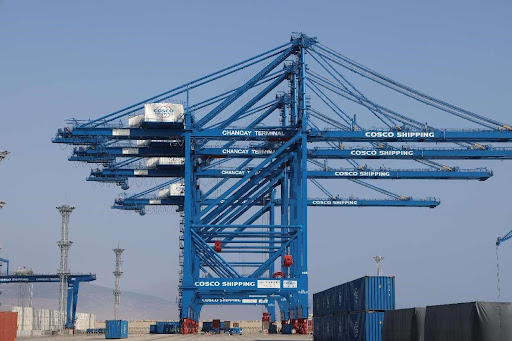
Blue quay cranesstand in neat rows at the construction site, busily performing their tasks. Over 20 autonomous transport vehicles are seamlessly moving newly arrived containers to the storage yard.
Since the first phase of the project began construction in 2021, “From Chancay to Shanghai” has become a catchphrase in Peru. As the project is near completion, this vision is becoming a reality.
Upon completion, the port will serve as a new land-sea route between China and Latin America, leading to a notable reduction in shipping time. It will also link to the Pan-American Highway through tunnels, providing direct access to Lima and significantly facilitating trade and regional connectivity.
José AristaArbildo, Peru’s minister of economy and finance, said that the Chancay Port, as a landmark project of Peru-China cooperation, will substantially reduce logistics costs, enhance competitiveness and open up market opportunities for Peruvian products, making Peru a regional logistics hub.
“There is a broad scope for Peru-China cooperation, and the Peruvian government is committed to promoting practical cooperation between the two sides in more areas,” the minister said.
Under the framework of high-quality Belt and Road cooperation, Chinese companies have made significant contributions to Peru’sinfrastructure development, bringing tangible benefits to local people.
For instance, a school in Peru’s La Libertad region has developed spacious, well-lit classrooms and playgrounds equipped with necessary facilities for students. Just a few years ago, the situation was entirely different.
In 2017, the area was hit by severe flooding, causing considerable water damage to the school, leading to extensive wall cracks,and presenting serious safety threats to the old buildings.
To address this situation, Peru’s National Infrastructure Authority allocated funds for the school’s reconstruction, which was undertaken by Yellow River Co., Ltd. under Power Construction Corporation of China (PowerChina).
The new campus, which was officially delivered in August this year, covers approximately 4,500 square meters, with a total building area of 4,000 square meters. Divided into kindergarten and primary school sections, the renovated schoolcan accommodate over 1,000 students. It includes bright classrooms, administrative offices, a library, computer rooms, science labs, as well as basketball courts, a kitchen, and a dining hall.
“The well-designed new campus is equipped with complete facilities, creating a safe and modern learning environment that is highly regarded by students and parents,” said the principal of the school.
She expressed deep gratitude for the involvement of the Chinese company in the school’s reconstruction, believing it not only benefited the students but also supported the educational development of the region.
“We hope that Peru and China continue deepening cooperation so as to bring us more benefits,” she added.
In Rongjiang county, southwest China’s Guizhou province, villager Yang Zhenjiang, standing in a soccer arena where games of the Village Super League (VSL), a grass-root rural village soccer tournament, are played, showed his photo collection on his phone.
Most of the over 100 photos were passionate foreign soccer players passing, scoring, hugging and dancing.
The VSL, whose appellation was inspired by the Premier League and the Chinese Super League, has been viral across China in recent years. It originated in Rongjiang, a small county nestling deep in the mountains of Guizhou province.
On Oct. 3, Brazil’s Sao Paulo Higher Bridge Football Team made its debut at the inaugural “Belt and Road” friendly matcheshosted by the Guizhou VSL. In the following 25 days, athletes of the team competed in games, tasted local food and experienced local folk customs, embracing up-close the vitality of China’s development, the hospitality of the Chinese people and the profoundness of the Chinese culture.
In August this year, head coach ofHigher Bridge Football TeamEleazar Villavicencio and team manager Yang Shengjun paid a visit to Rongjiang county. There, they saw the huge potential and broad prospects of China’s soccer market.
“Rongjiang is a promising land of soccer. The people here are passionate about soccer, which is similar toBrazil,” Yang said.
At 7:00 pm on Oct. 3, the Higher Bridge Football Team stepped onto the field, amid the cheers by over 30,000 spectators. On both sides of the tunnel, cheering squads consisting of local residents, wearing ethnic costumes and silver headpieces, performed ethnic dance to welcome the Brazilian players.
The game was fierce. In the 84th minute, player Ferreira’s follow-up shot sealed the victory for the Brazilian team. Brazilian players made samba moves to celebrate the goal. The spectators also cheered for them. Finally, the Brazilian team won the game at 1:0.
As the game ended, spectacular fireworks lit up the sky outside the stadium while festive music filled the arena. The spectators poured into the center of the pitch, forming a circle around the Brazilian players, and everyone joined in dancing with arms around each other’s shoulders. The Brazilian players showed off their unique samba moves as everyone shared the joy and friendship that soccer brought.
At this moment, soccer became a bridge between the peoples of both nations, and a witness to the reinforced friendship between China and Brazil.
From Oct. 3 to 6, the Brazilian team played three games, scoring eight goals in total. It showcased the unique charm of Brazilian soccer and presented a soccer feast to the spectators.
The inaugural “Belt and Road” friendly matches held in Rongjiang county, was joined by 10 foreign teams. Through soccer, the VSL has become not just an arena for athletic competition, but also a platform for cross-cultural exchange.
Soccer in Rongjiang extends far beyond the VSL. In the 1990s, locals spontaneously organized matches on open-air fields. Today, Rongjiang county boasts 14 standard soccer pitches, 35 registered teams, 14 national-level youth specialist soccer schools,and 41 county-level specialist soccer schools.
“After Eleazar returned to Brazil, we’ve maintained contact and decided to establish a youth training club in Rongjiang, using Brazilian coaching methods here,” said Yang.
He added that with the imminent launch of the Rongjiang youth training club, a group of young Brazilian players will stay in Rongjiang to join games and serve as soccer coaches in primary and secondary schools.
“We hope more children can use their soccer skills as a pathway out of the mountains, to open up more possibilities for their future,”said Yang.