NACCIMA Warns of Economic Impact Amid Rising Fuel Prices in Lagos and Abuja


The Nigerian Association of Chambers of Commerce, Industry, Mines and Agriculture (NACCIMA) has raised concerns over the recent surge in petrol prices in Lagos and Abuja, where prices have reached ₦998 and ₦1,030 per litre, respectively. The association’s National President, Dele Oye, issued a statement on Wednesday, highlighting the strain these increases are placing on businesses and households across the nation.

Oye warned that the price hike could lead to higher transportation costs, increased inflation, and severe consequences for small and medium-sized enterprises (SMEs), many of which rely on petrol for operations. He stressed that the rising fuel costs would affect not only businesses but also households, causing a ripple effect on the cost of goods and services.

He called on the Nigerian National Petroleum Corporation Ltd. to support the Dangote refinery in stabilizing local petrol prices and reducing the country’s reliance on imported fuel. Additionally, Oye urged the Central Bank of Nigeria to implement stronger monetary policies to stabilize the naira, which has been under pressure due to currency depreciation and rising importation costs.

NACCIMA continues to advocate for strategies that will not only stabilize fuel prices but also enhance domestic production capabilities, ensuring the Nigerian economy can navigate these challenging times.

Ondo Governor Sacks Aide Over Bribery Allegation, Dismissed Official Denies Charges


Ondo State Governor, Lucky Aiyedatiwa, has dismissed his Special Assistant on Forestry (Central Senatorial District), Adeboye Ewenla, following allegations of bribery. The accusations were made by timber traders, who claimed Ewenla was involved in corrupt practices within the state’s forestry sector.

The governor’s Chief Press Secretary, Ebenezer Adeniyan, announced Ewenla’s immediate dismissal on Wednesday. Aiyedatiwa has also called for an investigation into the management of forest reserves in the state, emphasizing that a replacement for Ewenla will be announced soon.

In response to his dismissal, Ewenla denied the allegations, calling them a deliberate attempt to tarnish his reputation. He argued that he was targeted because of his role in preventing illegal activities in the government’s forest reserves. According to Ewenla, the money in question was meant for government revenues, not personal gain.

The governor urged all political appointees to adhere to the law and maintain ethical conduct in their official duties.

Black Market Dollar to Naira Exchange Rate and CBN Assurance on Bank Deposits: October 10th, 2024


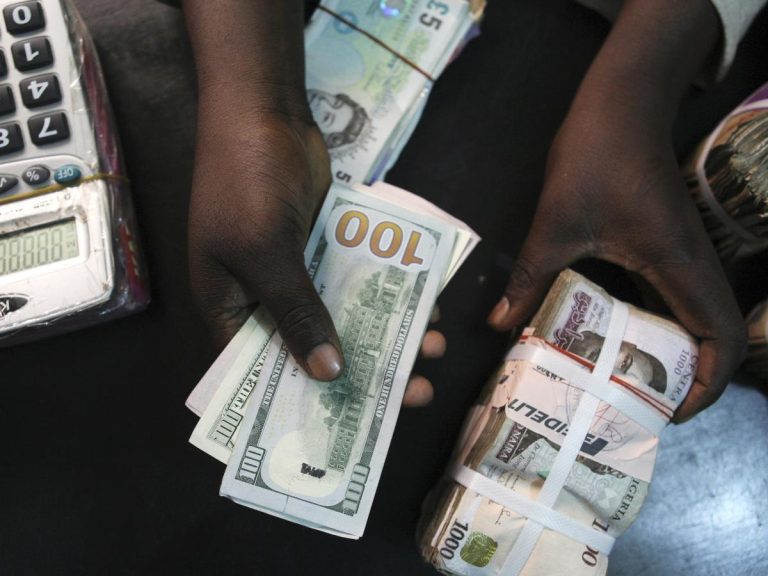
The dollar to naira exchange rate in the black market (also known as the parallel market or Aboki FX) for October 9th, 2024, saw players in Lagos buying the dollar for ₦1685 and selling it for ₦1695. It’s important to note that the Central Bank of Nigeria (CBN) does not officially recognize the parallel market and advises individuals to approach their banks for Forex transactions.

Exchange Rates Summary:

  • Black Market Rates (Aboki FX):
    Buying: ₦1685
    Selling: ₦1695
  • CBN Official Rates:
    Buying: ₦1589
    Selling: ₦1590

The rates provided may vary based on location and specific transaction circumstances.

In a separate development, the Central Bank of Nigeria has reassured the public that deposits in Nigerian banks are safe. This comes in response to rumors suggesting that certain banks were at risk of losing their licenses. CBN’s Acting Director of Corporate Communications, Hakama Ali, emphasized that the bank conducts regular stress tests and uses an Early Warning System to address risks and ensure stability in the financial system.

The CBN’s Risk-Based Supervision strategy targets institutions posing higher risks to the financial sector, ensuring a secure banking environment for depositors. The central bank remains committed to safeguarding the financial interests of all Nigerians.

Nigerian Army Probes Former Brigade Commander Over Alleged Misconduct

The Nigerian Army has initiated an investigation into Brigadier General M.A. Sadiq, former Commander of the 3 Brigade in Kano, following accusations of misconduct. General Sadiq is alleged to have withheld entitlements meant for his subordinates and engaged in misappropriation during his command. He has been relieved of his post and is currently in custody. Army spokesperson, Major General Onyema Nwachukwu, confirmed the investigation and assured the public of a fair and thorough process, emphasizing the military’s commitment to accountability and integrity.

Senate in Turmoil Over Local Government Autonomy, Enters Emergency Closed-Door Session


The Nigerian Senate plunged into confusion during an emergency closed-door session, sparked by a debate on the financial autonomy of the nation’s 774 Local Government Councils. Senator Tony Nwoye raised concerns about state governments allegedly bypassing a Supreme Court ruling that granted the councils autonomy, accusing governors of diverting local funds into joint accounts. Heated exchanges followed, with opposing views on the constitutional implications, leading to a temporary suspension of proceedings. The issue has reignited discussions on local governance and constitutional amendments necessary to enforce the court’s decision.

Fuel Prices Increased by NNPCL to N1,030 in Abuja and N998 in Lagos

The Nigerian National Petroleum Corporation Limited (NNPCL) has raised the pump price of fuel significantly, with the new prices set at N1,030 per litre in Abuja and N998 per litre in Lagos. This marks an increase from the previous prices of N897 and N885, respectively.

Details of the Price Hike

  • Observations in Abuja: At an NNPC outlet in Maitama, motorists were seen queuing up amid complaints about the price increase. Another station in Gudu had fuel available, but sales were paused pending adjustments to the pricing meters. An attendant confirmed the new price of N1,030 per litre.
  • Lagos Update: In Lagos, motorists faced long queues as the price increased to N998 per litre.

Context of the Increase

This fuel price adjustment comes just a day after reports suggested a potential hike due to the NNPCL’s exit as a middleman in the fuel purchase agreement with the Dangote Refinery. Previously, the NNPCL absorbed a subsidy of N133 per litre to cover the price gap between the refinery’s price and the retail price.

  • Deregulation Shift: The NNPCL’s decision reflects a significant shift toward a fully deregulated oil market, where fuel marketers will now negotiate prices directly with the Dangote Refinery under a “willing buyer, willing seller” arrangement. This model is already in place for other deregulated products like diesel and kerosene.
  • Impacts on Subsidy System: An official from the NNPCL noted the unsustainable financial burden of the subsidy system, emphasizing that continuing to absorb the cost was not feasible.

This change in pricing and structure is expected to have a considerable impact on fuel access and the overall economy in Nigeria.

Senator Akintunde Advocates for Solutions to Energy Poverty in Rural Nigeria

Yunus Akintunde, the senator representing Oyo Central, has highlighted the need for a more equitable distribution of energy resources in Nigeria, particularly focusing on the significant energy poverty faced by rural communities. Speaking at the Prof Nyaudoh U. Ndaeyo Public Lecture at the University of Uyo, Akwa Ibom State, he noted that the prioritization of urban areas over rural ones has stifled development in Nigeria.

Akintunde, who chairs the Senate Committee on Environment, emphasized the importance of policies that encourage the clustering of agribusinesses in rural areas. He believes such initiatives could motivate electricity companies to expand their operations into these underserved regions.

During his address, he discussed several challenges contributing to energy poverty, including:

  • Political interference in the planning and execution of rural electrification programs.
  • The prevalence of sub-standard off-grid technologies.
  • Economic barriers, including the high costs associated with infrastructure development.
  • Corruption within the energy sector.

He pointed out that over 81 million Nigerians, out of a total population exceeding 206 million, lack adequate access to electricity, with rural areas being the most affected. Akintunde noted, “Politicians interfere with the orderly planning and running of rural electrification programmes,” which hampers progress.

Despite Nigeria’s vast potential for renewable energy—estimated at 207,000 GWh for solar and 50,800 GWh for hydro—he highlighted ongoing issues such as:

  • Inadequate electricity generation (with only 4,000 MW generated against an installed capacity of 12,522 MW).
  • Poor transmission infrastructure.
  • Frequent blackouts and insufficient investment in the sector.

Akintunde also stressed the unique impacts of energy poverty on women, who often spend 4-6 hours daily collecting firewood and are exposed to harmful fumes from inefficient cooking methods.

Proposed Solutions

To address these challenges, Akintunde recommended several reforms:

  1. Institutional reforms to localize the Rural Electrification Agency (REA) and improve energy consumption.
  2. Public policies that enhance both the quantity and quality of electricity services, supported by macroeconomic strategies.
  3. Incentivizing private sector involvement in electricity access for rural areas.
  4. Promotion of renewable energy technologies to diversify energy sources.
  5. Increased investment in education to raise awareness about clean and efficient energy use.
  6. Development of mobile infrastructure, microloans, and payment solutions for low-income individuals.

He concluded by advocating for a collaborative approach between the government and multilateral institutions to establish funds for innovators in off-grid power generation, further emphasizing the need for targeted policies to uplift rural communities and reduce energy poverty.

Akintunde, who received a warm welcome from the Yoruba community and university management during his visit, was later invested as the grand patron of the Yoruba community in Akwa Ibom State.

Judiciary’s Role in Economic Challenges Highlighted by AGF Fagbemi

Lateef Fagbemi, the Attorney-General of the Federation and Minister of Justice, emphasized the potential role of the judicial system in addressing Nigeria’s pressing economic challenges, including high unemployment rates, rising inflation, and declining revenue. He made these remarks at the opening of the Legal Year 2024/2025 for the National Industrial Court in Abuja.

Fagbemi pointed out that the timely and efficient resolution of industrial disputes is crucial for industrial harmony, which in turn is vital for attracting foreign investment and creating jobs. He stated, “The court’s decisions have a direct impact on the stability and efficiency of our industries,” stressing that rulings must be based on sound legal principles and a thorough understanding of the complexities of the labor market.

In his address, Justice Benedict Bakwaph Kanyip, President of the National Industrial Court, reiterated the court’s commitment to enhancing the justice delivery system. He stated that the court aims to build trust and confidence among users and the general public, guided by the principles set forth by the International Labour Organization (ILO).

Since the last legal year celebration in 2022, the court has faced a significant backlog, with 8,608 pending cases. Out of these, 1,616 judgments were delivered, leaving 6,992 cases still pending. The case delivery ratio stood at 8 percent. Kanyip highlighted the workload in the first quarter of 2024, noting a ratio of 186.80 cases per judge, with the Owerri and Makurdi divisions managing heavier dockets of 500 cases each.

Mazi Afam Osigwe (SAN), President of the Nigerian Bar Association (NBA), urged the court to adapt to the evolving demands of the global economy, particularly in light of technological advancements such as the gig economy, remote working, and automation. This call for adaptation is part of a broader initiative to ensure that the judiciary remains responsive to contemporary economic realities.

Health Scheme Benefits Over 9,000 Residents in Kaduna North

A total of 9,098 underprivileged individuals have benefited from the Kaduna North Health Endowment Fund Scheme since its inception in December 2021, according to the local government chairman, Muktar Baloni. He made this announcement during the scheme’s unwinding event, highlighting its goal of providing affordable and accessible healthcare services to residents of the local government area.

The health initiative involved nine selected health facilities within the Kaduna North Local Government Area (LGA), including:

  • PHC Unguwar Sarki
  • PHC Unguwar Rimi
  • PHC Badarawa
  • PHC Unguwar Dosa
  • PHC Unguwar Shanu
  • PHC Kabala
  • PHC Unguwar Kanawa
  • Zakari Memorial PHC
  • PHC Radin Guza

Baloni mentioned that a committee was established to support the initiative by addressing health challenges within the program’s focus area. Each of the nine committee members received a monthly stipend of N25,000 throughout the program’s 26-month duration.

In total, approximately N24.412 million was spent on the program, which included the stipends paid to committee members, benefiting the 9,098 patients.

However, Baloni noted some challenges, including the lack of an enabling legal framework to sustain the health endowment fund and the absence of clear budgetary provisions for such programs. He explained that the council funded the scheme using its security votes and urged future administrations to sustain the initiative to improve healthcare accessibility for the sick.

To ensure the program’s longevity, Baloni called for the enactment of a bye-law, the Kaduna North Healthcare Endowment Act, and measures at the council legislative level to institutionalize the program. He emphasized the need for private sector participation to secure additional resources for the initiative.

Community leader Alhaji Usman Abba Ibrahim praised Baloni for initiating the scheme, describing it as the first of its kind in decades for the state. He also urged the incoming administration to continue the program for the benefit of the poor, who are the primary beneficiaries of such healthcare initiatives.

Foundation Calls for Support for Children with Cerebral Palsy

The Founder of the Straight Child Foundation, Dr. Peace Amaraegbulam, has urged Nigerians to recognize and support individuals living with cerebral palsy (CP) who exhibit remarkable determination in pursuing their goals. Her comments came after a health awareness walk organized by the foundation in collaboration with the University of Nigeria Alumni Association, held in Umuahia, Abia State, to celebrate World Cerebral Palsy Day 2024.

Dr. Amaraegbulam emphasized this year’s theme, “UniquelyCP,” which highlights the unique potential and beauty of individuals with cerebral palsy. She encouraged the public to understand that families and caregivers of children with CP can benefit from support networks that provide resources, experiences, and emotional assistance.

Cerebral palsy is a non-progressive condition, meaning that while the brain damage remains stable over time, the physical symptoms may evolve as the child grows. Early diagnosis and intervention, including physical, occupational, and speech therapy, can significantly enhance a child’s ability to function and lead an independent life.

Dr. Amaraegbulam stated, “World Cerebral Palsy Day is a powerful reminder that beauty comes in all forms, transcending physical challenges. By recognizing the unique talents and stories of those living with cerebral palsy, we foster a more inclusive society.”

Cerebral palsy can result from various prenatal factors such as infections, premature birth, or lack of oxygen during birth. In some cases, postnatal factors, including brain injury or severe jaundice, may also contribute to its development. Symptoms of cerebral palsy can vary widely, affecting coordination, walking, speaking, and fine motor skills, with severity ranging from mild to severe.

The doctor pointed out that treatment plans for individuals with CP are personalized, focusing on improving motor skills, managing pain, and enhancing quality of life. She added that this year’s theme underscores the idea that a person’s disability does not define their entire identity, as unique capabilities and strengths help them achieve their life goals.

The health awareness walk, which included participation from members of the University of Nigeria Alumni Association and the Straight Child Foundation, served as a platform to amplify the message of support for individuals with cerebral palsy.