
Libya, currently at the bottom of Group D, will face Nigeria, the group leaders, at the Martyrs of Benina Stadium in their 2025 Africa Cup of Nations qualifying match. The stadium, located 19 kilometers from Benghazi, has a capacity of 10,000 and features an artificial turf. The two teams will first meet on October 11th at the Godswill Akpabio Stadium in Uyo, with their next clash in Benina scheduled for October 15th.
Tor Tiv Launches Investigation Into Traditional Rulers Allegedly Involved in Banditry

The Paramount Ruler of the Tiv nation, Prof. James Ayatse, has announced an investigation into allegations involving certain traditional rulers in the Sankera region of Benue State who are accused of supporting banditry and disturbing peace.
The Tor Tiv emphasized the importance of swift and decisive action to restore public confidence in traditional leadership and vowed to hold accountable any ruler found complicit in such activities. He expressed a commitment to collaborating with the Benue State Government and law enforcement to identify those instigating criminal behavior in the Sankera area, which includes the local government areas of Ukum, Logo, and Kastina-Ala.
In a statement released by his Special Assistant on Media and ICT, Freddie Adamgbe, Ayatse underscored the critical role traditional rulers play in protecting the cultural integrity and safety of their communities. He warned against attempts to intimidate individuals willing to share information about criminal activities and urged government and security forces to ensure the safety of all informants.
The Tor Tiv commended local leaders and clergy, particularly the Bishop of Katsina Ala Diocese, Most Reverend Bundepuun Dugu, for their dedicated efforts and meetings aimed at restoring peace in the region. He encouraged these leaders to persist in their initiatives to achieve lasting peace.
Ayatse also lamented that despite the community’s struggles, some youths in Sankera have allied themselves with external forces, exacerbating the violence and harming local economies and agricultural productivity. He called for a sustainable solution to these challenges and urged the people of Sankera to maintain faith in God as the ultimate source of change, believing that He can inspire those causing turmoil to cease their actions.
Oshiomhole Explains Why Edo Governor-Elect Okpebholo Is Avoiding Media Interviews

Edo North Senator Adams Oshiomhole has addressed the issue of media appearances by the newly elected governor of Edo State, Monday Okpebholo, stating that the All Progressives Congress (APC) cannot force him to grant interviews. His comments come amid concerns about Okpebholo’s absence from media discussions compared to other leading candidates in the election, such as Asue Ighodalo of the Peoples Democratic Party (PDP) and Olumide Akpata from the Labour Party.
In an interview on Channels Television’s Politics Today program, Oshiomhole emphasized that the APC’s campaign strategy was effective, leading the electorate to support Okpebholo. “Our strategy worked, which is why the people voted. Monday communicated with the Edo electorate, and it resonated,” he remarked.
When questioned about Okpebholo’s reluctance to engage in media interviews or debates before the election, Oshiomhole stated, “People tend to exaggerate the importance of television appearances. It’s not about preventing him from speaking; we are not in a position to compel anyone.”
He further argued that communication extends beyond television, suggesting that radio has a broader reach and is a more effective means of connecting with voters. Oshiomhole concluded by asserting that the governor-elect must demonstrate his value to those who voted for him by articulating how he intends to govern differently from the previous administration.
Secondus Warns Nigeria’s Democracy Is on the Brink Due to Electoral Rigging

Former National Chairman of the Peoples Democratic Party (PDP), Prince Uche Secondus, has issued a grave warning about the state of Nigeria’s democracy, claiming it is teetering on a “keg of gunpowder” due to rampant rigging by the ruling All Progressives Congress (APC).
In a statement released through his media adviser, Ike Abonyi, Secondus expressed fears that the upcoming 2027 elections may be jeopardized by what he views as the APC’s deliberate undermining of democratic processes. His comments followed the controversial outcome of the recent gubernatorial election in Edo State, which he alleges was plagued by significant irregularities aimed at securing victory for the APC.
Secondus criticized the ruling party for “murdering and burying” democratic principles in Nigeria, highlighting a blatant disregard for electoral laws and the disenfranchisement of voters as clear indicators of electoral fraud. He pointed to similar instances of malpractice in other recent elections in Imo and Kogi states, condemning the Independent National Electoral Commission (INEC) under Prof. Mahmood Yakubu for its failures.
Moreover, Secondus took issue with APC National Chairman Abdullahi Ganduje’s remarks about using the Edo election as a “template” for future elections in Ondo and Anambra states, implying that the party aims to establish a one-party state by silencing dissenting voices and dismantling essential checks and balances.
He stated, “The beauty of democracy is the opposing voices that help to check the ruling party, but APC is set to ground Nigeria with their misrule yet won’t tolerate varying views.” Secondus cautioned that if the Edo election stands, it would pose serious challenges for conducting future elections in Nigeria.
Highlighting the troubling precedent set by the manipulation seen in Edo, including the harassment of opposition leaders and compromised security agencies and electoral officials, he concluded, “The world is watching the shame we bring to this beautiful form of government that other nations use to stabilize and develop their countries.”
Mikel Obi Applauds Chelsea Star Nicolas Jackson Following Impressive Victory

Former Chelsea midfielder John Obi Mikel has expressed his delight over the club’s recent 3-0 triumph against West Ham, praising forward Nicolas Jackson for his standout performance, which included two goals. After previously voicing critiques of Jackson, Mikel has now acknowledged the player’s remarkable dedication to the team.
“Nicolas Jackson’s commitment to Chelsea Football Club is undeniable,” Mikel stated during the latest episode of the Obi One Podcast. He was particularly impressed by Jackson’s goal-scoring abilities, calling his two goals against West Ham “absolutely fantastic.”
Mikel clarified that his earlier criticisms were intended to help Jackson grow as a player. “We intend to support and uplift the players,” he emphasized, highlighting the importance of constructive feedback in the development of young talents.
In addition to Jackson, Mikel also commended the overall team effort, singling out midfielder Moisés Caicedo for his exceptional performance. He likened Caicedo’s impact on the match to that of former Chelsea star N’Golo Kanté, noting it was “Moisés Caicedo’s best game in a Chelsea shirt,” as the Ecuadorian midfielder was influential throughout the Premier League clash.
Group Lauds Sanwo-Olu’s For Revolutionizing Education, Transportation, Others
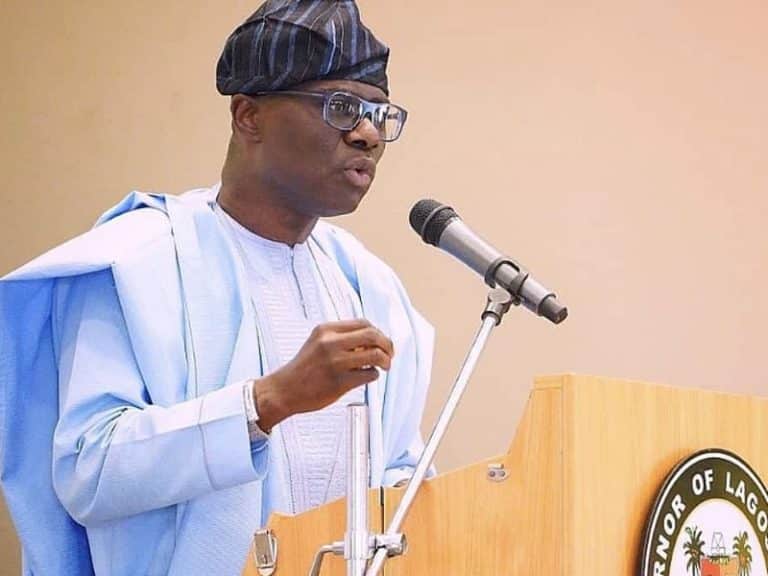
The Convener of Campaign for Dignity in Governance, Razaq Olokoba has applauded Lagos State Governor, Babajide Sanwo-Olu for accelerating development in education, environment, Infrastructure, transportation, and security in Lagos State since assuming office.
Olokoba, made this known while x-raying the achievement of Governor Sanwo-Olu after 5 years in a office during an interview recently.
He stressed that “Lagosians are lucky to have Governor Sanwo-Olu as their governor”, describing him as “ intelligent and brilliant and a very smart politician”.
“Lagos occupies a significant place in over all landscape of Nigeria; it occupies a significant position in the economic landscape of Nigeria and it is only someone like him (Sanwo-Olu) can steer the ship.
“Sanwo-Olu has been a transformative force, particularly through the implementation of the EKOEXCEL, a basic education reform programme that is revolutionizing basic education in Lagos.
“This reform has not only revolutionised public primary education in Lagos but has also garnered national and international acclaim, serving as a model for other states.
“It is not an accident that governments the world over consider the security of life and property their number one responsibility. This is because in an atmosphere of insecurity, no meaningful development – social, political, and economic – can take place.
“It is on record that Lagos, Nigeria’s most populous state, and the economic nerve center has continued to be marked safe due largely to the state government’s proactive and prodigious investments in security architecture and gizmo, as well as her steadfast commitment to delivering a safer Lagos for the benefit of all,” He said.
On infrastructure, Olokoba said, ““We are particularly happy with the acquisition of Lagos rail projects and the compensation of 263 residents affected by the Red Rail Line project’s right of way.
“We further commended the governor over employment offers to many youths of Ikeja extraction, many of which were accommodated in the 51, 514 graduate applications for internship programme designed to expose interns to hands-on work experience”.
Olokoba urged continuous support for Sanwo-Olu’s administration from both Lagosians and the federal government, noting that if Lagos is mismanaged the entire country will be affected.
“It requires a lot to manage 25 million people living in Lagos, if not for someone like the current Lagos governor’s initiative which has further developed the state. This why we all need to give Governor Sanwo-Olu our support.
“Lagos must also be protected, we have to ensure a state like Lagos must complimented by the Federal government,“ Olokoba stated.
Shettima Declares Tinubu-Led Government Most Investor-Friendly in Nigeria’s History at 79th UNGA

Vice President Kashim Shettima has lauded the current administration under President Bola Ahmed Tinubu as the most investor-friendly in Nigeria’s history. Speaking at the 79th United Nations General Assembly (UNGA), Shettima announced that Nigeria had already secured $320 million in investment commitments from the U.S. Chamber of Commerce.
Among these commitments, the American International Development Finance Corporation pledged $200 million toward mortgage refinancing in Nigeria, $100 million was allocated to FCMB to finance small and medium enterprises (SMEs), and $20 million was dedicated to Robust International to boost Nigeria’s cashew nut processing industry.
During a U.S.-Nigeria executive business roundtable, Shettima promoted Nigeria as a prime destination for foreign investment, citing recent economic reforms such as the removal of fuel subsidies and the unification of the foreign exchange market. He urged investors to trust the new economic direction set by President Tinubu’s administration.
The Nigerian delegation at the event included key ministers across various sectors, all of whom were present to emphasize the country’s commitment to fostering sustainable growth and international collaboration. Vice President Shettima is also set to deliver Nigeria’s national statement at the General Debate of the UNGA.
Oil Industry Mafia Stronger Than Drug Cartels, Says Dangote

Aliko Dangote, Africa’s richest man and owner of the Dangote Refinery, has revealed some of the major obstacles in Nigeria’s oil industry, pointing to the powerful control exerted by cartels. In a recent interview with Bloomberg, Dangote likened the oil mafia’s influence to being even greater than that of drug cartels.
“I never knew that the oil industry mafia is stronger than the drug cartel; it’s a big cartel,” Dangote remarked, emphasizing how these groups manipulate fuel prices to protect their own interests and block competition.
However, Dangote expressed confidence that his refinery could outsmart these cartels due to its ability to operate in local currency (naira), an advantage the cartels lack.
In related news, the Federal Government and Dangote Refinery have finalized a deal to supply 12 million barrels of crude oil to the facility in October. This agreement is part of the “Crude Oil for Naira” initiative, a partnership designed to enable local processing of crude oil into petrol, diesel, and jet fuel.
Dangote Urges Nigerian Government to Remove Fuel Subsidy for Economic Growth

Aliko Dangote, President and CEO of the Dangote Group, has called for the removal of fuel subsidies in Nigeria. Speaking during a 26-minute interview with Bloomberg Television in New York, Dangote emphasized that eliminating the subsidy would help determine the country’s actual petrol consumption and reduce financial waste.
Dangote, who owns two oil blocks expected to begin production next month, stated that fuel production from his $20 billion Lagos refinery would ease pressure on the naira by reducing reliance on petrol imports. He further explained that removing the subsidy would ensure transparency in fuel distribution and help the government save significant resources.
He also highlighted that while the refinery aims to be profitable, the decision to remove subsidies rests with the government, which needs to balance fiscal policies for the greater good.
“It’s time for the subsidy to go,” Dangote concluded, pointing to the potential benefits for the Nigerian economy.
FG Approves National Citizens Value Brigade for Schools to Promote Moral Values

The Federal Government has approved the establishment of the National Citizens Value Brigade in primary and secondary schools nationwide, aimed at addressing the decline of moral values among the youth. Announced by the Minister of Information and National Orientation, Mohammed Idris, after the Federal Executive Council (FEC) meeting, the initiative will foster a culture of values and instill discipline in younger generations.
Additionally, a national value charter will be integrated into school curricula, with a focus on civic education. Government appointees will also undergo training on national values and symbols. The new curriculum, designed to enhance knowledge, skills, and values, will be implemented from October 2024.
The Minister of Education, Prof. Tahir Mamman, also revealed plans for a new Senate building at the University of Ibadan and discussed the approval of funds for National Examinations Council (NECO) examinations.