Nigerian Cargo Rejections Abroad: Experts Identify Key Causes

LAGOS – The frequent rejection of Nigerian cargo in international markets is primarily due to the lack of goods integrity and exporters’ failure to adhere to best practices throughout the intermodal supply chain. This was the consensus at the fourth CHINET Aviacargo Conference held in Lagos, themed ‘e-Commerce and the Future of Air Cargo in Africa: The Building Blocks.’

Industry leaders in aviation, cargo business, and insurance expressed concerns over Nigeria’s unpreparedness to compete effectively in the global air cargo sector. Despite possessing raw materials, the country has allowed foreign companies to dominate air and water transport, thereby losing control of market dynamics.

Mrs. Nkechi Onyenso, Managing Director of Pathfinders International Limited, emphasized that ensuring cargo integrity requires more than just safe and timely delivery; it involves maintaining a transparent and honest supply chain. She identified poor packaging, inadequate documentation, lack of incident reporting, and insecure transportation as major issues hindering Nigerian cargo exports.

Onyenso highlighted the critical role of proper packaging in protecting goods from physical damage, contamination, theft, and tampering, while also facilitating compliance with international regulations. She stressed that maintaining thorough documentation and implementing secure transportation practices are essential for building trust and confidence in Nigeria’s logistics sector.

She also pointed out the importance of a clear policy framework, transparent procedures, high professionalism, and robust internal audits in guaranteeing cargo integrity. According to her, these measures are not just about compliance but are strategic imperatives to protect businesses from financial losses, reputational damage, and legal liabilities.

Additionally, Mr. Olusegun Ayo Omosehin, Commissioner for the National Insurance Commission (NAICOM), dismissed claims that Nigerian insurance companies lack the capacity to cover aviation-related risks. He assured stakeholders that Nigerian insurers, supported by global re-insurance practices, are fully capable of underwriting all aspects of the aviation industry, including cargo and aircraft acquisition.

Dollar to Naira Exchange Rate in Black Market on August 24, 2024

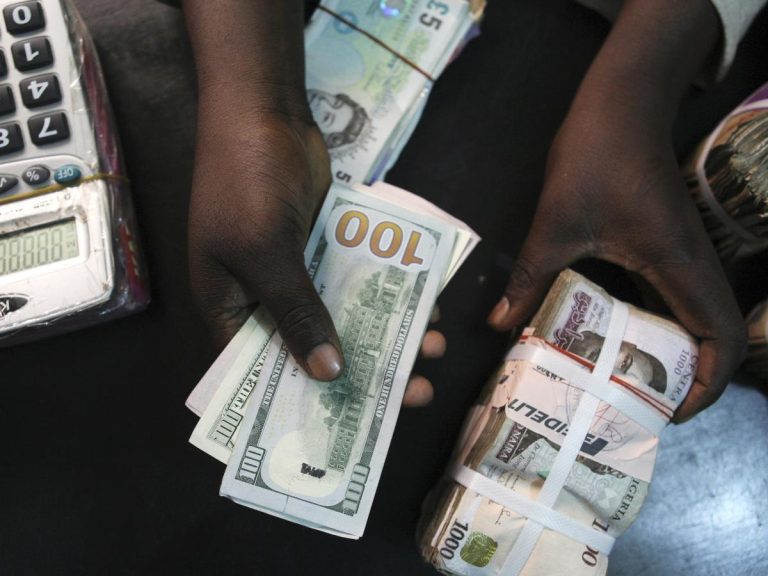
The exchange rate for the dollar to naira in the black market (also known as the parallel market) is a crucial piece of information for those looking to convert currency outside of official channels. On Friday, August 23, 2024, in Lagos, black market traders were buying dollars at N1610 and selling at N1615, according to sources from the Bureau De Change (BDC).

It’s important to note that the Central Bank of Nigeria (CBN) does not officially recognize the parallel market and advises individuals seeking foreign exchange to approach their respective banks for transactions.

Black Market Rates:

  • Buying Rate: N1610
  • Selling Rate: N1615

CBN Official Rates:

  • Buying Rate: N1591
  • Selling Rate: N1592

Please be aware that the rates at which you buy or sell forex may vary from those mentioned here, as market conditions can fluctuate.

NNPC’s Revenue from Crude Oil Sales in 2023

The Nigerian National Petroleum Company (NNPC) Limited has reported a significant increase in revenue from crude oil sales in 2023, totaling ₦14.07 trillion. This represents a staggering 298.7% increase from the ₦3.52 trillion generated in 2022, as disclosed in its Audited Financial Statements (AFS) for the fiscal year ending December 31, 2023.

Additionally, NNPC reported ₦7.14 trillion in revenue from petroleum product sales in 2023, marking a 58.74% rise from the ₦4.5 trillion earned in 2022. Revenue from natural gas sales also saw impressive growth, reaching ₦2.3 trillion, a 237.31% increase compared to the ₦683 billion recorded in 2022.

In a noteworthy development, the NNPC revealed that the country earned ₦94 million from power sales in 2023, a significant improvement from zero revenue in the previous year. Revenue from services also surged, reaching ₦464.94 billion, up 362.5% from the ₦100.5 billion earned in 2022.

Dollar to Naira Exchange Rate in Black Market on August 24, 2024

The exchange rate for the dollar to naira in the black market (also known as the parallel market) is a crucial piece of information for those looking to convert currency outside of official channels. On Friday, August 23, 2024, in Lagos, black market traders were buying dollars at N1610 and selling at N1615, according to sources from the Bureau De Change (BDC).

It’s important to note that the Central Bank of Nigeria (CBN) does not officially recognize the parallel market and advises individuals seeking foreign exchange to approach their respective banks for transactions.

Black Market Rates:

  • Buying Rate: N1610
  • Selling Rate: N1615

CBN Official Rates:

  • Buying Rate: N1591
  • Selling Rate: N1592

Please be aware that the rates at which you buy or sell forex may vary from those mentioned here, as market conditions can fluctuate.

NNPC’s Revenue from Crude Oil Sales in 2023

The Nigerian National Petroleum Company (NNPC) Limited has reported a significant increase in revenue from crude oil sales in 2023, totaling ₦14.07 trillion. This represents a staggering 298.7% increase from the ₦3.52 trillion generated in 2022, as disclosed in its Audited Financial Statements (AFS) for the fiscal year ending December 31, 2023.

Additionally, NNPC reported ₦7.14 trillion in revenue from petroleum product sales in 2023, marking a 58.74% rise from the ₦4.5 trillion earned in 2022. Revenue from natural gas sales also saw impressive growth, reaching ₦2.3 trillion, a 237.31% increase compared to the ₦683 billion recorded in 2022.

In a noteworthy development, the NNPC revealed that the country earned ₦94 million from power sales in 2023, a significant improvement from zero revenue in the previous year. Revenue from services also surged, reaching ₦464.94 billion, up 362.5% from the ₦100.5 billion earned in 2022.

Clark Urges Tinubu to Declare State of Emergency on Food Crisis

Chief Edwin Clark, former Federal Commissioner for Information and South-South Leader, has called on President Bola Tinubu to urgently declare a state of emergency on food security in Nigeria. Speaking at his Asokoro residence in Abuja, Clark emphasized the growing hunger and anger among Nigerians, urging immediate government action.

During a visit from the President of Host Communities of Nigeria Producing Oil and Gas (HOSTCOM), High Chief Benjamin Tamaranebi, Clark highlighted the dire situation facing the country, noting that citizens have the right to protest against the harsh economic conditions. He mentioned that while Tinubu is not to blame for the removal of fuel subsidies, the government must find effective ways to alleviate poverty and reduce the suffering caused by the decision.

Clark also criticized the poor management and leadership that have plagued Nigeria’s oil sector, making the Petroleum Industry Act (PIA) ineffective two years after its passage. He urged the government to ensure the proper functioning of the nation’s refineries and to address the ongoing fuel scarcity, which has been exacerbated by the alleged refusal of International Oil Companies (IOCs) to supply crude oil to the Dangote Refinery.

HOSTCOM President, High Chief Benjamin Tamaranebi, echoed these concerns, calling for the immediate repair and optimal functioning of the Port Harcourt, Warri, and Kaduna refineries. He also urged the federal government to compel IOCs to sell crude oil to local refineries in Naira, which would reduce the reliance on imported refined petroleum products and help lower the cost of petrol and other essential goods.

Urban Farming: A Lifeline for Nigeria’s Food Crisis

As Nigeria grapples with severe food scarcity, the need for innovative solutions to boost food production has become more urgent than ever. With pervasive challenges such as insecurity, inflation, and a growing population, traditional farming methods are struggling to meet the nation’s needs. However, a new approach—urban farming—offers a glimmer of hope.

First Lady Mrs. Tinubu has taken a bold step by introducing urban farming in the nation’s capital, encouraging city dwellers to cultivate their own food. This initiative mirrors successful strategies in countries like India and China, where urban farming has transformed them from food-deficit to food-surplus nations. Mrs. Tinubu’s efforts could potentially revolutionize Nigeria’s approach to food security, providing a sustainable solution to a crisis that threatens millions.

With rural farms increasingly abandoned due to violence and other factors, urban and suburban Nigerians must step up to ensure the nation’s food supply. The shift towards urban farming could not only alleviate the immediate crisis but also set Nigeria on a path to long-term food sufficiency.

12 Governors Hire Over 4,800 Aides Amid Rising State Debts

Despite ongoing calls to reduce governance costs and limit borrowing, 12 state governors have collectively appointed more than 4,835 aides since taking office in 2023, Saturday PUNCH reports.

The 1999 Constitution allows governors to appoint various aides, including Special Assistants, Special Advisers, and others, to help in their duties. However, some governors have significantly increased their number of aides, contributing to concerns about excessive spending.

Among the most notable, Kogi State Governor Usman Ododo appointed 170 aides in May 2023, followed by Yobe State Governor Mai Mala Buni, who appointed 24 aides around the same time. The trend continued with Adamawa, Kano, and Plateau States, among others, making similar appointments.

This increase in the number of aides comes as these states face rising domestic and external debts. For example, Niger State’s domestic debt grew from N121.95 billion to N139.80 billion in just six months under Governor Mohammed Bago, while Plateau State saw its debt rise from N157.62 billion to N173.93 billion in the same period under Governor Caleb Mutfwang.

The domestic and foreign debts of these states have surged, raising concerns about financial management and the sustainability of such appointments. Experts, including Olujide Oke, Chairman of the Nigerian Institute of Quantity Surveyors in Lagos, have emphasized the need to cut unnecessary spending and reduce the number of government appointees to ensure more funds are available for critical development projects.

Dubai Hospital’s Expansion to Lagos Promises Enhanced Healthcare Access, Say Stakeholders

The recent opening of the American Hospital Dubai Representative Office in Lagos has been hailed by stakeholders as a significant step towards improving healthcare access for Nigerians, potentially reducing the need for foreign medical trips.

At the unveiling of the state-of-the-art facility in Victoria Island, Lagos, key figures in the healthcare sector emphasized that the new office would connect Nigerian patients with world-class care, minimizing the burden of medical tourism. Mahmoud Harbaji, Chairman of American Hospital Dubai-Nigeria Limited, highlighted the importance of this initiative, noting that it would serve as a vital link between the Dubai-based hospital and local communities in Nigeria.

The launch event, attended by prominent government officials, embassy staff, and traditional leaders, underscored the collaborative efforts to strengthen Nigeria’s healthcare sector. Among those present were Lagos State Commissioner for Health, Prof. Akin Abayomi, and the Consul General of the United Arab Emirates in Nigeria, Dr. Abdullah Al-mandoos.

Prof. Abayomi, representing Governor Babajide Sanwo-Olu, praised the initiative as a positive first step in Lagos’ broader healthcare strategy, which includes plans to develop subspecialty hospitals for advanced medical treatments. He also acknowledged the significant growth in Lagos’ GDP and its impact on the state’s healthcare infrastructure.

The new office is expected to function as a gateway for Nigerian patients seeking medical care in Dubai, with plans already underway to open additional offices and a diagnostic center in Lagos. Stakeholders expressed optimism that this expansion would make accessing care in Dubai more seamless and convenient for Nigerians.

Africa CDC Urges Action as Mpox Cases Reach Over 21,000 Across 13 Countries

The Africa Centres for Disease Control and Prevention (Africa CDC) has alerted African Ministers of Health about the escalating Mpox outbreak, emphasizing the need for a comprehensive approach to effectively diagnose and manage the disease.

In a letter dated August 23, 2024, and signed by Dr. Jean Kaseya, Director-General of Africa CDC, the agency reported that from January 1 to August 23, 2024, there have been 21,466 Mpox cases (3,350 confirmed and 18,116 suspected) and 591 deaths across 13 African Union Member States. These countries include Burundi, Cameroon, the Central African Republic, Congo, Côte d’Ivoire, the Democratic Republic of Congo, Gabon, Liberia, Kenya, Nigeria, Rwanda, South Africa, and Uganda.

Dr. Kaseya stressed the need for a holistic approach to diagnosing and managing Mpox, noting that relying solely on laboratory tests is insufficient. He pointed out challenges such as limited domestic resources, low vaccine approval in African countries, and the risk of Africa being overlooked in the global distribution of vaccines and medical supplies.

Africa CDC is collaborating with AU Member States, the World Health Organization, and other partners to enhance preparedness and response efforts. The letter also highlighted the threat of cross-border virus transmission and the possibility of travel restrictions if the outbreak is not adequately addressed.

Tinubu Swears in Justice Kekere-Ekun as Acting Chief Justice of Nigeria, Emphasizes Judicial Integrity

President Bola Ahmed Tinubu administered the oath of office to Justice Kudirat Kekere-Ekun as the acting Chief Justice of Nigeria (CJN) on Friday, pending Senate confirmation. The ceremony, held at the Council Chamber of the State House in Abuja, marks the swearing-in of Nigeria’s 23rd Chief Justice and its second female to hold the position.

In a statement by the Special Adviser on Media and Publicity, Ajuri Ngelale, President Tinubu called on the new acting CJN to uphold the independence of the judiciary and promote justice. He underscored the importance of integrity, discipline, and transparency within the judicial system.

Tinubu commended Justice Kekere-Ekun for her outstanding reputation and career, highlighting her rise from magistrate to Supreme Court justice as a testament to her dedication and excellence. He expressed confidence in her ability to inspire young women and contribute significantly to the judiciary’s evolution.

Following her swearing-in, Justice Kekere-Ekun pledged to improve the judiciary’s reputation and public confidence, stressing the need for collective effort in driving necessary reforms.

The event was attended by key figures including Senate President Godswill Akpabio, former Chief Justices, Supreme Court justices, and members of the Federal Executive Council. Justice Kekere-Ekun’s family, led by her husband, Mr. Akin Kekere-Ekun, was also present.

Top 5 Countries with the Most Churches: Nigeria’s Surprising Rank

Christianity, one of the world’s largest religions, boasts a vast number of churches across the globe. While certain countries stand out for their high concentration of churches, Nigeria’s position on this list might surprise many.

Here are the top five countries with the most churches in the world:

  • United States
    The United States leads the world with an estimated 350,000 to 400,000 churches. Despite not all churches being packed every Sunday, this is a significant number, reflecting the deep-rooted Christian culture in the country.
  • Brazil
    Brazil is home to over 124,529 religious institutions, with more than half being Pentecostal or neo-Pentecostal churches. The number of official places of worship for these denominations has quadrupled over the past two decades.
  • Italy
    Italy, with its rich Catholic heritage, has over 20,000 churches, though some estimates suggest the number could be as high as 65,000. Vatican City, located in Rome, is particularly notable, housing about 1,700 churches, making it the country with the most churches per capita.
  • Spain
    Spain’s strong Catholic tradition is evident in its approximately 23,000 parishes and 712 monasteries. Many towns and cities across Spain have their own parishes, contributing to the vast number of churches in the country.
  • Nigeria
    Nigeria, with a population exceeding 206 million, has an estimated 16,300 churches. This equates to roughly one church for every 3.6 million people. Despite its large population, Nigeria ranks among the top countries with the most churches, reflecting the significant presence of Christianity within the nation.

While the number of churches in a country can be influenced by its population size, Nigeria’s position among the top five countries with the most churches underscores the prominent role of Christianity in its society.

NCC Seizes ₦50M Worth of Pirated Books in Lagos, Arrests Shop Owners in Major Raid

By: News Agency of Nigeria

The Nigerian Copyright Commission (NCC) has confiscated suspected pirated books valued at ₦50 million during a raid in the Yaba area of Lagos State.

The operation, led by Charles Amudipe, Deputy Director of Operations and Head of Operations at the NCC Lagos office, targeted the Yaba Book Market. The raid resulted in the seizure of pirated materials from five bookshops and three warehouses, along with the arrest of the shop owners involved.

Amudipe emphasized that the NCC’s anti-piracy action serves as a strong warning to the public, particularly booksellers, schools, and printers, that the commission will not tolerate any form of piracy. “The anti-piracy raid is to send a signal to the public that the commission has upscaled its enforcement activities,” he said.

He also highlighted the growing issue of pirated books being directly sold to schools and warned that any school found participating in such activities would be treated as a collaborator in piracy.

The NCC has mandated all printers, booksellers, and schools dealing in books to maintain proper documentation and receipts as proof of purchase from legitimate sources. Amudipe warned that failure to adhere to these regulations would result in severe penalties under the copyright act.