Falana Threatens Legal Action Against Senators Over ₦21 Million Monthly Allowance

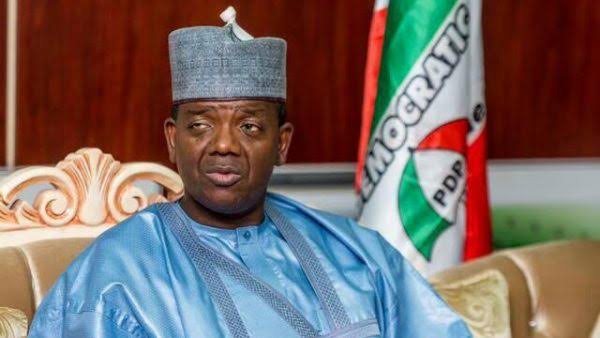
Human rights lawyer and Senior Advocate of Nigeria (SAN), Femi Falana, has issued a warning to the National Assembly regarding the recent disclosure that Nigerian Senators receive a monthly “running cost” allowance of ₦21 million. The increase from the previous ₦14 million has been labeled by Falana as both “illegal and contemptuous.”

Falana referred to a 2021 Federal High Court ruling by Justice Chuka Obiozor, which established that only the Revenue Mobilisation, Allocation, and Fiscal Commission (RMAFC) is authorized to determine the salaries and allowances of federal legislators. He condemned the National Assembly’s unilateral decision to increase these payments, highlighting it as a clear violation of the court’s ruling.

He also pointed out the discrepancies between these payments and the 2024 Appropriation Act, which makes no provision for such high running costs. Falana stressed that this move worsens economic inequality, particularly after the enactment of the Minimum Wage Act, which sets the minimum wage for workers at ₦70,000.

Falana has threatened to pursue legal action if the National Assembly fails to comply with the court’s decision and adjust the Senators’ remuneration to reflect the country’s legal and economic realities. He emphasized that no legislator is above the law and is prepared to initiate contempt proceedings if necessary.

Belt and Road cooperation brings tangible benefits to Panama

By Shi Yuanhao, Song Yiran, Chen Yiming, People’s Daily

On the vast Pacific Ocean, container ship Jasmine owned by China’s COSCO Shipping Lines was braving the winds and waves.

Upon arriving in Panama city, the ship slowly docked at the Port of Colon, close to the terminus of the Panama Canal on the shores of the Atlantic Ocean. 

There, the containers carried by the ship were transferred to an overseas warehouse built by China COSCO Shipping Corporation Limited (hereafter referred to as “China COSCO Shipping”), the parent company of COSCO Shipping Lines, and then distributed to merchants in Latin America and the Caribbean before reaching hundreds of thousands of consumers in the region.

This full-process comprehensive logistics service developed by China COSCO Shipping combines shipping, warehousing and customs clearance. It has made significant contributions to Panama’s employment and shipping industry.

The Colon Free Zone (CFZ) in Panama, one of the world’s busiest FTZs, is located at the Atlantic gateway to the Panama Canal. It boasts an advantageous maritime location and many tax incentives. Re-export trade is its core business.

In October 2020, China COSCO Shipping set up an overseas warehouse in CFZ, covering more than 20,000 square meters, to better leverage the CFZ’s geographical advantage and its shipping line strengths, in response to the growing needs of Chinese companies operating in Latin America.

Wang Zhen, deputy general manager of COSCO Shipping Lines (Panama) Inc., said that the overseas warehouse not only helps remove logistics bottlenecks in Latin America, but reduces overall transportation costs and makes industrial and supply chains stable and unimpeded.

According to Wang, Cargos are kept in the warehouse for quick dispatch and delivery to buyers from Latin America and the Caribbean.

“Cargo traders had to invest a large amount of money in advance, which could only be regained once all the goods were sold. Prolonged shipping time could inevitably lead to significant financial strain,” said Guo Jialun, logistics manager of COSCO Shipping Lines (Panama) Inc.

By reducing delivery times, the warehouse has helped relieve cash flow pressures and has received high appraisals from buyers in Latin America and the Caribbean, Guo added.

“I feel a strong sense of satisfaction every time I think about how we are moving these cargos to other countries and ensuring their safe and efficient delivery to businesses and consumers,” said warehouse supervisor Carlos Bandini of COSCO Shipping Lines (Panama) Inc.

Bandini has been working at the warehouse for more than two years. “The warehouse can secure punctual delivery of goods and achieve considerable cost reductions by implementing streamlined management techniques and adopting the latest technologies,” said Bandini.

China COSCO Shipping has employed a number of local workers at its office and terminals in Panama city. The overseas warehouse in the CFZ alone has created nearly 100 jobs for local residents.

The company is an active supporter of the development of Panama’s shipping industry. It has offered different types of vessel console simulators for local maritime colleges, and worked with these colleges and relevant organizations to provide internships for students.

On the campus of International Maritime University of Panama, there is a building donated by China COSCO Shipping. The university’s simulator and application technology center is also equipped with devices aided by the company.

Panama’s connectivity to the rest of the world is the country’s core competitiveness, said Giovanni Bruno Ferrari, general manager of the CFZ. 

“More and more Chinese companies are doing business in Panama, which is further enhancing such competitiveness,” said Ferrari.

According to statistics from the Panama Canal Authority, in the fiscal year of 2023, the Panama Canal saw more than 25 million tons of cargo originating from China and over 39 million tons destined for China, totaling more than 64 million tons, which account for a substantial 22.7 percent of the canal’s total traffic of the year.

Ferrari said China has long been the largest commodity supplier of the CFZ and the second-largest user of the Panama Canal. The vast amount of Chinese commodities shipped to Latin America and the Caribbean via the CFZ not only facilitates the development of the CFZ itself, but also plays an important role in maintaining unimpeded global trade and stabilizing the global supply chain.

Panama is the first Latin American country to sign a memorandum of understanding with China on the Belt and Road Initiative (BRI) cooperation. The two countries have agreed to take the opportunity of aligning the BRI with the National Logistics Strategy of Panama 2030, to strive for more highlights of bilateral cooperation.

Panamanian economist Eddie Tapiero said that Panama, as an international shipping center and regional aviation, logistic and financial hubs, enjoys natural advantages in Belt and Road cooperation. The country will leverage its geographical advantage and play a positive role in deepening Latin America-China cooperation, Tapiero added.

“Belt and Road cooperation has brought tangible benefits to Panama,” said Rogelio Paredes, former minister of Housing and Territorial Planning in Panama. The global connectivity network built by the BRI has significantly promoted global trade, making the geographical advantage of Panama even more prominent, he noted.

Highway-railway bridge in China Jiangxi boosts regional development


By Li Xinping, People’s Daily

In the first six months of this year, fixed-asset investment in China’s railway sector reached a
record high. The investment has fully leveraged the advantages of the railway industry’s long
supply chain, wide-ranging impact, and strong driving effects.
A railway project under construction today well explains the multiplier effect of this investment.
Standing on top of the 141-meter-high main tower G32 of the main bridge that spans the west
tributary of the Ganjiang River, a part of the Yangzizhou Ganjiang Highway-Railway Bridge, one
can overlook the sparkling Ganjiang River with cargo ships shuttling back and forth.
Factories, high-rise buildings, and vast fields in the distance are all within sight. Up close,
construction workers on the bridge are busy, many of whom come from counties and townships
nearby.
The Yangzizhou Ganjiang Highway-Railway Bridge is the controlling project of the entire route of
the Nanchang-Jiujiang high-speed railway, while the latter remains an important part of the
Beijing-Hong Kong high-speed railway, connecting the north and south, and integrating the east
and west.
Upon completion, the Nanchang-Jiujiang high-speed railway, will be crucial for the high-quality
development of the Yangtze River Economic Belt and the social and economic development along
the rail.
The driving force of the bridge has already become evident as the project commenced.
Let’s first look at the investment stimulation. The Nanchang-Jiujiang high-speed railway,
connecting Nanchang and Jiujiang in east China’s Jiangxi province, has drawn a total investment
of 32.41 billion yuan ($4.51 billion). The investment in the main bridge that spans the west
tributary of the Ganjiang River alone was nearly 1.08 billion yuan. Since the construction began,
the purchases of local materials have added up to 13.99 million yuan, effectively driving
procurement demand.
Xia Xiaoren, head of the Yangzizhou Ganjiang Highway-Railway Bridge with Nanchang-Jiujiang
Intercity Railway Co. Ltd., said that apart from purchasing local materials such as stone, sand,
steel bars, and cement, the company also leased machinery and vehicles from local providers. The
project has created job opportunities for local people and cultivated a group of skilled personnel in
project management, Xia added.
According to Xia, the construction of the Nanchang-Jiujiang high-speed railway, has provided
jobs to over 5,100 people, whose everyday needs have boosted the businesses of convenience
stores and restaurants in local villages.
The project has effectively increased the income of local residents and propelled economic
development, Xia noted.
Upon completion, the Yangzizhou Ganjiang Highway-Railway Bridge will set a number of world
records: it will become a highway-railway hybrid bridge with the most road lanes and largest
capacity in the world, the world’s largest-span highway-railway bridge, and the world’s first harp-
shaped cable-stayed bridge designed for trains running at 350 km/h.
New records mean new challenges. To address the difficulties, new technologies are
indispensable. Before the construction began, we virtually simulated the entire building process,

identified the engineering difficulties, improved design parameters, and streamlined the
construction process, said Zhong Lianggen, deputy head of the Yangzizhou Ganjiang Highway-
Railway Bridge with Nanchang-Jiujiang Intercity Railway Co. Ltd. The three-dimensional
visualization of the simulation was equivalent to an online rehearsal.

The construction site of the main tower G32 resembled a sophisticated intelligent factory, with 31
monitoring points in each cofferdam foundation pit. Real-time monitoring was carried out through
different methods such as radar water level gauges, strain gauges, and video surveillance.
Sensors provide real-time monitoring, and intelligent algorithms can automatically alert and
correct any deviations, achieving precise construction, said Zhong.
When the bridge is completed, its virtual version will also be delivered simultaneously for future
maintenance. The virtual bridge contains all the information during construction processes,
including design, material, plan, quality and examination, and will serve as the digital archive of
the physical bridge.
The Beijing-Hong Kong high-speed railway, along which the Nanchang-Jiujiang high-speed
railway is located, is an important vertical line of China’s high-speed rail network that centers
around eight main vertical lines linking the north and south and eight horizontal lines connecting
the east and west. It connects major city clusters such as Beijing-Tianjin-Hebei, the middle
reaches of the Yangtze River, and the Pearl River Delta.
The Beijing-Hong Kong high-speed railway will become another important route connecting the
north and south of China. It will not only facilitate travel and transportation, but provide more
capacity resources for railway freight transportation, said Xia.

China achieves remarkable results in protection, management of world natural heritage


By Yan Bing
The world’s cultural and natural heritage is an important outcome of the development of human
civilization and natural evolution.
The recently held 46th session of the World Heritage Committee of UNESCO included China’s
cultural heritage nomination: the Beijing Central Axis: A Building Ensemble Exhibiting the Ideal
Order of the Chinese Capital on the World Heritage List. It also included two natural heritage
nominations, respectively Badain Jaran Desert – Towers of Sand and Lakes, and Migratory Bird
Sanctuaries along the Coast of Yellow Sea-Bohai Gulf of China (Phase II).
To date, there are 59 sites of world heritage in China, including 15 natural sites and four mixed
cultural and natural sites. The country ranks first in the world in terms of the number of natural
heritage sites.
The inclusion exactly mirrored China’s unremitting efforts to protect and inherit cultural and
natural heritage, conserve ecology and build itself into a beautiful country.
For some time, China has placed unprecedented emphasis on ecological conservation. The nature
reserves system with national parks being the main component has been continuously improved,
providing a solid institutional guarantee for the protection of world natural heritage and mixed
cultural and natural heritage.
At present, China’s world natural heritage sites and mixed cultural and natural sites cover an area
of 79,000 square kilometers, including over 100 protected natural areas such as national parks,
nature reserves and various types of natural parks. The country has put important ecological
systems and natural heritage under effective protection, demonstrating to the world its relentless
efforts and responsibility in protecting the nature and human civilization.
In recent years, China has witnessed a large number of outstanding cases of ecological
conservation and management.
Huangshan Mountain in east China’s Anhui province has innovatively introduced a rotating
closure system and a paid rescue service. The Sichuan Giant Panda Sanctuaries in southwest
China’s Sichuan province has implemented a development model that calls for joint efforts from
relevant enterprises, cooperatives, farmers and research bases, actively exploring sustainable
development for communities within heritage sites.
Shandong provinces Taishan Mountain has built a comprehensive intelligent protection and
management system. Wuyi Mountain in southeast China’s Fujian province has established a two-
tier national park management system of management bureau – management station; The Three
Parallel Rivers of Yunnan Protected Areas has completely banned all prospecting and mining
rights within the heritage site and buffer zones.
Huanglong Scenic and Historic Interest Area in Sichuan province has made clonal propagation
research of endangered orchid species its flagship scientific project. Fanjing Mountain in
southwest China’s Guizhou province has implemented a conservation program for gray snub-
nosed monkeys.
According to the World Heritage Outlook released by the International Union for Conservation of
Nature in 2020, for 63 percent of all natural heritage sites and mixed cultural and natural sites in
the world, the conservation outlook is either good; or good with some concerns; while the
figure stands at 89 percent in China. For seven percent of these sites, the outlook is assessed as
critical, and none of them is in China.
This indicates that China has not only met international standards but also clearly surpassed the
global average in the conservation of natural heritage sites and mixed cultural and natural sites,
demonstrating outstanding conservation achievements.
With the development of China’s world heritage conservation, the country has not only gained
international recognition but also garnered high praise for its exemplary work in the protection,
restoration, and sustainable utilization of world heritage sites.
China has done a good job in the protection and restoration of habitats of endangered species.
The “100+ Biodiversity Positive Practices and Actions Around the World; of the 15th meeting of
the Conference of the Parties to the Convention on Biological Diversity included two projects in
China. One is the vegetation restoration in the habitat of gray snub-nosed monkeys and the
restoration of an ecological corridor in the Three Parallel Rivers of Yunnan Protected Areas. The
other one is the restoration project for the coastal wetland in Yancheng of east China’s Jiangsu
province, which is a part of the migratory bird sanctuaries along the coast of Yellow Sea-Bohai
Gulf of China.
Besides, the integrity and protection management of the Hoh Xil heritage site in northwest China’s
Qinghai province have been further strengthened and improved with the ongoing development of
the Sanjiangyuan National Park. The population of flagship species, including Tibetan antelopes
and wild yaks, keep growing, and their distribution areas are expanding.
China emphasizes both resource conservation and the development of people’s livelihoods in
protecting and utilizing its World Natural Heritage sites.
In sites like the karst landscapes in southern China, the Danxia landforms, and the Three Parallel
Rivers of Yunnan Protected Areas, governments at all levels have implemented various measures
tailored to local characteristics, such as franchising, profit sharing, ecological compensation, and
living subsidies, to benefit the local population.
These efforts have yielded remarkable achievements in striking a balance among world heritage
preservation, sustainable tourism, poverty alleviation, and the safeguarding of heritage values.
Some regions in China have received prestigious accolades, including the Shanghai Global Award
for Sustainable Development in Cities set by the United Nations Human Settlements Program and
the ;Best Tourism Villages; award set by the United Nations World Tourism Organization, among
others.
With the continuous progress made in China’s ecological conservation and the deepening practice
of the concept of building a community with a shared future for mankind in various fields, China
has achieved outstanding achievements in the conservation of world natural heritage.
World natural heritage sites and mixed natural and cultural heritage sites not only have become a
symbol of China’s ecological conservation efforts and a display of the beauty of China, but also
increasingly highlight China’s firm determination in and outstanding contributions to global
biodiversity conservation, sustainable development, and participation in global environmental
governance.

“Benjamin Kalu’s Threat to Abia Governor Sparks Social Media Fury”

Nigerians have reacted angrily to comments made by Benjamin Kalu, Deputy Speaker of the House of Representatives, who claimed that the APC would overtake Abia State from Governor Alex Otti in the 2027 elections. Kalu’s statements, both public and private, have been perceived as a direct challenge to Otti’s administration and have ignited a firestorm of criticism on social media.

Many critics argue that Kalu’s remarks are disrespectful and undermine the accomplishments of Governor Otti, who is seen as a high-performing leader. Social media users have called for Kalu’s defeat in future elections and have questioned his motives and political ambitions.

Amid the uproar, there is speculation that Otti might switch parties before the next election, driven by potential personal or political considerations. This scenario reflects the intense and often contentious nature of Nigerian politics, where strategic maneuvering and rivalries are prevalent as elections approach.

China upholds fairness, justice, promotes world multi-polarity

By He Yin, People’s Daily

In today’s turbulent world, power politics and bullying practices are causing severe harm, and the
international security landscape is fraught with chaos. As a responsible major country, China
always upholds fairness and justice.
Upholding fairness and justice has been a fine tradition and unwavering commitment of Chinese
diplomacy. From putting forth the Five Principles of Peaceful Coexistence with neighboring
countries over 70 years ago to actively advancing the building of a new type of international
relations and a community with a shared future for mankind in the new era, China has taken
concrete actions to contribute its strength in safeguarding world peace and promoting common
development.
In developing international relations, China is committed to equality among all countries, big or
small, and adheres to the principle of combining justice with interests while prioritizing justice.
China does not seek major-power competition or geopolitical spheres of influence. It does not
interfere in the internal affairs of other countries or force them to take sides.
Faced with surging hegemonism and power politics, China has always been defending justice. It
has resolutely pushed back against a handful of countries; attempts to dominate international
affairs, demanded increased representation and voice of developing countries in the global
governance system, supported addressing the historical injustices done to African countries as a
priority, and urged the lifting of all illegal unilateral sanctions. With these efforts, China has firmly
upheld the common and legitimate rights and interests of developing countries, and made the
international order more just and equitable.
Defending justice in defiance of hegemonic power is certainly also about safeguarding China's
sovereignty, national dignity and territorial integrity. In the face of external interference and
provocation, China fought back resolutely and forcefully. In response to various acts of unjustified
suppression, China took legitimate and reasonable countermeasures.
In international affairs, China consistently upholds fairness and justice while seeking solutions to
pressing issues, in an effort to promote equity and justice, and contribute to lasting peace and
stability.
On May 30, Chinese President Xi Jinping delivered a keynote speech at the opening ceremony of
the 10th Ministerial Conference of the China-Arab States Cooperation Forum. He stressed that
China firmly supports the establishment of an independent State of Palestine that enjoys full
sovereignty based on the 1967 borders and with East Jerusalem as its capital.
It supports Palestine's full membership in the UN, and supports a more broad-based,
authoritative and effective international peace conference.
Leaders of countries attending the opening ceremony highly appreciated China’s fair and just
stance on the Palestinian question. They expressed willingness to work closely with China to help
ease tensions and the humanitarian crisis in Gaza.
On July 4, Xi delivered a speech when attending the expanded meeting of the Shanghai
Cooperation Organization (SCO), or SCO+ in Astana, Kazakhstan, where he called for building a
common home of fairness and justice. The SCO Summit has issued the Astana Declaration and the
SCO initiative on world unity for justice, harmony and development. It was a strong message of
the new era, one that calls for solidarity, cooperation and justice rather than division,
confrontation, and hegemonism.

China unites with the Global South on the basis of equality, openness, transparency and
inclusiveness, strengthening the power of fairness and justice in the international community. As
an important member of the Global South, China forms its stance based on the merits of each issue
when handling international affairs, abides by the basic norms of international relations, and
safeguards the legitimate rights and interests of all countries, especially developing countries.
China supports deepening cooperation under the expanded BRICS and the SCO, and supports
Brazil and Peru in holding the G20 Leaders' Summit and the Asia-Pacific Economic Cooperation
(APEC) Economic Leaders' Meeting respectively to jointly create a shining "South moment" in
global governance.
China is accelerating the implementation of the eight initiatives to better support Global South
cooperation, working to ensure the success of the 2024 Summit of the Forum on China-Africa
Cooperation (FOCAC) that will be held in Beijing from September 4 to 6, developing the "five
cooperation frameworks" with Arab states, upgrading its relations with countries in Latin America
and the Caribbean, and deepening cooperation with Pacific island countries. China will stay
committed to the development and revitalization of the Global South.
Promoting world multipolarity and greater democracy in international relations is part and parcel
of upholding fairness and justice. China advocates an equal and orderly multipolar world, which
means every country can find its place in a multipolar system and play its due role pursuant to
international law.
China advocates that the multipolar world should be equal, that is, to insist on the equality of all
countries, oppose hegemony and power politics, oppose the monopoly of a few countries in
international affairs, and effectively promote greater democracy in international relations.
China believes that multipolarity should be a historical process in which countries choose
solidarity over division, communication over confrontation, cooperation over conflict, and win-
win results over lose-lose situations.
To achieve this goal, all countries should uphold the purposes and principles of the UN Charter,
safeguard the universally recognized basic norms governing international relations, and practice
genuine multilateralism.
No matter how the international landscape evolves, China always stands on the right side of
history and upholds fairness and justice. It will always be a firm builder of world peace, a
contributor to global development, and a defender of the international order.
China will continue to uphold fairness and justice, adhere to true multilateralism, safeguard the
authority and role of the UN, make the global governance architecture more balanced and
effective, and build an equal and orderly multipolar world.


Harris Leads Trump by 3 Points in Latest Polls

A recent nationwide poll conducted from August 14-16, 2024, shows Kamala Harris leading Donald Trump by 3 percentage points in the race for the U.S. presidency.

Poll Details:

  • Harris: 51%
  • Trump: 48%
  • Margin of Error: 2.1 percentage points

The poll, which surveyed approximately 3,300 registered voters, indicates a tight race, particularly in battleground states where both candidates are tied at 50%.

Context:

  • Election Date: November 5, 2024
  • Background: Following a poor performance by President Joe Biden in a televised debate with Trump, there was significant pressure from Democrats for Biden to withdraw from the presidential race. On July 21, Biden announced his decision to step down and support Kamala Harris as the Democratic nominee.
  • Current Candidates: Kamala Harris is the Democratic nominee, and Donald Trump is the Republican nominee.

Ukraine Targets Key Bridge in Kursk Region, Escalating Conflict

On August 18, 2024, Ukraine successfully struck and damaged a critical bridge over the Seym River in Russia’s Kursk region, leaving Russian forces potentially isolated from their supply lines. This action marks the third bridge targeted by Ukrainian forces in recent days.

Details of the Attack

  • Targeted Infrastructure: The damaged bridge, near the town of Glushkovo, was reportedly struck using US-made Himars rocket launchers, according to Russia’s foreign ministry. Satellite images confirm that the bridge has collapsed.
  • Russian Response: Russia’s Investigative Committee confirmed the damage and reported that the strike also impacted civilian infrastructure in Karyzh village.

Strategic Implications

  • Isolation of Russian Forces: Military analysts note that there were only three bridges in the area critical for supplying Russian troops. With the collapse of the last bridge, Russian forces defending south of the Seym River could be cut off from their supply lines, leading to potential isolation.
  • Russian Commentary: Russian war correspondents and military bloggers have indicated that the destruction of these bridges could precede a larger Ukrainian offensive to isolate the Glushkovsky district. Reports suggest that Ukrainian forces may be preparing for further advancements in the region.

Diplomatic and Military Reactions

  • Russian Diplomacy: Lithuanian diplomat Linas Linkevicius commented on the situation, suggesting that Russian conscripts are surrendering in large numbers and that the forces are “trapped.”
  • Ukrainian Goals: Ukrainian President Volodymyr Zelensky expressed intentions to establish a “buffer zone” in the aggressor’s territory to protect border regions from further Russian attacks. Ukrainian presidential adviser Mikhail Podolyak hinted that the operation might be aimed at prompting a fair negotiation process with Russia.

Future Prospects

The Ukrainian operation in the Kursk region signals a strategic shift, potentially leading to new phases in the conflict. The destruction of key infrastructure may set the stage for further military actions and diplomatic negotiations aimed at resolving the ongoing war.

Hope Beckons for Consumers as FCCPC Partners with EFCC for a Safer, More Transparent Market Environment

In a significant development for consumer protection in Nigeria, the Federal Competition and Consumer Protection Commission (FCCPC) and the Economic and Financial Crimes Commission (EFCC) have announced a strengthened partnership aimed at enhancing market transparency and consumer rights.

The New Alliance

The collaboration between the FCCPC and EFCC marks a strategic move to combat unfair practices and fraudulent activities in the market. The FCCPC, which oversees consumer protection, and the EFCC, known for its role in fighting economic and financial crimes, are joining forces to tackle issues such as misleading advertising, price gouging, and other forms of exploitation.

Expected Outcomes

This partnership is anticipated to:

  • Enhance Law Enforcement: Strengthen the enforcement of consumer protection laws and increase prosecution of violators.
  • Improve Response Times: Address delays in responding to consumer complaints.
  • Increase Penalties: Implement more significant penalties for businesses that engage in unfair practices.

Consumer protection advocates have expressed optimism about the partnership, seeing it as a potential game-changer in addressing long-standing challenges in the sector. Bamidele Ogunleye, a consumer rights activist, and Ngozi Adeyemi, a legal expert, both praised the collaboration, noting its potential to set new standards for consumer protection and accountability.

Economic Implications

Market analyst Chidi Nwosu highlighted the economic benefits of a well-protected consumer base, which is crucial for economic growth. The partnership is expected to foster a fair market environment, encouraging consumer confidence and driving economic activity.

Initiatives and Commitments

During a recent courtesy visit, FCCPC Executive Vice Chairman/CEO Mr. Tunji Bello and EFCC Executive Chairman Mr. Olanipekun Olukoyede discussed the increasing cases of arbitrary price hikes and the need for joint efforts to combat these issues. The FCCPC is also planning to engage with market leaders to address exploitative pricing practices.

Regulatory Actions

The FCCPC has already mandated that supermarkets visibly display product prices to enhance transparency and prevent consumers from being ambushed by unexpected costs at checkout. This is part of a broader initiative to ensure fair pricing and protect consumers from undue exploitation.

Looking Ahead

The partnership between the FCCPC and EFCC is set to bring about a more transparent and consumer-friendly market environment in Nigeria. With the combined efforts of these two agencies, consumers can expect better protection and fairer market practices, paving the way for a more equitable economic landscape.

Bank Recapitalisation: Unveiling Opportunities for Investors in a Volatile Economy

In a recent webinar hosted by Coronation Securities Limited, experts discussed the significance of bank recapitalisation and its potential to transform Nigeria’s banking sector amid economic fluctuations. The panel included prominent figures such as Okey Umeano (Chief Economist, Securities and Exchange Commission), Bolanle Adekoya (Partner, PwC), and Ayokunle Olubunmi (Financial Institutions Ratings, Agusto & Co.).

Capitalisation Mandates and Historical Context

Recapitalisation requires banks to bolster their capital reserves as a safeguard against financial instability. Historically, such mandates have led to substantial increases in capital, as seen in the 2005 directive which raised the minimum capital requirement from $2 billion to $50 billion. This initiative aims to ensure banks have adequate buffers to support a growing economy and maintain public confidence.

Current Capital Shortfalls and Opportunities

Nigerian banks are currently facing a significant capital shortfall, estimated at approximately N4.2 trillion, ranging from 35% to 90% of the new minimum capital requirements. Addressing this deficit is crucial for maintaining the sector’s role in economic growth and improving competitiveness with other African banks.

Strategies for Capitalisation

The Central Bank of Nigeria (CBN) has outlined several methods for raising capital:

  1. Public Offering (PO) and Follow-on Public Offering (FPO): Issuing new shares publicly can raise significant funds but may dilute existing shareholders’ ownership and incur additional costs.
  2. Private Placement: Selling shares to a select group of investors is faster but may lead to ownership dilution and potential disruption of corporate culture.
  3. Rights Issue: Allows existing shareholders to purchase additional shares at a discount, preserving their ownership stakes but relying on their willingness to invest further.
  4. Mergers and Acquisitions: Combining with or acquiring other banks can enhance capital and operational efficiency, though it requires careful planning and integration.
  5. Convertibles and Bonus Shares: Convertible securities offer flexibility but can lead to significant dilution. Bonus shares are not an approved method for meeting new capital requirements.

Advantages and Risks of Rights Issues

Rights issues are popular due to their lower cost and simplicity, targeting existing shareholders and preserving their ownership stakes. However, they may coincide with market uncertainty and potential volatility. Insufficient demand can lead to undersubscription and impact share prices negatively.

Regulatory Oversight

The Securities and Exchange Commission (SEC) and the Central Bank of Nigeria (CBN) oversee the recapitalisation process, ensuring regulatory compliance and protecting investor interests. The SEC has established frameworks to monitor and enforce rules during this period.

Impact on Banks and Investors

Recapitalisation strengthens banks’ financial foundations, enabling them to manage risks better, expand lending, and invest in new technologies. For investors, this presents opportunities for capital gains and stable dividend income. Coronation Securities offers platforms like Coronation Wealth to help investors capitalize on these opportunities, providing access to rights issues and public offerings.

Conclusion

Bank recapitalisation is a critical process for fortifying Nigeria’s banking sector and driving economic growth. Investors can benefit from participating in recapitalised banks, which are positioned for improved profitability and stability. As banks strengthen their financial bases, they offer promising prospects for both capital appreciation and income generation.