Black Market Dollar to Naira Exchange Rate for August 19, 2024

As of today, August 19, 2024, the black market exchange rate for the dollar to naira (Aboki FX) in Lagos is as follows:

  • Buying Rate: N1605 per dollar
  • Selling Rate: N1610 per dollar

These rates are sourced from Bureau De Change (BDC) operators. It is important to note that the Central Bank of Nigeria (CBN) does not officially recognize the parallel market and advises individuals seeking foreign exchange to approach their banks.

Official CBN Dollar to Naira Exchange Rate for August 19, 2024:

  • Buying Rate: N1584 per dollar
  • Selling Rate: N1585 per dollar

Please be aware that the actual rates for buying or selling forex may vary depending on the location and time of the transaction.

Inflation Update:

In related economic news, Nigeria’s food inflation rate decreased to 39.53% in July 2024 from 40.87% in June, according to the latest data from the National Bureau of Statistics (NBS). The reduction was driven by lower prices for food items such as garri, akpu (fufu), and milk. On a month-to-month basis, the food inflation rate in July was 2.47%, down from 2.55% in June.

How to reduce unhealthy eating habits 

Reducing unhealthy eating habits is crucial for maintaining good health and preventing chronic diseases. Here are some practical strategies to help you transition to healthier eating habits:

  1. Plan Your Meals Ahead of Time: Planning your meals for the week can help you avoid the temptation of fast food and unhealthy snacks. When you have a plan, you’re more likely to prepare balanced meals with the right nutrients, such as fruits, vegetables, whole grains, and lean proteins.
  2. Practice Mindful Eating: Focus on your food while eating, paying attention to its taste, texture, and aroma. This practice helps you recognize when you’re full, preventing overeating. Avoid distractions like TV or phones during meals to fully enjoy and appreciate your food.
  3. Choose Healthy Snacks: Replace unhealthy snacks like chips and candy with healthier options like fresh fruits, vegetables, nuts, and yogurt. Keeping healthy snacks accessible and portioned out can help you make better choices when hunger strikes.
  4. Stay Hydrated: Often, thirst is mistaken for hunger. Drinking plenty of water throughout the day can help prevent unnecessary snacking. Aim for at least 8 glasses of water daily. If plain water is unappealing, try adding fruit slices or herbs for a refreshing flavor.
  5. Control Portion Sizes: Eating large portions, even of healthy foods, can lead to weight gain. Use smaller plates and bowls to help control your portions. When dining out, consider sharing a meal or saving half for later to avoid overeating.
  6. Set a “Stop Eating” Time: Establish a cut-off time for eating each day, ideally 2-3 hours before bedtime. This can reduce late-night snacking, which often leads to unhealthy eating and poor digestion.

These tips will help you gradually reduce unhealthy eating habits and embrace a healthier lifestyle. Start by implementing one or two changes, and as they become routine, add more. Over time, these small adjustments can lead to significant improvements in your overall health and well-being.

We’ll create friendly environment for private investors, state economic boost — Aiyedatiwa

An Evening with the Governor,” Governor Lucky Aiyedatiwa of Ondo State reaffirmed his administration’s commitment to creating a favorable environment for private investors as a strategy to drive economic growth and development in the state. The engagement, held at the International Centre for Culture and Events in Akure, was organized by the group “Friends of Lucky” and aimed at strengthening partnerships between the government and private sector stakeholders.

Governor Aiyedatiwa emphasized that the private sector is not only essential for economic growth but also a crucial partner in effective governance. He assured the audience of the administration’s continued support for private investments, highlighting ongoing efforts to make Ondo State more business-friendly. This includes initiatives like the establishment of the Ondo State Investment and Development Promotion Agency (ONDIPA) to improve the ease of doing business.

Aiyedatiwa also acknowledged the late former Governor Rotimi Akeredolu’s role in laying the groundwork for many of these initiatives, particularly the Ondo-Linyi Industrial Hub at the Ore Industrial Park, a successful collaboration with China’s Linyi Province that has significantly boosted the state’s economy.

The governor expressed confidence in the state’s abundant resources, including fertile agricultural land, mineral wealth, and a dynamic youth population, which he believes will attract and sustain private investments. He assured potential investors of the state’s safety, peaceful environment, and streamlined business processes facilitated by dedicated agencies.

Guest speakers at the event, Dr. Abiola Oshodi and Chief Alex Ajipe, highlighted the importance of public-private partnerships in revitalizing industries and advancing the state’s economy. The event’s convener, Bankole Joseph Betiku, echoed these sentiments, emphasizing the role of the private sector in fostering sustainable economic growth and good governance in Ondo State. The event aimed to spark valuable collaborations and innovative solutions for the state’s future development.

Health benefits of fruits

The article by Olufunke Faluyi emphasizes the health benefits of fruits, particularly in reducing the risks of chronic diseases like heart disease, type 2 diabetes, and cancer. It also highlights the potential role of edible cassava in managing prostate enlargement, drawing from personal anecdotes and scientific insights.

Fruits are praised for their rich content of essential nutrients, antioxidants, and dietary fiber, contributing to overall health, weight management, and disease prevention. The article also touches on the importance of balanced fruit consumption, especially concerning fructose intake, and notes that while fruits are generally beneficial, those with specific dietary needs, such as diabetes or ketogenic diets, should be mindful of their choices.

Additionally, the article underscores the therapeutic potential of fruit peels, citing research on their anticancer properties due to their high antioxidant content and various bioactive compounds. Overall, the piece encourages a diet rich in fruits and other natural foods to promote wellness and prevent disease.

ECOWAS Takes Diplomatic Steps to Prevent Niger, Mali, and Burkina Faso from Exiting

The Economic Community of West African States (ECOWAS) Parliament is intensifying diplomatic efforts to dissuade Niger, Mali, and Burkina Faso from withdrawing from the regional bloc. This initiative is being led by Benjamin Kalu, the Deputy Speaker of Nigeria’s House of Representatives, who has emphasized the importance of maintaining unity within ECOWAS.

Key Developments:

  1. Parliamentary Diplomacy Initiated:
  • Details: ECOWAS has begun deploying diplomatic mechanisms, termed “parliamentary diplomacy,” to engage with the governments of Niger, Mali, and Burkina Faso. Letters have been sent to these nations, and parliamentary representatives are preparing to visit the countries to foster dialogue and encourage reintegration into ECOWAS.
  1. Financial Stability and Reform:
  • Details: Kalu assured that even if these countries proceed with their exit, ECOWAS’s financial stability would remain intact. The organization has multiple revenue streams, including the Community Levy and contributions from various development agencies. Additionally, ECOWAS is pushing for legislative reforms to enhance its independence and credibility on the international stage. These reforms would involve amending the protocols that established the ECOWAS Commission and Parliament to better reflect the current political landscape.
  1. Background Context:
  • Details: The efforts by ECOWAS to negotiate the return of these countries began after their military juntas announced their intention to withdraw from the regional body on January 28, 2024. Despite ECOWAS’s attempts to entice these nations back through sanctions relief and technical meetings, the response has been uncooperative so far.

These diplomatic endeavors by ECOWAS underscore the regional body’s commitment to maintaining cohesion and stability in West Africa, while also adapting to the evolving political dynamics in the region.

NDLEA Intercepts Cocaine and Other Drugs at Nigerian Airports and Ports

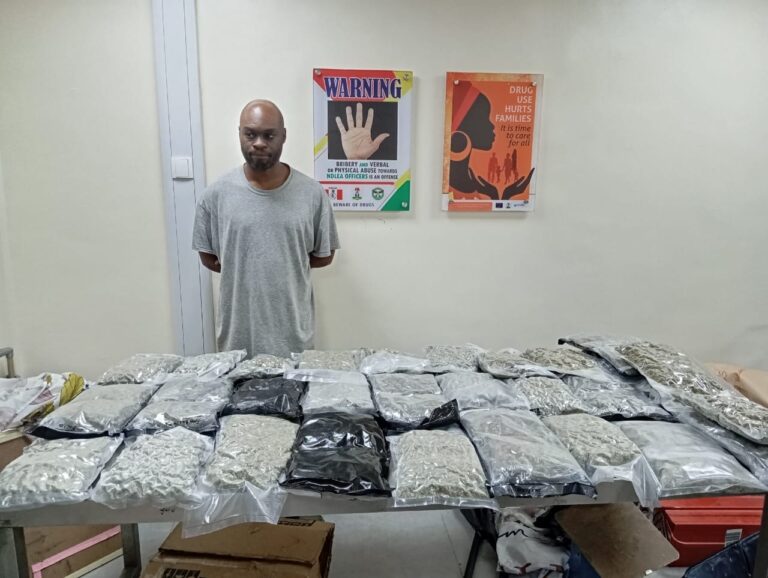
The National Drug Law Enforcement Agency (NDLEA) has made significant drug-related arrests and seizures in recent operations across Nigeria, targeting international drug traffickers and large shipments of illicit substances.

Key Arrests and Seizures:

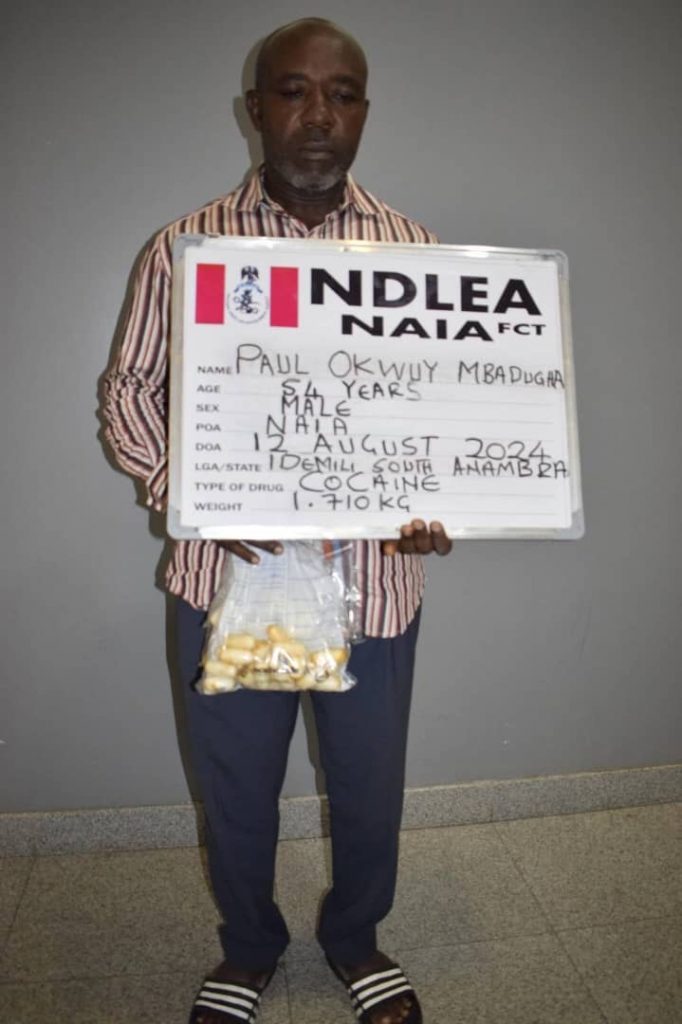
  1. Paul Okwuy Mbadugha Arrested:
  • Location: Nnamdi Azikiwe International Airport (NAIA), Abuja.
  • Details: The 54-year-old businessman, Paul Okwuy Mbadugha, was arrested after testing positive for ingesting cocaine. He excreted 88 wraps of cocaine, weighing 1.71 kg, over four days under observation. Mbadugha, bound for Vietnam via Qatar Airways, claimed he was offered $2,000 to deliver the cocaine.
  1. Drug Seizure in Lagos:
  • Location: Murtala Muhammed International Airport (MMIA), Lagos.
  • Details: NDLEA intercepted 800 grams of “Loud,” a synthetic strain of cannabis, hidden in noodles destined for Congo. A follow-up operation at Alaba International Market led to the arrest of Nnamani Sunday Sunny, the sender, who deals in GSM handsets.
  1. Large Consignment of Cannabis:
  • Location: Lagos Airport.
  • Details: NDLEA seized 65.80 kg of “Loud” cannabis concealed in six suitcases arriving from Canada on an Air France flight. Desalu Taophic Temitope, who transported the drugs, was arrested. He confessed that he was promised $10,000 for the successful delivery.
  1. Codeine Syrup Seizure:
  • Location: Port Harcourt Ports Complex, Onne, Rivers State.
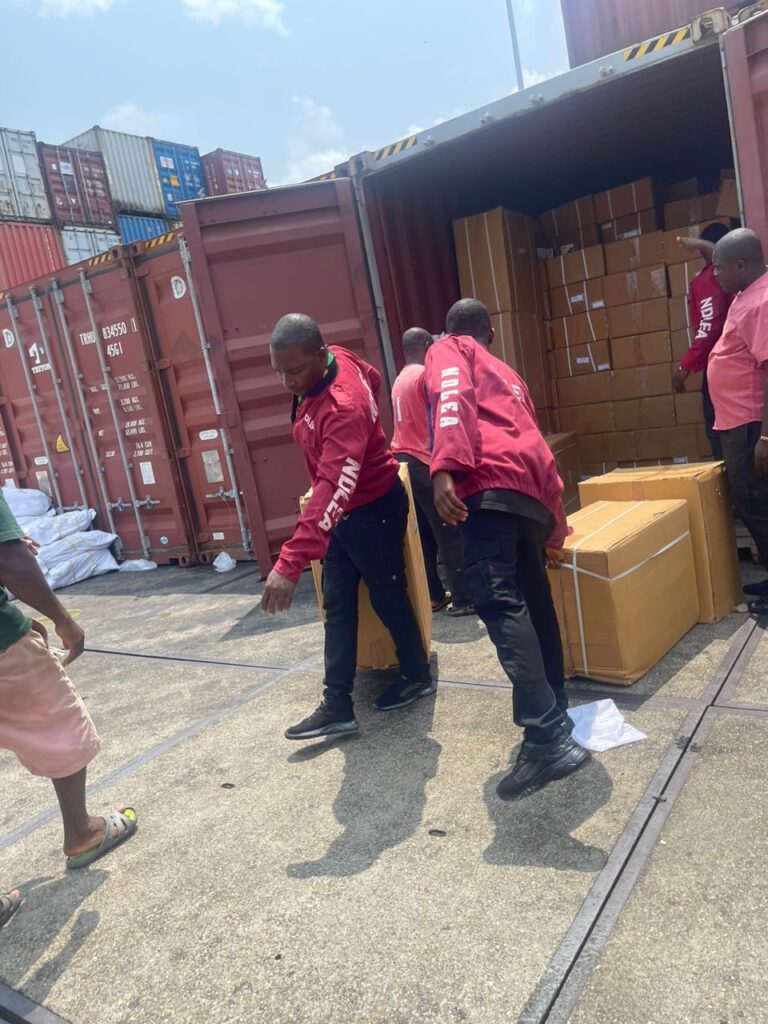
  • Details: NDLEA, in collaboration with Nigeria Customs, intercepted 892,400 bottles of codeine-based syrup, valued at over N6.2 billion, shipped from India. The bottles, packed in 5,337 cartons, were found in five containers.
  1. Cannabis Farm Raid:
  • Location: Ise-Ekiti, Ekiti State.
  • Details: A joint operation by NDLEA, Nigerian Army, and local security destroyed 21,800 kg of cannabis sativa spread over 20 hectares of farmland.
  1. Drug Interceptions Across Nigeria:
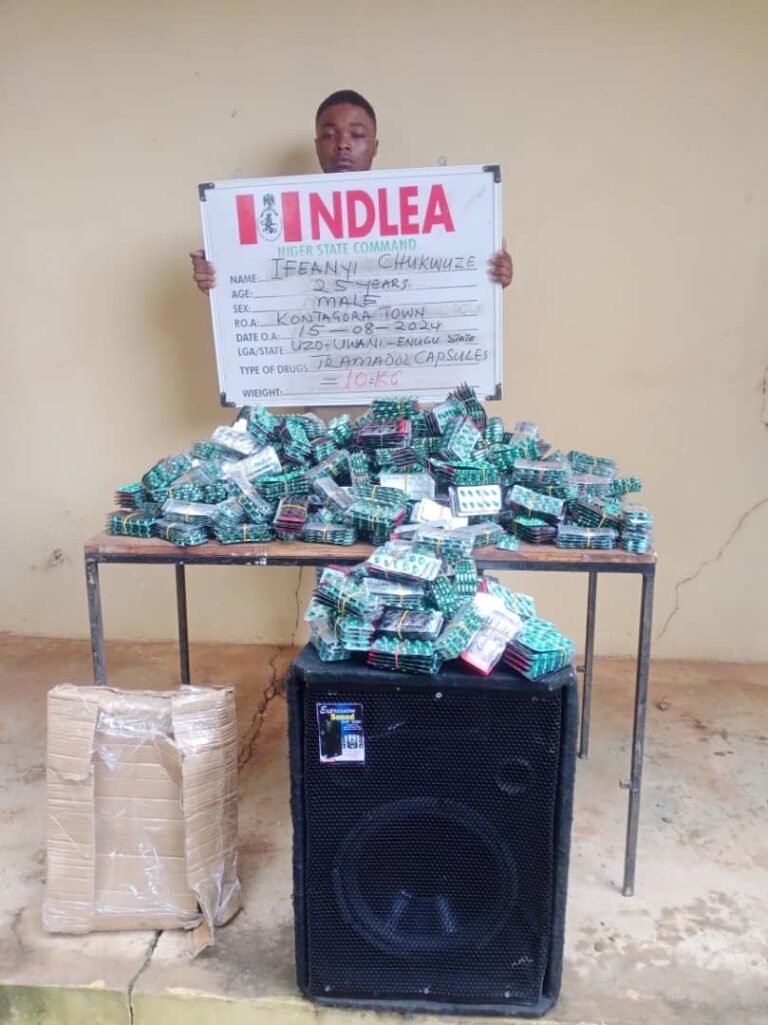
  • Locations: Kwali-Gwagwalada Expressway (Abuja), Kontagora (Niger State), and Lokoja (Kogi State).
  • Details: NDLEA officers seized 30,000 ampoules of pentazocine, arrested multiple suspects with large quantities of tramadol and pentazocine injections, and confiscated pills concealed in various items like loudspeakers.

These operations highlight NDLEA’s ongoing efforts to curb drug trafficking within and outside Nigeria, targeting both local distributors and international drug couriers. The agency continues to work in coordination with other security bodies to combat the spread of narcotics across the country

See pictures below:

Former Ogun State Governors Respond to Seized Presidential Jets Controversy

The seizure of three Nigerian presidential jets in Paris, including a recently purchased Airbus A330, has sparked reactions from two former Ogun State governors, Ibikunle Amosun and Gbenga Daniel. The jets were confiscated following a legal dispute involving Zhongfu International Investment Co. Ltd, a Chinese company whose contract was terminated by the Ogun State government in 2016.

Ibikunle Amosun’s Response:
Amosun, who served as Ogun State governor from 2011 to 2019, described the situation as a “Chinese against Chinese” dispute. He clarified that the controversy stemmed from a business rivalry between two Chinese companies over management rights to the Ogun Guangdong Free Trade Zone (OGFTZ). He emphasized that the dispute had little connection with either Ogun State or the Federal Government. Amosun reiterated that his administration acted based on information available at the time and denied any unlawful involvement.

Amosun urged the Nigerian government to treat Zhongfu International Investment Co. Ltd as an impostor, comparing the case to the P&ID scandal, and stressed his willingness to assist government agencies in preventing any scams against Nigeria.

Gbenga Daniel’s Response:
Gbenga Daniel, who governed Ogun State from 2003 to 2011, offered to help the federal government resolve the issue diplomatically. He stressed that the dispute was not about the establishment of the Free Trade Zone but rather the termination of a management contract. Daniel emphasized the ongoing importance of the Free Trade Zone to the local economy and warned against politicizing the situation.

Daniel also provided assurances that the project still benefits the community and called for accurate reporting and a focus on finding a productive solution that protects Nigeria’s interests.

Background:

The jets, including a Dassault Falcon 7X, a Boeing 737, and the newly acquired Airbus A330, were seized as part of a French court’s enforcement of a €74 million arbitral award to Zhongshan Fucheng, another Chinese company. The dispute highlights ongoing tensions over the management of the Free Trade Zone and raises concerns about Nigeria’s vulnerability to international legal actions.

Both former governors expressed their commitment to assisting the current administration in resolving the matter and protecting Nigeria’s assets.

Economic Challenges Cause 65% Drop in UK University Deposits by Nigerian Students

The financial strain in Nigeria has led to a significant 65% decrease in deposits made by Nigerian students for the upcoming academic session in UK universities, starting in September 2024, according to a report by the Financial Times of London.

This decline is mirrored by a 44% drop in payments from Indian students, another major group of international students in the UK. Overall, deposits from international students have decreased by 35% compared to August 2023, posing financial challenges for UK universities that heavily rely on international tuition fees.

Paul Kett, a senior education adviser at PwC UK, highlighted the variability in impact across institutions, depending on their market focus and attractiveness. Despite a slight recovery since a 57% drop in May, the number of international students applying to UK universities remains significantly lower than in recent years.

Education Secretary Bridget Phillipson emphasized the new Labour government’s commitment to welcoming international students, contrasting the approach with the previous Conservative administration’s efforts to reduce migration figures.

Meanwhile, smaller markets like Kenya and Nepal have shown increased demand, while the UK’s ongoing restrictions on family visas for graduate students continue to pose competitive challenges compared to other countries. The Office for Students has begun preparing for potential university insolvencies, as financial forecasts by universities remain overly optimistic about future growth in international student numbers.

Despite these challenges, recent data from the Central Bank of Nigeria showed that Nigerians spent $896.09 million on foreign education in the first half of 2023, with a significant portion directed to the UK. Foundation courses in the UK currently cost between £10,000 and £15,000, with additional yearly expenses of around £8,000 per student.

Ganduje Dismisses 2027 Presidential Campaign Poster as Fake News

Former Kano State Governor and current APC National Chairman, Abdullahi Ganduje, has addressed the circulation of a 2027 presidential campaign poster featuring him alongside Imo State Governor, Hope Uzodinma, as his running mate.

Ganduje, speaking through his Chief Press Secretary, Edwin Olofu, dismissed the poster as a malicious creation by mischief-makers, possibly linked to the Kwankwasiyya movement. He emphasized that the false campaign poster is intended to create discord between him and President Bola Tinubu.

The poster, which bore the slogan “For Nigerians, prosperity and human capital development,” was described by Ganduje as entirely fabricated. He reaffirmed his unwavering loyalty to President Tinubu and his commitment to supporting the President’s leadership and vision for Nigeria.

The APC urged the public to disregard the poster and refrain from spreading unverified information.

Unmasking the Maltese Cross of Corruption

By Arnold Owie

A national scandal has unfolded with the revelation of substandard petroleum products being imported into Nigeria, linked to a shadowy oil blending plant in Malta. Leaked documents and interviews expose a complex web of corruption involving NNPC personnel, oil traders, and terminal operators. Matrix Energy, owned by Abdulkabir Adisa Aliu, a member of the Presidential Economic Coordination Council (PECC), is at the center of this scandal. The company has been importing low-grade petroleum products from Russia, blending them in Malta, and selling them in Nigeria.

Aliu’s actions demonstrate a disregard for the Nigerian people’s welfare. Matrix Energy’s logistical infrastructure suggests a deliberate attempt to undermine local refinery efforts, ensuring continued importation of inferior fuel products. The allegations against Aliu are severe, including securing preferential access to crude oil cargoes and trading them through a UAE-based entity.

The Malta saga is a damning indictment of the entire system, with Farouk Ahmed and Mele Kyari facing scrutiny for their alleged complicity. The NNPC’s failure to curb substandard fuel imports is a testament to its incompetence or complicity, betraying public trust and national pride.

The exposé’s severity is heightened by Russia’s expulsion from the SWIFT global banking network, making oil and gas dealings between Nigerian entities and Russian refineries illicit. Shipping data reveals a disturbing trend: 15,000 tons of petroleum products were transloaded onto the ‘Matrix Triumph’ vessel on June 16 and discharged at Matrix Jetty in Warri on June 21 without rectification, implying toxic diesel is being sold to unsuspecting Nigerian consumers.

The House of Representatives’ visit to the Dangote Refinery on July 20, 2024, confirmed Matrix Energy’s importation of subpar diesel. Diesel samples from Matrix filling stations had a sulphur content exceeding 2,653ppm, far surpassing the 50ppm requirement. Aliko Dangote presented findings from an exhaustive analysis of diesel samples, revealing alarming sulphur content levels. The testing, conducted at Dangote Refinery’s state-of-the-art laboratories, employed precise protocols to measure total sulfur content in petroleum products.

Dangote revealed that the diesel samples were purchased in the presence of lawmakers, ensuring transparency and accountability. The test results showed that his refinery’s diesel boasted an exemplary quality, with a sulfur content of 600-650 ppm initially, and a remarkable 87 ppm currently. In stark contrast, the samples from TotalEnergies and Matrix Retail exhibited alarmingly high sulfur concentrations of 1,829ppm and 2,653ppm, respectively.

These findings corroborate the disturbing fact that certain companies have been peddling diesel with sulfur levels exceeding 2,000 parts per million, indicative of off-spec, adulterated products sourced from Russian refineries and purportedly “corrected” at blending plants in Malta and Lome. However, instead of rectifying the subpar fuel, a large-scale adulteration scheme was perpetrated, thereby posing grave dangers to the lives of consumers.

A report by Stakeholder Democracy Network (SDN), a non-governmental not-for-profit organization, said it appears to be easy for sub-standard fuel imports to enter Nigeria. “So it is probable that large volumes of fuel consumed are of poor quality, causing significant damage to public health, engines, and the environment. “This contributes to air quality levels that cut life expectancy by 4.7 years in the Niger Delta, the worst hit area across the African continent,” SDN said in its report.

The diesel produced locally in Nigeria is of a significantly higher quality than the fuel blended in Malta. This fact alone underscores the criminal nature of this operation. By importing inferior fuel, these unscrupulous individuals are not only defrauding the Nigerian government but also endangering the lives of millions of Nigerians. The long-term damage to vehicles and other machinery caused by these substandard products is incalculable.

In contrast to the greed and avarice displayed by those involved in the Malta saga, the figure of Alhaji Aliko Dangote stands tall as a beacon of patriotism and entrepreneurial spirit. Dangote’s strong commitment to building a world-class refinery in Nigeria is a testament to his belief in the potential of his country. Despite facing numerous obstacles and setbacks, he has persevered in his efforts to create jobs and generate wealth for the Nigerian people. Dangote’s refinery represents a tangible solution to the perennial fuel crisis and a catalyst for economic growth.

It is no coincidence that those involved in the Malta saga are vehemently opposed to Dangote’s refinery project. Their business model relies on the continued importation of substandard fuel, a practice that would be rendered obsolete by the existence of a local refinery. The Maltese cross of corruption is a formidable obstacle, but Dangote’s determination, coupled with the support of the Nigerian people, can overcome it.

This despicable scandal necessitates a prompt and resolute response from the government, entailing a comprehensive and unbiased investigation to hold accountable those responsible for these reprehensible actions. A radical overhaul and restructuring of the NNPC is imperative to prevent the recurrence of such abuses of power and ensure transparency. Moreover, the government must foster a conducive environment, conducive to the growth and prosperity of local refineries, thereby safeguarding our economy from the pernicious influence of saboteurs and revitalizing our oil and gas sectors with utmost haste.

Consequently, Male Kyari must be forthwith stripped of his position, while Adisa Aliu must be subjected to a meticulous and thorough investigation regarding his involvement in these sham dealings. The Nigerian populace deserves a government firmly committed to their welfare, and a petroleum sector distinguished by transparency, efficiency, and accountability.

The laxity in regulating fuel quality poses a grave and formidable health risk to the citizens of Nigeria, underscoring the imperative for a government that prioritizes their well-being. The Malta saga serves as a stark reminder of the formidable challenges confronting Nigeria, yet simultaneously presents an opportunity for transformative change. By unmasking the entrenched corruption and collusion that has long plagued the oil and gas sector, this scandal can catalyze a paradigm shift, heralding a new era of reform and accountability.

The Maltese saga Is a dark chapter in Nigeria’s history, but it can also be a turning point. By exposing the corruption and greed that have plagued the oil and gas sector, this scandal offers an opportunity to build a better future. A future where the nation’s resources are used for the benefit of its people, not the enrichment of a few.

Only by taking these steps can Nigeria hope to break free from the stranglehold of corruption and build a brighter future for its citizens.

Owie is an oil and gas expert writing from the United Kingdom.