NFF Seeks New Super Eagles Coach

The Nigeria Football Federation (NFF) has officially opened the search for a new head coach for the Super Eagles, following the expiration of Jose Peseiro’s contract at the end of February. Peseiro, the Portuguese coach, guided the Eagles to a commendable second-place finish at the 2023 African Cup of Nations in Ivory Coast.

With Peseiro’s departure, the NFF is actively scouting for a suitable replacement to lead the national team. Contrary to earlier reports suggesting the appointment of former coach Austin Eguavoen as an interim manager, NFF President Ibrahim Gusau has denied such an arrangement.

Simultaneously, the position of the Golden Eaglets’ Head Coach has also been declared vacant, signaling a comprehensive review of coaching positions within the national football setup.

Despite no scheduled matches for the Super Eagles leading up to the international window on March 18, the NFF faces the pressing task of appointing a new coach before the team’s next World Cup qualifiers in June. The federation’s decision to seek fresh leadership underscores the commitment to securing the best possible guidance for the national football teams as they navigate crucial tournaments and qualification stages.

Get Ready to Groove Kanwulia Releaaes ‘Amerikana’ Album and Lagos “Who’s That Girl Tour”?

Get ready to groove, Lagos! The city’s music scene is about to get a volcanic shake-up as Nigerian-American sensation Kanwulia gears up for a musical adventure. With her official ‘Amerikana’ album release and the commencement of her “Who’s That Girl?” City tour this Easter, Kanwulia is set to light up the stage with her electrifying blend of Afrobeats, jazz, and pop rhythms and of course infectious energy.

Picture this: Kanwulia, the powerhouse artist who regularly shuttles between Nigeria and the United States, is gearing up to reconnect with her fans in Lagos in a big way. Armed with her revamped album and a whole lot of swagger, she’s ready to take her music to new levels and share this with her loyal fans, too!
The ‘Amerikana’ album release is strategic as it allows Kanwulia to treat her fans & friends to some anthems of empowerment and infectious dancefloor bangers that will have them moving and grooving to the pulsating beats. Alongside this album release, Kanwulia will be hitting the city streets for her “Amerikana- Who’s That Girl?” Lagos tour – a whirlwind journey through some of the city’s hottest entertainment spots. From intimate lounge performances to electrifying club shows, she’ll be showcasing her dynamic stage presence and undeniable talent as she connects with fans old and new.

Speaking about her upcoming tour, Kanwulia couldn’t hide her excitement. “Lagos holds a special place in my heart, and I can’t wait to feel the energy of the city pulsating through me as I perform. I very much look forward to performing in Lagos one of the top global entertainment destinations, and I have to thank God and my management and agency Volkano & Inspiro Productions for making this happen! she exclaimed.

Kanwulia’s tour isn’t only about music—it’s also about empowerment and inspiration. As a Nigerian-American artist, she’s all about breaking barriers and shattering stereotypes. Through her music and her journey, she also hopes to inspire a new generation of artists to dream big and pursue their passions fearlessly.

So, as the countdown to Easter 2024 begins, all eyes are on Kanwulia as she prepares to storm the Lagos music scene. Get ready to be blown away, Lagos—Kanwulia is back, and she’s ready to take you on the ride of a lifetime. Get your dancing shoes ready because this is one musical adventure you won’t want to miss! Reach out for all things Kanwulia at www.kanwulia.com

Edo State Deputy Governor Faces Impeachment as Lawmakers Accuse Him of Leaking Government Secrets

The Edo House of Assembly has initiated impeachment proceedings against the state Deputy Governor, Philip Shaibu, accusing him of perjury and leaking government secrets. This development is seen as a continuation of the existing tension between Shaibu and Governor Godwin Obaseki, particularly since Shaibu declared his intention to contest the governorship race.

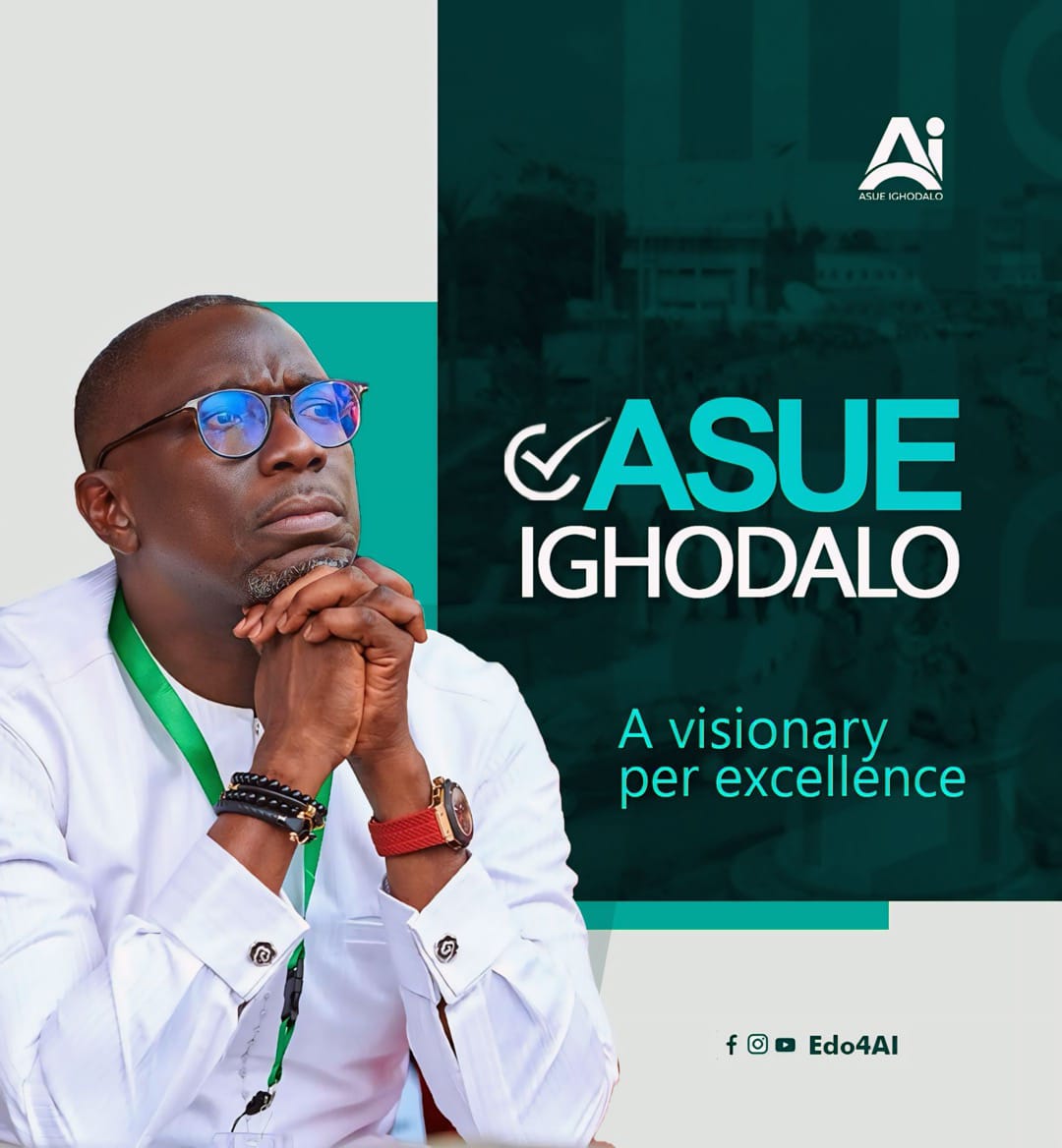
The strained relationship between the governor and deputy governor escalated when Shaibu boycotted the governorship primary and was subsequently declared the winner at a parallel primary. The PDP national leadership, however, recognized Asue Ighodalo as the valid winner of the primary, leading to Shaibu’s demand for a Certificate of Return and threats of legal action.

The impeachment proceedings were based on a petition dated March 5, 2024, signed by 21 out of the 24 members of the Edo State House of Assembly. The petition alleges perjury and the revelation of government secrets by the deputy governor. The Majority Leader of the House, Charity Aiguobarueghian, announced the impeachment notice during plenary, stating that the number of members who signed the petition exceeded the two-thirds requirement stipulated in the constitution.

The Speaker of the House, Blessing Agbebaku, acknowledged receipt of the petition and directed the Clerk of the House to serve the impeachment notice on Shaibu. The deputy governor has seven days to respond to the notice of impeachment.

Efforts to obtain Shaibu’s reaction were unsuccessful at the time of reporting. The Conference of Registered Political Parties in Edo State criticized the impeachment proceedings, asserting that Shaibu had not committed any impeachable offense or breached his oath of office. The association called on Governor Obaseki to intervene and rein in the Assembly.

Computer Village Vendors Express Concerns Over Potential Revenue Loss Amid Relocation Plans

Computer Village, the technology hub at the heart of Ikeja, Lagos, serving as Sub-Saharan Africa’s go-to destination for cutting-edge gadgets and reliable repairs, is facing relocation plans by the Lagos State Government. Despite its pivotal role in driving technological innovation, the market’s current location has led to traffic congestion, hindering business operations and road users.

In 2017, the Lagos State Government announced intentions to relocate Computer Village to alleviate environmental degradation, housing stock deficits, and traffic congestion in Ikeja. The new location, named the Katangua Information and Communications Technology Business Park, was expected to cost around N40 billion, with the first phase set to be completed in 24 months.

However, reports indicate a slow pace in the project’s execution, raising concerns among vendors. Ifeanyi Akubue, President of the Phone and Allied Product Dealers Association of Nigeria, acknowledged the delays but emphasized that the project’s progress depended on the contracted developer.

Emmanuel Osho, Managing Partner of Bodds IT Solutions, expressed dissatisfaction with the planned relocation, anticipating negative impacts on businesses. Osho and several traders are concerned about increased commuting times for both vendors and customers, as the new location would be farther from central Lagos.

Osho highlighted opposition from influential figures in the market, slowing down the project. He suggested a more practical approach of concentrating people within central areas of the market.

Solagbade Olaifa, the Public Relations Officer of the Computer and Allied Product Dealers Association of Nigeria, emphasized that Computer Village’s current location was not initially designed to be a market.

The reluctance of some key players and concerns among traders about potential revenue loss due to the relocation underscore the challenges associated with balancing development goals and the interests of businesses in the tech hub. The outcome of discussions between the vendors and the Lagos State Government remains crucial for the future of Computer Village.

Senate to Convene with President Tinubu Amidst Benue State Insecurity Crisis

In response to the recent militia clash in Benue State resulting in at least 30 casualties, the Senate has announced its intention to hold a meeting with President Bola Tinubu to address the growing insecurity not only in Benue State but across Nigeria.

The Senate’s decision was prompted by a motion titled “Motion On the Continuing Killings by Suspected Terrorists Parading as Herdsmen and Increasing Insecurity in Kwande, Ukum, Logo And Katsina-Ala Local Government Areas in the Benue North-East Senatorial District Of Benue State.” The motion was presented by Senator Emmanuel Udende, representing Benue North-East, under the urgency of public importance.

During the Senate session, Senator Udende reported that over 50 residents in the Logo and Katsina-Ala areas were killed by individuals disguising themselves as herders, perpetrating violence in these communities.

The recent incident in Ukum Local Government Area involved a militia clash on Tuesday, claiming numerous lives, including a family of seven. The clash was allegedly between rival militias led by figures identified as ‘Full Fire’ and ‘Chain.’ One of the militia leaders reportedly hired external bandits to invade Gbagir community in Ukum, leading to a violent confrontation with another militia gang in the region.

Most of the casualties were members of the rival militia groups, with approximately 12 innocent farmers caught in the crossfire. The clash left over 30 individuals injured, and many others have been declared missing.

A traditional ruler in the affected area disclosed that the conflict arose when a Tiv militia leader kidnapped a Fulani militia leader named Alhaji Gana, along with his family, known for their involvement in banditry and kidnappings. Despite receiving a ransom of N5 million, the hostages were reportedly killed, triggering outrage among the gang members in Taraba State.

In response, another militia leader from Ukum joined forces with the Fulani militia gang in Taraba to eliminate the rival gang in Ukum, resulting in the deadly clash.

The Senate’s decision to engage President Tinubu underscores the gravity of the situation and the need for coordinated efforts to address the escalating security challenges in Benue State and the broader national landscape.

EFCC to Address Tactics Following Court of Appeal’s Halt on Orji Kalu’s Fraud Trial

The Economic and Financial Crimes Commission (EFCC) has announced its intention to address procedural gaps in response to the Court of Appeal’s decision to halt the N6.7bn fraud case against former Abia State governor, Orji Uzor Kalu. Justice Joseph Oyewole of the appellate court rejected the EFCC’s attempt to reopen the case, citing unreliable records.

Speaking to journalists after the judgment, EFCC lawyer Oluwaleke Atolagbe stated that the commission would rectify the identified loopholes, emphasizing that the court did not delve into the merit of the appeal. Atolagbe expressed confidence in the opportunity to return to the Court of Appeal and have the merit of the case determined after addressing the court’s concerns.

The case originated from the Federal High Court in Lagos, which convicted Kalu, Slok Nigeria Limited, and former Abia State Government House Director of Finance and Accounts, Jones Udeogu, on December 5, 2019. Kalu was sentenced to 12 years in prison, Udeogu to 10 years, and Slok Nigeria Limited faced asset forfeiture.

Udeogu appealed the judgment, arguing that Justice Idris Mohammed, who pronounced the verdict, had already been elevated to the Court of Appeal at the time. The Supreme Court, in a May 8, 2020 judgment, sided with Udeogu, nullifying the conviction and declaring unconstitutional the provision of Section 396(7) of the Administration of Criminal Justice Act, 2015. This provision had allowed Justice Idris to return to the high court from the Court of Appeal to conclude the trial.

Reuben Abati Questions Placement of Tinubu’s Sons Ahead of Ministers on Protocol List

Former media aide to ex-President Goodluck Jonathan, Reuben Abati, raised concerns about the roles and diplomatic precedence given to President Bola Tinubu’s sons, Seyi and Yinka, during their recent trip to Qatar. Abati, co-anchoring Arise TV’s “The Morning Show,” found it disturbing that the president’s sons were placed before ministers on the protocol list.

Expressing his views, Abati emphasized the need to understand the professional occupations of the president’s children, questioning their contributions and qualifications for the roles they were assigned. He pointed out the potential discomfort and embarrassment caused by individuals “hanging around” solely due to their familial connections.

Abati highlighted the importance of individuals holding themselves accountable and not relying solely on family positions. He critiqued the order of protocol, noting that diplomatic precedence was given to Tinubu’s sons before ministers, raising questions about their roles and qualifications for such positions.

The former media aide urged a reevaluation of situations where individuals of privilege may overstep their roles, emphasizing the need for personal achievement and independence regardless of familial connections.

China accelerates building of new quality productive forces

By Yang Junfeng

China will strive to modernize the industrial system and develop new quality productive forces at a faster pace, according to a Government Work Report submitted on March 5 to the national legislature for deliberation.

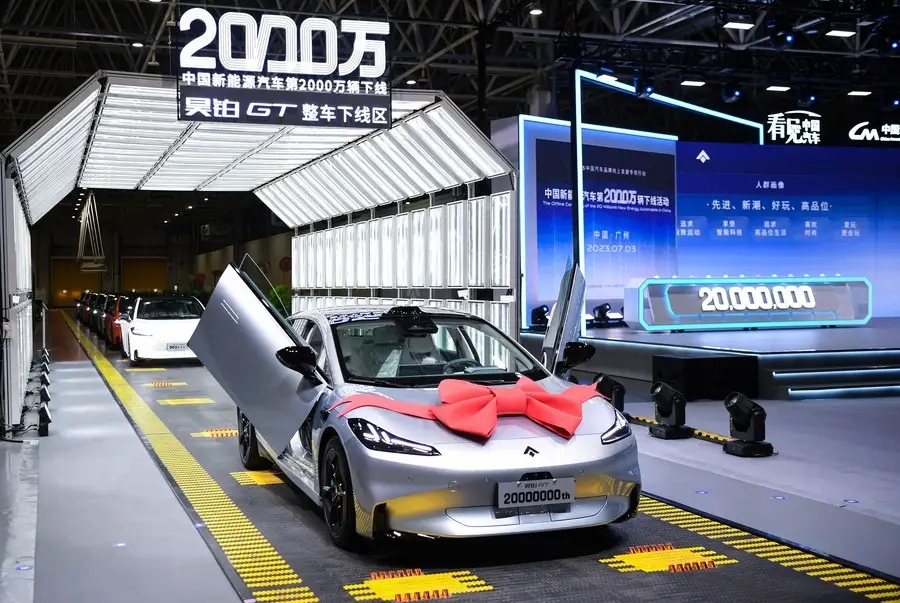
The country will consolidate and enhance its leading position in industries such as intelligent connected new energy vehicles, step up development of hydrogen power, new materials, innovative drugs, and other cutting-edge sectors, according to the report.

Recently, local governments across China have been outlining their “roadmaps” to foster the development of new quality productive forces at local “two sessions” meetings, the annual meetings of provincial-level lawmakers and political advisors.

Beijing is actively building an international science and technology innovation center. Anhui province is accelerating the development of three major science and technology innovation hubs in quantum information, fusion energy, and deep space exploration.

Moreover, Heilongjiang province is implementing digital transformation in manufacturing, empowering small and medium-sized enterprises with digital capabilities, and promoting pilot demonstration projects in intelligent manufacturing.

What do “new quality productive forces” mean?

The term refers to contemporary advanced productive forces that are generated by revolutionary technological breakthroughs, innovative allocation of production factors, and in-depth transformation and upgrading of industries. It takes the qualitative change of laborers, labor materials, labor objects and their optimal combination as the basic connotation, and the improvement of total factor productivity as the core indicator.

Technological innovation can give rise to new industries, new models, and new driving forces, which are the core elements for developing new quality productive forces.

In 2023, generative artificial intelligence (AI) emerged as a shining star in the tech world. By the end of 2023, China had released over 200 large AI models, with more than 20 of them approved to provide services to the public.

Most of the large models available to the public are general-purpose foundational models. Their greater competence is to empower intelligent industrial production and accelerate the development of new quality productive forces.

Liu Qingfeng, chairman of China’s leading AI and speech technology company iFLYTEK, noted that generative AI is one of the most significant technological innovations in recent decades. It has the potential to change the ways of content production, human-computer interaction, traditional business models, and the structure and competition pattern of industries.

A well-planned layout of industrial chains can effectively support the enhancement of new quality productive forces by optimizing resource allocation.

As a representative of new quality productive forces, the low-altitude economy has become an important direction for cultivating new momentum for development.

Today, China has developed a relatively complete industrial chain of the low-altitude economy, which has generated agglomeration effects.

Taking Shenzhen in Guangdong province as an example, by the end of 2023, it has gathered more than 1,700 unmanned aerial vehicles (UAV) companies with an annual output value of 96 billion yuan ($13.34 billion). Chinese civil UAV manufacturers, represented by DJI, are strongly competitive in the global market.

According to a DJI executive, DJI’s success benefited from the supporting and well-developed industrial chain in Shenzhen. With the continuous improvement of the entire Pearl River Delta’s electronic consumer goods industrial chain, DJI’s production capacity has been further strengthened.

To develop new quality productive forces, it is necessary to promote the digital economy, facilitating the deep integration of the digital economy with the real economy.

In recent years, new technologies such as big data, the Internet of Things, and new energy have been widely applied in the transportation industry, expanding the scope of intelligent transportation applications.

Anhui Transport Consulting & Design Institute Co., Ltd. (ATCDI) developed a design system that automatically generates drawings for commonly used bridge structures. The system has been in operation for over a year and has generated more than 7,400 drawings, significantly reducing the workload of frontline designers.

“Fostering new quality productive forces in the field of engineering information technology, such as intelligent manufacturing, digital design, as well as 3D laser scanning and inspection, can enable us to build bridges and roads more efficiently, thus better benefiting the people,” said Nie Wenhua, deputy director of the ATCDI digital innovation center.

Currently, some regions in China are focusing on the building of industrial chains for new quality productive forces, so as to enhance the resilience and security of industrial and supply chains.

The municipal government of Beijing has proposed to promote the high-quality development of the new energy vehicle industry and actively establish industrial chains of key components, such as motors, batteries, electronic controls, and automotive-grade chips.

The government of Shandong province said that it would carry out actions to promote the high-quality development of iconic industrial chains. It would implement 100 major scientific and technological innovation projects in fields such as integrated circuits and industrial machinery.

Some regions are working to remove barriers and bottlenecks that hinder the development of new quality productive forces, and have made innovative allocation of production factors a key focus of their work this year.

The government work report of Liaoning province proposed to promote the integrated development of strategic emerging industries such as new materials, aerospace, low-altitude economy, robotics, biomedicine and medical equipment, new energy vehicles, and integrated circuit equipment.

Jiangsu province said in its government work report that it would focus on future industries and explore new sectors such as future networks, quantum technology, life science, hydrogen energy and new energy storage, as well as deep-sea, deep-earth, and aerospace exploration.

Accelerating the formation of new quality productive forces also relies on the development of human resources.

A program on cultivating high-skilled talents, jointly implemented by the Ministry of Human Resources and Social Security and six other departments, noted that China will cultivate leading talents in key industries such as advanced manufacturing and modern services, focusing on major strategies, major projects and key industrial needs of the country. China will strive to cultivate over 15,000 new leading talents and drive the addition of around 5 million high-skilled talents within approximately three years.

“Two sessions” offers window for international community to understand China

By He Yin, People’s Daily

This year marks the 75th anniversary of the founding of the People’s Republic of China. It is critical for achieving the goals set in the 14th Five-Year Plan. The “two sessions” this year, the annual meetings of China’s national legislature and top political advisory body, has received broad attention from the international community.

By observing the “two sessions,” the international community can deepen its understanding of China’s democracy, gain insight into the pulse of China’s high-quality economic development, and better grasp the opportunities of cooperation between China and other countries.

Observing the “two sessions” helps the international community understand China’s governance. The “two sessions” are a vivid practice of China’s whole-process people’s democracy, and offers an important window for the international community to understand China’s modernization of national governance.

Some foreign scholars believe that by understanding the “two sessions,” one can understand how Chinese democracy operates effectively. The deputies to the National People’s Congress (NPC) and members of the Chinese People’s Political Consultative Conference (CPPCC) actively fulfill their duties and responsibilities, with the voices of the people coalescing into a consensus on national governance.

According to statistics recently released by the State Council Information Office, government departments under China’s State Council handled 7,955 suggestions submitted to the NPC and 4,525 proposals submitted to the CPPCC, accounting for 95.7 percent and 96.5 percent of all suggestions and proposals submitted. The departments rolled out over 2,000 policy measures based on some 4,700 suggestions and proposals last year.

China’s whole-process people’s democracy has not only a complete set of institutions and procedures, but also full of participation and practices. It has taken root in China as a political institution, a mechanism of governance and a lifestyle of the people.

This year marks the 70th anniversary of the NPC and the 75th anniversary of the CPPCC. Through observing the “two sessions,” the international community will gain a profound understanding of the wisdom and strength of China’s governance.

Observing the “two sessions” helps the international community understand the quality of China’s economic development.

Achieving high-quality development is one of the essential requirements of Chinese modernization. Over the past year, China’s economy has recovered. With an economic growth of 5.2 percent, higher than the global projection of around 3 percent, China ranks among the top in major economies worldwide. It fully demonstrates the strong endogenous impetus, resilience, and potential of the country’s economic development.

China is vigorously implementing its innovation-driven development strategy and promoting the accelerated development of new quality productive forces, which will continuously inject new impetus into high-quality development.

Against the backdrop of a sluggish global economic recovery, the international community looks forward to China’s “two sessions” further releasing positive signals of an economic rebound and improvement.

Foreign media believe that China’s current goal is to improve people’s living standards through high-quality development and the country is driving the transformation of its economic development towards an innovation-driven model, and accelerating coordinated digital and green transitions, which will set an example for the sustainable development of the global economy.

Observing the “two sessions” helps the international community understand the will of China to cooperate with other countries.

China has implemented five measures to facilitate the entry of foreign nationals into China, lifted all entry restrictions on foreign investment access in the manufacturing sector, accelerated the implementation of 24 policy measures to stabilize foreign investment, signed free trade agreements and investment protection agreements with more countries, and steadily promoted high-quality Belt and Road cooperation with relevant parties.

These measures have sent a clear signal of China’s unwavering commitment to further opening up at a higher level, demonstrating China’s determination and confidence in providing new opportunities for the world through its own new development.

How China will promote higher-level opening up and enhance its ability to participate in the international circulation has become one of the hot topics drawing attention from the international community at this year’s “two sessions.”

The international community is particularly interested in China’s development direction set by the “two sessions” and expects China to continue contributing to promoting peace and prosperity. International observers said that they look forward to gaining a deeper understanding of China’s plans and actions in addressing global challenges through the “two sessions,” and they expect China to provide more stability and certainty to the world.

China’s “two sessions” will allow the international community to see that the country firmly stays on the path of socialist political advancement with Chinese characteristics, and solidly advances whole-process people’s democracy. China is also resolutely pursuing high-quality development to achieve Chinese modernization and promoting high-level opening up to drive common development of the world. Through these efforts, China will make greater contributions to world peace, development, and human progress.

China’s Gov’t departments handle 12,480 suggestions, proposals last year

By Liu Wenxin, People’s Daily

Government departments under China’s State Council handled 12,480 suggestions and proposals submitted by deputies to the National People’s Congress (NPC) and members of the National Committee of the Chinese People’s Political Consultative Conference (CPPCC) in 2023, a spokesperson for the State Council Information Office said recently.

In particular, the departments handled 7,955 suggestions, accounting for 95.7 percent of all suggestions submitted, and 4,525 proposals, 96.5 percent of all proposals submitted, said the spokesperson Xing Huina.

Xing said that the departments rolled out over 2,000 policy measures based on some 4,700 suggestions and proposals last year. This has helped solve a series of problems concerning reform and development and pressing concerns of the people. Progress has been made in the promotion of high-quality economic development, and ensuring and improving people’s livelihoods.

China’s Ministry of Industry and Information Technology (MIIT) received 1,888 suggestions and proposals in 2023, and took lead in handling 602 of them, said Xin Guobin, vice minister of the MIIT, adding that all of the suggestions and proposals had been handled as scheduled.

The ministry issued about 290 policies based on the suggestions and proposals, which promoted the development of major technologies and equipment, as well as the development of specialized and sophisticated small- and medium-sized enterprises that produce novel and unique products.

Paying high attention to green industrial development, NPC deputies and CPPCC members gave advice on optimizing industrial structure, promoting green development of industrial parks and improving energy efficiency in major industries, Xin added.

China’s Ministry of Human Resources and Social Security handled 962 suggestions and proposals last year. The ministry has introduced more than 40 policies and measures, striving to transform the suggestions and proposals into a sense of fulfillment, happiness, and security for the people, said Li Zhong, vice minister of the ministry

According to him, the policies and measures to stabilize employment have been continuously optimized, and the nationwide pooling of basic pension funds for enterprise employees has been steadily promoted. A series of policies and measures to protect the rights and interests of workers in new forms of employment have been introduced, Li added.

The social security card is a fundamental carrier of livelihood services across the country, Li noted, adding that NPC deputies and CPPCC members have shown great concern for the “one-card-for-all-services” of the social security card.

They have put forward excellent proposals and suggestions regarding enriching application scenarios and developing distinctive services, Li said.

As of the end of January this year, 1.38 billion Chinese, or 97.9 percent of the country’s population, had social security cards. Among them, 970 million had an electronic version of the card, which provided services to cardholders 15.1 billion times last year.

Vice Minister of Transport Wang Gang noted that the ministry handled 775 suggestions and proposals in 2023, covering various aspects such as comprehensive transportation network planning, transportation infrastructure construction, development of new transportation formats, and green development of rural roads and water transportation. All of these suggestions and proposals have been addressed and responded to ahead of schedule.

In recent years, the construction of supporting infrastructure for new energy vehicles has been a focus of NPC deputies and CPPCC members.

“We are accelerating the development of charging infrastructure along highways. By the end of last year, we had already built a total of 21,000 charging stations, and the network of charging infrastructure along expressways has been further improved,” said Wang.

He disclosed that this year, the ministry plans to add 3,000 charging stations and 5,000 parking spaces with charging poles at service areas of highways. The ministry encourages construction of ultra-fast charging and high-power charging facilities at service areas.

Additionally, based on the traffic characteristics during different holidays and in different regions, guidance will be provided to local authorities to offer targeted support measures, aiming to facilitate more convenient and efficient public transportation, Wang said.

“The National Health Commission handled a total of 1,470 proposals and suggestions in 2023, of which approximately 1/10 were related to primary-level healthcare. These proposals and suggestions mainly focused on strengthening investment and support for primary-level healthcare, the construction of county-level medical consortia, the development of primary-level healthcare workforce, and the enhancement of primary-level healthcare service capabilities,” said Li Bin, deputy head of the National Health Commission.

The National Health Commission has made significant progress in handling related matters by fully absorbing and adopting the suggestions and proposals.

For instance, it issued a guideline on comprehensively promoting the construction of county-level medical and health consortia, transitioning the construction of county-level medical and health consortia from a 4-year pilot phase to a comprehensive promotion stage. The commission has also established a task force for the construction of rural doctor teams, recruiting over 6,700 university graduates as rural doctors in 2023.

Starting from 2023, a three-year action plan has been implemented to promote the construction of a number of health centers, addressing deficiencies in medical emergency response, infectious disease control, and pediatrics, among others.