Digital technologies usher in new possibilities for consumption growth in China

By Lin Lili, People’s Daily

Digital consumption is becoming an important driver for expanding domestic demand, stabilizing economic growth, and promoting industrial transformation in China.

From January to November in 2023, China’s online retail sales reached about 13.96 trillion yuan ($1.96 trillion), up 11 percent year on year.

Currently, the burgeoning new forms and models of digital consumption, represented by online shopping, livestreaming, and digital culture, are profoundly changing people’s consumption habits.

Thanks to livestreaming promotions, a consumer in Beijing can clearly see a sheep farm over 1,000 kilometers away in Huanxian county, Qingyang city, northwest China’s Gansu province, without leaving his home.

“The sheepfold looks quite clean and the sheep all seem energetic. Seeing is believing. I think this shop’s mutton must be good,” said Xu Jie, the customer, sitting at home holding his phone.

Compared to brick-and-mortar vegetable markets, livestreaming can sometimes offer consumers more information about products, he explained, adding that now he often makes purchases online.

“Business has been pretty good lately. With so many regular customers, I can sell about 120 sheep a day,” said Liu Guoning, an entrepreneur in Huanxian county.

According to Liu, he used to take sheep to the market to sell, or wait for buyers to come to his farm, while now he sells mutton online.

“Since I sold mutton online, I’ve not only been able to sell all the sheep from my own farm, but also help sell the sheep of other villagers. The profits and efficiency are much better,” he noted.

One of the prominent features of digital consumption is the broader scope of shopping, which plays a key role in boosting domestic demand.

Nowadays, as consumers’ online shopping radius keeps expanding, they can buy products from various parts of the country and even the world without leaving home.

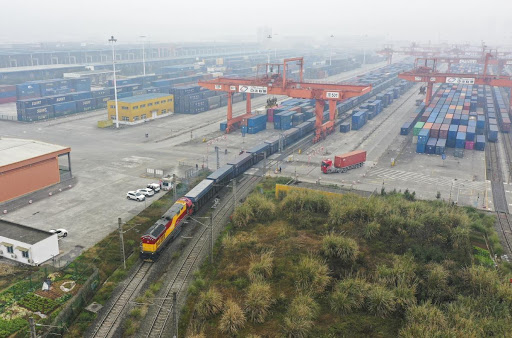
As a result of the continuous improvement of China’s rural digital infrastructure and e-commerce logistics systems, local specialties such as mushrooms, eggs, and meat produced in remote regions of the country can now be sold nationwide through e-commerce platforms.

Pinduoduo, a major Chinese e-commerce platform, has established direct connections with over 1,000 agricultural production areas in China, involving more than 16 million farmer households to the digital economy, according to Zhang Chao, said an operation magager of Pinduoduo.

“We have actively promoted the application of digital technologies in the circulation and supply of agricultural products, and vigorously advanced the construction of digital information infrastructure, including cold chain logistics of fresh agricultural products,” Zhang said.

The platform has implemented measures including sending out products within 48 hours after an order is placed and free express delivery services for consumers in remote areas in a bid to boost sales, according to Zhang.

By switching from offline transactions to online transactions, consumers can easily access information about products and services, which saves time and transportation costs that could be incurred during consumption, and expands consumers’ shopping radius, giving them more options and autonomy in consumption, said Li Mingtao, head of the research institute at the China International Electronic Commerce Center.

Digital technologies not only broaden consumers’ shopping radius, but also incubate new industries, new business forms and models, ushering in greater possibilities of consumption in the country.

In Beijing’s Dongcheng district, a consumer named Lin Qing obtained her own digital model after placing an order online, signing an agreement, and having her face scanned, all within about 30 minutes at a special photo studio that creates digital twin for customers.

Lin’s digital twin realized many of her dreams in the virtual world, including scoring slam dunks, enjoying skiing, and performing street dance.

“It’s really interesting to see the familiar ‘me’ doing unfamiliar things. I feel like I met another ‘me’ from a parallel universe,” Lin said.

“We’re building an ecosystem of digital humans where everyone may one day own their digital twin,” said Liu Zheng, founder of the studio.

In 2023, Chinese people discovered a proliferation of artificial intelligence (AI)-empowered digital humans in various scenarios.

They saw digital hosts present weather forecast programs, speakers’ digital twins take the stage at major conferences, digital livestreaming hosts work 24/7, and digital humans share life wisdom in short videos.

The application of AI have been stretched into various fields, from healthcare, education, finance to transportation, entertainment, and sports, changing the way people live and work.

“The extensive application of the Internet, cloud computing, AI, among other new technologies, has enabled digital technologies to better satisfy people’s needs for a better life and unleash consumption potential, making digital technologies a new driving force for consumption growth and economic development,” said Ren Baoping, a specially appointed professor of the school of digital economy and management of Nanjing University in east China’s Jiangsu province.

“We hope to accelerate the expansion of emerging consumption areas like customized consumption, smart consumption, and experiential consumption, as well as to increase effective supplies for digital consumption in healthcare, elderly care, medical services, culture, education, security and other fields,” Ren added.

China to foster new drivers for foreign trade

By Luo Shanshan, People’s Daily

Foreign trade is an important engine driving economic growth and a crucial link between domestic and international economic circulations. China’s 2023 Central Economic Work Conference recently emphasized the need to foster new drivers of foreign trade. And how will China do this in 2024?

Foreign trade involves both domestic and international markets, and to consolidate the foundation of foreign trade and foreign investment, it is necessary to first clarify the domestic and international situations.

“The unstable momentum and insufficient driving force of the global economic recovery have led to sustained weakness in external demand, which is the main factor affecting the trend of foreign trade,” said Li Xingqian, director general of the Department of Foreign Trade of China’s Ministry of Commerce.

He believes China needs to fully recognize the difficulties and challenges facing the development of foreign trade, and also see that positive factors of stabilization and improvement are gathering.

Specifically, there is abundant potential in new products and new business forms. The new “three major ones,” namely solar batteries, lithium-ion batteries and electric vehicles, as well as energy storage products meet the need of global energy development. New business forms and models such as cross-border e-commerce, overseas warehouses, and bonded repairs are flourishing.

Chinese foreign trade possesses enduring innovation capabilities and a stable, efficient, and resilient supply chain, which will continue to provide new drivers for the recovery and growth of the national economy and global recovery.

To cultivate new drivers for foreign trade, it is important to focus on key tasks. “China has been the world’s largest exporter of intermediate goods for 12 consecutive years, with intermediate goods contributing nearly 60 percent to the growth of foreign trade,” said Li.

Expanding intermediate goods trade conforms to the trend of international trade development and is a mutually beneficial move, he added.

It is necessary for China to further strengthen cooperation with its trading partners and meet their realistic demand for developing manufacturing industry, so that it can achieve complementary advantages and provide impetus for global economic recovery.

Zhu Siqiao, associate researcher at the Chinese Academy of International Trade and Economic Cooperation, believes that cross-border e-commerce, as the fastest-growing, most potential, and most influential new form of foreign trade, is becoming an important trend in international trade development.

Currently, cross-border e-commerce accounts for over 7 percent of China’s total exports. The sector has over 100,000 entities, more than 200,000 independent platforms, and over 1,500 overseas warehouses covering an area of nearly 19 million square meters.

Li said that in order to expand cross-border e-commerce exports, policies regarding customs clearance, taxation, foreign exchange, and other aspects will continue to be improved to enhance regulatory facilitation and help companies reduce costs and increase efficiency.

Support will also be provided to encourage cross-border e-commerce pilot zones, industry organizations, and companies to participate in Silk Road E-Commerce and Belt and Road cooperation.

To cultivate new drivers for foreign trade, it is also important to promote the digitalization and green development of trade, consolidate the foundation of foreign trade and foreign investment, and accelerate China’s transformation into a trader of quality.

According to China’s Ministry of Commerce, it will together with local and other departments, continue to effectively implement various policies already introduced to stabilize foreign trade. At the same time, in light of new circumstances and tasks, it will make new policies and measures, and roll them out in a timely manner, to help foreign trade companies reduce costs and increase efficiency.

China’s meteorological satellites contribute to global disaster prevention, mitigation

By Li Hongmei, People’s Daily

China’s Fengyun meteorological satellites, among the diverse man-made satellites orbiting the Earth, monitor meteorological conditions on the planet at all times, making important contributions to global disaster prevention and mitigation efforts, climate change response, as well as sustainable economic and social development.

Fengyun satellites are a series of remote-sensing meteorological satellites independently developed by China. Since the successful launch of the country’s first meteorological satellite in 1988, Fengyun satellites today are widely applied in such fields as weather forecasting, climate prediction, natural disaster and environmental monitoring, and scientific research.

China has by far successfully sent 21 Fengyun meteorological satellites of two generations into space. Currently, nine of them are operating in orbits, providing data and products for 129 countries and regions around the world.

With multiple satellites in orbit conducting networked observations, Fengyun meteorological satellites are able to provide three-dimensional (3D), quantitative, global, all-day, all-weather, hyperspectral, and timely precision monitoring data.

The extraordinary capabilities of the Fengyun satellites enable precise monitoring of all types of weather and climate events. It has detected all typhoons, performed 3D “computed tomography (CT) scans” of rainstorms, accumulated the dataset of climate variables for El Nino, and carried out more tasks.

The satellites have provided remarkable service support for the construction of the Belt and Road Initiative (BRI) and become the backbone of the global Earth observation network.

In recent years, data obtained from the instruments on the Fengyun meteorological satellites have been playing an increasingly important role in data assimilation of the numerical weather prediction models of the European Centre for Medium-Range Weather Forecasts (ECMWF), said Niels Bormann, a Principal Scientist in ECMWF Research Department.

Integration of satellite-based Earth observation data and ground-based observation data allows for better monitoring of meteorological disasters and their impacts on agriculture.

In the past few years, Fengyun meteorological satellites have been used to monitor extreme drought events in Central Asia, facilitate studies of drought mechanisms, climate change and its impacts, identify affected areas, and then help these areas reduce adverse impacts and enhance climate resilience, according to Sanjarbek Muratov, the Food and Agriculture Organization of the United Nations (FAO) representative to Uzbekistan.

On November 13 last year, the China Meteorological Administration (CMA) launched the international version of FengYun Earth, a comprehensive application platform serving services by leveraging the Fengyun meteorological satellites and satellite remote sensing technology.

The international version of the platform, specially developed for international users, boasts outstanding capabilities. It can effectively obtain multi-source data such as meteorological satellite data and numerical weather prediction data, while identifying disastrous weather and extreme climate events with the help of artificial intelligence (AI) technologies.

It also provides users with more than 100 quantitative and multi-scale products in five categories for different business scenarios, covering cloud charts, key elements, disaster events, climate, and model verification. According to different countries and regions, it can be configured to focus on certain meteorological factors, observation areas, and time ranges, among other aspects, so as to meet users’ personalized needs.

Shortly after its debut, the international version of FengYun Earth received an order – to provide support for the 17th Pacific Games hosted by the Solomon Islands.

At the invitation of the meteorological bureau of the Solomon Islands, the CMA sent experts to the Solomon Islands, while starting the fast-scan mode of the Fengyun-4B (FY-4B) satellite for meteorological observations centered on the Solomon Islands. Leveraging the platform, the CMA provided dozens of satellite products for the Solomon Islands, delivering strong support for the successful holding of the 17th Pacific Games.

In an effort to better serve international users, the CMA established an emergency support mechanism regarding disaster prevention and mitigation of Fengyun satellites in April 2018. A total of 34 countries had registered for the mechanism by 2023.

Since the beginning of 2023, Fengyun satellites have responded 28 times to global requests for emergency support services.

They have observed tropical cyclones Lola and Mocha, providing meteorological support to countries including the Solomon Islands, Vanuatu, and Bangladesh. They have also helped monitor concentrated ignition points of devastating forest fires from the northern coast of Algeria to northwest Tunisia, offering important assistance for the fire prevention and control efforts of local authorities.

According to CMA statistics, over the past five years, more than 1,000 international users have been trained for better use of Fengyun meteorological satellite-based products. The CMA has provided support concerning application software for Fengyun satellites’ remote sensing services and held video consultations on relevant services and products for over 20 countries and regions across the world more than 50 times.

Grassroots sports events empower rural revitalization

By Fan Jiayuan, Sun Longfei, People’s Daily

With flags flying high, the melodious sound of the reed pipes, the resounding beats of drums and gongs, cheerleaders dancing and singing, and a packed stadium, the 2024 season of the Village Super League, or “Cun Chao” in Chinese, kicked off on Jan. 6, 2024 in Rongjiang county, Qiandongnan Miao and Dong autonomous prefecture of southwest China’s Guizhou province.

“The new season sees a significant increase in the number of participating football teams. Last year, the Village Super League featured 20 teams, while this year, over 1,800 players from 62 football teams will partake in the new season,” said Lai Hongjing, a member of the organizing committee of Village Super League and a P.E. teacher of No.1 Middle School of Rongjiang county.

“Cun Chao” is a grassroots football league that has gained popularity in China in recent years. Chinese internet users dub it the “Village Super League”, drawing inspiration from renowned leagues such as the English Premier League and the Chinese Super League.

By hosting the Village Super League matches, Rongjiang, with a population of less than 400,000, became a sensation last year, attracting attention and generating revenue.

According to the Village Super League Office of Rongjiang county, from May 13 to Dec. 31, 2023, “Cun Chao” received more than 58 billion page views online, and the livestreams of the matches attracted more than 600 million views online.

During the same period, Rongjiang received 7.33 million tourist arrivals, translating to tourism income of 8.113 billion yuan (about $113 million).

The success of “Cun Chao” is attributed to the fervent football community in the local area.

In the 1990s, residents of Rongjiang county started to organize matches on open fields. Presently, the county boasts 25 football fields, 35 registered teams, and 41 schools offering football coaching. Nearly 50,000 people in the county play football.

“Cun Chao” is not the only sports event that has been deeply involved in the grassroots and has achieved great success.

In Taipan village, located in Taijiang county, Qiandongnan Miao and Dong autonomous prefecture, the local community upholds the tradition of playing basketball during festivals. Through the establishment of the “Cun BA”, or Village Basketball Competition, Taijiang county received over 2 million tourist arrivals in a year, resulting in tourism revenue exceeding 2.3 billion yuan.

In Wenchang, a county-level city in south China’s Hainan province, every village has its own volleyball court and everyone plays volleyball. The popularity of the village volleyball league has now extended from offline to online platforms.

Village sports events, originating from rural areas, play a significant role in the development of these regions. By actively involving the local community and capturing people’s attention, these events have unlocked a multitude of values.

Various rural sports events have also stimulated economic development.

During the breaks between the matches, the audiences were treated to captivating cultural performances. Outside the sports venues, e-commerce live-streaming sessions were hosted, offering a platform to sell a wide range of cultural and creative products.

Sports events have played a role in empowering the tourism and cultural industries, paving a new path towards rural revitalization. They have brought attention to Guizhou’s distinctive cuisine, agricultural products, and intangible cultural heritage.

They have also led to the creation of tourism projects and increased employment opportunities for the local community. The online buzz generated by these events has translated into increased offline foot traffic, ultimately benefiting the residents of Guizhou.

The thriving rural sports events allow more people to appreciate the charm of sports and experience the excitement of competition.

To demonstrate their support, villagers raised funds for their teams, stitched team emblems, and offered their seats to accommodate tourists. They even formed a volunteer team of drivers to contribute their share to the games.

Yang Bing, a commentator for the “Cun Chao”, said sports serve as a bond that unites people, instilling a sense of confidence in the local culture of Rongjiang.

Mass sports, deeply ingrained in rural areas, continue to exude vitality, infusing a fresh atmosphere into the hosting regions.

During the Village Super League matches, young entrepreneurs who have returned to their hometowns after graduating from college hosted live-streaming sessions, promoting local agricultural products. The impact of “Cun BA” is evident, as many neighboring villages have reaped the benefits of these basketball games.

“Over the past decade, driving rural revitalization through sports has emerged as a prominent aspect of China’s sports industry development, yielding many success stories. The innovative approaches implemented in Rongjiang county and Taijiang county serve as valuable references for integrating culture, sports, and tourism to stimulate economic and social development, thereby fulfilling the aspirations of the people for a better life,” said Wang Xueli, director of Tsinghua University Sports Industry Development Research Center.

China builds ecological monitoring network to better protect lucid waters, lush mountains

By Kou Jiangze, Yao Xueqing, Li Maoying, People’s Daily

Early in the morning, Shen Wei arrived at the Gehu Lake, upstream of the Taihu Lake in east China’s Jiangsu province, with a toolbox, to conduct routine water quality and aquatic organism monitoring. Meanwhile, Shen’s colleagues were sampling water from the lake with a water collector for the monitoring of planktonic algae.

After the sampling was completed, Shen, deputy chief of the ecological department of the Changzhou Environmental Monitoring Center, which initiated a comprehensive ecological monitoring network for water bodies on the plains of Changzhou, returned to the lab with his colleagues and started analyzing samples.

“We discovered Novaculina chinensis, a national second-class protected aquatic wild animal, and we have found it at multiple locations many times,” said Shen. According to him, this indicated that the ecological condition of Gehu Lake was improving.

The monitoring of planktonic algae also had some positive findings – diatoms, the dominant species in the winter lake, were at normal levels and varieties.

Ecological monitoring is essential for obtaining an objective and accurate understanding of the ecological conditions in a given area, implementing scientific ecological protection and restoration measures, and evaluating their outcomes.

Recently, China’s Ministry of Ecology and Environment, in collaboration with the Chinese Academy of Sciences, issued a work plan on national ecological quality supervision and monitoring for the 2023-2025 period.

According to the plan, China will set up a national ecological monitoring network and designate 55 sites as the first batch of national stations for monitoring ecological quality, including a station in Xishuangbanna, southwest China’s Yunnan province, and the comprehensive ecological monitoring network for water bodies on the plains of Changzhou.

The first batch of national stations for monitoring ecological quality cover major ecosystem types such as forests, wetlands, grasslands, deserts, oceans, cities, and farmlands. They span across 44 key ecological conservation and regulatory areas in China, as well as other important ecological regions and urban clusters with frequent human activities.

Compared to environmental monitoring, ecological monitoring features richer content, more complex indicators, and more diverse methods.

“The national ecological monitoring network takes species diversity and habitats as its monitoring objects, with the goals of highlighting supervision, finding problems, and accumulating data. It focuses on the composition, structure, and functions of biological communities and species, enabling comprehensive monitoring of all types of ecosystems within a 100 km radius of each monitoring station,” said Dong Mingli, an official with China’s Ministry of Ecology and Environment.

In the Xishuangbanna national nature reserve in Yunnan, Yuan Shengdong and other scientific researchers from the Xishuangbanna tropical rainforest ecosystem station walked into the depths of the dense forest to carry out routine field monitoring at designated plots, including measuring, marking, sampling, and recording.

For most of the year, the staff at this station are out in the field. “We collect millions of monitoring data every year, including various types such as biology, meteorology, hydrology, and soil,” said Yuan.

He further explained that studying the dynamics of tropical rainforests requires long-term data accumulation, as short-term observations do not yield immediate results. Therefore, researchers need to diligently work day by day to gather the necessary data for studying the changes in the rainforest ecosystem.

Dong said that the national ecological monitoring network takes monitoring stations as regional centers, monitoring plots as the primary objects, and ground mobile patrols as a supplement. Working in sync with remote sensing, it integrates satellite resources, manned and unmanned aerial vehicles, ground fixed and mobile patrol monitoring, and other observation methods to establish an integrated sky-ground ecological monitoring technology system, Dong explained.

It is learned that satellite remote sensing monitoring boasts a wide coverage. It can monitor land surface changes promptly and discover ecological damages, serving as the primary means for ecological supervision.

Unmanned aerial vehicles are flexible and responsive. They can carry visible infrared sensors, hyperspectral sensors, LiDAR and other payloads to conduct on-site investigations and technical calibrations of damage clues and changes of ecological types in key areas. This provides data support for the verification of ecological damages and validation of remote sensing parameters.

Ground monitoring mainly utilizes video surveillance, patrols, plot monitoring and other means to conduct real-time monitoring of key sensitive areas and discover problems like human interference.

Ecological monitoring not only aims to present the current status and changes in regional ecological quality but also focuses on enhancing the ability to proactively detect ecological issues.

“For example, cyanobacterial bloom is a prominent issue in the treatment of the Taihu Lake. The monitoring station utilizes historical data to study the competitive growth mechanisms of aquatic plants and cyanobacteria, providing technical support for scientific and precise artificial restoration of the ecological environment,” said Pan Chen, director of the Changzhou Environmental Monitoring Center.

U.S. “small yard, high fence” strategy will eventually backfire

By Zhong Sheng, People’s Daily

The United States’ domineering and coercive practices in technology are continuing escalating. The U.S. Department of Commerce recently announced an investigation into the semiconductor supply chain and national defense industrial base in the name of reducing national security risks, to assess the extent of their reliance on Chinese chips.

It was also reported that the U.S. has even requested Dutch chip equipment company ASML to halt exports of lithography machines to China before the relevant “bans” take effect.

While the U.S. claims to advocate fair competition, it constantly sets obstacles for the technological development of other countries. The country always groundlessly accuses other countries of engaging in “economic coercion,” while its own economic coercion has seriously harmed the interests of even its allies.

According to reports, the investigation initiated by the Bureau of Industry and Security under the U.S. Department of Commerce focuses on traditional chips that are not cutting-edge but still crucial to the industry.

Unlike previous U.S. restrictions on chip sales to China, this time it will scrutinize the usage and procurement of traditional chips manufactured by China in key U.S. industries.

To restrict China’s acquisition of advanced semiconductors, the U.S. is implementing a strict policy that prohibits both the sales and purchases of relevant products, which severely impedes the normal trade exchanges between chip, chip equipment, materials, and component companies from various countries.

This harms the legitimate rights and interests of not only Chinese enterprises but also semiconductor companies from other countries, including the U.S. It is typical economic and technological bullying and a serious violation of international trade rules.

The semiconductor industry is highly globalized, and the formation and development of its supply chain is the result of market forces and corporate choices. The United States, against market laws and the will of companies, is attempting to block the semiconductor supply chain with a “small yard and high fence” strategy, severely disrupting the landscape of the global semiconductor industry and seriously impacting the security and stability of international industrial and supply chains.

According to data from the U.S. Semiconductor Industry Association, China’s semiconductor procurement in 2022 amounted to $180 billion, accounting for over 1/3 of the global total and making China the largest single market worldwide. The Chinese market is irreplaceable, and withdrawing from it is not a feasible option. This is a consensus among global semiconductor companies.

The U.S. arbitrary act of isolating the Chinese market will not succeed and will eventually backfire. The U.S. Semiconductor Industry Association pointed out that excessive unilateral control may harm the U.S. semiconductor ecosystem.

Colette Kress, chief financial officer of U.S. chip company NVIDIA believes that long-term bans on exporting AI chips to China would cause the U.S. chip industry to permanently lose many opportunities.

The U.S. act to suppress and contain China’s technological development at the sacrifice of harming itself is a manifestation of its deep-rooted Cold War mentality. By excluding China from critical supply chains through state behaviors and restricting China’s ascent to higher segments of the value chain, the U.S. is indeed politicizing, instrumentalizing and weaponizing economic, trade, and technological issues to serve the hegemonic purpose of containing China’s growth.

The U.S. disguises its “small yard and high fence” strategy as an approach to safeguarding national security, and finds various excuses to coerce other countries into implementing technological blockades against China.

This has raised widespread concerns and criticism. Some said the U.S.’ efforts to weaponize its technological superiority in order to confront China seem to be putting strain on its alliances.

According to a report by The New York Times, government officials in European countries are concerned that preventing European companies from entering China, one of the world’s largest and most dynamic technology markets, could harm the interests of these enterprises.

Development of China is innovation-driven. Stifling China’s technological progress is nothing but a move to contain China’s high-quality development and deprive the Chinese people of their right to development. China’s development and growth, driven by its own inherent logic, will not be stopped by external forces.

The Chinese nation has the proud tradition of standing up for itself. Suppression and containment will only strengthen the will and boost the morale of the Chinese people.

The restrictions imposed by the U.S. on China’s technological innovation will only strengthen China’s determination to achieve high-level self-reliance in science and technology.

Insiders in the semiconductor industry have openly opposed the U.S. export control measures targeting China. They believe that the more pressure the U.S. exerts on the Chinese people, the more likely they will double their efforts.

Win-win cooperation has been the true narrative of the 45-year diplomatic relations between China and the U.S., and it should also be a shared goal of the two sides.

Adhering to Cold War mentality and zero-sum game thinking, and engaging in economic and technological bullying, will not bring progress to the U.S. Only by broadening horizons and realizing that the world is big enough for the two countries to develop themselves and prosper together, can they better serve their respective development and prosperity through mutually beneficial cooperation.

(Zhong Sheng is a pen name often used by People’s Daily to express its views on foreign policy and international affairs.)

China’s rail transit industry weaves huge net of manufacturing

By Li Xinping, People’s Daily

High-speed trains have greatly facilitated the transport for the Chinese people.

To produce a Fuxing high-speed train, it takes joint efforts from more than 2,100 enterprises.

The over 40,000 components needed to assemble a set of bullet trains are produced by suppliers from some 20 provinces, which forms a complex web of interdependent businesses.

China Railway Rolling Stock Corporation (CRRC) is the “locomotive” leading China’s rail transit industrial chain, which covers high-speed trains, as well as light rail and subway products. The company drives the integrated development of over 6,000 small- and medium-sized enterprises in upstream and downstream sectors. This has resulted in the formation of distinctive rail transit industrial clusters in places such as Hunan province’s Zhuzhou and Sichuan province’s Chengdu.

China’s high-speed train has amazing stability. Even a coin can be balanced on its edge on a moving bullet train.

Such high performance relies heavily on the crucial role played by shock absorbers. After nearly 10 years of joint efforts, CRRC and Zhuzhou Lince Group Co., Ltd., one of the biggest manufacturers and suppliers of rail transit equipment parts in China, have finally made a breakthrough in this field.

According to Qi Ran, deputy director of the supply chain management center at CRRC Zhuzhou Locomotive Co., Ltd., domestically produced shock absorbers are now among the best in the world.

CRRC chairman Sun Yongcai said that CRRC has extended its rich experiences in technological innovation as well as R&D management in urban rail transit equipment manufacturing to over 300 companies along the industrial chain, guiding them to improve their technologies, techniques and product quality. As a result, a group of companies with unique expertise and outstanding capabilities have emerged in their respective fields.

Rail transit is one of the most diverse categories in the equipment manufacturing industry, encompassing a rich industrial chain, value chain, and market chain. Zhuzhou is home to over 400 companies engaged in the sector, which makes it the world’s largest hub for the rail transit equipment manufacturing industry.

In this city, the time it takes to enjoy a cup of coffee is enough to produce over ten thousand components for an electric locomotive.

Zhuzhou is able to locally supply over 80 percent of the parts, components, and services needed by the rail transit equipment manufacturing industry, Qi said.

The advantage of industrial clustering not only deepens cooperation among companies along the industrial chain but also brings strong resilience to the entire industry, Qi added.

Last year, subway trains produced in China were put into operation in Türkiye. These trains were manufactured in Zhuzhou in just six months, much faster than the owner’s expectations.

In 2022, China’s first retro-style double-decker tourist tram exported to South Korea, also manufactured in Zhuzhou, achieved local production of all key components and was delivered in just four and a half months.

In Chengdu, rail transit industry clusters are also thriving, with 160 upstream and downstream companies settling in, achieving an industry aggregation rate of 60 percent.

On Shimu Road of the city, streams of trucks can always been seen transporting materials and equipment from the north side to the south side. On the south side, there is CRRC Chengdu Co., Ltd., while the north side is home to various supporting enterprises.

The clustering of supply and demand on both sides of the road facilitates rapid technological exchange, helping Chengdu’s rail transit industry transition from being scattered and small to becoming a strong whole. As a result, the city has emerged as the fifth-largest base for rail transit components in China.

By adhering to innovation and continuously striving for high-end and intelligent development, leading enterprises are driving supporting companies towards higher quality.

A Zhuzhou-based new material technology company has developed a “golden film” for trains – a high-performance polyimide film. This polyimide film is the world’s best-performing film insulation material. It can be applied in the manufacturing of not only rail transit equipment, but also crucial components in electronic products like smart phones and computers, as well as satellites and aircraft.

Thanks to the support from CRRC, this type of polyimide film is now massively produced in China and widely used in various fields such as offshore wind power generators and oil drilling motors.

In China, large, medium, and small enterprises are interdependent and mutually reinforcing, resulting in a series of exemplary cases of integrated innovation.

For instance, Syngenta Group, a provider of agricultural science and technology under Sinochem Holdings, has established a supply chain innovation center to conduct seed production research, driving technique innovation throughout the industry and reducing costs for seed suppliers in the industrial chain.

Additionally, Commercial Aircraft Corporation of China, Ltd. (COMAC) is exploring a model of integrated development for the entire composite materials industrial chain in large aircraft manufacturing. Leveraging platforms like the COMAC Innovation Valley, it brings together high-quality domestic and international aviation companies, as well as upstream and downstream supporting enterprises, to promote the translation of technologies and enhance collaboration.

The joint construction of projects, resource sharing, risk sharing, and benefit integration among large, medium, and small enterprises are effectively enhancing the resilience and security of China’s industrial chain and supply chain.

Philip Shaibu Campaign Organization Condemns Orchestrated Attack by Hoodlums

The Philip Shaibu Campaign Organization has expressed serious concern about a recent assault on the campaign vehicle of its leader, Rt. Hon. Comrade Philip Shaibu, in Ekpoma, Esan West Local Government Area of Edo State. The organization alleges that individuals associated with a PDP aspirant sponsored a violent attack on the vehicle, which was being driven by the Coordinator of the campaign in Esan West, Mr. Otoide Abas.

In a statement released on Monday and signed by Chief Sunday Okumayin, the organization claims that the incident occurred shortly after Mr. Otoide concluded a productive meeting with Ward 10 (Illeh) PDP supporters. While on his way to meet other supporters in Ekpoma, he made a brief stop at the local market square to purchase some beef barbecue (Suya). It was during this apparently innocuous moment that a white Toyota bus, labeled “Ameosa Motors,” suddenly appeared, and about seven heavily armed hoodlums emerged, causing fear and panic by firing shots indiscriminately.

According to the statement, Mr. Otoide reported that the same vehicle and occupants had previously visited Illeh after the meeting, where they maliciously vandalized the chairs and canopies used for the gathering. The hoodlums then proceeded to extensively damage the Philip Shaibu Campaign vehicle, firing multiple shots at it while Mr. Otoide and others sought safety.

Investigations have revealed that the bus used by the assailants was the same one that transported thugs accompanying the mentioned PDP aspirant to the Uchi Day celebration in Auchi last week.

The organization expresses deep concern about these acts of violence and asserts that Rt. Hon. Comrade Philip Shaibu and his campaign organization are committed to the well-being and progress of the people of Edo State. Unfortunately, there have been numerous attempts to obstruct the campaign, including the repeated vandalism of billboards by state-sponsored thugs targeting Mr. Shaibu’s candidacy.

Undeterred by these malicious acts, Rt. Hon. Comrade Philip Shaibu, the Deputy Governor of Edo State and a leading contender in the Edo 2024 gubernatorial election under the Peoples Democratic Party (PDP), remains resolute in reclaiming the state from individuals whose priorities prioritize personal gain over the welfare of the people.

The organization urges the state’s security agencies to promptly address these distressing events and compel the government to rein in their agents. Such violence undermines the democratic process and betrays the peaceful people of Edo State, who have chosen to participate in a democratic election to liberate their state from conniving capitalists masquerading as statesmen. The safety and security of all participants in the election must be guaranteed, and those responsible for these attacks must face the full force of the law.

As of now, the Coordinator of the Philip Shaibu Campaign Organization in Esan West Local Government Area is providing his statement at the Ekpoma Police station, while the campaign vehicle is being held as evidence.

Ohanaeze youth wing lauds Tinubu’s intervention, backs Betta Edu

Ohanaeze Ndi-Igbo Youth Wing has hailed President Bola Tinubu’s actions following the recent suspension of Minister of Humanitarian Affairs, Disaster Management and Poverty Alleviation, Dr. Betta Edu, while condemning unnecessary media trials of the issue by Nigerians.

The Youth group while rallying support for the embattled minister also commended President Tinubu for setting up a presidential panel to investigate the veracity of the allegations rather than axing the former Cross River State Health Commissioner.

National Youth Leader, Ohanaeze Ndi-Igbo Youth Wing, Chukwuma Okpalaezeukwu made known the group’s stance at a press conference Sunday in Abuja.

Okpalaezeukwu called on Nigerians to give the suspended minister the benefit of doubt until investigations into her complicity in the alleged financial impropriety have been proved, while describing media trials of the issue as “unfair and unfortunate”.

The group had these to say: “we wish to rally support for the suspended Minister of Humanitarian Affairs, Disaster Management and Poverty Alleviation, Dr Betta Edu, by calling on Nigerians to allow her fair hearing and give her the benefit of the doubt until a series of investigations into her involvement in the N583m alleged financial wrongdoing have proved her to be complicit.

“Judging by the actions of some persons in the media, it is obvious that there is too much media trial around Dr Edu, which those who wanted her out of favour with the Federal Government are spinning to her disadvantage.

“Media trial is unfair. An allegation has been levelled against her and President Bola Tinubu in his wisdom has suspended her to allow for transparent and unimpeded investigation. The best thing to do in the circumstance is to allow the investigation to conclude instead of crucifying her as if she had been found to be guilty.

“There is the need to find what the problem really was about the memo she put up to the Accountant General of the Federation, although the Accountant General had said that she did not honour the payment.

“If that was correct and we also give her (Accountant General) the benefit of the doubt that she would not have lied, then the subject of investigation of the N583 million could as well pale down to the propriety of routing the memo, and perhaps the request for the sum to be paid into a personal account of a Project Accountant.

“That would only be a matter of administrative infelicity and not financial heists since the Accountant General had confirmed that she did not honour the payment.

We are of the view that Nigerians should hold their peace during the pendency of the series of investigations, which we believe would either prove or disprove wrongdoing.

“As a young, vibrant and brilliant woman, Dr Edu had from the outset of her ministerial stewardship warmed her way into its heart as a result of her demonstrable commitment and zeal in applying herself to her assignment.

“If it is confirmed in the long run that she had committed some administrative infractions and not necessarily monetary diversion, we shall very well urge President Bola Tinubu to review her suspension and allow her to continue as a member of his cabinet.

“Betta was entrusted with a Ministry as huge as the Humanitarian Affairs, Disaster Management and Poverty Alleviation and everyone can attest to the fact that she remains one of the best in the Tinubu led Government, we must be conscious not to throw away the baby with the bathwater,” Okpalaezeukwu warned.

Group urges Gov. Abdulrahman to intervene as Ethnic Tension Escalates in Chikanda, Baruten LGA

…Appeals president Tinubu for Swift Action to Avert Crisis

The Barutem Patriotic Agenda (BPA) has issued an urgent plea to the Kwara State Governor, Mallam Abdulrahman Abdulrazaq, and president Ahmed Bola Tinubu as ethnic tension in the Chikanda community continues to escalate, raising serious concerns for peace and security.

In a statement released by BPA Secretary Aliyu Jibril (Seko) sent to Daily Sun correspondent in Lafia on Sunday. The organization highlighted the origins of the crisis, stemming from a provocative audio clip by Alh. Nafiu Amuda.

Despite initial attempts at resolution by first-class Emirs and political office holders, the situation has taken a dangerous turn with houses set ablaze and numerous injuries reported due to actions by irate Yoruba youths.

The BPA, as a Civil Society Organisation, implores Governor Abdulrahman Abdulrazaq to act swiftly as the Chief Security Officer of the state. Jibril emphasized the urgency, stating, “This situation poses a significant threat to the peace and security of the entire Baruten LGA. If left unaddressed, it may lead to the loss of innocent lives and valuable properties.”

The organization advocates for dialogue and understanding, urging the Governor to facilitate talks between conflicting parties. The statement underscores the importance of addressing root causes, promoting unity, and fostering an environment of mutual respect and tolerance among all ethnic groups in Chikanda and surrounding areas.

BPA also calls upon security agencies and all relevant stakeholders to collaborate in resolving the crisis before it spirals out of control. The statement encourages Governor Abdulrazaq to deploy adequate security personnel to affected communities to ensure residents’ safety and prevent further violence.

In a direct appeal to the Governor, Jibril expressed confidence in Abdulrahman Abdulrazaq’s leadership, stating, “Your Excellency sir, we trust in your leadership and commitment to the welfare of the people of Kwara State, Batombu inclusive.

“We believe that with your prompt intervention and the collective efforts of all stakeholders, the crisis in Chikanda can be resolved, and peace can be restored.”