Let fruits of internet development benefit more countries, people

By He Yin, People’s Daily Online
On Nov. 8, Chinese President Xi Jinping addressed the opening ceremony of the 2023 World Internet Conference Wuzhen Summit via video.
In his speech, he noted that the tide of information revolution is surging, and cyberspace embodies humanity’s boundless hope for a brighter future.
Profoundly grasping the development laws of human society in the information age, and analyzing the new situation and requirements facing global internet governance in a science-based manner, Xi emphasized the importance of prioritizing development, enhancing common security, and strengthening mutual learning between civilizations.
He called for the building of a more inclusive and prosperous cyberspace, a more peaceful and secure cyberspace, and a more equal and inclusive cyberspace.
What Xi said has provided important guidance for jointly advancing the building of a community with a shared future in cyberspace to a new stage.
The World Internet Conference Wuzhen Summit is the largest and highest-level internet conference held in China, and also a highly anticipated global summit in the field of Internet.
In 2014, Xi put forward four principles and a five-point proposal for global internet development and governance, and called for building a community with a shared future in cyberspace at the opening ceremony of the second World Internet Conference. This vision has been widely recognized and responded by the international community.
With the theme of “Creating an Inclusive and Resilient Digital World Beneficial to All — Building a Community with a Shared Future in Cyberspace,” this year’s summit featured 20 sub-forums on digital cooperation under the Global Development Initiative, synergetic digital and green transformation, artificial intelligence (AI) and other topics.
More than 1,800 representatives from over 120 countries and regions participated in the conference both online and in-person, demonstrating a strong willingness to deepen communication and engage in practical cooperation.
Strengthening global governance of the internet aims to make the cyberspace more inclusive and prosperous. Only by deepening international exchanges and cooperation in the digital field and leveraging the internet and digital technologies to improve people’s livelihood and eradicate poverty can the cyberspace enhance the well-being of humanity.
In recent years, China has hosted a series of international exchange events such as the China International Digital Products Expo, the World Robot Conference, and World Artificial Intelligence Conference. Together with the World Internet Conference, these events have provided a collaborative platform for building a community with a shared future in cyberspace and have taken practical actions to promote human development in the digital world.
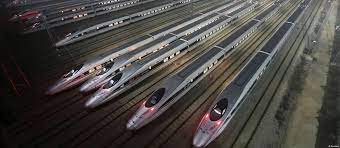
China, along with its partners, actively promotes the high-quality development of the Digital Silk Road, develops Silk Road e-commerce, and deepens international exchanges and cooperation in cyberspace, encouraging countries to ride the fast train of the internet and digital economy. This demonstrates China’s major-country responsibility in facing up to global challenges in digital development.
To strengthen global governance of the internet, it is crucial to ensure a more peaceful and secure cyberspace. The future of cyberspace should be jointly created by all countries, and the security of cyberspace should be collectively maintained. Only by respecting the sovereignty of each country in cyberspace, adhering to international rules governing cyberspace, and deepening practical cooperation in cybersecurity, can countries work together to address the challenges against cybersecurity.
China has released the International Strategy of Cooperation on Cyberspace and proposed the Global Initiative on Data Security, continuously contributing to the improvement of the global digital governance system.
In October this year, China put forward the Global AI Governance Initiative, presenting a comprehensive approach to AI governance in terms of development, security, and governance. It emphasizes a systematic approach that balances development and security, advocates a people-centered and benevolent AI consensus, and promotes the values of equality, mutual benefit, and respect for human rights. It has made a strong voice in leading global AI governance.
The key to strengthening global governance of the internet lies in making the online space more equal and inclusive. The vitality of the internet comes from connectivity, and its core lies in openness. The cyberspace should be a big where diverse voices can be heard, rather than a new battlefield full of digital barriers. Only by enhancing online communication and dialogue, promoting mutual understanding and friendship among peoples of different countries, and fostering inclusive coexistence of different civilizations, can countries better promote the common values of humanity and facilitate cultural exchange in the digital world.
China has been upholding the principles of openness and inclusiveness, promoting online dialogue and communication among different civilizations, and making the internet an important platform for showcasing the diverse cultures of the world. It has built the multilingual platform Travel Silk Road and hosted the Treasure Hunt Relay: Global Museum Director’s Choice in recent years.
As the internet becomes a new driving force of development, a new frontier of ensuring security, and a new platform for mutual learning between civilizations, the building of a community with a shared future in cyberspace is a natural choice in answering the call of the times and a common aspiration of the international community.
China will deepen cooperation with the rest of the world, jointly advance the building of a community with a shared future in cyberspace to a new stage, and let the fruits of internet development benefit more countries and people.

China strives for clean, efficient development of coal industry

By Ding Yiting, People’s Daily

As an important traditional source of energy in China, coal accounted for about 56 percent of the total domestic energy consumption annually. The coal industry has contributed significantly to China’s economic and social development.

However, it has also been criticized as wasteful and highly polluting.

In recent years, China has been actively promoting supply-side structural reform in its coal industry, promoting cleaner and more efficient use of coal, and working to transform the industry toward high-end, intelligent, and green development.

Zhunneng Group under China Energy Investment Corporation has developed a coal-derived nano-hydrocarbon fuel, a viscous black liquid made from coal, water and a small amount of additives through nanosizing processes.

“This type of fuel has a low fire point and can sustain autonomous stable combustion, significantly reducing coal consumption for thermal power plants,” said an executive with Zhunneng Group.

According to the executive, the potential applications of the newly developed fuel span multiple fields, including explosives, fuel substitution, and coal gasification.

A coal chemical enterprise, after using the new type of fuel, has seen increasing production of syngas, resulting in an additional revenue of approximately 200 million yuan ($27.48 million) each year, the executive told People’s Daily.

Zhang Hong, spokesperson of the China National Coal Association, noted that as the energy attribute of coal reaches its peak, there will be increasing emphasis on utilizing coal more as an industrial raw material.

According to him, many enterprises choose to improve the comprehensive utilization efficiency of coal as a raw material to develop high value-added, refined, and differentiated products, promoting high-end, diversified, and low-carbon development of the coal chemical industry.

According to incomplete statistics, in 2022, China’s coal-to-oil, coal-to-gas, coal-to-olefin, and coal-to-ethylene glycol production capacities reached 9.31 million tons, 6.125 billion cubic meters, 16.72 million tons, and 11.55 million tons, respectively. The comprehensive utilization efficiency of coal as a chemical raw material continued to improve.

In terraced open-pit mines in Erdos, north China’s Inner Mongolia autonomous region, unmanned mining trucks with a capacity of 330 tons were seen running to an unloading area 2.5 kilometers away, carrying mineral soil stripped by electric shovels.

These trucks were a safer alternative to manned mining trucks, said Guo Pei, manager of the intelligent construction management center of the Heidaigou open-pit coal mine of Zhunneng Group.

According to him, manned trucks, which are often large and have many blind spots, pose greater safety risks for drivers particularly during nighttime or in bad weather. Equipped with advanced technologies such as LiDAR, millimeter-wave radars, and digital twins, these unmanned trucks can autonomously plan routes and accurately park for unloading. Moreover, their speed is comparable to that of manned trucks.

By inputting information like coal rock and bench parameters, an intelligent drilling and blasting system can improve borehole precision to within 5 centimeters.

A high-bench radar monitoring system can rapidly identify potential hazard areas, reducing warning time from 24 hours to 2 hours. This allows over 100,000 extra tons of coal to be mined each year.

With the application of intelligent technology, production and management at the Heidaigou Open-pit Coal Mine operated by Zhunneng Group have become smarter and more efficient.

The coal industry is considered a high-risk sector, as it often faces hazards such as water damage, fires, gas leaks, impact pressure, and dust. Promoting the construction of intelligent coal mines reduces personnel usage in high-risk positions, enhances safety, and improves efficiency.

According to an official with the coal department of the National Energy Administration, seven key coal enterprises, including the China Energy Investment Corporation, China National Coal Group Corporation, and Shandong Energy Group, had built a production capacity of 1.393 billion tons annually through intelligent means as of the end of 2022, accounting for 74.7 percent of their total.

As of May this year, China had built 1,043 intelligent coal mining workshops and 1,277 intelligent tunneling workshops. Preliminary statistics show that the total investment scale of intelligent construction in coal mines nationwide has exceeded 150 billion yuan, driving the rapid development of industries such as mine Internet of Things, coal mining equipment manufacturing, and intelligent control systems.

Promoting resource recycling and enhancing value circulation is an important direction for the green transformation of the coal industry.

Zhunneng Group has turned nearly 100,000 mu (6,667 hectares) of reclaimed land into industrial tourism areas. Besides, in the plant of Gaozhuang Coal Company, Zaozhuang Mining Group under Shandong Energy Group, coal gangue is used for road construction and brick making, while tail coal slurry is transformed to improve the yield of medium coal.

According to data released by the China National Coal Association, the comprehensive utilization rate of mine water in the country has increased from 62 percent to 79.3 percent over the past decade, and the land reclamation rate has also risen from 42 percent to 57.8 percent.

During the same period, the installed power generation capacity from the comprehensive utilization of coal gangue and low-calorific coal has increased from 29.5 million kilowatts to 43 million kilowatts; the installed capacity of coal-fired power units with ultra-low emissions has exceeded 1.05 billion kilowatts, accounting for approximately 94 percent of the total.

China sees bright prospects in green development

By Yin Shuanghong, People’s Daily

China’s first prefabricated high-rise vertical factory, the phase-1 project of the Pingshan New Energy Vehicle Industry Park in Shenzhen, south China’s Guangdong province, was completed and delivered in April this year.

Thanks to the application of smart technologies, the construction period of the factory was saved by 15 percent, water and electricity usage by 20 percent, and waste discharge by 20 percent.

The high-rise vertical factory enables intensive land use and is conducive to resource recycling in the industrial park. It is an epitome of the green development of the manufacturing sector.

Promoting green and low-carbon economic and social development is a key part of achieving high-quality development. In recent years, China has made significant progress in fostering new growth points for green and low-carbon development.

In the manufacturing sector, the production of solar cells and charging piles increased by 63.2 percent and 34.2 percent respectively in the first three quarters of this year, while the production and sales of new energy vehicles grew by over 30 percent year-on-year.

In the energy industry, as of the end of September, the installed capacity of solar power generation increased by 45.3 percent compared to the previous year, and wind power installed capacity by 15.1 percent.

Green technologies and products continue to emerge in various sectors and industries, effectively promoting the optimization of industrial structure and demonstrating a strong momentum for industrial upgrading.

As a new driving force, the growth of the green industry can create a broader space for economic development. Green, circular, and low-carbon development is the direction of today’s technological revolution and industrial transformation, and the most promising field for development. A better grasp of the opportunities for green transformation can take the initiative and gain a favorable position in future competition.

According to data from the General Administration of Customs, the total exports of electric vehicles, lithium-ion batteries, and solar batteries reached 798.99 billion yuan ($109.83 billion) in the first three quarters this year, a year-on-year increase of 41.7 percent. China’s leapfrog development in green industries fully demonstrates the importance of pursuing sustainable economic growth.

Green development is sustainable. Only by laying a solid foundation for green development can China achieve high-quality development in the future. China has great potential in this regard and can build a number of growth points.

Currently, the country is actively promoting concerted efforts to cut carbon emissions, reduce pollution, expand green development, and pursue economic growth. It prioritizes green transformation and upgrading of industries, accelerates the cultivation and expansion of green and low-carbon sectors, actively develops green technologies and products, and makes the economy greener, so as to enhance the potential and momentum of development.

China’s renewable energy industry is developing rapidly, and the country leads in various fields such as energy equipment, water-saving equipment, and pollution control technologies.

New ecological industry models, including urban modern agriculture, eco-tourism, and rural complexes are also rapidly growing. Today, eco-friendly products have more ways for financial gain.

It is believed that as China continues to pursue green development, the Chinese economy will become even greener in the future.

Green development is an all-round and revolutionary transformation of production methods, lifestyles, ways of thinking, and values. To promote the growth of green industries, it is necessary to adhere to a systemic perspective and coordinate the greening of production, distribution, consumption, and other aspects. It is important to actively guide and mobilize the entire society to participate in green development.

With the continuous advancement of Chinese modernization and the improvement of people’s living standards, the concept of green development has permeated all aspects of Chinese people’s lives.

The demand for green upgrading and transformation of traditional industries, as well as the demand for green consumption, have given rise to a huge green market, continuously enhancing China’s development potential and momentum.

By further opening up new areas and creating new advantages, China is striving to promote economic development that not only maintains reasonable quantitative growth but also achieves steady qualitative improvement, allowing the people to have a greater sense of achievement, fulfillment, and security in a beautiful ecological environment.

To let Internet better benefit people of all countries

By Jin Xin, Gu Chun, Liu Junguo, People’s Daily

The 2023 World Internet Conference (WIC) Wuzhen Summit kicked off in Wuzhen, east China’s Zhejiang province on Nov. 8. The summit is the largest and highest-level Internet conference held in China, and also a highly anticipated global summit in the field of Internet.

The WIC has been held annually since 2014, bringing together political dignitaries and Internet elites from around the world at its permanent venue in Wuzhen to discuss collaboration and win-win cooperation in Internet development of the world.

Chinese President Xi Jinping addressed the 2023 WIC Wuzhen Summit via video. He said as the Internet becomes a new driving force of development, a new frontier of ensuring security, and a new platform for mutual learning between civilizations, the building of a community with a shared future in cyberspace is a natural choice in answering the call of the times and a common aspiration of the international community.

He stressed that the international community needs to deepen exchanges and practical cooperation to jointly advance the building of a community with a shared future in cyberspace to a new stage.

Currently, more than half of the countries and regions around the world are using China’s BeiDou Navigation Satellite System (BDS), and the system is making people’s lives safer, more convenient , and more efficient.

The BDS has been incorporated into the standard systems of international organizations in civil aviation, maritime affairs, and mobile communications, and is accelerating its integration into the international industrial system.

During the 2022 WIC Wuzhen Summit, an event was hosted to showcase the exemplary cases of  building a community with a shared future in cyberspace. Twelve cases were showcased, included one related to the BDS.

From conceptual documents to initiatives, and to cases, consensuses have gradually transformed into concrete actions. Leveraging the WIC Wuzhen Summit, countries are jointly planning for the global development of Internet and building a community with a shared future in cyberspace.

On July 12, 2022, Xi sent a congratulatory letter to the WIC for the inauguration of the WIC international organization. He said the establishment of the organization is an important move echoing the informatization trend of the times, and it will deepen international exchanges and cooperation in cyberspace.

This marked a qualitative leap of the WIC, from an annual international conference to an international organization with a permanent institution. Since its establishment, the WIC international organization has been joined by more than 120 members from countries such as the UK, France, Germany, the United States, Australia, South Korea, Japan, and India.

In recent years, an increasing number of international exchange activities have been held in China. Together with the WIC, they have built a collaborative platform for building a community with a shared future in cyberspace.

The China International Digital Products Expo, the China International Software Expo, the World Robot Conference and the World Artificial Intelligence Conference all presented opportunities for the international community to share the fruits of innovation in cyberspace.

As a highlight of the WIC Wuzhen Summit, the Light of Internet Expo has become a leading indicator of global Internet technology development.

Since 2014, the WIC has been dedicated to promoting the integration of digital technology and real economy, and using new driving forces to propel new development.

Not only the Light of Internet Expo, but also other important events such as a release ceremony for world leading internet scientific and technological achievements and the Global Internet Competition of “Straight to Wuzhen,” have facilitated the integration of mobile Internet, cloud computing, big data, artificial intelligence, and various other industries. These efforts have provided new impetus for enhancing global economic development.

Taking the WIC as an opportunity, China, as a major player in the digital economy, actively promotes broader and deeper international cooperation in digital economy, ensuring that the achievements of Internet development benefit people worldwide.

In Southeast Asia, Chinese enterprises helped build the first 5G smart hospital in ASEAN countries, promoting the intelligent transformation of hospital services. In Latin America, China has partnered with Brazil and Ecuador to utilize digital technology for innovative cooperation, assisting in the protection of the Amazon rainforest ecosystem and marine ecological environment. In Africa, China has launched technology assistance and training programs with the International Telecommunication Union to support the construction of a digital Uganda.

From the construction of information infrastructure and social digital transformation to the application of new technologies such as 5G and the Internet of Things, China is committed to narrowing the global digital divide and sharing development opportunities with the world.

In the information age, the Internet carries human dreams and is closely related to the well-being of the people. Looking ahead, the WIC will always strive to build a global Internet platform for extensive consultation, joint contribution and shared benefits, actively create a new pattern of international cooperation in cyberspace, and continue to write new chapters in the global development and governance of the Internet.

CIIE to provide new opportunities for world with China’s development

By Luo Shanshan, Ge Mengchao, Yang Xun, People’s Daily

On Nov. 5, the first day of the sixth China International Import Expo (CIIE), the National Exhibition and Convention Center (Shanghai) was bustling with “old friends” and “new friends” who gathered to discuss cooperation.

Walking through the exhibition areas, visitors were often overwhelmed by the vast array of exhibits on display. At this year’s CIIE, the Business Exhibition covered approximately 367,000 square meters, featuring six main exhibition areas and an innovation incubation zone.

In the Consumer Goods exhibition area, a 4.6-meter-tall Lego model was quite eye-catching. Heart shapes, smiley faces and wood ducks imbued with childlike wonder were dotted throughout the structure.

According to a staff member at the Lego booth, this large 3D model was specifically built for the CIIE, which took 18 builders 491 hours to put together.

At the previous five sessions of the CIIE, the Lego Group debuted many new products. This year, it once again launched its latest products at the event, hoping to bring more surprises to Chinese consumers.

The multinational medical device group Elekta brought its latest generation of the Gamma Knife stereotactic radiosurgery system. The group’s founder and boardchairman Laurent Leksell told People’s Daily that the CIIE is a platform for the company to showcase its latest innovative technologies and clinical applications, adding that the group looks forward to exchanging ideas and explore new opportunities with industry partners.

It is reported that at this year’s CIIE, exhibition areas for cutting-edge technologies like energy, low carbon, and AI, as well as lifestyle and consumer goods have grown 30 percent. More than 400 new products, technologies and services were exhibited.

Many agreements on practical cooperation were inked on the first day of the event.

One was signed by the multinational pharmaceutical company AstraZeneca and the Wuxi National High-tech District in east China’s Jiangsu province. According to the agreement, AstraZeneca will expand its production capacity of small molecule drugs in Wuxi.

The pharmaceutical company also inked an agreement on the phase-two project of an inhaler production supply base in Qingdao, east China’s Shandong province. It announced to launch a rare disease cooperation project in the Jinan Innovation Zone of Shandong, to develop more innovative medicines.

Wang Lei, global executive vice-president of UK company AstraZeneca and president of its China branch,, said this year marks the 30th year of AstraZeneca’s entry to the Chinese market, and China has become an important growth engine for the company in the global market.

“We are honored to be able to share the opportunities of the Chinese market through the CIIE,” he noted.

On Nov. 5, Sinochem Holdings held a special signing ceremony at the CIIE, at which it inked agreements with clients from the United States, Brazil, Chile, and other countries in multiple industries such as crude oil and refined oil, food and agricultural products, chemical products, chemical equipment, and service trade.

“Through the CIIE, a global exchange platform, Sinochem Holdings has strengthened cooperation with global energy, chemical, and agricultural companies, effectively expanding the channels for accessing upstream resources in related domestic industries, achieving diversification of import channels, and ensuring the stability of the industrial supply chain,” said Yang Shihao, vice president of Sinochem Holdings.

The CIIE has leveraged the strengths of China’s enormous market, fulfilled its platform function for international procurement, investment promotion, people-to-people exchanges and open cooperation, and made positive contributions to creating a new development pattern and promoting world economic development.

The “CIIE effect” continues to unfold, allowing China’s enormous marketto be shared by the world. This has strengthened the confidence of multinational companies in long-term investment and development in China.

At this year’s CIIE, General Mills, an American food company, announced the full-channel entry of its pet food brand, Blue Buffalo, into the Chinese market. Blue Buffalo made its debut in China at the fourth CIIE and has since benefited from various preferential policies in pilot free trade zones, successfully entering the Chinese market through cross-border e-commerce platforms.

“Over the past two years, we have seen the vast prospects of the pet market in China, which has brought new growth to our business in the country,” said Su Qiang from General Mills.

“We hope to exchange with other players in the industry via the CIIE and build more partnerships,” Su added.

“Through our participation in the CIIE over the past few years, we have fully experienced the powerful spillover effect of this platform. Shiseido’s new skincare brands and products have garnered extensive attention and recognition from consumers after being exhibited at the CIIE,” said Toshinobu Umetsu, president and CEO of Japanese company Shiseido’s branch in China.

He said the CIIE is an epitome of China’s high-level opening up, providing foreign companies operating in China with more market opportunities, investment opportunities and growth opportunities, and allowing enterprises to share the dividends of China’s opening up.

Asia-Pacific sees bright prospects for economic growth

By Yang Yi, People’s Daily

The economic growth of the Asia-Pacific region is expected to reach 4.6 percent this year, up from 3.9 percent in 2022, according to the Regional Economic Outlook for Asia and Pacific recently released by the International Monetary Fund (IMF).

The report said that “economic activity in Asia and the Pacific remains on track to contribute about two-thirds of global growth in 2023.”

In a recent Asian Development Outlook report, the Asian Development Bank (ADB) forecasted that the region’s developing economies will grow 4.7 percent this year.

Against the backdrop of a sluggish recovery of the world economy this year, the Asia-Pacific region has shown resilience and vitality, with continuous progress made in regional cooperation.

The Asia-Pacific region accounts for one-third of the world’s population, over 60 percent of the world’s economy, and nearly half of global trade. Experts said that the Asia-Pacific region boasts rich production factors, a huge market size, diverse resources, and strong economic complementarity.

Currently, market demand in the region is gradually recovering, the tourism industry is rebounding rapidly, and consumption is showing resilience. Inflationary pressures in some countries in the region are decreasing.

The Pacific Asia Travel Association recently estimated that by the end of 2023, the number of international tourists visiting the Asia-Pacific region is expected to exceed 516 million, reaching approximately 76 percent of the pre-pandemic level in 2019. By 2024 and 2025, the number is projected to increase to 107 percent and 116 percent of the pre-pandemic level, respectively.

The Asia-Pacific region is a pioneer and a demonstration area for promoting digitalization and developing the digital economy. According to a recent forecast by International Data Corporation (IDC), the digital economy is expected to contribute 65 percent of the overall economic output of the Asia-Pacific region in 2023, and businesses in the region are anticipated to generate 43 percent of their revenues from the digital economy chain.

Experts believe that digitalization is reshaping the Asia-Pacific economy, and the region is facing opportunities for digital transformation.

In addition, the IMF predicted that inflation for most Asia-Pacific economies would fall within central bank targets by the end of 2024, earlier than the rest of the world.

In June this year, the Regional Comprehensive Economic Partnership (RCEP) agreement came into effect for all its 15 members, entering a new phase of comprehensive implementation. According to the agreement, over 90 percent of trade in goods within the region will eventually be tariff-free.

This will make trade relations smoother and closer among member countries, further promote trade and investment liberalization and facilitation in the Asia-Pacific region, and enhance the region’s intrinsic momentum for economic growth.

With the signing of the RCEP, the dividends are gradually released. As the construction of the China-ASEAN Free Trade Area advances, the industrial and supply chain cooperation between the two sides, based on complementary advantages, has continuously been strengthened.

Bilateral trade volume between China and ASEAN reached over $970 billion last year, and they have been each other’s largest trading partners for three consecutive years.

The negotiations on Version 3.0 China-ASEAN Free Trade Area were launched earlier this year, which would further reduce tariff and non-tariff barriers and promote regional economic integration.

Krishna Srinivasan, director of the IMF’s Asia and Pacific Department, noted that implementing the RCEP has bolstered economic diversity across the region, integrating more economies and deepening cooperation among regional trading partners. In the long run, the agreement is expected to create a more attractive investment environment and boost regional economic growth.

As one of the most important economies in the Asia-Pacific region, China has enormous potential for economic growth and has made significant contributions to promoting regional economic growth.

According to the ADB’s Asian Economic Integration Report 2023, China’s contribution to economic growth in the Asia-Pacific region reached 64.2 percent. The country also contributed to 37.6 percent of the region’s growth in goods trade and 44.6 percent in services trade.

According to statistics, China’s GDP exceeded 91.3 trillion yuan ($12.54 trillion) in the first three quarters of 2023, growing 5.2 percent year-on-year. China’s imports and exports with other Belt and Road countries increased by 3.1 percent from the same period last year, accounting for 46.5 percent of its total trade volume.

“The accelerated recovery of the Chinese economy has greatly improved the overall liquidity and consumption performance in the Asia-Pacific region,” said Srinivasan. Recent economic indicators showed that both the manufacturing and service sectors of China have entered a path of recovery, a significant sign of China’s economic rebound, Srinivasan added.

Aksornsri Phanishsarn, adviser to the Foreign Affairs Committee of the Thai Senate and associate professor of the Faculty of Economics at Thammasat University, said that China’s economy boasts numerous promising areas, with rapidly emerging industries and innovative business models, all of which hold immense growth potential. This dynamic landscape serves as a powerful catalyst for economic growth in the Asia-Pacific region, she added.

World Bank Vice President Manuela Ferro said that the growth of the Asia-Pacific region, particularly China’s economy, has exceeded expectations. The broad recovery of the Asia-Pacific and global economy this year can largely be attributed to the driving force of China’s economy. She believed the region is expected to see a recovery in exports and other related trade in 2024.

China will always be important opportunity for global development

By He Yin, People’s Daily

Chinese President Xi Jinping sent a letter to the sixth China International Import Expo (CIIE) on Nov. 5. He said that China will always be an important opportunity for global development, firmly advance high-standard opening up and continue to make economic globalization more open, inclusive, balanced and beneficial to all.

The CIIE once again demonstrated to the international community China’s sincere aspiration to share its market opportunities with the rest of the world, a firm determination to advance high-level opening up, and proactive actions to build an open world economy.

The CIIE is the world’s first import-themed national-level expo. It aims to promote open cooperation and win-win results among all parties.

Since its debut in 2018, the CIIE has been successfully held for five sessions. It has leveraged the strengths of China’s enormous market, fulfilled its platform function for international procurement, investment promotion, people-to-people exchanges and open cooperation, and made positive contributions to creating a new development pattern and promoting world economic development.

Foreign exhibitors to the event, recognizing the increasing significance of the CIIE, said they looked forward to further deepening mutually beneficial cooperation with the Chinese market and would continuously expand their investment in China.

The CIIE serves as a window for fostering a new development pattern that creates new opportunities for the world through China’s further development.

The China Pavilion at this year’s CIIE has a record-breaking area of 2,500 square meters. With the theme of “Chinese Modernization, World’s New Opportunities,” an exhibition was staged to display the achievements of China’s pilot free trade zones over the past decade, showcasing the latest progress of China’s high-level opening up and high-quality development. 

These efforts demonstrate that the new development pattern China is building is not a closed domestic cycle but a more open domestic and international dual cycle. It not only meets China’s own development needs, but also benefits people from all countries.

China vowed that it would introduce the foreign investment regulations at a faster pace, improve the open and transparent foreign-related legal system, and implement the “pre-establishment national treatment plus negative list” management system for foreign investment across the board.

It promised to continue to encourage bold trials and experiments in pilot free trade zones and quicken the development of the Hainan Free Trade Port as pacesetters of opening up in China.

Besides, the country also said it would upgrade trade in goods, develop new mechanisms for trade in services, import more quality products, and establish pilot zones for Silk Road e-commerce cooperation.

China continues to release the dividends of openness and cooperation through the CIIE, vividly illustrating the expo’s theme – “New Era, Shared Future.”

The CIIE is a platform that promotes high-level opening up and shares China’s enormous market with the world. Hosting the CIIE is a significant decision for China to advance a new round of high-level opening up and a major initiative for China to proactively open its market to the world.

This year’s CIIE continued to draw eager participation from “old friends” and “new friends” alike. Around 200 companies have signed up to exhibit for the sixth consecutive year. Meanwhile, 11 countries joined the Country Exhibition for the first time, and 34 made their offline debut.

Over 3,400 exhibitors and nearly 410,000 professional visitors attended the CIIE, and the number of Fortune Global 500 companies and industry leaders participating in the event reached a new high in history.

The continuous improvement in the quality and level of the CIIE fully demonstrates that China, with its expanding openness, boasts strong appeal.

Time-honored stores, pioneering startups, globally renowned companies, and even small and medium-sized enterprises from the least developed countries are all leveraging the platform of the CIIE to enter the Chinese market and share the opportunities. “Confidence in the Chinese market” has become a shared perception among foreign enterprises attending the CIIE.

The CIIE provides shared international public goods and services that facilitate an open world economy and let the world benefit from win-win cooperation.

Currently, the world economic recovery lacks momentum and requires the solidarity and cooperation of all countries. The CIIE is a platform for trading goods and services, as well as exchanging cultures and ideas. It carries a distinctive feature of openness and continuously contributes to the development of an open world economy through both conceptual and practical support.

By facilitating cultural and idea exchanges, the CIIE fosters consensus on open cooperation. Through the trading of goods and services, the CIIE injects momentum into global economic development through open cooperation.

At this year’s CIIE, over 400 representative new products, technologies, and services made their debut. The Hongqiao International Economic Forum, themed “Joining Hands in Development, Opening Up for the Future,” featured 22 sub-forums covering hot topics such as green development, digital economy, and intelligent technology. These discussions aimed to foster broad consensus on promoting economic globalization, revitalizing the global economy, and enhancing the resilience of world economic development.

The enthusiastic participation in the CIIE fully demonstrated that open cooperation is the trend of the times, while mutual benefit remains a shared goal of all countries. China will stay committed to pursuing high-level opening up with a broader vision, a more open mind and a more proactive attitude. It will join hands with partners worldwide to create an even more prosperous future.

Photo taken on Nov. 4, 2023 shows the south square of the National Exhibition and Convention Center (Shanghai), the main venue for the sixth China International Import Expo (CIIE), in east China’s Shanghai. (Photo by Weng Qiyu/People’s Daily Online)

A robotic arm is exhibited at the Intelligent Industry and Information Technology exhibition area of the sixth China International Import Expo, Nov. 4, 2023. (Photo by Weng Qiyu/People’s Daily Online)

People visit the Medical Equipment and Healthcare Products exhibition area of the sixth China International Import Expo, Nov. 5, 2023. (Photo by Wang Chu/People’s Daily Online)

“Boost Your Confidence: 7 Daily Activities for a More Empowered You”

  1. Morning Affirmations: Start your day with positive self-affirmations to reinforce your self-worth.
  2. Powerful Posture: Adopt a confident posture – stand tall, shoulders back, and head held high to influence your mental state.
  3. Skill Development: Invest time in mastering a skill you’re passionate about to naturally boost your confidence.
  4. Healthy Lifestyle Choices: Prioritize regular exercise and a balanced diet to enhance physical and mental well-being.
  5. Social Interaction: Challenge yourself to initiate conversations and engage in social activities to build social confidence.
  6. Set and Achieve Goals: Break down larger goals into manageable tasks, celebrating small victories for increased self-belief.
  7. Reflect and Express Gratitude: End your day by reflecting on confident moments and expressing gratitude for positive aspects, shifting your focus to accomplishments.

“Emirates Orders 90 Boeing Aircraft, Flydubai Enters Widebody Arena”

Emirates has announced a substantial expansion with an order for 90 additional Boeing 777X twinjets valued at $52 billion. The order includes 55 777-9s, set for delivery from 2025, and 35 of the smaller 777-8s, scheduled to arrive in 2030. Emirates Group chief Sheikh Ahmed bin Saeed Al Maktoum revealed that the airline would be among the launch customers for the 777-8. The carrier is also updating its previous 787 order, adjusting from the original commitment of 40 787-10s to taking 30 787-9s, with a total of 35 Dreamliners, including 15 787-10s and 20 787-8s. To power the 777Xs, Emirates is signing for 202 additional General Electric GE9X engines. The airline’s widebody fleet now comprises 245 aircraft on order, including 205 777Xs.

Flydubai, Emirates’ partner, has also taken a significant step by ordering 30 Boeing 787-9s, marking a move into widebody operations. This is a significant shift for Flydubai, which had been exclusively using 737s, including the -800 and the Max versions. Flydubai’s decision to introduce widebodies reflects a maturing of the airline and its strategy to invest in advanced and efficient aircraft. The joint announcement at the Dubai Airshow showcased the close partnership between Emirates and Flydubai, both of which will benefit from the expanded and diversified fleet.

“Davido and Chioma Make First Public Appearance After Twins’ Birth, Stirring Online Reactions”

“Davido and Chioma, the renowned couple, stepped into the public eye together for the first time since welcoming their twins, prompting a range of reactions online. The pair attended a family event in Atlanta, USA, drawing attention and diverse comments from fans.

While some celebrated Chioma’s relaxed and beautiful appearance, others criticized her for leaving the twins at home. Opinions varied, with some questioning Davido’s alleged intrusion on Chioma’s privacy, while others hailed them as the “Couple of the Year.”

Positive remarks focused on Chioma’s post-childbirth weight loss and her perceived humility. Fans also applauded the couple’s close friend, Naomi, for her supportive role in Chioma’s life.

Davido had hinted at the twins’ arrival in his song ‘In The Garden,’ later confirming the news through a video showing the couple leaving the hospital with their twins. Having faced the loss of their son, Ifeanyi, last year, the birth of the twins holds special significance for them. In an interview, Davido shared the emotional journey of discovering the twin pregnancy, coinciding with the month of Ifeanyi’s birth.”