Chinese micro-drama surge in popularity across Southeast Asia

By Cao Shiyun, People’s Daily

In recent years, Chinese micro-dramas have achieved remarkable success in overseas markets, especially across Southeast Asia, largely driven by streaming platforms. 

Over 300 overseas apps now offer Chinese micro-dramas through various distribution channels. In 2025, global downloads are projected to reach 1.21 billion, with overseas revenue expected to total $2.38 billion, reflecting strong and sustained growth.

On TikTok, the Chinese micro-drama The Story of Suzhou, which centers on the preservation of traditional culture, has gained widespread popularity. Audiences from Thailand, Indonesia, Malaysia, and other countries have been sharing their responses in multiple languages, praising its visually poetic scenes and calling for the addition of subtitles in their native languages so they can watch it with family.

As the industry accelerates its global expansion, Southeast Asia has emerged as a key market. These micro-dramas are typically shot in vertical format, featuring fast-paced storytelling and distinct themes. Each episode is under 3 minutes long, with series totaling between 50 and 90 episodes, covering diverse genres such as urban romance, family ethics, fantasy, and suspense.

The strong narrative conflicts and uplifting emotional expression have captivated many Southeast Asian viewers, fostering sustained engagement. Additionally, the portrayal of China’s natural landscapes, traditional attire, and modern urban scenery has sparked growing interest in the country among audiences in the region, directly contributing to a sharp increase in downloads of Chinese micro-drama apps overseas.

As content genres grow increasingly diverse, distribution channels are also becoming more varied. Since 2025, Telkom Indonesia, the largest telecom operator in Indonesia, has collaborated with the Chinese micro-drama platform FlexTV to introduce exclusive viewing packages, allowing Indonesian users to access Chinese micro-dramas more conveniently and affordably. 

Meanwhile, DramaBox, a platform operated by Dianzhong Tech — a company focused on producing and distributing licensed mobile digital content–has partnered with local telecom providers across Southeast Asia to roll out integrated “data + content” bundleds, further lowering barriers to access.

Luo Chuanyu, deputy director of the China-ASEAN Research Institute at Guangxi University, observed that micro-dramas transcend linguistic and cultural divides through engaging narratives and authentic depictions of everyday life. Furthermore, by extensively featuring contemporary Chinese urban lifestyles and technological advances, they offer Southeast Asian audiences a more vibrant and relatable portrait of modern China, thereby fostering increased two-way cultural exchange and inspiring localized innovation.

“I often watch Chinese micro-dramas to unwind and have downloaded several dedicated apps,” shared Farrell, an Indonesian university student. He is particularly drawn to series depicting Chinese youth lifestyles, noting, “Seeing peers’ experiences in China feels relatable. Southeast Asia and China share many similarities, so I often recognize aspects of my own life in these stories.”

“The plot designs in Chinese micro-dramas align closely with the aspirations of Southeast Asian audiences for fairness, hope, and a better life, making emotional resonance almost effortless,” noted Drajat Tri Katono, a sociologist at Universitas Sebelas Maret in Indonesia. He pointed out that content which remains grounded in reality and meets widespread psychological expectations often bridges cultural differences and gains broad acceptance.

Cultural affinity is a key factor in the genre’s regional success. Singapore’s Lianhe Zaobao pointed out that the region’s large ethnic Chinese population serves as an important bridge. In areas such as family ethics, views on marriage and relationships, and workplace values, Southeast Asian societies share many commonalities with China. 

Earlier classics like Justice Pao, The Legend of the Condor Heroes and Journey to the West had already built a sizable fan base among overseas Chinese communities, laying a deep foundation of cultural affinity for today’s micro-dramas.

Southeast Asia’s distinctive consumption landscape offers fertile ground for the overseas expansion of Chinese micro-dramas. The region features a young population with a high share of youth, adaptable spending habits, and a strong openness to new forms of cultural and entertainment content — all contributing to substantial market growth potential.

Moreover, a large and expanding internet user base, growing internet penetration, and substantial time spent online have collectively fostered the adoption of digital payment methods among local users, creating favorable conditions for the dissemination and commercialization of micro-dramas. Data indicate that in 2025, paying micro-drama users in Southeast Asia increased by 28 percent year on year, solidifying the region as a core market with both commercial viability and a solid audience foundation.

At present, many Chinese micro-drama companies are extending their industrial chains overseas by setting up production centers in countries such as Thailand and the Philippines, exploring new models that feature localized creation and distribution. 

Jiuzhou Wenhua a company in Jiaxing, east China’s Zhejiang province has partnered closely with Southeast Asian production teams to establish content creation hubs and launch a dedicated micro-drama platform tailored to regional audiences. To date, the company has produced more than 600 micro-dramas for overseas markets, about 20 percent of which were originally created by overseas teams, reaching a total overseas audience of over 10 million.

Copyright licensing and format adaptation have also become key pathways for localization efforts. Indonesian digital media operator IDN Times has acquired the rights to Chinese micro-dramas while establishing a local production division, adopting their narrative pacing and creative techniques to produce content tailored to regional audiences.

“Micro-dramas align well with the viewing preferences of young people today and act as an effective cultural bridge connecting young people across nations,” noted Garin Nugroho, a prominent Indonesian director. He emphasized that the potential of this format should not be underestimated.

China’s rise as the world’s first “electrostate”: a model for the global energy transition

By He Yin, People’s Daily

Recent international discourse has highlighted China’s transformative achievements in the power sector, with foreign media suggesting the nation is poised to become the world’s first major “electrostate.”

As electricity becomes central to the global clean energy transition, experts suggest future economic value may increasingly be measured in wattage.

China’s science-based energy planning has not only strengthened domestic development but also accelerated worldwide decarbonization efforts.

“Electrostate,” a new term gaining traction in global energy and climate policy discussions, refers to the proportion of electricity within a country’s total energy structure.

Latest figures show that by the end of 2025, China’s cumulative grid-connected wind and solar capacity surpassed 1.8 billion kilowatts for the first time, equivalent to the total installed capacity of about 82 Three Gorges projects.

On the consumption side, China’s total electricity use in 2025 exceeded 10 trillion kilowatt-hours, setting a new world record for annual power consumption.

This achievement stands in contrast to challenges faced elsewhere. Some developed economies grapple with persistent issues like power shortages, fragmented grids, and soaring electricity prices. In contrast, China’s electricity consumption nearly doubled over a decade, from about 5.5 trillion kilowatt-hours in 2015 to more than 10 trillion kilowatt-hours in 2025, and is now more than twice that of the United States, exceeding the combined total of the European Union, Russia, India, and Japan. 

China’s recognition as the world’s first “electrostate” is well-deserved. This recognition stems from science-based planning and the steady progress in high-quality development within the energy sector. 

Achievements include constructing 46 ultra-high-voltage transmission projects enabling long-distance power transfer (west-to-east and north-to-south), accelerating a unified national electricity market, and aligning initiatives like “East Data, West Computing” with optimized energy distribution. China’s planning-driven governance has vividly demonstrated both remarkable efficiency and tangible achievements in green development.

China’s emergence as the world’s first “electrostate” offers a model for the global green energy transition. 

The International Energy Agency noted that the age of electricity has arrived. Electricity is the primary option for replacing fossil fuels in end-use consumption and the main pathway for harnessing new energy sources. 

In China, more than one-third of the electricity consumed is generated from renewable sources. By 2025, China’s combined installed capacity of wind and solar power had surpassed that of thermal power for the first time. More than 95 percent of China’s coal-fired power units have achieved ultra-low emissions, and over half are capable of deep peak regulation, forming the world’s largest clean coal power supply system. 

On the demand side, sectors like transportation, industry, and construction are actively advancing electrification, steadily substituting coal, oil, and gas with electricity. Looking ahead, China’s electrification rate is projected to rise steadily, reaching around 35 percent by 2030.

As the world’s largest developing nation and second-largest economy, China continues to pursue its energy transition with unwavering commitment, injecting robust momentum into global green development. 

International observers note that Chinese enterprises are helping pave the way toward a world powered by electricity rather than internal combustion engines — truly “a 21st-century vision of progress.”

The empowering role of Chinese technology, Chinese manufacturing capacity, and Chinese solutions in the global energy transition is becoming increasingly evident. 

China supplies about 70 percent of the world’s wind power equipment and 80 percent of photovoltaic panels. Exports of wind turbines, solar components, and new energy vehicles reach more than 200 countries and regions. 

For instance, in sub-Saharan Africa, Chinese off-grid solar systems account for more than half of new electricity connections. In Pakistan, Chinese-made solar panels have become a popular investment choice. In Laos, construction of the China-Laos 500-kilovolt power interconnection project is accelerating and, once completed, will transmit about 3 billion kilowatt-hours of clean electricity annually. 

From taking the lead in formulating the world’s first international standard for photovoltaic direct current technologies, to facilitating agreements covering projects with a total installed capacity of 12 million kilowatts at the Energy Ministers Meeting of the Shanghai Cooperation Organization last year, China has actively promoted technology sharing, joint standard-setting, and cooperative rule-making. 

Through a “shared supply” model, China contributes to solving global energy challenges and offers accessible, affordable transition pathways for developing nations worldwide. China’s emergence as the world’s first “electrostate” epitomizes the country’s high-quality development and mirrors a new global energy landscape, one powered by electricity and built on a green foundation, now rapidly taking shape.

China’s first humanoid robot 7S store in Hubei province generating buzz

By Wu Jun, People’s Daily

In China, car dealerships are commonly known as 4S stores, a model that integrates sales, spare parts, service, and surveys under one roof. Now, a groundbreaking concept is emerging: a robot 7S store in Wuhan, capital city of central China’s Hubei province.

This pioneering store expands beyond the traditional 4S functions to include solutions, showcase and skills training. This model covers nearly the entire humanoid robot value chain, from key components and complete units to real-world application scenarios.

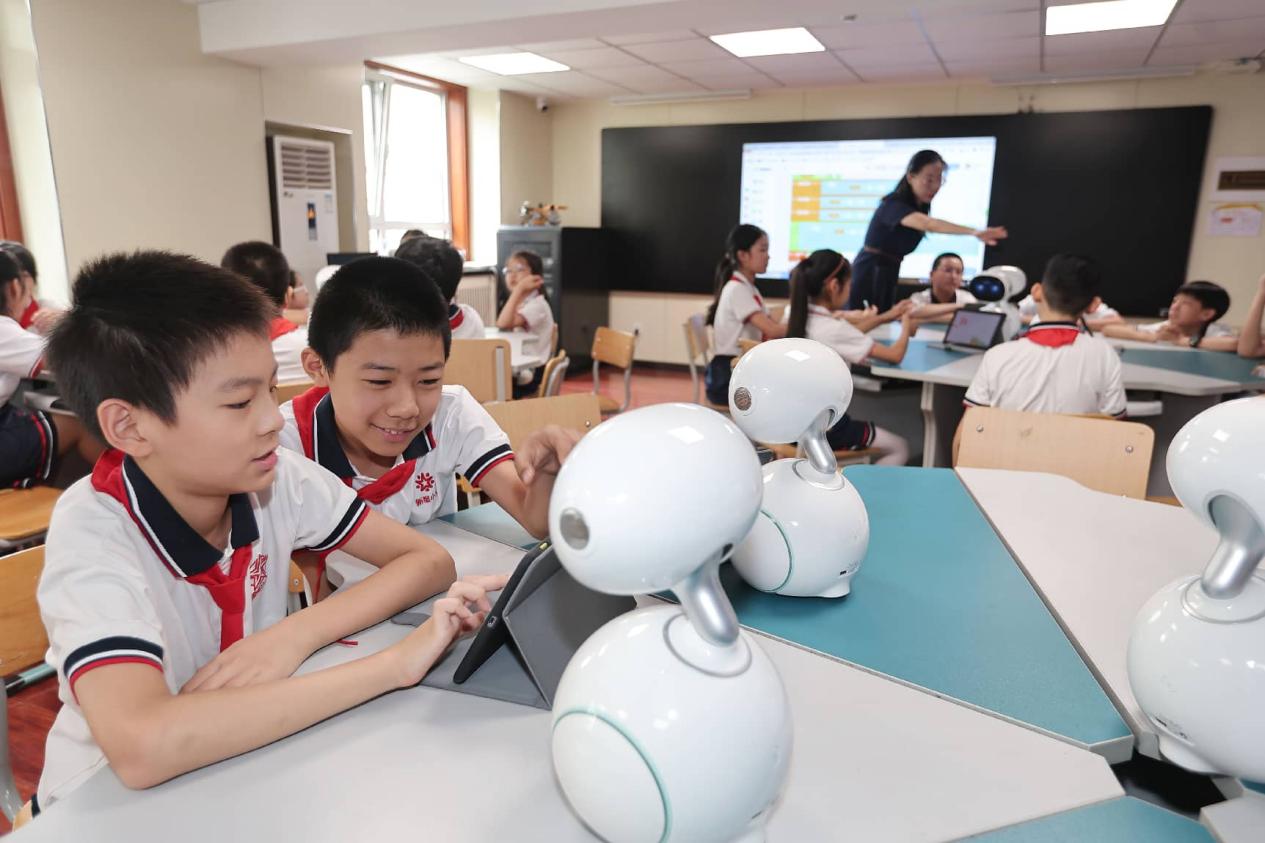
Inside the store, humanoid robots of different sizes and forms are busy at work: some kick footballs, some assist with sales, others play music. 

“We currently have 17 models of humanoid robots on display, priced from 7,999 yuan ($1152.89) to 700,000 yuan,” said store manager Hu Longdan. “They can be used in more than 10 scenarios, including industrial manufacturing, tourism guiding, elderly care and rehabilitation, and special operations.”

At the entrance of the store, a humanoid robot with wheels beneath its feet greets visitors. Named Yuanyou (meaning “traveling far”), the robot stands 158 centimeters tall, weighs 72 kilograms, and can move at a speed of 1.5 meters per second. 

“Yuanyou is a homegrown ‘Hubei native,'” Hu explained. For the past nine months, it has been working at Xianning Central Hospital in Hubei province, providing services such as patient guidance, explanations, and moxibustion therapy. It is the first humanoid robot in Hubei to work in a hospital.

“Before developing Yuanyou, we conducted extensive research into user needs,” said Yuan Chao, general manager of HandX, the developer of the robot. “We designed different ‘organs’ and ’tissues’ — hardware, software, and algorithms — and then assembled them into a complete humanoid robot.” 

He noted that a team led by Academician Liu Sheng from Wuhan University’s School of Microelectronics provided solutions in sensors and AI, while Hubei’s local humanoid robot enterprises supplied more than 80 percent of the hardware components. 

“Hubei has 20 core companies engaged in humanoid robot components and nearly 1,000 related enterprises,” Yuan said. “Key components such as the ‘brain,’ ‘skeleton,’ and ‘electronic skin’ can all be sourced locally.”

The journey from research and development to production was remarkably swift, taking only six months. In April 2025, the first Yuanyou robot rolled off the production line, and the product has now entered mass production. According to Yuan, the company has built four automated humanoid robot production lines with an annual capacity of 1,500 units.

Manufacturing robots is just the beginning; effectively deploying them is equally critical. To address this, Hubei established the Hubei Humanoid Robotics Innovation Center in June 2025 — effectively a “school” for humanoid robots. Every newly manufactured robot can undergo systematic training there under the guidance of data collection specialists.

“We offer 23 simulation scenarios and more than 10 temporary ones, allowing over 100 humanoid robots to train simultaneously,” said Liu Chuanhou, chief operating officer of the center. “We can collect over 1 million real-machine data entries each year. After verification, labeling, and cleaning, the data are fed into large-model training, enabling the robots to continuously evolve.”

So far, the 7S store has achieved revenue exceeding 600,000 yuan from various businesses including experiential consumption, sales, tours, and robot rentals. Hu noted that the store is backed by Hubei’s increasingly robust industrial ecosystem for humanoid robots. 

“The current capabilities of humanoid robots are still limited,” Hu acknowledged, “but they are poised to enter households and serve diverse industries in the near future, becoming integral to daily life.”

As one of the world’s most dynamic innovation hubs in the humanoid robot sector, China has in recent years seen rapid improvements in overall robot performance and expanding application scenarios, ranging from automobile manufacturing and computer, communication and consumer electronics assembly to warehousing, logistics, and smart elderly care.

Li Miao, a professor at the School of Robotics at Wuhan University, noted that the industry’s surge is the result of multiple forces converging. 

“Large AI models provide robots with a ‘brain,’ open-source operating systems lower development barriers, and the costs of key hardware such as motors, sensors, and reducers continue to fall, making high-performance humanoid robots feasible,” he said. 

Meanwhile, the digital and intelligent transformation across manufacturing and service sectors has generated substantial market demand, while robust national strategies and policy support are accelerating the influx of capital and talent. “Over the next five years,” Li added, “China’s humanoid robot industry is poised to transition from a phase of intense attention to one of tangible maturity.”

China’s automobile production, sales both surpass 34 million units in 2025

By He Yin, People’s Daily

China’s automotive industry has once again drawn widespread international attention. From Chinese carmakers grabbing global attention at the Consumer Electronics Show in Las Vegas to Canada announcing adjustments to its import policy on Chinese electric vehicles, global enthusiasm for Chinese automobiles continues to surge. 

In 2025, automobile production and sales in China both exceeded 34 million units. In particular, new energy vehicle (NEV) production and sales each surpassed 16 million units, topping global rankings for the 11th consecutive year. These impressive outcomes underscore the industry’s strong momentum for innovation and its leadership in green development.

The sector’s strength stems from China’s efficient intelligent manufacturing system, resilient domestic supply chain, rapid pace of technological upgrading, and continuous rollout of competitive products. This momentum demonstrates the strong momentum generated by the combination of the country’s innovation capacity and its vast domestic market.

From stumbling forward decades ago by importing foreign technologies, China has now evolved into a hub where multinational automakers are actively engaging in “co-creation and joint research and development (R&D).” This shift marks the arrival of a “Joint Venture 2.0” era and mirrors the shifting contours of opportunity in today’s China.

“China leads in developing and deploying new technologies,” remarked a multinational executive, stressing that keeping up with “China speed” is critical to gaining a competitive edge in the era of electrification and smart transformation.

The Advanced China Development Center of French carmaker Renault Group developed its first electric vehicle in just 21 months, while Volkswagen established its largest R&D hub outside Germany in Hefei, east China’s Anhui province, shortening development cycles by approximately 30 percent. 

These examples show how established international automakers are drawing on China’s momentum to drive global technological transformation and operational efficiency. This mutually collaboration creates multidimensional win-win outcomes, contributing to a more open, inclusive, and dynamic industrial ecosystem.

China’s accelerating green transition provides critical momentum for global sustainable mobility.

In 2025, NEVs accounted for more than half of new vehicle sales in China, and over half of the world’s NEVs are now on Chinese roads. At the same time, China exported over 2.61 million NEVs last year, doubling the figure from a year ago. 

Chinese automakers are driving down costs across the entire industrial chain through technology and scale, making green mobility a more accessible option for countries worldwide, especially developing ones.

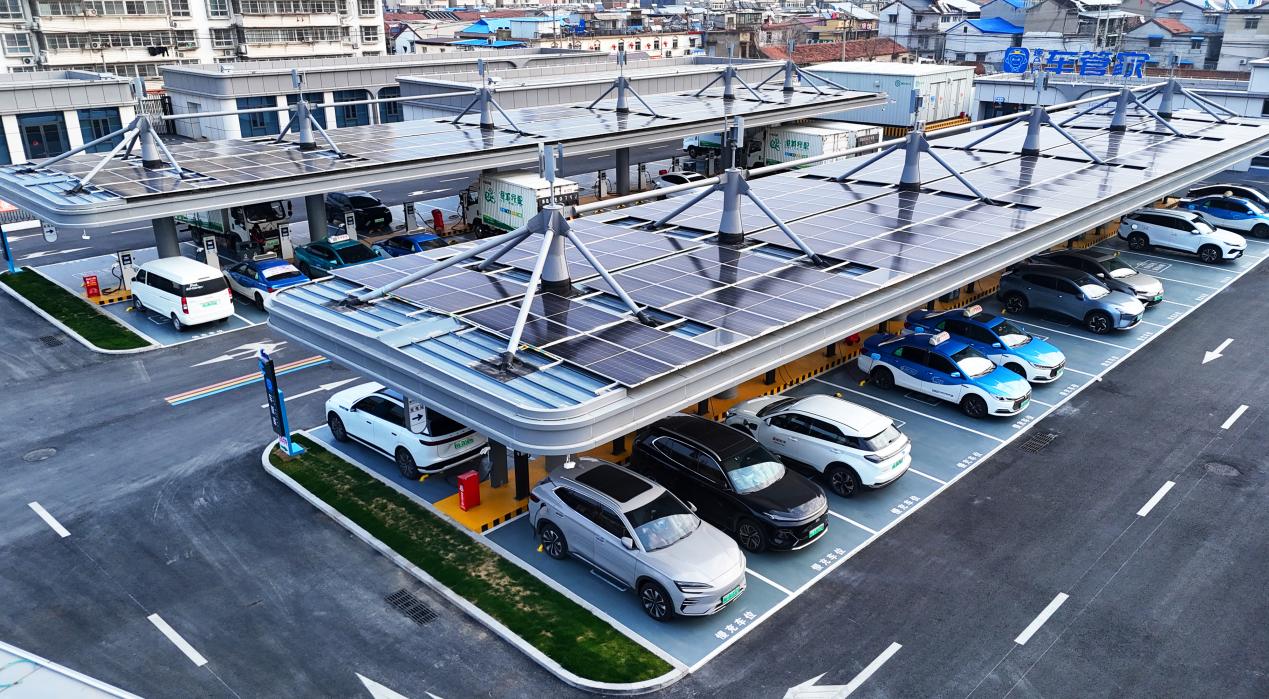
The growth of the global NEV industry requires not just high-quality products and technologies, but also practical, system-wide solutions. China’s experience shows that widespread adoption of green transportation is closely tied to easing “range anxiety.” During the 14th Five-Year Plan period (2021–2025), China built the world’s largest electric vehicle charging network, capable of supporting over 40 million NEVs. These proven solutions provide a strong, actionable reference for other nations in transition.

With a strengthened industrial foundation, China’s automotive sector is accelerating its global reach, directly contributing to development worldwide. Evolving from “product export” to “ecosystem expansion,” Chinese automakers’ commitment to openness and collaboration stands as a compelling case of “openness triumphing over protectionism.”

In recent years, Chinese carmakers have stepped up localization strategies overseas–building factories and strengthening local supply chains so that more communities can benefit from industrial upgrading. 

BYD and Great Wall Motor have built plants in Thailand, supporting the country’s automotive transformation; JAC Motors operates an assembly plant in Algeria, providing vocational training for local workers; and Chery’s joint venture with Spain’s Ebro in Barcelona has given a significant boost to the regional economy.

“Chinese enterprises bring us more than factories; they offer a new pathway for development,” said Jerônimo Rodrigues, Governor of Brazil’s Bahia State.

The leapfrog development of China’s automotive industry is a vivid reflection of the qualitative advancement and innovation within the country’s manufacturing sector. As China enters the 15th Five-Year Plan period (2026–2030), its industrial system is set to further evolve toward greater intelligence, greener development, and more integrated growth. 

Through continued openness and cooperation with nations worldwide, the shared benefits of development will keep expanding, injecting new momentum into the global economy and creating more opportunities for all.

Intelligent manufacturing boosts efficiency for Chinese aerospace manufacturer

By Liu Wenxin, People’s Daily, Sun Bing, Xie Wei, China Economic Weekly

A single launch vehicle contains hundreds of thousands of components. Historically, compiling a complete set of quality documentation for an entire rocket requires quality engineers and process technicians to shuttle back and forth between vast quantities of paper records and fragmented information systems — a process that typically takes about a week.
At the smart factory of Shanghai Aerospace Equipments Manufacturer (SAEM), however, that same task now takes just five minutes.
With a few clicks, staff can trace every data point back to its source — from raw material testing and component machining to subassembly, final assembly, and full-vehicle testing.
This dramatic increase in speed stems from a fundamental transformation of the production model.
Here, every product — whether a complete launch vehicle or a single screw — is assigned a unique digital identity that follows it throughout its entire lifecycle.
Data including raw material composition analysis ,heat-treatment temperature curves, real-time torque data from every tightening tool used during assembly, as well as all test records for each section, are automatically aggregated and dynamically linked to form a full-lifecycle quality data package that accompanies the product from start to finish.
“When we deliver a product, we must also deliver its complete data package,” said Cheng Hui, a researcher at SAEM.
He explained that if a quality fluctuation is detected in a batch of materials, an integrated quality traceability system, enhanced by AI, can pinpoint the exact affected parts from tens of thousands of components. It can also determine their status — whether in storage, production, or already installed on a specific rocket. “What was once a needle-in-a-haystack search through paper files is now resolved in seconds,” Cheng added.
Recently, China’s Ministry of Industry and Information Technology (MIIT) unveiled the inaugural list of 15 flagship smart factories, with SAEM among them. These flagship facilities are considered to represent the pinnacle of intelligent manufacturing, both in China and globally. Fostering such model factories is a strategic initiative by China to capitalize on opportunities in industrial intelligence and build a competitive edge for the future of manufacturing.
According to Ao Li, deputy head of China Academy of Information and Communications Technology (CAICT), the application of artificial intelligence technology was heavily weighted in the selection criteria for the first batch of flagship smart factories.
Statistics indicate that among the 15 selected factories, the average penetration rate of AI applications exceeds 70 percent, with more than 6,000 AI models in use and over 1,700 key pieces of intelligent manufacturing equipment and industrial software solutions achieving practical breakthroughs.
In the rocket final-assembly area, two rocket stages weighing dozens of tons were being joined together. The workshop lacked the noise typically associated with heavy industry; instead, the space was filled with the soft hum of electric motors.
An integrated one-stop flexible automatic docking system, incorporating large-scale spatial pose measurement technology, enables the equipment to “see” and “feel.” It can automatically capture position data, sense force conditions, adjust posture in real time, and seamlessly align multi-ton modules—marking a complete departure from the traditional approach that relied on verbal coordination, visual estimation, and manual adjustment.
Behind this transformation lies the factory’s decision to move complex systems engineering into the digital realm.
In this intelligent factory, critical and complex processes are first simulated and validated in a virtual environment before being executed on physical equipment, which significantly reduces rework and shortens production cycles.
Leveraging the accumulated image data, the company has developed defect detection systems based on artificial neural networks, which enables the automated identification of assembly quality issues in rockets and solar arrays. Virtual reality technology has also been introduced into assembly procedures, allowing three-dimensional stitching of localized and layered assembly images—addressing challenges such as accurately reflecting pipeline routing and installation sequences that traditional photos cannot capture. Across SAEM, AI application continues to deepen.
“The deep integration of AI with advanced manufacturing technologies now extends beyond typical scenarios such as production scheduling and online inspection,” Ao noted.
“It is expanding into higher-value segments of the industrial chain, including research and development, design, and operations and maintenance services. This integration is giving rise to a new generation of industrial intelligent agents capable of perception, decision-making, and execution, accelerating the evolution of intelligent manufacturing from automation toward autonomy.”
At the same time, SAEM is extending its “intelligent” capabilities throughout the entire industrial chain.
For instance, aerospace manufacturing extensively involves extreme processing techniques and requirements for performance in extreme environments. Through close, collaborative development with domestic equipment suppliers, SEAM translates process needs directly into equipment parameters. This collaboration has enabled the joint breakthrough in key equipment such as friction stir welding systems, automated flexible final assembly platforms, and high-precision mirror milling machines.
Through the development of its smart factory, SAEM has achieved a localization rate of over 80 percent for intelligent manufacturing equipment and increased production efficiency by 40 percent.

Village in E China finds new path of development in baseball

By Liu Junguo, People’s Daily

On a winter day, the sharp crack of a baseball bat cut through the quiet of the countryside. Footsteps followed, along with bursts of cheers. The sounds didn’t not come from an urban stadium, but from a baseball field nestled among rice paddies and village homes.
This is Xujiadai village, in Lindai township of Pinghu, Jiaxing, east China’s Zhejiang province. Here, the age-old rhythms of rural life are striking a new chord with the youthful pulse of sport, creating a fresh and vibrant atmosphere.
“In the past, almost every household raised pigs. The smell was strong, and the environment was poor,” recalled villager Zhang Jinfa. “Now the air is cleaner, the water is clearer, and people come here to play baseball. More tourists are visiting, and life is getting better.” His words captured Xujiadai’s transformation from a hog-farming community to a baseball village.
In 2003, Zhejiang province launched a large-scale rural revitalization initiative that began with improving living conditions in the countryside. By upgrading village infrastructure, cleaning up waterways, and restoring the rural environment, the program sought to improve not only ecological conditions but also rural production, daily life, and overall quality of life for farmers.
In Xujiadai village, livestock farms were closed and local rivers were rehabilitated, giving the village a fresh new look. Yet once the environment improved, a new question emerged: how to cultivate new industries and keep young people from leaving.
“The village was clean, but its overall development hadn’t kept pace,” said Liu Jianqun, Party head of Xujiadai village. “Traditional farming offered limited income growth, and rural tourism lacked distinctive features. We were unsure where to go next.”
A turning point emerged from a keen insight. Back then, Pinghu had attracted a number of Taiwan-funded and foreign-invested enterprises. Liu, himself a former professional manager, noticed that executives from these companies would often make trips to Shanghai just to play baseball. At the same time, an idle plot of land near the village entrance — low-lying and difficult to develop — sat unused. Then a bold idea struck him: Why not transform this land into a baseball field? It could serve the businessmen nearby while paving a new path for the village — one that blended sports with cultural tourism.
Turning this vision into reality proved challenging, requiring funding, expertise, and village consensus. Lindai township established a special coordination group to oversee land planning, policy support, and financing. Xujiadai organized volunteer teams to conduct household visits and village meetings, building community support.
In 2018, despite financial and technical hurdles and with no national precedent to follow, Xujiadai village completed China’s first standard-compliant youth baseball field in a rural setting. In 2019, a baseball tournament for youth in the Yangtze River Delta was successfully held there, marking an impressive debut.
The National Youth Baseball Championship U10 Group, the annual meeting of the Chinese Baseball Association, and other events soon followed. Xujiadai village became a national baseball training base for young players under the age of 10 and earned the title “China’s No. 1 Baseball Village.”
New challenges soon emerged. With baseball’s weak local foundation and scarce professional expertise, sustainable operation and promotion became pressing issues.
Lindai township explored an innovative model that combined professional management with villager participation. A professional sports company was brought in to handle event organization and training operations, while volunteer teams were formed to teach villagers basic baseball knowledge and involve them in field maintenance and logistical support.
“With the government providing the platform, professionals managing operations, market forces driving growth, and innovation fostering integration, this baseball business from the fields is flying farther and farther,” said Mo Yun, an official in Lindai township.
To date, the baseball field has hosted multiple high-level events including National Youth Baseball Championship finals, welcoming over one million athletes and visitors. Last July, the Xujiadai International Baseball Field opened, significantly upgrading event capacity.
Baseball has catalyzed development of ecological agriculture, homestays, catering, and educational tourism, forming a distinctive industrial cluster. Collective village income has surpassed 8 million yuan ($1.15 million).
“I used to make a living from a few plots of vegetables,” said Cao Huaying, a 62-year-old villager. “Now that the international baseball field is here, I work there as a cleaner year-round, and my income has increased a lot.”
Today, driven by baseball, the village has developed more than 20 specialty restaurants and homestays, created over 200 jobs for locals, and significantly increased per capita income. As Mo put it, with a baseball bat in hand, Xujiadai village has swung a magnificent arc across its fields — an arc powered by sports, integrated with industry, and dedicated to shared prosperity.

China’s bag charm economy: small accessories, big cultural impact

By Lin Lili, Hong Qiuting, Qi Zhiming, People’s Daily

From plush vinyl dolls in diverse shapes and museum-inspired cultural creations to unique souvenirs from scenic areas — an array of accessories now dangle from the backpacks of young people across China.
Portable and lightweight, bag charms are gaining increasing popularity among Chinese consumers. The ever-evolving designs of these small ornaments have fueled a consumption boom, supported by robust industrial clusters, and are now advancing through coordinated efforts in global expansion—together shaping the emerging “bag-charm economy.”
At a Beijing designer toy store, shoppers enthusiastically pose with Wakuku characters, sharing photos on social media. “Key features such as small size, affordability and emotional resonance align perfectly with young people’s lifestyles,” said Hong Yong, an associate researcher at the Chinese Academy of International Trade and Economic Cooperation under the Ministry of Commerce.
He observes that emotion-driven consumption has shifted priorities: young buyers now prioritize products delivering joy, belonging, and self-expression over pure utility.
As Chinese New Year approached, Nanjing resident Wu Wenjing purchased outfits not just for family, but for her Labubu charm. “I match charms to my mood and outfits,” she explains. “Sometimes they feel like emotional codes — shared recognition sparks instant connections.”
Liang Mei, president of the China Toy and Juvenile Products Association, observed that bag charms offer young people moments of everyday delight through a relatively relaxed consumption model. By fostering emotional connections, they help form interest-based communities with a shared sense of identity. At the same time, collaboration with well-known intellectual properties (IPs) and user participation in co-creation continue to inject vitality into the market.
Manufacturing Innovation Dongguan, China’s “designer toy capital,” anchors the global industry with over 4,000 manufacturers and 1,500 supporting enterprises. Its complete industrial chain covers design, production, IP licensing, and sales.
At the headquarters of a toy manufacturer in Chashan township, Dongguan, a team of 10 designers was discussing design drafts for a “Baku” series of bag charms.
“This China-chic bag charm blends traditional Chinese colors and auspicious symbols with modern design. Inspired by the mythical ‘Baku — a creature said to devour nightmares and bring sweet dreams — it carries the wish that all good dreams may come true in the coming year,” explained Wu Qiaomei, brand marketing director involved in the project.
She noted that from concept finalization to detail refinement, the initial design draft takes about 15 days to complete, with the sample workshop then needing another three to five days to produce the first plush prototype.
“With in-house manufacturing capabilities, we maintain flexibility in production coordination and scheduling,” Wu added. “From design confirmation to mass shipment, the entire process can be completed within about 30 days,”
With diverse styles and ever-changing market trends, bag charms call for agile production response. The consumer-end enthusiasm is fundamentally supported by a supply-side shift — from mass manufacturing to flexible customization. The robust production capacity within the toy industry provides the essential foundation for the rapid adaptation and output of these accessories.
In the past, producing a plastic toy required mold development costing tens of thousands of yuan, necessitating mass production runs of tens to hundreds of thousands of units to lower per-unit cost.
Today, smart manufacturing and digital workshops have made small-batch production truly feasible — minimum orders as low as 50 units or batch productions of merely 100 pieces are now readily achievable, with even single custom toys possible through 3D printing.
Labubu has sparked a worldwide trend in collectible art toys. Following the success of the animated film Nobody, bag charms featuring its characters sold out repeatedly after going viral overnight. Meanwhile, charms shaped like traditional Chinese herbs — such as goji berries, red dates, and red sage — have captivated overseas consumers with their creative designs and distinctive Eastern aesthetic.
Time magazine in the United States noted that China’s new generation of trendy toys is reshaping the international image of “Made in China” by telling stories rooted in local IPs and showcasing distinctive aesthetics.
In the first half of 2025, Chinese toy company Pop Mart recorded triple-digit growth in markets across Southeast Asia, Europe and the Americas, with growth in the Americas exceeding tenfold. The company’s global store count has now surpassed 570.
Products from HERE have reached nearly 20 countries and regions — including North America, Europe, Southeast Asia, and the Middle East — via distribution channels. Li Peng, Chairman of HERE, noted, “Breaking down cultural barriers through localized creation and building emotional bonds with global consumers are key to helping Chinese brands move beyond manufacturing and build greater brand value.”
Looking ahead, as more Chinese flagship products and brands go global, these small charms, infused with Chinese creativity and emotion, are poised to tell ever more compelling Chinese stories on the world stage.

China’s bag charm economy: small accessories, big cultural impact

By Lin Lili, Hong Qiuting, Qi Zhiming, People’s Daily  

From plush vinyl dolls in diverse shapes and museum-inspired cultural creations to unique souvenirs from scenic areas — an array of accessories now dangle from the backpacks of young people across China.

Portable and lightweight bag charms are gaining increasing popularity among Chinese consumers. The ever-evolving designs of these small ornaments have fueled a consumption boom, supported by robust industrial clusters, and are now advancing through coordinated efforts in global expansion—together shaping the emerging “bag-charm economy.”

At a Beijing designer toy store, shoppers enthusiastically pose with Wakuku characters, sharing photos on social media. “Key features such as small size, affordability and emotional resonance align perfectly with young people’s lifestyles,” said Hong Yong, an associate researcher at the Chinese Academy of International Trade and Economic Cooperation under the Ministry of Commerce. 

He observes that emotion-driven consumption has shifted priorities: young buyers now prioritize products delivering joy, belonging, and self-expression over pure utility.

As Chinese New Year approached, Nanjing resident Wu Wenjing purchased outfits not just for family, but for her Labubu charm. “I match charms to my mood and outfits,” she explains. “Sometimes they feel like emotional codes — shared recognition sparks instant connections.”

Liang Mei, president of the China Toy and Juvenile Products Association, observed that bag charms offer young people moments of everyday delight through a relatively relaxed consumption model. By fostering emotional connections, they help form interest-based communities with a shared sense of identity. At the same time, collaboration with well-known intellectual properties (IPs) and user participation in co-creation continue to inject vitality into the market.

Manufacturing Innovation Dongguan, China’s “designer toy capital,” anchors the global industry with over 4,000 manufacturers and 1,500 supporting enterprises. Its complete industrial chain covers design, production, IP licensing, and sales.

At the headquarters of a toy manufacturer in Chashan township, Dongguan, a team of 10 designers was discussing design drafts for a “Baku” series of bag charms.

“This China-chic bag charm blends traditional Chinese colors and auspicious symbols with modern design. Inspired by the mythical ‘Baku — a creature said to devour nightmares and bring sweet dreams — it carries the wish that all good dreams may come true in the coming year,” explained Wu Qiaomei, brand marketing director involved in the project. 

She noted that from concept finalization to detail refinement, the initial design draft takes about 15 days to complete, with the sample workshop then needing another three to five days to produce the first plush prototype.

“With in-house manufacturing capabilities, we maintain flexibility in production coordination and scheduling,” Wu added. “From design confirmation to mass shipment, the entire process can be completed within about 30 days,”

With diverse styles and ever-changing market trends, bag charms call for agile production response. The consumer-end enthusiasm is fundamentally supported by a supply-side shift — from mass manufacturing to flexible customization. The robust production capacity within the toy industry provides the essential foundation for the rapid adaptation and output of these accessories.

In the past, producing a plastic toy required mold development costing tens of thousands of yuan, necessitating mass production runs of tens to hundreds of thousands of units to lower per-unit cost. 

Today, smart manufacturing and digital workshops have made small-batch production truly feasible — minimum orders as low as 50 units or batch productions of merely 100 pieces are now readily achievable, with even single custom toys possible through 3D printing.

Labubu has sparked a worldwide trend in collectible art toys. Following the success of the animated film Nobody, bag charms featuring its characters sold out repeatedly after going viral overnight. Meanwhile, charms shaped like traditional Chinese herbs — such as goji berries, red dates, and red sage — have captivated overseas consumers with their creative designs and distinctive Eastern aesthetic.

Time magazine in the United States noted that China’s new generation of trendy toys is reshaping the international image of “Made in China” by telling stories rooted in local IPs and showcasing distinctive aesthetics.

In the first half of 2025, Chinese toy company Pop Mart recorded triple-digit growth in markets across Southeast Asia, Europe and the Americas, with growth in the Americas exceeding tenfold. The company’s global store count has now surpassed 570.

Products from HERE have reached nearly 20 countries and regions — including North America, Europe, Southeast Asia, and the Middle East — via distribution channels. Li Peng, Chairman of HERE, noted, “Breaking down cultural barriers through localized creation and building emotional bonds with global consumers are key to helping Chinese brands move beyond manufacturing and build greater brand value.”

Looking ahead, as more Chinese flagship products and brands go global, these small charms, infused with Chinese creativity and emotion, are poised to tell ever more compelling Chinese stories on the world stage.

‘Diplomatic surge’ that highlights China’s resolve, responsibility

By He Yin, People’s Daily

On Jan. 29, Chinese President Xi Jinping met in Beijing with UK Prime Minister Keir Starmer, who was on an official visit to China. This marked the first visit to China by a British prime minister in eight years and was widely seen by the international community as an important step by the UK to seek a new chapter in relations with China. 

As the world today is undergoing both changes and turbulence, China and the UK, as permanent members of the UN Security Council and major economies, should enhance dialogue and cooperation in order to maintain world peace and stability, while promoting the economy and people’s livelihoods of both countries.

Over the past year and more, under the strategic guidance of the two countries’ leaders, China-UK relations have steadily stabilized and improved. At the meeting, Xi outlined the direction for further advancing bilateral ties, from enhancing exchanges to jointly shouldering global responsibilities, and emphasized the need to translate the promising potential of cooperation into remarkable accomplishments.

Starmer noted that it is vital for the UK and China to build a long-term and consistent comprehensive strategic partnership with mutual respect and trust, especially in a volatile and fragile world. 

History and reality show that as long as both sides adopt a broad historical perspective, rise above differences, and respect each other, China-UK relations and cooperation can indeed open up new horizons, bringing benefits to the peoples of both countries and to the world as a whole.

Since the beginning of the year, leaders from several countries, including Ireland, Canada, Finland, and the UK, have visited China in succession. International media have described this as a wave of “diplomatic engagement” centered on China. 

With the global situation growing ever more unsettled and the world facing the risk of sliding toward a “ruleless” era, various parties are once again “rediscovering” China and placing greater emphasis on dialogue and cooperation to jointly address global challenges. 

This should not be simply interpreted as an “impulsive response” to changes in the international environment. Rather, it underscores the consistent resolve, sense of responsibility, and confidence that China has demonstrated as a responsible major country amid profound global transformations.

China’s role as a “source of momentum” for mutually beneficial cooperation has become more prominent. During his visit to China, Starmer led a delegation of more than 60 important representatives from Britain’s business and cultural sectors, which demonstrated the strong desire across British society to tap into opportunities in China. 

According to Sky News, China is already the UK’s third-largest trading partner, supporting 370,000 jobs across the country. The China-Britain Business Council recently stated that, for British companies, China is key to enhancing their global competitiveness. 

Finnish Prime Minister Petteri Orpo likewise noted that Finnish companies have a strong interest in cooperation with China, adding that his visit to China was intended to open the door to opportunities for Finnish businesses. 

At a time when de-globalization and trade protectionism are on the rise, opportunities for cooperation have become a scarce resource. 

As China embarks on its 15th Five-Year Plan period (2026-2030), it is steering high-quality development through sound scientific planning, steadfastly expanding high-standard opening up, and offering the world a “list of opportunities,” welcoming enterprises from all countries to dive into the vast ocean of China’s market. 

This not only helps all parties enhance the resilience of development, but also anchors the right course toward building an open world economy amid the headwinds of the times.

China’s role as a stabilizing force within the international order has also grown more pronounced. In recent years, the surge in unilateralism, protectionism, and power politics has dealt severe blows to the established international system. International law is only effective when universally respected, with major powers leading by example; otherwise, the world risks reverting to a state where might makes right.

This is precisely the resolve and responsibility that the international community sees in China today. China champions equality, the rule of law, cooperation, and good faith, and firmly upholds the international system with the UN at its core and the international order underpinned by international law. It practices genuine multilateralism and works to build a more just and equitable global governance system, contributing to an equal and orderly multipolar world and a universally beneficial and inclusive economic globalization. 

In its interactions with other countries, China does not demand that other countries choose sides. Even when bilateral relations encounter difficulties, China consistently advocates seeking common ground while shelving differences and focusing on cooperation, striving for harmony in diversity and shared progress. 

The growing recognition of China’s ideas and role by the international community further shows that what a turbulent world truly needs is not the logic of power or narrow calculations of interest, but a firm commitment to standing on the right side of history and on the side of human progress.

No matter how the international situation may change, China remains committed to the path of peaceful development and values the primacy of harmony and harmony within diversity. Partnering with China means embracing opportunities, and together contributing positive energy for peace and development to the world.

The Shuangliu Yangtze River Bridge: an engineering feat with ecological sensitivity

By Wu Jun, People’s Daily

The Yangtze River, China’s longest river, flows through Wuhan, the capital city of Hubei province in central China. Spanning its northern bank in the middle reaches, the Shuangliu Yangtze River Bridge connects Wuhan with neighboring Ezhou, strengthening regional integration.

As Peng Xiaobin, the bridge’s designer and deputy chief engineer of the Hubei Communications Planning and Design Institute, stood on the newly completed structure, he pointed skyward:”Look, that’s a grey heron, and over there is an egret.” His enthusiasm reflected the project’s dual success: engineering excellence and ecological conservation.

As Wuhan’s 12th bridge across the Yangtze, the Shuangliu Bridge stretches 35.043 kilometers. Its route traverses the Zhangdu Lake Wetland Nature Reserve — a critical habitat for the endangered Yangtze finless porpoise.

In December 2025, experts at a conference organized by the China Highway and Transportation Society hailed the bridge as a benchmark for Chinese engineering and a model of ecological preservation.

A key question emerged during planning: How could bridge construction protect the Yangtze’s fragile ecosystem?

The answer gleams under the winter sun — a 400-meter-long, fully enclosed protective structure along the bridge’s northern approach. “This sound barrier was specifically designed for the wetland birds,” Peng explained. Standing 6.38 meters high and spanning 34 meters, this “shield for birds” represents a first in Yangtze River bridge engineering.

The Zhangdu Lake Wetland lies along the East Asia-Australasia flywa, a vital migratory corridor. To minimize disruption, Peng’s team prioritized ecological considerations from the outset.  Collaborating with ornithologists and analyzing a decade of bird activity data, they conducted extensive field observations. “After numerous revisions, we added an extra curve to the northern approach,” Peng noted, acknowledging the significant cost increase this entailed.

To address noise generated after the bridge opens to traffic, Peng and his team decided to build a fully enclosed sound barrier on the bridge deck closest to the migratory route. The barrier was completed before the migration season. Today, noise levels outside the barrier are kept at 50 to 55 decibels during the day and 40 to 45 decibels at night, effectively fitting the wetland’s birds with “noise-canceling headphones.”

From the main span of the bridge, the broad Yangtze shimmering in the sunlight. “You can even see finless porpoises playing here,” said Chen Cheng, chief engineer of the Shuangliu Yangtze River Bridge project at CCCC Second Harbor Engineering Co., Ltd.

About two kilometers downstream from the main bridge lies a river bend where finless porpoises are frequently seen. To avoid disrupting their habitat, the bridge was designed to cross the river in a single span.

“The main bridge is a single-span steel box girder suspension bridge,” Chen explained. “Not a single pile was driven into the river. Both the north and south approach bridges were built entirely on land, completely avoiding in-water construction.”

During construction, work schedules were adjusted to avoid peak activity periods of finless porpoises and other aquatic species. Temporary structures such as trestles were erected during the dry season, followed quickly by the completion of tower foundations and caps. All steel box girders were prefabricated in sections at a factory, transported by specialized vessels, and then hoisted into place using cable cranes. 

“In this way, workers only needed to weld the joints at height, and the entire girder installation process did not disturb the river,” Chen said.

Over the more than three years of construction, the bridge and the finless porpoises have “grown together.” Surveys by the Institute of Hydrobiology of the Chinese Academy of Sciences showed that the finless porpoise population in the bridge section of the Yangtze River has increased from five or six individuals when construction began in 2022 to a stable group of about 20 today.

On the main bridge deck, long drainage pipes can be seen on both sides, each connected to an intelligent flow monitoring system. The system automatically identifies discharged liquids. Rainwater mixed with oil residues is directed into oil-separation and sedimentation tanks before release, while leaked or polluted wastewater is diverted into emergency containment pools and handled by qualified hazardous waste treatment companies.

The Shuangliu Yangtze River Bridge has now passed completion inspection. Once opened to traffic, travel time between Xinzhou in Wuhan and Ezhou will be reduced from 90 minutes to just five.

“By prioritizing conservation over unchecked development, we have found a balance between ecological protection and economic development,” said Wang Xihua, an executive with Shuangliu Yangtze River Bridge Co., Ltd. under Hubei Communications Investment Group Co., Ltd. “Our goal is to achieve a genuine win-win between economic and ecological benefits.”