To understand China, key lies in understanding Chinese modernization

By He Yin, People’s Daily

Chinese President Xi Jinping on Dec. 2 sent a congratulatory letter to the 2023 Understanding China Conference (Guangzhou) held in Guangzhou, south China’s Guangdong province.

“To understand China, the key lies in understanding Chinese modernization. China is advancing the noble cause of building a great country and national rejuvenation on all fronts through a Chinese path to modernization, and promoting the building of a community with a shared future for mankind,” Xi said. “China’s future is closely linked with the future of the entire humanity.”

Xi’s letter scientifically analyzed the general trend of the world today. It noted that to understand China, the key lies in understanding Chinese modernization, conveying the message that China looks forward to working hand in hand with the rest of the world to realize global modernization that features peaceful development, mutually beneficial cooperation, and prosperity for all.

The Understanding China Conference celebrates its 10th anniversary this year. Over the past 10 years, Xi has sent congratulatory letters, delivered video speeches, or met with foreign representatives at the conference, expounding on China’s path and propositions to help the international community better understand China.

Facing accelerating changes unseen in a century and intertwined risks and challenges, China has acted as a responsible major country, making significant contributions to solving common problems and enhancing the well-being of mankind. The importance of understanding China and working together with China to create a better future is becoming increasingly prominent.

To understand China, the key lies in understanding the significance of Chinese modernization to the world. Thanks to a century of exploration and struggle, China has found the development path that suits it. It is now advancing the rejuvenation of the Chinese nation on all fronts by pursuing Chinese modernization.

Chinese modernization is the modernization of a huge population, of common prosperity for all, of material and cultural-ethical advancement, of harmony between humanity and nature, and of peaceful development.

Chinese modernization is deeply rooted in its fine traditional culture and reflective of the advanced nature of scientific socialism. It emulates and absorbs all outstanding achievements of human civilizations, represents the future direction of human progress, and displays a new prospect distinct from the Western model of modernization, thus creating a new form of human advancement.

Chinese modernization expands the channels for developing countries to achieve modernization, and provides a Chinese solution to aid the exploration of a better social system for humanity.

To understand Chinese modernization, we need to see the opportunities brought to the world by Chinese modernization. As the largest developing country, China has always placed its own development within the larger context of human development and created new opportunities for the development of the world through its own development.

Xi said that China is committed to broadening the convergence of interests with other countries, and will continue to provide the world with new growth momentum and opportunities through its own development.

As the new round of scientific and technological revolution and industrial transformation unfold, China firmly adheres to the win-win strategy of opening up, accelerates the creation of a new development pattern, and promotes high-quality development. This will provide the world with more and better products made and created in China, and with a Chinese market of a larger scale and stronger demand.

Former Chancellor of Austria Wolfgang Schussel said that China has been building a market-oriented business environment, governed by the rule of law and internationalized, demonstrating its determination to adhere to a high-level opening up. Both China and the world stand to benefit from these efforts.

To understand Chinese modernization, we need to see that the modernization China is pursuing is not for the country alone. China looks forward not only to pursuing modernization for all developing countries through joint efforts, but also to realizing global modernization that features peaceful development, mutually beneficial cooperation, and prosperity for all.

Eying on the historical development of mankind with a broad vision of the world, Xi has proposed to build a community with a shared future for mankind, the Belt and Road Initiative, the Global Development Initiative, the Global Security Initiative and the Global Civilization Initiative. These have contributed Chinese wisdom and solutions to promoting the progress of human civilization and building a better world, and assisted other developing countries in exploring a path to modernization that suits their respective national conditions.

Former Egyptian Prime Minister Essam Sharaf believes that the important initiatives proposed by Xi have provided significant public goods for the world. When these initiatives are accepted by people who pursue peace and development, a road to common prosperity is built.

Realizing modernization is the common aspiration and due right of all peoples. As China’s own future is closely connected with that of other countries and peoples, China will strive to provide new opportunities for world development, add new impetus to humanity’s exploration of paths towards modernization and make new contributions to the theory and practice of humanity’s modernization as it makes new progress in Chinese modernization.

Expanding convergence of interests, building community of shared future

By Gong Ming, Zhang Penghui, Jiang Xiaodan, Luo Aihua, People’s Daily

The 2023 Understanding China Conference (Guangzhou) was held in Guangzhou, south China’s Guangdong province from Dec. 1 to 3.

The conference, themed “China’s New Endeavors amid Unprecedented Global Changes – Expanding the Convergence of Interests and Building a Community of Shared Future,” was joined by over 600 participants from over 30 countries and regions, who had discussions on how to resolve common problems and improve the well-being of humanity.

Today, confronted with a weak global recovery and escalating geopolitical conflicts, humanity has once again come to a crossroads in history. “What kind of world we need and how to build such a world” has become a vital question with the future of humanity at stake.

At the 2023 Understanding China Conference (Guangzhou), China’s new endeavors amid unprecedented global changes received huge attention, and the concept of building a community with a shared future for mankind has gathered a broad consensus.

Former Ethiopian President Mulatu Teshome said that countries are interdependent in the world today, and mankind is a community with a shared future. China has taken the building of a community with a shared future for mankind as its responsibility, constantly providing the world with new opportunities through its own new development.

From deepening economic and trade cooperation and sharing development opportunities, to promoting green development and addressing climate change, Africa-China cooperation mirrors the goal of building a high-level Africa-China community with a shared future, he said.

Former Chancellor of Austria Wolfgang Schussel said that solving global issues such as climate change and regional conflicts needs common efforts from the international community. China is the second-largest economy in the world and has made indispensable contributions to world peace, stability, development and prosperity.

Building a community with a shared future for mankind requires countries to support economic globalization and free trade, safeguard multilateralism, keep open cooperation and promote equality and justice, he added.

As an important practice in building a community with a shared future for mankind, the Belt and Road Initiative (BRI) was a focus of discussion at the conference.

Mushahid Hussain Syed, head of Pakistan’s Friends of Silk Road Club and chairman of the Pakistan-China Institute, noted that the vision of building a community with a shared future for mankind represents a new worldview, which explains that mankind is a community with a shared future and countries must respect with each other and reinforce cooperation.

During the past decade since the BRI was proposed, the initiative has brought new development opportunities to Asia, Africa, Latin America, Europe and other regions, and built new platforms for strengthening global economic cooperation.

Following the principle of extensive consultation, joint contribution and shared benefits, we’ll build a world that’s more open, inclusive and interconnected, he added.

At the conference, participants had in-depth discussions on higher-level opening up and economic globalization, artificial intelligence and the future of humanity, the development of the digital economy and cybersecurity governance.

It was widely recognized that China’s commitment to promoting high-quality development with high-level opening up and the steady progress of Chinese modernization have injected positive energy into achieving common development through open cooperation.

The world is facing numerous challenges, and deepening cooperation between Europe and Asia is more important than ever before, said Deputy Governor of the National Bank of Hungary Barnabas Virag.

Virag remarked that China possesses many key technologies for sustainable development, such as clean energy, new energy vehicles, and biotechnology. Strengthening cooperation between European countries and China in areas including trade, climate change response, and sustainable development will benefit both sides, and will also help steer the international order towards a more just and reasonable direction.

Former Egyptian Prime Minister Essam Sharaf said that China’s adherence to innovative development, which resulted in the rapid growth of information technology, big data, artificial intelligence, the Internet of Things, aerospace technologies and more, sets an example for other developing countries.

The China-proposed BRI promotes connectivity and trade development, creates opportunities for international cooperation, and assists developing countries to achieve modernization, Sharaf added.

Zafar Uddin Mahmood, former Special Assistant to the Pakistani Prime Minister and president of the Understanding China Forum, said that China has made tremendous progress in economic and social development under the leadership of the Communist Party of China.  Adhering to a people-centered development philosophy, China aims to ensure that the gains of development can better improve people’s livelihood, which makes Chinese modernization an important example for other developing countries, Mahmood noted. As China shares its

Yancheng in E China’s Jiangsu makes innovation in wetland conservation

By Yao Xueqing, People’s Daily

Yancheng in east China’s Jiangsu province, home to a World Natural Heritage site and accredited by the Ramsar Convention as an international wetland city, boasts a coastline of 582 kilometers and a total area of 4,553 square kilometers of tidal flats.

It houses the largest coastal wetland on the edge of the Asian continent and on the west coast of the Pacific Ocean, which serves as an important resting, feeding, and molting ground for migratory birds along the East Asian-Australasian flyway.

Developing coastal wetland resources for nature education is one of the focuses emphasized in a 2023-2035 development plan on nature education released at the 2023 China Nature Education Conference.

Yancheng, leveraging its local wetland resources, has dug into popular science development. It has built specialized venues, innovated popular science formats, and encouraged social forces to hold diverse activities, in order to form a synergetic force for nature education.

The Yellow Sea Wetland Museum in Yancheng is a treasure trove. It houses over 1,000 exhibits, including precious specimens of sperm whale skeletons, red-crowned cranes, elks, and spoon-billed sandpipers. It also offers an immersive experience with a large-scale digital sand table, a holographic display, and a dynamic monitoring platform for the Yellow Sea wetland.

The museum has five permanent exhibition halls focusing on themes of international wetland city, the Yellow Sea ecological zone, bird migration, muddy coast and human-nature harmony, unfolding a beautiful picture of the harmonious coexistence between man and nature.

In the museum, there is a holographic display that vividly presents the migratory routes of birds in 4D animation, an interactive display wall that brings together 436 bird species in Yancheng, and exhibition boards that showcase popular science knowledge about the biodiversity on muddy coasts, which attract a huge number of citizens and tourists.

Wu Qijiang, chief curator of the exhibition and director of the Yancheng Wetland and World Natural Heritage Site Conservation and Management Center, noted that that Yancheng’s unique natural resources are exactly the foundation for the city to carry out natural education.

According to Wu, the five permanent exhibition halls of the museum have gone through over 100 adjustments and received 83,000 visits since the museum started trial operation in 2022.

Yancheng is leveraging the museum to build a main base for nature education. In addition to the Yellow Sea Wetland Museum which systematically tells wetland stories, nature conservation organizations in the city such as the Yancheng Wetland and Rare Birds National Nature Reserve and the Dafeng Milu National Nature Reserve have also launched special exhibitions for visitors.

Besides, some schools and public institutions in the city have allocated hundreds of square meters from their office space to build “mini museums,” showcasing the evolution of wetlands and secrets of birds to teachers, students and the general public.

Apart from venue construction, the local government has innovatively developed various forms of science popularization, both online and offline, to create a comprehensive science education platform.

In 2019, the Yancheng Wetland and Rare Birds National Nature Reserve, in cooperation with the municipal education bureau of Yancheng, published a nature education book themed on Yancheng’s wetlands. Every primary and secondary school in the city has received a copy.

Staff members of the Dafeng Milu National Nature Reserve also visited surrounding communities and collaborative institutions, to launch public legal education and science popularization campaigns, while establishing joint protection mechanisms.

The Yancheng Wetland and World Natural Heritage Site Conservation and Management Center has established an official website and accounts on social media platforms, publishing nearly 500 science popularization articles.

In recent years, social forces in the city have hosted a variety of educational and scientific activities, which have been well-received by the public.

Since the Migratory Bird Sanctuaries along the coast of the Yellow Sea-Bohai Gulf (Phase I) in Yancheng was inscribed on the World Heritage List as a natural site by the United Nations Educational, Scientific and Cultural Organization in July, 2019, the Yellow Sea Wetland Museum, the Yancheng Wetland and Rare Birds National Nature Reserve, the Dafeng Milu National Nature Reserve, the School of Wetland of Yancheng Teachers University, as well as social educational institutions, have launched diverse and engaging educational activities, attracting primary and secondary school students to explore the wetland and discover the nature.

Jiangsu Yellow Sea Wetland Culture Development Co., Ltd., an enterprise focusing on wetland-themed business, education and research, has created a cartoon figure based on the endangered migratory bird, the spoon-billed sandpiper. The figure has been printed on T-shirts, cups, fans and other products sold in the gift shop of the Yellow Sea Wetland Museum.

Xu Hongxin, general manager of the company, told People’s Daily that the popularity of the figure exactly mirrors the process of nature education in people’s hearts

China brings new impetus, opportunities to rest of world with its own development

By Zhang Penghui, Gong Ming, Luo Aihua, Jiang Xiaodan, People’s Daily

Chinese President Xi Jinping on Dec. 2 sent a congratulatory letter to the 2023 Understanding China Conference (Guangzhou) held in Guangzhou, south China’s Guangdong Province.

He analyzed the general trend of the world today, saying to understand China, the key lies in understanding Chinese modernization. He noted that China looks forward to working hand in hand with the rest of the world to realize global modernization that features peaceful development, mutually beneficial cooperation, and prosperity for all.

Attendees of the conference told People’s Daily that all countries in the world shared the same future, and all parties should join hands to cope with global challenges, promote common development of the world and enhance the wellbeing of mankind.

The steady progress of Chinese modernization, the expanding high-level opening-up of China, as well as the country’s efforts to promote high-quality development will provide important opportunities for the development of the world.

British scholar Martin Jacques noted that both the speed and achievements of China’s development over the past decades are rare in the world. He believes that Chinese modernization benefits the world and the country’s economic development has created new opportunities for the rest of the world.

David Ferguson, a foreign expert with Beijing-based Foreign Languages Press, has a deep understanding of Chinese modernization as one who lives and works in China. He said Chinese modernization, different from that in the West, is the modernization of common prosperity for all. China has achieved the goal of eliminating absolute poverty and enhanced the wellbeing of all Chinese people.

He noted that Chinese modernization is the modernization of peaceful development, and China is always committed to win-win and all-win results, bringing opportunities to the rest of the world while pursuing its own development.

Warner Bros. Discovery’s Vice President Vikram Channa told People’s Daily that his company hopes to present the grand topic of Chinese modernization to the audience from multiple perspectives.

It is reported that a documentary of China’s Hong Kong-Zhuhai-Macao Bridge co-produced by Warner Bros. Discovery and its Chinese partners has earned a high reputation among the audience for its multi-dimensional, broad-perspective and panoramic narrative of the construction of the mega project.

Chinese modernization has not only provided documentary filmmakers with ample creative space, but also presented rich visual elements and shooting scenes, Channa said, adding that his company is currently advancing multiple relevant projects and hopes to produce more China-themed documentaries so that the world can better understand the country.

Yves Leterme, former Prime Minister of Belgium, who has had multiple visits to China, spoke highly of the forceful measures taken by China to expand institutional opening-up, calling the development of China one of the most stirring economic miracles.

As China enters a phase of high-quality development, a batch of internationally competitive enterprises have emerged. China’s opening-up and development as well as the country’s efforts to build an open world economy are good news to the world economy in sluggish recovery, Leterme said.

 Christopher Thomas, senior fellow at Brookings Institution, said that China is a huge market that creates tremendous opportunities for foreign companies and investors.

In the congratulatory letter, Xi emphasized that China will continue to foster a market-oriented, world-class business environment underpinned by a sound legal framework, and steadily expand institutional opening up with regard to rules, regulations, management and standards, and this, Thomas believes, has released a very positive signal to foreign investors.

Neil Bush, chairman of the George H. W. Bush Foundation for U.S.-China Relations, who has visited China multiple times this year, shared his experience of seeing towering wind turbines and massive solar panels during these visits.

He said he was impressed by China’s efforts to advance ecological progress and build a modernization characterized by harmonious coexistence between man and nature.

Noting that China is a world leader in developing clean energy and electric vehicles, he said U.S.-China cooperation can accelerate the application of the two countries’ advanced green energy technologies in more places around the world and make greater contributions to the global response to climate change.

He also called on all parties to further reduce trade barriers and let Chinese green industries benefit people in more countries.

“In today’s world, countries are closely connected with each other. No country is able to cope with climate change, post-pandemic recovery, international and regional security and other challenges alone. There’s an urgent need for them to cooperate closely and cope with challenges hand in hand,” said former Chancellor of Austria Wolfgang Schussel, who applauds the vision of building a community with a shared future for mankind proposed by Xi.

He said countries should properly deal with security concerns and prevent Cold War mentality from disturbing normal business exchanges.

Ferguson has joined the Understanding China Conference multiple time. He believes the conference provides a platform where personages from different countries communicate with each other and build closer friendships.

He said the theme of the 2023 Understanding China Conference (Guangzhou) – “China’s New Endeavors amid Unprecedented Global Changes – Expanding the Convergence of Interests and Building a Community of Shared Future” – bears important significance.

The vision of building a community with a shared future for mankind proposed by China demonstrates the country’s commitment to improving global governance, promoting multi-polarization and safeguarding equality and justice, Ferguson noted.

Adesina: $34.82bn investment interest for sustainable corridors devt, shared prosperity across Africa.

The attention of the Citizens Watch Advocacy Initiative (CWAI) has been drawn to the Africa’s premier flagship news making event and formidable platform as a result of the remarkable milestones generated to the tune of 34.82 billion investment during the recently held Africa Investment Forum (AIF) market place in Marrakesh, Morocco from 8 to 10th November, 2023. The African renaissance platform of connectivity and corridors with its challenges of poverty, unemployment, insecurity, inequality and inconsistencies of government policies including intra-African trade that has remained abysmally low at about 15% must be re-engineered for growth by the continent’s leaders, so as to meet with other developing nations. Indeed, African leaders has so much on their table to be delivered which has been championed by the AIF an arm of the AfDB to continuously guide, encourage and support the economic growth and paradigm shift in the continent.

The Africa Investment Forum (AIF), which is an arm of the Africa Development Bank (AfDB), recently held an annual investment forum entitled ‘Africa’s Investment Market Place in Marrakesh, Morocco,’ with a bankable $34.82 billion investment interest.

The theme of the three-day event was, “Unlocking Africa’s Value Chains.” The event which was graced by His Majesty, Mohammed VI, King of Morocco, was a high-level, top-notch event and a very successful one. It was aimed at charting a new course for Africa’s new prosperity and connectivity.

The auspicious African flagship platform and global brand was attended by Heads of State and Governments; Ministers from Africa; Captains of Industries and Corporate Africa, prominent among whom were His Excellency, Mr. Azali Assoumani, President of the Union of Comoros, and Chairperson of the African Union; Her Excellency, Ms. Samia Suluhu Hassan, President of the United Republic of Tanzania; Her Excellency, Ms. Mia Amor Mottley, Prime Minister of Republic of Barbados; His Excellency, Mr. Julius Maada Bio, President of the Republic of Sierra Leone; His Excellency, Mr. Edouard Ngirente, Prime Minister of the Republic of Rwanda; Her Excellency, Ms. Nadia Fettah Alaoni, Minister of Economy and Finance of the Kingdom of Morocco, and Honourable Ministers that included Professor Benedict Oramah, President of the African Export-Import Bank; Mr. Samaila Zubairu, President of the Africa Finance Corporation (AFC); Mr. Alain Ebobisse, Chief Executive Officer of the Africa 50; Ms. Boitumelo Mosako, Chief Executive Officer of the Development Bank of Southern Africa; Mr. Werner Hoyer, President of the European Investment Bank; Dr Muhammad Sulaiman Al Jasser, President of the Islamic Development Bank; Mr. Admassu Tadesse, President Emeritus and Managing Director, Trade and Development Bank; His Excellency, Babajide Sanwolu of Lagos State of Nigeria. Others in attendance were business leaders and investors from around the globe.

Sub-themes discussed at the event included: Digital Disruptors and Transformative Technology, Renewable Energy and Natural Capital; Accelerating Green Growth, Climate-Resilient Infrastructure; Securing the Future, Capital Market; Mobilizing Investment for Transformational Growth, Africa’s Creative Industries: Strategies for Promoting Investment and Growth, and was a response to the Feed Africa Commitment of the AfDB and other Partners at Africa Investment Forum, which unveiled a platform known as the Alliance for Special Agro-industrial Processing Zones to mobilise equity funding for the continent’s agro-ecosystem.

At the event, King Mohammed VI reiterated that Africa Investment Forum was the place where bankable projects in Africa meet with investors, where investors meet with Heads of State and Governments in investment boardrooms converge and give comfort to investment as a result of which risks are managed and deals closed.

According to the Executive Secretary of Citizens Watch Advocacy Initiative (CWAI), Omoba Kenneth Aigbegbele, who was a participant, “The event has been considered by stakeholders as the most strategic and important in terms of conveying power and capacity to galvanise investment actions on the continent, and harness its resources. From what happened in Morocco, the Africa Investment Forum (AIF) is indeed, renowned to be Africa’s premier investment market place.”

At this year’s event, His Excellency, Mr. Omar Kabbaj, Advisor to the King, representing His Majesty Mohammed VI, King of Morocco, stated: “The AIF is unique, it is not just any forum; it is a transactional platform, where real business is conducted; where deals are made and where actions supersede rhetoric.”

It was also revealed that since the launch of the Africa Investment Forum in 2018, AIF has drawn more than 16, 500 participants; generated investment interests of nearly $143 billion.

A retrospective analysis was made at the 2022 AIF Market Days, wherein the Abidjan – Lagos highway corridor was able to secure $15.5 billion of investment interests: What makes the AIF unique and remarkable is that it is highly innovative and 100% transactional. Investors have discovered that there is no other global investment forum like it. “They develop and curate projects; reduce transaction costs and risks and accelerate the closure of deals. They also improve the overall business environment within which projects and investments are structured, developed and delivered, making investments to land in Africa smoothly.”

Nevertheless, this corridor will transform the entire West Africa region and speed up regional integration and trade. Also, last year, other investment interests were secured for 3.6 billion dollars for the East Africa Railway corridor, linking Tanzania, Democratic Republic of Congo and Burundi respectively. That the AIF has so far closed on deals, investment gaps with 11 billion dollars, ranging from Liquefied Natural Gas (LNG) renewable energy, agribusiness, industrial manufacturing, creative industry, housing and transport.

According to global statistics, the Africa population will reach 2.5 billion by 2050; the continent will account for 25% of the global population. The New York Times recently affirmed in a headline what we know that the world is becoming more African. With a youth population of 477 million people between the ages of 15 and 25, Africa will be key for supplying the global labour force. Then, the size of the food and agriculture market in Africa will be worth one trillion dollars by 2030, in less than seven years from now.

It was revealed at the event that the future of the $7 trillion electronic vehicle market is tied to Nigeria and other African countries. Also, the size of the electric vehicles value-chain is estimated to increase from the current $7 trillion, to 157 trillion dollars by 2050.

According to the President of AfDB, Dr. Akinwumi Adesina, the future depends on Africa. That is because, as he asserted, Africa accounts for the largest source of the green metals for the development of electric vehicles, including platinum (70%), cobalt (52%), manganese (46%), bauxite (25%) and graphite (21%).

An assessment by Bloomberg NEF shows that the cost of manufacturing of lithium-iron precursor batteries in Africa is three times less than in the United States, China and Poland, all together. The global electric vehicle market has experienced significant growth, which is driven by increasing environmental concerns and advancement in technology. China, the United States and Europe are the three biggest electric vehicle markets globally. China has incentives such as subsidies, tax breaks and license plate restrictions which has encouraged consumers to embrace electric mobility.

President of AfDB, Dr. Akinwumi Adesina, further said, “Five of the six pre-pandemic top performing African countries are projected to be back in the league of the world’s 10 fastest growing economies for 2023-2024. African economies provide some of the best investment opportunities in the world.”

The Africa Continental Free Trade Area, when fully operational, offers incredible opportunities for boosting intra-regional trade across borders and regions as well as the emergence of a more competitive national, regional and globally connected value chain as envisaged in the Special Sessions on Regional Corridors: Quest to Integrate Africa. This, it was agreed, can only be achieved through the development of infrastructure.

The AfDB and partners are implementing the 20 billion dollars Desert-to-Power Initiative to develop 10GW of solar power across 11 countries of the Sahel zone, when completed, will be the largest solar zone in the world. These countries are ; Nigeria, Burkina faso, Cameroon, Chad, The Gambia, Guinea, Mauritania, Mali, Niger, Eritrea and Senegal including the Sahel regional transmission lines to assume reliable and competitively priced electricity for development of the corridors. The AfDB also supports the development and expansion of regional power pools, in collaboration with the African Union Commission and Regional Economic Communities.

“That is the Africa we want: A Fully Interconnected Africa, using regional corridor infrastructure and innovative regional financing instruments, to unleash economic opportunities and assure competitiveness of national and regional value chains; a well-connected Africa will be a more competitive Africa,” as asserted by Dr. Adesina, the president of AfDB.

The Lagos – Abidjan highway connects Nigeria, Benin, Togo and Cote d’Ivoire, secured investment interest of 15.2 billion dollars at the AIF last year, from multiple financiers and investors.

According to His Majesty, Mohammed VI, King of Morocco, his country has been championing for an Inter-African coordinated and cooperation mechanism to be enhanced in various fields of endeavours with a view to achieving regional economic integration and hub; that is why the Morocco – Nigeria Gas pipeline project is part of that endeavour closest to his heart.

He said this reflects his resolve to lay the groundwork for genuine regional cooperation. The project, he further stated, will enhance all countries along the pipeline route to have access to reliable energy supplies and to be more resilient to exogenous energy price shocks.

The African Development Bank has pledged 500 million dollars to develop the strategic Lobito corridor, connecting Angola, Zambia and the Democratic Republic of Congo to interlink countries and boost trade. The AfDB president has highlighted five priority areas to fully optimize the benefits of the developing regional corridors across Africa. These include: dedicating pooled financing facilities to corridor projects; building special industrial zones around the corridors to optimize existing infrastructure; adopting a systematic approach; and platform to syndicate around the development of strategic regional corridors.

The Alliance for Special Agro-Industrial Processing Zones to mobilise equity funding for the continent’s eco-system, a new initiative by the AfDB following the success of the Feed Africa Summit (FAS), which AfDB in partnership with the Senegalese government and Africa Union, held in January in Dakar, was attended by 34 Heads of State and Governments, according to the AfDB boss. He also informed that the summit had successfully mobilised 72 billion dollars towards implementing food and agriculture delivery compacts.

The Initiative, according to Dr Adesina, is aimed at mobilizing at least 2 billion dollars in financing and investment commitments from Alliance members and partners over the next five years. However, meeting the financing goal will deliver an additional 15 to 20 Special Agro-Industrial Processing Zones (SAPZ) projects in various countries across the continent.

The AfDB President emphasized that the Alliance will also raise funds through various investment windows for project preparation, project development and construction and financing for tenant companies. By doing so, the Alliance will bridge critical financing gaps, complement existing initiatives and mobilise resources towards the common goal of enhancing agricultural value addition in Africa. The platform will also provide project preparation, finance, equity and debt investments, technical assistance, as well as project tracking and oversight. It will further help with improving administrative policy and investment incentives never envisaged previously.

The Presidential Panel was attended by five Heads of State and Governments. There was robust engagement in challenges facing the continent. President Julius Maado Bio of Sierra Leone called for aggressive diversification of economies and attributed the desperation of youths to leave the continent to the low knowledge index of the economy. 

According to him, hundreds of African youths who die in the Atlantic Ocean while crossing to Europe are searching for jobs exported by African countries, owing to failure to add value to their communities. The President of Sierra Leone said value addition is a necessary option for growing resilient national economies across Africa and noted that the continent needs to move from merely talking to action.

For the Tanzanian President, Suluhu Hassan, there are a lot of obstacles to trade and investment in the continent. He urged his colleagues to work towards removing the obstacles to make the continent a destination of global investment and pride. On his part, the Rwandan Prime Minister, Edouard Ngirente, noted that time is ticking fast and the government could not afford to continue lamenting missed opportunities and chances, but rather move quickly and build the economy that their citizens deserve.

Consequently, the King of Morocco noted, “That is why initiatives such as the African Investment Forum (AIF), which is sponsored by the AfDB, are commendable, because they help direct private investment towards the most promising economic sectors, thus reinforcing the integration of Africa’s economies into global value chains.” 

All the high network corporate Africans, Heads of Governments, Ministers from across Africa, agreed that the economic potential of Africa is growing rapidly and of immense importance and promise of opportunities with incredible richness in vast natural and human capital resources in technology, agriculture, and entrainment. Africa is home to a youthful and dynamic workforce with a demography that cut across the youth population and abundant natural resources that will change the landscape in a few years ahead and that indeed, President of the AfDB, Dr. Akinwumi Adesina, is a global brand; chief optimist of Africa and a great and foremost marketing chief executive of Africa who has used the AfDB platform to change the narrative of Africa; deconstruct conversation favourable to Africa and shape opinions that, indeed, Africa is bankable and the risks are minimal, unlike what most books are saying as he re-echoed time again that “the future is indeed Africa and the time is now for investments and investors to see the continent as the new marketplace of ideas and unlocking the continent’s value chain.” He reiterated that, “Invest in Africa and reap high-risk adjusted returns!”

Senior Director of Africa Investment Forum (AIF) Chinelo Anohu also echoed that, “Africa must trust Africans with their ideas, innovations and strategy for the future.” The event was co-sponsored by the Africa Export-Import Bank, Africa Finance Corporation, Africa 50, and Development Bank of Southern Africa, European Investment Bank and the Islamic Development Bank, with an estimated $34.82 billion investment interest.

CWAI’s executive secretary emphasized that the Heads of State and Government, as well as all participants at the event, overwhelmingly agreed that, the President of the African Development Bank (AfDB), Dr. Akinwumi Adesina, was “indeed spreading shared prosperity across Africa with this innovative and bankable financial platform for building infrastructure corridors.”

Shanghai makes great strides in intelligent robot industry

By Xie Weiqun, Shen Wenmin, People’s Daily

In the exhibition hall of Chinese tech firm Fourier Intelligent in the Zhangjiang AI Robot Valley, Pudong New Area, Shanghai, a humanoid robot GR-1 was showcasing its abilities. The 1.65-meter-tall and 55-kilogram-weight robot could walk at a speed of 5 kilometers per hour and carry a load of up to 50 kilograms.

“The GR-1 has a highly biomimetic body structure and human-like motion control, enabling it to perform functions such as fast walking, agile obstacle avoidance, stable uphill and downhill movement, and resistance to impacts. It is an ideal carrier for general artificial intelligence (AI),” said Gu Jie, chairman of Fourier Intelligent.

The company focuses on the development of high-performance rehabilitation robots. It has only eight years of history, but has already launched over 30 product series that are now used in more than 2,000 medical institutions.

“We have shifted our focus from ‘specialized robots’ to ‘general-purpose robots,’ aiming at the future mainstream of the industry. Humanoid robots have a certain degree of versatility and they have enormous potential in various application scenarios such as industry, rehabilitation, home services, and scientific research. Through independent innovation, we have been able to produce key components such as joints domestically,” Gu said.

Shanghai has made early and rapid progress in the development of the AI industry. Currently, there are over 350 AI enterprises above designated size in Shanghai, with a total output value of over 380 billion yuan ($53.6 billion), which is approximately three times of that five years ago.

Intelligent robots, involving advanced technologies such as AI, high-end manufacturing, and new materials, have become a new engine driving economic growth and a new frontier for technological competition.

Shanghai is proactively cultivating intelligent robots in order to build new engines of growth and competitive strengths for the future.

In October this year, Shanghai released an action plan on promoting high-quality innovative development of the intelligent robot industry in the 2023-2025 period. The plan aims at building Shanghai into a globally influential innovation hub for the industry by 2025.

According to the plan, Shanghai will create 10 leading robot brands, establish 100 exemplary robot application scenarios, and expand the total value of robot-related industries to 100 billion yuan.

Furthermore, the plan includes the establishment of three public service platforms: an intelligent robotics testing and pilot verification innovation center, a humanoid robot manufacturing innovation center, and a general-purpose robotics research institute.

It also aims to achieve a density of 500 industrial robots per 10,000 workers in key manufacturing sectors, and will significantly enhance the depth and breadth of robot applications in industries.

Under the guidance of the plan, all districts in Shanghai are making concerted efforts to create a sound environment for the development of the intelligent robot industry.

At the Lingang Summit of the Shanghai Intelligent Robot Industry Conference held in Shanghai’s Lingang Special Area on Nov. 14, the General Robot Industrial Research Institute and a Lingang robot industry base were officially unveiled.

Besides, an intelligent robot industry alliance was established in the area, and a group of high-level intelligent robot projects settled in. As a result, an intelligent robot industry ecosystem was initially formed in the area.

“Lingang Special Area is home to more than 150 core AI companies with over 5,000 research and development personnel. Around 40 industrial chain-related enterprises have gathered here, focusing on four major areas: general-purpose robots, industrial robots, service and special robots, and AI technology,” said Wu Xiaohua, an official in Lingang Special Area.

According to Wu, efforts will continue to be made in ten key fields such as whole robot manufacturing and AI chips, further strengthening the foundation for the development of the intelligent robot industry and building a demonstration area for intelligent robot applications.

Industrial data has a wide range of application needs in the field of intelligent industries, and it helps solidify the foundation of the intelligent robot industry.

To address the challenges of scattered and complex industrial data resources and long transaction chains, the Shanghai Data Exchange and Intsig, a leading tech company specializing in business data, artificial intelligence, and mobile applications, jointly established an industrial data innovation center on Nov. 25.

Through three innovative initiatives, namely, creating a new one-stop industrial data service link, building a new paradigm of on- and off-trading integration, and exploring cross-domain data integration projects, the center is committed to establishing a compliant, fair, and trustworthy data trading order and data commercialization ecosystem, turning industrial data from “resources” to “value.”b9f0f129fcb4d29f2b7ce6a818a05c0

China a doer in advancing global climate governance

By He Yin, People’s Daily

The 28th session of the Conference of the Parties to the United Nations Framework Convention on Climate Change, or COP28, kicked off in Dubai, the United Arab Emirates on Nov. 30.

The meeting will carry out the first-ever two-year assessment of the world’s collective progress toward the goals of the 2015 Paris Agreement, and is of great phased significance for the global climate governance process.

The international community expects all parties to adhere to the objectives, principles and institutional arrangements outlined in the United Nations Framework Convention on Climate Change, and send a positive signal of focused action and enhanced cooperation.

The COP28, themed “Unite, Act and Deliver,” reflects the aspiration of the international community to jointly cope with climate change. According to a recent report issued by the United Nations Framework Convention on Climate Change secretariat, national climate action plans remain insufficient to meet the goals of the Paris Agreement.

UN Secretary-General Antonio Guterres noted that the COP28 must be the place to urgently close the climate ambition gap, and developed countries must rebuild trust “by delivering on their finance commitments.”

China is a doer in advancing global climate governance. Since the beginning of this year, it has maintained close communication with all parties to promote a successful COP28 and the comprehensive and effective implementation of the Paris Agreement.

Recently, Chinese President Xi Jinping met with his U.S. counterpart Joe Biden in San Francisco. The two heads of state underscored the importance of working together to accelerate efforts to tackle the climate crisis in this critical decade.

They welcomed recent positive discussions between their respective special envoys for climate, including on national actions to reduce emissions in the 2020s, common approaches toward a successful COP28 and operationalization of the Working Group on Enhancing Climate Action in the 2020s to accelerate concrete climate actions.

Secretary-General of the World Meteorological Organization Petteri Taalas believes that this echoes the spirit of global cooperation and has a positive impact on addressing the challenges of climate change worldwide.

Xi recently emphasized in a phone call with French President Emmanuel Macron that China stands ready to work with France in sending a strong signal of jointly addressing the issue of climate change, so as to prompt the success of the COP28.

As a responsible developing country, China has actively addressed climate change as the intrinsic demand for it to realize sustainable development. It has contributed its wisdom and strength to global climate governance.

China has implemented a national strategy to actively address climate change, announced its carbon peak and carbon neutrality goals, and put in place a “1+N” policy framework for carbon peak and carbon neutrality.

It has promoted structural adjustments of industry, energy, and transportation, adopted energy-saving and efficiency-improving measures, established and improved market mechanisms, and increased forest carbon sinks.

China places mitigation and adaptation on equal footing, and has made positive progress in addressing climate change. In 2022, China’s carbon emissions intensity decreased by over 51 percent from its 2005 level.

China has been actively engaged in South-South cooperation on climate change, and actively participated in the multilateral process of climate change, showing great responsibility as a major country.

Recently, the Al Dhafra PV2 Solar Power Plant in the United Arab Emirates, which was contracted by a Chinese company, has been completed. It is currently the world’s largest single photovoltaic project, providing electricity for 200,000 households and reducing carbon emissions by 2.4 million tons annually.

By September 2023, China had signed 48 memorandums of understanding on South-South cooperation on climate change with dozens of developing countries. It has collaborated on the construction of four low-carbon demonstration zones and implemented 75 projects on climate change mitigation and adaptation.

Furthermore, China has trained over 2,300 officials and technical personnel in the field of climate change for more than 120 developing countries.

China has launched close cooperation with Europe on green development, established a China-Europe carbon neutrality research center, initiated the China-France Carbon Neutrality Center, and hosted the Global Sustainable Transport Forum. These efforts have helped build consensus on global climate governance and boosted confidence in addressing climate change worldwide.

Addressing climate change is a cause shared by all of humanity. All parties should uphold the United Nations Framework Convention on Climate Change as the main channel for global climate governance, stay committed to the principle of common but differentiated responsibilities, and promote full and effective implementation of the Convention and the Paris Agreement.

China will work with all parties to use the Global Stocktake as an opportunity to step up implementation, strengthen supporting measures and jointly build a fair, reasonable and win-win global climate governance system.

Shanghai prioritizes efforts to improve people’s livelihood

By Tian Hong, Du Yifei, People’s Daily

Chinese President Xi Jinping inspected a government-subsidized rental housing community and learned about the city’s efforts in constructing government-subsidized rental housing projects in Shanghai on Nov. 29.

It is reported that the rental housing community provides affordable rental accommodation for new urban residents and young people.

The rental pricing takes into account both market prices and the income levels of the targeted group. Each apartment in the community is equipped with independent cabinets, a bathroom, and a kitchen. Public spaces such as shared kitchens, laundry rooms, recreational areas, and book corners are also provided.

Shanghai is a megacity. It attracts frontline workers and managers across the country engaging in its urban construction and function. They are important contributors to the city’s development and orderly operation.

In recent years, Shanghai has actively explored the provision of more rental housing with good location, high quality and low rent for frontline laborers, thus better satisfying their actual demands. It has implemented precise supply to ensure their life and work in Shanghai with more safety, comfort and dignity, which have been welcomed by the targeted group.

Adhering to the principle that “cities are built by the people and for the people,” Shanghai has been working to promote high-quality development, improving people’s living quality, and pursuing high-efficiency governance, to make urban management more science-based, refined and intelligent, and to make people’s life more convenient, comfortable, and enjoyable.

In the construction of the city, Shanghai always puts the people’s needs in the first place. It has expedited efforts to revitalize and transform old buildings and urban villages.

This year, the city has renovated 85,200 square meters of lower-grade, scattered, old housing and refurbished 247,700 square meters of aging residential properties. Ten urban village renovation projects have been launched.

Shanghai is actively exploring sustainable development models for urban renewal, while establishing and improving relevant policy systems and mechanisms.

Remarkable progress has been made in key urban renewal projects, such as the Fangua Long in Jing’an District, the ancient Panlong Town in Qingpu District, and Wukang Building in Xuhui District. Meanwhile, an additional 68,000 affordable rental apartments have been constructed.

With an aim to build an urban space that is not only livable but also enjoyable and engaging, Shanghai has worked to ensure coordinated development, management, and quality enhancement of the Huangpu River and the Suzhou Creek.

The Suhe Bay Green Space, a maritime park in the North Bund, and the Dongjiadu Road Skywalk have become popular destinations for citizens and visitors. Furthermore, eight kilometers of riverside paths in Pudong and Minhang have been connected and opened to the public.

Shanghai is accelerating the construction of sponge city demonstration areas and pilot zones for green and low-carbon development, to enhance the overall quality of the city. This year, it has built 75 “beautiful blocks.”

To build a green, smart, and resilient metropolis, Shanghai has reinforced the management of green building projects, and advanced the development of green urban spaces.

This year, approximately 2.6 million square meters of ultra-low energy-consuming buildings are underway, complemented by energy-saving renovations in 5.3 million square meters of existing public structures.

Shanghai has been solidifying the digital infrastructure of urban governance, pursuing digital transformation in all areas of urban construction and management. Particular attention has been focused on gas supply safety, while the control and emergency response to major risk sources are fortified, to forge a robust security line for this megacity.

These explorations and practices of Shanghai are the epitome of China’s commitment to sustainable development and the promotion of new urbanization.

In recent years, China has been continuously advancing a people-centered approach to new urbanization, strengthening the construction of major projects to ensure people’s livelihood, and improving the quality of life for its citizens.

It has accelerated the renovation and upgrading of urban pipelines, increased the availability of inclusive elderly care and medical services, improved urban ecology through the construction of “pocket parks,” and continuously enhanced public fitness facilities.

In the first seven months of this year, investment in the production and supply of electricity, heat, gas, and water in China increased by 25.4 percent. During the same period, renovation was launched for a total of 46,600 old urban residential communities nationwide, benefiting 7.95 million households.

Integrated development of Yangtze River Delta region promotes better livelihood

By Wu Qiuyu, Li Xinping, People’s Daily

“The efficiency and service attitude are amazing,” said Deng Xianhua, giving a thumbs-up to the staff members of a police station after getting her household registration transferred.

Deng, who lives in Wukang neighborhood in Deqing county, east China’s Zhejiang province, needed to transfer her household registration to her current residence from her hometown in Anhui province as her daughter was about to attend school in Wukang.

However, she was too busy with work to go back to Anhui to handle the matter. Fortunately, through a video remote service, she got the transfer done within minutes under the guidance from the staff members at the Wukang police station.

Deng’s story has gradually become the norm in the Yangtze River Delta region. In May 2019, the region launched a one-stop e-government service platform where 148 services were available. Over the past four years, Shanghai, Jiangsu, Zhejiang and Anhui in the Yangtze River Delta region have worked hand in hand to optimize this platform. As of June this year, the platform had handled over 6.4 million matters.

Chinese President Xi Jinping once stressed the need to enhance the access to basic public services in the region, so as to shore up weak links in people’s livelihood while pursuing regional integration.

The ultimate goal of the integrated development of the Yangtze River Delta region is to ensure and improve people’s livelihoods, and allow the general public to better share the fruits of high-quality development.

Over the past five years, Shanghai, Jiangsu, Zhejiang, and Anhui have adhered to a people-centered development philosophy, accelerating the construction of a livable Yangtze River Delta.

For the 237 million residents in the Yangtze River Delta, shared public services in transportation, education, healthcare and elderly care are the most intangible experiences brought about by integrated development.

Today, with their social security cards, the residents can take public transportation, visit museums, hit scenic areas, and receive subsidies in many cities in the Yangtze River Delta region. Since the security card has been made multi-purpose, basic public services have become more convenient in the region.

During this year’s May Day holiday, a resident surnamed Huang in Hangzhou, Zhejiang province, took her family on a trip to visit relatives in Bozhou, Anhui province. According to her, they used their electronic social security cards to buy and validate tickets at tourist sites, which she found extremely convenient.

Dong Lidan, who lives in Jiashan county, Jiaxing, Zhejiang province, had similar experiences. She told People’s Daily that she could have her settlement completed at the First People’s Hospital of Jiashan with the electronic certificate for medical insurance.

Dong’s father-in-law is from Shanghai. In the past, when he needed to purchase medication for his high blood pressure in Jiashan, he had to pay in cash first and then submit the invoices, medical records and detailed lists for reimbursement when he went back to Shanghai. And the reimbursement process took as long as some 20 working days. Now, with the direct settlement of expenses of outpatient chronic and specific diseases, it is much more convenient and worry-free, Dong said.

The Yangtze River Delta region has taken the lead in China to pilot the direct settlement of outpatient medical expenses across different cities and provinces. More than 15,000 medical institutions in 41 cities are now able to directly settle medical expenses across provinces, benefiting a total of 13 million people.

As lunchtime approached, senior residents happily enjoyed their meals at a dining hall in Zhongleshan neighborhood in Xujiahui subdistrict, Xuhui district, Shanghai. In recent years, Xuhui district has made great efforts to build integrated elderly care centers with medical, cultural, and sports facilities available within a 15-minute life circle.

Since 2018, civil affair departments in Shanghai, Jiangsu, Zhejiang, and Anhui have signed memorandums of understanding on eldercare cooperation, rolling out regional integrated eldercare pilot programs.

Shanghai and Anhui have planned to jointly construct an ecological green rehabilitation base for the aged in Anhui. Yixing in Jiangsu, Changxing county in Zhejiang, and Guangde in Anhui have signed an agreement to set up the country’s first inter-provincial cross-county demonstration area for eldercare.

In Tangdi village in Shaoxing, Zhejiang province, 98 percent of the labor force is engaged in flower and plant production and relevant businesses.

“We have taken powerful steps on the path towards achieving common prosperity, so that the masses can truly enjoy the fruits of development,” said Liu Jianming, Party head of the village and the director of the village committee. By leveraging the village’s advantages in the floriculture business, per capita income for villagers reached 120,000 yuan ($16,934) in 2022.

In 2022, the Executive Committee of the Yangtze River Delta Integration Development Demonstration Zone, together with the governments of Shanghai’s Qingpu district, Jiangsu’s Wujiang district and Zhejiang’s Jiashan county, issued an action plan on achieving common prosperity in the Yangtze River Delta Ecological Green Integrated Development Demonstration Zone, the first cross-provincial plan of its kind in China.

According to the plan, the per capita GDP in the zone is expected to reach 150,000 yuan, and the income gap between urban and rural residents should be no more than 1.8 by 2025. The per capita disposable income of residents is targeted to reach 80,000 yuan.

The action plan sets 26 goals in six areas, including high-quality economic development, ecological progress, and regional urban-rural integration.

“The introduction of the action plan has left a strong mark on the blueprint for common prosperity in the Yangtze River Delta, and broken the provincial and municipal boundaries in achieving common prosperity. It explores new paths to shared development in the Yangtze River Delta with a broader perspective and in a greater space,” said Zhou Haiwang, deputy director of the Institute of Urban and Demographic Studies, Shanghai Academy of Social Sciences.

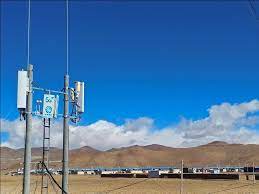
5G networks cover all counties, main townships in Xizang

By Xu Yuyao, Chungda Dolkar, Xian Gan, People’s Daily

Grabbing his phone and packing his backpack, Sonam Tsering, a forest ranger from a village, Bayi district, Nyingchi, southwest China’s Xizang autonomous region, started another patrol in the woods.

The village, located in the northwest of Bayi district, is surrounded by thick primitive forest. As Sonam Tsering trekked further down a small path in the forest, he occasionally took photos of the surrounding trees and made notes, promptly uploading the issues he discovered to a system through a mobile application that was specifically developed by Nyingchi for forest rangers.

With this application, forest rangers can record problems found in patrols and track their routes, so as to ensure the patrols are science-based and efficient.

And all of this was made possible with the support of a stable network. “Since our village accessed the 5G network, we could use more equipment and facilities, which are playing an increasingly important role,” Sonam Tsering told People’s Daily.

Kelsang Tseten, head of the village, has witnessed the village’s network upgrading. According to him, the villagers could not open even a simple web page before, but now they can watch online videos smoothly.

Many travelers were more than surprised. Kelsang Tseten often sees tourists livestreaming at the entrance road of the village. Many tourists pass through the village because it is near a renowned forest park, and the 5G network covering the village makes it easier for them to share their experiences.

“In fact, this has made our village more visible. When tourists post content on social media marked with our village location, many others follow the location and make this place their destination. Tourists can take a break in the village, have some snacks, and shop in local convenience stores, which contribute to the development of the village,” Kelsang Tseten said.

The developed network has allowed the world to learn more about Nyingchi. Every March and April, the Nyingchi peach blossom festival opens in various places in the city, attracting a large number of tourists. Thanks to the fast 5G network, the beautiful peach blossoms can be shown to viewers all over the world through livestreaming.

In addition, the harvests of the Nyingchi are also able to find new markets through the 5G network. For instance, apples and grapes in Mainling county, Zayu county’s kiwi fruits, and Medog county’s artisanal stone pots and teas are all sold through livestream marketing today.

The 5G network has brought new ideas for industrial development. In order to better integrate information technology with traditional agriculture, an ecological agriculture and animal husbandry company called Yarlung in Xizang’s Shannan has implemented a smart greenhouse project using 5G and Internet of Things technologies.

This has achieved production automation and intelligent management, saving 6.5 million yuan ($722,300) in labor costs for the company each year. The project has increased corn yields by 15 percent and tomato yields by 29 percent, and reduced maintenance costs by 50 percent compared to the original level.

The Julong Copper Mine, located in Lhasa, has an average altitude of over 4,000 meters with harsh operating conditions. Thanks to a 5G-enabled unmanned driving project for open-pit mining, the mine has been developed with reducing labor input and improving working environment. This project sets a benchmark for the upgrading and transformation of the industrial internet sector in Xizang.

According to Xizang’s communications administration, the autonomous region has built over 8,700 5G base stations so far, covering all the counties and main townships with the 5G network and providing 5G services to 1.84 million users. There are 23 5G base stations per 10,000 people in the region, reaching the national average.