Indonesia embraces era of high-speed railway with Chinese assistance

By Zhang Niansheng, Liu Hui, Zhang Jinruo, Li Peisong, People’s Daily

The Jakarta-Bandung High-Speed Railway connects the Indonesian capital Jakarta with the popular tourist city of Bandung. Spanning a total of 142 kilometers, it is the first high-speed railway in Indonesia and Southeast Asia, a signature of China-Indonesia Belt and Road cooperation and a flagship project of the practical cooperation between the two countries.

The high-speed railway offers Indonesian passengers a safer, greener, more efficient and more comfortable mode of transportation, providing them with delightful travel experiences. With its excellent services, the high-speed railway has become highly favored by the public.

According to statistics, the Jakarta-Bandung High-Speed Railway has served a total of 383,000 passenger trips as of Nov. 17, one month after its official opening. The highest daily passenger occupancy rate reached 98.7 percent, indicating tremendous growth in passenger traffic.

The Halim Station, where the high-speed railway starts, is always packed with passengers and surrounded by busy shops.

A passenger named Riswanto told People’s Daily that he and his wife came all the way here to take a ride along the Jakarta-Bandung High-Speed Railway.

“The Jakarta-Bandung High-Speed Railway was built with the assistance and advanced technology from China. We are very grateful,” he said.

“The highway from Jakarta to Bandung is heavily congested. In the past, it took three and a half hours by car to travel between the two cities. With the high-speed railway, the trip has been shortened to only 40 minutes, greatly improving transportation between the two cities,” he noted.

Olivia is an employee of an Indonesian fintech company that provides the electronic payment system for the Jakarta-Bandung High-Speed Railway.

According to her, with tickets still hard to come by, many haven’t yet had the opportunity to take a ride, but excitement runs high across the country as people speak proudly of this new high-speed railway, the first of its kind in Southeast Asia.

“On social media, people are sharing videos of their rides, showcasing the fast, smooth, and comfortable experience offered by the Jakarta-Bandung High-Speed Railway,” Olivia said.

Walking onto the platform, one will be attracted by the sleek lines of the bullet trains on the tracks and their vibrant red and white paint. The red polygon pattern at the connection between the locomotive and the carriages is inspired by the texture of the Komodo dragon, a national treasure of Indonesia. The gray seats mirror the famous Borobudur temple in Indonesia. The “Made in China” train just perfectly incorporates Indonesian local elements.

“The train for the Jakarta-Bandung High-Speed Railway is tailor-made for Indonesia, integrating Indonesia’s local culture and adapting to the local operating environment. It is technologically advanced, intelligent, safe, comfortable and environmentally friendly,” said Zhang Fangtao, chief designer of the train.

Shortly after People’s Daily reporters boarded, the train slowly pulled out and accelerated. The real-time speed of the train was displayed digitally inside the carriage, and the top speed hit 350 kilometers per hour. A water bottle placed upside down on a windowsill remained steady throughout the journey.

From the commencement of construction in June 2018 to the official opening of the railway on Oct. 17 this year, constructors from China and Indonesia joined forces to overcome challenges, working tirelessly for nearly 2,000 days. Together, they have holed through 13 tunnels and erected 56 bridges.

In response to the frequent earthquakes in Indonesia, the high-speed trains are equipped with a specialized earthquake early warning system.

To address the impact of high temperature, high humidity, and salty climate on the service life of the trains, the technical team conducted in-situ tests for two years, evaluating hundreds of body materials and coating samples, and finally tailored a corrosion prevention solution.

In order to adapt to the complex terrain along the route, more than ten versions of train network control software and traction software were developed, which led to the trains’ excellent acceleration capabilities.

“The collaboration between the Chinese and Indonesian contracting companies overcame various difficulties and obstacles in the construction,” said Dwiyana Slamet Riyadi, President Director of PT Kereta Cepat Indonesia China, or Indonesia China High-speed Railways Limited, adding that the railway serves as an outstanding example of bilateral cooperation between Indonesia and China.

The Java Island, on which the Jakarta-Bandung High-Speed Railway is built, is home to about 150 million people, over half of Indonesia’s population. It is the most economically and culturally developed region in the country.

Ridwan Kamil, former governor of Indonesia’s West Java Province, believes that the high-speed railway not only brings personnel exchanges, but also creates opportunities, saying it will create new economic opportunities and more job positions.

According to incomplete statistics, the Jakarta-Bandung High-Speed Railway has so far created 51,000 job opportunities in Indonesia. It is estimated that the passenger services, equipment maintenance, and related supporting industries will generate 30,000 additional jobs upon the operation of the railway.

Moreover, more than 75 percent of the services and procurement for the high-speed railway are sourced locally, which significantly boosts the local supply chain and employment. In particular, the project has trained thousands of qualified technicians, laying a solid foundation for its long-term and stable operation.

It is reported that during the construction of the Jakarta-Bandung High-Speed Railway, the Chinese side, by establishing training institutions, conducting on-site training and carrying out a mentoring mechanism, has trained over 45,000 Indonesian employees.

Budi Karya Sumadi, the Minister of Transportation of Indonesia, said that the Jakarta-Bandung High-Speed Railway offers Indonesia an opportunity for technological advancement and also promotes the development of the local supporting industry chain. In addition to high-speed rail, Indonesia looks forward to further strengthening cooperation with China in areas such as aircraft manufacturing and shipping, he added.

China, U.S. to take major country responsibility for benefit of world

By Zhong Sheng, People’s Daily

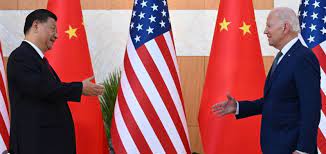
The San Francisco meeting between the Chinese and U.S. Presidents is significant for enhancing trust, removing suspicion, managing differences and expanding cooperation between China and the United States. It is also significant for injecting certainty and stability into a world of turbulence and transformation.

As two major countries and permanent members of the United Nations Security Council, China and the United States shoulder special international responsibilities and obligations.

Chinese President Xi Jinping said during the San Francisco meeting that the two countries should jointly shoulder responsibilities as major countries, stressing that the problems facing human society cannot be solved without cooperation between major countries.

China and the United States should lead by example, step up coordination and cooperation on international and regional issues, and provide more public goods for the world. The two sides should keep their initiatives open to each other, or coordinate and connect them for synergy, to the benefit of the world.

To shoulder responsibilities of a major country requires having a grand vision of a major country. Xi pointed out that China and the United States are faced with two options in the era of global transformations unseen in a century: One is to enhance solidarity and cooperation and join hands to meet global challenges and promote global security and prosperity; and the other is to cling to the zero-sum mentality, provoke rivalry and confrontation, and drive the world toward turmoil and division. The two choices point to two different directions that will decide the future of humanity and Planet Earth.

Speaking from his vantage point, Xi said at a welcome dinner by friendly organizations in the United States that China is ready to be a partner and friend of the United States, and the fundamental principles that China follows in handling China-U.S. relations are mutual respect, peaceful coexistence and win-win cooperation.

The role and responsibility of a major country lie in its actions to uphold world peace and security, and promote global development and prosperity.

Over the past more than half a century, the resumption and development of China-U.S. relations benefited the two peoples and promoted world peace, stability and prosperity. At present, as the world sees increasing instabilities and uncertainties, it is an aspiration shared by the two peoples and people of the world that China and the United States enhance coordination and cooperation, each run their domestic affairs well and, at the same time, work together to advance the noble cause of world peace and development.

During the San Francisco meeting, the two presidents offered views guiding the most pronounced issues confronting China-U.S. relations, including adopting a correct perception of each other, properly managing differences, and advancing dialogue and cooperation. They had all-round discussions on addressing the Palestinian-Israeli conflict, the Ukraine crisis, climate change, artificial intelligence and other global challenges. They further discussed the right way for the two major countries to get along with each other and further identified the joint responsibilities of China and the United States as major countries.

It is believed by the international community that the meeting was constructive and has injected stability and certainty into the changing world.

It’s a due responsibility of major countries to strengthen coordination and cooperation on international and regional issues. China and the United States are the world’s largest two economies. Their economic aggregates account for over 1/3 of the world’s total, and their bilateral trade about 1/5. The relations between the two countries decide the economic climate of the world.

Attempts at decoupling or severing supply chains in defiance of underlying laws would not help boost the U.S. economy. They would only make the world economy more vulnerable.

The Asia-Pacific is a region where Chinese and American interests are most tightly entwined and interact most frequently. The two countries should strengthen cooperation and work toward the goal of building an open, dynamic, resilient and peaceful Asia-Pacific community by 2040.

Providing more public goods to the world is a crucial manifestation of shouldering the responsibilities of a major country. Xi said at the welcome dinner by friendly organizations in the United States that the Belt and Road Initiative as well as the Global Development Initiative, the Global Security Initiative and the Global Civilization Initiative proposed by China are open to all countries at all times including the United States. China is also ready to participate in U.S.-proposed multilateral cooperation initiatives.

China has put forward a series of important initiatives to address global challenges, which have received widespread support and participation from the international community. China and the United States should jointly provide more public goods for the world, and the two sides should keep their initiatives open to each other, thus enhancing coordination and synergy. This will better promote the well-being of people in all countries.

Issues related to climate change have attracted increasing global attention. China and the United States enjoy great potential for cooperation in the fields of promoting green development and addressing climate change. There is every reason for the two sides to strengthen cooperation in this aspect and make it a new highlight in the development of China-U.S. ties.

During the San Francisco meeting, both Xi and Biden underscored the importance of working together to accelerate efforts to tackle the climate crisis in this critical decade. They welcomed recent positive discussions between their respective special envoys for climate, including on national actions to reduce emissions in the 2020s and on common approaches toward a successful 28th session of the Conference of the Parties (COP28) to the United Nations Framework Convention on Climate Changeand on operationalizing the Working Group on Enhancing Climate Action in the 2020s to accelerate concrete climate actions.

As the COP28 is approaching, the consensus reached between the Chinese and the U.S. presidents has undoubtedly boosted global confidence in tackling climate change.

We are in an era of challenges and changes. It is also an era of hope. The world needs China and the United States to work together for a better future. For the shared interests and the future of humanity, China and the United States should jointly shoulder the responsibilities as major countries, work together to address global challenges, strive to enhance the well-being of their peoples, and promote the progress of the human society.

(Zhong Sheng is a pen name often used by People’s Daily to express its views on foreign policy and international affairs.)

China, U.S. to promote people-to-people exchange, cement foundation for healthy development of bilateral relations

By Zhong Sheng, People’s Daily

Chinese President Xi Jinping noted that China and the United States should jointly promote people-to-people exchanges when meeting with his U.S. counterpart, Joe Biden, in San Francisco.

At a welcome dinner by friendly organizations in the United States that followed, he delivered an important speech titled “Galvanizing Our Peoples into a Strong Force For the Cause of China-U.S. Friendship.”

Xi attaches great importance to and personally promotes people-to-people exchanges between China and the United States. This demonstrates a sense of responsibility and commitment to solidifying the foundation for the healthy development of China-U.S. relations.

For any great cause to succeed, it must take root in the people, gain strength from the people, and be accomplished by the people. Growing China-U.S. friendship is such a great cause.

In the speech he delivered at the welcome dinner by friendly organizations in the United States, Xi mentioned the word “people” over 60 times. He stressed that the foundation of China-U.S. relations was laid by the two peoples; the door of China-U.S. relations was opened by the two peoples; the stories of China-U.S. relations are written by the two peoples; the future of China-U.S. relations will be created by the two peoples.

The sincere speech by Xi struck a chord with the audience. It would undoubtedly inspire people from both countries to actively engage in the cause of China-U.S. friendship, thereby generating more positive energy for the healthy development of China-U.S. relations.

Reflecting on the history of China-U.S. relations, it’s clear that the people-to-people friendship has been the source of strength for the relationship.

A hundred and fifty-eight years ago, a large number of Chinese workers came all the way to the United States to build the first transcontinental railroad, and established in San Francisco the oldest Chinatown in the Western Hemisphere. During World War II, the two countries fought side by side for peace and justice.

For 22 years, there were estrangement and antagonism between the two countries, but the people’s longing broke the ice between them.

So far, China and the United States have made 284 pairs of sister provinces/states and sister cities, and over 300 scheduled flights every week and over five million travels every year at peak time.

Xi noted that the hope of the China-U.S. relationship lies in the people, its foundation is in their societies, its future depends on the youth, and its vitality comes from exchanges at subnational levels. This is a profound insight into the reality of China-U.S. relations, as well as enlightening wisdom for fostering a healthy, stable, and sustainable development of the China-U.S. relations.

In recent years, some people in the United States deliberately erected barriers or created a chilling effect on people-to-people and cultural exchanges between China and the United States. This approach runs against the true aspiration of the two peoples to strengthen communication.

The more difficulties there are, the greater the need for the two countries to forge a closer bond between their peoples and to open their hearts to each other, and more people need to speak up for the relationship.

In the past few months, Xi has respectively met in Beijing with co-chair of the Bill & Melinda Gates Foundation Bill Gates, former U.S. Secretary of State Henry Kissinger, and governor of the U.S. state of California Gavin Newsom.

He sent a congratulatory letter to the “Bond with Kuliang: 2023 China-U.S. People-to-People Friendship Forum,” replied to a letter from the U.S.-China Youth and Student Exchange Association and friendly personages from all walks of life in the U.S. state of Washington, replied to a letter from the descendant of former U.S. General Joseph Stilwell, and replied to a letter from Chairman of the Sino-American Aviation Heritage Foundation and Flying Tigers veterans.

He also sent a congratulatory letter to the annual Gala Dinner of the National Committee on U.S.-China Relations, sent a message to the fifth China-U.S. Sister Cities Conference, and replied to a letter from Matias Tarnopolsky, president and CEO of the Philadelphia Orchestra.

Xi’s efforts to promote people-to-people exchanges and subnational cooperation between China and the United States have sparked warm responses in both countries, brightening the China-U.S. relationship that has been at a low point in recent years.

Both China and the United States need to take more actions to promote people-to-people and cultural exchanges in order to inject greater momentum into the continuous improvement and development of bilateral relations.

Xi noted that the two sides should increase scheduled flights, advance tourism cooperation, expand subnational exchanges, strengthen cooperation in education and disability affairs, reduce negative factors hindering people-to-people exchanges, and encourage and support greater interactions and communication between their peoples, to cement the foundation for the healthy development of China-U.S. relations.

Biden said that the U.S. side is glad to see more direct flights and more educational, scientific and technological and people-to-people exchanges between the two countries.

Important consensus has been made that the two countries will roll out more measures to facilitate travels and promote people-to-people exchanges, including increasing direct passenger flights, holding a high-level dialogue on tourism, and streamlining visa application procedures. This positive progress has been welcomed by the two peoples and the international community.

Both sides should implement the relevant consensus, so that the outcomes of the meeting between the two heads of state can be enjoyed by the people as soon as possible, creating favorable conditions and atmosphere for the people of both countries to make more visits, contacts and exchanges.

History shows that it is the convergence of many streams of goodwill and friendship that has created a strong current surging across the vast Pacific Ocean; it is the reaching out to each other by our peoples that has time and again brought China-U.S. relations from a low ebb back onto the right track.

No matter how the global landscape evolves, the historical trend of peaceful coexistence between China and the United States will not change. The ultimate wish of the two peoples for exchanges and cooperation will not change. The expectations of the whole world for a steadily growing China-U.S. relationship will not change.

Starting from San Francisco, the two sides should galvanize the Chinese and American peoples into a strong force to renew China-U.S. friendship, advance China-U.S. relations, and make even greater contributions to world peace and development!

(Zhong Sheng is a pen name often used by People’s Daily to express its views on foreign policy and international affairs.)

China contributes to improving global AI governance

By Liu Yao

In recent years, artificial intelligence (AI) technology has been rapidly advancing around the world and finding increasingly wider applications.

However, while driving economic and social development, the surge of AI also brings with it security risks and challenges.

In particular, the impacts of AI technology on legal, ethical, and humanitarian aspects, as well as its complex effects on international politics, economy, military, and society, have drawn attention and sparked discussions in the international community. The need for international cooperation and regulatory governance of AI has become particularly urgent.

Earlier this month, 28 countries and regions including China, the United States, the UK and the European Union signed the “Bletchley Declaration” at the first AI Safety Summit, agreeing to build an “internationally inclusive network of scientific research on frontier AI safety.”

This October, China launched the Global AI Governance Initiative, which systematically outlines China’s proposals on AI governance from three aspects, namely, the development, security and governance of AI, and presents a constructive approach to addressing universal concerns over AI development and governance.

The initiative stresses it is important to uphold a people-centered approach in developing AI, with the goal of increasing the wellbeing of humanity and on the premise of ensuring social security and respecting the rights and interests of humanity, so that AI always develops in a way that is beneficial to human civilization..

As an “enabler” for social development, AI primarily serves to enhance human wellbeing, thus it is important to ensure the robustness and safety of AI technology, said Zeng Yi, director of the International Research Center for AI Ethics and Governance of the Institute of Automation of the Chinese Academy of Sciences.

China explicitly emphasizes a people-centered approach in the Global AI Governance Initiative, which proves that the initiative is globally oriented and aims to benefit all humanity, Zeng added.

“The risks associated with AI technology are characterized by their hidden nature, cross-domain impact, global reach, and long-term effects. Capital’s pursuit of profit may lead to the alienation of technology, necessitating sustained, systematic, and collaborative governance efforts at the international level,” said Zhang Xin, director of the Digital Economy and Legal Innovation Research Center, the University of International Business and Economics.

In the Global AI Governance Initiative, China proposed that countries should adhere to the principle of developing AI for good, respect the relevant international laws, and align AI development with humanity’s common values of peace, development, equity, justice, democracy, and freedom. They should work together to prevent and fight against the misuse and malicious use of AI technologies by terrorists, extreme forces, and transnational organized criminal groups.

China is a major player in the AI sector. Statistics show that the scale of China’s core AI industry has exceeded 500 billion yuan ($70.42 billion), with the number of AI enterprises surpassing 4,300 and innovative achievements continue to emerge.

According to the World Intellectual Property Organization, Chinese enterprises and institutions applied for nearly 30,000 AI-related patents in 2022, accounting for over 40 percent of the world’s total.

While advancing in technology and related industries, China has been committed to enhancing the security, reliability, controllability, and fairness of AI technology.

In the Global AI Governance Initiative, China proposed that countries should gradually establish and improve relevant laws, regulations and rules, and ensure personal privacy and data security in the R&D and application of AI. It said countries should put ethics first, establish and improve ethical principles, norms, and accountability mechanisms for AI, formulate AI ethical guidelines, and build sci-tech ethical review and regulatory system.

Besides, it is also important to adhere to the principles of fairness and non-discrimination, and avoid biases and discrimination based on ethnicities, beliefs, nationalities, genders, etc.

A study by the International Monetary Fund found that AI and other new technologies may lead to increased investment in developed economies that have already achieved automation, thereby further widening the gap between wealthy and impoverished nations. Experts noted that in the field of AI, there exist a digital divide and a governance gap between developing and developed countries.

That’s why China, in the Global AI Governance Initiative, proposed that all countries, regardless of their size, strength, or social system, should have equal rights to develop and use AI.

Countries should increase the representation and voice of developing countries in global AI governance, and ensure equal rights, equal opportunities, and equal rules for all countries in AI development and governance. Efforts should be made to conduct international cooperation with and provide assistance to developing countries, to bridge the gap in AI and its governance capacity.

According to Zhang Li, a researcher with the China Institutes of Contemporary International Relations, the Global AI Governance Initiative responds to the widespread concerns and attention of the international community, especially developing countries, regarding the development of AI.

China’s advocacy for governance in the field of AI represents a voice for developing countries and demonstrates its role as a responsible major country in improving global governance, Zhang added.

BRICS countries speak up for justice, peace on Palestinian-Israeli issue

By He Yin, People’s Daily

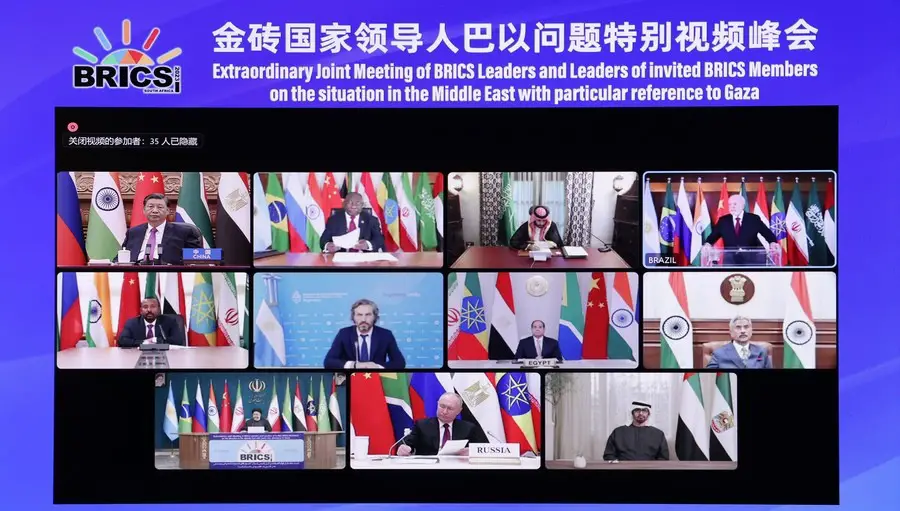
Chinese President Xi Jinping on Nov. 21 attended the BRICS extraordinary virtual summit on the Palestinian-Israeli issue and delivered an important speech.

Explaining China’s position on the Palestinian-Israeli issue, he pointed out that it’s urgent and imperativeto end hostilities and achieve a ceasefire immediately, keep humanitarian corridorssecure and unimpeded and prevent the conflict from spilling over. He stressed that the only viable way to break the cycle of Palestinian-Israeli conflict lies in the two-state solution.

His remarks addressed both immediate and long-term prioritiesand identifies the direction of effectively solving the Palestinian-Israeli issue.

The virtual summit was the first summit since the enlargement of BRICS, and an important meeting convened by the BRICS countries at a critical moment of escalation of the Palestinian-Israeli issue.

The BRICS cooperation mechanism is an important platform for emerging markets and developing countries to strengthen solidarity and cooperation and safeguard common interests. It always focuses on promoting world peace and development and addresses major international issues based on their merits, making fair remarks and taking fair actions, and bringing to the world more certainty, stability and positive energy.

As Xi pointed out, given the current circumstances, it is very timely and very important that BRICS countries meet and speak up for justice and for peace on the Palestinian-Israeli issue.

Xi noted that the parties to the conflict must end hostilities and achieve a ceasefire immediately, stop all violence and attacks against civilians, release civilians held captive, and act to prevent loss of more lives and spare people from more miseries.

He stressed that humanitarian corridors must be kept secure and unimpeded, and more humanitarian assistance should be provided to the population in Gaza. The collective punishment of people in Gaza in the form of forced transfer or water, electricity and fuel deprivation must stop.

Besides, the international community must act with practical measures to prevent the conflict from spilling over and endangering stability in the Middle East as a whole, he added.

These Chinese proposals are highly targeted and constructive, aligning with the common aspirations of the majority of countries and reflecting the unanimous call of peace-loving people worldwide.

The Palestinian issue has always been at the core of the Middle East problem. Without a just resolution to the Palestinian issue, there would be no lasting peace and stability in the Middle East.

Xi has emphasized on many occasions that the only viable way to break the cycle of Palestinian-Israeli conflict lies in the two-state solution, in the restoration of the legitimate national rights of Palestine, and in the establishment of an independent State of Palestine.

The root cause of the Palestinian-Israeli situation is the fact that the right of the Palestinian people to statehood, their right to existence, and their right of return have long been ignored. The historical injustices done to the Palestinian people should not be left unattended indefinitely. The legitimate rights and interests of a nation are not up for trade, and the demand to establish an independent state shall not be denied.

China calls for early convening of an international peace conference that is more authoritative to build international consensus for peace and work toward an early solution to the question of Palestine that is comprehensive, just and sustainable.

Since the outbreak of the latest Palestinian-Israeli conflict, China has been working actively to promote peace talks and a ceasefire. The fact that the delegation of Arab-Islamic foreign ministers made China its first stop for international mediation reflectedtheir trust in China and the tradition of mutual understanding and support between the two sides.

At the UN Security Council, China has acted in its capacity as president to facilitate the adoption of the resolution, which calls for extended humanitarian pauses and corridors, the protection of civilians, and the provision of humanitarian assistance.

The international community highly praised China for consistently upholding a fair position on the Palestinian issue and commended China’s role as the rotating president of the UN Security Council in pushing for the adoption of the first resolution since the outbreak of the latest Palestinian-Israeli conflict.

China has provided humanitarian assistance to help ease the humanitarian plight in Gaza. This includes $2 million of emergency humanitarian assistance provided through the Palestinian National Authority and UN agencies, and emergency humanitarian supplies worth 15 million yuan ($2.11 million), such as food and medicine, to the Gaza Strip with the help of Egypt. China will provide more supplies and assistance according to the needs of the people in Gaza.

The BRICS virtual meeting to coordinate positions and actions on the Palestinian-Israeli conflict marked a good start for greater BRICS cooperation following its enlargement. As a permanent member of the UN Security Council and a responsible major country, China will continue to maintain close communication with relevant parties, and make utmost efforts to protect civilians, ease tensions, restart negotiations, and strive for peace.

Dialogue, cooperation the only right choice for China, U.S.

By Zhong Sheng, People’s Daily

“No way you make progress over the long term without China and the U.S. deeply talking to each other on something like AI,” said the head of an American multinational technology conglomerate. “It has got to be an integral part of the process.”

The recent meeting between the Chinese and U.S. heads of state in San Francisco has yielded multiple outcomes, including the establishment of government talks on AI, which, once announced, has greatly encouraged the international science and technology community.

It signified that the leaders of both countries agreed to promote and strengthen dialogue and cooperation in various fields, which aligns with the common expectations of the two peoples and the international community. It will also help establish a stronger bond of interest between the two sides and increase international confidence in stabilizing and improving the China-U.S. relations.

Chinese President Xi Jinping pointed out during the San Francisco meeting that China and the United States have broad common interests in a wide range of areas, including traditional areas such as the economy, trade and agriculture, as well as emerging areas such as climate change and AI. Under current circumstances, the common interests between China and the United States have increased, not decreased.

This has laid a foundation for the two countries to carry out mutually beneficial cooperation. The important consensus and outcomes achieved during the San Francisco meeting once again proved the mutually beneficial nature of China-U.S. relations, and demonstrated that dialogue and cooperation is the only right choice for the two countries.

The relationship between China and the United States is the most important bilateral relationship in the world, and it is also highly complex.

To accurately grasp the relationship between the two major countries, it is necessary to not only observe the phenomena and details but also understand the essence and the overall picture, avoiding hasty generalizations or loss of essence.

In recent years, some people in the United States have been mistaken about the definition of the China-U.S. relationship, constantly emphasizing competition as if it was the dominant theme or even the sole focus of the relationship. This perspective not only deviates from the fundamental reality of China-U.S. relations but also carries the risk of pushing both sides toward conflict and confrontation.

It is normal for China and the United States to compete in certain areas. But from the overall picture and a broader perspective, it is easy to see that competition is just a tributary, while common interests are the mainstream.

It is in their mutual and fundamental interest to prevent conflict and confrontation and achieve peaceful coexistence. The two economies are deeply integrated, and both face new tasks in development. It is in their mutual interest to benefit from each other’s development. It is also in their interest to promote post-pandemic global recovery, tackle climate change and resolve regional issues through China-U.S. coordination and cooperation.

Advancing mutually beneficial cooperation requires necessary conditions and atmosphere.

Cooperation should be a two-way journey, not a one-way street. Both sides need to respect each other, pursue mutual benefit, focus on the larger picture, and nurture a sound atmosphere for cooperation.

Some people in the United States want to demand unconditional cooperation from China in areas in need, while continuing to contain and suppress China and damage China’s legitimate rights and interests. This logic is untenable and China cannot accept it.

China advocates win-win cooperation with the United States. At the same time, China has interests that must be safeguarded, principles that must be upheld, and red lines that must not be crossed. Only by adhering to mutual respect, equal treatment and win-win cooperation, can dialogue and cooperation proceed steadily and tangibly benefit the two peoples.

Advancing mutually beneficial cooperation requires necessary channels and mechanisms.

Xi noted that it is important to fully utilize the restored and new mechanisms in foreign policy, economy, finance, commerce, agriculture and other fields, and carry out cooperation in such areas as counternarcotics, judicial and law enforcement affairs, AI, and science and technology. This fully demonstrated China’s sincere desire and responsible stance in promoting mutually beneficial cooperation and improving China-U.S. relations.

In recent years, due to reasons known to all, China-U.S. relations have encountered severe difficulties, leading to the interruption of some dialogue and cooperation channels that have been established over decades. This is not in line with the fundamental interests of both countries, nor does it reflect the true aspirations of the two peoples.

Important consensus has been achieved on advancing dialogue and cooperation during the San Francisco meeting. The two sides decided to step up high-level interactions, advance or launch regular consultations in such areas as commerce, economy, finance, export control, the Asia-Pacific, maritime, arms control and nonproliferation, foreign policy planning, China-U.S. joint working group, and disability issues.

The two sides also agreed to start consultations on extending the China-U.S. Science and Technology Cooperation Agreement, and on resuming the China-U.S. Joint Committee on Cooperation in Agriculture. They should make good use of these channels and mechanisms to effectively promote mutually beneficial cooperation.

History and reality have repeatedly shown that as long as China and the United States advance mutually beneficial cooperation, they can create opportunities to better address their respective challenges and pursue development. China and the United States have developed $760 billion in bilateral trade and $260 billion in their two-way investment, bringing growth momentum and well-being to both sides.

The exhibition area of American companies has been the largest for six consecutive years at the China International Import Expo, and over 200 U.S. enterprises joined the event this year. This clearly demonstrates that the American business community sees opportunities in China, and hopes to continue mutually beneficial cooperation with China.

China is pursuing high-quality development, and the United States is revitalizing its economy. There is plenty of room for their cooperation, and they are fully able to help each other succeed and achieve win-win outcomes.

Win-win cooperation is the trend of the times, and it is also an inherent property of China-U.S. relations. Both China and the United States should seize the opportunities, meet each other halfway, and jointly promote mutually beneficial cooperation, so as to consolidate the positive momentum of bilateral relations.

(Zhong Sheng is a pen name often used by People’s Daily to express its views on foreign policy and international affairs.)

The Appeal Court upholds Jacob Ajegana Kudu’s victory for the Nasarawa Eggon East Constituency

In a landmark judgment delivered on Tuesday at the Appeal Court sitting in Abuja, the victory of Hon. Jacob Ajegana Kudu, representing the All Progressives Congress (APC), in the Nasarawa Eggon East Constituency election has been affirmed.

The ruling dismisses the petition filed by Ibrahim Muhammed, the candidate of the People’s Democratic Party (PDP), challenging the outcome of the fiercely contested election.

The legal battle that ensued following the elections, characterized by heated arguments and extensive legal representations, culminated in the judgment handed down by the appellate court. Hon. Jacob Ajegana Kudu emerged victorious in the election held on 18th march, 2023 garnering widespread support from constituents in Nasarawa Eggon East Constituency.

The Appeal Court ruling affirmed the earlier decision of the lower tribunal, which had upheld the victory of Hon. Jacob Ajegana Kudu. The panel of judges, deliberated extensively on the merits of the case, examining evidence presented by both parties.

Addressing the media shortly after the judgment, Hon. Jacob Ajegana Kudu expressed gratitude to the judiciary for upholding the will of the people and affirmed his commitment to serving the constituents diligently.

He extended an olive branch to his opponents, calling for unity and collaboration for the progress and development of Nasarawa Eggon East Constituency.

With the conclusion of the legal battle at the Appeal Court, Hon. Jacob Ajegana Kudu stands affirmed as the victor in the Nasarawa Eggon East Constituency election, marking the end of a protracted legal process and setting the stage for focused representation and development initiatives in the constituency.

PDP Concern Group Expresses Concerns Over Appeal Court Ruling in Nasarawa State

The PDP Concern Group Nasarawa State has conveyed its profound disappointment and apprehension in response to the recent Appeal Court judgment that overturned the PDP’s gubernatorial victory from the lower tribunal, awarding it to the APC on technical grounds rather than the case’s merit.

Expressing concerns about the departure from democratic principles, particularly the principle of majority rule, the group questions the credibility of our electoral processes. They highlight instances of irregularities, notably in Gayam ward and Chiroma ward, where discrepancies in accredited voters and votes cast were seemingly overlooked by the tribunal.

The group asserts that the judgment raises doubts about the judiciary’s commitment to justice, fairness, and merit. They emphasize the need for a thorough investigation into the alleged irregularities and call on competent authorities, notably the Supreme Court, to scrutinize the matter and rectify perceived injustices.

In addition, the PDP Concern Group urges the Independent National Electoral Commission (INEC) to address grievances seriously, ensuring the prevention of irregularities in future elections. They underscore the importance of safeguarding citizens’ right to participate in free and fair elections.

COM. ADAMU DAVIDSON HENRY, Convener of the PDP Concern Group Nasarawa State, reaffirms the group’s commitment to justice and fairness, pledging ongoing efforts to uphold the will of the people in Nasarawa State and beyond.

To make greater contributions to Asia-Pacific’s stability, prosperity

By Yu Yichun, Cao Shiyun, People’s Daily

This year marks the 30th anniversary of the first Asia-Pacific Economic Cooperation (APEC) Economic Leaders’ Meeting. Over the past 30 years, China’s deepening reforms and expanding opening up have gone hand in hand with the continuous expansion of Asia-Pacific economic cooperation.

Since 2013, Chinese President Xi Jinping has attended or chaired APEC Economic Leaders’ Meetings and delivered important speeches.

From “building an Asia-Pacific community with a shared future” to “creating and fulfilling an Asia-Pacific dream,” and from “forging an Asia-Pacific partnership” to “building a high-quality Asia-Pacific connectivity network,” Chinese ideas and proposals have sparked strong resonance in the Asia-Pacific region, making significant contributions to the stability and prosperity of the region.

China’s opening up and development are closely related to the Asia-Pacific region. China has always been a staunch supporter and active promoter of Asia-Pacific regional economic cooperation, integrating its own development with regional development and driving the opening up of the whole region through its own opening up.

In 2022, China’s trade volume with Asia-Pacific economies reached $3.1 trillion, a year-on-year increase of 19.2 percent, accounting for 36.8 percent of China’s total foreign trade.

During the same period, China’s high-quality implementation of the Regional Comprehensive Economic Partnership (RCEP) resulted in a total of 12.95 trillion yuan ($1.78 trillion) in imports and exports to other RCEP members, growing 7.5 percent from a year ago.

According to the Asian Economic Integration Report 2023 by the Asian Development Bank, Asia’s economic recovery is driven particularly by China, which accounted for 64.2 percent of total growth.

China has been making continuous and concrete efforts to deepen trade and investment cooperation with regional economies, contributing its part to building an open economy in the Asia-Pacific.

It pushed for the launch of the process to build a Free Trade Area of the Asia-Pacific at the 2014 APEC meeting in Beijing, and actively worked to join the Comprehensive and Progressive Agreement for Trans-Pacific Partnership and the Digital Economy Partnership Agreement. Furthermore, China has been actively promoting the China-ASEAN Free Trade Area 3.0 with ASEAN members.

The 30th APEC Economic Leaders’ Meeting, with the theme of “Creating a Resilient and Sustainable Future for All,” conveys the significance of green development and innovation for the Asia-Pacific region.

Under the active promotion by the Chinese government and the vigorous participation of Chinese enterprises, cooperation platforms such as the APEC Sustainable Energy Center and the China-Pacific Island Countries Climate Change Cooperation Center have gradually been established. Green development projects, including the Dzilam State Reserve located in Mexico’s Yucatan Peninsula, have commenced, contributing Chinese wisdom and solutions to building a clean and beautiful Asia-Pacific region.

APEC Secretariat Executive Director Rebecca Sta Maria noted that China has demonstrated its determination to achieve sustainable development through practical actions and has fulfilled its international commitments in the field of sustainable development.

Leveraging the digital twin technology, Chinese scientists are providing more solutions for the protection of marine biodiversity in Latin American countries. By introducing technologies such as 5G, cloud computing, and artificial intelligence, Chinese companies are helping Thai hospitals achieve comprehensive intelligent transformation in their services. With the assistance of the China-ASEAN Information Harbor, the level of cross-border trade and economic services between China and ASEAN countries continues to improve.

China not only leads the world in technological innovation and digital economic development, but also actively promotes digital transformation in the Asia-Pacific region and even the world at large.

Working with its partners to promote high-quality Belt and Road cooperation, China is improving the connectivity level in the Asia-Pacific region. It proposed to establish the Asian Infrastructure Investment Bank, aiming to provide financial support for regional infrastructure development.

China has hosted a series of international exhibitions such as the China Import and Export Fair, China International Fair for Trade in Services, and the China International Consumer Products Expo at high standards, collaborating with various parties to write stories of open cooperation and mutual benefit.

The just-concluded sixth China International Import Expo achieved fruitful results, with tentative deals reaching a new high of $78.41 billion, a 6.7 percent increase from the previous year.

China is committed to advancing high-level opening up, continuously providing new opportunities for the Asia-Pacific region and the world through its new development, and contributing Chinese strength to the construction of an open world economy.

Major countries should shoulder great responsibility. The United States is the host of the 30th APEC Economic Leaders’ Meeting. China and the United States are the world’s top two economies, accounting for over 1/3 of the global economic output, nearly 1/4 of the world’s population, and approximately 1/5 of global bilateral trade. They play a unique and important role in driving economic growth in the Asia-Pacific region and promoting regional cooperation.

The wide globe is fully capable for the two countries to develop themselves and prosper together. Stabilizing and improving China-U.S. relations not only serves the fundamental interests of both countries and their peoples, but also contributes to peace and prosperity in the Asia-Pacific region and even the world.

The world is once again at the crossroads of history. Under the new situation, Asia-Pacific economies need to learn from past experiences and lessons, respond to the challenges of the times and steadfastly advance Asia-Pacific regional economic integration, so as to jointly break new ground in development and build an Asia-Pacific community with a shared future. They will contribute wisdom and strength to world peace and development with the stability and prosperity of the Asia-Pacific region.

CIIE contributes to global recovery, development, prosperity

By He Yin, People’s Daily

The sixth China International Import Expo (CIIE) recently came to a close. It saw tentative deals worth $78.41 billion signed, 6.7 percent higher from the previous expo.

The continuous success of the CIIE showcases China’s increasing appeal in promoting high-level opening up, injecting positive energy into global recovery.

During this year’s CIIE, various parties further demonstrated their confidence in China’s development prospects.

The number of Fortune Global 500 companies and industry leaders participating in the expo exceeded that in previous years, with a flurry of “global debuts,””Asia debuts,” and “China debuts.”

Foreign companies have shown their trust in the Chinese economy through concrete actions. According to data released by the China’sMinistry of Commerce, the number of newly established foreign-invested enterprises in China increased by 32.4 percent year-on-year from January to September this year.

A survey conducted by the China Council for the Promotion of International Trade showed that nearly 70 percent of surveyed foreign companies are optimistic about the market prospects in China over the next five years.

The International Monetary Fund recently raised its growth forecast for China’s economy in 2023 to 5.4 percent, and major financial institutions such as JPMorgan, UBS Group, and Deutsche Bank have also lifted their predictions for China’s economic growth this year.

Business leaders from multinational companies who participated in the CIIE highly praised the resilience and potential of the Chinese economy, expressing their firm confidence in deepening their presence in the Chinese market.

One said that the Chinese supply chain system boasts huge resilience and potential, and the resilience and innovation of the Chinese economy mean an opportunity for foreign companies to satisfy the Chinese consumption market and the country’s economic demand.

This year’s CIIE has further demonstrated China’s determination to expand its opening-up. Before the first CIIE officially kicked off, Chinese President Xi Jinping remarked that the CIIE is hosted by China but for the world. He stressed that it is not an ordinary expo, but a major policy for China to push for a new round of high-level opening-up and a major measure for China to take the initiative to open its market to the world.

The CIIE fulfills its platform function for international procurement, investment promotion, people-to-people exchanges and open cooperation, creating market, investment and growth opportunities for participants.

Be it specialty from the least developed countries or high-tech products from developed countries, they are all getting on board the express train of the CIIE to accelerate their entry into the global trade market.

International observers have noted that an open China creates more cooperation opportunities for the world and China’s commitment to building an open economy injects tremendous certainty and momentum into the global economy.

This year marks the 45th anniversary of China’s reform and opening-up and the 10th anniversary of the establishment of China’s first pilot free trade zone. Recently, the 22nd pilot free trade zone of the country, the China (Xinjiang) Pilot Free Trade Zone, was officially launched.

From the establishment of the Lingang Special Area of the China (Shanghai) Pilot Free Trade Zone to the implementation of the integrated development of the Yangtze River Delta, and from the release of theMaster Plan for the Construction of the Hainan Free Trade Port and the ImplementationPlan for Further Reform and Opening-up in Shenzhen to the continuous improvement in business environment and intellectual property protection, a series of opening-up measures announced by China at the CIIE have been implemented, continuously creating new market opportunities for the world.

Thailand’s Deputy Prime Minister and Commerce Minister Jurin Laksanavisit noted that the CIIE has demonstrated China’s commitment to opening up and showcased the willingness of all parties to expand cooperation. It is creating new opportunities for global enterprises, especially small and medium-sized ones, he added.

The global economy is experiencing a weak recovery, with sluggish global trade. Countries need to strengthen open cooperation and work together to address challenges.

China will continue to host major exhibitions such as the CIIE to provide platforms for open cooperation, help build more consensus on open cooperation and contribute to global recovery and development.