Revealed: Alleged N5m Bribery against Chief Judge Tsoho Blackmail

Indications emerged that the allegations against the Chief Judge of the Federal High Court, Justice John Terhemba Tsoho, over a petition of involvement in an alleged $5 million bribery scheme aimed at overturning a court order restraining Nestoil Limited and its affiliates from tampering with their assets in a $1 billion debt recovery dispute is baseless and mere distractions.

The allegations surfaced barely one week after Justice Dehinde Dipeolu of the Federal High Court in Lagos granted a Mareva injunction inSuit No. FHC/L/CS/2127/2025, empowering First Trustees Limited and FBNQuest Merchant Bank Limited to take possession of Nestoil’s assets pending determination of the case.

Investigations by our judiciary correspondent revealed that the story flying on some online platforms is aimed at diverting attention on the issues raised in the matter.

More details later

Harnessing power of water and sand: China’s wisdom in managing Yellow River

By Wang Hao, People’s Daily

The Yellow River, China’s second-longest river, transports more sediment than any major river in the world. Centuries of silt accumulation have diminished reservoir capacity and elevated its riverbed, creating a “suspended river” that historically threatened downstream regions with flooding.

Since 2002, China has conducted 31 coordinated water-sediment regulation initiatives to ensure the river’s long-term stability. Through multi-reservoir management, over 3.5 billion tons of sediment have been flushed seaward, significantly mitigating the suspended river phenomenon while enhancing flood control and sediment transport capacity.

Central to this system is the Xiaolangdi Reservoir – functioning as both the “control tap” for the middle-lower Yellow River and the “power source” for sediment regulation. At 9 a.m. on Sept. 8, inside a digital twin control center of the Xiaolangdi Multipurpose Dam Project Management Center in central China’s Henan province, massive data streams pulsed on monitoring screens.

“Following a dispatch order to “adjust outflow to 2,500 m³/s,” Engineer Li Xiandong executed operational commands. As sediment-discharge gates lifted, torrents surged downstream, initiating the annual regulation cycle.

“This flow rate releases an Olympic-sized swimming pool’s volume per second – triple the normal discharge,” Li explained. “The powerful current acts like hydraulic brushes, scouring sediment seaward.” Li’s expertise lies in precisely timing gate combinations to optimize this scouring effect. During this year’s operation, 24 gate adjustments following six major commands enabled Xiaolangdi to flush 8.87 million tons of sediment.

Through meticulous water management, a multi-reservoir coordination system now operates across more than 1,000 river kilometers, integrating Xiaolangdi with Sanmenxia and Wanjiazhai reservoirs. This precision engineering has dramatically increased sediment discharge efficiency, alleviating sedimentation burdens throughout the system.

During pre-flood season operations (June 28, 8:00 AM), Xiaolangdi’s outflow peaked at 4,820 m³/s. Concurrently, drones equipped with edge-analysis terminals and dual-spectrum cameras launched automated inspections. “These devices transmit real-time imagery, autonomously identify structural defects, and generate inspection reports,” noted Wang Pengfei, deputy director of the hydraulic engineering department of a company under the Xiaolangdi Multipurpose Dam Project Management Center.

With digital twin technology, an intelligent “mirror” of Xiaolangdi has come to life. More than 2,943 monitoring devices capture precise structural data, while satellites provide full coverage of the 300-square-kilometer reservoir area and 1,300 kilometers of shoreline. In the virtual space, 12 hydrological and engineering models run continuous simulations.

From the dam and reservoir to the river channel and water flow, everything is mapped into the digital twin platform, where virtual and physical systems interact. This enables advanced simulations for sediment flushing, reservoir dispatching, and engineering safety – all tested and refined before real-world implementation.

From Xiaolangdi to the Yellow River section in Jinan and Dongping Lake, the digital twin yellow river project is steadily advancing. More than 550 million data entries have been integrated, bringing the Yellow River into the digital realm.

“We have developed a scientific paradigm of three interconnected models – a prototype Yellow River, a model Yellow River, and a digital twin Yellow River,” said Cao Yongtao, director of the sediment research department at the Yellow River Institute of Hydraulic Research. “The three systems verify and complement each other, improving forecasting accuracy and refining dispatch plans.” 

Through “micro-Yellow River” experiments and cross-validation among the three systems, the forecast error for flood peak enhancement has been reduced to within 10 percent.

As torrents of water roared downstream during this year’s pre-flood season operation, Lou Guangyan and her team from ecology and environment division the Yellow River institute of water resources protection worked along the river’s monitoring sections, studying the relationship between changes in sediment discharge and aquatic life.

The Yellow River Protection Law, which took effect on April 1, 2023, stipulates in Article 62 that water and sediment regulation shall minimize impacts on aquatic organisms and their habitats.

From 2023 to 2025, Lou’s team has set up 12 monitoring cross-sections between Xiaolangdi and the river mouth, collecting more than 1,300 samples to assess ecological impacts. “In the long run, water and sediment regulation helps stabilize the river’s morphology, improve aquatic habitats, and support biodiversity. Rare species such as the ungeo fish have reappeared,” Lou said.

Data show that since 2008, the structure of plankton communities in the lower Yellow River has remained stable, while the number of fish species in Henan and Shandong provinces has increased by nearly 50. During each operation, water is also released to the Yellow River delta wetland, providing essential support for its restoration and biodiversity enhancement.

The water and sediment regulation of the Yellow River embodies China’s ancient wisdom of water governance combined with modern technological innovation. After more than two decades of practice, this integrated approach has laid a solid foundation for ensuring the river’s long-term stability, while offering valuable experience and insights for the ecological management of major rivers around the world.

Shenzhou-21 heads for space: New milestones in China’s space program

By Liu Shiyao, Li Junqiang, People’s Daily

At 11:44 p.m. Beijing time on Oct. 31, the Shenzhou-21 manned spacecraft, aboard a Long March-2F carrier rocket, lifted off from the Jiuquan Satellite Launch Center in northwest China, embarking on a journey to China’s space station. 

This marked the 37th flight mission of China’s manned space program and the sixth manned flight mission since the space station entered the application and development phase.

According to Zhang Jingbo, a spokesperson for the China Manned Space Agency, the main objectives of the mission are to complete an in-orbit rotation with the Shenzhou-20 crew, stay in  the space station for about six months, and carry out space science and application tasks. 

The astronauts will perform extraveShicular activities, manage cargo transfers in and out of the modules, install space debris protection devices, and mount and retrieve external payloads and facilities. They will also engage in science education and public outreach activities, as well as conduct space-based experiments to further enhance the comprehensive benefits of the space station’s applications.

During their stay, the Shenzhou-21 crew will undertake 27 new scientific and application projects. These projects will focus on key scientific issues in areas such as space life science and biotechnology, space medicine, space materials science, microgravity fluid physics and combustion, and new spacecraft technologies. 

Notably, the mission will carry out China’s first in-orbit scientific experiment involving rodent mammals. Four mice, two male and two females, have traveled with the spacecraft and will be raised in orbit. The experiment will explore how microgravity and confined space conditions affect behavioral patterns. After returning to Earth, further studies will be conducted to explore how multiple organs and tissues of mice respond and adapt to the stress of the space environment.

The spacecraft also carries experimental payloads related to space applications, including in-situ electrochemical and optical studies of lithium-ion batteries and an on-orbit intelligent computing platform. These projects are expected to provide a scientific foundation for future research and strengthen the station’s long-term application capabilities.

Since its inception, China’s manned space program has adhered to the principles of peaceful use, equality and mutual benefit, and common development. China continues to promote international cooperation by inviting foreign astronauts to participate in missions to its space station, contributing to the progress of space technology and benefiting humanity as a whole.

Following the signing of a cooperation agreement between China and Pakistan in February this year, the selection of Pakistani astronauts for participation in China’s space missions has officially begun. The preliminary selection process is currently under way in Pakistan, while the secondary and final selections will take place in China. 

Upon completion, two Pakistani astronauts will train alongside their Chinese counterparts. One of them will be selected to participate in a short-duration spaceflight mission as a payload specialist and conduct scientific experiments for Pakistan.

Zhang reaffirmed that China is holding firm to its goal of landing astronauts on the moon by 2030. He noted that the country’s manned lunar exploration program is progressing smoothly. 

Since the beginning of this year, China has completed several key tests, including the second-stage propulsion system test and the captive firing test for the Long March-10 rocket, the zero-altitude escape test for the Mengzhou spacecraft, and the comprehensive landing and takeoff verification test for the Lanyue lander. 

Upcoming tests will include integrated testing of the lander, thermal and maximum dynamic pressure escape tests of the Mengzhou spacecraft, and low-altitude and technology verification flights of the Long March-10 rocket.

Since the approval of the space station application and development project and the manned lunar exploration program, China has actively adopted a commercial competition model to encourage the participation of private enterprises in spacecraft development and manufacturing. This approach has been applied to projects such as the low-cost cargo transport system for the space station, the crewed lunar rover, and lunar remote-sensing satellites. Contracts for these projects have been signed, and development work is under way. The share of commercial participation in China’s manned space program has increased substantially, accelerating technological progress and yielding increasingly significant results.

Looking ahead, China will continue to expand commercial participation in future projects, including the development of lunar scientific probe platforms and crater-detection platform, to further stimulate innovation and vitality in the country’s commercial space sector.

Eighth CIIE sets new records in exhibition area, number of participating enterprises

By Luo Shanshan, People’s Daily

The 8th China International Import Expo (CIIE) will convene in Shanghai from Nov. 5 to 10. This year’s event will bring together 155 countries, regions, and international organizations, featuring 4,108 overseas enterprises and covering an exhibition area of more than 430,000 square meters – a new record high for both scale and participation. 

Amid profound global economic shifts, the CIIE underscores China’s commitment to stabilizing international trade.

Vice Minister of Commerce Sheng Qiuping noted that China has maintained its position as the world’s second-largest import market for 16 consecutive years. During the 14th Five-Year Plan period (2021-2025), the country’s total imports of goods and services are expected to exceed $15 trillion. 

The first seven editions of the CIIE have together generated intended deals worth more than $500 billion, helping enterprises from around the world navigate global market fluctuations and share in the vast opportunities of China’s super-sized market.

This year’s CIIE will feature four distinct highlights.

Commitment to opening-up

The Ministry of Commerce will launch a new initiative under the theme of “Shared Market, Export Opportunities in China,” accompanied by a ceremony inaugurating related events. The China Pavilion at the 8th CIIE will showcase the country’s latest achievements in deepening reform and advancing high-standard opening-up during the 14th Five-Year Plan period. The Hongqiao International Economic Forum will release The World Openness Report 2025 and the latest World Openness Index.

Showcasing Frontier Innovations 

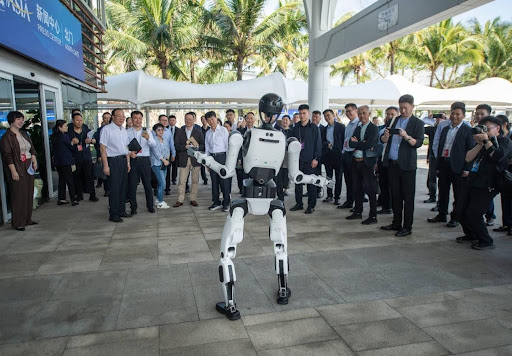
The expo will debut 461 new products, technologies, and services, highlighting frontier industries such as low-altitude economy and humanoid robotics. New themes including the silver economy, ice-and-snow economy, sports economy, and automotive tourism will be featured, along with new platforms for digital and health consumption, helping expand goods and services consumption and foster emerging consumption trends.

Strengthening Global Collaboration 

A record 4,108 enterprises (up from 3,496 in 2024), including 290 Fortune 500 companies and industry leaders, will participate across an expanded exhibition area. Over 600 new exhibitors have joined, with 43 trade missions and over 700 sub-delegations attending for procurement negotiations. Registered professional visitors total 449,500.

Inclusive Global Participation

Enterprises from 123 Belt and Road partner countries will participate in the event, up 23.1 percent from last year. A total of 163 companies from the least developed countries will be present, marking a 23.5 percent increase. The African products section has been expanded, with the number of participating African enterprises up by 80 percent year on year. For the first time, the Hongqiao International Economic Forum will host discussions on enhancing economic resilience  and sustainable agricultural development in the Global South.

China–ASEAN Free Trade Area 3.0 injects new momentum into regional openness, cooperation

By He Yin, People’s Daily

Amid rising unilateralism and protectionism, how can nations foster greater stability in regional and global development? China and ASEAN have delivered a compelling response.

On Oct. 28 in Kuala Lumpur, Malaysia, the two parties signed the China-ASEAN Free Trade Area 3.0 Upgrade Protocol. This achievement not only marks another milestone in their shared commitment to open cooperation but also significantly advances the development of an open world economy at a critical moment.

The agreement represents is a landmark outcome from the consensus reached between Chinese President Xi Jinping and ASEAN leaders during the ASEAN-China Special Summit to Commemorate the 30th Anniversary of ASEAN-China Dialogue Relations. 

It also represents an important step in implementing the decisions of the fourth plenary session of the 20th Central Committee of the Communist Party of China, which called for expanding high-standard opening up and creating new opportunities for mutually beneficial cooperation. 

The upgraded partnership between the world’s second- and fifth-largest economies is more than a simple sum of figures, it is a meeting of minds.

Since its full implementation in 2010, the China-ASEAN Free Trade Area(CAFTA) has continuously evolved to meet the demands of accelerating regional integration. Its progressive upgrades – moving from tariffs reductions on goods to expanded service sector access, and now to deeper alignment of regulations and standards – clearly demonstrate the expanding scope and rising ambition of China-ASEAN economic cooperation. The process fully reflects the two sides’ forward-looking vision and strategic understanding of global trends.

Building CAFTA 3.0 is a crucial step towards creating a super-sized market and fostering a community with a shared future. The economic partnership is exceptionally robust: China and ASEAN have been each other’s largest trading partners for five consecutive years, with total trade reaching nearly $1 trillion in 2024 and cumulative two-way investment exceeding $450 billion as of July this year. These deep economic ties form a powerful foundation for an even closer community with a shared future. 

Under the CAFTA 3.0 framework, both sides will jointly promote the development of emerging industries such as digital and green economies, enhance the alignment of standards and regulations, and advance infrastructure and supply chain connectivity. These measures will drive the region toward deeper economic integration and more sustainable long-term growth.

Businesses anticipate that the agreement’s provisions will significantly enhance the region’s appeal as an investment destination and contribute to building stronger, more resilient supply chains. These high expectations underscore the potential for the upgraded free trade area to unlock new dimensions of China-ASEAN cooperation.

The China-ASEAN Free Trade Area 3.0 fully demonstrates the two sides’ shared and solemn commitment to upholding multilateralism and free trade. Amid intensifying geopolitical rivalry and rampant protectionism, China and ASEAN are providing certainty through mutually beneficial cooperation in an uncertain world. Their joint resolve to build an open, inclusive, and rules-based regional integrated market and a resilient regional industrial and supply chain system that delivers mutual benefits will unlock significant opportunities for businesses across the region and beyond, inject strong confidence and vitality into global economic growth, and set an example for countries working together to address international economic and trade challenges.

Adhering to openness, cooperation, and mutual benefit is an inherent requirement of Chinese modernization. As of early 2025, China had signed 23 free trade agreements with 30 countries and regions. 

With China continuing to expand institutional opening up, foster innovation-driven trade growth, broaden two-way investment channels, and work with partners to advance high-quality Belt and Road cooperation, the space for mutual benefit and shared success will only continue to grow. 

Looking ahead, China’s steadfast commitment to openness and cooperation will ensure it remains a stabilizer and source of dynamism for the world economy.

Economic globalization is an irreversible trend of history. China will continue to work with all parties to uphold multilateralism and open cooperation, share development opportunities through openness, and pursue win-win outcomes, so as to promote a universally beneficial and inclusive economic globalization, build an open world economy, and jointly create a brighter future for all humanity

China’s light industry benefits from smart manufacturing, innovation

By Han Xin, People’s Daily

Recently, China unveiled its performance in light industry achieved during the 14th Five-Year Plan period (2021-2025), and three sets of figures stand out.

The number of light industry enterprises reached 136,600 in 2024, growing at an average annual rate of 5.89 percent since 2020. Retail sales of key products totaled 7.93 trillion yuan ($1.12 trillion), accounting for 16.2 percent of China’s total consumer goods retail. Global exports hit $925.4 billion, with 7.17% average annual growth.

“China has consolidated its position as the world’s largest light industrial producer and exporter through sustained scale expansion and enhanced supply chain resilience,” said Zhang Chonghe, head of the China National Light Industry Council.

Intelligent upgrading and green transformation driving growth

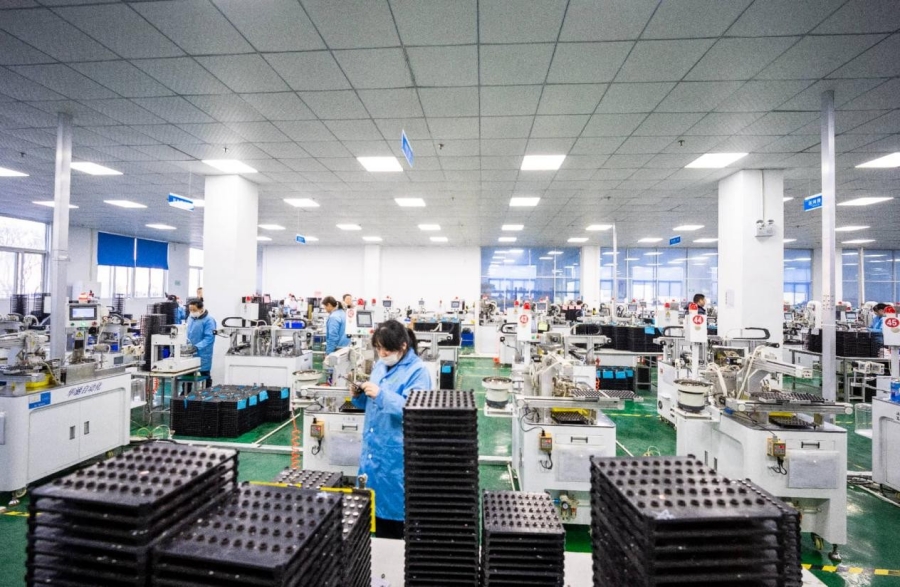
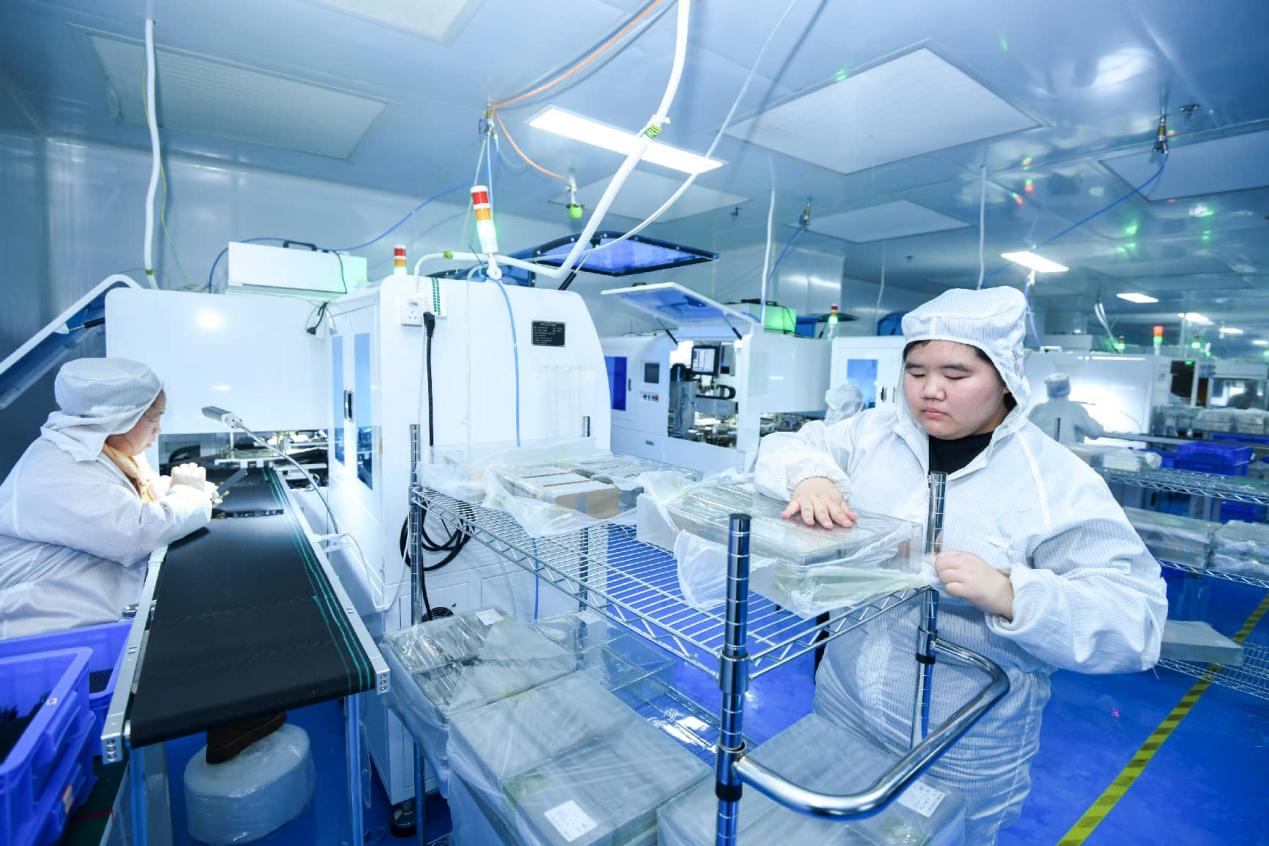
At Haier’s refrigerator factory in Qingdao, east China’s Shandong province, robotic arms assemble units with precision – producing one refrigerator every 10 seconds. The plant’s 5G-powered industrial internet system coordinates hundreds of components in real-time.

“From raw material intake to AI-driven production scheduling, our entire operation utilizes on-demand mixed-model manufacturing,” said Yin Dongdong, director of manufacturing technology at the plant. “AI visual positioning has reduced labeling errors to near-zero while doubling traditional factory capacity. We now ship approximately 5,000 premium refrigerators daily to global markets.”

This facility exemplifies the sector’s broader digital transition. Throughout the 14th Five-Year Plan period, China’s light industry has continued to upgrade under the dual drive of intelligent manufacturing and green transformation. 

The industrial internet is now widely adopted, covering more than 60 percent of large-scale enterprises in the sector. Green development has also made significant progress. As of 2024, 1,321 light industry enterprises, including those in home appliances, papermaking, food processing, and battery manufacturing, had been recognized as national-level green factories.

Innovation investment fuels technological breakthroughs

Is yeast only for baking? Not anymore. In an exhibition hall of Angel, a global yeast and biotech company in Yichang, central China’s Hubei province, a display wall catches visitors’ attention: high-sugar yeast for bread, specialized yeast for brewing, yeast extracts for hot pot bases, and even yeast protein powder. With hundreds of products and thousands of specifications, Angel has become a global leader in its field.

Driven by sustained investment in research and development (R&D), the company has entered a fast track of growth. According to Zhao Xiaojun, deputy general manager of Angel, over the past five years, the company’s R&D spending has grown at a compound annual rate of 16 percent, and the company has secured more than 400 authorized invention patents. Innovation is enabling yeast to take on increasingly diverse roles in everyday life, Zhao added.

And the story doesn’t end with the food industry. “During the 14th Five-Year Plan period, technological innovation has become the central driving force of China’s light industry,” noted Zhang. 

“Enterprises have accelerated the establishment of collaborative innovation systems integrating industry, academia, and research, helping the sector move up the global value chain,” Zhang added. 

The results are impressive. As of 2024, China’s light industry had obtained over 1.79 million authorized invention patents, with the number of valid patents rising from 127,000 in 2020 to 214,000 in 2024, an average annual increase of 12.3 percent.

Supply-side innovation, channel upgrading, and open cooperation

In Guangzhou’s district, south China’s Guangdong province, nearly 30 automated production lines at Guangzhou Leonis Machinery Co., Ltd,. efficiently assemble bicycles branded Trinx for export to 70 countries and regions.

“Since we began expanding overseas in 2016, we’ve established localized production bases in several countries, including India,” said Li Liwei, deputy general manager of Trinx’s operations. “For Southeast Asian markets, we’ve developed cost-effective mountain bikes, while for high-end European consumers, we’ve designed intelligent electric-assist models. Our precise product strategy has helped maintain an annual overseas growth rate of more than 20 percent.”

During the 14th Five-Year Plan period, China’s light industry has consolidated its market advantage through supply-side innovation, channel upgrades, and greater openness and cooperation. In 2024, the industry accounted for 25.9 percent of China’s total exports, ranking first among all sectors for the fifth consecutive year.

Looking ahead to the 15th Five-Year Plan period (2026-2030), both opportunities and challenges lie ahead. “China’s light industry will continue to strengthen its capacity for innovation, brand influence, and sustainable development,” Zhang said. 

“By 2030, we aim to cultivate more than 10 globally renowned brands and over 50 regionally distinctive ones, while maintaining our leading global market share for light industrial products,” he added.

Working together to draw a blueprint for Asia-Pacific connectivity

By Ma Fei, People’s Daily

Connectivity remains fundamental to human progress and is central to building an Asia-Pacific community with a shared future. 

For years, China has actively promoted comprehensive regional integration, aligning the Belt and Road Initiative with partner nations’ development strategies. This collaboration injects new momentum into fostering an open, innovative, and interconnected Asia-Pacific economy grounded in shared interests..

A pivotal moment came in 2014 during the 22nd APEC Economic Leaders’ Meeting at Beijing’s Yanqi Lake, where the APEC Connectivity Blueprint 2015-2025 was adopted. This landmark framework established clear direction for regional connectivity cooperation.

Since then, APEC economies have advanced infrastructure development, streamlined cross-border flows of people, goods, capital, and data, and built a multi-tiered connectivity network across the region – achieving significant collective progress.

While APEC members pursue diverse development paths, strengthening regional connectivity remains a unifying goal. 

Carlos Aquino, director of the Center for Asian Studies at the National University of San Marcos in Peru, noted that China’s active promotion of regional cooperation mechanisms and the country’s vision of connectivity, mutual benefit, and open collaboration have gained wide recognition, creating new opportunities for regional economies in areas such as infrastructure, green transition, and digital economy.

China has been a key participant and promoter of Asia-Pacific cooperation, actively aligning the Belt and Road Initiative with other regional and national strategies. This has not only strengthened the region’s economic arteries but also created broader platforms for connectivity. 

This year, China and Vietnam launched a railway cooperation mechanism to achieve full standard-gauge rail connectivity between the two countries, expanding the vision of regional transport integration. A new cold-chain shipping route between Malaysia’s Kuantan Port and China’s Beibu Gulf Port has made two-way logistics more efficient. In Chile, the Route 5 highway operated by a Chinese company runs through the country’s main cherry-producing region, serving as a “sweet road” connecting bilateral trade.

China has also worked to promote policy coordination, regulatory alignment, and institutional innovation, removing barriers to regional cooperation and making the “connectivity of rules” smoother and more efficient. 

At the Youyi Pass, also known as Friendship Pass, on the China-Vietnam border, truck drivers can clear customs within seconds through a streamlined system of pre-registration, self-scanning, and rapid verification – with an average inspection time of less than 15 seconds per vehicle. 

Under a special supervision model launched by Guangdong-Hong Kong-Macao Greater Bay Area, fresh fruit from Thailand can reach Guangzhou, Guangdong province in as little as seven hours and Beijing within 30 hours. 

Through the Asia-Pacific Model E-Port Network, the China (Shanghai) International Trade Single Window has established compliant end-to-end data links with other economies, optimizing customs data flows and creating a cross-border clearance channel based on trade, logistics, documentation, and customs data.

Connectivity is not only about infrastructure and trade; it is also about people-to-people ties. China has been actively promoting cultural and social exchanges to strengthen the bonds of friendship across the region. 

The country has expanded its visa-free policy and introduced a series of measures to facilitate foreign visitors. In the first half of this year, 13.64 million foreigners entered China visa-free, a year-on-year increase of 53.9 percent. 

China has strengthened regional cultural ties by hosting the Conference on Dialogue of Asian Civilizations and establishing Chinese Cultural Centers in countries including Thailand, Malaysia, Australia, and New Zealand. Initiatives such as Chinese Film Festival and Happy Chinese New Year celebrations have fostered public understanding and built enduring goodwill, reinforcing the foundations of regional cooperation.

China is an important participant in regional cooperation and economic integration in the Asia-Pacific, a major trading partner for Asia-Pacific economies, and a key link in regional industrial and supply chains. 

In the first three quarters of this year, China’s total import and export value reached 33.61 trillion yuan ($4.73 trillion), up 4 percent year on year, while 48,921 new foreign-invested enterprises were established nationwide, an increase of 16.2 percent. 

China’s pursuit of high-level opening up enhances its foreign trade appeal and strengthens its capacity to attract foreign investment, fostering a more open and inclusive industrial and supply chain network across the Asia-Pacific.

Through major platforms such as the China International Import Expo, the China Import and Export Fair, the China International Fair for Trade in Services, the China International Consumer Products Expo, and the China International Supply Chain Expo, China has turned “supply chains” into “chains of shared success” for international cooperation.

Wichai Kinchong Choi, a business development expert at the leading Thai bank Kasikornbank, said that in today’s uncertain global trade environment, China’s continued commitment to high-level opening up is highly encouraging. It will bring broader market, investment, and growth opportunities to all countries, fostering common development and shared prosperity, he added.

Fostering green innovation to power growth in Asia-Pacific

By Chen Shangwen, People’s Daily

As the latest wave of scientific and technological revolution reshapes global industries, the world economy is accelerating toward digitalization, sustainability, and intelligent development, generating strong momentum for global economic integration. 

As a member of the Asia-Pacific family, China remains committed to ensuring broad access to technological advancements while deepening regional cooperation in green innovation. This approach actively supports higher-quality, more resilient development across the Asia-Pacific region.

At Peru’s Chancay Port, the first smart and green port in South America, giant blue automated gantry cranes move containers with precision, while self-driving trucks shuttle back and forth. In a central control room, the port’s production operation system dispatches tasks to the cranes, rail-mounted gantries, and trucks, directing their automated operations efficiently.

This facility has reduced China-Peru shipping times to 23 days while cutting logistics costs by over 20%, exemplifying how innovation drives connectivity and sustainable growth.

Innovation is a key driving force for Asia-Pacific development. China has been advancing innovation in digital economy, promoting both industrial digitization and digital industrialization. It has put forward a range of cooperation initiatives under APEC, including digital village development, enterprise digital identity, and the use of digital technology to promote green and low-carbon transition. By fostering new quality productive forces, China is propelling international cooperation and injecting fresh impetus into the Asia-Pacific’s transformation toward digital, intelligent, and green development.

As a key production factor in digital economy, data plays an increasingly vital role in innovation and public governance. China has released the Global Cross-border Data Flow Cooperation Initiative, offering constructive ideas for addressing governance challenges in cross-border data flows. The initiative outlines China’s position on promoting global cooperation in this field, advocating the principle of openness, inclusiveness, security, cooperation, and non-discrimination.

In northern Mexico’s Yucatan Peninsula, the Dzilam mangrove biosphere reserve, covering more than 690 square kilometers, is home to over 590 species of flora and fauna, including dozens of endangered and protected species. 

Since 2022, a Chinese company, in partnership with the International Union for Conservation of Nature and the government of Yucatan State, has launched a Tech for Nature digital technology cooperation project. In its first phase, the project collected audio and video data within the reserve and used AI on cloud platforms to analyze and process the information, monitoring biodiversity indicators and providing solid technological support for species protection and ecological research.

In Chile, fleets of Chinese-brand electric buses now operate across the capital, Santiago, offering residents a low-carbon, efficient, and convenient solution of public transport. In Malaysia, Chinese enterprises have helped local automaker Proton turn losses into profits, establishing a complete industrial chain for electric vehicle production and launching full-scale manufacturing.

Through the building of a green Belt and Road, China has continued to deepen cooperation in green infrastructure, green energy, and green transport. It has supported capacity-building efforts in developing countries through a South-South cooperation fund on climate change. China has also put forward a series of APEC cooperation initiatives in areas such as green agriculture, sustainable cities, low-carbon energy transition, and marine pollution control, contributing to the creation of a clean and beautiful Asia-Pacific.

China has always placed great importance on strengthening exchanges and cooperation in science, technology, and innovation under the APEC framework. It works to enhance technological capacity, especially in developing economies, ensuring that innovation outcomes better serve people across the region.

In Singapore, a cutting-edge medical institution has adopted an intelligent analysis and follow-up system developed by a Chinese enterprise, reducing the processing time for single imaging cases to just two or three minutes. 

In Brunei, a fatigue monitoring system jointly developed by a Chinese company and Brunei’s Muara Port Company using China’s homegrown BeiDou Navigation Satellite System helps prevent and monitor safety risks during transport, providing early warnings and post-event analysis to improve driver management and operational safety.

“Innovation is the core driving force of APEC development,” said Jeon Byung-seo, director of South Korea’s China Economic and Financial Research Institute. He explained that from building a mutually beneficial Digital Silk Road, to integrating more deeply into global innovation networks, and actively participating in global science and technology governance, China has aligned vision with action, working hand in hand with other countries to build an innovative, sustainable, and prosperous future for the Asia-Pacific.

Why China has become a ‘forward-looking nation’

By He Yin, People’s Daily

On Oct. 23, the fourth plenary session of the 20th Central Committee of the Communist Party of China (CPC) concluded successfully. The international community has closely monitored the session, recognizing the growing global significance of China’s five-year planning framework. 

Worldwide confidence remains high that China will continue to serve as both a stabilizing anchor and a growth engine for the global economy. Many anticipate new opportunities brought by Chinese modernization.

The CPC’s practice of scientifically formulating and implementing five-year plans represents a cornerstone of its governance approach. These plans offer critical insight into China’s modernization path for the international community.

“China is a country that always plans for the long term. It truly is a forward-looking nation,” remarked former Italian Prime Minister Mario Monti, capturing the widespread admiration for China’s governance wisdom, which combines medium-term planning with century-long aspirations.

China’s transformative development – a historic achievement reshaping human progress – stems significantly from its disciplined execution of five-year plans. These frameworks leverage the strengths of China’s socialist system, enabling coordinated national implementation and policy continuity under a unified blueprint.

Since the launch of the first Five-Year Plan in 1953, China has transformed from an impoverished agrarian country into the world’s largest manufacturing hub and the second-largest economy. As the 14th Five-Year Plan period (2021-2025) concludes this year, this trajectory exemplifies how sequential five-year plan – combining long-term vision with practical implementation – have systematically advanced China’s modernization. Globally, these plans are recognized as valuable frameworks for nations studying China’s development model.

During the 14th Five-Year Plan period, China navigated volatile international conditions and domestic reforms while mitigating major risks. It converted high-quality development into stabilizing force against global uncertainty. 

China’s economy is expected to grow 35 trillion yuan ($4.93 trillion) in total during the five years, with per capita GDP exceeding $13,000 for two consecutive years, placing the country among upper-middle-income countries. China has remained the world’s top manufacturing nation for 15 straight years and contributed around 30 percent of global economic growth annually. 

Amid today’s crossroads of global instability, China sustains focus on its developmental priorities. By aligning national rejuvenation goals with emerging global dynamics, it provides growing certainty through consistent governance.

The Recommendations of the Central Committee of the CPC for Formulating the 15th Five-Year Plan for National Economic and Social Development, adopted at the fourth plenary session of the 20th Central Committee of the CPC, lays out the top-level design and strategic blueprint for the next five years. It marks another comprehensive mobilization and deployment to build on the momentum and carry forward the cause of Chinese modernization. The document combines strategic foresight with a pragmatic, problem-oriented approach, providing clear direction for China’s future development and reinforcing global confidence in China’s prospects.

Observers worldwide called the plenary session a meeting that will shape global markets over the next five years, saying such institutional arrangements enable China to advance national development efficiently and achieve long-term goals. They believe China is poised to create more development opportunities and offer valuable solutions for the world.

These views reflect a shared understanding that China, committed to sharing opportunities and pursuing common development with all countries, is increasingly seen as an “oasis of certainty” in a turbulent world, continuing to contribute to global stability, cooperation, and progress.

Socialist modernization can only be realized through a historical process of gradual and ongoing development. The period covered by the 15th Five-Year Plan will be critical in this process as China works to reinforce the foundations and push ahead on all fronts toward basically realizing socialist modernization. 

Through strategic resolve and historical initiative, China aims to advance national rejuvenation while creating broader avenues for global peace and win-win cooperation.

BAVCCA Visits FCT Chief Judge, Seeks Collaboration to Promote Ethical Online Reporting

The leadership of the Bloggers and Vloggers, Content Creators Association of Nigeria (BAVCCA), on Wednesday, paid a courtesy visit to the Honourable Chief Judge of the Federal Capital Territory (FCT) High Court, Hon. Justice Husseini Baba-Yusuf, where discussions centered on strengthening collaboration between the judiciary and the digital media community.

Speaking during the visit, BAVCCA President, Mr. Ikechukwu Chukwunyere, said the association represents a nationwide network of over 5,000 professional bloggers, vloggers, and digital content creators dedicated to promoting ethical online practices and digital accountability in Nigeria.

He stated that the visit was aimed at fostering mutual understanding and partnership between the judiciary and the digital media sector, noting that both institutions play vital roles in promoting justice, transparency, and public enlightenment.

“Your Lordship, our visit today is to pay our respects to the judiciary, seek partnership for responsible online reportage, and establish a framework for collaboration in public education, legal awareness, and digital justice literacy,” Chukwunyere said.

The BAVCCA President emphasized the association’s commitment to promoting responsible online behavior among digital creators, adding that the group is already working on a Digital Responsibility and Judicial Awareness Campaign targeted at educating over 10 million social media users on ethical content creation and respect for judicial processes.

He appealed to the Chief Judge to partner with the association as a patron in the campaign and to support BAVCCA’s proposed “Judiciary and the Digital Media Conference” scheduled for early 2026.

Mr. Chukwunyere also commended the FCT Judiciary for its swift justice delivery, digital court reforms, and continued efforts in maintaining the integrity and accessibility of the justice system under Justice Baba-Yusuf’s leadership.

“We have watched with admiration how Your Lordship continues to uphold the dignity of the Bench amidst growing societal pressures. The reforms you are introducing not only modernize the justice system but also open opportunities for accurate and transparent digital reporting,” he added.

In his response, Hon. Justice Husseini Baba-Yusuf welcomed the BAVCCA delegation and congratulated the association’s executive members on their election, noting that their emergence was a reflection of trust, character, and competence.

The Chief Judge commended the association for organizing themselves into a structured professional body to check the excesses of online media practitioners, describing the initiative as a step toward ensuring credibility and discipline within the digital space.

He encouraged the leadership to guide their members responsibly and focus on building the association’s reputation as a partner in nation-building.

“You have a very critical role to play in shaping public opinion. Lead rightly, promote truth, and ensure that your platforms contribute positively to the growth of our democracy,” Justice Baba-Yusuf advised.

The Chief Judge also expressed willingness to co-host the proposed “Judiciary and Digital Media” conference with BAVCCA in early 2026, aimed at deepening dialogue between judges, lawyers, and digital content creators on the evolving relationship between law and media technology.

The courtesy visit ended with group photographs between the BAVCCA leadership and the Chief Judge, symbolizing the beginning of a strategic partnership between the Bench and the Blogosphere in advancing ethical digital communication in Nigeria.