Powerchina Kano Launches ‘Hundreds Of Enterprises And Thousands Of Villages’ Aid Activities

On the morning of November 5, POWERCHINA Nigeria’s “One Hundred Enterprises and One Thousand Villages” event was held in Lauteye Village, Bunkure Town, Kano State. Tian Yuan, the country’s chief representative of POWERCHINA in Nigeria, Guo Jun, the chief reporter of Xinhua News Agency, Wang Jingxi and Shui Jinyu, the secretaries of the China General Chamber of Commerce in Nigeria, Chen Hao, the person in charge of the Kano Irrigation Project of POWERCHINA, the Senator of Kano State, the owner’s representative, the local land More than 300 people including the emperor, the president of the river basin committee, the local mayor, and villagers attended the event.

Tian Yuan, the country’s chief representative of POWERCHINA Nigeria, said: “Since POWERCHINA entered the Nigerian market in 2003, it has always adhered to the concept of sustainable development and unswervingly fulfilled its corporate social responsibility in Nigeria. As a Chinese corporate social responsibility in Africa, The chairman unit of the alliance, as the director unit of the Nepal-China Chamber of Commerce, will actively play a leading and leading role, vigorously support the construction assistance work, actively participate in the “Hundred Enterprises and Thousands of Villages” activities, respond to President Xi Jinping’s call with practical actions, and participate in the implementation of ” Dakar Action Plan 2022-2024 to help build a China-Africa community with a shared future.”

Chen Hao, the person in charge of POWERCHINA Kano Irrigation Project, introduced the project. He said: “The total irrigation area of ​​the POWERCHINA Kano Irrigation Project is 14,444.24 hectares. The main construction contents include one main canal, three branch canals and 44 plots ( Among them, 41 were repaired and 3 were expanded) channels, linings, roads, and gates at all levels, the construction of 14 agricultural water association offices, and the repair of three dams in Tiga, Ruwan Kanya, and Challawa Gorge. The construction officially started on January 8, 2019. Up to now, the project has completed and handed over 33 plots, and it is expected to be completed one year ahead of schedule by the end of 2022. After the project is completed, it will meet the food supply of 400,000 people and greatly alleviate the problem of food shortage in the region. It plays a vital role in promoting the livelihood of Kano society and promoting economic development.”

Shui Jinyu, secretary of the Nepal-China Chamber of Commerce, gave a brief introduction on the practice of corporate social responsibility by the chamber of commerce, the four offices of the chamber of commerce, and the daily operation of the chamber of commerce. The local emperors and representatives of the owners made a speech of thanks for the donation project.

In this “One Hundred Enterprises Thousand Villages” photovoltaic product donation activity, POWERCHINA donated 504 sets of solar panels and lighting to Bunkure Town, Kano Prefecture, involving more than 300 villagers. The donated photovoltaic panels can not only use solar energy for lighting, but also have the function of charging small electronic devices such as mobile phones by connecting to USB.

After the villager Abdul got the light, he said excitedly: “The Chinese are our best friends. They helped us repair the irrigation canal two years ago, and now they have brought high-tech electricity to my family. I am very grateful to the Chinese company. , thank the Chinese.”

It is reported that Abdul’s family has settled in his village for more than 100 years. For more than 100 years, they rely on the sun and the moon for lighting and rainfall for drinking water. The life in the village is in a simple state of sunrise and sunset. There are nearly 10,000 peasants living in Lauteye Village for generations like this.

Villager Ghalfoor said: “I am very grateful to the Chinese company for bringing us solar power equipment. In the past, I had to go to a town 4 kilometers away to charge my mobile phone and spend money to charge it. Now I can charge it directly with this solar photovoltaic panel. .”

On November 29, 2021, in his speech at the opening ceremony of the 8th Ministerial Conference of the Forum on China-Africa Cooperation, Chinese President Xi Jinping proposed to “support China’s CSR Alliance in Africa to launch the ‘Hundred Enterprises and Thousands of Villages’ activities”, aiming to promote Chinese enterprises Actively fulfill social responsibilities in Africa and help build a China-Africa community with a shared future. The event has been included in the FOCAC-Dakar Action Plan (2022-2024), which is one of the important tasks of the nine projects of China-Africa cooperation.

POWERCHINA not only actively participates in the implementation of the “Hundreds of Enterprises and Thousands of Villages” activities, but also actively fulfills its social responsibilities and promotes the leading and exemplary role of leading enterprises.

In October 2021, POWERCHINA helped renovate a malaria treatment hospital in Bunkure Township, Kano State, contributing to Nigeria’s fight against malaria and solving the problem of local residents’ difficulty in seeking medical care.

On September 16, 2022, POWERCHINA assisted the market leveling in Bunkure Township, Kano State, and provided commercial land for local youth organizations, and received a letter of thanks from the local Youth Development Association.

At the same time, POWERCHINA won the Nigeria National Trade Union Commendation Award on June 8, 2021, and the Nigeria “National Construction Icon Award” on February 3, 2022.

China is ready to work with all countries to practice true multilateralism, build more consensus for openness

By He Yin, People’s Daily

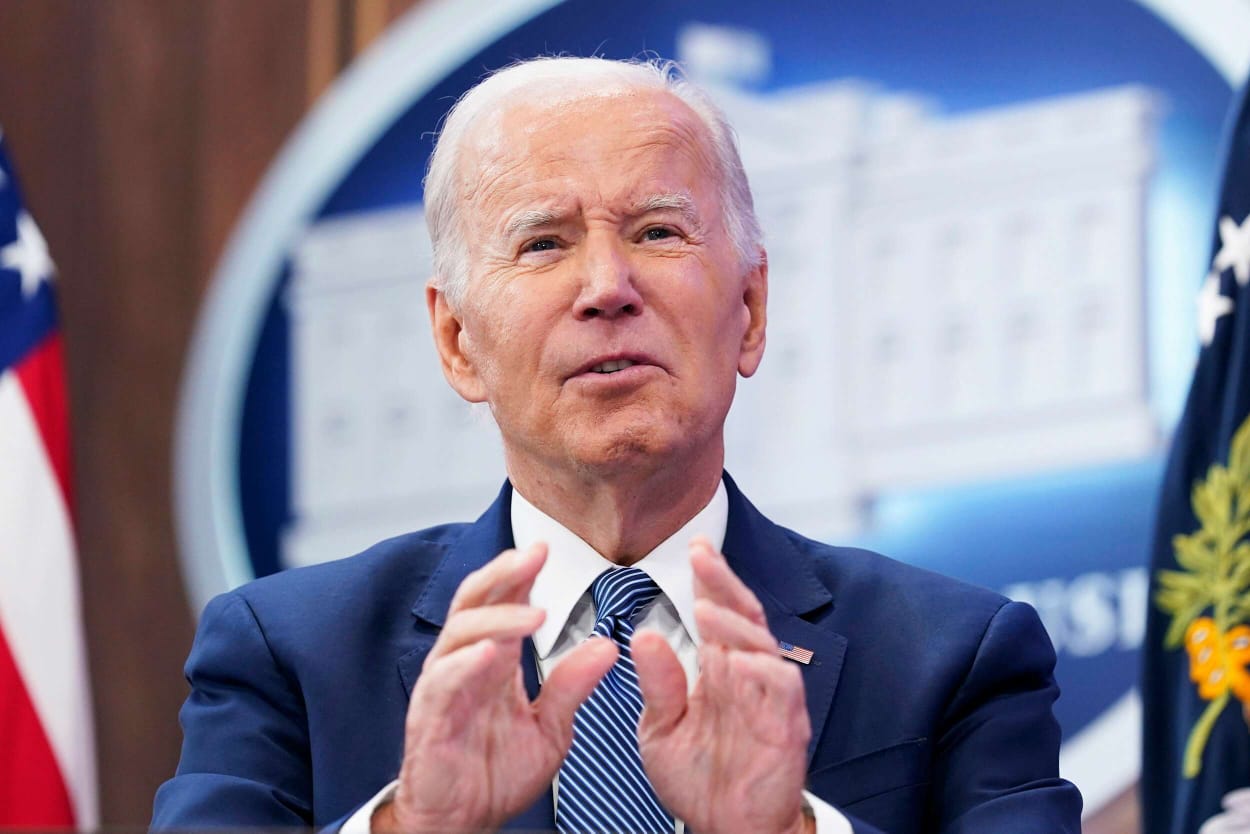
On the evening of November 4, Chinese President Xi Jinping attended the opening ceremony of the fifth China International Import Expo (CIIE) held in Shanghai via video link and delivered a speech.
He said China will work with all countries and all parties to share the opportunities in its vast market, from its institutional opening-up and from deepened international cooperation.
China is willing to work with all countries for a bright future of openness and prosperity.
The world today is confronted with accelerated changes unseen in a century as well as a sluggish economic recovery. At the critical moment, the international community should see the underlining trend to create opportunities in opening up and tackle difficult problems through cooperation.
Openness is a key driving force behind the progress of human civilizations and an intrinsic path toward global prosperity and development, Xi said, expounding on the significance of opening up for human progress.
He called on all countries to commit themselves to openness to meet development challenges, foster synergy for cooperation, build the momentum of innovation, and deliver benefits to all. He also called on all countries tosteadily advance economic globalization, enhance every country’s dynamism of growth, and provide all nations with greater and fairer access to the fruits of development.
China is a beneficiary of open development, as well as an important force building an open global economy. Xi, also the general secretary of the Communist Party of China (CPC) Central Committee, stressed that China is committed to its fundamental national policy of opening to the outside world and pursues a mutually beneficial strategy of opening up in the report he delivered to the 20th CPC National Congress.China strives to create new opportunities for the world with its own development and to contribute its share to building an open global economy that delivers greater benefits to all peoples, the report said.
As the first important international exhibition held by China after the20th CPC National Congress, the fifth CIIE welcomes visitors from across the globe and benefits the whole world. It presents to the world China’s determination to expand opening up and share development opportunities in the new era.
Five years ago, Xi announced the decision to hold the CIIE for the very purpose of expanding China’s opening-up and turning its enormous market into enormous opportunities for the world.
China’s door has been opening wider and wider over the past five years. The country constantly stimulated the potential for increased imports, broadened market access, fostered a world-class business environment, explored new horizons of opening-up and promoted international cooperation at multilateral and bilateral levels. It has fulfilled its commitment to opening up with concrete actions.
China will steadily expand institutional opening-up with regard to rules, regulations, management and standards, to support an open economy of higher standards. It will definitely make more contributions to building an open world economy.
The CIIE creates opportunities for the whole world. As the world’s first import-themed national-level expo, it is a great platform for international procurement, investment promotion, cultural exchange and open cooperation.
The exhibition has won high recognition from the international community. Many executives of transnational corporations attending the CIIE expressed their strong confidence in keeping developing in the Chinese market. They said the CIIE is a comprehensive platform sharing development opportunities, and it gathers new products, technologies, services and schemes from all over the world, demonstrates the huge potential of the Chinese market, and builds a bridge through which the world shares China’s market dividends.
China will step up efforts to cultivate a robust domestic market, upgrade trade in goods, develop new mechanisms for trade in services, and import more quality products. It will establish pilot zones for Silk Road e-commerce cooperation and build national demonstration zones for innovative development of trade in services, so as to encourage innovation in trade and promote high-quality Belt and Road cooperation.
China will engage fully and deeply in WTO’s reform negotiations, promote trade and investment liberalization and facilitation, and enhance international macro-economic policy coordination, with a view to jointly fostering new drivers for global growth. It will endeavor actively to join the Comprehensive and Progressive Agreement for Trans-Pacific Partnership(CPTPP) and the Digital Economy Partnership Agreement(DEPA) to expand the globally-oriented network of high-standard free trade areas. It will firmly support other developing countries and assist them in growing faster, and promote the building of a community with a shared future for mankind.
The path is unfolding before us, and a brighter future beckons beyond. The CIIE is a showcase of China’s new development paradigm, a platform for high-standard opening-up, and a public good for the whole world. It will keep connecting China and the wider world and strive for win-win results through open cooperation.
Embarking on a new journey, China will always move forward by following the logic of historical progress and develop by riding the tide of development of the times.
China is ready to work with all countries to practice true multilateralism, build more consensus for openness, jointly overcome the difficulties and challenges confronting global economic growth, and make sure that its commitment to openness will bring about broad prospects for global development.

Yunnan dispatches sci-tech experts to South Asia, Southeast Asia, builds bridge of int’l technological cooperation

By Zhang Fan, Li Maoying, People’s Daily

Moth orchids and lilies bred in Kunming, southwest China’s Yunnan province, are hot sellers in Vietnam. A China-Laos joint lab of renewable energy is now offering hot water heated by solar energy for Lao schools and hospitals…
Such progress was made possible by a mechanism of sending Chinese sci-tech experts to foreign countries, started by Yunnan province in 2013.
This year, the province once again dispatched a group of sci-tech experts to South Asian and Southeast Asian countries for scientific research, technological advisory and training programs.
Lu Hai, a researcher of an institution of the Yunnan branch of the China Southern Power Grid, was recently designated as a sci-tech expert by the Yunnan Provincial Science and Technology Department and joined the preparation work for the construction of a joint lab of power technologies among the Lancang-Mekong countries.
“As a sci-tech expert dispatched overseas, I can fully leverage cooperation platforms to share experiences in power technologies, operation and management,” Lu said.
Relying on its geological and industrial advantages, Yunnan province employs this mechanism to meet the demand for technologies of South Asian and Southeast Asian countries during their economic and social development, said He Wei, an official with the Yunnan Provincial Science and Technology Department.
So far, the department has dispatched 92 experts to 16 countries, including Laos, Vietnam, Thailand, and Sri Lanka, in five batches, according to He.
Hu Faguang from the Institute of Tropical and Subtropical CashCrops at the Yunnan Academy of Agricultural Sciences is dispatched to Laos to offer guidance and training on coffee technologies for Chinese companies. So far, he has worked in the Southeast Asian country for a total of over 300 days.
To improve the capability of coffee planting in local Lao communities, Hu instructed local technicians from the very basics. He proposed to grow coffee trees on contiguous fields along roads, so as to make the local coffee business stronger and more centralized. Today, Chinese experts have been dispatched to six counties to plant coffee in the country.
Like Hu, many other Chinese sci-tech experts have also established platforms of academic and technological exchanges to nurture professionals for local communities.
For instance, professor Chen Yubao from Yunnan Normal University (YNU), one of the earliest Chinese sci-tech experts dispatched overseas, has helped construct some 20 demonstration zones of renewable energy in Laos.
“These demonstration projects promoted the application of Chinese renewable energy technologies in Laos, tangibly improved local people’s living standards, and set a good example in talent cultivation and lab construction for local communities,” Chen told People’s Daily, hailing these projects as a role model for international sci-tech cooperation.
According to him, the Solar Energy Research Institute at YNU recruits doctoral and postgraduate students from Laos, who would return to their country after graduation and contribute to local new energy studies.
Chinese sci-tech experts dispatched overseas promote China’s exchanges and cooperation with neighboring countries, build a bridge of international cooperation, and enhance people-to-people bonds through technological and personnel exchanges, said Wang Xueqin, head of the Yunnan Provincial Science and Technology Department.

CIIE to write more stories of open cooperation, win-win results

By Guo Jiping, People’s Daily

The 5th China International Import Expo has started as scheduled at the the National Exhibition and Convention Center (Shanghai) (NECC) on November 5th.

The previous four sessions of the trade fair reported remarkable performance – a cumulative intended turnover of more than $270 billion and over 1,500 launches of new products, technologies and services.

The trade fair, as a “wind indicator” for industries, is a carnival for global enterprises. Over the past four years, it has been consecutively joined by over 120 Fortune Global 500 companies and industrial leaders. This year, the world’s top 10 electrical engineering companies, top four grain producers, top 10 manufacturers of medical apparatus and instruments, top 15 pharmaceutical enterprises and the 10 most valuable automakers have confirmed their participation in the six-day event.

The success of the CIIE vividly mirrors China’s firm determination to expand opening up, promote win-win cooperation and share development opportunities.

China is home to more than 1.4 billion people, including over 400 million middle-income earners. It imports around $2.5 trillion of commodities and services each year.

Enjoying such a huge market, the CIIE comes with an intrinsic appeal. It is a “golden key” that opens the door of Chinese opportunities for those who want to follow the general trend of economic globalization.

In the first three quarters this year, China’s total foreign trade of goods jumped 9.9 percent to 31.11 trillion yuan ($4.28 trillion). As the country removes all impediments to smooth production, distribution, circulation, and consumption, and accelerates the establishment of a “dual circulation” development pattern in which domestic economic cycle plays a leading role while international economic cycle remains its extension and supplement, it will become a market for the world, a market shared by all, and a market accessible to all.

The fundamentals of the Chinese economy – its strong resilience, enormous potential, vast room for maneuver and long-term sustainability – remain unchanged.According to statistics recently issued by the National Bureau of Statistics, China’s GDP increased 3 percent year-on-year in the first three quarters of 2022, 0.5 percentage points faster than that in the first half. The Chinese economy, on a track of high-quality development, will give a sustained and strong boost to the stability and growth of the global economy.

Over the past 10 years, China has fulfilled its commitment to further opening up with concrete actions. By implementing the management systems of pre-establishment national treatment and negative list for foreign investment, it constantly expanded the utilization of foreign capital. With an aim to build a globally oriented network of high-standard free trade zones, the country has inked 19 free trade agreements with foreign countries, up from 10.

It has established 21 pilot free trade zones and the Hainan free trade port, working toward new heights in reform and opening up. Besides, it has hosted high-level expos such as the CIIE, the China International Fair for Trade in Services and the China International Consumer Products Expo. Its efforts have led to tangible and fruitful results of the high-quality development of the Belt and Road Initiative.

China has not only benefited from economic globalization, but also contributed to it.It has signed over 200 Belt and Road cooperation documents with more than 140 countries and more than 30 international organizations, to enable more people across the world to benefit from development and promote a new model of economic globalization.

It pushed for the implementation of the Regional Comprehensive Economic Partnership(RCEP) and is advancing its accession into the Comprehensive and Progressive Agreement for Trans-Pacific Partnership(CPTPP) and the Digital Economy Partnership Agreement(DEPA).

Embracing economic globalization in the new era, China is working to make economic globalization more open, inclusive, balanced and beneficial for all and bringing hopes to improving global economic governance.

Chinese President Xi Jinping, also general secretary of the Communist Party of China (CPC) Central Committee, said in a report to the 20th CPC National Congress that: “China is committed to its fundamental national policy of opening to the outside world and pursues a mutually beneficial strategy of opening up. It strives to create new opportunities for the world with its own development and to contribute its share to building an open global economy that delivers greater benefits to all peoples.”

As the first major international exhibition hosted after the 20th CPC National Congress, the 5th CIIE will once again prove to the world that China will only open its door wider to the world.

Profound changes unseen in a century are evolving rapidly in the world. Changes of the world, of our times and of history are unfolding today in ways like never before. China will join hands with its partners to write more stories of open cooperation and win-win results at the 5th CIIE, and make new contributions to promoting world recovery, advancing common development and building a community with a shared future for mankind.

Silk Road e-commerce promotes trade among Belt and Road countries

By Yan Yu

As part of China’s efforts to share market opportunities, Silk Road e-commerce has experienced rapid development over the recent years, vigorously driving the two-way trade between China and other Belt and Road countries.

It is constantly deepening international cooperation and expanding the Belt and Road “circle of friends.”

At an export cargo station of the Guangzhou Baiyun International Airport, south China’s Guangdong province, a batch of “made in China” commodities for cross-border e-commerce, including home appliances, clothes and toys, would soon be shipped to Pakistan, South Africa and other Belt and Road countries.

In the Qingpu Comprehensive Bonded Zone of Shanghai, numerous commodities were piled up in warehouses, including exhibits displayed at the China International Import Expo (CIIE). Exhibits from around the world would become available on cross-border e-commerce platforms and be shipped directly to consumers from the bonded zone after the CIIE.

Today, this innovative model is attracting merchants from all over the world to attend the CIIE and participate in the Silk Road e-commerce.

Since signing its first bilateral memorandum of understanding on e-commerce cooperation with Chile at the end of 2016, China has inked documents and established bilateral e-commerce cooperation mechanisms with more than 20 countries from five continents, including Belarus, Italy and Columbia, to promote policy exchange, planning coordination, industry promotion, sub-national cooperation, and capacity building, among others. Silk Road e-commerce has become a new channel of international economic and trade cooperation.

The prospering Silk Road e-commerce comes from China’s efforts in a wide range of aspects.

Over the recent years, the country has established cross-border e-commerce pilot zones in six batches and issued a series of supportive policies. It also constantly expanded the list for cross-border e-commerce retail imports and put into use a number of overseas warehouses in Belt and Road countries.

Silk Road e-commerce is now an important measure for local authorities across China to advance Belt and Road construction. Many cities have set up cross-border e-commerce pilot zones to build themselves into node cities of Silk Road e-commerce.

Besides, China has hosted a number of activities, such as livestreaming and launches of country pavilions on e-commerce platforms, to help its Silk Road e-commerce partners bring their quality products to the Chinese market and establish new channels of trade and investment.

The 2022 China-ASEAN Silk Road Cross-border E-commerce Forum was held in Nanning, south China’s Guangxi Zhuang autonomous region this September. During the forum, online events were held to promote products from the autonomous region, and diplomats from ASEAN countries in China were invited to introduce their countries’ products to Chinese consumers through livestreaming shows.

Today, Silk Road e-commerce is seeing fruitful results. Coffee and pepper from Rwanda are coming to China via e-commerce platforms; the online retail sales of Iceland have significantly improved; thousands of enterprises from the countries along the Belt and Road have upgraded their products and services through e-commerce cooperation.

According to an official with the Ministry of Commerce, China’s cross-border e-commerce exports surged 92.7 percent year on year in the first quarter of this year. More and more countries are expecting to join Silk Road e-commerce.

In the future, Silk Road e-commerce will expand its cooperation to higher levels with huge development potential. China will establish bilateral e-commerce cooperation mechanisms with more countries under the framework of Silk Road e-commerce, and align with high-standard international economic and trade rules, to promote high-level development of cross-border e-commerce.

China’s Beidou reaches world-leading level: white paper

By Bao Han, People’s Daily

Chin’s BeiDou Navigation Satellite System (BDS) is now a top-class system with cutting-edge technologies, pioneering design and powerful functions, according to a white paper published on Nov.4 by the State Council Information Office.

The 12,000-word paper, titled “China’s BeiDou Navigation Satellite System in the New Era,” consists of six main parts including the operation management and governance of the BDS, as well as the sustainable development of the BDS applications industry.

According to the paper, China began to develop its own navigation satellite system in 1994. BDS-1 entered service and began providing positioning services in China at the end of 2000. On July 31, 2020, Chinese President Xi Jinping announced to the world that BDS-3 was officially commissioned – a sign that BDS began to provide global services.

After many years in development, it has become an important new element of China’s infrastructure, providing high-accuracy, round-the-clock positioning, navigation and timing services to global users in all weathers, the paper said.

The system has reached a world-leading level in core technologies in terms of hybrid constellation, inter-satellite links, and signal structure that follow international standards.

The paper also noted BeiDou’s outstanding batch production capability, saying 18 rockets have deployed 30 BDS satellites into orbit in less than three years, “a pace unmatched by any other country.”

China will further upgrade BDS technologies, functions and services in the future, the paper said. The country will help improve people’s wellbeing and promote human progress by achieving the goal to create a comprehensive spatiotemporal system that is more extensive, more integrated, and more intelligent, and that provides flexible, smart, precise and secure navigation, positioning and timing services.

The paper also highlighted the international cooperation and applications of Beidou in building a global community of shared future.

According to the paper, the country has engaged in active cooperation with other countries and international organizations on technology R&D and the satellite navigation industry by setting up overseas BDS application and industrialization promotion centers.

It is strengthening cooperation with regional organizations such as ASEAN, the African Union, the League of Arab States, and the Community of Latin American and Caribbean States, and releasing BDS-based solutions in the fields of smart cities, public security, precision agriculture, digital transport, and disaster prevention and mitigation, which are being piloted in Asia, Africa, and Latin America.

“China is ready to share its achievements in developing BDS, and it will work with all countries to promote the development of navigation satellite systems, venture into deeper space, and make an even greater contribution to building a global community of shared future and a better world,” the paper said.

China-proposed Global Security Initiative to forge a strong synergy to build a community with a shared future for mankind

By He Yin, People’s Daily

Changes of the world, of our times and of history are unfolding today in ways like never before, posing challenges that must be taken seriously by humanity.

Geopolitical conflicts rise as the COVID-19 pandemic unseen in a century is still casting a shadow over the world; the sluggish economic recovery comes along with a widening development gap; climate change issues still remain unsolved and are followed by the challenging problem of digital governance.

How to coordinate traditional and non-traditional security and how to ensure development and security are common issues facing the mankind.

After putting forward the Global Development Initiative (GDI) at the general debate of the 76th session of the United Nations (UN) General Assembly in September, 2021, Chinese President Xi Jinping proposed the Global Security Initiative (GSI) at the opening ceremony of the Boao Forum for Asia Annual Conference 2022 held this April.

The GSI is underpinned by “six commitments,” namely, staying committed to the vision of common, comprehensive, cooperative and sustainable security; staying committed to respecting the sovereignty and territorial integrity of all countries; staying committed to abiding by the purposes and principles of the UN Charter; staying committed to taking the legitimate security concerns of all countries seriously; staying committed to peacefully resolving differences and disputes between countries through dialogue and consultation; and staying committed to maintaining security in both traditional and non-traditional domains.

The “six commitments” serves as a guiding idea, a basic premise, a fundamental rule and an important principle of safeguarding world peace. It is also the only road leading to world peace and explains the importance of maintaining world peace.

It gives explicit answers to questions of our times such as what security concept the world needs and how countries can achieve common security, offering a Chinese approach to tackling global challenges, eliminating the root causes of international conflicts and achieving durable stability and security in the world.

This major initiative conforms to the common aspirations of all countries to build a world that enjoys universal security.

Peace is the ever-lasting wish of the people. Facing emerging traditional and non-traditional security threats, the GSI goes beyond the zero-sum game and hegemonism, advocates the win-win mindset to address the complex and intertwined security challenges, and champions the spirit of solidarity to adapt to the profoundly changing international landscape.

It charts the course for all countries around the world to pave a path that ensures security for all, by all, and of all.

The GSI has gained support from over 70 countries, which indicates that it is an initiative that is in line with the will of the people.

This major initiative meets the pressing need of the international community to safeguard true multilateralism.

The GSI is rooted in true multilateralism. It calls upon all countries to abide by the purposes and principles of the UN Charter and reject the obsolete mentality of zero-sum game and bloc confrontation.

It insists that security should be based on mutual respect between nations, as well as the commitment to the UN-centered international system and the international order underpinned by international law.

The initiative provides important principles, lays an important foundation and pulls strength of solidarity for improving global governance through a multilateral perspective.

This major Initiative meets the shared desire of all peoples for working together to build a better world beyond the pandemic.

Security is a precondition for development, and development is a guarantee for security. The GSI is an organic whole of dialectical unity that coordinates security and development and corresponds to the GDI. It will help promote world economic recovery and build a world of common prosperity.

Pakistani Prime Minister Shahbaz Sharif noted that there’s no development if there is no security. He believes the GSI will work in synergy with the GDI.

The GSI takes root in China’s independent foreign policy of peace and the practices of this policy. It is inspired by the diplomatic tradition and wisdom with unique Chinese characteristics.

China has put forward a four-point proposal on resolving the Palestinian question and a five-point initiative on promoting peace and stability in the Middle East. On the Iranian nuclear issue, China actively promotes the negotiations to resume compliance with the Joint Comprehensive Plan of Action (JCPOA). It also comprehensively advances the political settlement of the Korean Peninsula issue and promoted the establishment of a coordination and cooperation mechanism of Afghanistan’s neighboring countries.

China keeps to its conviction about peaceful development, and is committed to its international responsibilities and resolving international hotspot issues peacefully through dialogue and consultation.

As an ancient Chinese teaching goes, all good principles should adapt to changing times to remain relevant. The GSI conforms to the trend of the times featuring peace, development and win-win cooperation, and will help all parties open up a broad path toward lasting peace and universal security.

China stands ready to work with all peace-loving countries and peoples to carry out the GSI, nurture security dynamics featuring equity and justice, joint contribution and shared benefits, and forge a strong synergy to build a community with a shared future for mankind.

Shanghai to present more splendid CIIE with digital technologies

By Tian Hong, People’s Daily

Digital technologies are employed to make the 5th China International Import Expo (CIIE) more intelligent and bring better experiences to participants.

So far, preparations of the grand trade fair, which is scheduled to kick off on Nov. 5 and conclude on Nov. 10, have generally been completed.

New exhibiting zones will open this year featuring the crop seed industry and the artificial intelligence industry. Besides, the event has optimized the special area for low carbon and environmental protection technology, and expanded the innovation and incubation area. 

More than 150 startups specialized in technological equipment, consumer products, healthcare and automobiles will display their products and services at the innovation and incubation area.

Representatives from a total of 145 countries, regions and international organizations will participate in the 5th CIIE. Enterprises from 127 countries and regions are expected to join the business exhibition, and 66 countries and three international organizations will take stage in the country exhibition. All these figures outnumber those in the last year.

Nicaragua, Djibouti, Mauritania, Comoros, Mozambique, the Democratic Republic of the Congo, Iraq, and Iceland will take part in the country exhibition for the first time this year.

This year, the country exhibition will still be held online, showcasing participating countries’ technological innovation, culture and art, as well as investment environment with augmented reality, real-time rendering and other frontier technologies. It will give visitors an immersive experience.

Besides, more than 300 exhibitors specialized in intelligent industry and information technology will display and launch their products and services at the Digital CIIE platform this time.

On Oct. 28, a batch of art pieces to be exhibited at the 5th CIIE from the UK, France, Norway and Japan arrived in the Shanghai Waigaoqiao bonded area. Shanghai Customs for the first time employed information sampling devices to collect data of the features of the art pieces for exit-entry consistency verification.

Since exhibits of the 5th CIIE started entering China in mid-September, Shanghai Customs has set up 110 exclusive and around-the-clock customs clearance windows and channels to improve efficiency. Relevant exit and entry information is acquired on a big data platform of the customs to ensure faster customs procedures for visiting guests and exhibits.

Shanghai Customs has also combined inspections at the port of entry and exhibition hall so as to avoid secondary package opening.

So far, 194 batches of CIIE exhibits have completed customs clearance, with a total value of $142 million.

Shanghai has built the Hongqiao Central Business District Bonded Logistics Center and the Greenland Global Commodity Trade Hub Bonded Exhibition and Sales Place to expand the spillover effect of the CIIE and make bonded exhibition and sales regular.

The China-Europe freight train “Shanghai” launched by the Shanghai-based Orient International (Holding) Co., Ltd. before the 4th CIIE has reached some 20 cities in six countries over the past year.

This year, the company has set up a Shanghai International Sister Cities Hub at the Hongqiao Import Commodity Exhibition and Trade Center, which has so far attracted over 100 exhibitors from 30 countries.

“This year marks the fifth year and also a new start of the CIIE,” said Gu Jun, executive deputy director of the office of the leading group for urban service and security of the CIIE, adding that Shanghai is going all out to make the 5th CIIE successful, splendid and fruitful.

China’s Mengtian module docks with space station combination

By Yu Jianbin, People’s Daily

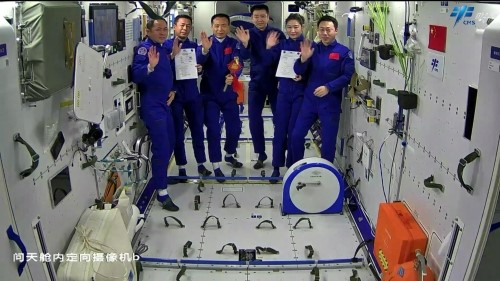
The Mengtian lab module successfully docked with the front port of Tianhe, the core module of China’s Tiangong space station at 4:27 a.m. on Nov. 1 after it entered the planned orbit, according to the China Manned Space Agency (CMSA).

The whole process of rendezvous and docking took about 13 hours.

The lab module was launched by a Long March-5B Y4 carrier rocket from the Wenchang Spacecraft Launch Site on the coast of the southern island province of Hainan on Oct. 31.

Mengtian will conduct transposition as planned and then form the space station’s basic configuration in T-shape together with Tianhe core module and Wentian lab module. It is a key step toward the completion of the space station.

According to an expert with the China Aerospace Science and Technology Corporation, the Mengtian lab module is so far the heaviest payload launched by China to date. The rocket fairing of the Long March-5B Y4 was “custom-made” based on the shape and weight of the Mengtian.

For instance, to enable wireless communication during the ascent stage, a wave-transparent window was designed on the fairing.

Su Lei, chief designer of the control system of the Long March-5B rocket family, told People’s Daily that carrier rocket is capable to achieve accurate rendezvous and docking within a limited period. Besides, the control system of the rockets can also automatically calculate the deviation and correct it to ensure the accuracy of orbit injection, rendezvous and docking.

The Mengtian lab is one of the three modules forming the basic T-shape configuration of China’s space station and the second lab module after the Wentian lab. It consists of four sections: working cabin, cargo airlock cabin, payload cabin, and resource cabin.

The 17.88-meter-long new module has a takeoff mass of about 23 tons and a diameter of 4.2 meters. It is mainly used for space science experiments.

The design team of the Mengtian module innovatively equipped the space lab with a cargo airlock cabin that facilitates the ins and outs of cargo and payloads. With its payload transfer device, the cargo airlock cabin is able to handle cargo as heavy as 400 kilograms, and the size of the cargo envelope for a single shipment can reach 1.15 meters x 1.2 meters x 0.9 meters.

To allow the entry and exit of larger and heavier cargos, Mengtian has been installed with a 1.2-meter-wide port gate to the airlock cabin, with which astronauts can finish outboard operation of cargos and payloads just in the cabin without extravehicular spacesuits.

The airlock cabin of the Mengtian module will better help astronauts carry out efficient and safe extravehicular experiments, and further improve the scientific ability of China’s space station, said an expert.

Building an advanced national space lab is the goal of the construction of the Tiangong space station. The Mengtian module has the most powerful payload-supporting capabilities among the three modules.

Liu Guoning, deputy chief designer of the scientific cabinet system at the Chinese Academy of Sciences (CAS)’ Technology and Engineering Center for Space Utilization, introduced that the Mengtian lab mainly focuses on microgravity studies.

Carrying eight science experiment cabinets, Mengtian can carry out scientific research on materials science, fluid physics and combustion science, which is expected to make scientific results at an international level.

Some 40 scientific experimental projects in these fields have been scheduled so far, Liu revealed.

Besides, among Mengtian’s payloads, there is also a cabinet with the ability to film – for the first time in a space station – material changes in high temperatures with X-rays. It is a device of historic significance, said Liu Xuechao, chief designer of the experiment system of the cabinet and a researcher with the Shanghai Institute of Ceramics of the CAS.

Irrigation project in Jiangsu gets world heritage designation

By Yin Xiaoyu, People’s Daily

The Xinghua Duotian Irrigation and Drainage System in Xinghua, Taizhou, east China’s Jiangsu province was recently recognized as a World Heritage Irrigation Structure (WHIS).

Granted by the International Commission on Irrigation and Drainage (ICID) on Oct. 6, the Xinghua Duotian Irrigation and Drainage System, together with three other newly-designated projects, have brought the total number of Chinese irrigation projects on the WHIS list to 30.

Back in 2014, the Xinghua Duotian Agrosystem has been designated by the Food and Agriculture Organization of the UN as a Globally Important Agricultural Heritage System (GIAHS).

The two heritage designations are now a “golden signboard” of local development.

Xinghua, a county-level city in Taizhou, sits between the Yangtze and Huaihe Rivers. The low-lying city is traversed by many lakes.

On higher marshes, ancestors of the city raised mud into small stacks and gradually developed a unique method of water-land utilization that dates back to over 1,000 years ago.

China’s agricultural development has a natural bond with irrigation engineering. “Duotian,” which means raised farmland in Chinese, is core to both the Xinghua Duotian Irrigation and Drainage System and the Xinghua Duotian Agrosystem. The two systems both include irrigation and drainage systems, remains of ancient irrigation and drainage facilities, ancient water systems, architectural remains, as well as relevant documents and tales about water conservation.

Being similar to each other, the two systems still have differences, which indicates the necessity of applying for two separate heritages.

The two heritages designations, focusing on irrigation structure and agricultural system, respectively, discover and demonstrate the connotation of Xinghua Duotian in terms of history, technology and culture in different ways.

As an agricultural heritage, Duotian is a “living fossil” of ancient land utilization and a precious sample facilitating the study of the evolution of local ecology and methods of land utilization.

As an irrigation heritage, it is the world’s only irrigation and drainage system located on raised and dry farmland. It plays an important role in supporting agricultural development and the utilization of water resources.

The successful application of the WHIS and the GIAHS not only motivated Xinghua to protect and preserve its raised farmland, but also stimulated the productivity of social development.

When spring arrives, the blossoming rape flowers on the raised fields and the boats floating on nearby waterways would form a picturesque view. In autumn, high-quality Longxiang taro, a local featured gourmet, is harvested.

Duotian is not only a rich source of agricultural products, but also a tourist attraction. As early as April 2009, it held a rape flower festival.

The WHIS and GIAHS recognitions have given a huge boost to the local economy, especially the tourism sector. Xinghua has fully leveraged such brand advantage to improve its influence.

In 2016, it signed a memorandum to enhance cooperation and exchanges on agricultural heritage with Mexico City. Between 2015 and 2017, it held three sessions of high-level training courses on GIAHS under the framework of the South-South Cooperation program and a seminar on the management and protection of agricultural cultural heritage for Belt and Road countries.

Besides, Xinghua has vigorously promoted integrated development of the primary, secondary and tertiary industries. It cultivates various types of ornamental plants to sustain its beautiful landscape all year round.

By fostering the dehydrated vegetable business, it has established a national-level demonstration zone for food safety and quality that covers over 10,000 mu, or 667 hectares, becoming the top county in China in terms of the processing of dehydrated vegetables and fruits.

Duotian is driving the economic growth of Xinghua, and the local government is in turn enhancing its efforts to further protect the heritage.

Since March last year, a regulation on the protection of Duotian has been put into force in Taizhou. Xinghua has set up a research center for Duotian protection and development, and is carrying out regular patrols for monitoring and reconditioning of the raised farmland.

In the recent two years, the Qianduo scenic area in Xinghua has completed the comprehensive management of 500 mu of Duotian, and plans to advance with a progress of 200 mu per year.