5th Digital China Summit achieves fruitful results

By Liu Xiaoyu, Shi Yu, People’s Daily

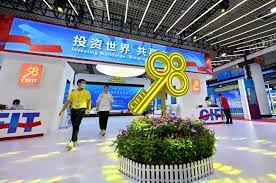
The 5th Digital China Summit concluded with fruitful results in Fuzhou, capital of east China’s Fujian province on July 24.

The two-day summit included 18 sub-forums on hot issues in digital technologies, as well as more than 30 featured activities. More than 100 academicians and experts, and 100 big names in the digital industry participated.

It was also attended by representatives from over 1,000 Chinese and foreign enterprises. Nearly 2,000 guests joined in-depth negotiations over digital technologies and future cooperation.

The summit aimed to demonstrate the latest achievements in China’s digital construction, with 565 project agreements signed and a total investment value of 299 billion yuan ($44.28 billion), covering 5G, Internet of Things, artificial intelligence, industrial internet, cybersecurity and satellite applications. These projects are expected to give a boost to China’s digital industrialization and industrial digitalization.

A special achievements exhibition with an area of more than 200,000 square meters took place, where nearly 500 exhibitors showcased their achievements.

A low-power wearable navigation and motion sensing system was displayed by the State Key Laboratory of Information Engineering in Surveying, Mapping and Remote Sensing of Wuhan University. The system, as small as a bottle cap, can be used to track real-time information on firefighters’ rescue missions and monitor the positions of workers at construction sites.

On a big screen in the exhibition hall, targeted orders were sent to volunteers serving the exhibition through a service management system by the command center of a young volunteers association in Fuzhou. Combining online order making, services evaluation, and volunteer dispatching, the updated digital system is both efficient and environmentally friendly.

In a smart power protection center, information such as weather conditions, load rate of power protection equipment and alarms were displayed visually. The summit for the first time adopted a digital twin power grid and the power system was automatically inspected by smart robots, which helped reduce 50 percent of the support personnel.

The Digital China Summit has been successfully held for five years in a row in Fuzhou since 2018. It is an important platform driving China’s digital construction.

From 2018 to 2021, China moved up its ranking at the Global Innovation Index from 17th to 12th, and the country’s digital economy grew from 31.3 trillion yuan to more than 45 trillion yuan. The proportion of the digital economy in China’s GDP also rose from 34.8 percent to 39.8 percent.

According to a digital development report released by the Cyberspace Administration of China on July 23, China has built the world’s largest and most technologically advanced network infrastructure. With rapidly rising innovation capability in digital technologies, the country has become a frontrunner in emerging technologies such as artificial intelligence and quantum information, the report said.

Last year, industrial internet was applied in 45 major categories of China’s national economy, with a total output of over one trillion yuan. Digitalization has driven down costs by 17.6 percent and increased revenue by 22.6 percent for manufacturing enterprises.

At present, digital technology is moving toward a new stage featuring intensive application, regulated development and shared benefits, said Yu Xiaohui, head of the China Academy of Information and Communications Technology, during the summit. Industrial digitalization has become a major development direction of the digital economy, he added.

Nigeria Air: Hope rises as FG approves three aircraft

The process for the establishment of a new national carrier, Nigeria Air, got a boost on Wednesday with the Federal Government approving the lease of three aircraft for initial operations.

A statement Wednesday by Special Assistant to the Minister of Aviation on Public Affairs James Odaudu disclosed that by this approval, the national carrier would begin operations with domestic routes deploying the aircraft to be procured from Airbus and Boeing.

Minister of Aviation, Hadi Sirika, made the disclosure while briefing journalists after the Federal Executive Council (FEC) presided over by President Muhammadu Buhari.

Sirika announced that the airline would begin with domestic routes, then expands to regional and intercontinental routes. He was not specific with the actual date for the take-off of the airline operations.

On the likely date for the commencement of operations Sirika said “We will announce commencement soon. “

Sanya in S China sees steady progress of coral reef protection

By CaoWenxuan, People’s Daily

Coral reefs are among the oldest and most valuable ecosystems in the world. They are home to nearly 30 percent of marine species though they cover only less than two thousandth of the ocean floor.

However, global warming, marine pollution and over excavation have constantly degraded coral reefs in the last 20 years. Therefore, Chinese marine biologists are planting corals on the seabed to protect coral reefs and restore marine ecology.

Thanks to their efforts, scuba divers are now able to see a vibrant undersea world where species of fish swim in between swaying colorful corals in the waters around Wuzhizhou Island, a renowned tourist attraction in Sanya, south China’s Hainan province.

It’s beyond imagination that 10 years ago, in this vibrant undersea world, there were only shipwrecks and cement piles. The coral reef ecosystem in the waters near Wuzhizhou Island was once destroyed due to the warming seawater, fishing and coastal construction.

Under years of efforts made by scientific researchers, 30,188 corals have been planted on the seabed around Wuzhizhouisland, which covers around 50,000 square meters. The undersea “afforestation” efforts are leading to constant improvement of the marine ecosystem. Coral planting has even been made into a scuba diving program for tourists visiting the island since this year.

Since 2013, Sanya has implemented 19 projects to restore marine ecology, including the restoration of coral reefs and shoals, as well as shoreface nourishment. The city has restored 7.7 kilometers of coastline and a sea area of 51,584 square meters.

Coral planting is a harder form of “afforestation.” On one hand, the complicated marine environment creates huge challenges for planting activities, such as the fierce flow of sea water in the South China Sea caused by typhoons between July and October each year; on the other hand, sections of the seabed are differently affected by the environment and human disturbance, and their health levels also vary, so it calls for scientific researchers to make individualized plans.

The underwater “afforestation” relies on technological progress. There are large areas of coral reefs under the sea waters around Hainan province, which makes the province a major planter of corals. Coral reef restoration technologies have been constantly improved during the coral planting practice in the province.

For instance, the Hainan South China Sea Institute of Tropical Ocean has improved the efficiency of coral planting by applying a stainless steel seedbed; Hainan Universityhas made new breakthroughs in the restoration of fractured coral reefs by combining artificial fish reefs and coral reef restoration.

New methods and technologies are driving new progress inChina’s underwater “afforestation” and contributing Chinese wisdom to the global protection of the marine ecosystem.

Artificial methods are just a supplement to the restoration, while the reduction of human disturbance remains the key to bettering the marine ecosystem.

In recent years, China has enhanced its efforts to promote natural restoration of coral reefs, and coral reef protection has been included in a series of laws of the country.

Besides, China has joined the Convention on Biological Diversity, the Convention on International Trade in Endangered Species of Wild Fauna and Flora, as well as other international treaties.

The country has established five state- and province-level nature reserves and a special national ocean park involving coral reefs.

So far, nearly 30 percent of the offshore waters and 37 percent of the continental coastline of China have been incorporated into its ecological red lines, which is making the ocean more and more beautiful.

Abducted Train Passengers: I will tackle the issue by God’s Grace, Sambo promises protesting family members

The Federal Government has reiterated its resolve at securing the release of the 43 persons still held captive by the terrorists.

Minister of Transportation, Mu’azu Jaji Sambo stated this while addressing families of the victims of the ill-fated March 28, 2022, train attack who led a peaceful protest to the Ministry demanding the release of their loved ones.


“The government has not been sleeping from the enquiries I have made. There are some things you do not say in public, but I want you to give me time. Let me resume properly in this office and I promise you, this will be the first issue I am going to tackle by the grace of God”, the Minister assured.


Speaking further, the Transportation Minister, requested for details of contacts, names, addresses and telephone numbers that he can reach, promising that he will be in constant engagement until every single person in captivity regains freedom and gets reunited with their families.


The Minister further disclosed that a Situation Room will be created to constantly keep the families abreast of efforts by the government to secure the release of the remaining victims.

Transportation Ministry mourns over loss of Minister’s brother

The Ministry of Transportation has sympathised with its Minister Mu’azu Jaji Sambo over the demise of his younger brother, Ja’afaru Jaji Sambo.

The sad event occurred on Monday,18th July, 2022.

According to a statement signed Thursday by Director Press and Public Relations, Eric Ojiekwe, friends and well-wishers described Ja’afaru as a quintessential gentleman, a master strategist, a philanthropist, a loyalist, a family man, a dependable friend, and above all devote Muslim”.

He was an embodiment of what the Jaji Sambo brothers represent which differentiates them from others: Decorum, philanthropism, respect, sincerity, and team spirit.

It was further disclosed that he was sponsoring well over 300 students from Jalingo Local Government before his demise.

The Management and staff of the Federal Ministry of Transportation while sympathizing with the Minister prayed the Almighty Allah (SWT) to grant him Jannah.

Land-sea trade corridor sees robust development

The New International Land-Sea Trade Corridor, a major trade channel between western Chinese provinces and other countries, has witnessed growth in freight volume for four consecutive years since its opening in southwest China’s Chongqing municipality in 2017.

According to statistics, 379,000 TEUs were shipped via the route in the first half of this year, up 33.4 percent year on year.

The passage extends primarily from Chengdu, southwest China’s Sichuan province, and Chongqing to Beibu Gulf Port in south China’s Guangxi Zhuang autonomous region and Yangpu Port in south China’s Hainan province. It provides western China with a shorter and faster route for overseas exchanges.

ASEAN countries have also found a faster track to send their products to western China, and further ship these products to Europe via China-Europe freight trains.

Seven new railway service stations joined the New International Land-Sea Trade Corridor this year, bringing the total number to 106 located in 14 provinces, autonomous regions and municipalities, said China Railway Nanning Group Co., Ltd. Over 640 categories of goods have been sent to 319 ports in 107 countries and regions around the world.

Yu Bo, head of the overseas business department of SMW Motors based in Chongqing, said it took about a month to export goods produced in western China to ASEAN countries via river-sea routes, but now they can be transported to Vietnam via the new land-sea corridor in just four days.

“We exported over 3,000 vehicles via the New International Land-Sea Trade Corridor last year and the number is expected to exceed 4,000 this year,” he told People’s Daily.

The corridor network has kept expanding in various transportation means. Chongqing launched freight train services bound for Vientiane soon after the China-Laos Railway was put into operation, and now the trains are running normally once a week.

On March 26, a new freight train route was opened between Chongqing and Vietnam’s capital Hanoi, bringing new opportunities for cross-border trade between the Chinese municipality and ASEAN countries.

Besides, China’s first sea-rail automated container terminal was recently put into operation in Guangxi’s Qinzhou, and the Beibu Gulf Port is now linked to over 60 container shipping routes.

ASEAN has maintained the largest trading partner of Chongqing for three years in a row. Last year, trade volume between the two sides stood at 129.2 billion yuan ($19.19 billion), up 15.2 percent year on year. Chongqing’s actual use of foreign capital from ASEAN countries grew 124 percent from a year ago to nearly $1.64 billion, while its investment in ASEAN countries hit $46.73 million, up 41 percent year on year.

Chongqing and Hainan jointly launched an initiative with Indonesia, Vietnam and Laos on the promotion of international cooperation on the new land-sea corridor for further trade and investment facilitation.

Besides, a comprehensive cross-region operation platform is taking shape for the corridor. So far, a number of state-owned platform enterprises from Chongqing municipality, Guangxi Zhuang autonomous region, Guizhou province, Gansu province, Ningxia Hui autonomous region and Xinjiang Uygur autonomous region have joined the construction of the platform.

Ba Chuanjiang, director of the ports and logistics office of the Chongqing municipal government, introduced that the corridor becomes an important driver for the opening up of western China.

The stability and efficiency of the corridor are attracting more enterprises to enhance their cooperation with ASEAN countries, and a cross-border industrial and supply chain is shaping up by international enterprises.

More than 20 projects and organizations, including the Lao-China Economic and Trade Promotion Association, have set up offices in Chongqing. Many Chongqing-based enterprises have established plants in Indonesia and Thailand, such as Chongqing Sokon Industrial Group and Zongshen Industry Group.

Nigerian, Adeyemi Elected Secretary General African Civil Aviation Commission


Ms. Adefunke Adeyemi has been elected as the new Secretary General of the African Civil Aviation Commission (AFCAC).

Ms. Adeyemi’s election as the new Secretary General of AFCAC was announced at the 34th AFCAC Plenary in Dakar, Senegal. The new AFCAC Secretary General takes over from the former Secretary General, Mr. Tefera Mekonnen TEFERRA whose tenure ended in January 2022, following which Ms. Angeline Simana steered AFCAC as Interim Secretary General.

“The Bureau and the Secretariat of AFCAC have the honor to inform AFCAC member States, International Organizations, States Partners and all aviation and affiliated Stakeholders that Ms. Adefunke Adeyemi has been elected the new Secretary General of the African Civil Aviation Commission (AFCAC)”

According to a statement Friday by the Special Assistant to the Minister of Aviation on Public Affairs James Odaudu, the Secretary General who remarked shortly after her election said that her objective is to build on the progress already made by previous Secretaries General and teams of AFCAC to see a new dawn for change through positive action for AFCAC and African aviation.

“The vision for African aviation is to enable a fully connected, prosperous and united Africa. We have made so much progress and we must stay the course and build on current momentum to strengthen existing partnerships and create new mutually beneficial relationships. We are stronger together and I am fully committed to collaboration, multilateralism and fostering cooperation with all States, partners and relevant stakeholders to move African aviation forward.”

With an international career spanning over 20 years, Adefunke began her career as a practicing lawyer in Nigeria and then as Company Secretary and General Counsel to Virgin Nigeria Airways before joining the International Air Transport Association (IATA) where she has worked in different roles over the last 12 years. In her current role as Regional Director, External Affairs and Sustainability for Africa, she advocates for the sustainability of air transport, trade, tourism and business across the region, highlighting its positive socioeconomic impact and value as strategic enablers and accelerators of development and growth across Africa and beyond.

Up until her appointment, Ms. Adeyemi has been the IATA focal point for the implementation of the Single
African Air Transport Market (SAATM) and a Private Sector Champion of the African Continental Free Trade Area (AFCFTA), two strategic policy initiatives of the African Union designed to promote intra-African connectivity and trade to secure Africa’s integration and prosperity.

“We must all work together to tackle the challenges that African aviation has faced and harness the opportunities that abound to translate Africa’s aviation potential into reality. The time is now. Africa must fully connect, for its own survival and prosperity. Civil aviation must continue to focus on its core areas and also work much closer with the tourism and trade sectors. This synergy, which must be intentional, will ensure that African aviation survives, grows and thrives for the benefit of Africa and its citizens”, Adeyemi said.

Ms. Adeyemi is a lawyer and advocate, with extensive experience in regional and global strategy and policy development. She is also a global air transport and trade facilitation expert, focused on driving value, policy reform, best practices and international standards to air transport and related sectors, businesses and government. She holds a Bachelor of Laws (LL.B. Hons) from the University of Lagos, a Master of Laws (LL.M.) from the University of Cambridge, United Kingdom and a Master of Business Administration (MBA) from Nanyang Business School, Singapore in collaboration with Wharton Business School, Philadelphia and Berkeley Hass Business School, California.

The African Civil Aviation Commission (AFCAC) is the specialized agency of the African Union mandated to oversee matters related to civil aviation across Africa. AFCAC is also expressly tasked as Executing Agency with facilitating, coordinating and ensuring the successful implementation of the Yamoussoukro Decision/Single Africa Air Transport Market (SAATM) to liberalize Africa’s air transport industry. It supervises and manages initiatives aimed at improving Safety, Security, Environment, Human Resources Development, Aviation Training, Aviation Financing, Infrastructure development in the air and on the ground), and much more.

Digital technologies help improve rural living environment

Digital management has been employed by local governments in China to improve rural living environment and build a green countryside over the recent years.
Guizhou province in southwest China is home to a considerable number of mountainous villages. The disposal of domestic waste in the province’s rural areas is quite challenging as waste storage facilities are scattered far away from each other.
Liu Ping, a garbage truck driver in Liuzhi special region, Liupanshui of Guizhou, is responsible for the transportation of domestic waste at over 30 local waste storage facilities.
Thanks to the application of digital management methods, the man is quite confident in making efficient work plans despite the huge workload.
Checking the latest updates of these waste storage facilities on a mobile application on his smart phone is the first thing on his work routine every day. Every time he sees a warning sign on the screen, he would drive to the spot according to the recommended route planned by the application.
“The digital terminal has largely improved the efficiency of garbage disposal,” he said.
To improve rural living environment and build a countryside that is beautiful and pleasant to live in is an important task in pushing forward all-round rural vitalization.
China has further enhanced its efforts to make the countryside better since a three-year rural living environment upgrade campaign was launched in 2018.
In 2020, the usage rate of rural sanitary toilets in the country grew to over 68 percent, and over 90 percent of administrative villages had domestic waste disposal facilities. In addition, sanitation campaigns were launched in more than 95 percent of the country’s villages.
As a result, the countryside has become beautiful and the rural living environment has been largely improved.
To improve rural living environment calls for upgrading of infrastructure, as well as upswings in intelligent and digital “software.” Digital technologies and information platforms are a strong force driving the improvement of rural living environment.
In January this year, China’s Ministry of Agriculture and Rural Affairs, and nine other departments jointly issued an action plan to advance the construction of digital countryside between 2022 and 2025, which proposes to build intelligent and green villages, and improve rural living environment governance through digital applications.
Today, virtual reality-enabled glasses are helping with patrol missions along rural rivers, and big data technology can generate transportation routes for domestic waste to be disposed of. Besides, digital management methods are also monitoring and controlling water supply facilities to ensure water safety.
Enhancing information connectivity between the user and management ends through the internet, mobile applications, QR codes and other digital methods, China will achieve further progress in improving rural living environment and ecological protection.

NIMASA TO DEPLOY SPECIAL AIRCRAFTS AGAINST OIL THEFT

The Nigerian Maritime Administration and Safety Agency (NIMASA), has given disclosed that two special mission aircrafts in the deep blue project fleet of the agency will be deployed to fight oil theft and protect the nation’s economy.

Director General of the Agency, Bashir Jamoh made this known while speaking at the recently held 16th edition of the Maritime Seminar for Judges organized by the Nigerian Shippers’ Council.

In a statement Thursday by the Assistant Director of NIMASA Osagie Edward, the Director General described oil theft, pipeline vandalism and illegal refining as unlawful activities capable of threatening the economic and environmental well-being of the country.

He said the aircrafts from the mobile assets of the deep blue project, will support existing platforms being deployed by other security agencies, which NIMASA has subsisting Memorandum of Understanding with.

Jamoh explained that the aircrafts would assist in patrolling oil facilities, installations and other assets to observe suspicious human and vessel movements in and around the facilities

The NIMASA DG while restating the agency’s commitment to a crime free and secure maritime domain, reminded participants at the seminar of President Muhammadu Buhari’s interest in rebuilding stakeholders and investors’ confidence in the country’s maritime sector.

According to him, approval of the President for procurement of the assets, his coming to commission them in Lagos and their deployment for security duties have contributed immensely to the fight against maritime crimes.

He said, “We shall be deploying our 2 special mission aircrafts for aerial surveillance to prevent and fight oil theft in the country. With this, we aim at using the aircrafts to patrol sensitive areas, record suspicious human and vessel movements to process intelligence for timely action by our security agencies

“The oil industry is critical to our national economy and no space of the sector should be left for criminals to occupy or operate. We have recorded gains in our maritime security efforts and more needs to be done to sustain and consolidate on these gains.

“Our collaborations with security agencies which we have MoUs with is, among other reasons, to collaborate and work ahead of criminal elements. I am happy to state that our synergies have been beneficial to the country in many ways,” Jamoh said.


NIMASA TO DEPLOY SPECIAL AIRCRAFTS AGAINST OIL THEFT

The Nigerian Maritime Administration and Safety Agency (NIMASA), has given disclosed that two special mission aircrafts in the deep blue project fleet of the agency will be deployed to fight oil theft and protect the nation’s economy.

Director General of the Agency, Bashir Jamoh made this known while speaking at the recently held 16th edition of the Maritime Seminar for Judges organized by the Nigerian Shippers’ Council.

In a statement Thursday by the Assistant Director of NIMASA Osagie Edward, the Director General described oil theft, pipeline vandalism and illegal refining as unlawful activities capable of threatening the economic and environmental well-being of the country.

He said the aircrafts from the mobile assets of the deep blue project, will support existing platforms being deployed by other security agencies, which NIMASA has subsisting Memorandum of Understanding with.

Jamoh explained that the aircrafts would assist in patrolling oil facilities, installations and other assets to observe suspicious human and vessel movements in and around the facilities

The NIMASA DG while restating the agency’s commitment to a crime free and secure maritime domain, reminded participants at the seminar of President Muhammadu Buhari’s interest in rebuilding stakeholders and investors’ confidence in the country’s maritime sector.

According to him, approval of the President for procurement of the assets, his coming to commission them in Lagos and their deployment for security duties have contributed immensely to the fight against maritime crimes.

He said, “We shall be deploying our 2 special mission aircrafts for aerial surveillance to prevent and fight oil theft in the country. With this, we aim at using the aircrafts to patrol sensitive areas, record suspicious human and vessel movements to process intelligence for timely action by our security agencies

“The oil industry is critical to our national economy and no space of the sector should be left for criminals to occupy or operate. We have recorded gains in our maritime security efforts and more needs to be done to sustain and consolidate on these gains.

“Our collaborations with security agencies which we have MoUs with is, among other reasons, to collaborate and work ahead of criminal elements. I am happy to state that our synergies have been beneficial to the country in many ways,” Jamoh said.

Sambo promises priority attention for transportation infrastructure

The new Minister of Transportation, Muazu Sambo has pledged to continue with the actualisation of President Muhammadu Buhari’s infrastructural development agenda in transportation sector.

The Minister who made this known during a brief handover ceremony  by the former Minister of State for Transportation, Gbemisola Saraki Wednesday in Abuja, said the ministry will do its best working with members of staff at the ministry.

The Minister said: ”I am here for a very short time. I am coming with an open mind; there is nothing under the sun you won’t hear when you move into a place.

” The best thing is lead the people with an open mind. I want you to embrace me and give me all the support.

”I wish we could work with my sister (Saraki) but I have a brother, one good one goes one comes.

”We will do our best and leave the rest to humanity and posterity to judge.”

Saraki while handing over, thanked the staff of the Ministry and urged them to support the new ministers.

She said: ” The team you have here are exceptionally hardworking, very quick to learn and have been exceptionally focused in ensuring to serve and assist the ministers in any and every capacity.

” I am sure that they will continue to do that as you take over the reign of the ministry.
”The Ministry of Transport is one of the focal point of Mr. President’s agenda, looking at the issue of infrastructure.

”I am sure and have no doubt in my mind that the good thing that have been started in 2015 will continue.
‘”If there is anyway i can be of assistance to both of you, you know where I am.”

The new Minister of transportation resumed along side the minister of State for Transportation, Mr. Ademola Adegoroye.