Investigate Deji Adeyanju, Concerned Nigerians now, group tells security agencies

The Citizens Against Fake Activists (CAFA) have called on security agencies in the country to investigate activist, Deji Adeyanju and his cohorts in Concerned Nigerians.

CAFA said Adeyanju has developed a penchant for spreading falsehood to jeopardize the nation’s fight against the dreaded coronavirus.

In a statement signed by Director of Communications, Comrade Ibrahim Kabiru Dallah, on Sunday, the group alleged that Adeyanju is on a mission to discredit President Muhammadu Buhari.

The Kogi-born critic recently alleged that the security operatives have killed more Nigerians in the course of enforcing the stay-at-home directive than the virus itself.

Such misleading information, according to CAFA, will encourage gullible Nigerians to flout the lockdown directive and thereby enhance spread of the disease.

Although CAFA admitted that “Adeyanju’s devilish alliance with mischief-makers such as the Islamic Movement in Nigeria isn’t new, it, however, added that he reached a new low since the COVID-19 outbreak owing to the severity of the pandemic.”

CAFA, therefore, called on the security agencies to thoroughly investigate Adeyanju and his fellow activists working against the nation’s progress.

Read full statement below:

Citizens Against Fake Activists (CAFA) is appalled by the tenuous lies being peddled by one troll factory under the auspices of Concerned Nigerians (CN) and its convener, Deji Adeyanju, who has now been proven to be working with interests that want to jeopardize Nigeria’s ability to contain the spread of the COVID-19 pandemic in the country. It is important that the relevant security agencies immediately investigate him.

In a pattern that has become synonymous with him, Adeyanju again deployed fake news to the effect that law enforcement agents have killed more Nigerians in the course of enforcing the stay at home directive than the virus has killed. CAFA is concerned that this kind of irresponsible behaviour will encourage gullible people to flout the lockdown directive and thereby encourage the spread of the disease.

The impression created by Adeyanju in his misleading statement was that a few people that chose to disregard the stay at home order are entitled to compromise the safety of others by engaging in acts that will speed up the spread of the killer virus. There is ample science backed data to show that countries that took social isolation seriously recorded comparatively lower cases while those whose citizens misconstrued the concept of civil liberties to disregard government-imposed lockdown are today paying the price by way of a disproportionately high human toll.

CAFA therefore categorically dismisses Adeyanju’s allegations against the security and military agencies as patent falsehood intended to blackmail the military, the police and President Muhammadu Buhari’s administration like he has been paid to do and consistent with his obsession with demonizing the aforementioned. The only verified instance of killing, which took place in Delta state, is being investigated by the appropriate authorities while the other instances mentioned by the paid activist have been investigated and discarded.

Nigerians should recall that CAFA had raised the alarm over an increase in the deliberate attempts by crisis entrepreneurs and political merchants of war masquerading as activists to cause discontent in the country. Their sole aim is to discredit the Buhari led administration and it is now apparent that they do not care if they expose millions of Nigerians to the deadly COVID-19 with their irresponsible acts.

Adeyanju, like his fellow paid activists, has the right to make a living off paid activism as he did in the past including openly supporting the Islamic Movement in Nigeria (IMN), a group that a competent court properly designated as a terrorist organization. He perfected the act of creating phantom casualties for when his clients protest, including the protests in which he arranged thugs to attack himself so that he can blame the government for deploying excessive force against him. But Adeyanju should have by now realize that COVID-19 is a threat to humanity and it is not his call to encourage people to disregard the government ordered lockdown and social distancing necessary for dealing with the pandemic.

CAFA calls on the security agencies to thoroughly investigate Adeyanju over the inciteful nature of the lies he is telling to make people flout the stay at home order. It is important to address the trouble being fomented by Adeyanju and nip it in the bud. He should not be allowed to create the impression that the government, military and security agencies are the enemies when in reality COVID-19 is the enemy. Authorities must also note that Adeyanju’s attempt at incitement is like a pilot or testing the waters for his circuit of paid activists to know how the government will respond to such criminality. Where they sense a tepid response to Adeyanju’s lies they will then escalate the incitement until it leads to social unrest that they are hoping will bring the government down.

Meanwhile, since Adeyanju’s statement is based, in part, on the lie that people “could no longer bear the brunt of the stay-at-home order by the government,” CAFA is appealing to Nigerians to take advantage of the various palliatives being provided by the government, organizations, religious bodies and well spirited individuals. There is a place for being positively proud but there is also the time for the humility to accept help as people the world over have been compelled to do since this virus shut down economies and unleash hardship on populations.

Boko Haram: Between Deby’s Political Survival and Our Fake Activists

By Terrence Kuanum

There has been an upsurge of praises for the Chadian President, Idriss Deby, for the seemingly fantastic exploits in the war against Boko Haram terrorist operating in the Lake Chad Basin Region. I have read commentaries and epistles with regards to this feat by some supposed enlightened minds that dot the nook and crannies of the country.

At the initial stages, I almost joined the bandwagon in giving legitimacy to the Idriss Deby abracadabra. However, with the benefit of hindsight, I restrained and instead chose to understand the issues at stake. And I was glad I towed this line because the revelations afterward typified the height of insincerity of heart and purpose.

I say this for two reasons; one is the fact that Idris Deby of Chad was not fighting terrorism but fighting for his political survival, having held unto power for over 30 years that brought about some form of resentment from Chadian rebels on the Lake Chad islands. Secondly is the fact that some mischief-makers in Nigeria that have either by commission or omission refused to acknowledge the efforts of the Nigerian Military in the fight against terrorism in North-East Nigeria and consequently went to town with disparaging remarks aimed at promoting heroism on the part of the Chadian President and futilely attempting to rub mud on the faces of the Nigerian authorities.

As a start, I am convinced the Idris Deby war escapades have been politicized and hijacked by those whose stock in trade is to propagate fake news in Nigeria, all in a bid to discredit the government and sell their business in return for a plate of porridge. But they got the plot wrong this time around with the revelations as regards to what transpired in Chad.

It is thus pertinent to state that what transpired in Chad was the incursion of Chadian Rebels in the North East region of Chad that led to the death of over 90 Chadian soldiers. This was on the heels that there was an initial attempt in 2019 by the rebel group, Union of Resistance Forces (Union des forces de la résistance – UFR), to reach the capital N’Djamena to overthrow President Idriss Déby and “set up a transitional government uniting all of the country’s forces.” This incursion was aborted following the French intervention.

Accordingly, the Chadian Army stated on 9 February 2019, that “more than 250 terrorists, including four leaders,” were captured, and over forty of their vehicles destroyed. However instructive is the fact that by asking France’s military forces to intervene on his territory for the first time since 2008, President Idriss Déby showed that he took the risk very seriously which was due to a domestic situation marked by growing social upheaval, and also to burgeoning dissent within his ethnic community, which the rebels hope to exploit.

The events that led to the death of 92 Chadian soldiers happened in the Lac province, on the Boma peninsula, which borders Niger, Nigeria, Chad, and Cameroon in March. Idriss Deby, the Chadian President, saw this as a threat to his continued hold on power, and he consequently went on a clearance mission that now dots the social media spaces.

It must be indeed stated the Idriss Deby of Chad didn’t lead his army to clear out Boko Haram terrorists in Nigeria as speculated. Credible information indicates that the Chadian President lead a clearance operation of some rebel groups on the Lake Chad Islands plotting to overthrow his government. This is also on the heels that over 80% of the Boko Haram faction of Islamic State of West African Province are Chadian rebels with operational headquarters in the Lake Chad Islands.

If we recall, Boko Haram’s split occurred in 2016. At the time, due to the counter-offensive launched by the Nigerian Military. Boko Haram – which in 2015 had become a branch of ISIS known as the Islamic State in West Africa Province (ISWAP) – split in two. One group led by Abu Musab al-Barnawi and Mamman Nur left Boko Haram’s headquarters in the Sambisa forest and reached Lake Chad. There, they successfully rallied the bulk of the rebel fighters in Chad and obtained recognition from ISIS, thereby keeping the name ISWAP.

So the activities of ISWAP have constituted tremendous security challenges for Idriss Deby in his quest to hold onto power, and these series of confrontation led to the death of over 90 Chadian soldiers. It must also be noted that ISWAP is undoubtedly the most dangerous because of its links to ISIS. ISWAP also has ties in the Lake Chad region with the group formerly known as the Islamic State in the Greater Sahara (ISGS), an affiliate of the Islamic State, operating in Mali, Niger, and Burkina Faso. The group formed as a splinter from Al Mourabitoun, an Al Qaeda-affiliated militant organization, when Adnan Abu Walid al Sahrawi swore allegiance to the Islamic State (IS) and its emir, Abu Bakr al Baghdadi.

Credible intelligence sources had indicated that ISIS had placed ISGS under the banner of ISWAP with operational headquarters in the Islands on Chadian territories in the Lake Chad Basin Region from where they teamed up with other Chadian rebel groups to launch offensives against the Idriss Deby led government and other countries within the triangle.

For starters, it would make no sense that the Chadian government would carry out an operation in another country without express clearance or participation from that country given the existence of the Multinational Joint Taskforce, a combined multinational formation, comprising units, mostly military, from Benin, Cameroon, Chad, Niger, and Nigeria and headquartered in N’Djamena.

So what this tells us is that whatever exploits that have been credited to Idris Deby with regards to that operation was strictly a Chadian affair and on Chadian soil. This much was corroborated when Idriss Déby stated that he had pushed jihadist troops out of Chadian territory, taken back command posts on the lake from Boko Haram factions, and deployed his men into Niger and Nigeria to hunt down fighters who had fled and to “clean up” the border areas with those countries. On 3 April, he also announced that operations would continue in neighboring countries and called on them to provide troops to prevent rebels from regaining lost ground on the border areas of Niger and Nigeria.

This is the actual situation in Chad and not what a segment of the population wants us to believe all in the despicable attempt to discredit whatever gains that have been recorded by the Nigerian Military so far.

I am not concerned with how Idriss Deby is fighting for his political survival. However, I am with the way and manner some of us have elected to turn the truth on its head with regards to national issues, especially the efforts of the government in the fight against terrorism and other militant groups in Nigeria.

Like I mentioned earlier, this is the era of fake news, and in Nigeria, fake news is propagated by fake activists to the detriment of our collective interest. They don’t care about whatever implication their actions and inactions might have on the psyche of the generality of Nigerians. For them, it’s about their interest and their interest is the money.

Still using the Chadian example, it suffices to mention that all that praises heaped on Idriss Deby for exploits in the fight against Boko Haram terrorist was deliberate. It was designed to cast aspersion on the efforts of the government. Little wonder why some of these fake activists had the effrontery to ask President Muhammadu Buhari to demonstrate leadership like his Chadian counterpart by physically leading the war against Boko Haram terrorists in North-East Nigeria.

That was quite a low one, which indeed exposed the mischief behind the news. For whatever it is worth, Idris Deby is fighting for his political survival. The French troops under the code name Operation Barkhane have been on the ground providing him with that military support it needs to keep the rebels at bay.

I am therefore of the considered opinion that Nigerians must as a matter of necessity disregard the mischievous information been bandied around by these group of people all in a bid to cause disaffection in the polity, which on the one hand might be a ploy to heighten tension in the nation so that their paymasters can take advantage of the accompanying crisis to take over government through the back door.

We must also admit that indeed these are trying times, and those against the interest of Nigeria are amongst us. They wine and dine with us, and they also sing the national anthem when the need arises. But in their closets, they are hawks that have sold their souls to the devil in return for a plate of porridge. Yes, this is the starkness of reality facing us. It behooves on all well-meaning Nigerians to rise to the occasion and join hands with the government to preserve our country not just for us, but for the generations unborn who would have nowhere to call home.

For the records, the military expertise of Chad cannot be compared to that of Nigeria. There is no way; it can be said that Chad, under Idriss Deby, is more committed to the fight against terrorism than Nigeria. That is indeed an anomaly. It is fake news, and fake activists propagate it. This is the actual situation of things as it stands.

Kuanum is
Field Researcher,
Global Amnesty Watch

X-raying Nigeria Army’s unmatched record in counter-terrorism

By Richard Murphy

In August 2015, UN Secretary General, Ban Ki Moon, had cause to commend Nigeria’s effort towards counter terrorism in the West African sub region.

He said while speaking at a Dialogue on extreme violence and other issues bedeviling Africa that though no country can tackle the threat of terrorism on its own, Nigeria’s increased cooperation with countries of the region is welcomed.

It came as a little pat on the back for Nigeria given that it had only recently then experienced a regime change and the new administration of President Muhammadu Buhari was putting structures to confront the challenges.

But three years down the line, Nigeria qualified for more than a pat on the back from world leaders.

United States president, Donald Trump, while speaking about Nigeria’s fight against terrorism at a joint press conference with President Buhari at the White House, in April 2018, had more to say about Nigeria in that regard.

While thanking President Muhammadu Buhari for Nigeria’s partnership and leadership role in the fight against terrorism, Trump said, “Nigeria was one of the first African nations to join the coalition to defeat ISIS, and Nigerian forces are currently leading regional efforts against ISIS in West Africa, and doing very well.”

He said, “Nigeria is also leading African nations in the fight against Boko Haram, and — another ruthless jihadist terrorist group.”

Terrorism, defined as the unlawful use of violence and intimidation, especially against civilians, in the pursuit of political aims; and insurgency, a rebellion against a constituted authority when those taking part in the rebellion are not recognized as belligerents has been recorded in many parts of the globe for centuries.

The Nigerian army even when it was part of a West African Frontier Force, is not new to both as it has been involved in counter terrorism and anti-insurgency operations mostly outside Nigeria since the 60s and has given good accounts of itself wherever it is involved.

Nigeria according to verifiable documents, has contributed more than 20,000 troops to various UN missions since 1960.

What is worthy of note in all these exercises is that Nigerian troops have come out with higher reputation as disciplined and well trained force after each assignment and has been the leader in many tough military assignments.

It has been sent on UN and ECOWAS missions as far as in the former Yugoslavia, Guinea-Bissau, Sierra Leone and other places .

When UN forces in Somalia were trapped and humiliated by rebel forces at the beginning of the war in Somalia, Nigerian troops led in the operation that later restored sanity, albeit temporarily to the war torn country.

The troops for that particular operation were drawn from Nigerian Army’s 231 battalion in Biu and were trained at the Nigerian Armed Forces Simulation Center in Jaji.

Nigeria through its troops has also played a prominent role in the West African sub-region through the commitment of substantial military capacity to peace keeping missions.

The reputation of the Nigerian army in counter insurgency operations was so high at a time that its expertise was being sought in all troubled spots across the globe.

This had seen the Nigerian army leading the Economic Community of West African States (ECOWAS) force to Mali and contributing 900 of its troops to that country.

The role Nigeria played in restoring democracy to countries like Sierra Leone and Liberia has remained green in the memory of the citizens of these countries who never fail to applaud Nigeria’s role in saving their countries from unending wars and bloodshed.

In October 2004, Nigerian troops again were deployed into Darfur, Sudan to spearhead an African Union force to stop the genocide in Darfur.

Nigeria’s role as a big brother was constantly accentuated by the success of its military in every given mission.

But as the Nigerian army fought for other countries, the time came for its capacity to be tested at home.

The first was in the late 60s when the civil war broke out and the second was the taking up of arms against the Nigerian state by the Boko Haram terrorists in 2009. On both occasions, Nigerian army showed it has the capacity to reenact the feat it has achieved abroad at home.

As the largest component of the Nigerian Armed Forces responsible for land warfare operations, the NA bears the brunt of the nation’s security challenges.

It did not disappoint even with asymmetric warfare introduced by the Boko Haram and later the ISWAP terrorists. It is well known how the army was called in to intervene when the insurgency of the Boko Haram got out of hand in its early days and how the army discharged its duties effectively and arrested the sect’s leader and handed him over to another agency.

It took several years after that before the insurgents again regrouped and took up arms against the Nigerian state. But even after that, the Nigerian army has been relentless in proving its capacity to safeguard the country.

This much came to the fore with the coming of Lt. Gen. Tukur Yusuf Buratai as the Chief of Army Staff.

This time the focus shifted from launching counter attacks to leading offensives against the insurgents and in their turf. The operations became so successful that the terrorists could no longer launch attacks on communities as any attempt they make are preempted and dispelled.

In 2015, the Nigerian army repelled an attack by suspected Boko Haram militants in the town of Biu in the north-eastern state of Borno where the militants had entered the town firing guns very early in the morning causing many residents to flee. The army had engaged the militants in intense battle and the insurgents were killed and driven back and calm was restored to the town. There have been several other instances after that but mentioning a few remarkable ones would suffice.

In June 2019, Nigerian troops again thwarted an ISWAP attack on a military formation in the Northeast where the Boko Haram came in seven gun trucks and motorcycles and stormed the base at Goniri, Yobe State. The ambush did not succeed as dozens of the terrorists were annihilated while many of them fled with injuries.

In that encounter, five gun trucks, weapons and rounds of ammunition were recovered from the militants, while their motorcycles were destroyed. Again in December 2019, Nigerian troops fought back Boko Haram insurgents at Gonar Bukar settlement on Gashua Road on the outskirts of Damaturu, the Yobe capital. They had attempted to infiltrate Damaturu metropolis in the evening and troops engaged the insurgents and sent them fleeing.

Then in January this year there was massive shooting in Monguno, a major town in northern Borno State, as the Nigerian military repelled an attack by the terrorists.

Suspected members of the ISWAP faction of Boko Haram attempted to invade the community that now serves as a mega camp for internally displaced persons and soldiers battled for several hours to repel the attack. In March 2020 Nigerian troops also devastated Boko Haram militants in Damboa, a town 85 kilometers away from Maiduguri.

Governor of Borno State, Babagana Zulum, who is slow in commendation was so overwhelmed that he was full of praises for the Nigerian troops. He said the troops demonstrated unprecedented gallantry when they tackled the insurgents saying 19 gun trucks were recovered from the insurgents while an unspecified large number of them were killed. “‎I find it compelling to salute our gallant soldiers of the Nigerian Army and Air Force, under operation Lafiya Dole for a decisive blow against Boko Haram insurgents on Wednesday morning in Damboa town,” he said.

In all, the Nigerian army has shown that it is unrivalled in the fight against insurgency and terrorism.

Murphy is a security expert and wrote this piece from Calabar

Deby Itno’s pseudo-heroism and our gang of fake activists

By Julius Orya

When the Nigeria police in February announced that it undertook a combat operation that led to the killing of 250 alleged terrorists in Birin Gwari, Kaduna State, many Nigerian activists questioned the announcement saying there were many gaps in the story. 

They demanded picture and video evidence and challenged the police to take newsmen to the scene of the fight to convince them.
When gallant Nigerian troops repelled a planned invasion on the town of Biu, Borno State, last December and took out quite a number of the insurgents as they tried to escape, cynicism greeted the cheery news from the camp of activists who wanted to reduce the feat as insignificant. 

But last week, when the Chadian President, Idriss Deby Itno, came out and announced that his troops have killed over 1000 of the Boko Haram and ISWAP terrorists, Nigerian activists did not demand a picture or video evidence from him. He, rather got a standing ovation.

The same people that tried to fact check the announcement by the Nigeria police and downplay the liquidation of insurgents by Nigerian troops never deemed it fit to subject the claim by the Chadian President to scrutiny.

Deby Itno had said that while Chadian troops liquidated over 1000 of the insurgents, that only 52 of his men fell in the ‘daring’ operation on the fringes of the Lake Chad, which has been code named ‘Operation Colero de Borno.’

Those who have bothered to fact check the claim of the Chadian President have however uncovered lots of misinformation, half truths, exaggeration and outright lies in the Deby story. 

The first is the claim by Deby Itno that he is fighting Boko Haram and ISWAP terrorists. The second is the claim on the identity of those liquidated and the third is the motive for moving against the militia.

Of the four countries directly affected by the activities of the Boko Haram and ISWAP terrorists,  that is, Nigeria, Cameroun, Niger and Chad none of them has been so receptive and welcoming of the groups like Chad.

While the three other countries had committed to a joint multinational task force and were doing all they could to suppress the insurgents, Chad under Deby on the other hand had preferred to play the ostrich.

Over the years, Chad would pretend to be with the multinational task force in the day, but in the night, when the other countries send troops to go after  the insurgents, it will allow them safe abode deep within its borders and beyond the 25 kilometers allowed for penetration by the multinational force. This is why while the other countries have been able to keep the population of insurgents low, Chad has seen to a boom in their population. 

Fact check revealed that since the insurgents began to seize territories in 2013 and hoist their flags, they do not at any one time station more than 300 of their men at a particular location preferring to be itinerant for fear of being subdued.

When the insurgents seized Gwoza in Borno State and made it the capital of its caliphate, facts on ground showed that it kept only about 400 of its militia to secure and administer the place until they were flushed out by Nigerian troops.

In other smaller communities that the insurgents manage to capture, residents say after the initial invasion when they come with so many of their men, they quickly retreat leaving about 100 of them to hold on and maintain the siege.

For any country to have 1000 of the fighting men of the Boko Haram and ISWAP terrorists, as claimed by the Chadian President therefore, means that either the country is accommodating the two terrorists groups or the claim in number and identity is not entirely true.

One has a cause to believe that while Chad harboured the terrorists and was using them to extort money from other bigger countries, it also had its own share of rebel militias that are almost indistinguishable from the Boko Haram and ISWAP terrorists. This is because their activities are known to overlap.

Militancy in Chad evolved from a series of mutiny that has become part and parcel of the politics of that country over the years since the days of Goukouni Oueddei who was shoved off the throne by Hissen Habre.

Habre also got a worse treatment from Deby who was his associate and the culture of schemes, betrayal and power tussle has become the order in Chad.
Deby Itno himself has survived many putsch and in the bid to make himself the life president,  removed term limit for the presidency and has been winning elections since then.

This, needless to say, has set him against a section of the country who are yearning for regime change and for the enthronement of true democracy in the tiny country. A mutiny even arose from within the armed forces which was however quelled and the leader arrested and detained.

Deby Itno, to sustain his grip on the nation, had to keep political opponents behind bars for several years and under inhuman conditions. 
Despite all that, he has not been able to shake off the fear that he might lose the throne the same way he got it hence never cease to look over his shoulders.

Matters got to a head last year, when there was an agitation from the civil populace against bad governance. As the agitation grew, Deby Itno decided to move against the largest concentration of armed militia in his country which he by default allowed and which could be used against him. 

The militia, realising they were about to be sacrificed in the political chess game, decided to preempt the Chadian President by moving against his killer squad and succeeded in killing 98 of them.
This angered the Chadian President who saw the political implication of the liquidation of his strike force and decided to retaliate by giving the militia a bloody nose.

It was so personal to him and relevant to his survival on the throne that he had to lead the operation himself as he trusted no one else to do that for him given the level of disenchantment and mistrust even in the armed forces . So the Chadian President in leading the troops was basically fighting for his own political  survival . Hence on the first fact check, Chad is not fighting Boko Haram in the Lake Chad. 

One the second fact check,  it is equally important to probe the identity of the militia the Chadian troops engaged. It is a well known fact that 80 percent of Boko Haram/ISWAP are Chadian Rebels as virtually all of them are found in Lake Chad Islands within the Chadian Territory. Deby Itno in dislodging his country’s rebels who have grown in number and have mingled with the terrorists across the border for his political survival, has turned his political fight into a propaganda to portray him as a warlord fighting terrorism and insurgency. 
Unfortunately, this is the version our Nigerian ‘activists’ want to believe. Whatever they chose to believe, no one can sell the dummy to us that there was any 1,000 terrorists killed anywhere by the Chadian President who is fighting for his own survival.

Orya wrote this piece from Karu, Nasarawa State.

Covid-19: Issues and factors hindering success

By Salihu Moh. Lukman

This is dedicated in prayers to all the unfortunate people who have tested positive to Covid-19. May God Almighty endow humankind with the knowledge and wisdom to produce cure for the virus!

Introduction

As we approach April 14, 2020, the close of the two weeks lockdown of Abuja, Lagos and Ogun, expectedly government will be reviewing progress the nation is making in terms of containing the spread of Covid-19 in the country. Noting that as at Sunday, March 29, 2020 when President Buhari addressed the nation and declared the lockdown, Nigeria had 111 confirmed cases. Also, recognising that by Thursday, April 9, 2020, we had 288 confirmed cases, an increase of 177 in 10 days, which gives an average of at least 17 confirmed cases per day. It then means that by Tuesday, March 14, 2020, Nigerians may be expecting a minimum of another 85 confirmed cases, which could raise the total confirmed cases in the country to more than 370.

With such projection, the question to ask is; is Nigeria’s Covid-19 curve being flattened or the country is approaching the point when it will begin to experience the exponential rise in the number of cases? We are told by the Nigeria Centre for Disease Control (NCDC) and especially the Lagos State Commissioner of Health, Prof. Akin Abayomi that two important determining factors to help flattened the Covid-19 curve are lockdown and community ownership. In the case of lockdown, it will help the process of contact tracing, isolation, treatment and therefore confining cases to specific location and prevent spread to other locations. Community ownership on the other hand, will enhance the capacity of government for contact tracing, isolation, treatment and preventing cases from being transmitted within communities.

What has been the assessment so far? Assessment of how well as a nation, we are containing the spread of Covid-19 nationally and within communities will be critical in determinant of whether the two weeks lockdown of Abuja, Lagos and Ogun is about to come to an end or extended. If it is to be extended, will it also be extended to other parts of the country? Is there any possibility that it will end in any of the three locations (Abuja, Lagos and Ogun) on Tuesday, April 14, 2020?

If records of cases from states is any reference, with Lagos and FCT recording daily increases and now having 158 and 54 confirmed cases respectively, it simply means that the spread is on the increase. Perhaps, Ogun state could be an exception having stablised with only 4 cases for more than a week. However, being neighbours to Lagos, and with cases in Lagos on the increase, the possibility of relaxing or ending the lockdown may depend on the status of Lagos.

With number of cases spreading to more states and also on the increase within states, the possibility of extending the lockdown to other states could be high. Again with number of cases in Osun, Edo, Oyo, Bauchi, Akwa Ibom, Kaduna, Delta, Enugu, Ekiti, Rivers, Benue, Katsina and Ondo states respectively now being 20, 12, 11, 8, 5, 2, 2, 2, 2, 2, 1 and 1, these are readily candidates for the extension of the lockdown to cover these states. Assuming the number of cases is to be the determinant of whether the lockdown will be extended beyond April 14, 2020, will that be sufficient to contain the spread? Given that after the lockdown of Abuja, Lagos and Ogun, more states recorded new cases, wouldn’t this be indicative of the need to have a national lockdown?

Conspiracy Theories and Problems of Ownership

Factors that would influence the final decision of government on this matter is certainly beyond the number of cases. Other assessments including capacity to enforce compliance will also have to be considered. Issues of support and ownership are important considerations. Part of the big obstacle as it is today appears to be that most Nigerians are yet to accept that Covid-19 constitute threat to their personal lives. Narratives of false conspiracy theories being propagated across all social strata in the country – religious, traditional, interest groups and even medical practitioners don’t seem to be helping matters. It is either Covid-19 is associated with G5 network and all the superpower competition between China and US, some biological warfare, politics of vaccine targeted at population control, to the ridiculous issue of distrust and allegations of strategy to divert public resources by political office holders in the country.

The list of conspiracy theory narratives is long and increasing perhaps on daily basis. In all, none of the conspiracy theories dispute the fact that Covid-19 threaten human life on a global scale. While most of the conspiracy theories are global in origin and proven not be true empirically and scientifically, Nigerians still find them attractive simply because somehow, almost all the narratives resonate with Nigerians on account of inability of citizens to trust government. Sadly, not even the alarming reports of Covid-19 cases coming from other parts of the world is making Nigerians to consider teaming up with government to contain the spread.

Take for instance the case of the message that was circulated in social media some few days ago, drawing attention to experiences of countries like Italy, United States, France, Germany, Spain and Iran that within a space of 5 – 6 weeks recorded exponential rise in number of cases from 21, 16, 18, 18, 25 and 5 to 86,498, 100,037, 32,964, 50,178, 64,059 and 32,332 respectively. As at Friday, April 10, 2020, these countries respectively have 143,626, 468,895, 117,749, 119,244, 153,222 and 66,220 cases. Records of death from these cases have similarly shot up to 18,279, 16,697, 12,210, 2,678, 15,447 and 4,110 respectively.

These records hardly convinced Nigerians on the need to ensure that the fight against the spread of Covid-19 in the country succeed. Instead, it is perceived by many as an attempt by government and their supporters to divert attention from the issue of ensuring that it (government) provide palliatives to Nigerians for the lockdown to succeed. This opens the gate for another variant of conspiracy theory aimed at diverting attention from some alleged corrupt practices around the execution of the fight against the spread of Covid-19 in the country.

Three issues can be used to demonstrate this. The first was the controversy around the issue of Chinese medical team coming to assist Nigeria. Many Nigerians, including Nigerian Medical Association (NMA) opposed the decision of the Presidential Task Team on Covid-19 to accept the offer of assistance from the Chinese medical team. Some alleged that Italy began to experience exponential increases in number of Covid-19 cases after accepting similar assistance from Chinese medical team. The whole issue around the support being offered was reduced to sentimental considerations. The national conversation wasn’t around the question of evaluating preparedness to contain the spread of Covid-19.

Secondly, around the same period when the issue of the assistance from Chinese medical team dominated our media, on Tuesday, April 6, 2020, there was the report of the session between the leadership of the National Assembly, led by both the Senate President, Sen. Ahmed Lawal and Speaker of the House of Representatives, Rt. Hon. Femi Gbajabiamila, on the one hand and Haj. Sadiya Umar Farouk, Minister of Humanitarian Affairs and Disaster Management, on the other hand. The leadership of the National Assembly were reported to have queried the Minister about management of palliatives to cushion the effect of the lockdown. In particular, there was the question of the database being used to disburse the conditional cash transfer of N20,000 to qualified beneficiaries.

The third event was the unfortunate fire in the office of the Accountant General of the Federation on Wednesday, April 7, 2020. Although completely unrelated to the whole question of containing the spread of Covid-19 in the country, some Nigerians alleged that the fire outbreak in the office of the Accountant General was because of the insistence of the leadership of the National Assembly that all resources being disbursed as palliative under the Covid-19 campaign, must be accounted for. Some even alleged that N2 trillion has already been released by the Federal Government. Across most social media platform, the allegation was that the fire outbreak in Accountant General Office was aimed at destroying records and therefore sabotaging any potential investigation into the disbursement of palliatives to citizens, including the N20,000 conditional cash transfer.

Shift from Containing Spread to Management of Palliatives

Although many officials of government attempted to respond to these allegations with clarifications, which should have helped to douse the public suspicion around issues of resource management and disbursement, the problem of trust remains a strong factor militating against citizens ownership of social distancing initiatives of government, including lockdown. What is very clear is that for many citizens, the debate is not about containing the spread of Covid-19. Rather, the issue of management of public resources directed at cushioning the effect of the lockdown is the main concern.

As a result, unfortunately, for most part of the period since Sunday, March 31, 2020 when the Federal Government directed lockdown of Abuja, Lagos and Ogun commenced, government was unable to achieve the needed public ownership of the fight against the spread of Covid-19. Without doubt, both the Presidential Task Force (PTF), led by the Secretary to the Federal Government, Mr. Boss Mustapha and State Governments, especially Lagos State have been briefing Nigerians on daily basis, but given the high focus on palliatives as requirement for the fight against Covid-19 to succeed, the unintended national impression has been created to the effect that Covid-19 is simply a problem of government. At least, that would appear to be the dominant perception by most Nigerians.

This is quite worrisome. The fact is that given the poor state of our hospitals, if we are unable to contain the spread of Covid-19 in Nigeria, the experiences of Italy, Spain, United States, France, etc. will be child play. Should that happen, records of cases and deaths could be phenomenal. Combinations of high incidences and poor records of citizens in the country having medical conditions bordering on tuberculosis, high blood pressure, diabetes, asthma, etc. it is hard to imagine how, as a nation we want to risk such a possibility.

Issues of Public Engagement and Recommendations

Maybe it is the perilous nature of our orientation that is playing out. Unfortunately, it will appear that low engagement strategy by the PTF on the Covid-19 campaign is also reducing citizens’ ability to own the fight against the spread in the country. This is not in any way passing any judgment on the leadership of the PTF in the fight against Covid-19 but to highlight areas requiring urgent attention in order that Nigeria is able to succeed in the fight against the spread of Covid-19.

What are these recommendations? First, the PTF need to broaden the scope of its membership at two levels. It needs to approach the question of expansion based on the strategy of using communication to mobilise the participation of everyone both governmental and non-governmental. Communication should not be about simply passing information to citizens about what government is doing. It should be more about accommodating the views and interests of Nigerians through their representatives. This can come about through the deployment of some approaches that allows identified representatives to interact with members of the PTF and through such interactions influence decisions.

It is good to have all senior federal government functionaries driving the process and consulting other arms of governments – National Assembly and Governors. This however can be strengthened by going beyond consultations. The reality is that consultation alone, will hardly produce the needed ownership and synergy of initiatives even within governmental structures. In fact, one can argue that some of the critical observations of the leadership of the National Assembly from the session with the Minister of Humanitarian Affairs and more recently with the PTF on Thursday, April 9, 2020 is a confirmation of the limitations of consultations. What is required is that, depending on the terms of reference of the PTF as given by the President, the PTF should consider co-opting members of the National Assembly to join the Committee.

Similarly, is the issue of coordinating with states. The PTF Chairman, Mr. Boss Mustapha, has reported at least in two of its daily media briefing sessions that they have had teleconferencing with Governors. The reality of ensuring successful containment of the spread of Covid-19 will however be hinged on the effectiveness of states to enforce measures around social distancing including lockdown. Although, it is true that the Federal Government exercises jurisdiction over agencies of law enforcement, the truth is that in our context law enforcement alone will not guarantee success. Some of the factors that account for this include the fact that our law enforcement agencies are already overstretched with all the problems of insecurity in the country.

In addition, enforcement shouldn’t be simply about compelling citizens but more about securing citizens’ consent to abide by government instructions. If state governments are to play their roles, there will be the need to configure the PTF in such a way that it is able to accommodate the participation of state governments. This could lead to the issue of possibly organising the PTF into sub-teams deployed to each geo-political zone based on which Secretaries to State Governments and other nominees can be also coopted into the PTF.

Accordingly, instead of working from one location in the zone they could be mobile across states in the zones. It may even be possible that each of the zonal teams can further be sub-divide into state teams and expand to have more membership. For instance, all Senators, House of Representatives and State Assembly members can be part of a state team and their membership should not add to the financial cost of the state team. In fact, the cost of state teams may even be mobilised by the state governments independently.

Engaging Non-Governmental Actors

With a mobile setup, the PTF could be able to develop clear engagement templates for each team across all the zones and task them to engage all social interests with the objective of securing the buy-in of citizens to comply with government social distancing directives including lockdown. To strengthen the PTF teams in each zone or states as the case may be, activities should include consultative meetings with interest groups notably traditional rulers, religious leaders, political party leaders (multi-party), local government chairmen, organised private sector, organised labour, civil society, women groups, persons with disability, etc.

Part of the challenge will be the question of managing financial expectations. This is a big challenge especially given that citizens just believe that government has all the resources in the world. Part of the issue therefore is for government and the PTF to make clear declarations that every group and all Nigerians must be ready to make sacrifices. If Ministers and National Assembly members are already sacrificing their salaries, this should not be a difficult call. Perhaps, the only addition should be that all members of the PTF at whatever level will not be entitled for any sitting allowance. Afterall, this is really an emergency assignment bordering on the need to provide leadership for Nigerians to contain the spread of Covid-19 which is a threat to the lives of citizens. Public servants and leaders should be called upon to serve based on disposition to make sacrifices. This will remarkably help to resolve all insinuations around speculated rates to be drawn by members of the PTF.

Palliatives vs Sacrifices

Once the PTF is able to configure itself this way the issue of palliatives and how to administer it can be easily handled. It is important that both the PTF and the Presidency are able to correct problems of trust and ensure that it is able to minimise all distractive debates around administering palliatives. For instance, once schools are closed, there is no need talking of school feeding. This does not mean, the resources for the school feeding cannot be directed to support the families of the schoolchildren for the duration of the fight against Covid-19. It is simply a matter of redirecting how it is disbursed. In any case, whether we recognise that or not, so long as schools are closed, method of feeding those children have to change.

On the whole, we need to appeal to both the PTF and Ministry of Humanitarian Affairs to try and assist the government to refocus national conversations around the fight against the spread of Covid-19 in the country away from issues of management of the palliatives. In some ways, the palliatives that should be the subject of national debate should not be the ones under the National Social Investment Programme (NSIP). Important as the NSIP is, the PTF should be able to deliberate on nature and scope of the palliatives and decide on how best it should be handled in order to succeed in this critical fight against Covid-19.

While considerations can be given to utilising some of the resources domiciled in the NSIP, as much as possible government and the PTF need to avoid a situation whereby the debate is reduced to academic exercise. It is important that everyone in government and the PTF is reminded about the fact that this is a fight that we must succeed. In fact, it is a fight that required that we adopt the Machiavellian logic of the end justify the means, which should imply that any approach that should save the lives of Nigerians should be welcome. In particular, members of the PTF should bear in mind that they have the overriding burden to support President Muhammadu Buhari to succeed. Given that President Buhari’s disposition is one of non-interference once he delegates a responsibility, allowing factors of distractions to dominate national conversations instead of the sacrifice members of the PTF and government officials will be making could potebntially undermine government.

On the whole, deciding on the question of palliatives, in whatever way the PTF want to approach it should not be about being defensive. The best approach should be to quietly change the approach. Part of the problem associated with the current practice is that it undermines social distancing practices including the lockout. This has to change. One of the recommended considerations could be to ensure that traditional, religious and community leaders commit themselves to mobilise citizens to observe social distancing and lockdown. In other words, is it possible to get them to participate in the process of disbursement?

One of the expected criticisms could be that non-governmental leaders may embezzle the resources. Interestingly, this is also what is being alleged against government management of the resources. Shouldn’t it therefore be better for government to transfer the burden of disbursement to other non-governmental leaders and seek to strengthen accountability through combinations of sanction and incentives? For instance, wouldn’t it be possible to structure disbursement of the palliatives based on some specific executions of activities to enforce social distancing? Through this, compliance with suspension of Muslim and Christian congregations, wedding, naming and burial ceremonies and practices could the focus, such that qualification for disbursement in a particular community is based on level of compliance.

Other incentives such as community recognition, which should confer access to some facilities including targeted incentives to citizens in that community and provision of some infrastructure may also be added. The point is that there has to be some new approaches to entice citizens to support all government measures towards ensuring success in the fight against the spread of Covid-19. Deployment of strategies to win the support of citizens through active involvement of leaders across all strata of Nigerian society will be very important.

Conclusion and Appeal

The message from all the countries that have succeeded in containing or bringing the spread of Covid-19 under some control is very clear. Government will only succeed based on citizens’ support. Such a support is only possible if citizens are able to trust government, on the one hand, and on the other hand, government also able to accept the partnership of citizens. Given our reality in the country, this is not going to be easy. It will require the capacity of leaders in government, especially the PTF to come up with initiatives that can energise activities that should be appealing to citizens.

It is tempting to dismiss such proposals and continue to handle the challenge at hand about containing the spread of Covid-19 based on business as usual approaches. In the event that such an approach leads to exponential rise in cases of Covid-19, both leaders in government and non-governmental spheres must accept responsibility. At that point, no blame game can save the situation, or worst still, recover any life lost. If our leaders, whether in government or out of government want to save the situation, the time to act is now.

Already, business as usual practices is already making religious leaders to compel our leaders in government to relax the lockdown in many states and based on that mosques and churches congregations are returning with the high risks of getting the virus to spread faster in our society. Chances are that should this be the case, once the spread produce the exponential figures of cases of positive person and unfortunate death, citizens together with religious leaders will then turn and start blaming government. In return, government may argue that it is because citizens refuse to observe social distancing and comply with directives of lockdown.

Why should we allow things to get to this level? Why can’t our leaders lead us in this moment when it is only our capacity to make the right sacrifices that could help to contain the spread of Covid-19 and therefore ensure that we are able to save the lives of our citizens? If community ownership is required to achieve this, isn’t it necessary that it is only through the active support of non-governmental leaders that we can achieve community ownership? In any event, will Covid-19 spare the non-governmental leaders or any category of citizen?

We may want to respond to these questions based on strategies to protect our comfort zones. In which case, religious leaders may want to protect their powers based on insisting that religious congregations hold. And traditional and other leaders may also choose to be indifferent. Government may also continue to act based on declarations and expect citizens to respect them. All these will only translate to politicising the fight against Covid-19. In the end, no matter where we stand, we are all as individuals vulnerable to Covid-19 irrespective of whether we are ordinary citizens, leaders in or out of government, Muslim, Christian, traditional, organised private sector, organised labour, women or persons with disability, etc.

Finally, it is important to highlight the point that the most important requirement that will ensure success in the fight against Covid-19 is the ability of all Nigerians to make the right sacrifices. Inability to direct initiatives in our fight against Covid-19 will only reproduce all our national differences, whether, ethnic, religious, gender, social and economic status, etc. Part of what the fight against Covid-19 require in the circumstance is that we must all remember that first and foremost we are human beings. In any case, beyond the fight against Covid-19, there will be the question of building on our successes and directing it towards creating a new foundation for a stronger health sector in the country. Such a foundation can only be guaranteed based on good partnership between government and citizens. That is only possible if we are able to, as a nation, rise to this challenge of Covid-19, which calls to question our humanity.

Like Simon Kolawole rightly and aptly put it in his article of Sunday, April 5, 2020, Human Race under Siege, using the statement, which he wasn’t sure it came from the American Artist, Susan Boerner, “We were all humans until race disconnected us, religion separated us, politics divided us and wealth classified us.” Simon went on to argue that “We are all in panic mode. We are desperately looking for a solution and we don’t care the race or religion of who finds it. We do not have enough time to be analysing our artificial divides.” There is no better way to capture the reality we face today. However, considered, the appeal is: Nigerian citizens and government should be united in this fight against Covid-19.

Salihu Moh. Lukman, is the Director General, Progressive Governors Forum
Asokoro, Abuja.
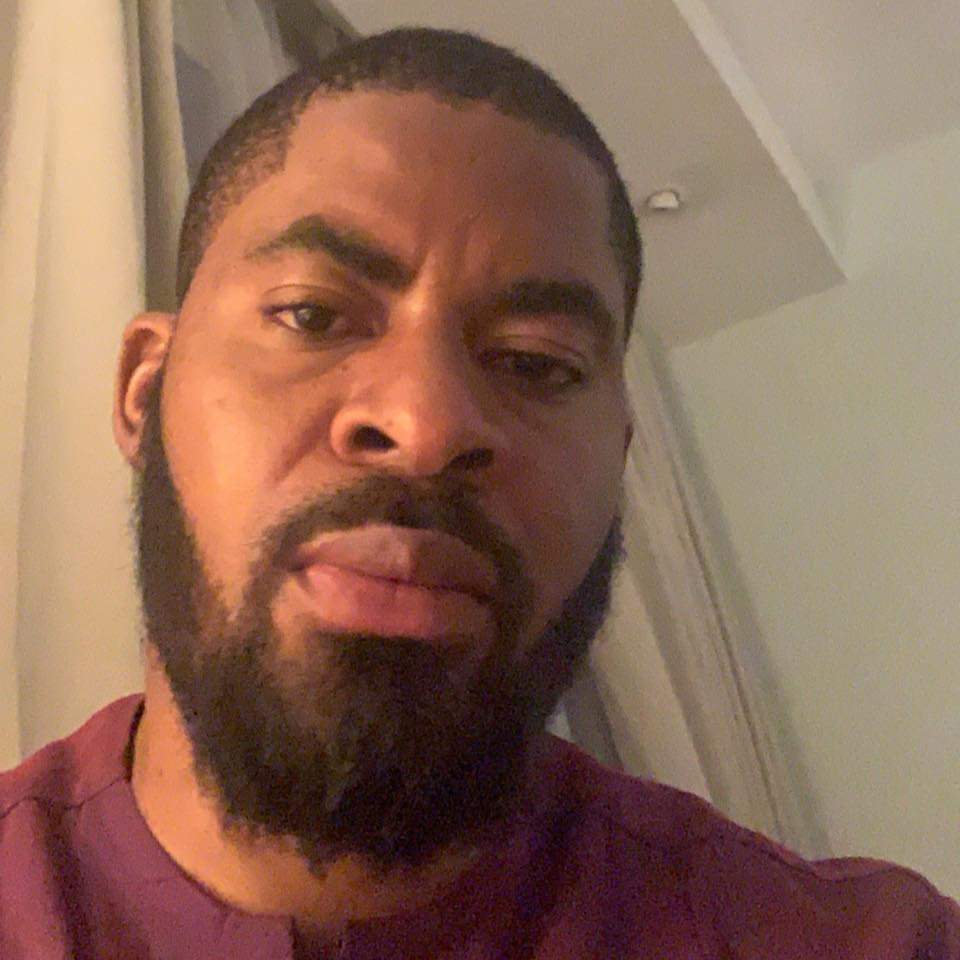
Frank Alleges Rot in Buhari’s Administration

A former Deputy National Publicity Secretary of the All Progressives Congress (APC), Comrade Timi Frank, has made more startling allegations of ongoing looting that is capable of sinking Nigeria.

Comrade Frank made the made this known via his verified Twitter handle on Saturday as he described the cabal running the government as a profit making bunch whose only interest is to loot the treasury dry.

According to the Bayelsa-born political activist, “no government in the World has looted their country like the Buhari’s government”.

“To them, this is a profit making period and the level of corruption is stinking all over this government,” he said.

“By the time he leaves too, we would be shocked at what @MBuhari and his looting cabal have done to Nigeria,” Frank stated.

The political activist, who has remained consistent in exposing the ills of this administration, stressed that the @MBuhari adminstration has introduced a new face to corruption and corruptive tendencies that will ruin the economy of Nigeria as no day passes without report of one humongous sleaze being exposed.

Frank, in his tweet, said God used the COVID-19 pandemic to expose the kind of Government that is running the affairs of the country.

“It shows the @MBuhari has no concern for the citizenry of Nigeria”.

“At this period that Nigerians need you more, that is when you are displaying your incompetence,” Frank stated.

“Buhari should never again mention that he is fighting corruption. He is highly corrupt”, he stressed.

“Now, when you talk about individuals who are fighting against corruption in Africa, then you will mention @PaulKigame of Rwanda and @Magufuli JP of Tanzania”.

Frank noted that “Muhammadu Buhari has only been championing a corrupt course. This is the most corrupt government in the history of Nigeria. They are just shameless”.

Idris Derby: When Orange is a New Black

By David Onmeje

Celebration of fantasies over anything foreign has deeply influenced the psyche of Nigerians. It is in the character of every Nigerian to even abominably bow to anything and everything foreign, no matter how fake. And many are still pleasurably ignorant that the original or initial religious Boko Haram insurgency has been decapitated and eclipsed.

The scanty traces of insurgency in the country and the infiltration of ISWAP terrorists into Nigeria is deliberately festered for a different motive. What is energizing rebels and criminals in the Lake Chad Basin enclaves is economic terrorism because of its rich oil and gas resources. The naturally endowed Lake Chad Basin area is largely shared by Nigeria, Chad, Niger and to a large extent, Cameroonian republics.

For clarity, in a March 2020 well researched article published in the Journal of Politics and Religion, titled “Untold Story of Boko Haram Insurgency: The Lake Chad Oil and Gas Connection,” authored by Mr. J. Tochukwu Omenma, the author opinionated that “Oil as an important natural resource will continue to shape international conflict, and since the beginning of oil exploration in the Lake Chad basin, oil products have been a key element of the riparian states’ national interest and contestation. The “greed-and-grievance” theory explains this configuration of forces behind the insurgency in the Lake Chad region.”

There have been some funny hallucinations in Nigeria, the last few days. It about the Chadian President Idriss Deby, who reportedly led his country’s Military in an operation against Boko Haram called, “Operation Boma’s Wrath” on April 4th 2020. The Chadian forces onslaught extinguished terrorists in the battle at Kelkoua, bank of the Lake Chad. Scores of Boko Haram terrorists were neutralized and two Boko Haram command posts in Chadian territory were dismantled.

This should only be commendable to the extent one discerns Chad’s repentant posture in supporting terrorism. President Deby deluded himself by erroneously thinking he could keep enjoying the criminal alliance with Boko Haram/ISWAP insurgents eternally.

The only appropriate description of President Deby’s action is “revolt is the chamber of terrorists.” Deby was disappointed that his partners in crime betrayed him when the Boko Haram militants again attacked a military base in Boma on March 23, 2020, killing 98 Chadian soldiers. It happened earlier at Diffa region. He was incensed and ordered the vengeance operation to appease his soul. These are tricks crafty leaders like President Deby play with the lives of the people.

So, the onslaught killed, dislodged and captured Boko Haram terrorists’ major bunker of armoury in Chad territory. It is good news that some Boko Haram terrorists escaped into the Nigerian, Nigerien and Cameroonian territories. Its cheering revelation that terrorists have no abode in Nigeria because of the superior might of Nigerian troops. It intimated Nigerians that terrorists empowered to torment the country are harboured by neighbouring countries.

In justifying the queerness of some Nigerians, a joint military operation by Nigerian troops under the auspices of the Multi- National Joint Task Force (MNJTF) through combined air and artillery bombardments strikes also dislodged fleeing terrorists from Chad which wanted to take shelter at the Tumbun Fulani area in Borno state and Lake Chad Islands in Nigerian territory.

But Nigerians never gave a thought to the brilliant and proactive actions of Nigerian troops. Some newspapers still credited the action of Nigerian troops to Chadian forces. And so, what resonated in the country was rather the bemused celebration of President Deby for the “wonderful feat”, just to spite President Muhammadu Buhari and the Nigerian Military. One cannot scoff at the idiocy of some Nigerians enough.

Sometimes, it’s difficult to comprehend Nigerians. The Chadian Military’s strike, dislodgement and destruction of the armory bunker of Boko Haram terrorists is at best, an action expressive of a deal gone awry between Chad and Boko Haramists and their ISWAP counterparts. But compatriots failed to discern this simple insight.

Some shallow-minded fellows never reminisced that the Nigerian Military had consistently complained about the tacit support Nigeria’s neighbours who extend assistance to Boko Haram terrorists, especially Chad. The insurgents armoury bunker attacked by the Chadian forces in her territory was neither assembled in a day nor in a hurry. It has been there and provided a convenient environment for Boko Haram/ISWAP terrorists to stockpile weapons, raise and train foot soldiers, in spite of the presence of MNJTF.

It is one of the many secure spots in Chad and other neighbouring countries Boko Haram retire for protection and replenishment each time they launch attacks on Nigerian territories. This is not hidden and Chad particularly has refused to heed to pleas to cooperate with Nigerian forces and MNJTF.

It is therefore, surprising that instead of Nigerians to deeply assess the sudden reaction by Chad, they are senselessly celebrating the fantasy of the action Chadian forces led by President Deby. Suddenly, almost every Nigerian has forgotten that Chad has been a major impediment in Nigeria’s absolute success in her counter-terrorism expeditions.

Under the Jonathan Presidency, President Deby allegedly collected $20 million to assist Nigeria fight Boko Haram. But thereafter, Chad embarked on actions which were supportive of terrorists and emboldened insurgents against Nigeria. And similarly, it is an established fact that under the Buhari Presidency, once Boko Haram terrorists chased from Nigeria in the heat of field combats with Nigerian troops, they cross into Chadian territory, where they are shielded to escape and recuperate to plot fresh attacks on Nigeria.

In the past, Chad had variously frustrated and sabotaged regional cooperation in the war against terrorism ostensibly because of its secret agreements with Boko Haram insurgents. Chad vacillates allegiance between Boko Haram and alliance to the mandate of MNJTF.

For instance, in 2014, Chad pulled out hundreds of its troops stationed in Niger to assist in the regional collaborative fight against Boko Haram. Chad acted in this resentful manner after President Donald Trump included the country on its revised travel ban list, as one of the countries suspected of aiding and abating terrorism. President Trump was explicit that Chad reneged to “adequately share public-safety and terrorism-related information.”

In January 2020, Chad again, withdrew its troops from Nigeria operating under the MNJTF. Thereafter, Boko Haram strikes in Nigeria accentuated. Anonymous Chadian military sources claimed its forces had completed its mission in Nigeria. Chad and her tricky engagements with neighbouring countries in the fight against terrorism is so glaring.

It is no news that Chad is famous for its refusal to fund MNJTF as agreed by the member-nations. And it condescends to the level of even consenting to hundreds of cattle rustled in Nigeria by terrorists from ransacked communities to find their way into Chadian markets unmolested. It has remained one of the main sources of funding of Boko Haram terrorism in Nigeria.

And despite Chad’s US secured computerized gadgets, installed at all Chadian borders with neighbouring countries, Nigeria inclusive and backed up by a 24-hour security surveillance and checks at all border-crossing points by Chad’s security forces, Boko Haram still freely ferries weapons through the country into Nigeria. Chad has not denied that it is one of the countries from which Boko Haram/ISWAP terrorists receive smuggled weapons.

Terrorists smuggled heavy military weapons from some countries in Europe to Boko Haram in Nigeria transit through several countries, including Chad. Chad has neither denied or raised an eyebrow against this act clearly because of a deal and understanding it has reached with terrorists. The silent voice in the deal between Chad and Boko Haram seems to say, “allow us use your country, to transport weapons to Nigeria and we will not strike your country.”

Therefore, it is absolutely senseless and smacks of infantilism for President Deby and his partisan promoters in Nigeria to make a bazaar over his revolting against Boko Haram/ISWAP terrorists partners for betraying Chad by striking the country’s military base and killing soldiers. Like earlier stated, the Boko Haram armoury bunker destroyed in the “operation Boma’s Wrath,” was not erected in a day. How come Chadian intelligence never knew of it and reacted until the satanic souls rose against them?

Nigerians must know it is a battle between two criminals – Chad and Boko Haram/ISWAP terrorists. Nigerians celebrating President Deby just to deride President Buhari and the Nigerian military have missed the drift and failed to decode the underlying conspiracies against their country. It is the fundamental problem of some Nigerians.

The Chief of Army Staff (COAS) and leader of the counter-insurgency operations in Nigeria, Lt. Gen. TY Buratai and Nigerian troops have demonstrated in actions these past years their mettle. A combination of Boko Haram/ISWAP terrorists are not beyond their capacity to handle.

The COAS is leading the counter-terrorism combats effectively and he has proved beyond reasonable doubt that he is capable of quenching the fire of terrorism in Nigeria. Nigeria has never had a pact with the rebels; but it is open secret that President Deby struck a deal with them, except that it has gone sour now.

Deby needs to clear his name in the kingdom of Lucifer and apologize to his compatriots for sacrificing them. Leading the battle at Boma personally was rather Deby’s symbolic purging of a haunting guilt. Nigeria is not a place for him to come and fart after playing such odious roles to terrorists, rebels, killers, murderers and rapists.

Had the likes of Chad not denied Nigeria and her military, the necessary cooperation in the fight against terrorism, Boko Haram/ISWAP terrorism would have been blighted a long time ago, not only in Nigeria but from the West African sub-region. President Deby should stop playing the gods, because the “rich also cry.” His day of reckoning is finally here!

President Deby cannot connive and cooperate with Boko Haram for ages to torment and massively murder Nigerians only to step out angrily to avenge betrayal of his country by the sect and expect sane people to eulogize him. It is childish antics and fraudulent playing to the gallery. The Nigerians hailing the actions of the Chadian President urgently needs to have their brains examined.

Onmeje wrote this piece from the United Kingdom.

Fake activists, promoters of fake news are worse than Boko Haram- CAFA

The Citizens Against Fake Activists (CAFA) believes fake activists and promoters of falsehood are worse menace to the country than even Boko Haram terrorists.

According to CAFA, these self-acclaimed human rights activists are only interested in their pockets and this desperation led them into blackmailing the Nigerian military to promote the agenda of their paymasters.

CAFA made this point in a statement on Friday through Director Communications and Publicity, Comrade Ibrahim Kabiru Dallah.

Dallah pointed out the recent alliance and hype accorded Chadian troops as a typical example of these activists’ dubious endeavours, who all the years kept mute when they faulted and never accorded the Nigerian military similar adulation.

CAFA added that they are instead quick to criticise the Nigerian troops, alleging right abuses each time there is a successful onslaught against the terrorists.

The Citizens against Fake Activists, however, warned Nigerians to be wary of the likes of Aisha Yesufu, Omoyele Sowore, Deji Adeyanju and Ahmad Salkida affiliated with international NGOs to escalate falsehood, especially against the military.

As the Army intensifies effort to flush out the remnants of Boko Haram terrorists, the group therefore appealed to authorities to “nip the problem of fake news in the bud by leveraging on the international movement against the ugly phenomenon to arrest the ugly practice that is threatening the security of the country”.

Read full statement below:

Citizens Against Fake Activism (CAFA) has blamed the fake news being propagated by dubious activists for the seeming resilience of Boko Haram and Islamic State West Africa Province (ISWAP) as it warned that these so called activists are plotting to escalate their lies now that Boko Haram is taking a beating home and abroad.

This fake activists have a perfected a vicious circles whereby they tell lies to slow down the military, allow Boko Haram terrorists re-gain grounds and then turn around to blame the government for not doing enough to curtail the terrorists even though the same dubious people accuse the government of right abuses each time there is a successful onslaught against the terrorists. These fake activists and fake news agents are in essence responsible for the continuous Boko Haram terrorism in the country.

After years of not doing much to support Nigeria in smoking out terrorists that plan and launch attacks from its territory, the Republic of Chad was recently coerced into attacking Boko Haram fighters after its military suffered heavy losses to the criminals; instead of urging Chad to do more in flushing out the terrorists, these fake activist rather rushed to deploy fake news that they hoped would sour relations with Nigeria so that Chad will again lose its new found impetus to do the right thing.

The liars also attempted to rewrite history by attempting to mislead the unwary and create the impression that the terrorists have not been decimated on Nigeria soil and only operate cross border from the safe havens they found in a country like Chad, which did not do anything to stop their act of terrorism until Chadian President Idris Derby saw the ugly side of the viper he had embraced to his bosom.

It must be clearly stated that these fake activists deliberately engage in what they do. The fake news they publish are meticulously crafted and vetted by their clients following which they unleash these campaigns of misinformation, falsehood and calumny with the intent to use them for strengthening Boko Haram/ISWAP especially whenever they are being pummeled by the Nigerian military.

With the knowledge that the Chief of Army Staff (COAS) Lt. General Tukur Buratai had directed troops to prepare for a final assault on Boko Haram/ISWAP and mop up terrorists that may be escaping from the trouble they courted in Chad, it is important to alert Nigerians to be on the lookout for an increase in fake news emanating from these compromised activists.

CAFA wants to particularly warn Nigerians to be on the lookout for contents from the arrowheads of the fake activists, Aisha Yesufu, Omoyele Sowore, Deji Adeyanju and Ahmad Salkida. These individuals and their proxies as well as affiliated international NGOs would be escalating the campaign of fake news and unsubstantiated stories to help Boko Haram/ISWAP resist its imminent end.

Our monitoring revealed an increase in the deployment of fake news by these people since additional steps were recently taken to launch the final attack against Boko Haram, notably the lies that were directed against Nigerians when the army shuffled its commanders to better position itself. They have also started peddling rumours and lies since the Chadian operation with the intent of blackmailing the Nigerian military into inaction and that will allow fleeing Boko Haram terrorists melt into the Nigerian society from where they will rebuild their cells.

Nigerians should blame these identified fake activists that persistently undermines national security should they do anything to strengthen Boko Haram. Citizens should exact a steep cost from them if they as much as run a single item of fake new and shame their families in market places, malls, schools and even at places of worship to serve as deterrent to other would-be promoters of fake news now that this batch of never-do-wells has been exposed.

CAFA appeals to authorities to nip the problem of fake news in the bud by leveraging on the international movement against the ugly phenomenon to arrest the ugly practice that is threatening the security of the country. We are aware that it is possible to charge purveyors of fake news to court under several pieces legislation that are already in place

Deji Adeyanju: A Man in Conflict With his Inner Self

By Mohammed Ibrahim

Deji Adeyanju invokes a strong feeling of empathy these days. A close observation of his persona lucidly reveals a squandered childhood and misused middle-age. He is full of the emotions of regrets and self-pity. He is a perfect portrait of a thoroughly misguided soul, pushed into a burning furnace by a toxic ambition in the quest for prosperity.

Listening to his lamentations, it drapes with the pathetic feelings of a frustrated man. Adeyanju is a self-acclaimed activist who is in intricate conflict with his inner self. Recently, Adeyanju exclaimed on his Twitter handle that Nigeria is not a country worth dying for. The ennui in him is understandably deep upon the realization that he has taken faulty steps during the best part of his life.

If Adeyanju dreads dying for a public cause in his country, it implies that he is not a true activist. He does not believe in the pro-masses campaigns he claims to advocate, probably because of the attraction of financial rewards. Everywhere, people make sacrifices for their people and nation. There is a country called Nigeria today because some of our forebears battled the colonialists and made sacrifices for independence of the nation.

Likewise, many soldiers battling Boko Haram/ ISWAP terrorism in the Northeast have died. They have paid the supreme price so that other Nigerians can exist in a peaceful and secured country. Therefore, pro-masses campaigners do not dread death for whatever reason as Adeyanju has done. It means his actions all this while have been deceitful. Adeyanju’s actions reminds of another odious character, by the identity of Nnamdi Kanu, the leader of Indigenous Peoples of Biafra (IPOB). He too dreaded to make sacrifices for his people but when it mattered most, he sneaked out of Nigeria. They are the self-seeking brats who project the false image of chief agitators of public cause. And they are aplenty in Nigeria, confusing themselves and those who believe in their inveterate gospels.

It is one of the many contradictions in Nigeria. The likes of Deji Adeyanju flaunts the public badge of activists, but he is everything except what he claims in public. Adeyanju is a political merchant and crisis entrepreneur, designed in a manner beneficial to him. His utterances most times portray him as a debauch. He wrote on his twitter handle another day that President Muhammadu Buhari is an animal. “Only an animal will kill 1,000 Shiites and boast about it on National TV,” he asserted.

No man who grows up in a disciplined home would use such vulgar and debased language on his leader. No circumstance, anger or instigation justifies such an uncouth diction on your President. But Adeyanju does not give a damn. Rather, he expects sane and good-mannered Nigerians to listen to him; he wants them to believe what he says or take him for a responsible person. But Adeyanju must know that student unionism is different from activism. What he does is disguised and advanced form of verbal terrorism.

And it is not surprising that Adeyanju markets himself in this manner. He has links with gangsterism, lacks morality, and an undisciplined lad. These are his observable innate attributes. In his undergraduate days at the Bayero University Kano, (BUK), Adeyanju was reportedly a rough character.

And old habits die hard. So, out of school, he is still the same Adeyanju. The air of cultism, and murder whirls around him. An awaiting trial ex-jailbird, people with such nasty experience are barren of a humane conscience; they are ruthless. When he organizes and leads protests to protect the interests of the brutal, barbaric and murderous members of El-Zakzakky’s IMN in Nigeria, he is only identifying with his soulmates.

It defeats logic that Adeyanju should stand up for the defence of members of the illegal Islamic Movement of Nigeria (IMN), a murderous sect in Nigeria. It is strange that the self-styled pro-democracy campaigner claims the murder of a thousand Shiites by government, (how did he arrive at this figure?) but is less unconcerned about the innocent Nigerians the religious extremists have killed for over 40 years. What a warped sense of justice!

So, garbing himself with the robes of a political activist is merely an antic of masking himself to exploit gullible politicians. Adeyanju has rendered himself as an active voice of political power mongers in Nigeria. In his estimation, this is a career and he practices it with every expertise.

It surprised many that when Justices Okon Abang sentenced the former PDP national publicity secretary, Mr. Olisa Metuh to jail after convicting him on charges of corruption, Adeyanju came out barking and howling like a castrated bull. He again tweeted, expressing disappointment with the decision of the judge.

He sought to exonerate Metuh from guilt, claiming the former PDP pub scribe was only paid for a transaction. To know Adeyanju is not only a brainwashed soul contracted on hatchet jobs, he argued farcically that the recipient of money for a transaction has no obligation to investigate the source. This reasoning is too infantile, especially for anyone familiar with the facts surrounding the scandalous disbursement of the $2.1 billion arms procurement fund to politicians. But is a trite law and common knowledge that a person who receives stolen property is also an accomplice in the criminal act.

Adeyanju is a doubtful character with multiple identities. He is variously known as Charles, Umar and so forth. And as an unstable character, Adeyanju has been shuttling between Christian and Muslim faiths at different intervals. He presents himself as a Christian today and a Muslim tomorrow. It smacks of a character who is at war with himself and cannot be trusted. Those who know him claim, Adeyanju was chased out of the Nigerian Peace Corps for impersonation as well. Dubiousness surrounds him.

A person like Adeyanju with such filthy credentials has no moral justification to even pretend leading a genuine public cause. It is impossible! It must be made abundantly clear to Adeyanju that a political merchant cannot automatically morph into an activist. Adeyanju cannot run away from his rotten past and seek to clad himself with a new artificial identity. He must identify his personality in consonance with his known antecedents.

And there are just two alternatives left for him. Adeyanju should acknowledge himself either as a fake activist or a cloaked terrorist. But surely, he is not a genuine activist. His actions of defending the murderous Shiites cannot exculpate him from the tag of a terrorist. It will do Adeyanju a lot of good, if he stops deceiving himself and Nigerians with the fake title of an activist.

Ibrahim wrote from Kaduna.

Boko Haram: Why Nigeria Does Not Need Deby’s Fraudulent Approach

By Ajibola Adeojo

If recent reports of the success recorded by Chadian troops against the Boko Haram terrorists are anything to go by, then it would be taken that the Chadian forces used a new approach that had never been seen before. 

Codenamed “Operation Boma Wrath,” Chadian troops were said to have launched an attack on the terrorists, following an attack on their military base on March 23 by Boko Haram in which 98 Chadian troops were killed. 

The revenge attack was adjudged a success because the Chadian troops killed many of the insurgents, destroyed five of their bases and many of their bunkers where its top commanders were hiding and recovered thousands of weapons from them.

Few of the surviving insurgents were said to have ran to Nigerian territories to escape been killed.

But if the Chadians had this  offensive strategy against the Boko Haram terrorists who have been taking refuge in their territories for several years why are they unleashing it only now? 

The answer is not farfetched. Chad did not use any new approach in military warfare. 

That it decided to come out against the insurgents now has more to do with the relationship between the Chadian president, Idriss Deby Itno and the insurgents.

Long before now, Chad had been engulfed in internal crisis for many years and many of its rebels frequently found themselves in Northern Nigeria.

Driven by hunger but with guns and other weapons at their disposal, they wreaked havoc on several Nigerian communities, seized their food supplies and extended their heinous criminal activities to highway robberies. They were known as Kwanta Kwanta due to the language they deployed in their operations.

With the advent of the Boko Haram, especially with the killing of Mohammed Yusuf, top commanders of the sect that were seeking revenge against the Nigerian State were mopped in by the Chadian rebels and in no time the latter surrendered to the command of the Boko Haram because it had more resources and an identifiable structure.

Chad therefore became an important operational base of the terrorists with the knowledge of the Chadian goverment.

The Chadian President had used this relationship to his advantage to demand financial support from Nigeria before.

But the relationship between Boko Haram and Deby went sour in recent times mainly because the Boko Haram were no longer economically useful since nobody was paying to have them kept at bay as was the practice during its early days and secondly, they were becoming a nuisance to their host communities. 

The recent killing of the Chadian troops by Boko Haram broke the proverbial back of the camel and the Chadian government had to turn its gun on the terrorists.

The swift manner the exercise was carried out however raised the questions about the  approach used which saw the Chadian troops waking up one day to round up the terrorists in a singular attack.

Some say this is because the attack was led by the Chadian President himself and would want Nigeria to emulate that.

Those advancing this line of thought forget that about the same time that the Boko Haram attacked the Chadian troops killing 98 of them, the theater commander of the Operation Lafiya Dole, Major General Olusegun Adeniyi was also ambushed by the insurgents and would have been killed if not for the deployment of superior military strategy that gave the insurgents a bloody nose.

It is recorded that the Boko Haram suffered so much in that attack that they abandoned a large cache of their weapons and fled.

But days after the Nigerian soldiers outmanouvered the insurgents routing them out in their numbers,  only a little media attention was given to it unlike the Chadian episode. 

The truth is, apart from needless propaganda, Nigeria has fared far better in military operations than the tiny African country, hence has nothing to learn from Chad.

Even judging by the two incidents, it is clear which side gave a good account of itself as far as responding to attacks is concerned.

While Chad was humiliated by the killing of  98 of its finest fighters, said to be the equivalent of its strike force, Nigeria lost only two soldiers in the ambush before reconnoitering to take on the insurgents and blowing them away.

It is obvious that the Chadian military strategy and approach to counter insurgency differs from that of Nigeria in many respects and it would be a great disservice to Nigeria for anybody to suggest that Nigeria should adopt the Chadian approach in its fight against the insurgents. 

One, there is not even a clearly laid out strategy that has cast Chad as having an upper hand in the fight against insurgency. 

In the history of warfare, before any strategy could be said to be superior, it must have  produced the same results over and over again. 

This is not the case with the Chadians as what we have seen is a one off tit-for-tat mission that managed to succeed..

But the danger in playing the defensive or counter offensive like Chad has done in an asymmetric warfare like the one involving Boko Haram is that the insurgents are allowed to make their pick of targets before they are replied.

This could be counterintuitive as the insurgents while taking the time to plan and launch attacks would not always assemble in a place waiting to to be struck. 

Another thing is that allowing the terrorists to converge at a particular place before taking on them.would be at a great cost to the civilian population along their camps who would be made to bear the brunt of their sustenance and the many humiliations that come with it.

The fact of the matter is that Nigeria is far ahead of Chad and other countries in the fight against insurgency.

Nigeria has been the leader on many counter insurgency operations across the continent including the multinational joint task force currently fighting the Boko Haram.

The Nigerian Chief of Army Staff, Lt. General Tukur Yusuf Buratai has been leading the fight from the front since he was so appointed in June 2015.

He has personally participated in drills and other military exercises with fighting troops, talked and interacted with them directly  and led operations in the theatres of war.

His presence at many operations has served to inspire troops and boosted their confidence in the battle field. 

Apart from that, the Chief of Army Staff  has been able to win the war by adopting tactics and strategies that suits particular geographical locations which he is quite familiar with.

Troops confidence has further  been boosted with the keen interest he has shown in the improved welfare of soldiers and instilling in them a high sense of patriotism.

Chad on the other has had a pact with the insurgents which went sour and were driven by rage of betrayal by an estranged accomplice. 

Nigeria however is driven by patriotism and the need to save humanity from catastrophe and disorder. 

The two countries are not in the same category. 

Nigeria is doing well in the fight against insurgency and has nothing to learn from a one off operation.

Adeojo, a security analyst wrote this article from Ibadan.