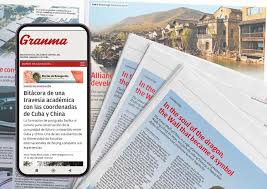
By Dilbert Reyes Rodríguez, Yesey Pérez López
Mention your Chinese heritage while walking through Havana’s streets, and you will likely encounter warm smiles – a reciprocity mirrored in Beijing – where Cubans receive immediate hospitality upon revealing their origins. Separated by oceans but bound by history and shared ideals, Cuba and China continue to chart a course of enduring friendship.
2025 marks the 65th anniversary of diplomatic ties between Cuba and China. Under the strategic guidance of the two heads of state, bilateral ties are ascending to new heights. At Granma, the official newspaper of the Communist Party of Cuba Central Committee , we have long placed great emphasis on covering news related to China – politics, culture, economy, and society. Our sustained cooperation with People’s Daily has established a crucial bridge in deepening mutual understanding and trust between our two nations.
Our cooperation took a significant leap last August when we were invited to attend the 2024 Media Cooperation Forum on Belt and Road, hosted by People’s Daily. During the event, we signed a bilateral memorandum of understanding and embarked on a media journey through Chengdu, Zigong, Yibin, Guangzhou, and Foshan, gaining firsthand insight into China’s rapid development.
We marveled at China’s high-speed railways, observed autonomous driving in action, and toured smart factories humming with innovation. At the same time, we delved into the richness of Chinese civilization – exploring the Jinsha Site Museum in Chengdu, strolling the Yongqing Fang historical alleyways, and attending performances at the Cantonese Opera Art Museum in Guangzhou – deeply moved by China’s reverence for its historical and cultural heritage.
These moments sparked something more than stories. They gave birth to a new voice: “Diarios De Navegacion” (“Navigation Diaries”), a dedicated column in Granma for sharing China’s stories in the new era, was officially launched at the 2024 China-Latin America and Caribbean Media Cooperation Forum held in Rio de Janeiro last October.
Since its inception, the column has published more than 70 stories – a living record of the Cuba-China friendship. In Cuba, we have covered vibrant cultural exchanges, such as the “Happy Spring Festival” co-hosted by the Chinese Embassy in Cuba and local institutions, which brought together Chinese traditions with Caribbean flair.
In China, we reported on the “two sessions,” breaking down the Chinese government work report to help our readers better understand Chinese concepts such as whole-process people’s democracy and Chinese modernization. We also covered China’s consistent support for Cuba’s UN resolutions opposing the U.S. blockade – demonstrating China’s firm commitment to Cuban sovereignty and resistance to external interference.
A recent milestone was our reporting on the fourth ministerial meeting of the China-CELAC (Community of Latin American and Caribbean States) Forum. We provided timely analyses of the cooperation proposals put forward by Chinese President Xi Jinping, underscoring the shared aspirations of Latin America and China for peace, development, and cooperation.
Meanwhile, our journalists have conducted field reporting across Beijing, Jiangsu, Henan, and other regions. In Henan’s Luoyang, we visited the birthplace of the “Dongfanghong” tractor – a legendary symbol of China’s agricultural modernization and now widely used on Cuban farms. We’ve also written about the cultural and historical resonance of the Great Wall, Jiangsu’s innovative cultural-tourism integration, and China’s extensive low-carbon development expertise. These stories have enriched our newspaper and drawn strong online engagement, with numerous Cuban readers acknowledging China’s growing global influence and recognizing its development model as a valuable reference for Global South countries .
The column has become more than a collection of words and images – it is a new bridge for cultural exchanges between Cuba and China. For our reporting team, contributing to the building of a Cuba-China community with a shared future and promoting much-needed dialogue among civilizations is both an honor and a responsibility. As a faithful chronicle of the evolving Cuba-China relationship, “Diarios De Navegacion” will continue documenting each chapter of cooperation between our countries, bearing witness as our friendship sails toward a brighter future.
(Dilbert Reyes Rodríguez is the director of the Granma newspaper, and Yesey Pérez López is the director of communications of the Granma newspaper.)
Where runways meet relics: airport museum in Xi’an bridges past and present
By Zhang Danhua, People’s Daily
As one of the world’s most renowned ancient capitals, Xi’an in northwest China’s Shaanxi province boasts a history spanning more than 3,100 years and serves as the capital for 13 dynasties for more than 1,100 years. The city is home to an abundance of cultural relics, ranking among China’s most archaeologically rich urban areas with unparalleled density of underground heritage.
In the midst of its bustling modernization, a unique blend of archaeology and infrastructure has emerged at Xianyang International Airport, where a groundbreaking museum now brings the relics of antiquity into the flow of modern life.
The story begins with the third-phase expansion of the airport, launched in 2020. As construction began, the Shaanxi provincial institute of archaeology, working in collaboration with China West Airport Group (CWAG), started excavating the site. What followed was nothing short of an archaeological treasure trove: more than 6,800 relic sites, over 4,000 ancient tombs, and more than 22,000 artifacts have been unearthed.
“On the very first day, a cluster of Northern Zhou Dynasty (557-581) tombs was discovered. This was quickly followed by tombs from the State of Qin during the Warring States period (475-221 BC) and aristocratic burials from the Han Dynasty (202 BC-220 AD),” recalled Qi Quanhai, a member of the airport construction command center. “Our investigation team worked tirelessly during that time.”
In the most artifact-rich areas, over 300 tombs were discovered per square kilometer, turning what was supposed to be a routine infrastructure project into a living dialogue with history.
Faced with the urgent need to rescue thousands of tombs, the airport’s construction team and the Shaanxi provincial institute of archaeology developed an innovative “zoned prioritization” excavation approach, allowing critical construction areas to proceed while temporarily halting work elsewhere. Each zone was handed over for construction immediately after archaeological work was completed.
“Archaeologists and construction teams shared real-time location data to coordinate efforts. This close collaboration allowed both archaeological rescue and construction to move forward together,” said Qi.
By synchronizing construction and archaeology in real time, this approach ensured the project stayed on schedule while preserving invaluable cultural heritage, such as a camel figurine bearing cargo.
Among the most significant finds was the 2022 uncovering of the tomb of Yuwen Jue, founding emperor of the Northern Zhou Dynasty. Located near the airport’s west interchange road (north), the planned road network of the Airport New City (south), and the third-phase expansion zone (east), the discovery attracted widespread public attention.
With bustling commercial activity and logistics development on one side, and a tomb of immense historical value on the other, the tomb raised an interesting dilemma: how to balance development with preservation? After consulting with experts in archaeology, history, architecture, and cultural heritage, the decision was made to preserve the tomb in situ, covering it with a protective structure and building a heritage park above it. LED screens and digital installations now educate visitors about its archaeological and historical significance.
“This approach not only enhances cultural value but also creates a win-win outcome for cultural preservation and economic development,” said Ma Zhifeng, an official with the administrative office of the Airport New City.
The “archaeology-first” principle guided the entire project. For example, Xi’an’s intercity rail line underwent multiple design revisions to avoid disturbing both a Qin Dynasty (221-207 BC) pottery workshop and the ruins of ancient Xianyang city – the former capital of the dynasty. Construction was suspended nearly 100 times due to cultural discoveries, yet workers consistently demonstrated deep respect for the relics beneath their feet, a quiet tribute to the legacy of the past.
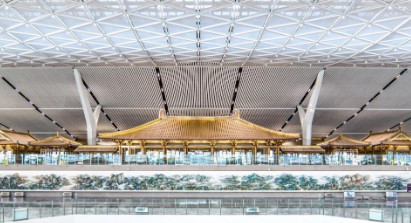
The excavation site quickly became a cultural sensation online, with over 100,000 comments surging for an on-site museum to showcase the discovered artifacts. The call was answered with the creation of the CWAG Museum of Heritage inside the airport’s Terminal 5, the world’s first in-situ archaeological museum housed within an airport terminal.
Situated in the heart of Terminal 5, the museum draws on the rich cultural history of Xi’an and showcases artifacts unearthed during the airport’s expansion. Designed in the architectural style of the Tang dynasty (618-907), the museum creates an immersive experience where each piece tells a localized story of the region’s past.
Since its opening on February 26, the museum has welcomed nearly 100,000 visitors and hosted over 1,300 volunteer-guided tours. In partnership with universities, the museum offers immersive programs for international students, streams virtual tours, and features “Pei Fuzhou” – a real-time interactive 3D digital guide. With its combination of ancient relics and modern technology, the museum has become a cultural hub within a bustling transportation hub.
“Modern airports are no longer just places for planes to take off and land. They are becoming cultural spaces in their own right,” said Lin Bin, deputy general manager of CWAG.
Chengdu emerges as magnet for foreign businesses, professionals
By Wang Yongzhan, People’s Daily
Chengdu, a key city in southwest China’s Sichuan province, has become a magnet for foreign businesses and investors, thanks to its rich cultural heritage, convenient location, and strong pro-business environment. Today, more than 4,000 foreign-invested enterprises are based in the city, and over 100,000 foreigners live and work there.
When Dutch national Robert was asked why he settled in Chengdu, he instantly cited the local expression: “Ba shi,” meaning “ideal comfortable.”
In 2008, while attending university in the Netherlands, Robert met his future wife, Chen Ruze, a Sichuan native. After graduating and beginning careers, the couple visited Chen’s hometown Zigong in 2013, extending their trip to Chengdu
Known for its long history and vibrant culture, Chengdu ranks among China’s most compelling cities for international visitors. Robert found himself captivated not only by the city’s famous landmarks but also by quintessential local scenes – citizens dancing in public squares or leisurely drinking tea in traditional teahouses – all epitomizing the city’s signature unhurried lifestyle.
In early 2015, the couple moved to Chengdu permanently. Robert began learning Chinese and adapting to local customs. “Here, you can enjoy both tradition and modernity – historic sites, pandas, Sichuan opera, exhibitions, hot pot, teahouses. There’s always something new to experience,” he said.
Around the same time, Chengdu unveiled its plan to become an international exchange center, rolling out policies to attract overseas professionals and international students. “After conducting thorough market research, we decided to start a company to help foreign talent find jobs in China,” Robert said.
In 2016, Robert founded the company eChinaCareers. The following year, the company moved into an industrial park built for international talent in Chengdu High-tech Industrial Development Zone, benefiting from subsidized rent policies. “We primarily help international schools and foreign enterprises in China with talent acquisition,” explained Chen Ruze.
In 2023, the company relocated to the nearby International Talent Hub, which is also in the Chengdu High-tech Industrial Development Zone. The company continued to enjoy rent-free space.
Leveraging the platform of International Talent Hub, the Chengdu High-tech Industrial Development Zone aims to become a major hub for human resources services in central and western China and a vibrant zone for young global innovators and entrepreneurs.
Chengdu’s international appeal has grown significantly in recent years. According to Ctrip’s 2024 Chinese travel destination heatmap, Chengdu ranked as the top destination for foreign tourists in China. A wide range of talent programs and streamlined mechanisms for attracting overseas professionals have helped Chengdu earn repeated recognition as one of the best Chinese cities for talent and a top destination in the eyes of expats.
This environment also creates opportunities for eChinaCareers, which has helped tens of thousands of foreign professionals find jobs. “More and more foreigners are coming to Chengdu and falling in love with it,” said Robert, adding that his company now also helps local talent explore international opportunities.
At a Chengdu production facility of Australian medical device company Cochlear, general manager of Cochlear China Li Xinyu was inspecting the latest batch of cochlear implants.
In September 2017, Cochlear approved plans to build a production base in Tianfu New Area, Sichuan. It would become the company’s sole overseas manufacturing site for cochlear implants. With an investment of about $87 million in buildings and equipment, the Chengdu facility officially began operations in 2021.
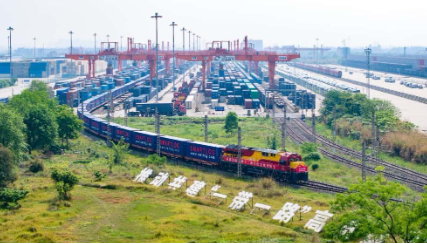
“Chengdu has an advanced transportation network and serves as a key node along the Belt and Road,” Li explained. “The components we use can be shipped here quickly and cost-effectively by rail or air.”
Soft infrastructure also plays a role. “At every stage of project development and operations, we received robust multi-level support,” Li said. After the project was approved, the local government in Tianfu New Area provided tailored one-on-one assistance with incentive applications. “With institutions like the University of Electronic Science and Technology of China, the city offers a deep talent pool, and dozens of top hospitals present huge potential for cooperation.”
Chengdu’s logistical advantages have strengthened since operations began. “Dual international airports enable efficient distribution across China and Southeast Asia,” said Li. With support from customs and other agencies, clearance time for shipments has dropped from two weeks to just one day, significantly reducing logistics costs.
With convenient transportation and an open, business-friendly environment, Chengdu continues to attract foreign investment. In 2024, the city’s international airports handled over 87 million passengers and more than 1 million tons of cargo. In the first four months of this year, Chengdu brought in $656 million in foreign direct investment, ranking first among all cities in western and central China.
Chinese online literature offers global readers a window into modern China

By Zhang Bolan, Zhao Yipu, Mang Jiuchen, People’s Daily
Once a niche form of entertainment, Chinese online literature, from serialized novels to adaptations in television, gaming, and animation, is emerging as a new cultural bridge to the world – drawing millions of international readers into its vivid narratives and offering a fresh perspective on contemporary China.
In 2024, the overseas market for Chinese online literature exceeded 5 billion yuan ($695.09 million), according to a report by the Chinese Academy of Social Sciences. The expanding community now includes 460,000 overseas web novel authors and over 350 million readers across more than 200 countries and regions.
In Cannes, France, a mother found inspiration in Release That Witch, a fantasy novel set in an alternate medieval world. Taken by a scene describing a Chinese dessert, she handcrafted “ice-skin baozi” for her children, eager to bring a taste of China into her own home. Thousands of miles away in Quebec, Canada, a young woman working in a kindergarten spends her night translating her favorite Chinese web novels into French, uploading them online to share with fellow readers.
“Chinese online fiction doesn’t just captivate through fantasy. It reflects real emotional and moral concerns,” said Charles Dewees, co‑founder and editor‑in‑chief of Chireads, a France-based online reading community.
Founded in 2017, Chireads has become the largest hub for Chinese web novel translations in the French‑speaking world, attracting nearly one million monthly active users, primarily from France, Belgium, Luxembourg, Monaco, and Canada. On average, users spend more than 50 minutes a day on the site.
The forum has flourished thanks to licensing agreements with leading Chinese platforms such as Qidian and China Literature, enabling high-quality translations that preserve the nuance of the original texts. Comments on the site – “Fantastic!” “Engaging!” “Legendary!” – testify to their growing popularity.
Dewees sees Chinese web literature as both a storytelling powerhouse and a cultural ambassador. “With its thrilling plots, imaginative fantasy, and heartfelt emotion, it resonates far beyond China’s borders,” he said.
For Andeez Ziauddin, a Bangladeshi student at Fudan University in Shanghai, Chinese online fiction played a formative role in her life. Her first encounter came during childhood visits to Guangzhou, south China’s Guangdong province, where her entrepreneur parents often traveled for business. She discovered Chinese novels at local libraries, including web fiction, and was instantly hooked. Even after returning to Bangladesh for secondary school, she continued reading online.
Now 27 and in her seventh at Fudan University, Ziauddin has been a fan of Chinese web literature for over two decades. She believes the appeal lies in shared cultural values. “South Asian readers can relate deeply to Chinese stories about perseverance, destiny and justice,” she said.
In South Korea, translator Park Nu Lee has witnessed the rising appeal of Chinese online literature firsthand. She first found them from TV adaptations such as Joy of Life and Nirvana in Fire, which sparked her interest in the original novels. Today, she works with professional institutions to bring more of these works to Korean audiences through translation.
The influence of Chinese web literature in South Korea has grown remarkably, with adaptations into television dramas winning popularity among young audiences, Park noted.
She said Chinese online literature covers a variety of genres, including history, fantasy, sci-fi, mystery, wuxia and romance. “There’s something for everyone.”
She credits the genre’s growing momentum in part to the strength of China’s online literature industry, which has developed a mature ecosystem of spin-offs and adaptations. “In South Korea, many learn about Chinese web novels through TV shows or animations, then return to the original works. That adaptation cycle – how it loops back to the source – is something quite unique,” Park explained.
What China’s wind, solar power surge means for world
By Cui Yan, People’s Daily
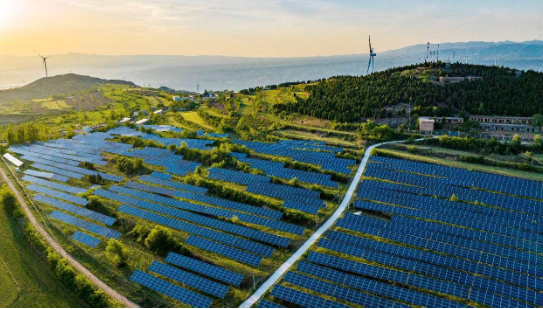
Traveling along China’s coastal highways today, one frequently encounters vast stretches of wind farms, their towering turbines steadily spinning under the open sky – a striking emblem of the country’s accelerating energy transition.
In the first quarter of this year, the country’s installed capacity of wind and photovoltaic power reached 1.482 billion kilowatts, exceeding that of thermal power for the first time in history.
With the rapid expansion of renewable installations, wind and solar power are set to continue leading China’s energy mix in the years ahead, reflecting a profound adjustment of the country’s energy structure.
Once niche industries, China’s wind and solar sectors have grown into global frontrunners in both innovation and manufacturing, progressing from reliance on foreign core technologies to becoming the world’s largest exporter of wind and solar equipment.
Perseverance and practical action
China’s energy transition is above all a story of steady determination and pragmatic policymaking. Over time, the country has pursued a carefully structured approach to advancing its energy revolution. Central to this revolution is the development of a clean, low-carbon, safe and efficient energy system.
Step by step, China has implemented tangible measures: building pilot zones for photovoltaic development and large-scale renewable energy bases, fostering rapid innovation through demonstration projects, and refining regulatory frameworks for renewable energy pricing, consumption guarantees, and market mechanisms. These sustained efforts have laid the groundwork for renewables to become a new pillar of the country’s modern industrial system.
Innovation as driving force
At the core of this energy transformation lies a relentless pursuit of innovation. Technological advancement has propelled China to the forefront of global renewable energy development, with breakthroughs spanning materials, design, and technology.
The country has developed a 26-megawatt offshore wind turbine, the largest of its kind in the world, with all 30,000 components produced domestically and key technologies leading the world. It has also developed the longest wind turbine blades, supporting onshore turbines as tall as 60-story skyscrapers. In photovoltaics, China’s all-perovskite tandem solar cells have achieved a record-setting 28.2 percent photoelectric conversion efficiency. These accomplishments underscore a broader ecosystem of innovation that continues to fuel progress in clean energy technologies.
Global vision for sustainable development
China actively contributes its green development achievements to global progress. Acknowledging energy security and climate change as shared global challenges, the country accelerates its green, low-carbon transition while promoting sustainable development worldwide.
China has built the world’s largest and most complete new energy industrial chain and expanded the global reach of its photovoltaic and wind power equipment. China has always prioritized practical cooperation through technology transfer and supply chain integration, serving as a committed advocate and contributor to global green and low-carbon development.
Today, China is collaborating on green energy projects with over 100 countries and regions, launching a large number of signature projects and “small yet smart” people-centered programs. The success of China’s wind and solar industries is not only a testament to the country’s own unwavering energy transition, but reflects its outward-looking vision to foster global green transformation.
China’s progress in wind and solar energy reflects its commitment to achieving domestic development while enabling global sustainability. As Jack Perry, chairman of Britain’s 48 Group Club, has observed, China’s renewable energy expertise serves as a source of hope for other developing countries pursuing modernization. The U.S. Brookings Institution has described China as a global leader in non-fossil energy, clean transportation and green finance – “the world’s greatest hope” in these fields.
This hope is carried forward with every turn of a Chinese turbine blade, delivering not only a strong current of electric power, but also a brighter, more sustainable future for all.
Exploring cultural richness of ‘pearl of Silk Road’ Kashgar
By Che Bin, Li Yanan, People’s Daily
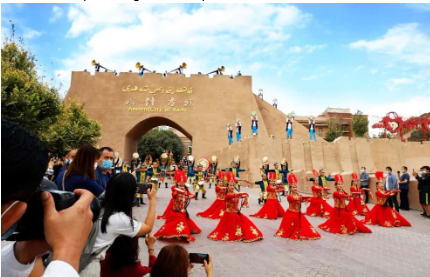
Located in the southwestern part of Xinjiang Uygur autonomous region, Kashgar sits on a lush oasis nourished by the Yarkant River, which flows from the Karakoram Mountains. Since ancient times, traders and travelers crossing the Pamir Plateau have stopped here to rest, trade, and connect. This made Kashgar a key hub along the ancient Silk Road and one of Xinjiang’s earliest international trading posts. Historical figures such as Zhang Qian, Xuanzang, Faxian, and Marco Polo all left their footprints in this storied land.
Today, Kashgar stands as China’s gateway to the west, an international corridor leading to Central, West, and South Asia, and the starting point of the China-Pakistan Economic Corridor. Departing from downtown Kashgar and heading south along the Karakoram Highway, known as the “China-Pakistan Friendship Road,” one can reach Taxkorgan Tajik autonomous county after a 300-kilometer drive.
Just north of Taxkorgan lies the Ruins of Stone City, a site with more than 2,000 years of history. When Buddhist monk Xuanzang in Tang Dynasty (618-907) returned from his journey to India, he passed through the site and later described the ancient stronghold in his travelogue “The Great Tang Records on the Western Regions.” Weathered by time, the ruins still stands with quiet grandeur.
In downtown Kashgar lies the ancient city of Kashgar, which dates back over 2,100 years. Known as a “living city of antiquity,” it begins each day with a ceremonial opening: at sunrise, dancers emerge from its streets, greeting visitors with cheerful music and vibrant performances.
Wandering through the ancient city, one encounters 99 alleys that twist and turn, lined with earth-toned buildings decorated with flower pots, intricate wood carvings, colorful domes, and overhanging eaves. As families expand, new generations add floors to their homes, creating a unique and compact architectural landscape with hanging houses and enclosed passageways. Over time, more than 20,000 residences have formed a dense, labyrinthine urban layout – one of the largest inhabited clusters of earthen buildings in the world.
In the early Yuan Dynasty (1271-1368), Italian traveler Marco Polo described Kashgar in his travel notes as a city with beautiful gardens, orchards, vineyards, and merchants from every corner of the world.
In August last year, Italian hiking enthusiast Vienna Cammarota visited Kashgar. Before her trip to China, she had read about the city in The Travels of Marco Polo. Upon arrival, she was thrilled to discover that Kashgar was not only a vital hub on the ancient Silk Road but also a place brimming with vitality today.
“The streets are lively by day and poetic at night,” she said. “There’s a constant hum of voices and the air is filled with the aromas of spices, freshly baked bread, and sizzling barbecue.”
In the ancient city of Kashgar, there is a cafe named Dili & Diya, run by a young local man, Dilxat Tursun, and his Tanzanian wife Hadiya.
Hadiya attributed her opportunity to live and study in China to the Belt and Road Initiative. She met Dilxat Tursun while both were students in Fuzhou, southeast China’s Fujian province. In May 2020, the couple returned to Dilxat Tursun’s hometown Kashgar.
“The moment I arrived in Kashgar, I fell in love with it,” Hadiya said. “The city has a rich history, and the people are warm and hospitable. In my hometown of Zanzibar, there’s also a Stone City, which feels quite similar to Kashgar. That connection made me feel even closer to this place.”
Their cafe features hand-crafted pottery cups from Kashgar and wall decorations from Africa. “Tanzanian coffee beans are well-known in the Chinese market,” said Dilxat Tursun. “So in March 2023, we opened this cafe together. Hadiya taught me how to grind beans and brew rich, flavorful coffee. Our lattes are made with local milk and Tanzanian coffee beans, a fusion that reflects the East-meets-West charm of Kashgar ancient city.”
“With China’s visa-free policy expanding its coverage, we’re seeing more and more international visitors at our cafe,” he added.
As the business grows, securing a steady supply of coffee beans has become a top priority. “When we first started, we would bring beans back with us during family visits to Tanzania. Now, they’re shipped via a more stable route – from Africa to Europe, then to Kashgar by China-Europe freight trains,” he explained.
At the end of last year, construction began on the China–Kyrgyzstan–Uzbekistan Railway. Dilxat Tursun was among the first to celebrate the news. “This railway starts in Kashgar. We hope for its swift completion and operation, which would make coffee bean transport even easier. More importantly, I believe this project will open up more trade opportunities and improve daily life for people in the countries along the route,” he said.
Digital technology assists with protection, utilization of Suzhou’s classical gardens
By Wang Weijian, People’s Daily
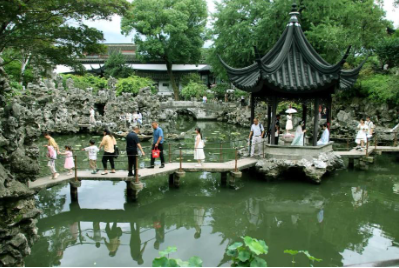
Early in the morning, Mei Hong, a senior engineer at the administration office of Lingering Garden in Suzhou, east China’s Jiangsu province, logged into a digital platform for garden conservation and monitoring, uploaded the latest data collected over the previous few days.
Gesturing to rows of real-time data flashing on his screen, he explained, “From towering ancient trees and entire structures to individual tile or a trailing vine, every element in the garden is safeguarded by an invisible ‘digital guardian.’ With digital technology, we can continuously monitor all living organisms and structural components within the garden.”
Since 9 classical Suzhou gardens, including the Humble Administrator’s Garden, Lingering Garden, and Master-of-Nets Garden, were added to the UNESCO World Cultural Heritage List, Suzhou has established a comprehensive monitoring system for its heritage sites. The city has systematically digitized distinctive features such as lattice windows, paved paths, decorative furnishings, brick carvings, and archways, achieving millimeter-level accuracy. Detailed electronic records have been created for every component of these classical gardens, with data regularly measured and updated to maintain a dynamic database.
Why is such a meticulous database necessary?
At 59, Mei has dedicated over two decades to garden monitoring and conservation. He recalled that in earlier years, without digital tools, maintenance relied entirely on visual inspections and the subjective judgment of seasoned craftsmen. Questions like “Should this pillar be repainted?” or “Does this window lattice need repair?” were decided based on intuition. Over time, repeated restorations gradually eroding the original character of these classical gardens.
Digital technology has revolutionized heritage conservation, making it more precise and science-based. “Thanks to this database,” Mei said, “even centuries from now, no matter how many repairs or restorations occur, we will preserve the authentic essence of Suzhou’s classical gardens for generations to come.”
Digitalization is also breathing new life into these ancient spaces, offering visitors richer and more engaging experiences.
At 9 pm in the Humble Administrator’s Garden, located in Suzhou’s Gusu district, an enchanting “digital spectacle” unfolded amid the moonlit rocks and waters.
Holding a small lantern, 68-year-old Suzhou native Pan Meilan ascended to the Jianshan Pavilion in the garden. Peering down, she saw a digitally rendered “fawn” stroll gracefully through bamboos. Simulated birdsong and insect chirps, paired with the lilting melodies of Kunqu Opera, filled the air. Above the pavilion, a luminous “digital moon” slowly rose.
In recent years, while safeguarding cultural relics, the Humble Administrator’s Garden has embraced modern technologies such as digital projection to create immersive experiences. The Jianshan Pavilion serves as a highlight on the garden’s nighttime tour route.
Xue Zhijian, director of the garden’s administration office, explained that digital elements now permeate the 70-plus-mu (about 4.67 hectares) site. In addition to enhancing the nighttime experience, the garden has launched digital products inspired by Jianshan Pavilion and created its virtual replica. Through a mobile app, visitors can access a high-resolution, 720-degree 3D panoramic view of the pavilion.
The digital transformation exemplifies Suzhou’s broader initiative to preserve and showcase classical gardens through technology. In recent years, a host of new digital cultural products and experiences have emerged, giving these ancient gardens fresh appeal. Lingering Garden, for example, has developed a metaverse project, which uses 3D modeling to vividly recreate its major structures. The Lion Grove Garden has also introduced metaverse experience, featuring immersive 5G-enabled virtual reality tours.
Experts noted that Suzhou’s digital garden projects not only provide richer spatial data for conservation mapping, but also break the limitations of time and space. They offer new ideas and approaches for both protecting and revitalizing these cultural treasures.
How global manufacturing hub Dongguan adapts to changing markets

By Hu Jian, He Linping, People’s Daily
One in five smart phones, one in four anime merchandise items, and one in five sweaters worldwide are made in Dongguan, a manufacturing hub in south China’s Guangdong province.
The economic pulse of Dongguan has long been synchronized with global industrial and supply chain dynamics.
In the first four months of this year, Dongguan recorded 486.35 billion yuan ($67.73 billion) in foreign trade, up 19.4% year on year. Exports alone reached 291.6 billion yuan, an 11.9% increase.
Dongguan has demonstrated notable resilience in navigating global market challenges, as evidenced by the performance of its manufacturing sector and companies like VIVO.
At VIVO’s quality testing laboratory in Dongguan, every new smartphone model undergoes a comprehensive series of rigorous assessments before move into mass production. Devices endure repeated 1-meter drop tests from 26 angles, undergo 150,000 power button actuations, and withstand 1,000 compression cycles under simulated real-world conditions.
In 2024, VIVO achieved global shipments exceeding over 97 million units, securing fourth position in worldwide market share by Q1 2025. The company maintains robust market resilience despite external challenges.
Vivo collaborates with nearly 400 supply chain partners across display, imaging, electronics, structural components, and semiconductors, with 25%of these partnerships have endured for over a decade. Multiple suppliers have achieved public listings during their collaboration with VIVO. This ecosystem reflects mutually beneficial growth between the manufacturer and its partners.
Currently serving over 500 million users across more than 60 countries and regions, VIVO emphasizes users-centric innovation. “Our commitment to customer-focused R&D investment provides the foundation to navigate market uncertainties, both domestically and internationally,” said the company’s executive vice president and chief operating officer Hu Baishan.
VIVO’s story reflects the evolution of Dongguan’s mobile phone and electronics industry. Since the city produced its first mobile phone in 1995, it has grown into a global production center, now accounting for 1/5 of the world’s total output.
In Dongguan’s Binhaiwan New Area, construction is in full swing on an “AI Island,” which will integrate technology R&D, product manufacturing, and data services. “We aim to establish a national AI application demonstration zone within 6 years, generating an industrial output of 60 billion yuan,” said Luo Bin, an official with Binhaiwan New Area.
“In an uncertain global market, the key lies in focusing on making great products,” said an official with Dongguan’s bureau of industry and information technology. According to the official, the city is selecting key sectors with strong foundations and broad applications to systematically promote initiatives ranging from robotics product development to technological innovation and market integration.
But resilience doesn’t mean there’s no challenge. “Unilateral tariff hikes imposed by the United States led to the sudden cancellation of over 1,000 of our overseas orders. Now that tariffs have been adjusted, customers are resuming shipments, but costs remain high,” said Wang Zhen, chairman of a Dongguan-based toy and baby product manufacturer.
“Trade with the United States used to account for 20% of our exports, so we seized this opportunity to accelerate our transformation,” Wang said, holding up a toy resembling a mythical Baku – a dream-eating creature with a short trunk and a horn. “We’ve developed a full line of Baku-themed toys, with over 150 products now exported to Southeast Asia, Europe, and Japan, generating annual export sales of more than 10 million yuan.”
Adaptability has been critical. The company has enhanced its brand identity with culturally creative products and refined its marketing strategies by exploring integrated domestic and foreign sales. When Chinese e-commerce giant JD.com launched a 200-billion-yuan program this April to help exporters pivot to the domestic market, the company secured a 50-million-yuan domestic sales contract through the initiative.
Diversifying international markets is a shared priority among Dongguan enterprises. In the first 4 months of this year, Dongguan’s trade with Belt and Road partner countries grew 28.8% year on year, trade with ASEAN nations 45.4%, and trade with the five Central Asian countries 56.3%.
In March, in Dongguan’s Chashan township, where a toy and baby product manufacturer is based, the local government signed a strategic cooperation agreement with technology firms and industry associations to build an intelligent industry cluster that combines AI and toys. Just a month later, the first batch of locally developed AI-powered toys hit the market.
According to an official with Chashan township, no matter how global markets shift, Dongguan will remain committed to moving its industries up the value chain, thus enhancing technology, branding, and service capabilities to drive high-quality growth.
Again, Group Call For Ojulari’s sack As NNPCL GCEO
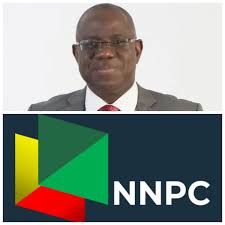
A civil society organization, the Coalition of Nigerian Patriots for Good Governance, has reiterated its demand for the immediate removal of Bayo Ojulari, the Group Chief Executive Officer of the Nigerian National Petroleum Company Limited (NNPCL). The coalition accuses him of orchestrating systemic sabotage of national assets and engaging in blatant abuse of office.
This announcement was made during a press conference in Abuja on Tuesday, led by National Coordinator Comrade Ibrahim Musa. He emphasized that the concerns raised by the coalition are shared by other civil society organizations, concerned workers, and transparency advocates who are alarmed by what they describe as the reckless actions of the NNPCL CEO.
They are accusing Ojulari of championing the following: the suspicious shutdown of Nigerian refineries; a grand plot to privatize and sell NNPCL to cronies; diversion of crude to illegal local refineries; mass resignations and a toxic work environment and; undermining the President’s national objectives.
The group demanded President Bola Ahmed Tinubu to immediately sack Bayo Ojulari as Group CEO of NNPCL; launch investigation into the ₦5.7 billion shady consultancy contract awarded under his leadership to Haske and for the EFCC to invite and probes all parties involved in the Kigali retreat scandal, including estacode fraud, use of five private jets, and outrageous waste of public funds.
The statement reads:
“Barely weeks after his appointment, Ojulari’s leadership has been characterized by impunity, secrecy, and destructive policies that threaten to derail the gains of the Renewed Hope Agenda and frustrate the tireless efforts of Mr. President in repositioning Nigeria’s oil and gas sector for sustainable growth and economic recovery.”
“THE SUSPICIOUS SHUTDOWN OF NIGERIAN REFINERIES: “We question, in the strongest terms, the irrational and suspicious shutdown of our national refineries by Mr. Ojulari, barely 24 hours after he assumed office on May 24th, 2025.
“Let it be on record that millions of taxpayers’ money has been invested in the rehabilitation of the Port Harcourt, Warri, and Kaduna refineries, with several reports confirming that some of these refineries had started test-running and were functional. Yet, Mr. Ojulari, without recourse to stakeholders, and any official technical audit, allegedly ordered a shutdown of the facilities. This action is anti-people, anti-progress, and targeted at undermining President Tinubu’s goal of achieving energy self-sufficiency and reducing fuel imports.”
The coalition also alleged an attempt by Ojulari to deliberately devalue the NNPCL to pave the way for what it called a rushed and questionable privatisation process.
“It is now an open secret within the industry that Mr. Ojulari has an agenda to deliberately demarket NNPCL to justify a hurried and shady privatisation process. We have credible information that buyers have already been lined up — cronies and proxies — waiting to acquire our national oil assets at giveaway prices. In the event he fails to privatise, Mr. Ojulari’s backup plan is to (allegedly) fabricate a bloated repair cost and demand billions to ‘refix’ already working refineries. This is nothing short of economic sabotage and institutional capture.”
“This is a deliberate effort to sabotage the national refining effort and enrich private interests.This diversion must be investigated. We therefore call for an independent inspection by a team of credible, external engineers — including COREN and refinery experts — to verify the true operational state of the refineries and to determine if there was ever a genuine reason to shut them down.”
The group also emphasized what it described as a brain drain at the NNPCL under Ojulari’s leadership, citing the recent resignations of senior officials, including the Group Chief Operating Officer, Mr. Roland.
“Under Ojulari’s leadership style, NNPCL is bleeding talent. Over the past two weeks, several senior officials have resigned, including Group Chief Operating Officer, Mr. Roland, and other key department heads. Worse still, Ojulari (allegedly) frequently drops President Tinubu’s name, claiming he is untouchable and above scrutiny because he is “the President’s man.” This is not only false but also a disgraceful abuse of privilege. We know that President Tinubu is not a corrupt man and would never support or protect such conduct.”
The coalition warned that the NNPCL’s current trajectory was undermining national economic objectives.
“It is on record that President Tinubu has made it a national priority to raise Nigeria’s crude production from 1.6 million barrels per day to 3 million barrels per day. However, under Ojulari’s command, NNPCL is headed in the opposite direction — from transparency to secrecy, from performance to decay. Ojulari’s mismanagement is clearly undermining the bold reforms and credible image President Tinubu is trying to build both locally and internationally.”
In response, the coalition issued a series of demands to the Presidency and relevant authorities:
“We call on President Bola Ahmed Tinubu to immediately sack Bayo Ojulari as Group CEO of NNPCL. His continued stay in office is a threat to Nigeria’s energy security, oil sector reform, and economic recovery. We demand a full investigation into the ₦5.7 billion shady consultancy contract awarded under his leadership…
“We demand that EFCC invite and probe all parties involved in the Kigali retreat scandal, including estacode fraud, use of five private jets, and outrageous waste of public funds.
“We request the intervention of the National Assembly and COREN to immediately launch an independent technical audit of the nation’s refineries and expose the lies surrounding their shutdown. We urge the presidency to clean up the NNPCL, restore staff morale, and bring back professionalism, transparency, and patriotism.”
Property Demolition: CSO Condemns Peter Obi’s Attempt To Drag Lagos Govt Into Controversy
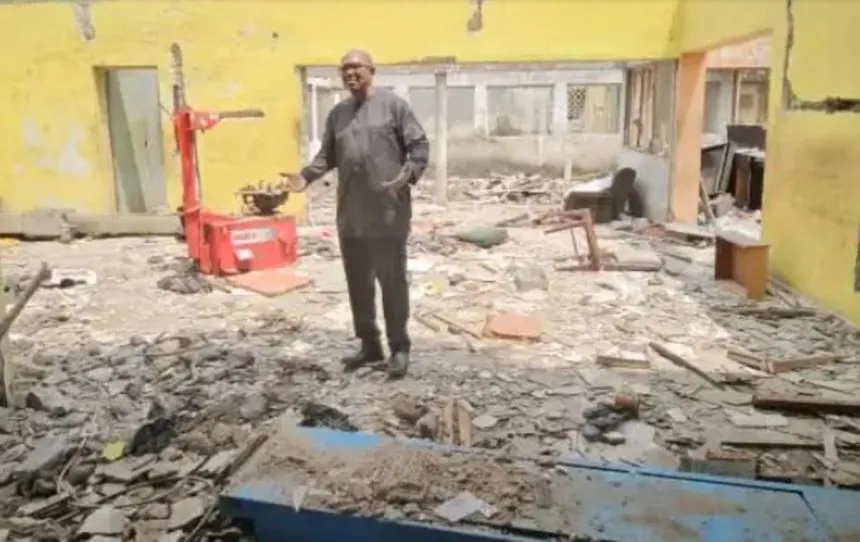
The Transparency Initiative Project (TIP) has criticized former Anambra State Governor Peter Obi for what it calls an unnecessary attempt to involve the Lagos State Government in the controversy surrounding the demolition of a property belonging to his brother, without verifying the facts.
In a statement on his X account, Obi expressed outrage over the incident, claiming it reflects a broader pattern of impunity and disregard for the rule of law in the country. He alleged that the building was demolished without notice, a court order, or any engagement with the rightful owner.
In response, the Lagos State Government swiftly denied any involvement in the demolition of the property located in Ikeja. They stated that neither the Lagos State Building Control Agency (LASBCA) nor any other branch of the government executed the demolition.
During a press conference on Monday in Lagos, the group’s convener, Yemen Ngutor, condemned the incident and expressed concern over Obi’s allegations. Ngutor emphasized that it was troubling for Peter Obi to make such claims without verifying the facts first.
He insisted that before making unsubstantiated accusations and suggesting that the demolition had political motivations, Obi should have verified who authorized the demolition.
Ngutor praised the Lagos State Building Control Agency (LASBCA) for its prompt denial, which was issued in a statement signed by the Commissioner for Information and Strategy, Gbenga Omotoso, and supported by Dr. Olajide Abiodun Babatunde, the Special Adviser on e-GIS and Urban Development, under whose supervision LASBCA operates. They confirmed that the agency had no involvement in the matter.
“We join other concerned Lagosians and Nigerians who are worried about the demolition of Peter Obi’s brother’s property in Ikeja. However, we are also troubled by unverified accusations that seem to implicate the state government in the controversy. It is concerning that a person of Obi’s stature would not confirm the facts with the authorities before trying to involve the state in his brother’s issues.
“It seems premature and superficial to suggest political motives in this matter without waiting for investigations to conclude. We believe that Mr. Peter Obi has misstepped this time.
“Unfortunately, Obi’s statement resonated with his supporters, who may believe that the Labour Party candidate in the 2023 presidential election is a target of systemic intimidation. We urge Obi’s supporters to verify the facts and refrain from blindly promoting every claim put forth by politicians.
“We applaud the Lagos State Government for promptly launching an inquiry into the controversy, and we welcome the fact that Peter Obi’s brother has taken the issue to court to challenge the demolition. We can follow the proceedings and await the outcome.
“The administration led by Governor Babajide Sanwo-Olu has demonstrated exceptional capacity across various sectors in Lagos and has prioritized infrastructural development. We are confident that he will not support any form of illegality that could hinder the development of Nigeria’s commercial capital, now or in the future, whether for personal or political reasons,” Ngutor emphasized.
In a rebuttal to Peter Obi’s claims, Lagos State Commissioner for Information and Strategy, Gbenga Omotoso, stated:
“We find it alarming that Mr. Peter Obi would make such accusations without verifying the facts.
“The Lagos State Government is committed to upholding the rule of law and ensuring the safety and security of all residents. We will not tolerate any acts of lawlessness or violations of existing laws. Any individual or group found to be involved in such actions will be held accountable.
“We urge the public to disregard Mr. Peter Obi’s allegations and to rest assured that the Lagos State Government will continue to work tirelessly to maintain law and order in our great state,” the Lagos Government said.
“We will not be swayed by baseless claims or attempts to undermine our efforts,” Omotoso concluded.