
Says promotion exam yet to hold, urges critics to verify facts
Reaffirms commitment to institutional integrity and civil service compliance
A coalition of civil society organizations under the Civil Society Groups for Good Governance (CSGGG) has addressed recent allegations of favoritism in the Nigerian Export Promotion Council (NEPC)’s promotion exercise, describing the claims as speculative and lacking basis in fact.
Speaking at a press briefing in Abuja, the President of CSGGG, Comrade Ogakwu Dominic, clarified that the promotion process is still at the preparatory stage and no staff member has been promoted yet. He noted that the procedure followed aligns with civil service regulations, including approvals from the Office of the Head of Service and oversight by a multi-agency Senior Staff Committee.
According to Dominic, an official circular (ADM/CONF/SM/I/VOL.12/121) dated June 26, 2025, had communicated eligibility lists to all staff, maintaining transparency throughout the process. “It is misleading to suggest favoritism when the exams haven’t even been conducted,” he stated.
He further referenced the 2024 promotion exercise, where 49 out of 74 eligible candidates were promoted, commending the structured process that has been in place under the current leadership.
CSGGG urged stakeholders to allow the NEPC to carry out its duties without unnecessary distractions, while also calling on the public to uphold professionalism and fairness in public discourse.
The coalition reaffirmed its commitment to promoting transparency and good governance in all public institutions, adding that it will continue to monitor the NEPC and similar agencies to ensure compliance with established procedures.
China’s services sector climbs up global value chain

By Luo Shanshan, Ding Qianqian
China is emerging as a dynamic engine for global services trade growth, demonstrated by surging international interest in tourism and shopping alongside leadership in artificial intelligence and cloud computing.
In the first four months of 2025, China’s services exports reached nearly 1.13 trillion yuan ($157.73 billion), an increase of 14.6 percent from a year earlier – a notable achievement amid persistent global trade uncertainty.
This global appeal was recently showcased when more than 3,000 tourism professionals from 74 countries and regions gathered in Shanghai and Chengdu at the invitation of Chinese travel platforms.
“I could watch pandas munching on bamboo all day long!” said David, a travel agency operator from Australia with 20 years of experience while visiting the Chengdu Research Base of Giant Panda Breeding.
Awed by the up-close encounter with China’s beloved national treasure, David remarked that his agency plans to introduce panda-themed tours as a highlight of its premium packages. “Since last year, ‘China travel’ has become the most frequently asked topic among our clients. We expect to bring at least 500 Australian tourists to China next year,” said David.
Among the destinations were marketing executives of Dubai’s hotels, product managers from major European tour operators, and internationally renowned travel influencers – individuals with significant clout in global tourism circles.
From the dazzling skyline of the Bund area in Shanghai to the serene beauty of the Jiuzhaigou scenic area in southwest China’s Sichuan province, from the aroma of hotpot on busy street corners to the bustling pulse of modern commercial centers, this journey – shared by tourism elites from around the world – became a meaningful cultural dialogue.
Trade in travel-related services continued rapid growth momentum, surging 14.7 percent year on year to reach 756.78 billion yuan from January to April this year. Exports soared by a remarkable 79.9 percent, while imports grew by 7.8 percent.
This dramatic rise in outbound travel services is underpinned by several converging factors: streamlined visa-free transit policies, the resumption of international flights, tax-refund policies for overseas tourists, and steady upgrades in China’s catering, hospitality, and business travel industries.
According to data from Chinese online travel platform Ctrip, tourism contributed 10 percent to global GDP in 2024 and created 350 million jobs. “Tourism has become an important bridge connecting Chinese services with the global market,” said Sun Jie, CEO of Ctrip.
Today, Chinese services are rapidly moving up the global value chain. In the first four months of this year, exports of knowledge-intensive services reached 590.24 billion yuan, a 6.1 percent year-on-year increase.
In June, at Peru’s Chancay Port, a flagship project under the Belt and Road Initiative and South America’s first smart port, 50 autonomous smart trucks maneuvered through the terminal with precision, transporting containers from cargo ships to designated storage areas along pre-programmed routes. The operation, fully automated and coordinated via an intelligent dispatch system, demonstrated a new model for port logistics.
The port’s smart logistics system was developed by Shanghai-based Utopilot. “The first 40 trucks have been operating around the clock in coordination with the central dispatch platform, increasing handling efficiency by 30 percent and reducing empty truck runs by 15 percent,” said Yang Lei, general manager of the company’s sales and operations center. “All instructions and task assignments are automatically generated, which streamlines port management.”
To accommodate the intricate needs of round-the-clock terminal activity, precision parking, and end-to-end scheduling coordination, Utopilot has developed 36 major categories encompassing over 120 safety testing protocols, integrated 80 autonomous driving functions, and created an intelligent fleet management platform capable of supporting over 1,000 vehicles.
The project was recognized as a national best-practice case in technology trade and joined other exemplary cases of Chinese companies advancing international cooperation and export of high-end services.
One such example is Yangling Modern Agriculture International Cooperation Co. Ltd., which has built 14 agricultural demonstration parks in seven Belt and Road partner countries, exporting China’s expertise in modern farming practices.
Another standout is WhaleBI, a firm based in Nanjing, east China’s Jiangsu province, which has successfully delivered a large-scale cloud computing solution to Saudi Arabia through remote deployment. The project facilitated the digital transformation of local data centers, reducing operational and maintenance costs by approximately 30 percent.
Also on the list is the Dalian Institute of Chemical Physics of the Chinese Academy of Sciences, which developed an industrial-scale, environmentally friendly process for synthesizing ethylenediamine. The technology provides a greener solution to the global chemical industry.
As a new wave of technological revolution and industrial transformation accelerates globally, China is seizing emerging opportunities to boost the competitiveness of its services sector on the world stage.
Working together for Belt and Road science and technology community
By He Yin, People’s Daily
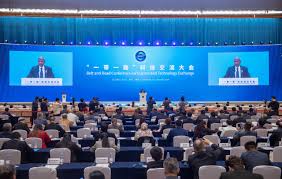
The Second Belt and Road Conference on Science and Technology Exchange recently held in Chengdu, southwest China’s Sichuan province, offers a timely response to the rise of unilateralism and protectionism that continues to challenge global development. The gathering reinvigorated international cooperation in scientific and technological innovation, reinforcing the foundation for high-quality Belt and Road cooperation to deliver broader benefits to humanity.
Scientific and technological cooperation is a key pillar of the Belt and Road Initiative (BRI). From the launch of the Belt and Road Science, Technology and Innovation Cooperation Action Plan at the first Belt and Road Forum for International Cooperation in May 2017, to designating “advancing scientific and technological innovation” as one of the eight major steps China will take to support the joint pursuit of high-quality Belt and Road cooperation at the third Belt and Road Forum for International Cooperation in October 2023, Chinese President Xi Jinping has always placed high importance on scientific and technological collaboration in BRI cooperation. He has always championed innovation-driven development and encouraged collective efforts to seize the opportunities presented by the ongoing technological revolutions.
In recent years, China has made significant progress in advancing the Belt and Road Science, Technology and Innovation Cooperation Action Plan. Working closely with its partners, the country has strengthened top-level planning and expanded collaborative platforms. So far, China has signed intergovernmental science and technology cooperation agreements with more than 80 BRI partners, and set up more than 70 BRI joint laboratories and 10 international technology transfer centers.
At the conference, a range of new initiatives were announced, including the official launch of the International Meridian Circle Program, collaborative projects in AI and traditional Chinese medicine, as well as the creation of additional joint laboratories, research alliances, and technology transfer hubs.
A particularly meaningful dimension of the Belt and Road scientific and technological cooperation lies in its focus on technology-driven poverty reduction. China’s own experience – where technological innovation played a pivotal role in lifting hundreds of millions out of poverty – offers valuable experience for the Global South.
At the conference, a dedicated forum examined how technological solutions can be leveraged to combat poverty in developing countries, sharing China’s proven approaches while exploring new pathways and models for targeted, innovation-led poverty reduction.
The forum unveiled ten key technological solutions for poverty reduction, along with new research platforms designed to facilitate knowledge exchanges. Participants underscored the need for equitable access to scientific and technological advances and called for stronger international cooperation, especially among countries in the Global South.
Scientific and technological progress is a global topic and a defining issue of the times. Openness and cooperation remain the only viable path forward. As the world undergoes a new wave of technological revolution and industrial transformation, with big data, cloud computing, and artificial intelligence (AI) increasingly shaping economic and social development, cooperation in science and technology has never been more critical.
Yet, growing disparities in technological capacity, digital access, and AI threaten to widen global inequalities. The unilateral pursuit of technological hegemony by some nations – seeking to suppress others under the pretext of national security – has further fragmented the global landscape, posing significant challenges to inclusive global development.
In Chengdu, delegates voiced a shared conviction: global challenges demand collective responses. Many emphasized that “countries must join hands to advance global cooperation, drive inclusive development, foster mutual learning among civilizations, and chart a shared path of innovation.”
The conference delivered a strong message: science knows no borders and should benefit all of humanity. Broad international consensus holds that scientific and technological cooperation should be open, fair, equitable, and non-discriminatory. Zero-sum competition, the politicization of cooperation, and the excessive overstretching of national security concerns have no place in the global science community.
Unity fosters shared success; partnership drives progress. Looking ahead, China remains committed to working with all partners to advance the International Science and Technology Cooperation Initiative, and to build a Belt and Road scientific and technological innovation community that is innovative-driven, open and inclusive, fair and equitable, and oriented toward shared prosperity and sustainability. In doing so, science and technology will better serve the well-being of all humanity and contribute to building a community with a shared future for mankind.
Multinationals continue to invest in China
By Luo Shanshan, Wang Pei, People’s Daily
As global supply chains undergo a new round of restructuring, China is emerging as an increasingly attractive destination for foreign investment. A recent report from the Chinese Academy of International Trade and Economic Cooperation under the Ministry of Commerce highlighted how the country’s comprehensive, multi-dimensional strategic advantages and expanding market potential are reinforcing its appeal to multinational corporations.
The convergence of diverse opportunities is enabling the Chinese market to deliver greater long-term value, fostering both sustained capital appreciation and enhanced global competitiveness. As of the end of 2024, foreign investors had invested and established more than 1.23 million enterprises, with a cumulative actual utilization of foreign capital of 20.6 trillion yuan ($2.87 trillion).
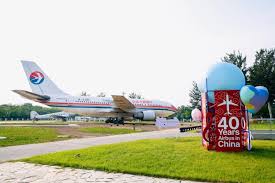
On June 25, Airbus marked four decades of partnership with China. Over the years, China has become Airbus’ biggest single-country market for commercial aircraft. Today, the partnership spans the entire aircraft lifecycle – from design and manufacturing to operational support and recycling after retirement. According to Airbus’ 2025 global market forecast, China will become the world’s largest air transport market in the next 20 years, requiring 9,570 new aircraft, accounting for nearly one-fourth of total demand globally.
On June 18, German electric giant Phoenix Contact, another multinational with a long-standing presence in China, broke ground on a mega-factory in Nanjing, east China’s Jiangsu province, with a total investment of 1 billion yuan. Once completed, the facility will triple its production capacity within five years.
A company representative noted that China’s market scale and sophistication provides significant growth potential, while the rapid advancement of sectors like new energy and intelligent manufacturing aligns closely with the company’s business focus.
Han Jian, a professor at Nanjing University’s business school, observed that on the demand side, China’s large and multi-tiered market presents abundant commercial opportunities for foreign businesses. On the supply side, the country boasts a complete industrial system and strong manufacturing capabilities, having built the world’s largest high-speed railway and expressway networks, as well as world-class port clusters and highly efficient logistics systems. This helps multinationals lower costs and enhance operational efficiency, Han noted.
A stable policy framework and an increasingly open environment further strengthen China’s investment profile.
This confidence is reflected in multinationals’ consistent investment patterns, exemplified by German consumer goods leader Henkel: the company allocated over 500 million yuan in setting up an innovation center in Shanghai in 2021, launched a new adhesive manufacturing facility in the Yantai Huang-Bohai New Area in east China’s Shandong province in 2023, and inaugurated its Cosmetics Brands China Factory in Taicang, Jiangsu province, in March this year.
“The current wave of investment is driven by market dynamics, strong government support, and continuous improvements in the business environment,” said Yu Jiang, head of government relations and public affairs at Henkel (China).
“The Chinese government has been actively advancing opening-up. The negative list for foreign investment is getting shorter every year, and in 2024, restrictions in the manufacturing sector were completely lifted. A range of new policies have also been introduced to attract foreign investment,” said Yu.
Experts affirm that China’s long-standing political and social stability, combined with consistent policy implementation, cultivates a reliable and predictable operating climate for foreign businesses. Notably, China’s well-structured approach to both voluntary and unilateral opening-up has created a forward-looking and flexible space for multinational development.
Many foreign companies have highlighted China’s dynamic application scenarios and innovation momentum as key reasons for choosing the country as a launchpad for new business models and launching cutting-edge technologies. Today, China boasts the world’s largest innovation ecosystem for scenario-based applications.
After 38 years of development in the Chinese market, Schneider Electric, a global leader in energy management and industrial automation, has made China its second-largest market globally and one of its most critical supply chain bases.
According to Yin Zheng, executive vice president of China and East Asia Operations at Schneider Electric, the company has established five research and development (R&D) facilities in cities such as Beijing and Shanghai. Since 2019, its R&D spending in China has grown at a compound annual rate of more than 18 percent.
Japanese electronics maker Seiko Epson Corp has followed a similar strategy, combining technological expertise with localization. “Through open collaboration, we’ve developed a wide range of popular, China-specific solutions,” said the president of Epson (China) Co., Ltd.. “In response to the emerging challenges of the AI era, we are actively integrating into China’s development trajectory and innovation ecosystem.”
According to the report released by the Chinese Academy of International Trade and Economic Cooperation, foreign-invested enterprises have been rapidly expanding their R&D presence in China in recent years. As of May 2025, Shanghai was home to 603 foreign-funded R&D centers. In 2024 alone, Beijing approved more than 110 new foreign-funded R&D centers, bringing the city’s total to 221 – more than doubling within just a short span of time.
Gaokao opens the door wider for all

By Li Xinshu
Amid China’s 2025 national college entrance examination, known as gaokao, scenes of quiet determination played out across the country.
In Suzhou, east China’s Anhui province, Wang Ziwen, a student with osteogenesis imperfecta, also known as “brittle bone disease”, was gently assisted into the exam hall by staff. In Ziyang, southwest China’s Sichuan province, Jiang Xintong, paralyzed from the waist down due to myelitis, arrived at the examination room 30 minutes early via a special access route. In Shenzhen, Guangdong province in south China, Chen Xinhe, the only fully blind candidate in the province, took his braille exam with the support of special education teachers, a counselor, and medical staff arranged by the test center.
These touching moments reflect not only the resilience of the examinees, but also the progressive enhancemen of inclusivity measures within China’s education system.
Reasonable accommodations for examinees with disabilities are now systematically standardized: Blind candidates receive 150% of the standard exam duration; those with hearing impairments may utilize assistive devices such as hearing aids or cochlear implants; candidates with severe upper limb disabilities or those with severe writing difficulties are granted a 30% time extension .
This year, among the 13.35 million students who registered for gaokao, over 14,000 candidates with disabilities qualified for specialized support – a stark contrast to the mere 100 students in 2012 – representing a 140-fold increase in just over a decade.
Gaokao has long been regarded in China as one of the most equitable systems for talent selection. This perception stems not only from its rigorous procedures and transparent mechanisms, but also from its institutional inclusiveness – offering individuals from all socioeconomic backgrounds an equitable pathway to pursue academic aspirations. For candidates with disabilities, this educational access constitutes a profound motivator.
The rights to survival and development are among the most fundamental human rights. As China advances economically while strengthening public services and social security systems, the basic needs of people with disabilities are increasingly met. Building upon this foundation, more attention now focuses on fulfilling their self-actualization aspirations. The once-exceptional practice of requesting examination accommodations has evolved into standardized practice, exemplifying how a modern society elevates vulnerable populations through systemic compassion..
Education is essential to the holistic human development. As of 2024, China has more than 915,900 students enrolled in special education programs. Initiatives such as assistive device access in schools, large-print textbooks included in the national curriculum, as well as flexible programs like home-based instruction and remote learning, have helped special education steadily advance, creating a pathway for students with disabilities to achieve personal growth and success. While individual journeys differ, inspiring stories multiply of students overcoming physical challenges to lead fulfilling lives.
Beyond education, China is working to improve support across the full spectrum of life.
In employment, tailored job assistance for college graduates with disabilities and local job creation projects have been rolled out, and more than 9 million people with disabilities were employed across China in 2024.
In healthcare, dynamic adjustment mechanisms for severe disability care subsidies are being refined, and participation in disability-inclusive health insurance programs continues to rise. A more comprehensive and tightly woven support network, ranging from daily care to medical treatment, is being built to better empower people with disabilities in their pursuit of aspirations.
Through equitable, inclusive, and accessible approaches to public welfare, China is striving to ensure that the benefits of development are shared by all, regardless of physical conditions.
Chinese robotic lawn mowers gain ground overseas

By Wang Junling
In Lower Saxony, Germany, homeowner Hoffmann has a sizable lawn that needs frequent maintenance. When it came time to buy a robotic lawn mower, he did his research, comparing multiple brands before ultimately choosing China’s ECOVACS.
“ECOVACS has already built a robust after-sales network in Germany, and its design suits European users’ habits,” Hoffmann said. “What really impressed me is its route planning. It doesn’t move around randomly; it systematically covers the lawn, which is much more efficient. My wife is thrilled I no longer spend every weekend pushing the lawn mower.”
Chinese brands are quickly becoming go-to choices for smart lawn care in overseas markets. Since the beginning of the year, companies such as Segway-Ninebot, ECOVACS, Greenworks, and Daye have reported rapid business growth, with smart lawn mowers standing out as a key driver of their rising overseas sales.
“In suburban areas across Europe, the United States, and Australia, where population density is low, many homes feature spacious yards. Traditional manual mowing is inefficient and expensive,” said Zhu Fanghao, senior vice president of Chinese electronics manufacturer Anker Innovations, adding that smart mowers save significant labor, time, and money.
These devices are suited for residential gardens, public parks, and small landscaped areas, accommodating spaces from 200 to 4,000 square meters while capably navigating slopes, flowerbeds, swimming pools, and trees. Moreover, in many of these regions, lawn upkeep is factored into property values, supporting a mature and high-retention consumer market.
Demand for robotic mowers continues to rise, driven by aging populations, increasingly fast-paced lifestyles, and growing demand for outdoor living spaces.
“Electrification, low-carbon operation, and smart automation are the key trends driving the future of lawn equipment,” said Wu Junliang, general manager of Shanghai Worth Garden Products Co., Ltd., a Chinese gardening products and accessories provider that is currently expanding operations in the United States.
“We’ve moved beyond buried perimeter wires to a new phase of automation and intelligence, opening up massive growth opportunities,” he said. According to industry forecasts, the global robotic lawn mower market is expected to reach approximately $4 billion by 2028.
What makes Chinese-made robotic lawn mowers so appealing overseas? Robust performance is a major factor. On platforms like Amazon, Chinese models have garnered large numbers of positive reviews, with “easy to install and operate,” “accurate obstacle avoidance,” and “excellent performance” being the top praises.
“When I bought a robotic mower back in 2018, I had to lay down boundary wires which was very time-consuming,” wrote a user going by the name A.T.K. in an online review. “Now with Anker’s eufy E18, I just charge it and press start. It’s amazing! If new grass grows in areas not previously mowed, it expands the zone automatically. If a mole digs a hole, it avoids it. I suspect the developers are updating the software weekly.”
Industry insiders attribute the rise of Chinese robotic mowers to the strength of China’s industrial ecosystem and increasingly sophisticated supply chains.
“Breakthroughs in technologies like LiDAR and boundary-free navigation have dramatically improved product performance and the user experience,” Wu explained. “Many newer models now support remote control via smartphone apps, allowing users to customize mowing schedules and zones, monitor real-time status, and receive maintenance reminders.” He added that the Chinese-made core components like LiDAR sensors are helping reduce overall manufacturing costs and retail prices.
Ying Xinsen, director of the general office of Chinese garden tools manufacturer Safun, emphasized that core technologies such as precise positioning, obstacle detection, motion control, and path planning are critical for achieving full automation and intelligence in robotic mowers. China now boasts leading companies across several of these key domains, including smart algorithms, low-pulse motors, multimodal control systems, and LiDAR sensors.
China’s thriving cross-border e-commerce ecosystem has also fueled growth. Platforms like AliExpress offer simplified market access, streamlined transactions, and enhanced brand exposure, helping Chinese manufacturers expand their global footprint, speed up product innovation, and strengthen brand identity.
Experts view the surge in robotic mower exports as a vivid example of Chinese manufacturing moving up the value chain toward smarter, higher-end development. As China becomes more deeply integrated into the global economy, more “Made in China, sold worldwide” success stories are expected to follow.
China’s ‘Blue Engine’ Powers Ahead
By Han Xin, Wang Zhe, Shi Yu, People’s Daily
Vast, beautiful, and rich in resources, the ocean offers boundless opportunities. In 2024, China’s marine economy exceeded 10 trillion yuan ($1.39 trillion) for the first time, a 75.9% increase over the past decade. Fueled by expanding scale and robust momentum, the sector is experiencing rapid growth in emerging industries such as marine engineering equipment and marine biomedicine. The tertiary marine industry has now become the primary driver of this blue economic surge.
Smarter, Faster Maritime Transport
With the sound of a ship’s horn, a container vessel loaded with small commodities from Yiwu, east China’s Zhejiang province, departed Ningbo-Zhoushan Port. At 12:36 am Beijing time, it arrived at the Port of Jebel Ali in the United Arab Emirates, completing a 17-day journey. This marked the successful launch of a dual-mode logistics channel combining sea-rail express and fast maritime shipping from Yiwu to the UAE via Ningbo-Zhoushan Port.
“Yiwu goods first travel via sea-rail express to Ningbo-Zhoushan Port. After warehouse consolidation, containers move directly to the port without repacking, saving at least three days versus traditional road transport,” explained Lyu Zhe, business manager of a Zhejiang-based supply chain service company.
The second leg of the journey, under the fast maritime shipping model, requires close coordination among ports, customs, shipping lines, and inland warehouses to ensure seamless connectivity with deep-water ports. This allows goods to travel directly from consolidation centers in Yiwu to distribution terminals in Dubai.
“Previously, shipping Yiwu goods to the Middle East took about 25 days, with frequent customs delays,” Lyu added. “This new logistics model has built a more efficient trade and logistics corridor between Yiwu and the Middle East, significantly shortening delivery time and cutting logistics costs by 18%.”
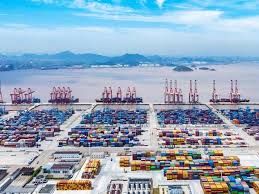
With Ningbo-Zhoushan Port as its hub, China has now established two high-efficiency intermodal corridors: Hefei-Anhui to Wilhelmshaven, Germany, and Yiwu to Dubai, demonstrating the model’s operational maturity.
The Yiwu West Railway Station – Ningbo-Zhoushan Port sea-rail intermodal route now bridges the “world’s supermarket” and the world’s busiest port. The port’s sea-rail network serves 67 cities across 16 provinces, with cargo throughput ranking first globally for 16 consecutive years.
Smarter, Greener Marine Fisheries
“These juvenile large yellow croakers are ready to be moved onto the ship for offshore farming,” said Wu Yimei, a juvenile fish breeder in Ningde, southeast China’s Fujian province, as she pointed to a tank on a transport vessel teeming with fish.
What kind of ship can be used for fish farming? Not long after departing, a massive vessel came into view on the open sea, with the name Guoxin-1 painted on its hull.
“Guoxin-1 represents the world’s first 100,000-tonne intelligent aquaculture vessel,” said Qu Shancun, general manager of the vessel. Measuring 249.9 meters long and with a displacement of 130,000 tonnes, it pioneers a roaming, vessel-based aquaculture model and boasts an annual production capacity of 3,200 tonnes.
Below deck, Guoxin-1 houses 15 aquaculture tanks containing 90,000 cubic meters of water, equivalent to 36 standard swimming pools. The tanks feature 24-hour water circulation and oxygenation systems that simulate deep-sea, wild-like conditions ideal for fish growth.
Equipped with more than 2,000 sensors, the ship enables real-time monitoring of environmental indicators and fish development from its central control room. Once the fish are ready, they can be processed and packaged directly onboard. To date, Guoxin-1 has traveled over 18,000 nautical miles and transferred more than 12 million self-bred juvenile large yellow croakers.
A Thriving Marine Tourism Sector
With a sea area of 6,064 square kilometers, 408 kilometers of coastline, around 70 kilometers of sandy beaches, and 126 islands, Pingtan in Fujian province boasts abundant marine tourism resources.
To enhance the visitor experience of island hopping and ocean activities, Pingtan launched the Pier. 22 International Yacht Marina in June last year. The facility features 49 berths and offers a variety of water-based experiences, including sailing, yachting, artificial wave surfing, jet skiing, and water go-karting.
Now, wave-chasing and sunset-viewing at sea have become a must-do activity for many tourists. Lin Xiaoyan, a visitor from Fuzhou, capital of Fujian province, booked a sunset cruise with her friends. They enjoyed the sea breeze and the sunset glow while watching performances and taking photos in themed outfits on the ship. “Sipping a drink by the window and taking in the view was pure bliss,” she explained.
“Our single-vessel daily passenger record reached 1,500 last year,” said Wang Feng, Chairman of Pingtan Maritime Sightseeing Cruise Co., Ltd. “This summer, we plan to add two daily sailings and introducing themed offerings such as maritime study tours, corporate retreats, and oceanic weddings packages.”
From January to May this year, Pingtan received nearly 4.39 million domestic tourists, a year-on-year increase of 15%, generating 4.29 billion yuan in tourism revenue, up 18.5% compared to the same period last year.
Legacy of Tea-Horse Road lives on at China-Laos border

By Liu Lingling, Hou Lulu, Qu Pei, People’s Daily
If you board a train from Mohan, Mengla county in southwest China’s Yunnan province, 10 minutes later you’ll be in Boten, the first stop in Laos on the China-Laos Railway.
This is a key node on the ancient Tea-Horse Road, a trade route dating back to the Tang Dynasty (618-907). During the Ming and Qing dynasties (1368-1911), Chinese mule caravans set out from Kunming, capital of Yunnan province, carrying Pu’er tea and ironware through the province’s Pu’er and Xishuangbanna, and passed through Mohan before reaching Southeast Asia. In return, Lao traders brought rock salt and agricultural specialties into China via Boten.
Today, vendors’ hawking at border markets and the multilingual announcements on the China-Laos Railway keep alive the pulse of cultural exchanges along this historic trade route, continuing the ever-evolving story of openness and connectivity.
Mengla is the southernmost county in Xishuangbanna, Yunnan province, sharing mountains and rivers with Laos and Myanmar. At daybreak, Yan Shu, head of Mengla’s Manlie village, was already up and headed out the door, as the village was hosting a lively market gathering. Twice a month, Chinese and Lao residents gather in Manlie village for this festive event to visit friends and relatives, enjoy local food, and trade goods in a warm and joyous atmosphere.
Manlie village lies about five kilometers from Mengman Port on the China-Laos border, faces Muang Sing in Luang Namtha province, Laos. At the bustling market, aromas of grilled Dai cuisine mingled with the rich fragrance of Lao coffee, while handmade Lao crafts such as bamboo weaving and natural soaps filled the stalls. Yan weaved through the crowd, exchanging greetings with vendors along the way, staying busy until noon before sitting down to share a meal with his friends.
“China’s roads just keep getting better!” one of Yan’s Lao friends said, savoring a bite of pickled fish. Yan seized the moment to extend an invitation: “Next time, bring your wife and kids along – it’s even better with family!”
Border trade between China and Laos has a long history. In 1993, the two governments officially opened the Mohan-Boten national port, further relaxing policies for cross-border commerce.
In June last year, Mengla and Muang Sing launched a “sister households” program, encouraging families from both sides of the border to support one another in times of hardship and come together for weddings and other celebrations, cultivating bonds like cross-border kinship.
For Yan, it’s a relationship that has grown from business to brotherhood: “At first we were just trading partners, then drinking buddies – now we’re neighbors watching each other’s backs.” These everyday interactions, he added, have slowly woven a durable fabric of friendship.
Tickets for the D87 international passenger train on the China-Laos Railway, running between Kunming and Vientiane, are in high demand. For 19-year-old Anong, a student from Laos, the railway is tied to her dream. Her sister began working for the railway over a year ago, and now Anong hopes to follow the same path. That’s why she chose to study at Mengla Vocational High School.
Over the past two decades, the school has enrolled nearly 3,000 Lao students. They typically spend the first two years learning Chinese before either applying to Chinese universities or pursuing careers as translators.
Many of Anong’s classmates travel to school via the China-Laos Railway. To them, the railway is a “modern-day Tea-Horse Road” – still winding through mountains, still bearing goods and friendship. But unlike the past, when caravans traveled for three months, today’s train journeys take just a few hours. The rhythmic clatter of horse hooves has given way to the roar of trains; loads once carried on horseback now move in containers.
Chanxay Xekang, another 19-year-old student from Laos, also studies at Mengla Vocational High School. He hopes to pursue a medical degree at a Chinese university after graduation. “China’s medical technology is highly advanced,” he said. “My goal is to return to Laos and open my own clinic.”
Chanxay comes from northern Laos’ Phongsaly province, where tea cultivation is a part of everyday life – with nearly every village growing it, and nearly every household consuming it. His grandfather often recalls the slow, grueling pace of mule caravans once used to carry tea out of the region. Today, a single rail line and a fiber-optic cable are enough to connect Phongsaly’s tea with markets thousands of miles away.
From the jingle of mule bells to high-speed trains, and from ancient post stations to modern border ports, the mechanisms of connection have changed. Yet the bond forged by shared landscapes and sustained through vibrant cross-border exchanges remains unbroken.
Yan has already arranged the next gathering with Laotian friends via phone. Anong celebrates the water-splashing festival with classmates and teachers, and Chanxay returns home bearing freshly harvested spring tea. Across the borderlands, hope and friendship continue to flourish, stretching farther and wider than ever before.
China to write stories of shared success through deep engagement with global economy
By He Yin, People’s Daily
The 16th Annual Meeting of the New Champions, also known as the Summer Davos, was recently held in Tianjin, north China, drawing global attention to China’s role in revitalizing the global economy.
At the forum, participants expressed strong confidence in China’s economic outlook and its continued commitment to openness and cooperation. As one attendee put it, “China’s innovation and opening-up help strengthen the resilience of free trade and the multilateral system.” Another noted, “China continues to inject strong momentum into global development and remains a land of promise for international investment and cooperation.”
At a time when protectionism, unilateralism, and anti-globalization sentiments are on the rise, the world economy and international trade cooperation are facing new challenges. Global development now finds itself at a critical crossroads.
Many stakeholders are striving to counter mounting uncertainties and instabilities, and there is a strong desire across the international community for solidarity and cooperation to overcome challenges and promote common prosperity.
This year’s Summer Davos forum attracted a record number of participants in recent years, bringing together political leaders alongside more than 1,700 representatives from over 90 countries and regions. This robust turnout demonstrates a global consensus on safeguarding economic globalization and the free trade system, and sends a strong message of win-win cooperation.
Business leaders at the forum noted that foreign enterprises operating in China have long witnessed the country’s sustained economic growth. Amid growing global uncertainty, China’s policy stability and long-term planning are particularly valuable.
In recent months, as growth-stabilizing policies have been rolled out, the resilience of China’s economy has come to the fore. Leading foreign institutions such as Morgan Stanley, Deutsche Bank, and Goldman Sachs have all raised their forecasts for China’s economic growth.
Time and again, facts have shown that with clear development goals, consistent planning, firm reform measures, and pragmatic macro policies, China has the confidence and capability to sustain sound economic growth despite external shocks.
As World Economic Forum President Borge Brende noted, China’s recent series of policy measures are ensuring the solid advancement of structural reforms. These efforts not only support the realization of this year’s growth target of around 5%, but also lay a solid foundation for the next decade.
Through continuous opening-up, China is fostering shared prosperity by further integrating into the global economy. As the world’s second-largest consumer and import market, China boasts nearly 50 trillion yuan ($7 trillion) in consumption, over 50 trillion yuan in investment, and 20 trillion yuan in imports, showing immense potential for growth on multiple fronts.
China is proactively opening its market to the world, advancing a strategy to expand domestic demand, and launching special initiatives to boost consumption. These efforts aim to transform China from a manufacturing powerhouse into a vast consumption-driven economy, offering even broader market opportunities for global businesses. .
Mirek Dusek, managing director of the World Economic Forum, remarked that China’s economic scale and vast consumer market play a crucial role in driving the development of new quality productive forces and in shaping the broader ecosystem across Asia.
Thanks to China’s sustained opening-up, more and more countries are engaging in cooperation with China across fields such as trade and technology, sharing in the dividends of development, creating new growth momentum for the global economy, and contributing to greater certainty worldwide.
One of the highlights of this year’s forum was China’s scientific and technological innovation. . The country has successfully pursued a path where sci-tech innovation drives industrial upgrading and, in turn, industrial transformation fuels sci-tech breakthroughs, drawing global attention. China actively shares original technologies and innovative application scenarios with the world, supports international joint research and development and technology promotion, and fosters global innovation through open collaboration.
Many participants expressed a strong desire to deepen cooperation with China in areas such as emerging technologies and industrial transformation, seeking new opportunities for development.
Lee Hee-sup, secretary-general of the Trilateral Cooperation Secretariat, observed that China’s focus on digital technology, artificial intelligence, and green industries is advancing new quality productive forces. This positions China at the forefront of building future growth engines, thereby supporting global economic recovery.
Partnering with China will bring more opportunities. China firmly embraces a universally beneficial and inclusive economic globalization, and upholds free trade and multilateralism. It stands ready to work with all parties to safeguard common interests through mutually beneficial cooperation, contribute to each other’s development by generating more growth, and contribute its own development capacity to what the world economy needs most.
Border city in NE China builds close China-Russia friendship

By Wang Yuan, Zhou Zhou, People’s Daily
Located in northeast China’s Heilongjiang province, Suifenhe was established in 1903 following the construction of the Chinese Eastern Railway. Dubbed “a train-forged city,” this border town has grown in tandem with the railway and flourished through its port.
Today, walking through this border city, one encounters a vibrant tapestry of Chinese-Russian culture, storefronts adorned with bilingual signs, candy-colored Russian architecture, clusters of foreign visitors, and local vendors fluent in both Chinese and Russian – painting a vivid picture of close cultural and people-to-people exchanges.
The Chinese Eastern Railway, a branch line of the Trans-Siberian Railway, stretches from Manzhouli in the west to Suifenhe in the east. The railway has breathed new life into the city, promoting cultural and commercial exchanges and making Suifenhe one of the first cities in China’s northeastern border region to gain access to trains, motor vehicles, electricity, and telephone services.
In 1987, Suifenhe and Russia’s Pogranichny launched cross-border trade with a symbolic exchange: 1,000 thermos flasks and 100,000 kilograms of apples for 30,000 kilograms of halibut and 50,000 kilograms of pollock.
During the 1990s, barter trade flourished among ordinary citizens . Streets buzzed with activity as locals set up stalls, exchanging daily necessities such as snacks and toys for Russian leather goods – a scene that remains etched in the collective memory of Suifenhe’s residents.
As one of China’s pioneering border cities to expand opening-up, Suifenhe boasts both highway and railway ports at the Chinese national level, serving as a vital node in the China-Mongolia-Russia Economic Corridor and an important gateway for the eastern route of the China-Europe freight train service. The city’s railway port now handles over 10 million tons of goods annually, with nearly 900 train trips each year. China-Europe freight trains departing here reach five European countries, while inbound trains serve 25 Chinese cities, cementing this border town’s status as a genuine “international commercial hub.”
Throughout Suifenhe’s urban areas and countryside stand numerous Russian-style buildings. These structures preserve the architectural style of the early 20th century along the railway, serving as a “three-dimensional” testament to Suifenhe’s urban development and the mutual exchange of Eastern and Western civilizations.
Russian social media influencer Artem always commutes between Russia and Suifenhe by train. He loves promoting Suifenhe’s cultural and tourism highlights to Russian audiences on social media, with 220,000 followers.
“Compared to my first trip here with my family 20 years ago, transportation is much more convenient now – they even opened an airport last year,” he noted. “Many Russian tourists take trains here to explore the food and culture of China’s northeast region, and they always go home happy. The city’s blend of Russian and Chinese charm makes everyone feel right at home.”
In November 2023, Wang Xuehan, a student at Suifenhe No. 1 High School, traveled to Pogranichny to stay with the family of Russian student Lisa. She participated in the “China-Russia student homestay exchange program” launched by the local government in 2006. During her stay, she was welcomed by local fresh fruits, seafood, and handmade gifts like bracelets and dolls crafted by Liza and her sister Alina. “I made Russian blini with my Russian classmates in cooking class. We were covered in flour but laughed non-stop,” Wang recalled.
The following spring, Lisa and Alina visited Wang’s family as promised, their suitcases filled with Russian specialties and heartfelt care. “They brought my favorite Russian candies and fresh shrimp,” Wang recounted.
The trip left vivid memories for the sisters. They participated in a school sports meet, played traditional Chinese games, and experienced paper-cutting. “Every day in Suifenhe felt as warm as home,” Lisa later wrote in Russian. Today, the students continue to stay in touch across borders.
Over the years, more than 400 students have participated in the homestay exchange program. Annual events like the China-Russia international youth art festival and youth sports exchanges provide fertile ground for lasting friendships.
A monument in the central square of Suifenhe recounts another story of the China-Russia friendship. Galia, a Chinese-Russian woman, bravely ventured to a fortress on the Tianchang Mountain to negotiate with Japanese invaders to protect innocent civilian hostages in 1945, on the eve of victory in the Chinese People’s War of Resistance Against Japanese Aggression. Though she never returned – losing her life at the age of 17 – her legacy lives on.
At the nearby Peace Angel Galia memorial hall, artifacts, photos, and videos recount her bravery. “Galia is remembered as a symbol of Russia-China friendship. Her story reminds us of the deep bonds between our peoples – bonds that should be preserved and passed on,” said a visiting Russian tourist.