Chinese, Russian heads of statecontinue guiding bilateral relations toward new height

Chinese President Xi Jinping had a video meeting with Russian President Vladimir Putin on January 21, 2025, ahead of the Chinese Lunar New Year.

During the virtual meeting, the two heads of state reviewed the significant progress made in China-Russia relations in 2024, and looked ahead to key moments in the development of bilateral ties in 2025.

They engaged in in-depth discussions on international andregional issues of common concern, and agreed to maintain strategic communication in the new year.

Continuing guiding China-Russia relations toward a new height, the two leaders sent a positive signal of the two countries’ determination to cope with uncertainties of the external environmentwiththe stability and resilience of their bilateral ties during the video meeting.

This stable, resilient China-Russia relationship is expected to help promote the development and revitalization of the two countries, and uphold international fairness and justice.

The leadership of the heads of state of both countries represents the greatest political advantage and fundamental guarantee for the robust development of China-Russia relations.

In 2024, the two heads of state of China and Russia met three times, which led to a range of important common understandings.

Both countries held grand celebrations for the 75th anniversary of the China-Russia diplomatic relations.Featuring permanent good-neighborly friendship, comprehensive strategic coordination and mutually beneficial cooperation, the relations havebecome increasingly dynamic.

Over the past year, the two heads of state held candid, in-depth exchanges of views on bilateral relations, international and regional situations, and global governance, among other major issues of common concern,and achieved a series of important consensuses, jointlyguiding the development of bilateral relations and the reform of the global governance system.

Pragmatic cooperation is the most important endogenous driving force for the continuous development of China-Russia relations.

The two countries have made steady progress while maintaining stability in their pragmatic cooperation, with bilateral trade continuing to grow.

In recent years, China and Russia have strengthened alignment of their development strategies, and achieved rich fruits in bilateral cooperation under the Belt and Road Initiative (BRI).

A good number of large-scale projects have driven economic and trade cooperation between the two countries, benefiting their peoples with tangible results.

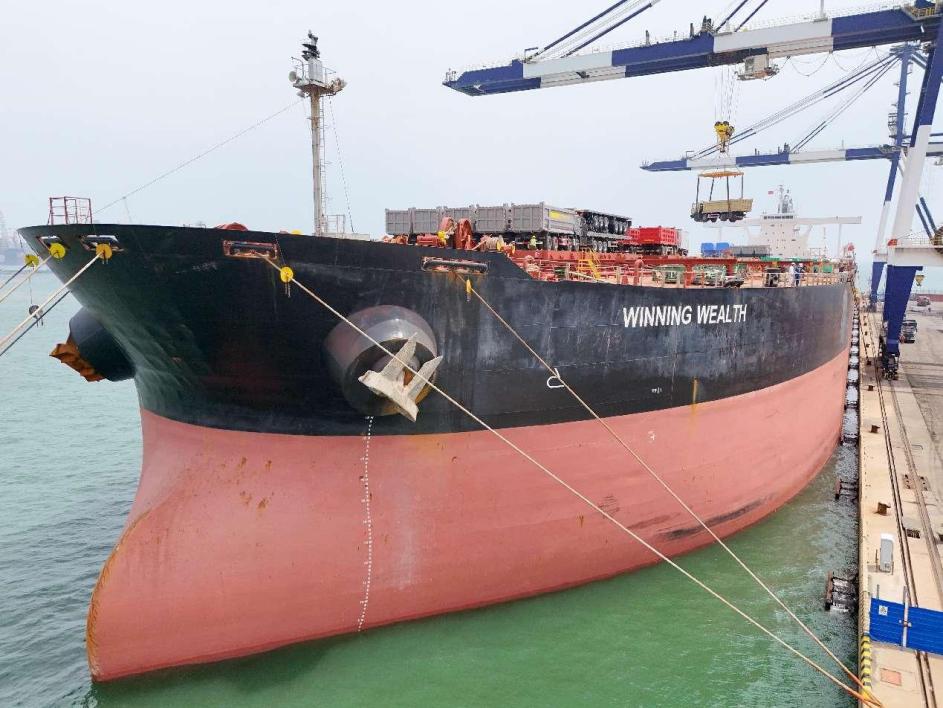
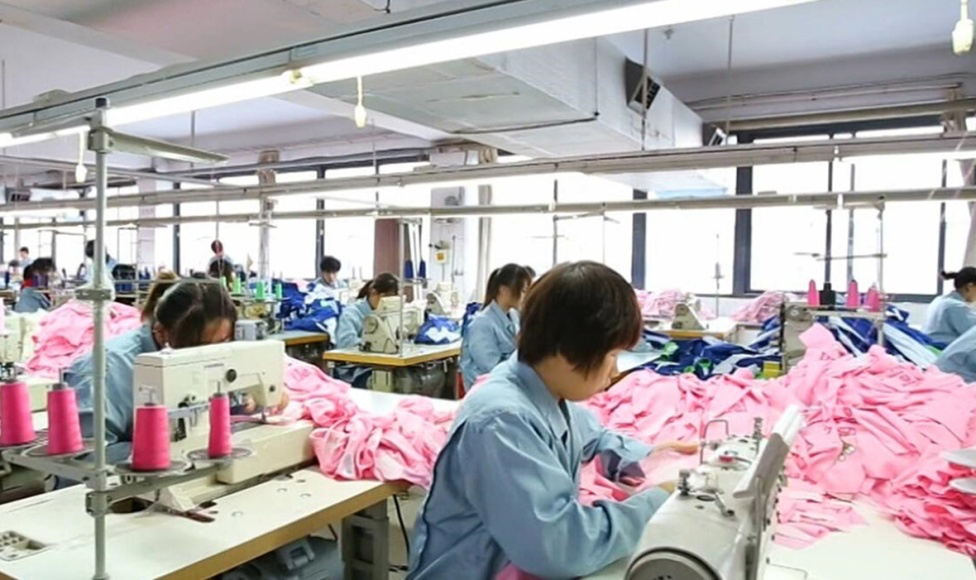
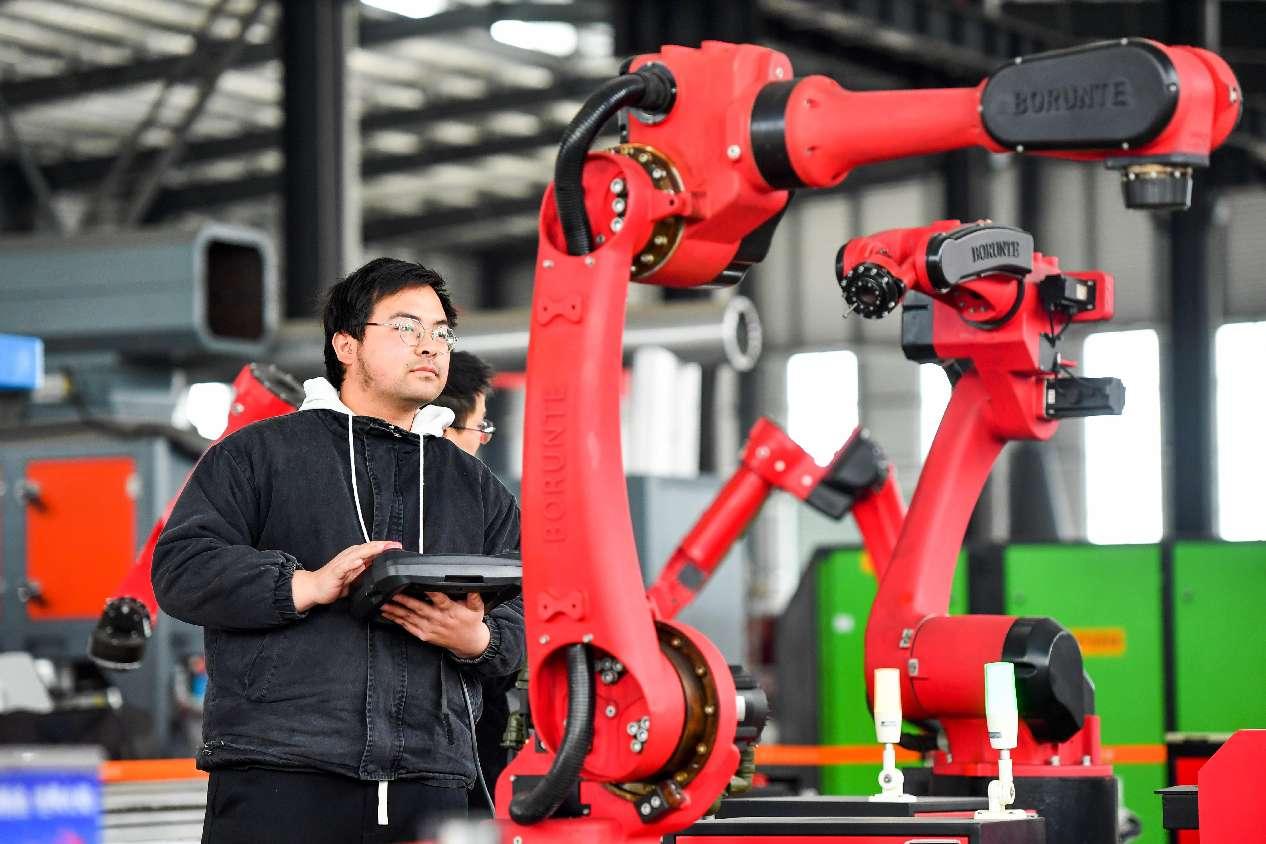
Automobiles and smartphones produced by Chinese brands are increasingly popular among Russian consumers, while high-quality Russian agricultural products and foods are finding their way into millions of Chinese households.

China is ready to work with Russia to accelerate the implementation of important consensuses reached by the two heads of state, further strengthen mutually beneficial cooperation in various fields, and ensure that the outcomes of their cooperation better benefit both countries and their peoples.

Through a long and challenging journey, China and Russia have foundtheright way for neighboring major countries to get along with each other, which features non-alliance, non-confrontation and not targeting any third party.

In the face of rapidly evolving global changes unseen in a century and an increasingly volatile international landscape, both countries have remained at the forefront of the times.

Staying true to their original aspirations of establishing diplomatic ties, the two countries have strengthened strategic coordination, advanced pragmatic cooperation, and jointly pioneered a new path of mutual respect, peaceful coexistence, and win-win cooperation, setting an example for a new type of international relations and relations between neighboring major countries.

The two countries’ unswerving commitment to everlasting friendship, fulfillment of their responsibilities as major countries, and mutually beneficial cooperation has not only benefited the development of their bilateral relations and the well-being of their peoples, but also contributed to global peace and stability.

This year marks the 80th anniversary of the victories of the Chinese People’s War of Resistance against Japanese Aggression, the Soviet Union’s Great Patriotic War and the World Anti-Fascist War, as well as the 80th anniversary of the founding of the United Nations (UN).

China and Russia will take this as an opportunity to jointly defend the UN-centered international system and the outcomes of victory in World War II, promote all countries’ adherence to the purposes and principles of the UN Charter, uphold the universally recognized basic norms governing international relations, and practice true multilateralism.

Given that China and Russia are bothpermanent members of the UN Security Council and major countries in the world, and China serves as the rotating chair of the Shanghai Cooperation Organization (SCO), the close coordination between the two countries on multilateral platforms such as the UN, the SCO, and BRICS is bound to provide more positive energy for the reform and development of the global governance system.

As the Chinese people are about to bid farewell to the old lunar year and usher in the new, a new journey will soon begin.

Under the leadership of the heads of state of both countries, China and Russia will continue deepening strategic coordination, firming up mutual support, and safeguarding the legitimate interests of the two countries.

By continuously deepening and expanding their comprehensive strategic coordination and pragmatic cooperation in various fields, the two countries will bring more benefits to their peoples and make greater contributions to human progress.

World needs multilateralism

By He Yin, People’s Daily

The World Economic Forum Annual Meeting 2025, themed “Collaboration for the Intelligent Age,” is held from 20th to 24thJanuary in Davos, Switzerland, bringing together nearly 3,000 representatives from various regions and industries worldwide, who aim to carry forward the spirit of cooperation for sustainable and inclusive solutions.

The Global Cooperation Barometer 2025 was released prior to the meeting, which highlights the rising challenges against the stable global cooperation in the post-Cold War era. The Global Risks Report 2025 was also issued, stressing that multilateral solutions are the only way to address future global risks.

This indicates the World Economic Forum has placed multilateral cooperation in a more important position.

This year marks the 80th anniversary of the end of World War II and of the founding of the United Nations, the most universal, representative, and authoritative intergovernmental organization.

However, rising unilateralism and protectionism, along with growing divisions and fragmentation, are reshaping geopolitical and economic landscapes, putting immense pressure on multilateralism. In the face of increasing instability and uncertainty, it is crucial for all parties to uphold and practice multilateralism, so as to tackle common challenges through effective global cooperation.

The problems facing the world are intricate and complex. The way out of them is through upholding multilateralism and building a community with a shared future for mankind,” Chinese President Xi Jinping said in his special address at the World Economic Forum Virtual Event of the Davos Agenda in January 2021.

China advocates that all countries should jointly shape the future of the world, write international rules, manage global affairs and ensure that development outcomes are shared by all. It hopes that all parties can embrace the vision of a community with a shared future, safeguard and practice multilateralism, and promote world peace and development with the spirit of global solidarity.

World peace is contingent upon the preservation of multilateralism, a fundamental product of the evolution of the international system.

The harsh lessons of the two world wars have shown that zero-sum games and power politics lead to disaster, while multilateralism and the pursuit of fairness and justice pave the way for lasting peace.

The post-war international order, centered on the United Nations and rooted in multilateralism, has played a vital role in preventing the recurrence of wars and promoting the prosperity of nations.

To pursue multilateralism, countries must protect the United Nations-centered international system, the international order based on international law, and the basic norms of international relations based on the purposes and principles of the United Nations Charter.

China remains a staunch defender of the United Nations’ authority and stature, being recognized as a key pillar of multilateralism.

Global development relies on the support of multilateralism. Upholding and practicing multilateralism, and fostering win-win cooperation is the sure way to success in launching major initiatives that benefit all.

Countries taking the lead in economic development should give a hand to their partners who are yet to catch up, so as to transform global development disparities into shared prosperity.

The multilateral trading system, with the World Trade Organization at its core, has significantly advanced global trade and investment liberalization and facilitation, driving world economic growth. Protectionism and unilateralism ultimately harm everyone involved.

The international community must strengthen multilateral cooperation and openness to mitigate the risks of trade fragmentation. China’s commitment to expanding high-level opening up, building an open world economy, defending the multilateral trading system, and enhancing global trade and investment liberalization and facilitation has injected positive energy into global economic recovery.

United Nations Secretary-General Antonio Guterres recently highlighted at the Handover Ceremony of the Chairmanship of the Group of 77 and China that the successful adoption of the Pact for the Future at the United Nations Summit of the Future last year, largely due to the unwavering efforts of the Group of 77 and China, demonstrates that nations can unite to reshape a multilateral system that serves all.

China stands ready to work with all parties to revisit the original aspirations of the United Nations’ founding, firmly uphold the United Nations’ authority and stature, advocate for an equal and orderly multipolar world and a universally beneficial and inclusive economic globalization, and solidify the foundations of world peace and development through multilateralism, so as to steer human progress toward a brighter future.

World Needs Multilateralism

By He Yin, People’s Daily

The World Economic Forum Annual Meeting 2025, themed “Collaboration for the Intelligent Age,” is held from 20th to 24th January in Davos, Switzerland, bringing together nearly 3,000 representatives from various regions and industries worldwide, who aim to carry forward the spirit of cooperation for sustainable and inclusive solutions. 

The Global Cooperation Barometer 2025 was released prior to the meeting, which highlights the rising challenges against the stable global cooperation in the post-Cold War era. The Global Risks Report 2025 was also issued, stressing that multilateral solutions are the only way to address future global risks.

This indicates the World Economic Forum has placed multilateral cooperation in a more important position.

This year marks the 80th anniversary of the end of World War II and of the founding of the United Nations, the most universal, representative, and authoritative intergovernmental organization. 

However, rising unilateralism and protectionism, along with growing divisions and fragmentation, are reshaping geopolitical and economic landscapes, putting immense pressure on multilateralism. In the face of increasing instability and uncertainty, it is crucial for all parties to uphold and practice multilateralism, so as to tackle common challenges through effective global cooperation.

“The problems facing the world are intricate and complex. The way out of them is through upholding multilateralism and building a community with a shared future for mankind,” Chinese President Xi Jinping said in his special address at the World Economic Forum Virtual Event of the Davos Agenda in January 2021. 

China advocates that all countries should jointly shape the future of the world, write international rules, manage global affairs and ensure that development outcomes are shared by all. It hopes that all parties can embrace the vision of a community with a shared future, safeguard and practice multilateralism, and promote world peace and development with the spirit of global solidarity.

World peace is contingent upon the preservation of multilateralism, a fundamental product of the evolution of the international system.

The harsh lessons of the two world wars have shown that zero-sum games and power politics lead to disaster, while multilateralism and the pursuit of fairness and justice pave the way for lasting peace. 

The post-war international order, centered on the United Nations and rooted in multilateralism, has played a vital role in preventing the recurrence of wars and promoting the prosperity of nations. 

To pursue multilateralism, countries must protect the United Nations-centered international system, the international order based on international law, and the basic norms of international relations based on the purposes and principles of the United Nations Charter. 

China remains a staunch defender of the United Nations’ authority and stature, being recognized as a key pillar of multilateralism.

Global development relies on the support of multilateralism. Upholding and practicing multilateralism, and fostering win-win cooperation is the sure way to success in launching major initiatives that benefit all.

Countries taking the lead in economic development should give a hand to their partners who are yet to catch up, so as to transform global development disparities into shared prosperity.

The multilateral trading system, with the World Trade Organization at its core, has significantly advanced global trade and investment liberalization and facilitation, driving world economic growth. Protectionism and unilateralism ultimately harm everyone involved.

The international community must strengthen multilateral cooperation and openness to mitigate the risks of trade fragmentation. China’s commitment to expanding high-level opening up, building an open world economy, defending the multilateral trading system, and enhancing global trade and investment liberalization and facilitation has injected positive energy into global economic recovery.

United Nations Secretary-General Antonio Guterres recently highlighted at the Handover Ceremony of the Chairmanship of the Group of 77 and China that the successful adoption of the Pact for the Future at the United Nations Summit of the Future last year, largely due to the unwavering efforts of the Group of 77 and China, demonstrates that nations can unite to reshape a multilateral system that serves all. 

China stands ready to work with all parties to revisit the original aspirations of the United Nations’ founding, firmly uphold the United Nations’ authority and stature, advocate for an equal and orderly multipolar world and a universally beneficial and inclusive economic globalization, and solidify the foundations of world peace and development through multilateralism, so as to steer human progress toward a brighter future.

Chinese, Russian Heads of State Continue Guiding Bilateral Relations Toward New Height

By He Yin, People’s Daily

Chinese President Xi Jinping had a video meeting with Russian President Vladimir Putin on January 21, 2025, ahead of the Chinese Lunar New Year. 

During the virtual meeting, the two heads of state reviewed the significant progress made in China-Russia relations in 2024, and looked ahead to key moments in the development of bilateral ties in 2025. 

They engaged in in-depth discussions on international and regional issues of common concern, and agreed to maintain strategic communication in the new year. 

Continuing guiding China-Russia relations toward a new height, the two leaders sent a positive signal of the two countries’ determination to cope with uncertainties of the external environment with the stability and resilience of their bilateral ties during the video meeting. 

This stable, resilient China-Russia relationship is expected to help promote the development and revitalization of the two countries, and uphold international fairness and justice.

The leadership of the heads of state of both countries represents the greatest political advantage and fundamental guarantee for the robust development of China-Russia relations. 

In 2024, the two heads of state of China and Russia met three times, which led to a range of important common understandings. 

Both countries held grand celebrations for the 75th anniversary of the China-Russia diplomatic relations. Featuring permanent good-neighborly friendship, comprehensive strategic coordination and mutually beneficial cooperation, the relations have become increasingly dynamic. 

Over the past year, the two heads of state held candid, in-depth exchanges of views on bilateral relations, international and regional situations, and global governance, among other major issues of common concern, and achieved a series of important consensuses, jointly guiding the development of bilateral relations and the reform of the global governance system.

Pragmatic cooperation is the most important endogenous driving force for the continuous development of China-Russia relations. 

The two countries have made steady progress while maintaining stability in their pragmatic cooperation, with bilateral trade continuing to grow. 

In recent years, China and Russia have strengthened alignment of their development strategies, and achieved rich fruits in bilateral cooperation under the Belt and Road Initiative (BRI). 

A good number of large-scale projects have driven economic and trade cooperation between the two countries, benefiting their peoples with tangible results. 

Automobiles and smartphones produced by Chinese brands are increasingly popular among Russian consumers, while high-quality Russian agricultural products and foods are finding their way into millions of Chinese households. 

China is ready to work with Russia to accelerate the implementation of important consensuses reached by the two heads of state, further strengthen mutually beneficial cooperation in various fields, and ensure that the outcomes of their cooperation better benefit both countries and their peoples.

Through a long and challenging journey, China and Russia have found the right way for neighboring major countries to get along with each other, which features non-alliance, non-confrontation and not targeting any third party. 

In the face of rapidly evolving global changes unseen in a century and an increasingly volatile international landscape, both countries have remained at the forefront of the times. 

Staying true to their original aspirations of establishing diplomatic ties, the two countries have strengthened strategic coordination, advanced pragmatic cooperation, and jointly pioneered a new path of mutual respect, peaceful coexistence, and win-win cooperation, setting an example for a new type of international relations and relations between neighboring major countries. 

The two countries’ unswerving commitment to everlasting friendship, fulfillment of their responsibilities as major countries, and mutually beneficial cooperation has not only benefited the development of their bilateral relations and the well-being of their peoples, but also contributed to global peace and stability.

This year marks the 80th anniversary of the victories of the Chinese People’s War of Resistance against Japanese Aggression, the Soviet Union’s Great Patriotic War and the World Anti-Fascist War, as well as the 80th anniversary of the founding of the United Nations (UN). 

China and Russia will take this as an opportunity to jointly defend the UN-centered international system and the outcomes of victory in World War II, promote all countries’ adherence to the purposes and principles of the UN Charter, uphold the universally recognized basic norms governing international relations, and practice true multilateralism. 

Given that China and Russia are both permanent members of the UN Security Council and major countries in the world, and China serves as the rotating chair of the Shanghai Cooperation Organization (SCO), the close coordination between the two countries on multilateral platforms such as the UN, the SCO, and BRICS is bound to provide more positive energy for the reform and development of the global governance system. 

As the Chinese people are about to bid farewell to the old lunar year and usher in the new, a new journey will soon begin.

Under the leadership of the heads of state of both countries, China and Russia will continue deepening strategic coordination, firming up mutual support, and safeguarding the legitimate interests of the two countries. 

By continuously deepening and expanding their comprehensive strategic coordination and pragmatic cooperation in various fields, the two countries will bring more benefits to their peoples and make greater contributions to human progress.

Group Dismisses Obasa, Says New Lagos Speaker ‘People’s Choice’

Prominent youth group, Youth Bureau has berated Hon. Mudashiru Obasa, over recent comment in which he claimed he is still the Speaker of the Lagos State House of Assembly despite his removal by 32 out of the 39 House members.

The group however described Obasa’s replacement, Hon. Mojisola Meranda as “the people’s choice having emerged through popular vote, while warning Obasa against acts that could cause problems in the polity.

President of Youth Bureau, Tomison A. Badewole made this known in a statement issued on Sunday, January 26, insisting that Obasa’s impeachment was democratic and devoid of illegalities.

While affirming support for the new speaker of the Lagos Assembly, Hon. Mojisola Meranda, the group stressed that the ousting of Obasa was a popular decision taken by most lawmakers and stands no possibility of being reversed.

The group warned the embattled Agege lawmaker (Obasa) to desist from acts that will foment trouble in the state or destabilize the peace enjoyed by Lagos residents. They revealed their plans to work assiduously to defend democracy and stop thug attacks on lawmakers.

“Mudashiru Obasa stands impeached, we stand with the Lagos assembly because the impeachment process was democratically done in broad daylight and no going back. So for us, Obasa is no longer the Speaker of Lagos State.

“We vehemently condemn Obasa’s recent position where he was still laying claim to the office of the speaker, that his assertion is an error, incitement and can be an “invitation to anarchy.

“So, Obasa should be warned against making comments that could incite unrest in the state; If the former Lagos Speaker does not agree with the decision of his colleagues, he can simply go to court and seek redress.”

The statement further read:
“The Constitution is crystal clear about the removal of a speaker and in Obasa’s case, it was followed.

“Speaker of a House of Assembly can only be removed by a resolution passed by at least a two-thirds majority of the House members. With 32 members of the Lagos Assembly voting in favour of Obasa’s impeachment, the constitutional requirement has been met.

“According to Section 92 of the Constitution, the Speaker or Deputy Speaker of the House of Assembly shall vacate his office if he ceases to be a member of the House of Assembly when the House first sits after any dissolution of the House, or if he is removed from office by a resolution of the House of Assembly by the votes of not less than two-thirds majority of the members of the House.

“This means that to remove a Speaker, a resolution must be passed by at least two-thirds of the House members. In this instance 32 out of the 39 removed the speaker and fulfilled the two-third majority principle, so the Agege lawmakers stand impeached.

“We call on Lagos state government and security agencies to take note of Obasa’s vituperations which can potentially throw the state into anarchy if adequate care is not taken,” the group warned.

It will be recalled that Obasa upon return to the country from the United States of America after his impeachment had dared his colleagues, insisting that he remains the speaker of the state assembly.

The embattled lawmaker made this known while addressing a mammoth crowd of his supporters at his official residence at the GRA, Ikeja on Saturday, insisting that his impeachment did not follow due process.

Likewise, the state lawmakers have asked the residents of the state to ignore the rantings of the former speaker, warning him against heating up the polity.

To Answer Three Key Questions About Economic Globalization

By Huan Yuping, People’s Daily

In the face of a sluggish world economic recovery, the rising threat of protectionism, and the widening gap between the rich and the poor, discussions around economic globalization are increasing within the international community. At the center of discussion, there are three main questions as follows.

Has economic globalization stagnated or regressed?

Economic globalization has not stagnated or regressed, but continues to develop against headwinds. 

According to the Global Trade Update published by the United Nations Conference on Trade and Development (UNCTAD), global trade is on track to hit a record $33 trillion in 2024, marking a 3.3 percent annual growth. It has demonstrated strong resilience, largely driven by digital trade and trade in services.

Despite unbridled unilateralism and protectionism, and some countries’ obsession with “decoupling” and building “small yard with high fences,” the overall global landscape shows that businesses around the world continue to thrive within the interconnected supply, industrial and value chains. The World Openness Report 2024 indicates that the rise and evolution of global value chains reflect the inherent rationale of economic globalization, which is driven by digitalization, green economy, and services sector.

Globally, political consensus and policy measures to promote open development are steadily increasing.

The high-quality implementation of the Regional Comprehensive Economic Partnership (RCEP) has delivered increasingly prominent development dividends to member countries. The Comprehensive and Progressive Agreement for Trans-Pacific Partnership (CPTPP) has not waned despite the withdrawal of a few countries; instead, it has attracted more countries to join. 

African countries are accelerating the implementation of the African Continental Free Trade Area (AfCFTA), which was enacted in several African nations, including South Africa, Ghana, and Kenya in 2024. The 31st APEC Economic Leaders’ Meeting also reached an important consensus on upholding the multilateral trading system and advancing regional economic integration.

How to view the headwinds and undertows facing economic globalization?

Despite headwinds and undertows, economic globalization has always been the general trend.

Historically, the global economy was thrown into disarray by two world wars, which severed international trade routes. The subsequent nearly half-century-long Cold War divided the world into two distinct camps, hindering economic exchanges and disrupting the flow of resources. 

However, in the long run, these disruptions did not prevent the world from returning to the path of economic globalization. This is because economic globalization is an objective requirement of growing social productive forces and a natural outcome of advancement in science and technology – a fact that no one can change.

The current headwinds against economic globalization are largely a result of political shifts within a few countries and do not signify a change in the fundamental logic that economic globalization promotes global welfare. 

According to the World Trade Organization (WTO), between 1996 and 2021, a high trade share of GDP was strongly linked to faster economic growth in low- and middle-income economies. This fully proves that openness is the only path toward prosperity and development for every country.

Today, the world is moving faster to embrace a digital, green and smart economy, building up powerful energy for further expedition of economic globalization down the road.

WTO statistics show that the global exports of digitally delivered services reached $4.25 trillion in 2023, up nine percent year-on-year, accounting for a record 54.2 percent of world services exports. 

Besides, green and sustainable development has become a global consensus, with global annual renewable capacity additions increasing by almost 50 percent in 2023. 

Mark Leonard, director of the European Council on Foreign Relations, noted that due to accelerated reforms in energy and technology, the world is experiencing “re-globalization” rather than “de-globalization.”

How to resolve the issues and challenges brought by economic globalization?

Economic globalization is at a new crossroads. It must be guided carefully to maximize its benefits and ensure its sound and sustainable development.

The World Trade Report 2024 warns that mounting protectionism threatens to unwind 30 years of progress in closing income gaps between poor and rich countries. Both the United Nations and the International Monetary Fund have recently cautioned that rising tariffs could hamper global economic growth. All countries, especially major economies, should uphold the general trend of open development, resist protectionism, and build an open world economy.

To resolve the challenges brought by economic globalization, the key lies in promoting universally beneficial, inclusive economic globalization. It is important to address the development imbalances between and within countries resulting from the global allocation of resources, and ensure that different countries, classes, and communities can all participate in and benefit from economic and social development, so as to take economic globalization to a new phase that is more dynamic, inclusive, and sustainable. This requires wisdom and decisive action from governments of all countries.

China has blazed a development path of pursuing common development through opening up. Its active participation in economic globalization has not only driven its own development but also provided immense development opportunities to other countries. 

China’s experience demonstrates that promoting universally beneficial, inclusive economic globalization can contribute to shared development of all countries in the world. This is why China is committed to pursuing a mutually beneficial strategy of opening up, expanding voluntary and unilateral opening up in an orderly manner, steadily expanding institutional opening up, and pushing for an open world economic system.

Economic globalization is a sure way for human society to achieve development and an irreversible trend of the times. All countries must possess the wisdom to recognize this overarching trend, and the determination and confidence to work with it, so as to join hands in promoting universally beneficial, inclusive economic globalization.

Chinese Economy Demonstrates Precious Resilience

By He Yin, People’s Daily

China recently unveiled its economic performance for 2024, revealing a total economic output of 134.9 trillion yuan ($18.44 trillion), marking a 5.0 percent increase from the previous year. This not only highlights the robust resilience of the Chinese economy but also presents a promising outlook for high-quality development to the world.

In the midst of a sluggish global economic recovery, the resilience of major economies holds significant value. 

Confronted with a complex and challenging landscape characterized by mounting external pressures and internal obstacles, China achieved a milestone in 2024 as its total economic output exceeded 13 trillion yuan for the first time. 

With a growth rate that places it at the forefront among major world economies, China continues to serve as a pivotal driving force for global economic expansion.

Pierre-Olivier Gourinchas, chief economist of the International Monetary Fund (IMF), characterized this development as an “positive surprise.” Subsequently, the IMF revised its growth projections for the Chinese economy in 2025 upwards in its most recent World Economic Outlook report.

Every day in China, the economy buzzes with activity: 80,000 vehicles are freshly minted, 3.4 million smartphones are crafted, and over 470 million parcels embark on their journeys. These staggering numbers vividly illustrate the sheer dynamism of China’s economy.

With a robust economic foundation, a colossal market, and a comprehensive industrial ecosystem, China stands resilient in the face of risks and challenges.

Despite deepening adverse impacts from external changes, as well as the difficulties and challenges confronting China’s economy, the country’s economic strength, technological prowess, and overall national strength have reached new heights, with a more solid foundation, better conditions, stronger driving force, and enhanced resilience against risks. 

China is capable of translating various favorable factors into tangible development achievements, propelling the economy to continue its positive trajectory. 

Sir Sherard Cowper-Coles, chair of the China-Britain Business Council, remarked that the overall trend of China’s economic growth is highly positive, and China will continue to develop and play a significant role in shaping the world’s future.

A foreign journalist who recently visited rural areas in China highlighted the country’s innovative use of high technology to enhance food production. This included practices like vertical vegetable farming and the use of drones for monitoring and managing agricultural activities. These advanced techniques showcase how new quality productive forces are driving China’s development towards higher quality and efficiency.

In the past year, China’s economic structure has undergone further optimization, as evidenced by the value added of high-tech manufacturing enterprises above the designated size increasing by 8.9 percent. This growth rate surpassed that of the overall industry and equipment manufacturing sectors, highlighting the significant progress in China’s high-tech manufacturing sector.

The value added of the information transmission, software, and information technology services industries all experienced double-digit growth. Additionally, there was a notable increase in the production of new energy vehicles, integrated circuits, industrial robots, and other products. These developments underscore China’s focus on industrial upgrading and evolution.

China is steadfastly advancing high-level opening up, demonstrating a strong sense of responsibility amidst the intensification of trade protectionism and the trend of global economic fragmentation. 

In 2024, China’s total import and export volume reached 43.8 trillion yuan, marking a five percent increase and hitting a historic high. The country is steadily expanding institutional opening up, deepening institutional reforms for promoting foreign investment, introducing more policies for voluntary and unilateral opening up, expanding the globally oriented network of high-standard free trade areas, and comprehensively relaxing and optimizing visa-free transit policies. 

China’s endeavor to promote high-quality development through high-level opening up is another important reason for the strong resilience of the Chinese economy. 

According to statistics, in 2024, China’s investment structure continued to improve, with 52,000 foreign-funded enterprises established in the first 11 months, with total investment of 749.7 billion yuan. 

Marcos Pires, director of the Institute of Economics and International Studies at Sao Paulo State University in Brazil, believes that China’s ongoing commitment to reform and opening up has not only driven its own development but also facilitated its integration into the global economy, consistently contributing to the progress and prosperity of the world.

The dominating trend of a sound Chinese economy for the long term and the elements supporting it have not changed, and the momentum for high-quality development remains unchanged. Despite the challenges on the path ahead, China is confident in its ability to continue driving high-quality economic growth, bringing new surprises and opportunities to the world. 

‘China Travel’ Continues to Heat Up as Impact of Visa-free Policies Grows

By People’s Daily reporters

With China relaxing and optimizing its visa-free policies and introducing measures to facilitate foreign travelers, “China travel” has become a top choice for many international tourists. 

According to the latest data from the National Immigration Administration of China, in 2024, immigration authorities nationwide handled 610 million border crossings, a year-on-year increase of 43.9 percent. 

Among them, 291 million border crossings are made by Chinese mainland residents, 254 million by Hong Kong, Macao, and Taiwan residents, as well as 64.88 million by foreign nationals. These three figures went up by 41.3 percent, 38.8 percent and 82.9 percent, respectively, compared to 2023. Nearly 20.12 million foreign nationals entered China visa-free last year, an increase of 112.3 percent.

This ease of travel has opened new windows and channels for the world to understand China, showcasing a true, diverse, and vibrant image of the country.

Recently, “Travel to China after work on Friday” became a trending topic on South Korean social media. Data from South Korea’s Ministry of Land, Infrastructure and Transport showed a significant increase in South Korean tourists traveling to China since China implemented a visa-free policy for South Korea on Nov. 8, 2024. In that month, 993,400 South Korean tourists visited China, up 47 percent from the same period last year.

Since the end of 2023, China’s visa-free “circle of friends” has been steadily expanding. To date, China has implemented a complete mutual visa exemption with 26 countries. It has issued a unilateral visa-free policy for 38 countries, a visa-free transit policy for 54 countries, and reached mutual visa-free agreements with 157 countries and regions. 

On Dec. 17 last year, China comprehensively relaxed its visa-free transit policy, extending the permitted stay for eligible foreign travelers from the previous 72 and 144 hours to 240 hours and increasing the number of visa-free transit ports from 21 to 60. Foreign nationals entering China through the visa-free transit policy can make cross-province travels within allowed areas in 24 provinces, autonomous regions and municipalities.

Visa-free policies are increasingly taking effect, further boosting the popularity of “China travel.” Within half an hour of China’s visa-free policy announcement for Poland in June 2024, searches for related keywords by Polish users on Trip.com increased by 40 percent from a day ago. 

A resident in Warsaw named Milena, who loves Chinese culture, immediately decided to visit China. After spending 10 days exploring places like Zhangjiajie, she was deeply impressed. “It was incredible! I hope my friends can see China’s landscapes with their own eyes.”

Belgian tourists Patrick, Luc, and Ingrid recently returned from a trip to China. “Waking up on the train’s sleeper to the stunning views of the Qinghai-Xizang Plateau was amazing,” one of them said. “The more you explore China, the more you feel its charm. One visit isn’t enough, we’re eager to come back and learn more about Chinese culture.”

Not long ago, Juergen Kremer, a German who speaks fluent Chinese, embarked on a trip to China. As the chief commercial officer of Shanghai China International Travel Service Ltd., Frankfurt Office, he went to China to develop hiking routes there for German tourists and participate in the China International Travel Mart.

“Our China routes are very popular, with many products selling out quickly upon launch,” Kremer noted. According to him, besides traditional routes, newly developed ones like those to the Yangtze River and the Three Gorges are also in high demand. The number of tourists the company received in 2024 has returned to the levels of 2019, and is expected to keep growing in 2025.

The surge in “China travel” has also driven growth in the aviation transport market. Daniel Lee, CEO of Malaysia’s travel service provider Gofay Airways, stated that with the growing enthusiasm for cross-border travel between China and Malaysia, the aviation sector has seen continuous growth. Recently, 18 new direct flight routes have been launched between the two countries, covering multiple cities, better meeting the needs of tourists.

As the adage goes, seeing is believing. Inbound tourism is a crucial way for international tourists to understand China. Zeng Bowei, director of the Tourism Economy and Policy Research Center of Beijing Union University, said the visa-free policies not only boost inbound tourism but also send a strong signal of China’s opening up. As the effects of these policies unfold, more foreign tourists are expected to visit China, he noted.

An article published on The Independent Singapore believes that China’s expansion of visa-free policies has broader implications for global tourism. By actively providing more convenient entry and exit services for international tourists, China helps reduce travel barriers, rapidly grows its tourism industry, and encourages other countries to adopt similar policies, making global travel more convenient and fostering international economic and cultural exchanges, ultimately promoting global connectivity.

Chinese, Asean Mayors Join Discussion for Stronger Vitality of Development

By Zhao Yipu, Li Chen, Pang Geping, People’s Daily

From Jan. 15 to 18, the Global Mayors Dialogue Nanning was held in Nanning, south China’s Guangxi Zhuang autonomous region.

Themed “Building a China-ASEAN Community of Friendship: Urban Openness and Cooperation,” the event brought together mayors, representatives, and experts from eight countries, including China, Cambodia, Indonesia, Laos, Malaysia, Myanmar, Thailand, and Vietnam. 

A municipal official from an ASEAN country participating in the event said that ASEAN and China are among the most dynamic regions globally, and the cities from both sides should continue fostering economic and trade cooperation and friendly exchanges to inject new vitality into the building of a closer China-ASEAN community with a shared future.

In recent years, economic and trade cooperation between China and ASEAN has significantly strengthened, leading to a steady increase in bilateral trade volume and the deepening integration of industrial, supply, and value chains.

The Global Mayors Dialogue Nanning resulted in the signing of 14 projects across various sectors including sister city partnerships, trade, logistics, education, and tourism. These projects involve countries such as Myanmar, Cambodia, the Philippines, Malaysia, Thailand, Vietnam, Laos, and Singapore, and have attracted total foreign investment exceeding 3.3 billion yuan ($450 million).

The event also saw the release of the Nanning Initiatives. Nong Shengwen, Party chief of Nanning, stated that the initiative aims to deepen practical cooperation at this new historical juncture and accelerate the building of a closer China-ASEAN community with a shared future, contributing to global peace and development.

Mayor of Yangon City Bo Htay remarked that the fruitful outcomes of the event would further stimulate economic and trade vitality between ASEAN and Chinese cities, benefiting people in both regions. 

“Yangon has sister city relationships with several Chinese cities, including Nanning, and we look forward to strengthening these ties,” Bo Htay said. According to him, Yangon aims to explore more areas of cooperation with Nanning such as education, electricity, agricultural trade, and electric vehicle production and promotion. During the event, Yangon and Nanning signed a memorandum of understanding on a friendly exchange plan for 2025-2026.

The Detian Waterfall, located in Daxin county, Chongzuo, Guangxi, flows majestically down from the cliffs, connecting with Vietnam’s Ban Gioc Waterfall. It is Asia’s largest and the world’s fourth-largest transnational waterfall. In October 2024, the China-Vietnam Detian-Ban Gioc Waterfall cross-border tourism cooperation zone officially began operations. It is the first of its kind in China.

Nguyen Van Hanh, chairman of the People’s Committee of Lang Son City, Vietnam, said Lang Son plans to develop cross-border tourism routes among Lang Son, Mong Cai, and Nanning, using tourism to boost cultural exchanges. He also proposed organizing educational exchanges among institutions in these three cities.

“Maintaining openness and interaction between ASEAN and Chinese cities is not just an opportunity but a responsibility to build a peaceful, prosperous, and sustainable future,” he said.

Located in southern Thailand, Surat Thani is renowned for its island tours, a major draw for tourists. Bundan Sathirachawal, deputy governor of Surat Thani Province, expressed the hope that more visitors from China and other ASEAN countries would come to visit the province. 

The implementation of the Thailand-China mutual visa exemption agreement has led to a significant increase in the number of Thai citizens visiting China, with a particular surge in winter sports tourism among the younger demographic. 

“There is vast potential for cooperation between Thailand and China in the tourism sector, which will inject vitality into urban prosperity,” the official said.

APC Slams Bala Mohammed: You Have Misappropriated Hundreds of Billions of Naira

The All Progressives Congress (APC), Bauchi State Chapter has slammed Bauchi State Governor, Bala Mohammed accusing him of misappropriating and mismanaging the state’s resources to the tune of hundreds of billions of Naira received from the Federal Accounts Allocation Committee (FAAC) as well as loans collected on behalf of the State.

The Bauchi State chapter of the APC, in a statement signed by Saadu Umar, its Chairman Publicity Committee, and titled: “Ambassador Tuggar spoke truth to power. The gospel truth, backed by facts and figures … He deserves commendation not condemnation,” stated that the Governor was reaping the benefits of the President Bola Ahmed Tinubu government through increased State allocations but was misappropriating the funds.

“Governor Bala and other Governors had advocated for subsidy removal even before the election of Tinubu in 2023. Indeed Bala and the PDP campaigned on it in the last general election. Even the Tax Reform Bills are now acceptable to Bala. He got what he wished for; he’s enjoying it yet, he’s cursing the goose that lays the golden egg.

“While Bala reaps the fruits of the FG’s economic policies in billions monthly, as pointed out by Tuggar, he plays the ostrich and blames the President for all his ills. Honest Governors like Uzodinma of Imo confessed that Tinubu’s bountiful economic policies are “direct blessings to the State Governments” and the policies afford Governors the chance to grow and develop their States.

“Governor Sule of Nasarawa aired the same sentiment saying if people in the States are suffering, their Governors are responsible, because the Governors are getting windfalls — fruits of Tinubu’s policies,” the statement noted.

The APC Bauchi Chapter stated that Governor Bala Mohammed had received over N150Billion from the Federation account since he resumed office and had mismanaged the money.

“Bala got ₦133.18 Billion from Federation account by the end of Q3 2024, according to the Budget Performance Report 2024.

“Last October and November, Bala got another windfall of ₦18 Billion taking his total to ₦150 Billion in 11 months. Besides, Bala borrowed another ₦100 Billion! And what did Bala do with the money? Mismanagement. Misappropriation. Here’s why.

“He paid ₦11.7 Billion to a “Financial Consultant” without appropriation, according to Bala’s Budget Report. This Consultant cornered over ₦21 Billion in the last two years. And, Bala built big beautiful white hacienda for himself. He even demolished a mosque and an Islamiyyah school in the process. Demolition of mosques and schools reminds me of Gaza and Netanyahu. Ironically, Bala, before becoming Governor, thought a Governor who builds a new house is a thief. Or is he? Listen to Bala’s viral clip, recorded during the 2019 Governorship Campaign.”

The party accused the Governor of failing to improve healthcare in Bauchi State despite the availability of funds from FAAC, stating that it was the intervention of the Minister of Health, Professor Pate, who is also an indigene of the State that has catered to the health needs of the State.

“Bala couldn’t employ healthcare professionals to carter for our healthcare needs. Only 10.9% of hospitals have medical doctors in the entire State and only 19% have a nurse, according to Wikkitimes citing figures from BudgIT 2024 report. Hundreds of infants die of malnutrition!

“It’s the intervention of Professor Pate, the Minister of Health and Social Welfare, that’s our saving grace. Prof Pate brought many healthcare projects, (with hundreds of jobs, direct and indirect), like the Federal Medical Centre Misau, upgrade of FMC Azare to Federal Teaching Hospital, Radiology Centre in ATBU Teaching Hospital, free CS for expecting mothers and reductions in the cost of dialysis to ₦12,000 from ₦50,000.”

Speaking further, the APC Bauchi State Chapter stated that it took the interventions of Federal Legislators to provide basic amenities to the State such as hospitals and educational facilities, stating that the Governor was spending state resources on elephant projects while upgrading his Government House with the sum of over N16 Billion.

“Our five Federal Legislators too are helping with construction of hospitals and educational facilities in their respective constituencies. For instance, Hon. Isma’il Dabo is building at least 2 hospitals in Toro — at Kwamɓo, Shau and other villages.

“Again, Bala upgraded his Government House with ₦16.1 Billion on a ₦6.1 Billion original budget, according to Bauchi Auditor-General’s report, reported by Sahara Reporters in November 2024. Instead of spending on healthcare, education and human capital development, as advocated by Tuggar, Bala prefers to spend Bauchi money elsewhere — boondoggles, white elephant projects, mismanagement — ₦31.7 Billion spent on corrupt and unaccounted security votes, over ₦38 Billion Government House overhead costs, according to Bala’s Budget Report. And, corruption and self-dealing involving Adda Nigeria Ltd to the tune of ₦4.6 Billion, according to reports by Premium Times and others.”