China contributes to global intellectual property rights governance

By Li Jiabao

This year marks the 30th anniversary of China’s entry into the Patent Cooperation Treaty (PCT). In 1994, patent applications via PCT from China were only 98; by 2023, the number increased to nearly 70,000, ranking first in the world for five consecutive years.

Over the past three decades, China has emerged as the world’s largest patent filer and is advancing toward becoming an intellectual property powerhouse, becoming a crucial player in the global innovation landscape.

A series of impressive data underscore China’s vibrant innovation ecosystem. According to World Intellectual Property Indicators 2024 released by the World Intellectual Property Organization (WIPO), innovators in China filed around 1.64 million patent applications worldwide in 2023, far exceeding other countries and regions.

In 2024, China moved up one spot to 11th place in the ranking of the world’s most innovative economies, remaining the only middle-income economy in the top 30, according to the Global Innovation Index (GII) 2024 released by WIPO.

In recent years, China’s green and digital economy has been gaining strong momentum, with cutting-edge technologies continuously fostering new industries, new models, and growth drivers. Sustained scientific and technological innovation continues to empower new quality productive forces.

According to China National Intellectual Property Administration (CNIPA), in 2023, the number of invention patents approved in China’s core digital economy industries reached 406,000, a year-on-year increase of 21.2 percent, accounting for 44.1 percent of the total number of granted invention patents in the country. As of the end of 2023, China had 243,000 valid green and low-carbon patents.

Ding Minglei, a researcher with the Chinese Academy of Science and Technology for Development, said that China’s intellectual property protection is becoming increasingly advanced. The country stands at the forefront of global high-tech innovation and patent applications, highlighting its strong innovative vitality and significant influence in global technological innovation, Ding added.

During the recently concluded seventh China International Import Expo (CIIE), many new technologies and products met the public for the first time, demonstrating the vibrant charm of cutting-edge technology. Among the standout exhibits are the world’s first intelligent powered shoes that allow wearers to walk at running speed, an airless tire for lunar rovers that can withstand the moon’s extremely harsh conditions, and a foldable handheld cleaning machine.

Since its inception in 2018, the CIIE has served as an “accelerator”driving the entry of new products worldwide into the Chinese market. The favorable atmosphere of intellectual property protection and the law-based business environment are key factorsthat encourage global enterprises to launch their products and invest in China.

During the seventh CIIE, the Shanghai Municipal Bureau of Justice established a foreign-related legal service center and a legal service volunteer team, providing global exhibitors with one-stop legal consulting services ranging from intellectual property administrative law enforcement, intellectual property right protection, and dispute resolution.

Ding said that in recent years, China has created a more fair and transparent business environment for foreign investors by improving laws and regulations, and strengthening law enforcement and judicial efficiency. These measures have effectively reduced costs incurred by technology transfer for foreign investors, increased their market profit expectations, and promoted the continuous inflow of high-quality foreign investment.

The number of applications, authorizations and holdings of intellectual patents of foreign companies in China has increased rapidly year by year. By June this year, the numbers of effective invention patents owned by foreign applicants and valid trademark registrations by foreign applications in China had reached 919,000 and 2.135 million respectively. This speaks to foreign investors’ full confidence in China’s intellectual property protection.

In recent years, China has actively promoted international cooperation in intellectual property rights. It has established stable cooperative relations with over 80 countries and regions, with over 200 intellectual property cooperation agreements currently being implemented.

In addition, the number of Patent Prosecution Highway (PPH) partners with China has increased to 33, covering 84 countries, providing strong support for Chinese companies’ overseas intellectual property layout.

Intellectual property cooperation within multilateral frameworks such as China-Central Asia cooperation mechanism, China-ASEAN cooperation mechanism, BRICS, China-Mongolia-Russia cooperation mechanism, China-Africa cooperation mechanism, and China-Latin America cooperation mechanism has also made significant progress.

Furthermore, China actively participates in negotiations and discussions at the WIPO Assemblies and professional committees to improve international intellectual property rules.

In May this year, China facilitated the conclusion of the WIPO Treaty on Intellectual Property, Genetic Resources and Associated Traditional Knowledge, ending 25 years of negotiations and achieving a historical breakthrough.

China follows people-centered approach, turns visions into reality

By He Yin, People’s Daily

“China’s story is proof that developing countries can eliminate poverty, and that a weaker bird can start early and fly high, when there is the endurance, perseverance, and striving spirit that enables water drops to penetrate rocks over time and turns blueprints into reality.”

The remarks were made by Chinese President Xi Jinping in a speech at Session I of the 19th G20 Summit under the title “Building a Just World of Common Development” in Rio de Janeiro, Brazil, during which he profoundly explained what China’s battle against poverty says to the world,triggering strong responses from the international community.

China’s experience in poverty alleviation has garnered worldwide attention as the country has lifted 800 million people out of poverty, and met the poverty reduction target of the UN’s 2030 Agenda for Sustainable Development ahead of schedule.

China’s experience is worth learning from because its story has proved that developing countries can eliminatepoverty as well. In today’s world, around 733 million people are facing hunger, and the population suffering from high levels of acute food insecurity has increased for five consecutive years. Many countries are eager to learn from China’s poverty alleviation experience to achieve development and revitalization.

“Bringing benefit to the people is the fundamental principle of governance.” The ancient Chinese saying that Xi quoted on many occasions exactly mirrors the unbreakable commitment of the Communist Party of China (CPC) to bring the people a happy life.

Everything China does, it always places the people front and center, and it solemnly declares that “not a single poor region or person should be left behind.” That’s why the country has been successful in the fight against poverty and has set an example for global poverty reduction.

The CPC has always put people first and is always committed to seeking happiness for people.

In Liangjiahe village, northwest China’s Shaanxi province, Xi, as Party secretary, guided by the belief of “bringing tangible benefits to the people,” led the villagers in digging wells, building terraces and sediment storage dams, and setting up the province’s first methane-generating pit.

In Zhengding county, north China’s Hebei province, he visited over 200 villages riding a bicycle, to explore the path of rural reform and poverty alleviation.

Cultural and creative product industry prospers in China

By Yin Jie

After waiting in line for over two hours, Zhang Jiajia finally bought a refrigerator magnet launched by the Beijing Ancient Architecture Museum, which featured caisson ceiling, a Chinese architectural feature typically found in the ceiling of temples and palaces, usually at the center and directly above the main throne, seat, or religious figure.

The refrigerator magnet was inspired by the caisson ceiling in Beijing’s Longfu Temple, which is now collected by the Beijing Ancient Architecture Museum. It has five layers that can be either separated or put together. The refrigerator magnet became the top trending product soon after it hit the market in May this year, and is often out of stock.

Zhang, a culture aficionado, visits museums a couple of times every month, either for exhibitions or to buy cultural and creative products.

“Refrigerator magnets are exquisite. They serve as ornaments and are rich in culture. To some extent, buying them is like taking culture home,” Zhang said.

In recent years, cultural and creative products represented by refrigerator magnets have been emerging. These products are not only rich in culture but also fashionable. The rapid growth of related industries is effectively boosting the development of local cultural and tourism sector.

Why have seemingly insignificant refrigerator magnets become highly sought-after products?

Hao Chunfeng, general manager of a Beijing-based cultural company, a member organization of the National Alliance of Cultural Creative Museum Products, said that limitations such as the number of museums, available spaces, and people’s leisure time prevent many from visiting museums frequently. Additionally, the rarity and uniqueness of cultural relics have contributed to the rise of cultural and creative products inspired by these relics.

Cultural and creative products are no longer limited to museums – in recent years, “high recognizability” has increasingly become the design standard for cultural and creative products across different regions.

Multiple distinctive products launched by north China’s Shanxi province are popular among tourists. These include a small temple-shaped refrigerator magnet inspired by the Jin Temple, translucent postcards depicting the Nine Dragon Screen in Shanxi’s Datong, ice cream in the shape of the Twin Pagodas in Taiyuan, capital of Shanxi, and mortise-and-tenon structure models.

With its rich cultural and historical resources, Shanxi has long prioritized finding effective ways to promote and showcase its heritage. Today, these cultural and creative products, designed to resonate with young audiences, are gaining market recognition and opening new doors for the province’s cultural tourism efforts.

A gift shop on the Zhonglou Street, also known as Bell Tower Street in Taiyuan sells approximately 2,000 types of Shanxi-themed cultural and creative products. Last year, it achieved sales of nearly 5.9 million yuan ($814,557), and this year, the number is expected to reach around 8 million yuan.

High-quality cultural and creative products, apart from making impressive sales, are also emerging as a key driver of local economic and social development.

In Huawu village, Xinren Miao township, Qianxi, Bijie, southwest China’s Guizhou province, tourists were browsing for their favorite cultural products in a Miao embroidery workshop. According to the workshop’s manager, the workshop blends tradition with fashion, creating items like cushions, keychains, and T-shirts that cater to consumer preferences. This approach not only enhances the economic value of Miao embroidery but also injects fresh vitality into the local cultural tourism sector.

Weifang in east China’s Shandong province, known for its rich history of kite-making, has made kites a central theme for cultural products. In venues like the Weifang World Kite Museum‘s creative workshop, kite-themed products such as wind chime kites, kite-themed table decorations, and embroidered kite sachets are drawing significant interest from tourists. Currently, Weifang is home to over 600 kite-related businesses, which generate an annual revenue of more than 2 billion yuan and export products to over 50 countries and regions worldwide.

Ningxia-grown vegetables find big market in Greater Bay Area

By Qin Ruijie, People’s Daily

In a vegetable planting base in Xianjin village, Ligang township, Helan county, Yinchuan, northwest China’s Ningxia Hui autonomous region, which mainly supplies its produce to the Guangdong-HongKong-MacaoGreaterBayArea (GBA), Chinese flowering cabbages were just harvested, and they would soon be shipped to Guangzhou, south China’s Guangdong province around 2,300 kilometers away.

“It takes only 36 hours for our Chinese flowering cabbages to reach the markets in the GBA from our fields. The demand is so high that we can hardly satisfy it,” said Chen Dingyou, head of the planting base. Chen works for an agricultural technology company in Ningxia that owns vegetable distribution centers in three cities in the GBA.

Chinese flowering cabbage is a vegetable commonly used in Cantonese cuisine. In Helan county alone, there are 15 planting bases that grow it, covering a total area of 24,500 mu, or about 1,633 hectares.

The Chinese flowering cabbages harvested in Ningxia are shipped to the GBA through cold-chain logistics, and they enjoy high reputation in the region.

The unique climate is what makes Ningxia a perfect place for growing Chinese flowering cabbage. Take Helan county as an example. The county, with an average altitude of over 1,000 meters, has dry summers and enjoys rich sunshine. Besides, with the Yellow River as the source of irrigation, nutrient accumulation becomes easy for the vegetable.

Though Ningxia boasts sound natural conditions, science-based planting is still necessary. Standard planting techniques of GBA enterprises are now adopted in Ningxia.

Chen picked up his phone and showed how the vegetable is planted. In the vegetable field, neatly arranged ridges spaced 20 centimeters apart stretched across the land. The Chinese flowering cabbages glistened with water droplets as workers skillfully and swiftly cut the tender greens with precision.

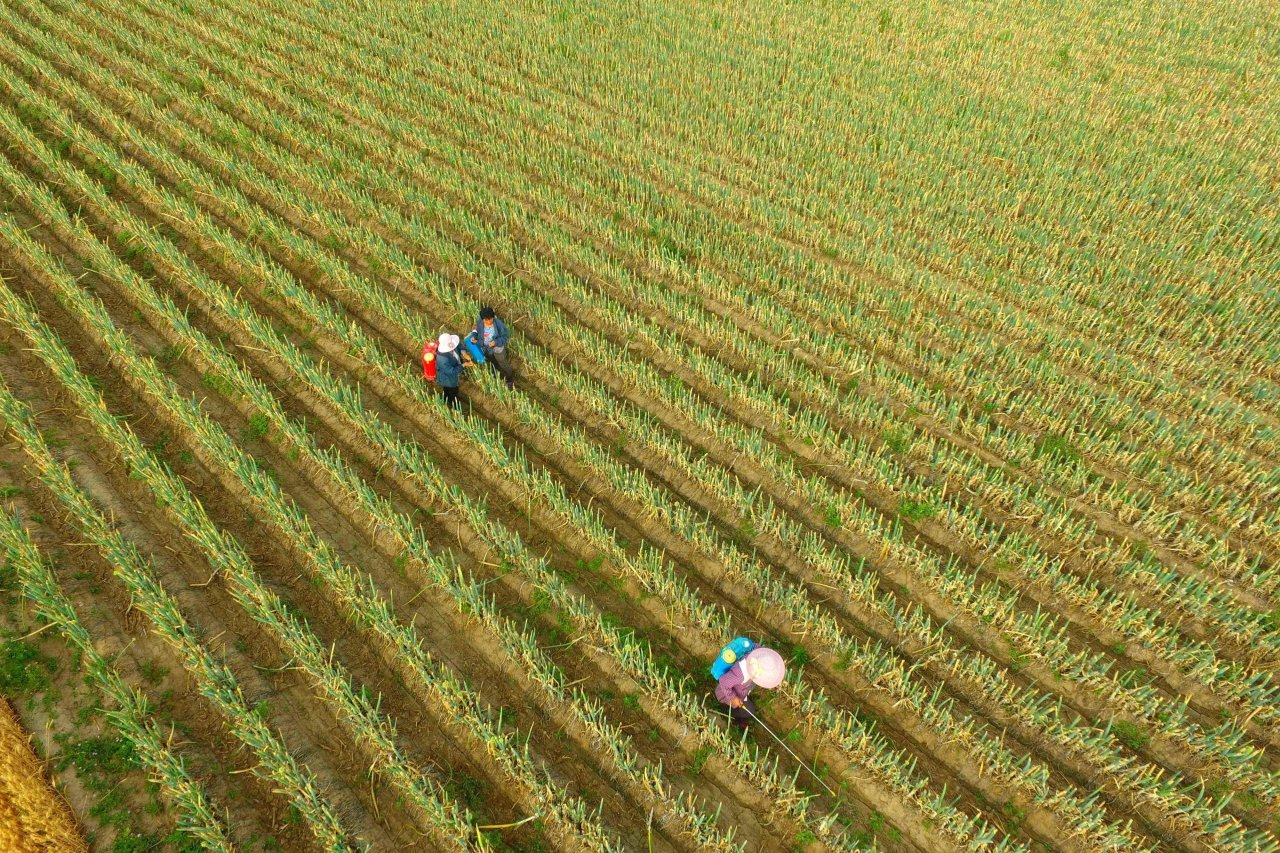
Today, the vegetable base of Chen’s company utilizes automated irrigation systems and drone-based crop protection operations, which have significantly reduced labor management costs.

With a simple tap on a mobile app, the 2,000-mu planting base was divided into dozens of plots, where details like seeding and weeding progress were displayed.

“We’ve developed a digital field management and monitoring platform that allows us to manage the entire planting process – seeding, fertilizing, and watering – all from a smartphone,” said Wu Xiaoning, the materials scheduling manager of the company.

“Currently, processes like rotary tilling, seeding, and film mulching are all mechanized. The base can cultivate five full crop cycles each year, with each cycle yielding 400 to 600 kilograms. The average output value per mu for the entire planting cycle reaches 10,000 yuan ($2,548).” Wu added.

“The Chinese flowering cabbage grown using modern farming techniques has a crisp and tender texture,” said Chen. “As soon as the product hits the market, it becomes a hot seller in the GBA.”

Delivering delicious Chinese flowering cabbage to the GBA, more than 2,000 kilometers away from Ningxia, wouldn’t be possible without a modern logistics system.

“The cold storage is maintained at 1.5 degrees Celsius. Once the freshly harvested Chinese flowering cabbage is brought in, it is rapidly cooled down,” said Li Houxue, head of Xianfeng Agriculture Company based in Ningxia, referring to a cold storage facility of the company.

After being pre-cooled for six hours, the Chinese flowering cabbage harvested is packed and sorted by 2 am the next day. By 8 am, refrigerated trucks set off directly for Guangzhou, where the produce is distributed to secondary centers in cities like Guangzhou, Shenzhen, and Dongguan. Some batches, after passing quality checks, are loaded onto trucks bound for Hong Kong, ready to hit the local market.

“With professional cold chain logistics, the transportation cost for a 15-kilogram box of Chinese flowering cabbage has been reduced to just 15 yuan,” Li said..

Today, nearly 80 refrigerated trucks depart from Ningxia every day, delivering Chinese flowering cabbage to regions like the Yangtze River Delta and the GBA. To address storage challenges at the source, Helan county has ramped up cold chain infrastructure development. Currently, 56 enterprises have established cold storage facilities with a combined capacity of approximately 89,900 tons and a net volume of 449,500 cubic meters. These advancements have greatly improved the storage, preservation, and processing capabilities for agricultural products at their origin.

To meet market demand, many vegetable bases in Ningxia that supply products to Hong Kong have established strict cultivation and quality control standards. They have developed a comprehensive industrial chain from planting, management, and harvesting to packaging, cold chain transportation, and sales.

“In 2023, Helan county’s vegetable planting area reached 243,800 mu, with an annual output of 474,600 tons and a production value of 1.4 billion yuan. This has effectively boosted employment and income for local farmers,” said Chen Ying, director of the bureau of agriculture and rural affairs in Helan county.

Edo University: Group urges Gov Okpebholo to urgently appoint Acting Vice-Chancellor

A group of professionals in the education sector in Edo State has asked the governor of Edo State Monday Okpebholo to urgently appoint a new acting Vice Chancellor for the Edo State University Uzairue to replace the embattled Prof Dawood Egbefo.

The Edo Forum for Educational Standards and Advancement in a statement Friday and signed by its Chairman Moses Omagbon and Secretary Zuberu Alemoh explained that the current Vice Chancellor whose brief tenure has been marred by allegations of serious infractions and violations of extant University laws comes to an end on the 1st of December, 2024. It also alleged that by the civil service rule, his tenure cannot exceed six months especially when the process for the appointment of a substantive Vice-Chancellor is ongoing.

According to the group, Prof Egbefo was appointed acting Vice Chancellor by the University Governing Council for a six months duration from June 1, 2024 to December 1, 2024 because the council had begun the process of electing a new Vice Chancellor for the University. They noted that his performance in Office has left all well-meaning stakeholders within and outside the University bewildered.

In the release, the group stated that “few days to the end of his acting Vice Chancellorship, Prof Egbefo was suspended on November 4th, 2024, by the Chairman of the University’s Governing Council, Prof. Emeritus T.O.K. Audu, following grave allegations of corruption, contract splitting, siphoning of university funds, non-compliance with due process, and gross incompetence.

“The Edo Forum for Educational Standards and Advancement notes that the attempt by some members of the dissolved council, led by Mrs. Ifueko Omoigui-Okauru, to reinstate Professor Egbefo has further worsened the leadership crisis in the young university as their action contradicts the provisions of Section 11(9) and (10) of the University Law, which govern the procedures for suspensions and reappointments.

“The university’s governing laws emphasize that there cannot be a vacancy in the office of the Vice-Chancellor, which means that someone must be appointed in an acting capacity to oversee the University until a substantive Vice-Chancellor is confirmed. With Prof. Egbefo’s six-month tenure set to expire, the University faces a critical leadership vacuum, and it is now imperative for the governor to act swiftly in appointing a new acting head of the institution.

“With the University’s leadership already embroiled in a severe succession crisis, we warn that any failure to act decisively on December 1 could damage the institution’s reputation further. The University’s integrity has been compromised under the previous leadership of Prof. Egbefo and the suspended Registrar, Mr. Habib Ekhalefo.

“As the situation unfolds, all eyes are on the Governor Okpebholo to ensure that the University’s leadership is stabilized and that a competent acting Vice-Chancellor is appointed without delay to safeguard the future of the institution.”

The group therefore insist that:
The governor should not re-appoint or renew the tenure of Professor Egbefo as he has been previously suspended by the council on matters bothering on corruption, constrict splitting incompetence and abuse of office.
That Professor Egbefo was duly suspended and remains suspended by the former council of the University, in compliance of the laws establishing the University as amended.
That the purported re-instatement of Profesor Egbefo by some members of the dissolved council, let by Mrs. Ifueko Omoigui-Okauru is null and void as it negates Section 11(9) and (10) of the University Law.
That the governor needs to act by appointing someone to oversee the University on the 1st of December to save the integrity of the university which has been enmeshed in serious succession crisis and misrule by Professor Egbefoh and the suspended registrar, Mr. Habib Ekhalefo.

To understand China’s reform and opening up via two sets of data

By Jin Sheping, People’s Daily

Recently, two sets of data highlight the latest achievements of China’s reform and opening up.

The first set of data is about China’s new energy vehicles(NEVs). On November 14, China’s annual production of new energy vehiclessurpassed 10 million units for the first time, making China the world’s first country to reach this milestone. In the first 10 months of this year, China’s NEV exports exceeded 1 million units, hitting 1.058 million units, a year-on-year growth of 6.3 percent.

The second set of data involves China-Europe freight train operations. On November 15, the China-Europe freight train servicehitthe milestone of 100,000 trips. Operating at an essentially balanced schedule of seven outbound trips and six return trips every week, the trains have delivered over 11 million twenty-foot equivalent units (TEUs) of goods, with a total value exceeding $420 billion.

The two sets of data offers a striking perspective into the country’s reform and opening-up efforts. Here are three takeaways from this great process.

The first takeaway: Economic globalization has always been the general trend.

On October 11, the 3 millionth vehicle produced by Tesla Gigafactory Shanghai rolled off the assembly line, setting a new milestone. Of the 3 million vehicles, one-third have beenexported to Europe and Asia-Pacific countries. In the first three quarters of this year,the Shanghai Gigafactory delivered 676,000 vehicles, accounting for more than half of Tesla’s global deliveries during the period.

Tesla’s development in China demonstrates the fruitful outcomes of economic globalization and stands as a compelling testament to China’s efforts to advance the great endeavor of “harmonious coexistence” among all countries.

Apart from Tesla, a good number of foreign carmakers have ramped up investment in the Chinese market, which underscored that China, with a complete industrial chain, efficient market mechanisms, and a competitive industrial ecosystem,continues to attract global capital to invest and do business.

In April this year, Mercedes-Benz inaugurated a new building in Shanghai as an upgrade to its R&D center in the metropolis to acceleratethe innovation efforts in China; Volkswagen committed €2.5 billion to expand its production and innovation hub in Hefei, east China’s Anhui province. Since 2010, nearly 100 million yuan ($13.8 billion) has been invested in the BMW Shenyang Production Base in northeast China’s Liaoning province.

The trend toward economic globalization is deepening and countries are increasingly interdependent. No single country can independently manage the entire lifecycle of an industrial and supply chain, which involves an interconnected process from R&D to production, distribution, and consumption. Unilateralism and protectionism offer no viable path forward, and”small yard, high fences” will only result in self-imposed constraints.

The second takeaway: Promoting reform through opening up is an inevitable path.

For more than 40 years, China has advanced reform and opening up in a coordinated manner. High-level opening up has become a critical driver for China to promote in-depth reforms and high-quality development.

Since the beginning of this year, China has extended high-level opening-up to broader areas, wider fields and deeper levels.

On November 1, the new edition of China’s national negative list for foreign investment officially came into effect, removing all market access restrictions for foreign investors in the manufacturing sector. On the same day, Chinese authorities released revised rules on foreign investors’ strategic investment in listed companies in a move to encourage foreign investors to make long-term and value investment in the country.

On November 22, China announced to apply the visa-free policy to nine more countries on a trial basis. Starting from November30, ordinary passport holders from 38 countries within its visa-free arrangement, including the newly added nine countries, can enter China visa-free for the purposes of business, tourism, family visits, exchanges and visits and transit, with stays of no more than 30 days.

Additionally, China has introduced a negative list for cross-border trade in services at the national level to boost opening up.

At the same time, deepening reform also provides institutional support for further advancing high-level openingup.

In March this year, China released a guideline to continue optimizing payment services for foreign visitors in the country. Thanks to the measures, over 5 million inbound visitors used mobile paymentin the first half of this year, marking a fourfold year-on-yearincrease.

China has also rolled out guidelines to speed up the building of a unified national market, regulations on promoting and standardizing cross-border flows of data, regulations for fair competition reviews, and guidelines on improvingthe market access system.

China has made breakthroughs in key areas and crucial sectors in comprehensively deepening reform, with deep-level reform and high-level opening-up mutually reinforcing each other. This has created new opportunities for economic development.

In July, the 20th Central Committee of the Communist Party of China concluded its third plenary session, and adopted a comprehensive plan for further deepening reform comprehensively to advance Chinese modernization. More than 300 important reform measures were introduced at the session, and they will be fully implemented within five years. This will provide not only strong impetus for China’s economic and social development, but also more opportunities for global development.

The third takeaway: China’s reform and opening up brings opportunities to the world.

China’s reform and opening up is a witness to the common progress of China and the world. As China opens its doors wider to the outside world, it is creating significant opportunities for the world.

For instance, the China-Europe freight train service not only allows more countries along the routes to share the dividends of the Chinese market, but also creates new logistics activities, industries, commercial centers and industrial parks, generating numerous local jobs and enhancing connectivity across the Eurasian continent.

“The China-Europe freight train service meets the needs of businesses exploring European and Asian markets, bringing brand-new development opportunities,” head of a logistics company in the Netherlands said.

The recently concluded seventh China International Import Expo (CIIE) saw $80.01 billion worth of tentative deals reached for one-year purchases of goods and services, an increase of 2 percent over the previous year, demonstrating the vast opportunities of the Chinese market.

Openness is an intrinsic path toward global prosperity and development. In addition to the CIIE, China is also hosting other global trade fairs one after another, including the Canton Fair and the China International Fair for Trade in Services (CIFTIS).

Through the new development, China is creating fresh opportunities for the world, promoting the building of an open world economy, and writing a new chapter of shared development between China and the world.

G20 shoulders responsibility for history, takes historical initiative, moves history forward

By He Yin, People’s Daily

Chinese President Xi Jinping on Nov. 18 attended the 19th G20 Summit and delivered important speeches, explaining Chinese philosophies on “Fight Against Hunger and Poverty” and “Reform of the Institutions of Global Governance.”

He announced China’s eight actions for global development and proposed concrete measures in economic, financial, trade, digital and eco-environmental fields for the G20.

Xi’s important speeches provided crucial conceptual guidance for improving global governance and addressing the practical challenges facing global development, helping consolidate consensus and strength in building a just world of common development and a just and reasonable global governance system.

To build a just world of common development, all parties should shoulder their responsibility for history, take historical initiative and move history forward.

Xi said prosperity and stability would not be possible in a world where the rich become richer while the poor are made poorer, and countries should make global development more inclusive, beneficial to all, and more resilient.

Countries need to channel more resources to such fields as trade, investment and development cooperation, and strengthen development institutions. They need to support developing countries in adopting sustainable production and lifestyle and enhancing ecological conservation.

They need an open, inclusive and non-discriminatory environment for international economic cooperation, and should promote a universally beneficial and inclusive economic globalization. They also need to stay committed to multilateralism, and uphold the UN-centered international system, the international order underpinned by international law, and the basic norms of international relations based on the purposes and principles of the UN Charter.

Only through unity and cooperation among all parties can the goal of building a just world of common development be achieved.

China is always a doer and go-getter working for the cause of global development. It has lifted 800 million people out of poverty, and met the poverty reduction target of the UN’s 2030 Agenda for Sustainable Development ahead of schedule.

China’s story is proof that developing countries can eliminate poverty, and that a weaker bird can start early and fly high, when there is the endurance, perseverance, and striving spirit that enables water drops to penetrate rocks over time and turns blueprints into reality.

China’s eight actions for global development announced by Xi, including pursuing high-quality Belt and Road cooperation, implementing the Global Development Initiative, supporting development in Africa, and supporting international cooperation on poverty reduction and food security, fully prove that China is a reliable long-term partner of fellow developing countries and is willing to go hand in hand with fellow developing countries toward modernization.

International observers believe that China’s eight actions for global development will help make global development more just, inclusive, and sustainable.

To build a just world of common development, it is important to establish a fair and equitable global governance system. Currently, the Global South is gaining significant momentum, yet global governance reform has long been stagnant.

After a 16-year development, the G20 needs to build on its past achievements and continue to act as a force to improve global governance and move history forward.

Xi said that the G20 needs to improve global economic governance and build a world economy characterized by cooperation, to improve global financial governance and build a world economy characterized by stability, to improve global trade governance and build a world economy characterized by openness, to improve global digital governance and build a world economy characterized by innovation, and to improve global ecological governance and build a world economy characterized by eco-friendliness.

He stressed that the G20 should support the U.N. and its Security Council in playing a greater role, and support all efforts conducive to the peaceful settlement of crises. This provides significant momentum for the international community to work together in addressing challenges and crises, while opening up new avenues for win-win cooperation.

The Chinese often say, “A journey of a thousand miles begins with the first step.” As a major forum on international economic cooperation, the G20 should renew its commitment to the founding mission, and make a fresh start from Rio de Janeiro. China is ready to work with relevant parties to shoulder the responsibility of the times, build a just world of common development, and usher in a better future of common development and prosperity.

China a positive force driving global development

By People’s Daily Reporters

Chinese President Xi Jinping attended the 19th G20 Summit in Rio de Janeiro, Brazil on the morning of Nov. 18, local time.

He delivered an important speech at the Session I of the summit on Fight Against Hunger and Poverty under the title “Building a Just World of Common Development,” in which he outlined China’s eight actions for global development.

Today, transformation of a scale not seen in a century is accelerating across the world. Humanity faces unprecedented opportunities and challenges. International personages told People’s Daily that Xi’s important remarks have charted the course for international cooperation on poverty reduction and pooled strength for global development. They believe that the eight actions will help build a just world of common development.

Xi pointed out that China’s story is proof that developing countries can eliminate poverty, and that a weaker bird can start early and fly high, when there is the endurance, perseverance, and striving spirit that enables water drops to penetrate rocks over time and turns blueprints into reality. If China can make it, other developing countries can make it too. This is what China’s battle against poverty says to the world.

“With a turbulent international landscape, the topic of ‘Fight Against Hunger and Poverty’ holds significant practical significance,” said Osmar Junior, executive secretary of Brazil’s Ministry of Development and Social Assistance, Family and Fight against Hunger.

“President Xi Jinping has led the Chinese people to win the battle against poverty, a remarkable achievement that has drawn global attention. We are eager to learn from China’s experience,” Junior added.

Henrique Couto da Nóbrega, president of the Brazil-China Friendship Association, stated that China has successfully eradicated absolute poverty through decades of efforts, enabling people to live better lives.

“China’s achievements in poverty alleviation are of global significance, and the Chinese experience is worth learning from for Brazil. Deepening cooperation in this field between Brazil and China will further promote the common development of the two countries,”Nóbrega said.

Hayati Nufus, a researcher at the Research Center for Politics BRIN in Indonesia, pointed out that targeted poverty alleviation proposed by Xi is a crucial concept. By implementing tailored poverty alleviation measures based on local conditions, different groups are provided with customized poverty alleviation solutions. During this summit, China actively supported the establishment of a Global Alliance Against Hunger and Poverty. China’s ideas and actions contribute to enhancing the capacity building of developing countries, Nufus said.

Nasser Bouchiba, presidentof the Africa-China Cooperation Association for Development in Morocco, stated, “As an important member of the Global South, China, on the G20 platform, calls for the construction of a just world of common development. It demonstrated the sense of responsibility of a major country. Through initiatives such as the high-quality Belt and Road cooperation, and the three major global initiatives, China has built bridges for cooperation among Global South countries.”

China actively shares experiences, provides technology, and is committed to ensuring that innovative achievements benefit the Global South, enabling more people in developing countries to lead better lives, Bouchiba added.

“A key factor behind China’s success is its ability, rooted in its own history and experience, to resonate with the needs of developing nations, which make up the majority of the global community,” said Charbel Barakat, head of Foreign Desk at Aljarida newspaper in Kuwait. He pointed out that by taking a series of measures to promote common development, China has provided strong support for the better development of a large number of developing countries.

China’s eight actions for global development outlined by Xi this time include supporting international cooperation on poverty reduction and food security. In response to this,Victor Otazu, a potato expert from Peru who was honored with the Friendship Award by the Chinese government, said, “Many regions around the world are still suffering from poverty, and the causes of poverty reduction and food security are of great significance in improving people’s lives. “

The Global Development Initiative proposed by Xi focuses on addressing real-world issues, and is bound to have a profound impact globally, Otazu said.

Matangi Tisa Village in Kenya’s Nakuru County is designated as the country’s first demonstration village for China-Africa agricultural development and poverty reduction. It is currently under construction.

Dennis Munene Mwaniki, executive director of the China-Africa Center at the Africa Policy Institute, stated that China has enabled hundreds of millions of people to get rid of poverty, which is a great achievement.

China is actively engaging in cooperation with Africa through platforms such as the Forum on China-Africa Cooperation, assisting in Africa’s modernization efforts, from which many Kenyan people have benefited, he said. He believes that China’s advancement in modernization will provide more momentum for global development.

China-Europe freight trains make 100,000 trips

By Li Xinping, People’s Daily

At 10:20 am on Nov. 15, the 100,000th China-Europe freight train, marked as X8083, departed from Tuanjiecun Station in southwest China’s Chongqing municipality, and headed for Duisburg, Germany. It marked another milestone after the 90,000th was recorded in May.

Statistics show that the time required to dispatch 10,000 trains has been reduced from 90 months in the early days of operation to just 6 months today.

More than 1,000 years ago, the steady rhythm of camel caravans brought prosperity to the ancient Silk Road. Today, the roaring China-Europe freight trains have become the modern embodiment of cooperation and mutual benefit.

Over the past decade, the China-Europe freight train network has grown increasingly dense. In China, the network connects 125 cities with 93 regular train routes with a speed of 120 kilometers per hour. Internationally, it spans 25 European countries and 227 cities, as well as more than 100 cities in 11 Asian countries.

These “steel camel caravans” traverse continents, fostering trade connectivity and driving economic growth.

Operating weekly with seven outbound and six return trips, the trains maintain a balanced two-way flow. The 100,000 trains have transported more than 11 million TEUs (twenty-foot equivalent units) of goods across Eurasia, with a total trade value exceeding $420 billion and a catalog of over 53 major categories encompassing 50,000 distinct products.

German automobiles, Polish apples, Dutch cheese, Kazakh flour – more and more countries along the routes are benefiting from access to the Chinese market. For instance, in 2023, apple trade between Poland and China increased 23.2 percent year on year.

At the same time, the China-Europe freight trains have enabled faster and more cost-effective delivery of Chinese-made goods like electronics, home appliances, and new energy vehicles to Central Asia and Europe, propelling Chinese manufacturing to global markets.

The China-Europe freight trains exemplify the appeal of openness and connectivity.

Many Chinese inland cities far from coastlines or borders have become new hubs of international trade thanks to the trains. For example, Chongqing has seen its export-oriented industries grow by an average of 30 percent annually due to the freight network. Similarly, Chengdu and Zhengzhou, capital cities of Sichuan province and Henan province, respectively, have transformed into key centers for import-export trade and modern international logistics.

Internationally, the trains have spurred the development of new logistics hubs, industrial zones, and trade centers, creating significant job opportunities. At Germany’s Duisburg Port, the operation of China-Europe freight trains has attracted over 100 logistics companies, generating more than 20,000 jobs. In Poland, theMałaszewicze rail terminal has experienced exponential business growth thanks to the trains, which greatly boosted the local economy and social development.

Since its inception, the China-Europe freight train network has maintained safe, stable, and efficient operations, establishing a new framework for transcontinental transportation. It has created a robust platform for trade cooperation along its routes, ensured the stability of global industrial and supply chains, and injected fresh momentum into the world economy.

Connecting hundreds of cities and navigating diverse railway regulations, the China-Europe freight trains are a result of China’s commitment to high-level institutional opening up.

China has established a domestic China-Europe Transport Coordination Committee, and co-established a joint work team with six other countries to deepen cooperation on China-Europe freight rail services, in an attempt to facilitate “soft connectivity” of international railway rules.

Additionally, the collaboration between Chinese customs and railway authorities has led to the development of a “95306 digital port system,” significantly enhancing customs efficiency and streamlining clearance processes.

Through continuous expansion of institutional opening up in areas such as rules, regulations, management, and standards, the China-Europe freight trains have elevated Eurasian connectivity to new heights.

From launching daily services across the Caspian Sea to increasing the number of scheduled trains, and to fostering deeper collaboration between the China-Europe freight trains and the China-Laos Railway, the network is constantly evolving. It is propelling high-level opening-up to deeper and more practical levels.

As the trains forge ahead, they accelerate the pace of mutual benefit and shared prosperity, writing a new chapter in global trade and cooperation.

China, U.S. should keep exploring right wayfor two major countries to get along well with each other

By Zhong Sheng, People’s Daily

Chinese President Xi Jinping recently met with U.S. President Joe Biden on the sidelines of the 31st APEC Economic Leaders’ Meetingin Lima, Peru. This meeting was held one year after the last time that the two Presidents met, and marked their first interaction after the just-finished U.S. presidential election, receivinggreat attention from the international community.

The two sides reviewed the journey of China-U.S. relations over the past four years, and drew experiences and inspirations from it. Their conversation was candid, in-depth and constructive. It focused on advancing dialogue and cooperation and properly managing differences during the transition period of the U.S. government and on regional and international issues of mutual interest, and charted the course for bilateral relations.

Over the past four years, China-U.S. relations have gone through ups and downs, but under the stewardship of the two Presidents, the two sides have also been engaged in dialogue and cooperation, and bilateral ties have remained stable on the whole.

In his interactions with Biden,Xi fully shared his views on how the two sides should approach bilateral relations, which provide strategic guidance and are important for the direction of this relationship.

Xi vividly compared the relationship between China and the U.S. to a mansion. During the virtual meeting with Biden in 2021, he proposed that China and the U.S. should respect each other, coexist in peace, and pursue win-win cooperation, which is the dome of the mansion.

During the 2022 Bali meeting, he underscored China’s four red lines on the Taiwan question, path and system, democracy and human rights, and right to development, which is the foundation of the mansion.

During the meeting in San Francisco in 2023, he stated that China and the U.S. should jointly develop a right perception, manage disagreements effectively, advance mutually beneficial cooperation, shoulder responsibilities as major countries and promote people-to-people exchanges, which are the five pillars of the mansion.

China and the U.S. should jointly contribute to the high building of the mansion, so as to push for the stable, healthy and sustainable development of bilateral relations.

Strategic perception is the fundamental and overarching issue in China-U.S. relations. The Thucydides Trap is not a historical inevitability.A new Cold War should not be fought and cannot be won. Containing China is unwise, unacceptable and bound to fail.

When the two countries treat each other as partners and seek common ground while shelving differences, their relationship will make considerable progress. But if they regard each other as rivalsand pursue vicious competition, they will roil the relationship or even set it back.

As two major countries, neither China nor the U.S. should seek to remodel the other according to one’s own will, suppress the other from the so-called “position of strength,” or deprive the other of the legitimate right to development so as to maintain its leading status.

Contradictions and differences between two major countries like China and the U.S. are unavoidable. But one side should not undermine the core interests of the other, let alone seek conflict or confrontation. The one-China principle and the three China-U.S. joint communiques are the political foundation of China-U.S. relations.

China and the U.S. have deeply intertwined interests, with boundless potential for cooperation.

Economically, the two countries’ total trade has exceeded $660 billion, and over 70,000 American companies are doing business in China, earning a profit of $50 billion annually. In terms of employment, exports to China alone support 930,000 jobs in the U.S., and Chinese investment has also created more jobs in the country. In terms of livelihood, Chinese products have not only offered American consumers more choices but also lowered costs for them.

Among the new outlets of McDonald’s opened last year, about 60% were in China;More than half of Tesla’s global deliveries of electric vehicles last year originated from its gigafactory in Shanghai; and Starbucks is running over 1,000 stores in Shanghai, topping the world.

Theseexamples of mutually beneficial cooperation have proved that under the current circumstances, common interests between China and the U.S. are expanding rather than shrinking. They should always advance the well-being of the two peoples, expand the list of cooperation, and make a bigger pie of cooperation to achieve a win-win result.

It is a shared consensus between the two sides that a stable China-U.S. relationship is critical not only to the interests of the two peoples, but also to the future of the entire humanity.

As humanity is faced with unprecedented challenges in this turbulent world suffering from frequent conflicts,the two countries should always keep in mind humanity’s future and their responsibilities for world peace, provide public good for the world, and act in a way conducive to global unity.

Major-country competition should not be the underlying logic of the times; only solidarity and cooperation can help humanity overcome current difficulties. Neither decoupling nor supply-chain disruption is the solution; common development can only be achieved through mutually beneficial cooperation. “Small yard, high fences” is not what a major country should do; only openness and sharing can advance the well-being of humanity.

It is important for China and the U.S. to assume the vision, shoulder the responsibility, and play the role that come along with their status as major countries. This is the only way forward for the two countries to be responsible for history, for the people and for the world, and earn respect from the international community.

Xi stressed that China’s goal of a stable, healthy and sustainable China-U.S. relationship remains unchanged; its commitment to mutual respect, peaceful coexistence and win-win cooperation as principles for handling China-U.S. relations remains unchanged; its position of resolutely safeguarding China’s sovereignty, security and development interests remains unchanged; and its desire to carry forward the traditional friendship between the Chinese and American peoples remains unchanged.

This shows that China is ready to engage in dialogue, expand cooperation, and manage differences with the incoming U.S. government so as to maintain stability in China-U.S. relations to the benefits of the two countries and the world at large.

To ensure a smooth transition of the China-U.S. relationship, both sides should follow the seven-point common understandings on the guiding principles for China-U.S. relations, namely treating each other with respect, finding a way to live alongside each other peacefully, maintaining open lines of communication, preventing conflict, upholding the United Nations Charter, cooperating in areas of shared interest, and responsibly managing competitive aspects of the relationship.

Currently, the China-U.S. relationship once again stands at a crossroads. The two peoples and the international community expect the stable development of China-U.S. relations. It is hoped that the U.S. will work in the same directionwith China, keep exploring the right way for two major countries to get along with each other, realize long-term, peaceful coexistence on this planet, and inject more certainty and positive energy into the world.

(Zhong Sheng is a pen name often used by People’s Daily to express its views on foreign policy and international affairs.)