China implements measures to counter Japan’s accelerating remilitarization

By Zhong Sheng, People’s Daily

China’s Ministry of Commerce has announced the placement of 20 Japanese entities involved in enhancing military capabilities on its export control list. A further 20 Japanese entities, where the end-users and end-uses of dual-use items cannot be verified, have been added to a watch list.

These actions are taken to safeguard China’s national security and interests, fulfilling international non-proliferation obligations, and prevent Japan’s pursuit of remilitarization and nuclear armament. 

The measures are fully justified, reasonable, and lawful, demonstrating China’s commitment to the rule of law and its responsibilities as a major country.

This follows China’s January 6th announcement of strengthened export controls on dual-use items to Japan. The latest move explicitly names specific companies, translates earlier restrictions into targeted, enforceable, entity-based controls designed to effectively safeguard national security and regional peace and stability. 

According to international legal instruments such as the Cairo Declaration, the Potsdam Proclamation, and the Japanese Instrument of Surrender, Japan is required to be fully disarmed and must not maintain industries that would enable its rearmament. 

However, a number of Japanese companies, including Mitsubishi Heavy Industries, IHI Corporation, and Kawasaki Heavy Industries, have long been active in the defense sector, producing equipment such as naval vessels, fighter aircraft, and missiles. 

For instance, multiple subsidiaries of Mitsubishi Heavy Industries have participated in the development of Japan’s hypersonic weapon system, the Hyper-Velocity Gliding Projectile for remote island defense. Vessels built by Mitsubishi Shipbuilding have not only supported Japan’s maritime activities related to the Diaoyu Islands, but have also been supplied to the Philippine Coast Guard for use in the South China Sea, posing risks to regional peace and stability. 

China’s measures represent a targeted response to curb Japan’s development of offensive military capabilities and to uphold international law and the post-war international order.

Japan’s push toward remilitarization is following a clear trajectory, with a new military-industrial complex rapidly taking shape. 

In recent years, Japan has accelerated its military buildup, with defense spending rising for 14 consecutive years from fiscal 2012 through fiscal 2026, and effectively doubling within three years since 2022.

State-driven support has enabled Japanese defense contractors to reap substantial profits, even fueling what some describe as a “defense bubble” in capital markets. Data show that since November 2022, the stock price of Mitsubishi Heavy Industries has surged by more than 650 percent, IHI Corporation by over 480 percent, and Kawasaki Heavy Industries by more than 280 percent. In stark contrast, Japan’s manufacturing sector has recorded an average annual growth rate of less than 1 percent over the same period.

Since Sanae Takaichi assumed power, Japan’s remilitarization process has noticeably accelerated. War preparedness has been elevated to an overriding national priority, with further support extended to defense-related interest groups. 

Reports indicate that the Japanese government plans to address defense funding gaps through large-scale bond issuance and a special income tax, while also preparing to establish a “national intelligence agency” this year. 

In a recent policy speech in the House of Representatives, Takaichi asserted that Japan must fundamentally strengthen its defense capabilities and pledged to clearly communicate defense procurement needs to industry. These steps are likely to further bind Japan’s defense spending to specific industrial and corporate interests, creating a self-reinforcing cycle.

At the same time, right-wing forces in Japan have shown a growing ambition to pursue nuclear capabilities. In recent months, some Japanese politicians have openly advocated for nuclear armament and sought to revise the long-standing “Three Non-Nuclear Principles.” 

It is widely recognized as a “nuclear-threshold state,” having long produced and stockpiled plutonium far exceeding civilian needs. By the end of 2024, Japan possessed as much as 44.4 tons of separated plutonium. 

With a complete nuclear fuel cycle and advanced nuclear industry capabilities, Japan is technically capable of producing weapons-grade plutonium. Should right-wing political forces push Japan across the nuclear threshold, it would represent a severel breach of the global nuclear non-proliferation regime. 

A recent commentary by Singapore’s Lianhe Zaobao noted that nuclear non-proliferation remains central to international politics, and that Japan’s pursuit of nuclear weapons runs counter to the interests of Southeast Asia, where reducing arms races and minimizing the risk of conflict are essential to regional stability.

Japan’s remilitarization and nuclear ambitions pose a serious threat to regional peace and stability. The lessons of history make clear that appeasement of militarism amounts to a betrayal of peace. Countering the rise of right-wing forces in Japan requires concrete actions.

China’s law-based control measures aimed to prevent dual-use items from feeding into Japan’s military expansion and firmly curb any resurgence of militarism. China will work together with all peace-loving countries to uphold the post-war international order and jointly maintain regional security and stability.

Japan’s right-wing forces should recognize that a return to militarism leads only to self-destruction.  Any reckless attempt to challenge international justice and the global order is bound to meet firm resistance from the forces of justice around the world.

(Zhong Sheng is a pen name often used by People’s Daily to express its views on foreign policy and international affairs.)

Integrating grassroots Perspectives into China’s legislative process

By Zhang Tianpei, People’s Daily

Shanghai recently hosted a legislative consultation meeting on the draft law on promoting ethnic unity and progress at the Gubei civic center in Changning district’s Hongqiao subdistrict. 

The meeting fostered an engaged discussion, with attendees — including deputies to the National People’s Congress (NPC), academics, legal professionals, and members of non- Communist Party of China political parties — offering a wealth of valuable insights.

For Sheng Hong, an NPC deputy and Party branch secretary in the local Ronghua No. 4 Residents’ Community, this marked her 11th such consultation meeting within a year.

“Over the past year,” Sheng noted, “the scope of these legislative consultations have covered critical areas like ecological and environmental protection, urban governance, and public well-being. Participants contribute diverse perspectives and specific revision suggestions based on their professional expertise. This process effectively integrates grassroots voices and professional insights, ensuring draft laws are more grounded in reality.”

Sheng reflected on the evolution of public participation. Initially, residents visited grassroots legislative outreach offices primarily to understand how laws are made. Gradually, she observed, they evolved from passive recipients of legislative information into active advocates for legal awareness. Today, a robust network for gathering public opinion has taken shape, with participation expanding significantly.

A notable moment came in July 2025, Sheng recalled, when the State Council issued guidelines on gradually implementing free preschool education. Residents who had previously contributed to consultations on the draft preschool education law felt a profound sense of accomplishment.  “They recognized that ideas debated at our grassroots offices were being reflected in national policy,” Sheng explained.

She emphasized the shifting public expectations: “The focus is no longer just on whether laws exist, but on their effectiveness, practicality, and ability to solve real-world problems.” During the legislative process of the preschool education law, factors such as demographic changes in school-age populations and household financial capacity were fully considered. 

The resulting legislation aims to encourage increased government investment to reduce family burdens while simultaneously strengthening kindergarten teaching staff and improving facilities. “Beyond ensuring access,” Sheng stated, “the law actively addresses the public’s demand for high-quality early education, enhancing its relevance and timeliness.”

Promoting “public well-being” with “public voices,” a steady stream of practical, experience-based legislative suggestions is being conveyed from grassroots legislative outreach offices to the Great Hall of the People for legal adoption.

To date, the Legislative Affairs Commission of the NPC Standing Committee has set up 60 local legislative outreach offices nationwide. Additionally, provincial and city-level legislatures operate a network of over 7,800 such offices. In 2025 alone, opinions and suggestions were solicited from these offices on 26 draft laws, yielding more than 34,000 submissions, many of which have been adopted in legislation.

“Matters of the people should be discussed by the people themselves,” Sheng said. “As an NPC deputy from the primary level, I will continue to stay close to the people, listen to their voices, pool their wisdom, and bring more of their views to the Great Hall of the People, contributing to the practice of whole-process people’s democracy at the grassroots level and to improving the quality of legislation.”

Understanding China’s whole-process people’s democracy

By Xu Jun, People’s Daily

The upcoming “two sessions,” the annual meetings of China’s top legislature, the National People’s Congress (NPC), and the top political advisory body, the National Committee of the Chinese People’s Political Consultative Conference (CPPCC), provide an important opportunity to observe Chinese modernization and a key window into understanding whole-process people’s democracy in China.

As an original and defining concept, whole-process people’s democracy is deeply embedded in the daily lives of the Chinese people.

Deliberating the draft outline of the 15th Five-Year Plan (2026-2030) is a major focus of this year’s “two sessions.” The process of formulating the plan itself is a vivid practice of whole-process people’s democracy.

From May 20 to June 20, 2025, an online public consultation was conducted for the formulation of the 15th Five-Year Plan. The initiative drew over 3.11 million valid submissions, yielding more than 1,500 constructive suggestions across 27 topics.

The drafting group attached great importance to these inputs, carefully studied and incorporated them, with many reflected in relevant policy measures of the plan in appropriate forms.

By the end of 2025, the Legislative Affairs Commission of the NPC Standing Committee had established 60 grassroots legislative outreach offices, which in turn drove the establishment of more than 7,800 such offices at the provincial and municipal levels. In 2025, more than 1,400 CPPCC members submitted over 12,000 reports on public sentiment. These diverse channels for reflecting public opinion serve as important bridges linking the people with the authorities.

Such democracy widely participated by the people has made “micro-governance” more dynamic and efficient.

At a “People’s Livelihood Teahouse” in Wenhe subdistrict, Guangling district, Yangzhou, east China’s Jiangsu province, deputies to people’s congresses at various levels, members of CPPCC local committees, and local residents gather to discuss issues affecting people’s livelihoods. There, residents’ concerns are addressed, and some suggestions are promptly relayed to relevant authorities. 

In recent years, similar platforms have been established one after another, making primary-level governance smoother and more effective.

From farmlands and factory floors to hospitals, schools, and communities, NPC deputies and CPPCC members diligently perform their duties, soliciting opinions from the public, and turning suggestions into concrete actions that deliver tangible benefits.

In 2025, all 269 motions and 9,160 suggestions submitted by NPC deputies were reviewed and handled, with responses provided to the deputies. Of the more than 5,900 proposals submitted by CPPCC members, over 5,000 were filed, and some suggestions were incorporated into relevant policy documents.

A defining feature of “whole-process” is that it runs through the entire chain, spans all dimensions, and covers all areas.

Take food safety, a matter of widespread public concern, as an example. From May to September 2025, the NPC Standing Committee’s law enforcement inspection team carried out inspections on the implementation of the Food Safety Law. 

The team placed great emphasis on hearing public voices, incorporating public opinion, and pooling public wisdom. 

Two deputies who led relevant motions and 10 other deputies were invited to participate throughout the process, contributing professional expertise and offering suggestions from different perspectives on strengthening food safety. 

The team also organized a questionnaire survey on the implementation of the law, collecting 488,200 valid responses and 119,800 public suggestions.

During the inspection, the NPC Standing Committee also completed targeted amendments to the Food Safety Law. By integrating legislative and oversight functions, it further urged localities and departments to fulfill their responsibilities, improved relevant laws, regulations, and standards systems, strengthened law enforcement capacity, and consolidated a social governance framework for food safety, collectively safeguarding public health.

Whole-process people’s democracy is not occasional, partial, fragmented, or piecemeal. Rather, it runs through the entire chain of democratic election, consultation, decision-making, management, and oversight; spans all aspects of political and social life; and covers all fields, including economic, political, cultural, social, and ecological development. 

This fundamentally addresses the problem of systems where people are engaged only when voting and go dormant afterward.

Continuously meeting the people’s growing needs for a better life is an inherent requirement of developing democracy. Democracy is meant to solve the problems for the people. This is one of the defining features that distinguishes China’s whole-process people’s democracy from the election-centered model of democracy in some Western countries, and it is also a key strength of this form of democracy.

China’s development demonstrates that only a democracy suited to a country’s specific conditions can be reliable and effective. The defining features of “whole-process” people’s democracy enrich the forms of human political civilization and offer a Chinese approach to exploring better social systems.

Looking ahead, China will continue to follow a path of democratic development suited to its national conditions, advocate and support other countries in independently choosing their own paths of democratic development, and work together to advance the progress of democracy for  all humanity.

NPC deputy advocates for deeperAI-manufacturing integration

By Ju Yunpeng, People’s Daily

As China accelerates the integration of AI and manufacturing, how to ensure reliability and high-quality development has become a key concern among national lawmakers ahead of this year’s “two sessions,” the annual meetings of China’s top legislature, the National People’s Congress (NPC), and the top political advisory body, the National Committee of the Chinese People’s Political Consultative Conference (CPPCC).

“If a user asks an AI application a question on a smartphone and encounters an ‘AI hallucination,’ the incorrect answer can still be verified,” said Zhang Fan, an NPC deputy and vice president of China Electrical Equipment Group Co., Ltd. “But if similar errors occur on a manufacturing production line, the consequences would be unimaginable.”

Having worked in the electrical equipment manufacturing industry for nearly two decades, Zhang has been involved in the research and development of a range of high-end equipment. He notes their accelerating penetration across industries, bringing significant potential to enhance manufacturing quality.

“However, my research indicates challenges remain in this AI-manufacturing integration,” Zhang stated. He pointed out that while China has issued guiding policies for “AI Plus Manufacturing,” the sector’s diverse industries have varying levels of readiness. Some enterprises have rushed into developing specialized large models, leading to issues like redundant efforts, fragmented resources, and inconsistent quality. Furthermore, there is a shortage of relevant talent.

“Critically, there is a lack of high-quality industrial data, and data sharing remains difficult, which constrains the training efficiency and generalization capability of AI models,” he added.

In response, Zhang submitted a suggestion titled “On Accelerating the Deep Integration of Manufacturing and AI for High-Quality Innovation and Development” at the 2025 NPC session. 

He called for faster formulation of AI development plans in sectors such as electrical equipment manufacturing, joint efforts to establish industry AI innovation centers, coordinated development of sector-specific large models, multi-pronged measures to build a high-quality industrial data ecosystem, and accelerated cultivation of interdisciplinary AI talent.

High-quality suggestions have helped advance related work in an orderly manner. The Ministry of Industry and Information Technology (MIIT), along with other central government departments, has engaged in in-depth communication with Zhang through field research, symposiums, and consultations to solicit his views.

Recently, eight government departments, including the MIIT, jointly issued an implementation plan for the “AI Plus Manufacturing” initiative. The plan outlines a series of measures, including developing high-level industry models, advancing coordinated data-model initiatives, accelerating AI applications in key industries, and strengthening talent training and recruitment.

Zhang believes this “top-level design” will be crucial for advancing AI-manufacturing integration. He added that he will continue to monitor the policy’s implementation, aiming to drive comprehensive and high-level empowerment of new industrialization through AI technologies.

“In a new round of technological revolution, digitalization and intelligent transformation are vital to improving competitiveness,” Zhang said. “Advancing the deep integration of the real economy with digital technologies in an open manner will undoubtedly take China’s manufacturing sector to a new level.”

Chinese vision shapes future of global human rights governance

By He Yin, People’s Daily

Global governance stands at a new crossroads as the international human rights cause faces serious challenges. In these turbulent times, objective, impartial, and rational voices are needed more than ever. 

At the ongoing 61st session of the United Nations (UN) Human Rights Council, China elaborated on the human rights dimensions of the Global Governance Initiative (GGI), reaffirmed its commitment to multilateralism, and provided a clear Chinese approach to reforming and improving the global human rights governance system.

This year marks the 20th anniversary of the establishment of the UN Human Rights Council and the 40th anniversary of the adoption of the Declaration on the Right to Development. Yet these celebrations unfold against a backdrop of resurgent unilateralism, persistent regional conflicts, and intensifying non-traditional security threats. 

UN Secretary-General Antonio Guterres warned that human rights are under a full-scale attack around the world, and the rule of law is being outmuscled by the rule of force.

At such a critical juncture, it is all the more necessary to uphold rules and order and create a stable governance environment for the development of the international human rights cause. China’s GGI embodies profound humanitarian values and offers concrete solutions to current challenges.

Since its inception, the initiative has received support and positive responses from more than 150 countries and international organizations. With the formal establishment of the Group of Friends of Global Governance, its implementation has taken solid steps forward. 

Leveraging the GGI to drive systemic reforms will steer global human rights governance toward a future characterized by fairness, effectiveness, and inclusivity.

Promoting the sound development of the international human rights cause requires clear and well-grounded guiding principles as well as practical planning. China’s contributions demonstrate how visionary frameworks can translate into tangible progress for humanity’s shared future.

During the 61st session of the UN Human Rights Council, China systematically elaborated on the human rights implications of the five core principles of the GGI, calling for upholding sovereign equality, abiding by international rule of law, practicing multilateralism, advocating a people-centered approach and being action-oriented. 

These efforts inject Chinese momentum into strengthening global human rights governance and reinvigorating the central role of the UN. 

President of the UN Human Rights Council Federico Villegas noted that human rights are of paramount importance and that multilateral cooperation remains indispensable in addressing common challenges. 

All parties must be equal in participation, decision-making and benefit-sharing, firmly safeguard the purposes and principles of the UN Charter, and put the right to development higher on the multilateral human rights agenda. 

Through dialogue and cooperation on major issues, and by discarding outdated mindsets such as colonialism and racial discrimination while properly addressing new challenges like artificial intelligence and climate change, all parties can jointly provide fresh perspectives and inject positive energy into global human rights governance.

China has always attached great importance to respecting and protecting human rights and continues to play an increasingly active role in advancing the international human rights cause. 

Through its own poverty alleviation efforts, China has accelerated global poverty reduction and established the world’s largest social security system. China’s contributions to the international human rights cause lie not only in strengthening the material foundation but also in providing advanced concepts and frameworks for cooperation. 

China actively participates in UN human rights affairs and engages extensively in exchanges and cooperation with other countries. Through high-quality Belt and Road cooperation and other practical initiatives, China has helped people in Global South countries better realize their rights to subsistence and development. 

Over the past year, China successfully hosted the Global Summit of Women and announced new measures to support women’s development worldwide; it promoted the adoption of resolutions at the UN Human Rights Council on promoting human rights through development and on promoting economic, social, and cultural rights, injecting new momentum into mutually beneficial cooperation; and it has shared its human rights philosophy and practices while building new platforms for talent training and capacity building in other developing countries. 

As China enters the opening year of the 15th Five-Year Plan period (2026-2030), it will continue to advance the all-round development of human rights and ensure that the achievements of Chinese modernization benefit people around the world more broadly and equitably.

The promotion and protection of human rights represent a shared global endeavor. China stands ready to work with all parties to promote development and prosperity for all, safeguard international fairness and justice, jointly improve global human rights governance, and champion the common values of humanity, so that progress in human rights may better benefit people across the world.

Blind massage therapist travels across China by train

By Li Xinping, Shi Yu, People’s Daily

Sun Wufei, a visually impaired massage therapist from Ningde in southeast China’s Fujian province, has built a thriving business by tapping into opportunities brought by the railway network. Starting with just three massage beds in his home, he now runs four massage outlets and has created jobs for more than 30 people with visual impairments.

Nestled between mountains and the sea, Ningde long lagged behind economically due to rugged terrain and poor transport links. After graduating from a program in traditional Chinese medicine wellness at a vocational school for the visually impaired, Sun found few opportunities at home and was force to seek work elsewhere.

That changed dramatically in 2009 with the opening of the Wenzhou-Fuzhou Railway. “Once the trains started running, people began to move,” Sun recalled. “And where there are people, there is business.” He soon returned home to start his own venture.

In Fuding, Ningde, Sun converted a 20-square-meter space in his house into a massage studio with three beds. As a person with disabilities, he benefited from supportive policies when applying for business permits and was exempt from personal income tax.

His reputation steadily grew, attracting in loyal customers.This success allowed him to expand, opening additional branches in Fuding and downtown Ningde in 2013 and 2018.

The Wenzhou-Fuzhou line was just the beginning. Subsequent routes — including the Hangzhou-Shenzhen Railway (Fuzhou-Xiamen section), the Hefei-Fuzhou High-Speed Railway, and the Quzhou-Ningde Railway — further integrated Ningde into China’s national rail network.

Improved connectivity transformed Ningde’s economy, attracting significant investment and establishing it as a global hub for lithium battery and stainless steel production. 

“As the economy grows and incomes rise, people pay more attention to their health,” Sun noted. “My business has only gotten better.”

Motivated by his success, Sun began giving back. By inviting experienced practitioners to provide guidance and traveling across regions to train staff, Sun has mentored more than 20 apprentices.

At 7:30 a.m. on Wanting Road in Fuding, Sun stepped out of his home. “I’m heading to my store in downtown Ningde,” he said.

Tapping his white cane against the pavement, he made his way to a bus stop. “The sound of the wind, footsteps, even the aroma from street-side food stalls — these are all part of my navigation,” he explained.

At the stop, he used his smartphone with voice prompts and a transit app to find the bus to Fuding Railway Station. “Public transport is free for people with disabilities and seniors,” he noted.

En route, Sun called Ye Yaojun, a duty passenger service attendant at Fuding Railway Station, to let him know he would arrive in 10 minutes. 

Their connection began a decade ago. One winter day, amid pouring rain, Ye encountered Sun on a railway platform. “The rain drowned out his sense of direction. He looked lost,” Ye recalled. Stepping forward to help, Ye made a promise: “Whenever you come, call me. I’ll guide you.”

Ten years on, that promise still stands.

“Wufei, over here!” As the bus pulled in, Sun heard Ye’s voice. Resting a hand on Ye’s shoulder, he followed him with practiced ease.

When the train arrived, Ye handed Sun over to Ren Hualian, conductor of train D6329. She helped Sun board and settle into his seat, then sent Ye a message with a photo: “All set.”

The 55-minute journey passed quickly. At Ningde Railway Station, another attendant was already waiting.

This seamless coordination is made possible by a volunteer service group initiated by Ye along the Wenzhou-Fuzhou Railway. The group consists of over 20 station attendants along the route. Whenever a passenger with limited mobility needs assistance, details such as the train number, carriage, and specific needs are shared in a group chat, ensuring smooth handovers at every stop.

So far, the network has assisted more than 30 visually impaired passengers. 

“They can book priority services through the official railway platform,” Ye said. “If it’s urgent, they can also contact us directly — we’ll make sure they’re taken care of.”

Outside work, Sun loves traveling and exploring local cuisine. He once spent over 30 hours traveling to Lanzhou in northwest China’s Gansu province for authentic beef noodles. For classic northeastern dishes, he transferred across multiple trains to reach Harbin in Heilongjiang province.

In 2025, he attended a music festival in Taizhou, east China’s Zhejiang province. “Tens of thousands of people jumping and dancing together — it felt amazing,” he said.

Sun now takes more than 50 train trips a year, having traveled across 29 provincial-level regions. As China’s high-speed rail network continues to expand, travel have become increasingly convenient. 

“More importantly, there’s warmth everywhere I go,” he said. “I’ve lost count of how many times train staff have offered help, or how often volunteers at scenic spots have stepped in as soon as they noticed me.”

“It’s a world full of kindness,” Sun told People’s Daily. “I can set off whenever I want.”

Space mining advances toward feasibility

By Meng Fanzhe, People’s Daily

Recent developments signal that space mining, once confined to science fiction, is edging closer to reality..The China Aerospace Science and Technology Corporation announced plans to conduct feasibility studies during the 15th Five-Year Plan period (2026-2030) for a major project known as “Tiangong Kaiwu.” 

The project aims to build an integrated experimental system for space resource development, supported by ground infrastructure. Its core focus will be on achieving technological breakthroughs in areas such as small celestial body exploration, intelligent autonomous mining, low-cost transportation, and in-orbit resource processing. 

At its most fundamental level, space mining refers to extracting resources from celestial bodies beyond Earth’s atmosphere. However, the broader concept of space resources encompasses not just minerals but also materials, energy sources, environmental conditions, and information that can be utilized in space. 

The “Tiangong Kaiwu” project is centered on developing a comprehensive system for deep-space resource utilization. This system would cover the entire chain — from exploration and extraction through transportation and in-orbit processing — moving this capability from laboratory research towards practical engineering implementation.

The vision of utilizing extraterrestrial resources is not new. Outer space has long been viewed as a vast, untapped resource reservoir. Scientific evidence suggests that certain asteroids harbor high concentrations of precious metals like platinum and palladium. Lunar regolith contains helium-3, a clean, safe, and efficient fuel for nuclear fusion, while KREEP-rich regions on the Moon hold thorium and rare earth elements. 

Among all space resources, water ice is considered particularly valuable. Through electrolysis, water can be split into hydrogen and oxygen, creating high-performance rocket propellant. If water can be extracted in space, spacecraft could one day refuel at orbital or lunar “fuel stations.”

The challenge, however, lies in cost. With current technology, transporting materials from space back to Earth often costs far more than the resources are worth.

For this reason, in-situ resource utilization (ISRU) has become a key approach to reduce reliance on Earth-based supplies, by sourcing and processing materials directly on the Moon, asteroids, or other celestial bodies. 

The primary goal of space mining, therefore, is not to ship valuable materials back to Earth, but to lower the cost of deep-space activities–transforming space exploration from a high-cost, low-frequency endeavor into a more sustainable and routine system.

China’s confidence in this field stems from steady technological progress. The Chang’e-5 and Chang’e-6 missions have successfully returned lunar samples to Earth. The asteroid sample-return mission Tianwen-2 was launched in 2025 and is currently en route to its target asteroid. Chang’e-7 is set to explore water ice at the Moon’s south pole this year, while Chang’e-8, planned for launch around 2028, will conduct crucial ISRU technology experiments on the Moon. 

Complementing these missions, the newly established School of Space Exploration at the University of Chinese Academy of Sciences is training talent in aerospace science and planetary research. From exploration and sampling, to laboratory research and engineering applications, and from technology validation to talent development, a comprehensive capability network for deep-space exploration is rapidly taking shape.

Significant challenges remain. The Moon’s surface experiences temperature swings of up to 300 degrees Celsius, while asteroids have near-zero gravity and long communication delays with Earth. These extreme environments pose formidable obstacles for space mining. 

At the same time, efforts to overcom them are expected to drive breakthroughs in fields ranging from aerospace engineering and materials science to artificial intelligence.

From quantum technology and biomanufacturing to embodied intelligence and nuclear fusion, China’s long-term development strategies increasingly emphasizes future-oriented industries. 

As a new wave of technological revolution and industrial transformation accelerates, China is seeking to position itself with foresight and steady action to gain momentum across emerging frontiers.

Driverless vehicles boost delivery efficiency in rural Dunhuang

By Zeng Yichen, People’s Daily

At 3 p.m., inside a 24-hour unmanned parcel station in Wudun village, Mogao township, Dunhuang, northwest China’s Gansu province, villager Zhang Jianpeng saw a moving dot on the screen of his phone — tracking a driverless delivery vehicle heading his way from a logistics hub 15 kilometers away.

Thirty-five minutes later, alerted by a notification, Zhang stepped outside. “It’s almost here,” he said.

The “it” was an orange, box-shaped autonomous vehicle turning onto the asphalt road. Equipped with rooftop lidar sensors, it navigated obstacles and followed its programmed route. Despite having no driver, it strictly observed traffic rules — slowing for turns and yielding to pedestrians — before stopping precisely at the station entrance.

Zhang scanned a QR code on the vehicle. A side compartment door slid open, revealing neatly stack parcels. In less than 10 minutes, he sorted and unloaded the packages bound for the station. The vehicle then closed its door and moved on to its next stop.

“When the vehicle arrives, I take out the parcels, scan them, and place them into the lockers,” Zhang explained.

The parcel station has been converted from an unused village building. It is equipped with smart lockers and a self-service pickup area. “The facilities are designed based on villagers’ daily needs,” Zhang said. “They also come with surveillance, smart scanning systems, and voice-visual instructions, making them accessible, especially for elderly users.”

Dunhuang, a major tourist destination with a population under 200,000, faces logistical challenges due to widely dispersed settlements and seasonal labor shortages. Courier companies have long struggled with rural delivery.

“Trips to remote townships like Yangguan sometimes involve just one delivery — not even covering the fuel cost,” said Zhang Chutong, head of a local courier company. “This demotivates couriers. Waiting to accumulate more orders causes delays, turning ‘express delivery’ into ‘slow delivery,’ which frustrates villagers.”

Dunhuang’s open roads and lighter traffic in suburban and rural areas make it an ideal testing ground for scaling autonomous delivery. The adoption of driverless vehicles has helped ease last-mile logistics challenges in remote villages.

“These vehicles operate reliably even in extreme weather,” Zhang Chutong noted. “They maintain a stable daily range of about 130 kilometers, even at temperatures as low as minus 28 degrees Celsius. That reduces the workload for couriers and lowers operating costs.”

By his estimates, a single autonomous vehicle can handle around 1,000 parcels per day, improving delivery efficiency by 30 percent and cutting costs by 40 percent.

Working in tandem with unmanned stations, courier companies now deliver packages in bulk to designated pickup points, further reducing per-delivery costs. This model has improved both sustainability and experience of rural logistics.

In Wudun village, resident Yang Shuhua said the new system has made daily life much easier. “We just enter a pickup code at the station and collect our parcels anytime,” she said.

She recalled that many villagers used to work outside during the day and only returned after the stations had closed. “We worried that fresh items would spoil, so we often avoided ordering them,”she said. “Now that concern is gone.”

The station also allows villagers to send out agricultural products. “When our apricots are in season, we can ship them directly from here,” Yang added. “It’s very convenient.”

As Dunhuang continues to upgrade its rural logistics network, the city has been advancing a three-tier delivery system covering the city, townships, and villages. So far, parcel delivery services have reached all eight rural townships and 56 administrative villages.

“Going forward, we will continue exploring new models for rural delivery,” said Yang Xuewu, head of the Dunhuang postal administration. “Our goal is to better serve remote, low-volume villages–ensuring smoother outbound channels for agricultural products and efficient inbound delivery of consumer goods.”

China averages 100 trees per person as nation accelerates greening efforts 

By Gu Zhongyang, Chen Juan, People’s Daily

How many trees grow across China? 

The latest data from the National Forestry and Grassland Administration show that the country’s total forest area now spans 240 million hectares. 

During the 14th Five-Year Plan period (2021-2025), China completed afforestation covering 12.3 million hectares, recording the world’s fastest and largest expansion of greening.

A 2025 research outcome released by a team led by Guo Qinghua at Peking University estimated that, as of 2020, China had approximately 142.6 billion trees — equivalent to about 100 trees per person. Using drones, LiDAR technology, and algorithmic models, the team surveyed more than 76,000 sample plots, completing the country’s first nationwide tree-count assessment.

The figure of “100 trees per person” makes China’s green assets more concrete and its ecological progress easier to grasp. These gains stem from both strengthened protection and sustained afforestation.

Over the past five years, China has carried out standardized protection for approximately 5.08 million ancient and notable trees, while effectively conserving 172 million hectares of natural forest resources. Since 2012, cumulative afforestaton has exceeded 73 million hectares, accounting for roughly 1/4 of the world’s newly added green area.

Following an integrated approach to conserving mountains, rivers, forests, farmland, lakes, grasslands, and deserts, China has implemented a series of major ecological programs. Among them, the Three-North Shelterbelt Forest Program has achieved a cumulative afforested and preserved area of 32 million hectares — about half the size of the Loess Plateau.

These achievements highlight the governance capacity underpinning China’s ecological transition. 

In Nagqu, southwest China’s Xizang autonomous region, at an average altitude of 4,500 meters and once known as “the only city in China without trees,” cold-, wind-, and UV-resistant species such as spruce have been introduced during the 14th Five-Year Plan period. With patented technologies overcoming high-altitude planting challenges, trees and forests are now taking roots across the city.

China’s approach to greening prioritizes expanding tree cover, improving forest quality, and strengthening long-term management. National land greening efforts are being advanced in a coordinated manner — increasing green coverage, fostering green development, and safeguarding green resources. Guided by the principle of aligning afforestation with local water availability and ecological conditions, China has pursued a scientific, ecological, and cost-effective path to greening.

The idea that “lucid waters and lush mountains are invaluable assets” has gained broad social acceptance. In 2025, the total output value of China’s forestry and grassland industries approached 11 trillion yuan ($1.6 trillion), supporting employment and income growth for more than 60 million people. More than 1.7 million forest rangers now safeguard these ecosystems.

According to the Global Forest Resources Assessment 2025 released by the Food and Agriculture Organization of the United Nations, China recorded an average annual net increase of 1.69 million hectares of forest area between 2015 and 2025 — the highest in the world.

Looking ahead, China’s recommendations for formulating the 15th Five-Year Plan (2026-2030) call for well-planned, large-scale greening programs. The country aims to peak carbon emissions before 2030 and increase total forest stock volume to over 24 billion cubic meters by 2035. Anchored in the goal of building a beautiful China, it pledges to remain a steadfast participant and a major contributor to global green development.

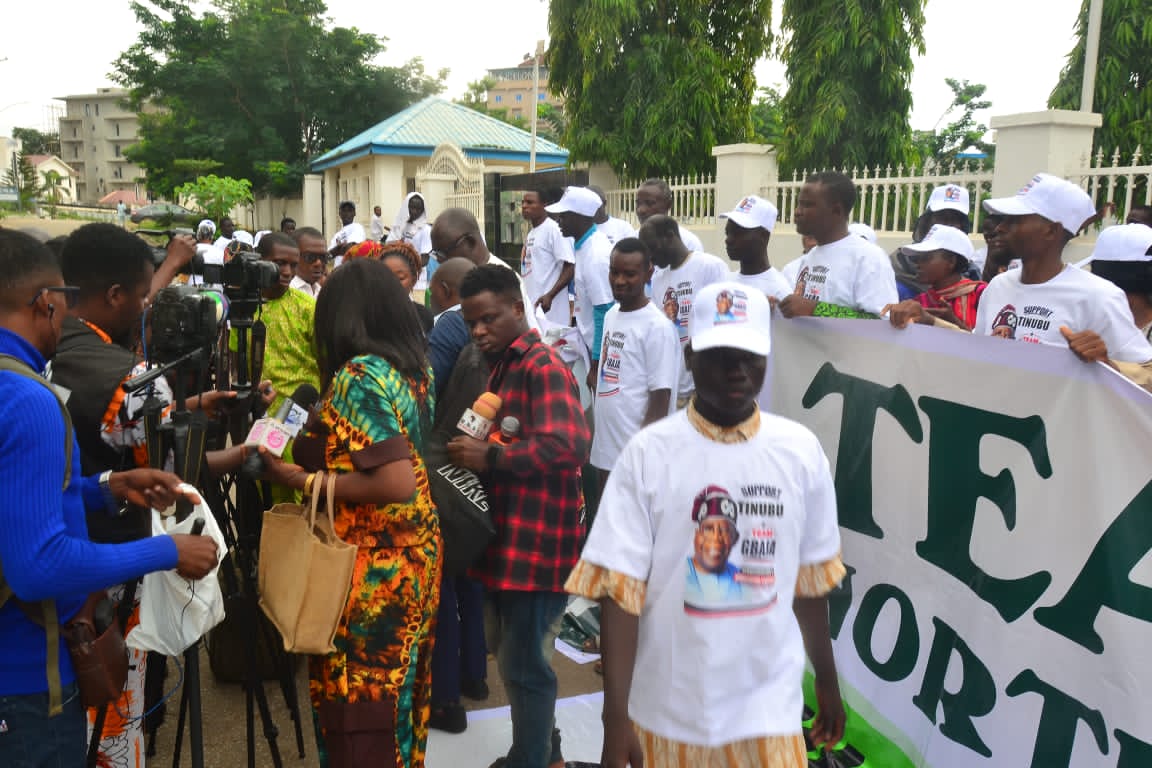
Nigerian Youth Storm National Assembly Demands Access to Present Dishonourable Award to Senator

Nigerian Youth under the leadership of Empowerment for Unemployed Youth Initiative (EUYI) on Tuesday stormed the National Assembly to present Senator Olajide Ipinsagba with the Most Dishonourable Senator of the year award.

EUYI previously threatened to present the Senator with the award, citing a plethora infractions and unwholesome dealings especially with his legislative aids and associates.

The group urged the Senate President to grant them access to the hallowed chambers to make the presentation as wake up call to other public servants.

Addressing the press at the National Assembly complex, Comrade Danesi Momoh Prince disclosed that they had gathered as early as 7 am at the National Assembly gate only to discover that the Senate is not sitting and that the embattled Senator was absent despite prior information.

“We’re angry that Senator Olajide Ipinsagba has refused to show up and collect his award for his dishonourable conduct especially as it pertains the exploitation and underemployment of Nigeria youth under his office

“How can a Senator be paying his legislative aid 30,000 naira when the national minimum wage is 70,000 Naira? Is he the only one that needs money? Is it not wickedness to treat unemployed Nigerian youth like that?”, he queried.

The group vowed to go ahead and present the award to the Senator in person, be it in the Senate Chambers or his house. We shall however not give the award to anybody but the senator due to the “seriousness of his offense”