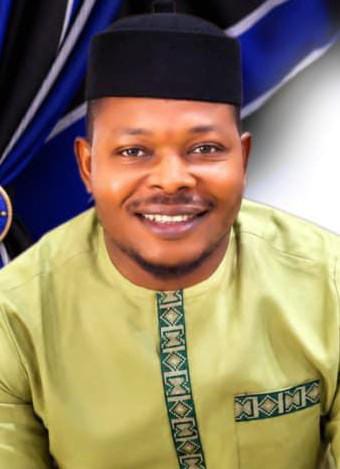
Chief Ambassador Eka A’adu Dickson, Chairman and CEO of Ekason Group of Companies, has sent heartfelt greetings to the Igede Nation as the people prepare to celebrate the annual Igede Agba Festival today.The Igede Agba Celebration, observed every September, is one of the most significant cultural events of the Igede people. It marks the new yam harvest and symbolizes gratitude, unity, and continuity of tradition. For generations, the festival has been a rallying point for Igede sons and daughters at home and abroad, who gather to honor their heritage through dance, music, prayers, and communal feasting.Chief Dickson, who holds the traditional title of Ota-Okpenyi Ny’Igede, extended his felicitations to the Adirahu Ny’Igede, HRH Chief Oga Ero (Rtd), the Igede Intermediate Area Traditional Council, and the Chairmen of Oju and Obi Local Government Councils, alongside all Igede political, cultural, and religious leaders. He described the festival as a proud reminder of the resilience and cultural identity of the Igede people.He noted that Igede Agba is not only about celebrating the harvest but also about strengthening the bonds of kinship and reaffirming the collective pride of the Igede Nation. He emphasized that the festival serves as a beacon of unity, inspiring younger generations to embrace their roots and uphold the values of hard work, gratitude, and community spirit.“Igede Agba is more than a festival; it is a celebration of who we are as a people. It is a time to strengthen our bonds, honor our traditions, and inspire the younger generation to carry forward the pride of Igede,” he said.As a philanthropist and cultural advocate, Chief Dickson has consistently supported initiatives that uplift communities and promote Igede heritage. His leadership and goodwill have been instrumental in encouraging cultural preservation and fostering development across Igede land. He commended the traditional institutions for their steadfast role in sustaining cultural valuesHere’s the expanded, publication-ready version of the story with the traditional institution and leaders included, written in a straight, professional newspaper style:Chief Ambassador Eka A’adu Dickson Extends Warm Felicitations to Igede Nation on Igede Agba CelebrationChief Ambassador Eka A’adu Dickson, Chairman and CEO of Ekason Group of Companies, has sent heartfelt greetings to the Igede Nation as the people prepare to celebrate the annual Igede Agba Festival today.The Igede Agba Celebration, observed every September, is one of the most significant cultural events of the Igede people. It marks the new yam harvest and symbolizes gratitude, unity, and continuity of tradition. For generations, the festival has been a rallying point for Igede sons and daughters at home and abroad, who gather to honor their heritage through dance, music, prayers, and communal feasting.Chief Dickson, who holds the traditional title of Ota-Okpenyi Ny’Igede, extended his felicitations to the Adirahu Ny’Igede, HRH Chief Oga Ero (Rtd), the Igede Intermediate Area Traditional Council, and the Chairmen of Oju and Obi Local Government Councils, alongside all Igede political, cultural, and religious leaders. He described the festival as a proud reminder of the resilience and cultural identity of the Igede people.He noted that Igede Agba is not only about celebrating the harvest but also about strengthening the bonds of kinship and reaffirming the collective pride of the Igede Nation. He emphasized that the festival serves as a beacon of unity, inspiring younger generations to embrace their roots and uphold the values of hard work, gratitude, and community spirit.“Igede Agba is more than a festival; it is a celebration of who we are as a people. It is a time to strengthen our bonds, honor our traditions, and inspire the younger generation to carry forward the pride of Igede,” he said.As a philanthropist and cultural advocate, Chief Dickson has consistently supported initiatives that uplift communities and promote Igede heritage. His leadership and goodwill have been instrumental in encouraging cultural preservation and fostering development across Igede land. He commended the traditional institutions for their steadfast role in sustaining cultural values and guiding the people, while also praising the local government chairmen for their contributions to community progress.Today’s celebration is expected to be marked by colorful displays of tradition, with masquerades, traditional dances, and communal gatherings that highlight the rich cultural tapestry of the Igede people. It will also serve as a reminder that culture remains a vital force in shaping identity and unity.Chief Dickson’s message resonates with the broader vision of progress and solidarity that the festival embodies. His felicitations to the Igede Nation underscore the importance of cultural pride and the enduring spirit of togetherness that defines Igede Agba.As the Igede Nation celebrates today, the festival stands as a testament to the people’s resilience, their gratitude for the harvest, and their unwavering commitment to preserving their heritage for generations to come.God bless the Igede Nation.
BAVCCA Lauds BPP Over Reforms, Vows Fight Against Procurement Corruption
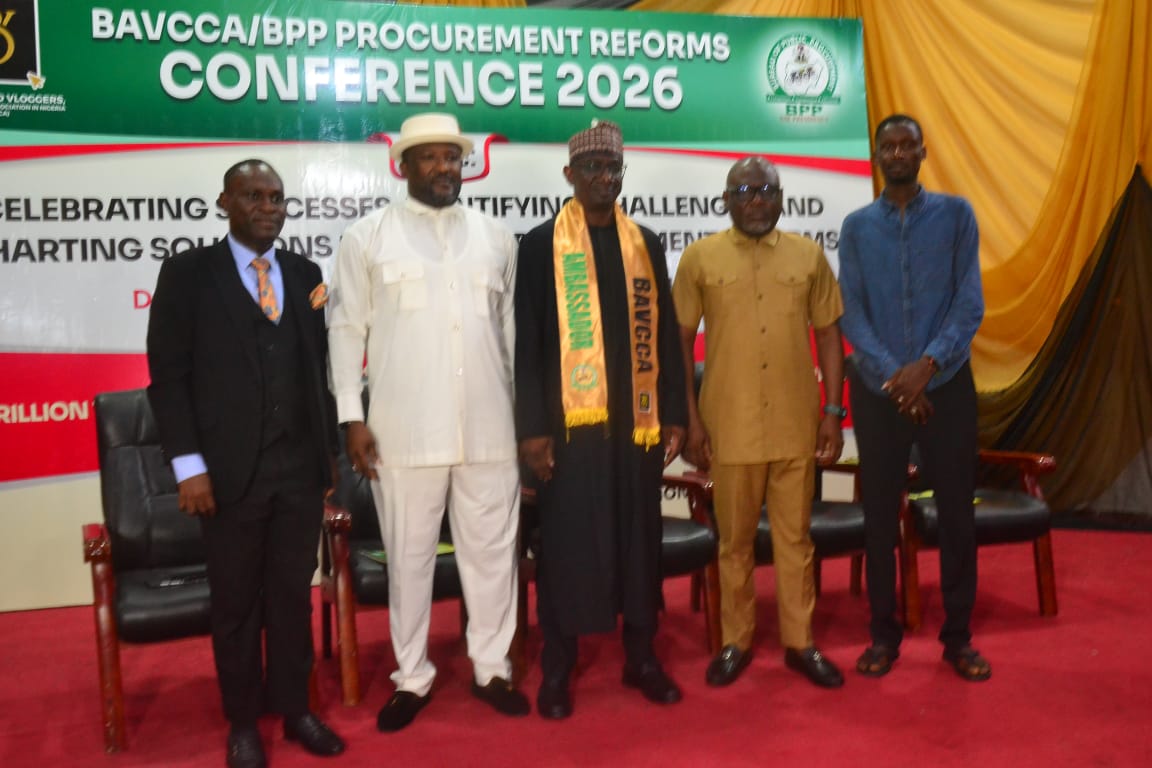
The Bloggers and Vloggers, Content Creators Association of Nigeria, BAVCCA, has lauded the Director General of the Bureau of Public Procurement (BPP), Dr. Adebowale Adedokun, for his remarkable achievements within a short period in office, while disclosing their resolve help strengthen government institution against corruption and foster national development.
President of BAVCCA, Ikechukwu Chukwunyere, disclosed this on Thursday at the 2026 BPP Procurement Reforms Conference held at the Women Development Centre, Abuja.
Chukwunyere described Adedokun’s achievements and commitment to repositioning the procurement system within a short period in office as exceptional, adding that. the reforms and institutional renewal efforts under Adedokun had attracted the association’s public commendation.
He also revealed BAVCCA will submit detailed letters and evidence of alleged corruption uncovered through its civic monitoring and digital investigations to the Economic and Financial Crimes Commission.
Chukwunyere said the association had uncovered what he described as “deeply troubling patterns of wrongdoing” within parts of the public system.
He said the documents to be submitted to the EFCC would identify implicated government institutions and draw attention to alleged acts of corruption observed by the association.
“ No institution is above scrutiny, and transparency must be matched with consequences where necessary,” he said.
The BAVCCA president spoke on the theme, “Celebrating Successes, Identifying Challenges, and Charting Solutions for Public Procurement Reforms,” at the conference organised in collaboration with stakeholders in the procurement sector.
He said public procurement was not merely about contracts and procedures but involved the responsible management of resources belonging to Nigerians.
According to him, every naira saved through efficient procurement could be redirected to critical sectors such as infrastructure, healthcare, education and security.
Chukwunyere called for stronger collaboration among the Bureau of Public Procurement, media organisations, civil society groups and digital content creators to promote transparency and public understanding of procurement reforms.
He said digital media practitioners had a responsibility to ensure that information published on their platforms was accurate, balanced and presented within the proper context.
“Responsible digital media can complement the work of institutions such as BPP by educating citizens, explaining procurement reforms, drawing attention to legitimate concerns and helping to counter misinformation,” he said.
While identifying capacity gaps, resistance to change, bid manipulation, data challenges and enforcement as some of the challenges confronting public procurement, Chukwunyere said addressing them would require more than government action.
He advocated stronger institutions, competent procurement professionals, technology, public awareness and responsible citizen participation.
On the 2027 general elections, the BAVCCA president announced plans by the association to organise governorship and presidential debates ahead of the polls.
He said the debates would provide candidates with platforms to present their manifestos and explain their plans directly to Nigerians.
Chukwunyere urged Nigerians to participate actively in the electoral process by registering, obtaining their Permanent Voter Cards and making informed choices based on competence, character, capacity and credible programmes.
He also appealed to politicians and their supporters to shun hate speech, incitement, violence and electoral malpractice.
He urged Nigerians not to sell their votes or allow themselves to be used to perpetrate violence, stressing that political disagreements should not destroy relationships among citizens.
“Let us disagree politically without becoming enemies. Let us campaign on issues and ideas, not hatred and violence,” he said.
He maintained that building a better Nigeria required not only political leadership but also an informed, active and responsible citizenry.
ICPC’s War Against Corruption: How Musa Aliyu Is Reclaiming Nigeria’s Stolen Wealth
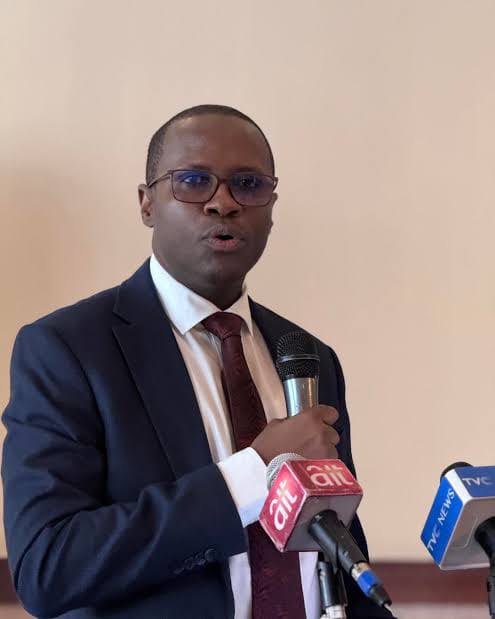
Barely a week ago, the Independent Corrupt Practices and Other Related Offences Commission once again proved that Nigeria’s anti-graft war is far from a toothless bulldog. Chairman Dr Musa Adamu Aliyu, SAN, disclosed to State House correspondents in Abuja that his commission had unearthed yet another fake government agency, this time operating brazenly within the Office of the Secretary to the Government of the Federation. The phantom outfit, calling itself the National Brands Development and Made in Nigeria Special Project Office, had somehow managed to secure office accommodation, gain access to public servants, open bank accounts and even wriggle its way into the 2026 national budget, all without any legitimate presidential authorisation.
The discovery was not accidental. It emerged from the ICPC’s dogged investigation into the earlier scandal involving the fake Presidential Foreign Intervention Promotion Council, an outfit promoted by one Adeniyi Adeyemi Matthew that had similarly infiltrated government structures before Aliyu’s team blew the lid off it. Following his Friday briefing to President Bola Ahmed Tinubu, the President ordered the immediate arrest of George Buchi Nwabueze, identified as the man behind the new fake agency, and directed the suspension of three permanent secretaries in the OSGF: M.S. Danjuma, Nandungu Gagare and Richard Pheelangwah, over the circumstances that allowed the fraudulent office to thrive under their watch. Investigators further found that the outfit had built an elaborate structure complete with an executive director, zonal directors, state coordinators and even foreign representatives, a level of sophistication that speaks to how deeply corruption can burrow into government machinery when vigilance slips.
The ICPC did not stop at exposing the fraud. It went further to indict the Budget Office of the Federation for negligence, establishing that officials had processed and onboarded the phantom council into the 2026 Appropriation Act despite glaring gaps in its documentation, relying instead on informal engagements and unverified scanned approvals rather than due diligence. It was a sobering reminder that corruption does not always announce itself with the theft of physical cash; sometimes it hides in the quiet failures of institutional process, waiting for a vigilant commission to catch what ordinary oversight missed.
This latest exposure is only the newest chapter in what has been a remarkably consistent record for Aliyu since he took the reins as the Commission’s fifth substantive chairman. In his first year alone, he reported cash recoveries of nearly ₦30 billion domiciled in ICPC recovery accounts, alongside almost ₦11 billion recovered as Value Added Tax and remitted to the Federal Inland Revenue Service, and ₦10 billion clawed back from the COVID-19 vaccine fund and returned to the treasury. Forfeited assets in that period alone were valued at ₦2.5 billion plus close to a million dollars in foreign currency.
The momentum has not slackened. By 2024, the Commission had recovered more than ₦20 billion in cash and properties from corrupt individuals. The following year proved even more fruitful: 2025 closed with the ICPC announcing recoveries of ₦37.44 billion and over $2.35 million through asset seizures and forfeitures, one of its most significant annual hauls since the Commission’s founding. That year also saw the agency investigate 263 cases against a target of 250, file 61 cases in court, and secure a conviction rate of 55.74 percent, including the notable jailing of a University of Calabar professor for abuse of office.
Beyond the courtroom victories and cash recoveries, Aliyu has placed heavy emphasis on tracking public infrastructure spending through the Commission’s Constituency and Executive Projects Tracking Initiative. As of the middle of this year, that initiative had tracked over four thousand five hundred public projects worth more than ₦22.5 trillion nationwide between 2023 and June 2026, recovering stalled projects valued at over ₦507 billion and generating an estimated ₦385.6 billion in savings for government coffers. Separately, the Commission has pointed to recoveries exceeding ₦130 billion drawn from public projects worth more than ₦35 trillion, alongside court-ordered forfeitures including properties worth over ₦5 billion tied to the Federal Mortgage Bank of Nigeria and nearly ₦942 million recovered from a 2024 payroll fraud scheme.
Taken together, the figures tell a story of an anti-corruption agency that, under Aliyu’s watch, has shifted from mere rhetoric to measurable results, running into hundreds of billions of naira reclaimed, saved or redirected back into the Nigerian treasury. Yet the chairman himself has been candid that the fight is far from over. He has repeatedly appealed to the National Assembly for improved funding, warning that inadequate resources continue to hamper the Commission’s manpower, logistics and operational capacity, even as staff morale suffers under the weight of high-risk investigative work. He has also pushed back firmly against suggestions that the Commission is being weaponised for political witch-hunting, insisting that its work is driven strictly by evidence and due process rather than political considerations.
If the recent unmasking of yet another ghost agency within the corridors of government is any indication, Nigerians can expect the ICPC under Musa Aliyu to keep peeling back the layers of institutional rot, one budget line, one phantom office, and one recovered billion at a time.
Hon. Hamma Adama Ali Kumo Congratulates Senator Yari And APC Leaders On Campaign Council Appointments
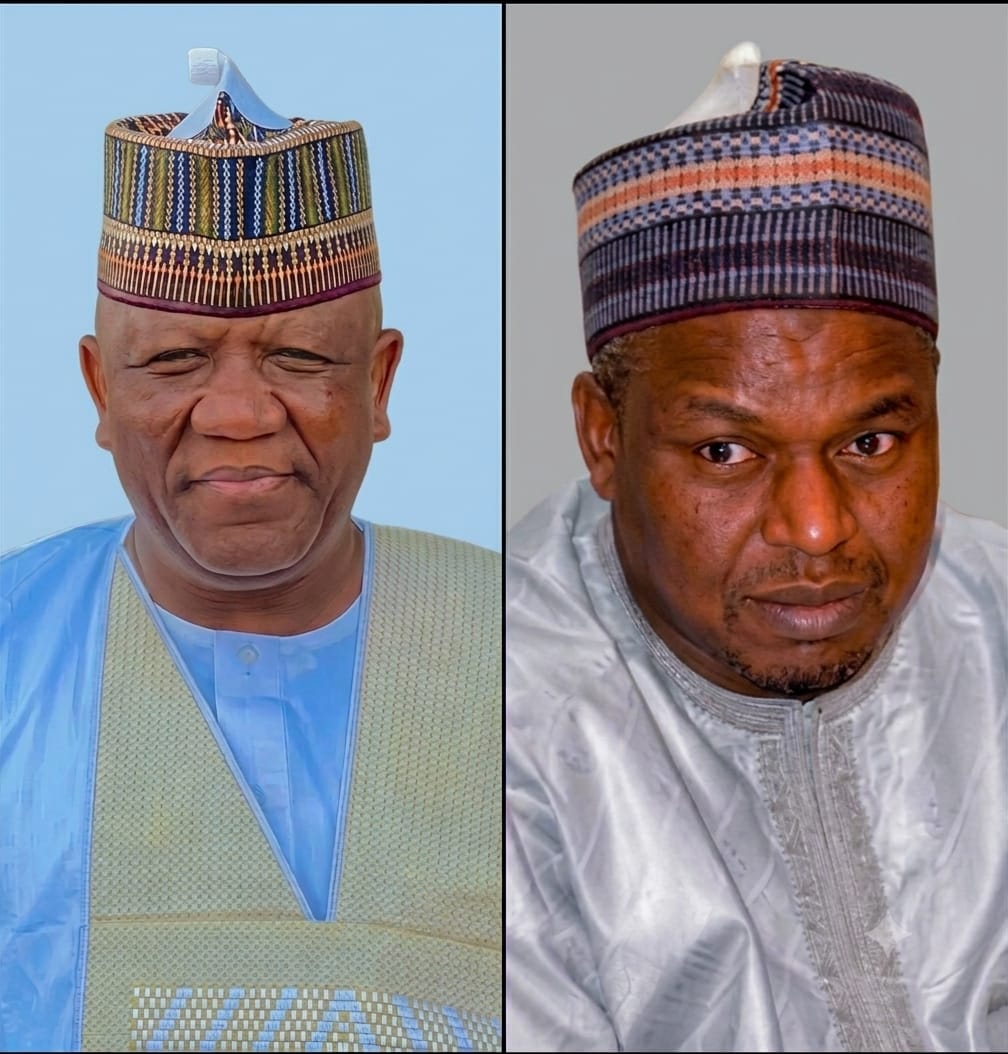
Hon. Hamma Adama Ali Kumo, Chairman Board of Trustees of the Industrial Training Fund (ITF) and Deputy National Financial Secretary of the All Progressives Congress (APC), has extended warm congratulations to Distinguished Senator Abdulaziz Yari on his appointment as Director-General of the APC Presidential Campaign Council for the 2027 Presidential Election. He also congratulated all other leaders and members selected to serve in various capacities within the campaign structure, describing them as the best team chosen to lead the party to victory.In his statement, Hon. Kumo commended the APC leadership for what he termed a strategic and thoughtful selection process, noting that the appointments reflect a deliberate choice of tested and trusted individuals with the political experience, grassroots reach, and organisational capacity required to deliver success for the party. He emphasized that Senator Yari’s appointment as Campaign DG is a recognition of his proven ability to mobilize support across the country and his wealth of political experience, which will be critical in steering the campaign to victory.Hon. Kumo expressed confidence that under Senator Yari’s leadership, the APC Presidential Campaign Council will consolidate the gains of the Renewed Hope Agenda and drive the Tinubu/Shettima 2027 campaign to resounding success. He stressed that the combination of seasoned politicians, technocrats, and grassroots mobilizers chosen for the campaign council demonstrates the party’s readiness to engage Nigerians with a strong, united, and purposeful message.He further noted that the appointments come at a crucial time when the APC is focused on strengthening internal unity, deepening reforms, and delivering on its promises to Nigerians. According to him, the calibre of individuals selected to lead the campaign is a clear indication that the party is determined to secure another resounding victory in 2027.Speaking on behalf of his office and political associates, Hon. Kumo congratulated every appointee, urging them to see their roles as a call to national service and a responsibility to strengthen the unity and progress of the APC. He prayed for God’s wisdom, strength, and guidance for Senator Yari and the entire campaign team as they embark on this important national assignment.He concluded by reaffirming his loyalty to the APC and its leadership, stressing that with the calibre of individuals selected to lead the campaign, the party is well positioned to secure victory in the 2027 presidential election and continue delivering on its promises to Nigerians.HON. HAMMA ADAMA ALI KUMO
Chairman, Board of Trustees ITF
Deputy National Financial Secretary, APC
BUDGET OFFICE OF THE FEDERATIONRESPONSE TO THE 2026 U.S. DEPARTMENT OF STATE FISCAL TRANSPARENCY REPORT ON NIGERIA
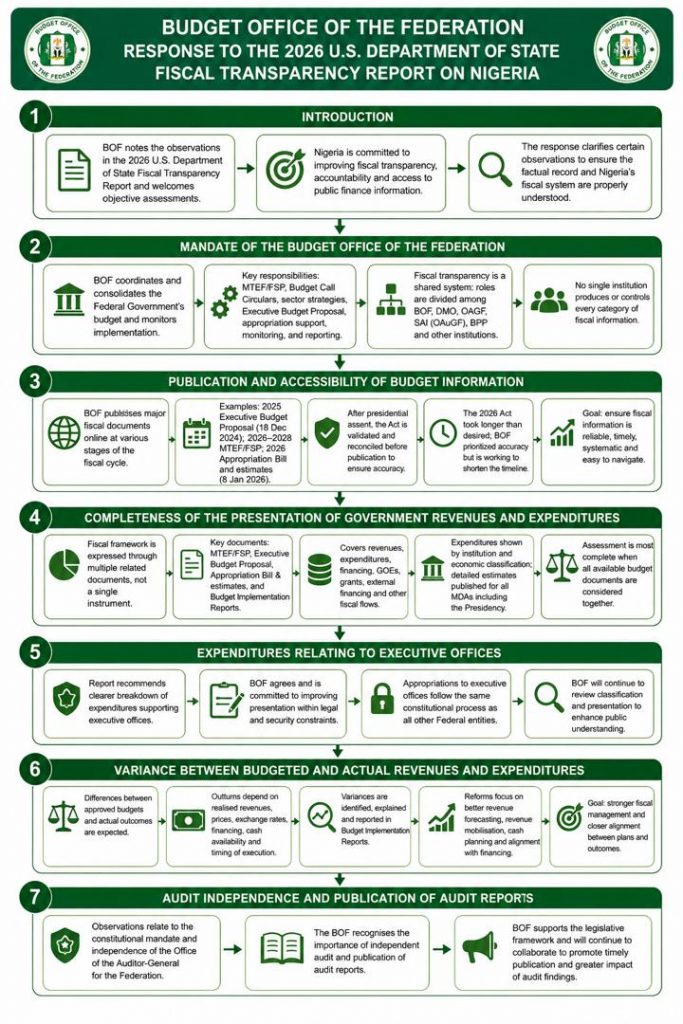
- Introduction
The Budget Office of the Federation (BOF) notes the observations on Nigeria contained in the 2026 Fiscal Transparency Report of the United States Department of State. The Federal Government welcomes objective assessments of its public financial management system and remains committed to the continuous improvement of fiscal transparency, accountability and access to public finance information.
The Report acknowledges important areas in which Nigeria meets fiscal transparency requirements, including the public availability of the enacted budget and end-of-year fiscal information; the disclosure of debt obligations, including major state-owned enterprise debt; the legal and disclosure framework governing the sovereign wealth fund; and the existence and application of statutory procedures governing natural-resource extraction contracts and licences.
Other observations in the Report require clarification when considered in the context of Nigeria’s institutional allocation of responsibilities and the range of budgetary and fiscal information already in the public domain. The purpose of this response is therefore not to dispute the value of external scrutiny, but to ensure that the factual record and the structure of Nigeria’s fiscal system are properly understood. - Mandate of the Budget Office of the Federation
The BOF is responsible for coordinating the preparation and consolidation of the Federal Government’s budget, and for monitoring and reporting on its implementation within the framework established by law and government fiscal policy.
Its responsibilities include coordinating the preparation of the Medium-Term Expenditure Framework and Fiscal Strategy Paper (MTEF/FSP); issuing Budget Call Circulars; coordinating the preparation of Medium-Term Sector Strategies; coordinating the preparation and consolidation of the Executive Budget Proposal; supporting the appropriation process; monitoring budget implementation; and producing periodic Budget Implementation Reports.
These responsibilities form part of a wider public financial management system in which different institutions perform duties assigned to them by the Constitution and by statute. Debt recording and management fall principally within the remit of the Debt Management Office; government accounting, treasury and cash-management functions reside principally in the Office of the Accountant-General of the Federation; external audit is constitutionally assigned to the Office of the Auditor-General for the Federation; while federal procurement operates within the statutory framework administered by the Bureau of Public Procurement and individual procuring entities.
The observations in the Report are therefore best considered in the context of this institutional division of responsibility. Fiscal transparency is the product of an interconnected system; no single institution produces or controls every category of information on which an assessment of the entire system must depend. - Publication and Accessibility of Budget Information
The Report recommends that Nigeria make its Executive Budget Proposal widely and easily accessible to the public, including online. The BOF respectfully notes that the online publication of the Executive Budget Proposal and other major budget documents has, for several years, formed part of the Federal Government’s established budget process.
The BOF routinely publishes major documents produced at successive stages of the fiscal cycle. These include the MTEF/FSP, the Executive Budget Proposal and detailed estimates, Appropriation Acts, implementation guidelines, and periodic Budget Implementation Reports.
For example, the 2025 Executive Budget Proposal was published on the BOF website on 18 December 2024 alongside the 2025 Appropriation Bill. The 2026-2028 MTEF/FSP was similarly published, while the 2026 Appropriation Bill and its detailed estimates were placed on the BOF website on 8 January 2026.
The purpose of continuing reform, therefore, is not to create a practice of publication where none exists, but to make an established practice more timely, systematic and easier for users to navigate. Fiscal information is useful not merely because it exists, but because it is published at the appropriate time, clearly identified and readily connected to the other documents needed to understand the fiscal picture.
Following presidential assent to an Appropriation Act, the signed instrument is subjected to validation and line-by-line reconciliation against the version passed by the National Assembly before the final budget details are reflected on the Government’s financial management platform and released for public use. This process is intended to ensure that the figures, codes and statutory references placed before the public correspond with the instrument that has become law.
For the 2026 Appropriation Act, this process took longer than would ordinarily be desirable. The Budget Office considered it preferable to complete the necessary validation before publication rather than place in the public domain figures that might later require correction. That choice protected the integrity of the published record, but the delay also demonstrates the need to shorten the interval between presidential assent and public availability.
The lesson is therefore twofold: published fiscal information must be reliable, but that reliability must increasingly be achieved without sacrificing timeliness. The BOF is reviewing its internal sequencing, validation and publication arrangements with that objective in mind. - Completeness of the Presentation of Government Revenues and Expenditures
The Report recommends that the budget provide a substantially complete picture of government revenues and expenditures. Nigeria’s fiscal framework is expressed through several related documents rather than through a single instrument. The MTEF/FSP establishes the macroeconomic and fiscal assumptions underlying the annual budget. The Executive Budget Proposal, Appropriation Bill and detailed estimates set out proposed expenditure allocations, revenue assumptions and the financing framework. Budget Implementation Reports subsequently show performance against approved benchmarks.
Taken together, these documents contain extensive information on projected revenues, expenditure proposals, financing and the operations of Government-Owned Enterprises. The budget documentation also provides information on grants, external financing and other material fiscal flows within the Federal Government’s reporting framework.
Expenditure is presented through institutional and economic classifications, including allocations to ministries, departments and agencies. The Government also publishes detailed estimates relating to the Presidency and other institutions of government, subject always to the legitimate requirements of law, national security and operational confidentiality.
The BOF therefore considers that an assessment of Nigeria’s fiscal transparency is most complete when it examines the available budget documents as a body, rather than treating any one document as though it were intended to contain the entire fiscal account.
This does not remove the need for improvement. Citizens, investors and other users of fiscal information should be able to understand the broad relationship among revenue, expenditure, financing and fiscal risks without having to reconstruct the fiscal picture from numerous documents. The Office will therefore continue to improve consolidation, cross-referencing and presentation so that information already disclosed across different fiscal documents can be more readily understood as a coherent whole. - Expenditures Relating to Executive Offices
The Report recommends a clearer breakdown of expenditures supporting executive offices. The BOF agrees with the transparency objective underlying this recommendation.
Appropriations to offices and institutions within the Executive are subject to the same constitutional appropriation process that applies to other Federal Government entities. Detailed estimates are already published within the budget documentation. Where expenditures are currently aggregated within broader administrative, personnel or service-wide classifications, there remains scope to improve their presentation without compromising legitimate security, statutory or operational considerations.
The BOF will accordingly continue to examine the classification and presentation of such expenditures with a view to improving public understanding within the applicable legal and security framework. - Variance Between Budgeted and Actual Revenues and Expenditures
The Report observes that actual revenues and expenditures did not reasonably correspond with the enacted budget. The BOF considers that this observation would benefit from greater precision regarding the standard against which such correspondence is being assessed.
An appropriation is an authority to spend; it is not, in every circumstance, a guarantee that the entire amount appropriated will become available in cash. Actual fiscal outcomes depend on realised revenues, oil production and prices, tax collections, exchange rates, financing conditions, cash availability and the timing of expenditure execution. A difference between an approved budget and the eventual outturn must therefore be interpreted rather than merely observed.
The central transparency question is whether material deviations are identified, explained and reported. This is one of the purposes of the Budget Implementation Reports produced by the BOF, which compare revenue and expenditure performance against approved benchmarks and explain significant departures from the fiscal plan.
At the same time, persistent or unusually large differences between appropriations and outturns can weaken the usefulness of the budget as an instrument of economic management. The Government’s continuing reforms therefore place greater emphasis on realistic revenue forecasting, improved revenue mobilisation, stronger commitment controls, better cash planning and closer alignment between appropriations and available financing. - Audit Independence and Publication of Audit Reports
The observations concerning the independence of the Supreme Audit Institution and the publication of audit reports relate principally to the constitutional and statutory mandate of the Office of the Auditor-General for the Federation and to the wider legislative framework governing public audit.
The BOF supports a strong and independent external audit function as an essential component of fiscal accountability. It will continue to provide the budgetary and implementation information required within its mandate and to cooperate with the Office of the Auditor-General for the Federation and other oversight institutions.
Institutional or legislative questions concerning the independence, powers and publication obligations of the Supreme Audit Institution are, however, appropriately addressed in conjunction with the Office of the Auditor-General for the Federation, the National Assembly and other authorities responsible for the applicable legal framework. - Public Procurement Information
Federal procurement is governed by the Public Procurement Act and the institutional framework administered by the Bureau of Public Procurement, while procurement transactions are undertaken by individual procuring entities. The recommendation concerning the publication of accessible information on procurement contracts should therefore be addressed principally through that framework.
The BOF nevertheless recognises the close relationship among appropriation, procurement, commitment and payment. Greater interoperability among budget, procurement and treasury information systems would materially improve the public’s ability to follow expenditure from appropriation through procurement to eventual payment and delivery. The Office supports the continued development of such integrated public financial management arrangements. - Timeliness, Institutional Capacity and the Fiscal Responsibility Framework
Fiscal transparency should be treated as a continuing institutional obligation, not as an exercise undertaken solely in response to an external assessment. The experience of producing statutory fiscal reports has, however, brought into sharper focus a question that warrants attention beyond administrative improvement alone.
Fiscal reports are assembled from numerous sources across government. Their reliability depends on the timely submission of information, reconciliation among institutions, resolution of discrepancies and verification before publication. Where these processes repeatedly require more time than the statutory reporting period permits, the response should not simply be to normalise lateness.
Government must first improve the processes that can be improved: clearer responsibility for source data, earlier submission, greater automation, greater interoperability among systems and stricter reporting discipline.
However, where experience over time demonstrates that a statutory deadline no longer reasonably accommodates the number of institutions, datasets and verification steps required to produce a reliable report, there is also a legitimate case for reviewing the law itself.
The purpose of the Fiscal Responsibility Act is to strengthen fiscal discipline, accountability and transparency. Its reporting provisions should therefore impose deadlines that are demanding enough to compel administrative discipline, but sufficiently realistic to permit the publication of information whose accuracy can be defended.
The Federal Government should accordingly consider, through the appropriate legislative process, whether aspects of the reporting timetable under the Fiscal Responsibility Act require amendment in the light of experience since its enactment. Such a review should not weaken reporting obligations. Its purpose should be the opposite: to establish timelines that are credible, enforceable and capable of producing reports that are both timely and reliable. - Institutional Engagement and Continuing Improvement
The Fiscal Transparency Report can also serve as a basis for constructive technical engagement. The BOF considers it useful to deepen dialogue with the United States Government and other development partners on the methodology used in fiscal transparency assessments, particularly the treatment of multiple publicly available fiscal documents, the measurement of budget credibility, and the standards applied to timeliness and accessibility.
Such engagement should be approached as an opportunity for clarification and institutional learning rather than as a dispute over the assessment. The Office may also explore appropriate technical assistance arrangements to strengthen its capacity in fiscal reporting, information management, digital publication, interoperability and public accessibility. Any such cooperation should complement Nigeria’s own reforms and operate within the Government’s legal, institutional and information-security framework. - Conclusion
Nigeria accepts the principle at the heart of fiscal transparency: citizens and other stakeholders should be able, without unnecessary difficulty, to know what the Government intends to raise and spend, what the legislature has authorised, what was eventually received and spent, and how public resources were accounted for and audited.
Nigeria has already built a substantial architecture for making this information public. The question before us is therefore not whether disclosure exists, but how to make the existing system faster, clearer, more complete and easier to understand.
There are areas in which Government must improve its own processes. There are areas in which fiscal information already exists but must be assembled and presented more coherently. There are responsibilities that belong to institutions other than the Budget Office. There may also now be statutory reporting timelines whose continued practicality deserves examination in the light of experience.
A mature system should be able to acknowledge all four points without defensiveness.
The Budget Office therefore welcomes external assessments that assist Nigeria in strengthening its institutions. It also considers it important that such assessments take account of the full range of fiscal documents made publicly available and of the constitutional and statutory division of responsibilities among institutions.
The Federal Government remains committed to a budget system in which fiscal decisions are not only lawful and disciplined, but are also increasingly transparent, accessible, intelligible and capable of independent public scrutiny.
Tanimu Yakubu
Director-General
Budget Office of the Federation
Abuja
18 August 2026
Restructuring: Voices Rise for Ancient Igala Kingdom Regional Autonomy
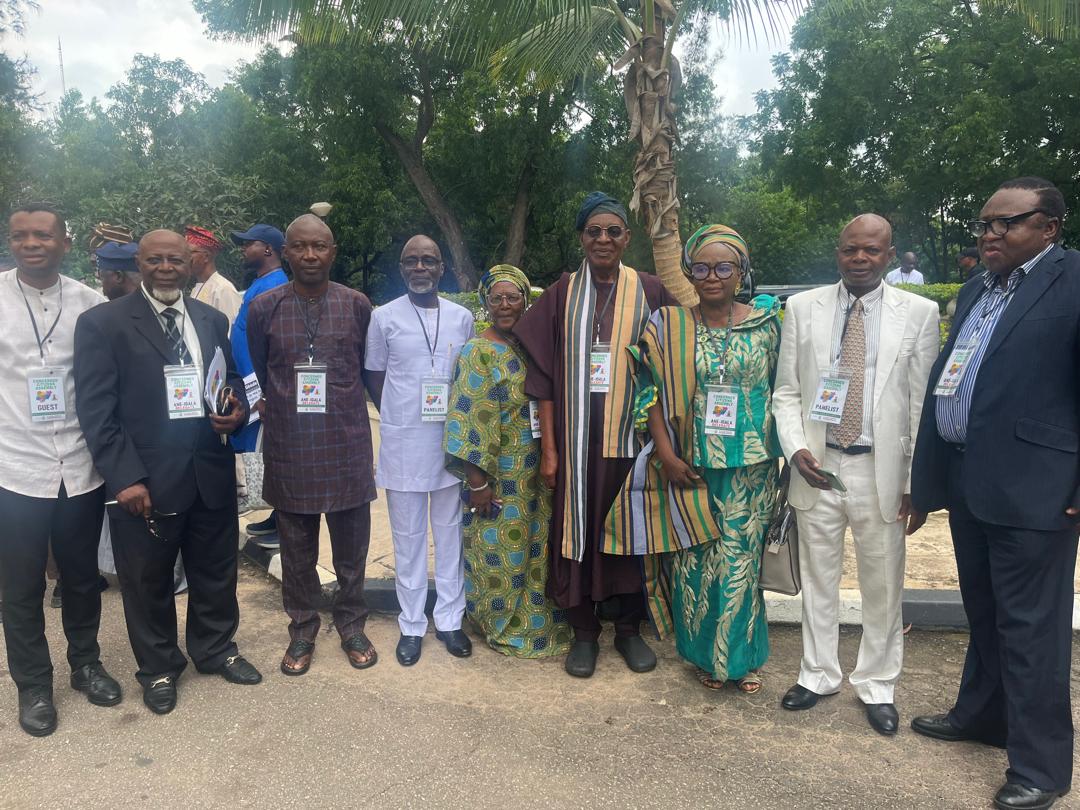
Representatives of the proposed Ane Igala Region have called for the creation of an autonomous region within a restructured Nigeria, citing the historical identity of the old Igala Kingdom, resource control, equitable representation and regional security among the reasons for their demand.
The position was contained in a memorandum presented by Professor Lucy Jumeyi Ogbadu on behalf of representatives of the Ane Igala Region at a constitutional restructuring summit on August 8, 2026. The memorandum proposes a region initially comprising Ankpa, Dekina, Bassa, Olamaboro, Ofu, Idah, Ibaji, Igalamela/Odolu, Omala and Kogi Local Government Areas, as well as the eastern flanks of Lokoja and Ajaokuta, with an estimated population of about four million.
The memorandum said the proposed region was historically part of a powerful precolonial kingdom centred on Idah and governed by the Attah Igala. It also noted the presence of other ethno-linguistic groups, including Bassa Nge, Bassa Nkomo, Igbirra Mozun and Igbirra Koto, with whom it said the Igala had historically co-existed.
As part of its historical argument, the memorandum referred to the September 6, 1841 agreement at Idah between the ‘Attah of the Egarra/Igalla country’ and representatives of Queen Victoria. It said the British engagement with the Attah demonstrated the existence of an established political authority in the territory before subsequent colonial restructuring. Contemporary British records also referred to the Attah as the sovereign chief of the Egarra or Igalla country.
The memorandum attributed the subsequent fragmentation of the kingdom to successive colonial and post-colonial administrative arrangements. It said that in 1915 different parts of the kingdom were placed under Onitsha, Munchi and Nasarawa provinces, while subsequent political reorganisations eventually left parts of the historical territory in different states.
Against this background, the representatives proposed the creation of an autonomous Ane Igala Region, headquartered in Idah, and the voluntary reintegration of Igala communities in parts of Benue, Nasarawa, Enugu, Anambra, Delta, Edo and other parts of Kogi State. The proposed region, according to the memorandum, would operate a parliamentary system with equal representation for constituent local governments and rotational regional leadership.
The memorandum also called for greater control of the region’s natural resources, arguing that its agricultural, mineral, coal and oil resources had not translated into commensurate development. It cited coal mining in particular, claiming that more than 100 trucks of coal leave the region for other parts of Nigeria and Niger Republic while local communities contend with environmental degradation and mining-related deaths.
On oil, the representatives argued that despite the designation of Kogi State as an oil-producing state, the benefits of the 1per centnt derivation arrangement had not reached the region in meaningful development terms. Their proposal is for the region to exercise greater control over its resources, attract investment and remit 10 per cent of its accrued revenue to the Federal Government for responsibilities retained at the centre.
Security was identified as the third major restructuring request. The memorandum said communities in the proposed region were facing banditry, terrorism, kidnapping, and other criminal activities, with insecurity disrupting farming and economic activities. It proposed an integrated regional security network comprising a Regional Police, Civil Defence Corps, Forest Guards, Marine Guards, and Community Vigilantes.
The representatives further proposed a broader restructuring of Nigeria into federated regions, with each region operating under its own constitution and exercising authority over resources and matters outside the Federal Government’s jurisdiction. The memorandum also called for equality of representation at the Federal Executive Council and rotational leadership of the central government among the regions.
Concluding the memorandum, the Ane Igala representatives requested the creation and recognition of Ane Igala Region as an autonomous region within a proposed Federated Regions of Nigeria, alongside the reintegration of Igala communities currently located in Anambra, Benue, Delta, Edo, Enugu and Nasarawa states, as well as relevant parts of Kogi Central and Kogi West. The memorandum described the demand as a response to more than a century of territorial fragmentation and as a quest for history, justice, equity and fair play.
Dogara Celebrates Former President Ibrahim Babangida at 85, Hails His Enduring Legacy

Rt. Hon. Yakubu Dogara, former Speaker of Nigeria’s House of Representatives, has joined millions of Nigerians in celebrating the 85th birthday of former military President, General Ibrahim Badamasi Babangida (rtd), fondly known as IBB.
In a heartfelt tribute, Dogara described General Babangida as “a statesman of uncommon vision whose leadership helped shape the destiny of Nigeria.” He emphasized that Babangida’s years in power were marked by bold reforms, infrastructural expansion, and the creation of new states that gave voice and identity to millions of Nigerians.
Born on August 17, 1941, General Babangida rose through the ranks of the Nigerian Army to become Head of State in 1985. His eight-year tenure remains one of the most defining eras in Nigeria’s political and economic journey. During his administration, Babangida introduced far-reaching economic reforms, strengthened Nigeria’s federal structure through state creation, and invested in infrastructure projects that continue to serve the nation decades later.
Dogara noted that Babangida’s foresight in establishing institutions and agencies has left an enduring legacy. He highlighted the former president’s role in expanding Nigeria’s federation, ensuring equity and representation across diverse regions, and laying foundations that successive governments have built upon.
Beyond his years in office, Dogara commended Babangida’s enduring role as an elder statesman. Even in retirement at his Minna Hilltop residence, Babangida continues to provide wise counsel to successive governments and inspire younger generations with his humility, patriotism, and resilience.
He prayed for Babangida’s continued health, strength, and grace, adding that his life is a testimony of service to God and country.
As Nigerians reflect on his 85 years, Babangida’s story is not only one of military distinction and political leadership but also of enduring influence in shaping Nigeria’s path toward unity and progress. His legacy continues to resonate, reminding the nation of the importance of vision, courage, and commitment to the common good.
Group Threatens Legal Action Against Akutah Over Alleged Breach of Presidential Directive
An advocacy group, the Centre for Democracy (CDD), has given the Executive Secretary of the Nigerian Shippers Council, Pius Akutah, five days to explain why he allegedly failed to resign from his position after obtaining the All Progressives Congress (APC) governorship nomination form.
In a statement signed by its Director of Operations, Barrister Jude Oseni, and made available to journalists, the group alleged that Akutah ought to have resigned immediately after obtaining the nomination form.
The group said his alleged failure to resign breached a presidential directive requiring federal appointees seeking elective positions in the 2027 general elections to relinquish their appointments by March 31, 2026.
According to the CDD, failure to comply with the directive amounts to insubordination to President Bola Tinubu and raises questions about Akutah’s relationship with the office of the Secretary to the Government of the Federation and the Minister of Transportation.
The group threatened to institute legal action against Akutah if he failed to publicly clarify that the APC governorship nomination forms were purchased by another person without his knowledge.
The CDD further alleged that Section 88(3) of the Electoral Act would prevent Akutah from participating in the election if he is presented as the APC governorship candidate, claiming that his alleged failure to resign from public office made him ineligible to contest.
The group also claimed that the APC, or any other political party that fields Akutah as its governorship candidate, could face legal consequences over his alleged non-compliance with the resignation requirement.
“His failure to resign on May 31, 2026 has made him ineligible to contest for the 2027 governorship election in the All Progressives Congress and also in any other political party,” the statement said.
The CDD argued that presidential directives constitute orders or policy guidelines issued by the President to the executive branch of government, provided such directives do not conflict with the Constitution or laws enacted by the National Assembly.
It cited Section 5 of the 1999 Constitution, which vests executive powers of the Federation in the President, and Section 130(2), which provides that the President is the Head of State, Chief Executive of the Federation and Commander-in-Chief of the Armed Forces.
The group argued that these constitutional provisions empower the President to issue directives to officials under his authority, including heads of ministries, departments and agencies.
It also cited Section 171 of the Constitution in arguing that the President’s authority over the appointment and removal of certain public officers reinforces his power to issue administrative directives to officials under his control.
The CDD alleged that President Tinubu’s directive requiring political appointees seeking elective office to resign by March 31, 2026 was issued to ensure compliance with electoral guidelines and promote fairness ahead of the 2027 general elections.
The group further referenced Section 88(1) of what it described as the Electoral Act, 2026, which it said provides that a political appointee at any level shall not serve as a voting delegate or be voted for at the convention, congress or primary of a political party for the purpose of nominating candidates for an election.
On that basis, the CDD argued that any political appointee who failed to resign in accordance with the directive would be ineligible to participate in a party’s nomination process or emerge as its candidate.
The group therefore called on Akutah to clarify his status within five days, warning that failure to do so would prompt it to pursue legal action over what it described as an alleged breach of the presidential directive and electoral law.
OPEN LETTER TO HIS EMINENCE, THE SULTAN OF SOKOTO
NIGERIA BELONGS TO ALL OF US
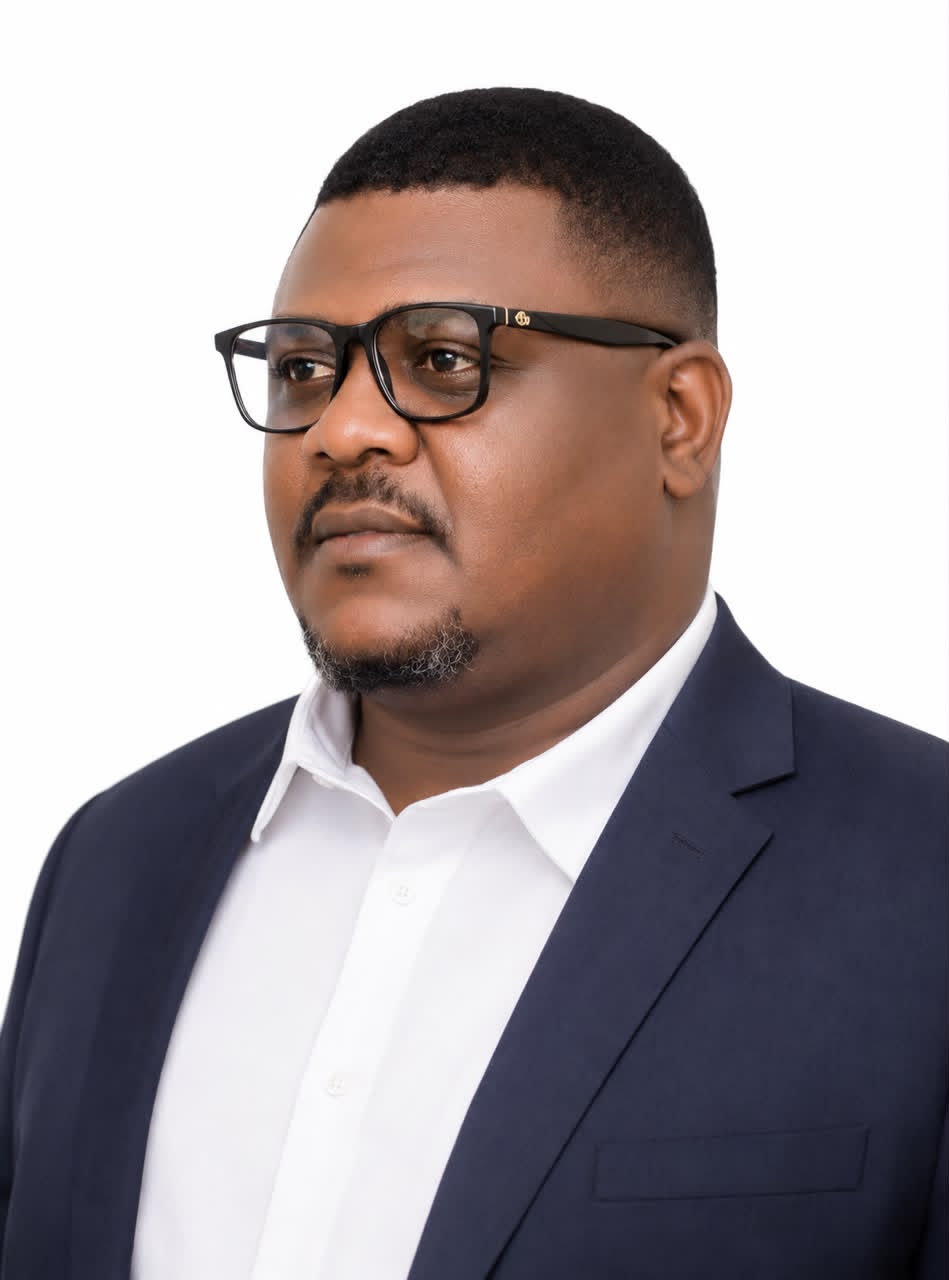
I have written this open letter to His Eminence, Alhaji Muhammad Sa’ad Abubakar III, CFR, mni, Sultan of Sokoto and President-General of the Nigerian Supreme Council for Islamic Affairs, with profound respect for his office and for the historic institution he represents.
This is not an attack on Islam, neither an attack on Christianity.
Also, It is not an attempt to diminish the historical importance of the Sultanate, rather, it is a sincere contribution to a conversation I believe Nigeria must have with greater honesty, courage and intellectual maturity:
What does equal citizenship mean in Nigeria?
Our country has a complex history involving kingdoms, caliphates, indigenous political systems, colonialism, amalgamation, independence, religion, ethnicity and competing political traditions.
But after all that history, one question remains fundamental:
Who does Nigeria belong to? My answer is simple:
Nigeria belongs to all Nigerians.
I am publishing this letter openly because I believe conversations of this magnitude should not be confined to private rooms.
I hope it reaches His Eminence.
More importantly, I hope it reaches Nigerians—Muslims and Christians alike—who believe that our future must be built on equal citizenship, mutual respect, constitutional democracy and a shared sense of belonging.
I invite people to read this letter in that spirit.
Not as a provocation or as a religious argument. But as an invitation to think.
AN OPEN LETTER TO HIS EMINENCE, ALHAJI MUHAMMAD SA’AD ABUBAKAR III, CFR, mni
SULTAN OF SOKOTO AND PRESIDENT-GENERAL, NIGERIAN SUPREME COUNCIL FOR ISLAMIC AFFAIRS
Your Eminence,
OUR HISTORY MUST BE REMEMBERED HONESTLY—BUT IT MUST NOT BECOME A CLAIM ON THE FUTURE
Nigeria’s history contains great Muslim civilisations and political institutions.
Kanem-Bornu, the Hausa states and the Sokoto Caliphate represent important chapters in the history of the territories that eventually became Nigeria.
The Sokoto Caliphate, in particular, became one of the most influential Islamic political formations in West Africa.
That history deserves recognition and respect.
But history presents us with an important question:
Does historical political authority confer permanent political ownership?
I believe the answer must be no.
The British colonial conquest and occupation of the territories that now constitute Nigeria occurred over decades, with the conquest of the Sokoto Caliphate culminating in 1903. The Northern and Southern Protectorates were subsequently amalgamated in 1914, and Nigeria achieved independence in 1960.
Whatever political arrangements existed before colonial consolidation, the Nigeria that emerged as a modern sovereign state ultimately became a constitutional republic in which citizenship could not legitimately be based upon the political history of one religion, ethnic group, kingdom or region.
Nigeria became something larger than all of those histories.
It became a country.
And that country belongs equally to the Muslim, the Christian, the adherent of another faith, and the citizen who professes no religion.
Your Eminence, Nigeria’s Constitution does not establish either Islam or Christianity as the religion of the Nigerian state.
Section 10 provides that:
“The Government of the Federation or of a State shall not adopt any religion as State Religion.”
Section 38 protects freedom of thought, conscience and religion.
Section 42 further provides constitutional protection against discrimination on the basis of religion, among other grounds.
These provisions are not merely legal technicalities. They represent an important national compact.
They establish principles of religious neutrality, religious freedom and equal citizenship.
They tell every Nigerian that his or her fundamental rights cannot legitimately depend upon belonging to the “right” religion.
That principle protects Muslims from Christian majoritarianism just as it protects Christians from Muslim majoritarianism.
And therefore, defending constitutional religious neutrality is not an attack on Islam neither an attack on Christianity.
It is protection for both.
THE DIFFICULT QUESTION OF POLITICAL SYMBOLISM
Your Eminence, this is where I believe our national conversation requires greater intellectual honesty.
A political arrangement can have two realities simultaneously:
its strategic reality and its symbolic reality.
Strategically, politicians may see a particular political ticket as an effective coalition, an electoral calculation, a mechanism for consolidating support or a means of improving political cohesion.
But citizens may interpret exactly the same arrangement symbolically.
They may ask:
Who is represented?
Who is included?
Who is excluded?
What does this say about the distribution of power?
What does this mean for people like me?
This distinction became particularly visible in Nigeria’s debate over the Muslim-Muslim presidential ticket.
Some citizens saw strategy while others saw symbolism.
Some saw political competence, Others saw the possibility of religious exclusion.
Both reactions can exist simultaneously.
A mature democracy must therefore be capable of understanding not only what a political arrangement is, but also what people believe that arrangement means.
This is not an argument against Muslims occupying political office nor should it be an argument against Christians occupying political office.
It is an argument for understanding the enormous responsibility that comes with political symbolism in a deeply religious society.
Political leaders must therefore understand that electoral strategy does not exist in a vacuum. Every political decision is interpreted through the lived experiences, fears, hopes and historical memories of the citizens who encounter it.
That is why responsible leadership requires both strategic intelligence and sensitivity to political meaning.
The Muslim citizen must not feel like a tolerated Nigerian, neither should the Christian.
This is perhaps the most important principle I wish to communicate.
A Christian should never have to feel that his citizenship is conditional upon political accommodation by Muslims. A Muslim should never have to feel that his citizenship is conditional upon political accommodation by Christians.
Neither should have to prove that his loyalty to Nigeria is greater than his loyalty to his faith.
Both should be able to say:
“Nigeria is my country, and nobody needs to give me permission to belong here.”
That is the Nigeria we should be building.
Your Eminence, traditional and religious leaders occupy a unique position in Nigerian society.
Political leaders come and go.
Governments change.
Political parties rise and fall.
But institutions such as the Sultanate carry historical memory.
That gives your words a different weight.
When a politician speaks about religion, Nigerians may suspect political calculation but when a respected religious leader speaks about coexistence, citizenship and national unity, the message can carry a moral authority that politics often cannot achieve.
This is why I believe the Sultanate has an extraordinary opportunity.
Not merely to speak for Muslims, But to speak to Nigeria.
To say clearly that the greatness of Islam in Nigeria does not require the political diminishment of Christianity. And equally, that the flourishing of Christianity in Nigeria does not require the political diminishment of Islam.
The strength of one faith should not require the weakness of another.
The security of one community should not depend upon the insecurity of another.
And the political advancement of one Nigerian should never require the political humiliation of another Nigerian simply because of religion.
WE SHOULD MOVE BEYOND THE COMPETITION FOR RELIGIOUS OWNERSHIP OF NIGERIA
There is a dangerous psychological temptation in deeply divided societies.
Each community begins to measure its security by the amount of power the other community possesses.
Then politics becomes a permanent struggle for religious arithmetic.
Who has the President?
Who has the Vice President?
Who controls the security institutions?
Who appoints judges?
Who controls the legislature?
Who controls the governors?
Who controls the economy?
And eventually, citizens stop asking the most important question:
Does the country work for everyone?
That is where we must break the cycle.
Nigeria cannot become great by producing a permanent contest between Muslim political power and Christian political power.
It can become great when both communities begin demanding something larger:
competent political power exercised for the common good.
The ultimate measure of political leadership should not be the religion of the person holding office.
It should be the quality of governance, the protection of citizens, the fairness of institutions, the security of communities and the opportunity available to every Nigerian.
PERHAPS OUR GREATEST NATIONAL TEST IS NOT RELIGIOUS DOMINANCE—BUT MUTUAL TRUST
Your Eminence, I believe Nigeria’s deepest problem is not simply that Muslims distrust Christians or Christians distrust Muslims.
It is that decades of political competition, violence, injustice, insecurity, corruption and unequal experiences of citizenship have created an enormous deficit of trust.
Religious suspicion is often the language through which that distrust expresses itself.
Therefore, if we want to defeat religious tension, we must do more than preach tolerance.
We must build institutions that make tolerance unnecessary as a condition of citizenship.
A Nigerian should not need to be tolerated.
He should simply be equal.
A Christian should not need a Muslim’s permission to belong.
A Muslim should not need a Christian’s permission to belong.
Our common citizenship should be the foundation upon which our religious differences are accommodated—not the other way around.
Your Eminence, I respectfully propose that Nigeria’s most respected Muslim and Christian leaders begin a different kind of conversation.
Not another conference where speeches are made and photographs taken.
But a serious national dialogue around five questions:
- What does equal citizenship actually mean in Nigeria?
- How should religious diversity influence political representation without becoming a mechanism for religious entitlement?
- How do we distinguish legitimate political strategy from symbolism that creates unnecessary fear or exclusion?
- How can traditional and religious institutions help rebuild trust between communities?
- What constitutional, institutional and political reforms are necessary to ensure that no Nigerian believes the country belongs more to another citizen than to himself?
These are difficult questions. But perhaps Nigeria has spent too many decades avoiding difficult questions because they are uncomfortable. And perhaps the price of that avoidance is becoming too high.
Your Eminence, history gives leaders a choice.
Every generation inherits history. But every generation also decides what to do with it.
We can use history as a weapon or wisdom
We can teach our children that Nigeria is a battlefield between religious communities.
Or we can teach them that Muslims and Christians inherited a complicated country together and have the responsibility to make it work together.
We can continue competing over who has the greater historical claim.
Or we can build a country where historical claims do not determine the value of a citizen.
I respectfully believe the latter is worthy of the office you occupy.
The greatest legacy of a historical institution is not merely that it preserves the memory of what once was.
It is that it helps a nation decide what it can become.
My final appeal Your Eminence, I do not ask you to abandon Islam.
I ask you to help Nigerians understand that Islam does not need Nigeria to belong exclusively to Muslims for Muslims to belong completely to Nigeria.
And I would say the same to Christian leaders:
Christianity does not need Nigeria to belong exclusively to Christians for Christians to belong completely to Nigeria.
The future must therefore be bigger than both arguments.
Nigeria must belong to Nigerians.
Not to Muslims.
Not to Christians.
Not to Hausa, Yoruba, Igbo, Tiv, Fulani, Igala, Idoma, Nupe, or any other ethnic nationality.
Not to the North.
Not to the South.
Not to one historical institution.
To all of us.
That, in my humble view, is the foundation upon which a truly united Nigeria can eventually be built.
I respectfully submit this thought to Your Eminence—not as an accusation, but as an invitation to a deeper national conversation.
May our religious differences become a source of moral strength rather than political division.
May our history become a source of wisdom rather than entitlement.
May our political differences never become a justification for denying one another’s citizenship.
And may the Nigeria we leave our children be a country in which neither Muslim nor Christian ever has to ask:
“Does this country belong to me?”
Because the answer should always be:“Yes. It is your country too.”
With profound respect,
Dr. Mike Achadu
A Nigerian Citizen
POVERTY, REFORM AND THE PROBLEM OF CAUSATION
What the evidence says about hardship, recovery and the road ahead
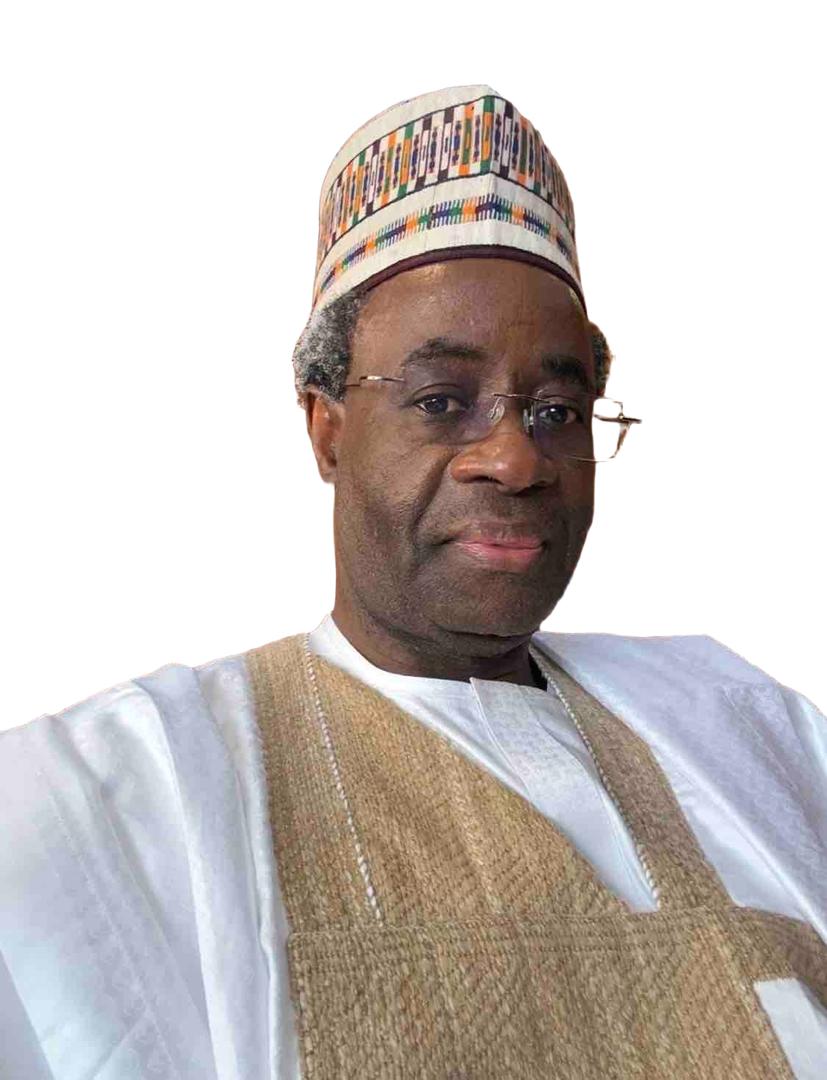
By Tanimu Yakubu, Director-General, Budget Office of the Federation
The argument should begin where Nigerians live
Any serious discussion of the reforms must begin with what Nigerians can see and feel. Food is expensive. Transport takes a larger share of income. Electricity, rent and school bills press harder on household budgets. For many families, the question is not whether an economic indicator has improved. The question is whether their money can still carry them through the month.
That hardship is real, and we should say so without hesitation. But hardship by itself does not tell us what caused it, nor does it tell us whether reversing the reforms would make the country better off. Those are separate questions, and they require evidence rather than anger or reassurance.
The PUNCH report of 16 July 2026 presents poverty as persisting ‘despite reforms’. The phrase is striking, but it compresses several different issues into one. The World Bank and IMF material cited around the same debate records both a deeply vulnerable population and an economy that has returned to stronger real growth, built larger external buffers and moved away from some of the distortions that had accumulated before 2023.[1][2][3][4] The fair reading is therefore not that hardship has vanished, nor that reform has achieved nothing. It is that economic repair has begun while household relief has lagged behind.
A poverty crisis that did not begin in 2023
Nigeria did not enter May 2023 from a position of broad prosperity. Growth per person had been weak for years. Foreign exchange was scarce. Multiple exchange rates encouraged arbitrage. Fuel subsidy costs absorbed public resources. Insecurity kept farmers away from parts of the land. Electricity remained unreliable, transport was costly and too few Nigerians held secure formal jobs.[2] Poverty and vulnerability were already widespread before the present reform programme began.
That history is important because causation matters. A poverty problem built over many years cannot reasonably be attributed in full to policies introduced three years ago. But history cannot become an alibi. The exchange-rate adjustment and fuel-subsidy removal imposed immediate costs on people who had little room to absorb them. Imported goods and inputs became more expensive. Transport costs rose. Inflation eroded wages and savings. Those consequences belong in any honest account of the reforms.
We do not strengthen our case by appearing to argue that suffering is merely inherited. We strengthen it by acknowledging that necessary reforms have had painful consequences and then showing, with evidence, how our policies are reducing those consequences.
What the 79 per cent figure does — and does not — mean
The widely quoted figure that 79 per cent of Nigerians are poor or vulnerable is serious, but it needs to be read correctly. The World Bank’s Streamlined Country Diagnostic distinguishes those already below the poverty line from those who are near-poor or vulnerable to falling below it.[1][2] The number therefore describes a broad zone of insecurity, not a single poverty headcount in which every person is in the same condition.
The distinction does not soften the warning. A household only slightly above a poverty line can be pushed below it by a failed harvest, a medical bill, the loss of a job or another rise in food prices. What the figure shows is how narrow the margin of safety is for millions of Nigerians. It should not, however, be turned into proof that the reforms created a poverty stock that plainly predates them.
The economy has not collapsed, but households are still waiting
World Bank data show real GDP growth of about 4.0 per cent in 2025. The IMF estimated the same rate for 2025 and projected about 4.1 per cent for 2026. Gross international reserves were around US$46 billion at the end of 2025, up from about US$40 billion a year earlier, while net reserves also improved.[3][4] These figures are not a substitute for household welfare, but they are evidence against the claim that the economy has simply collapsed under reform.
The fall in GDP measured in current United States dollars also needs care. A sharp depreciation of the naira reduces the dollar value of naira output even when the volume of goods and services produced is rising. World Bank data can therefore show positive real growth alongside a lower current-dollar GDP.[3] The depreciation has real costs: imported inputs become more expensive and the external value of domestic incomes falls. But it is analytically wrong to treat a translation effect as if it were an equal fall in physical production.
None of this should be presented triumphantly. Nigerians do not eat reserves. A better fiscal balance does not put rice on a table by itself. The value of stabilisation lies in what it permits next: investment, production, employment, lower inflation and better public services.
Relief will come from making more things and moving them more cheaply
The most convincing answer to hardship will not come from another speech about macroeconomic stability. It will come when the supply of food, energy, transport and industrial inputs improves enough to lower costs in everyday life. That is where several large projects now approaching important stages become relevant.
The Kano-Jigawa-Katsina-Maradi railway is one example. We reported in May 2026 that the project was about 60 per cent complete, with delivery targeted for the end of 2027.[5] Its relevance is practical. Northern farmers and traders move large volumes over long distances on roads that are expensive to maintain and slow to use. A working freight corridor can lower haulage costs, widen markets for agricultural produce and improve trade through the northern border. The benefit of the railway will not be the number of kilometres of track. It will be the saving that eventually appears in the cost of moving grain, livestock, fertiliser and manufactured goods.
Lagos shows the same principle in urban transport. The first phases of the Blue and Red Lines are already carrying passengers while extensions continue.[6] For a commuter, the value of mass transit is measured in time, predictability and the share of income spent getting to work. For business, it is measured in a city that moves people with less dependence on road congestion and fuel-intensive transport. That is how infrastructure becomes an alleviative measure rather than a monument.
The Ajaokuta-Kaduna-Kano gas pipeline can have an even wider industrial effect. NNPC’s May 2026 report placed the mainline in advanced construction, installation and pre-commissioning, with early gas delivery to Abuja targeted in 2026.[7] Northern industry has long paid heavily for unreliable energy. Gas delivered into the corridor can support power generation and manufacturing, reduce dependence on expensive self-generation and make new investment more viable. The public will judge the pipeline not by its diameter, but by the factories it helps to run, the jobs it supports and the costs it helps to bring down.
Fertiliser shows what supply reform can mean on the farm
The fertiliser story is closer to the next harvest. Under the Presidential Fertiliser Initiative, more than 449,000 metric tonnes of inputs had been secured by May 2026, and we were on course for a 1.1 million metric tonne programme – roughly 22 million bags – supported by more than 90 operational blending plants.[8]
For years, the problem was not merely the existence of blending plants. A plant without raw materials is an idle factory. Information available to us indicates that, under the previous administration, some plants could secure enough raw materials for only about three months of production. We have moved to secure raw materials on a basis intended to sustain blending through the year. That change is important because it turns installed capacity into actual supply.
The difference is easy to understand. A plant that works for three months produces little and carries high unit costs. A plant supplied through the year can produce more, spread its costs over a larger volume and compete in a market with less scarcity. As availability rises, scarcity pricing becomes harder to sustain. Farmers gain better access to fertiliser when they need it, yields can improve, and the resulting increase in food supply should place downward pressure on prices in 2027.
The effect will not occur by proclamation. Fertiliser must reach farmers, crops must be planted, fields must be secured, harvests must be moved and markets must remain competitive. But this is a visible chain of cause and effect, and it is a stronger basis for expecting lower food prices than administrative price controls.
Rice mills: feed the mills, not the import market
The same supply argument applies to rice. About 300 rice mills are struggling, not because Nigeria lacks milling capacity, but because too many of them cannot obtain enough paddy to run steadily. When a mill operates below capacity, workers lose shifts, fixed costs are spread over fewer tonnes, farmers lose a dependable buyer and the price advantage of domestic processing is weakened. Importing finished parboiled rice may appear to close a supply gap quickly, but it also transfers the milling, transport, handling and much of the value added to producers outside Nigeria.
Our intervention should therefore address the shortage at its source. We need to stimulate local paddy production while permitting the importation of the raw-material shortfall where domestic supply is temporarily inadequate. The purpose of such imports would be to keep Nigerian mills running, not to displace them. As local output rises, the imported component should fall. That approach protects consumers from scarcity while preserving demand for Nigerian paddy and creating a stronger incentive for farmers to expand production.
For rural households, this distinction is consequential. A bag of finished rice imported into Nigeria creates little income for a farmer in Kebbi, Kano, Jigawa, Niger, Taraba or Ebonyi. Paddy supplied to a Nigerian mill does. It supports cultivation, aggregation, haulage, milling, packaging and distribution before the rice reaches the market. Keeping the roughly 300 mills supplied therefore attacks food scarcity and rural poverty at the same time. It raises domestic value added, strengthens the market available to farmers and retains more of every naira spent on rice within the Nigerian economy.
The objective is not permanent dependence on imported paddy. It is to prevent idle domestic capacity while we close the production gap. The durable answer remains higher yields, more irrigated cultivation, improved seed, fertiliser, extension services, secure farming communities and reliable links between growers and mills. But where a temporary shortfall exists, importing the missing raw material is economically preferable to importing the finished product and leaving Nigerian factories underused.
Security is also an economic policy
A farmer who cannot enter his field does not produce. A trader who fears the road moves less produce and charges more for risk. In this sense, the campaign against banditry is also a campaign against food inflation.
Security operations in 2026 restored access to a number of communities and allowed economic activity to resume in areas that had been badly disrupted.[10] It would be inaccurate to claim that banditry has disappeared from every affected area. The economic test is narrower and measurable: are more farmers returning to their land, are more hectares being cultivated, and is more produce reaching markets with fewer losses and delays?
Where the answer is yes, the effect should combine with better fertiliser availability. More cultivated land, higher input use and safer distribution can produce a larger harvest. If those gains hold through the 2026 farming cycle, consumers should begin to see more relief in food markets in 2027.
Why the alternative also has a cost
It is easy to compare the pain of reform with an imagined version of the old system in which prices stayed low and no one paid the difference. That system did not exist. The difference appeared elsewhere: in subsidy bills, foreign-exchange shortages, parallel-market premiums, arrears, inflation and public resources that could not be spent on other needs.
The real choice is not between painful reform and painless continuity. It is between completing a difficult correction and returning to arrangements that had become increasingly expensive to finance and easier to exploit. That does not excuse poor implementation. It means that the answer to hardship is to improve the reform, protect vulnerable households and accelerate the supply response, not to rebuild the distortions that made correction unavoidable.
The test now is whether Nigerians can feel the change
We should not ask Nigerians to celebrate numbers they cannot yet feel. Our better argument is to show where the numbers lead. Stronger public finances must produce roads, power, schools, health care and productive investment. Better reserves and a more orderly foreign-exchange market must support confidence, investment and a more stable supply of essential goods. The reforms will be vindicated in the lives of Nigerians, not in the vocabulary used to describe them.
These are not slogans. They are outcomes that can be checked. If fertiliser remains scarce despite year-round input supply, then our policy has not worked as intended. If rice mills remain idle for lack of paddy while finished parboiled rice is imported, we will have missed an opportunity to reduce scarcity through Nigerian production and rural incomes. If secured communities do not return to cultivation, the economic benefit has not been realised. If new rail and gas infrastructure do not reduce costs or expand productive activity, completion alone will not be enough. We must therefore measure success by what these interventions do to production, prices, jobs and household welfare.
Nigeria’s poverty crisis is older than the present reforms. Our reforms have nevertheless imposed real costs on households that were already under strain. Both facts can be true at the same time. The evidence also shows that real output has grown, external buffers have improved and important constraints on production are being addressed. Our responsibility now is to convert those gains into relief that is visible in markets, incomes and public services.
That is where the debate should end and our work should begin: not with a claim that hardship has disappeared, and not with the claim that reform has failed because hardship persists, but with a clear test. Are we producing more? Are we keeping our fertiliser plants and rice mills working? Are we moving goods more cheaply? Are farmers returning to their fields? Are factories operating for longer? Are families beginning to see prices ease and opportunities expand? Those are the questions by which Nigerians will judge us, and rightly so.
References
- Sami Tunji, “Poverty threatens 79% of Nigerians despite reforms – World Bank,” PUNCH, 16 July 2026.
- World Bank, Nigeria Country Partnership Framework FY2026–FY2032 and accompanying Streamlined Country Diagnostic, 2026.
- World Bank, World Development Indicators, Nigeria country data, including 2025 current-dollar GDP and real GDP growth; accessed August 2026.
- International Monetary Fund, Nigeria: 2026 Article IV Consultation — Press Release; Staff Report; and Statement by the Executive Director for Nigeria, IMF Country Report No. 26/125, June 2026.
- State House, Abuja, “FG: Kano-Jigawa-Katsina to Maradi Railway Project 60 Percent Completed; Set for Delivery End of 2027,” 3 May 2026.
- Lagos State Government, official updates on Lagos Rail Mass Transit Blue and Red Lines, including operational Phase I services; 2024–2025.
- NNPC Limited, Monthly Report Summary, May 2026: AKK mainline construction, installation and pre-commissioning activities, with early gas delivery to Abuja targeted in 2026.
- State House, Abuja, “President Tinubu Hails MOFI, NADF for Strengthening Nigeria’s Fertiliser Value Chain, Supporting Food Security,” 18 June 2026.
- Ministry of Finance Incorporated / PFI-NPK reporting on early 2026 procurement and distribution of fertiliser raw materials to registered blending plants, June 2026.
- Official security reporting on continuing operations against banditry and kidnapping and the restoration of access to affected communities, 2025–2026.