Dollar to Naira Exchange Rate Today, October 12, 2024 (Black Market)

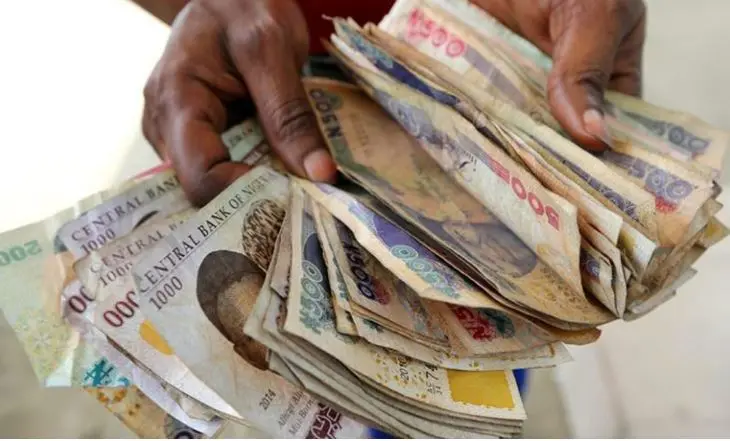
The dollar to naira exchange rate in the black market today, October 12, 2024, stands at ₦1695 for buying and ₦1700 for selling. This rate is reported from Lagos-based Bureau De Change (BDC) sources. However, the Central Bank of Nigeria (CBN) does not recognize the parallel market and advises individuals to conduct foreign exchange transactions through official banking channels. The official CBN exchange rate is ₦1625 for buying and ₦1626 for selling. Keep in mind that actual exchange rates may vary depending on location and transaction circumstances.

Group caution Speakers Abbas SLA, Ogbeche over comments on Betta Edu

Concerned Civil Society Organizations of Nigeria (CCSON) has called on the Economic and Financial Crimes Commission (EFCC) to make public its findings regarding the suspended Minister of Humanitarian Affairs and Poverty Alleviation, Dr. Betta Edu.

The group in a press statement issued to newsmen in Abuja on Friday, were making reference to the earlier write-up by the SLA to the Honourable Speaker, Federal House of Representatives, Hon. Cecelia Ogbeche Odok from Cross Rivers State, who tagged Edu’s trial as witch-hunts, claiming that the suspended Minister is clean and should be acquitted of any wrong doing.

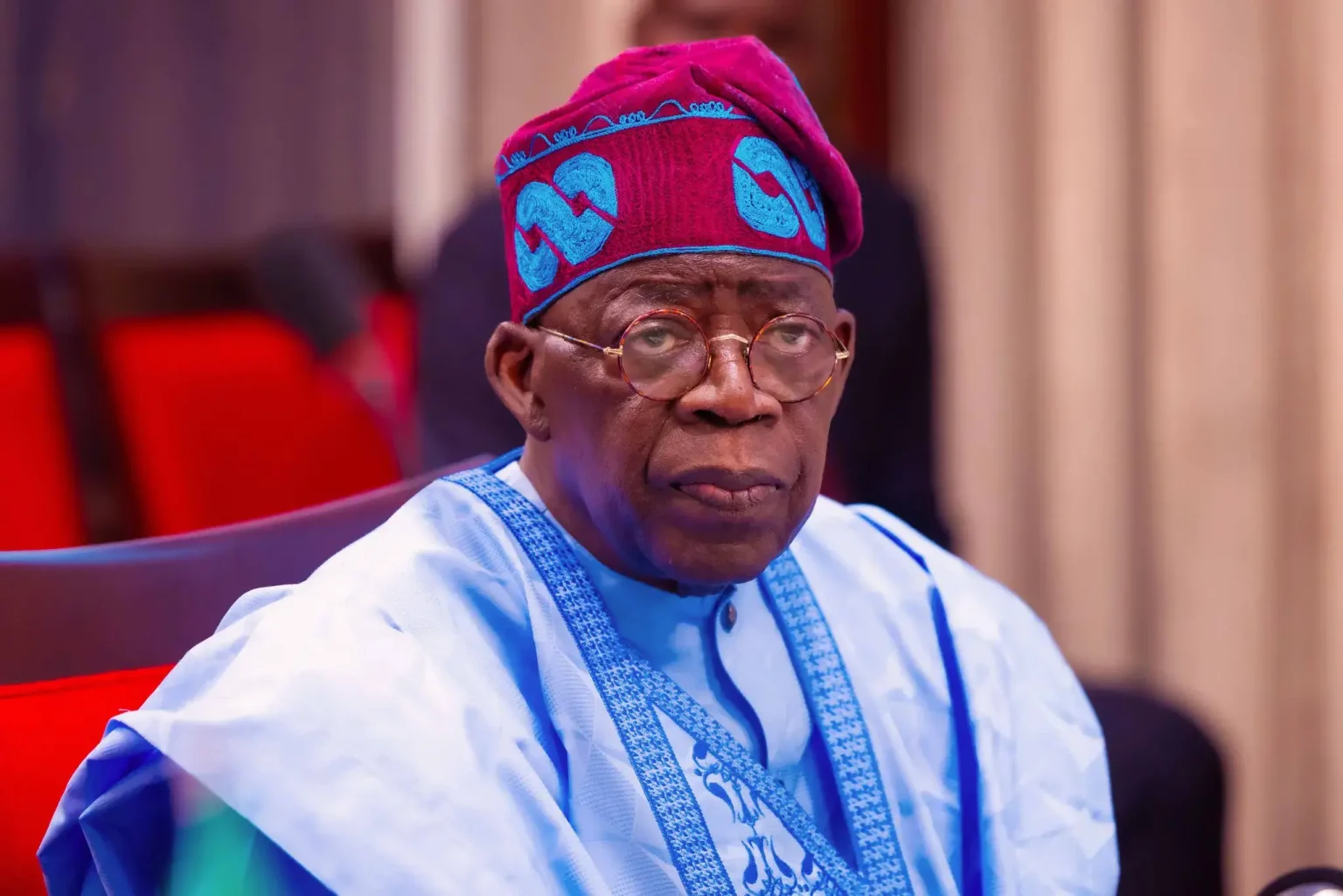
It could be recalled that Dr. Edu was suspended by President Bola Ahmed Tinubu in January following serious allegations of misappropriating funds amounting to N585 million.

This decision came amidst growing scrutiny of her handling of the ministry’s resources, particularly concerning programs designed to alleviate poverty and support vulnerable populations in Nigeria.

The controversy intensified when it was revealed that Dr. Edu had approved flight fares for ministry staff traveling to Kogi State, a region that notably lacks an operational airport.

This raises an urgent question: what justified the approval of funds for flights to Kogi State, given there is no airport to accommodate such travel?

CCSON, while expressing alarm over the apparent inaction from the presidency regarding Dr. Edu’s case, especially when compared to the swift replacement of Halima Shehu, the National Coordinator and CEO of the National Social Investment Programme Agency, asserted that Halima was suspended alongside Edu.

The group criticized what they termed as disparity between Edu’s case and that of Halima, stressing that it undermines principles of accountability and fairness in governance.

“While we commend the prompt action taken against Halima Shehu, we are dismayed by the presidency’s silence regarding Dr. Betta Edu,” the statement read. “This selective accountability sends a troubling message about the commitment of this administration to uphold justice for all Nigerians.”

CCSON urged President Tinubu to take immediate action by replacing Dr. Edu, emphasizing the need for equitable treatment across all regions and the importance of transparency in government actions.

They also asserted that the public deserves clarity regarding the serious allegations and that the EFCC must act swiftly to restore trust in government institutions.

As the call for transparency grows, civil society groups are advocating for a thorough investigation into the alleged misappropriation of funds, arguing that accountability is crucial for effective governance.

The Concerned Group has equally urged the EFCC to publicly disclose its findings, asserting that the Nigerian people have a right to know the truth behind these allegations, as they noted with concerned that the delay is making Nigerians to gradually lose their trust in the president Tinubu’s stance against corrupt practices in the country.

FG Allows Direct Fuel Purchase from Dangote Refinery

The Federal Government of Nigeria has officially permitted petroleum marketers to lift petrol directly from the Dangote refinery, bypassing the Nigerian National Petroleum Company Limited (NNPC). This decision marks a significant shift in the country’s fuel procurement process and confirms speculation that the NNPC would no longer be the exclusive off-taker of Dangote’s fuel.

In a statement released on Friday, Wale Edun, the Minister of Finance and Chairman of the Naira-crude sale implementation committee, provided an update following the committee’s recent meeting on October 10. This meeting focused on evaluating the progress of the Crude Oil and Refined Products Sales in naira initiative, which aims to facilitate local production and distribution for domestic consumption.

Edun highlighted the successful transition to a new operational framework established by the Federal Executive Council, which promotes local production and aims to achieve a fully deregulated market for all petroleum products. He stated, “With this mechanism now in full operation, petroleum product marketers are now able to purchase PMS directly from local refineries without the intermediary role of NNPC. Marketers are encouraged to initiate direct purchases on mutually negotiated commercial terms, promoting competition and improving market efficiency.”

The government expresses optimism that these changes will lead to better market conditions, ultimately benefiting Nigerian consumers.

APC Dismisses Calls for Policy Reversal, Urges Support for Tinubu’s Agenda

The All Progressives Congress (APC) has rejected opposition demands to reconsider the policies of President Bola Tinubu’s administration, instead urging support for the government’s Renewed Hope agenda. This follows criticism from the Peoples Democratic Party (PDP), which accused the APC of electoral manipulation in the September 21 Edo State governorship election and warned of a potential move towards a one-party system in Nigeria.

PDP Board of Trustees (BoT) Chairman, Senator Adolphus Wabara, linked the country’s worsening socio-economic conditions to the policies of the APC-led government during a recent BoT meeting in Abuja. He reiterated the opposition’s stance against alleged electoral misconduct.

In response, APC Director of Publicity, Alhaji Bala Ibrahim, dismissed these claims as baseless. He reaffirmed the party’s commitment to democracy, arguing that APC policies are designed to uplift Nigerians and are not anti-people. Ibrahim emphasized that the opposition should be constructive, not destructive, and urged them to abandon thoughts of policy reversal and instead support the government’s long-term goals for the nation.

APC Suspends Minister Heineken Lokpobiri and 2019 Gubernatorial Candidate David Lyon

The All Progressives Congress (APC) in Bayelsa State has suspended several high-ranking officials, including the Minister of State for Petroleum, Senator Heineken Lokpobiri, and David Lyon, the party’s 2019 gubernatorial candidate. The suspension also affects two commissioners currently serving in the Peoples Democratic Party (PDP)-led Bayelsa State administration who are also APC members.

Mitin Eniekenemi, the APC leader in Ekeremor Local Government Area, confirmed the suspension of Lokpobiri and the Commissioner for Power, Engr. Karin Kumoko, citing internal party divisions and misconduct as the reasons. The decision followed recommendations by a disciplinary committee under Article 21.3(1) of the APC Constitution.

In a related development, APC officials in Southern Ijaw Local Government Area also suspended David Lyon, along with Commissioner for Lands and Survey Barr. Peres Biewari and six others, accusing them of undermining the party, particularly during the 2020 Bayelsa State bye-election.

Investigations into the suspended members’ actions are ongoing, with more details expected to emerge regarding other individuals involved in anti-party activities.

Court Blocks PDP Leadership From Removing Damagum as Acting National Chairman

A Federal High Court in Abuja has issued a restraining order preventing the National Executive Committee (NEC) and Board of Trustees (BoT) of the Peoples Democratic Party (PDP) from removing Umar Damagum as the Acting National Chairman. This ruling ensures that Damagum remains in his position until the party’s national convention, scheduled for December 2025.

The decision, delivered by Justice Peter Lifu, followed a lawsuit filed by Senator Umar El-Gash Maina. Maina argued that any attempt to alter the party’s leadership must follow the PDP Constitution, specifically Articles 42, 47, and 67, which state that national officers can only be elected during the National Convention.

Maina, Chairman of the PDP in Yobe State, expressed concerns that certain factions within the PDP were plotting to replace Damagum with Dr. Phillip Omeiza Salawu, a former Deputy Governor of Kogi State. He claimed to have sent letters to the party’s National Secretary, Senator Samuel Anyanwu, detailing these covert activities but received no substantial response.

Justice Lifu ruled in Maina’s favor, emphasizing that the leadership of the PDP must adhere to the constitutional procedures, particularly the rotation of the chairmanship between the northern and southern regions. He also declared that any move to remove Damagum without a convention or court order would violate the party’s Constitution.

The court’s ruling reaffirmed that Damagum, appointed from the northern region following the departure of former national chairman Senator Iyorcha Ayu, is entitled to serve the remainder of the four-year term. Justice Lifu concluded that the PDP’s NEC and BoT are bound by the Constitution, and any disruption of Damagum’s tenure would be a serious breach.

Impetus for Okura State as National Chairman Inaugurates Committee

The quest for the creation of Okura State out of the present Kogi State on Thursday gained more steam as the National Chairman of the Movement, Chief Robert Audu inaugurated the Okura State Movement Special Conveners’ Committee in Abuja.

The Committee, which is headed by Professor Emeritus Godwin Ogbadu was constituted at the Movement’s meeting held to organize a crucial meeting of expanded Igala/Bassa stakeholders, scheduled to take place in Ata Igala Palace, Idah on 26th October, 2024.

In his inaugural address, Chief Robert Audu, the Agenyi Attah Igala and retired federal Permanent Secretary, charged the members to ensure the success of the meeting, which is expected to put a final touch on all aspects of the proposed state, preparatory to the expected Public Hearing on the Bill, seeking the creation of the proposed Okura State, as presented by Hon. Halims Abdullahi Ali, the Deputy Majority Leader of the House of Representatives, along with the Memorandum for the creation of Okura State already presented to the National Assembly.

He commended members of the National Assembly from Kogi East Senatorial District, for the effort they are making so far, to place the request for the creation of the proposed state at the front burner amongst requests, being presented to the National Assembly. He further charged the Committee members to show utmost dedication on the assignment, which is the hope of the Igala/Bassa communities in the country and beyond, to place themselves over and above their peers, as they excelled in the past. He noted that the calibre of the members was an indication on the premium, being placed on the assignment by the Igala/Bassa people.

The Chairman called on all leaders of Igala/Bassa extraction to work for the realization of the proposed state, which has been our demand since 1980. There were nagging issues, which have been amicably resolved, he said, to pave the way for the creation of the proposed state, among which were: the name, capital of the proposed state and its composition.

He explained that the quest for the creation of the new state was not because of any perceived marginalisation, as the area remains the majority part of the present Kogi State. Rather, he emphasized that desire to fast-track development in the area was the motivation. He further reiterated the age-long relationship with the present Central and Western Senatorial Districts, having all been part of the old Kabba province, a relationship, he maintained, would remain even after the creation of Okura State.

On new suggestions for the name and capital of proposed state, Chief Audu said several meetings were held at various times and places, including the Ata Igala Place, Idah.

“Many suggestions as to the name of the proposed state were made. Some people suggested Inikpi State, Ayegba State, Igala State, etc. Finally, the name – Okura State was adopted, based on its long history. On the capital of the proposed state, Anyigba, which was proposed in 1980, while, Igala/Bassa were involved in demanding for two separate states – Kogi and Okura was mentioned. In order to vigorously pursue the creation of Okura State, Idah, the cultural and traditional headquarters of the Igala Kingdom and Igala Native Authority was adopted as the capital of the proposed state, based on its long history of being a home to the Igala nation, worldwide. Further issue of composition of the proposed state, to include Igala in Ajaokuta, Enugu, Anambra, Delta, Benue and Edo States were discarded, because of the difficulties in attaining the constitutional provisions.”

He added that the proposed Okura State would serve as home for all Igala, Bassa Kwomo, Bassa Nge and Mozum, wherever they may be, either within or outside the country.

Finally, he charged the Committee to consult far and wide to ensure inclusiveness and success of the proposed meeting.

In his acceptance speech, Prof. Godwin Ogbadu, an erudite scholar, thanked the Chairman of the Movement for finding the members worthy, to serve on the Committee.

He promised on behalf of the members to do a thorough job that would unite the Igala/Bassa more than ever before and congratulated the members and urged them to cooperate with him.

Other members of the committee, include, AIG Abdulsalam Iyaji (rtd), who serves as Vice Chairman, former Chief of Naval Staff, Vice Admiral Usman Jibrin (rtd), AIG Haruna Garba (rtd), former Deputy Governor, Simon Achuba, former Minister Prof. Stephen Ocheni, Alhaji Alfa Ibn Mustafa, Dr. Jeremiah Ekele and Engr. Cyprian Adejoh.

Others are, Chief Dr. Rekiya Momoh – Abaji, Dr. Mrs. Lami Amodu, Hajiya Salamatu Baiwa Umar – Eluma, Arc. Alhaji Ukele Ali, Mr. Kingsley Idoko Ilona, Barr. Dr. D. D. Makolo, Dr. James Odaudu, Hon. Barr. Frank Itaka Ineke, Engr. Usman Adaji, Hon. Salifu Ameh, Ms. Precious Ojochegbe Enoch and Dr. Yakubu Ugwolawo who will serve as Secretary to the Committee.

Nigeria High Commission in UK Removes Goodluck Jonathan’s Statements from Website

The Nigeria High Commission in the United Kingdom has removed statements and policies from the era of former President Goodluck Jonathan from its official website. Jonathan, who left office in 2015 after losing the presidential election to Muhammadu Buhari, had his administration’s policies displayed on the website long after his tenure ended.

Despite Nigeria’s transition from Buhari’s administration to President Bola Tinubu in 2023, and even after the approval of a new national anthem in May 2024, the website continued to feature outdated content. It was only recently, after media reports pointed out the oversight, that the commission began updating its site.

The former anthem, Arise O Compatriots, has now been replaced by the newly approved anthem, Nigeria, We Hail Thee. Furthermore, the site has started to show “update in progress” notices for key sections such as Economy Overview, Labour Market and Unemployment, and Agriculture, which hadn’t been refreshed since Obasanjo’s era.

Dr. Bola Akintehinwa, former Director-General of the Nigerian Institute of International Affairs (NIIA), expressed frustration over the outdated content, arguing that it tarnished Nigeria’s reputation internationally. He warned that a lack of updated policy information from President Tinubu’s government could hinder opportunities to strengthen global relationships and improve Nigeria’s economy.

“It’s all about perception. When foreign investors see outdated information, it gives the impression of carelessness, making them question the credibility of Nigerian institutions,” Akintehinwa said. He added that the issue reflects poorly on public administration in Nigeria and highlights the country’s struggle to keep up with the demands of a technologically driven world.

New Bill Proposes Mandatory Tax Identification Number for Opening and Operating Bank Accounts

Anewly proposed bill in Nigeria mandates that individuals involved in financial services, including banking, insurance, and stock-broking, must provide a Tax Identification Number (TIN) before opening a new account or operating an existing one.

Titled “A Bill for an Act to Provide for the Assessment, Collection of, and Accounting for Revenue Accruing to the Federation, Federal, States, and Local Governments,” the proposal aims to enhance tax compliance and streamline Nigeria’s revenue collection process.

The bill, dated October 4, 2024, and obtained from the National Assembly, stipulates that any person engaged in financial services must present a TIN to ensure proper tax registration. It also extends to non-residents supplying taxable goods or services or earning income from Nigeria, requiring them to register for tax and obtain a TIN.

Non-residents earning income solely from passive investments are exempt from this requirement but must still provide necessary information as per tax authorities’ guidelines. Additionally, the bill gives tax authorities the power to issue a TIN automatically if an individual fails to register, with penalties for non-compliance set at ₦50,000 for the first month and ₦25,000 for each subsequent month of failure to register.

IPMAN Threatens to Halt Operations Over Petrol Price Hike, Accuses NNPCL of Price Inflation

The Independent Petroleum Marketers Association of Nigeria (IPMAN) has threatened to stop operations nationwide due to the high cost of Premium Motor Spirit (PMS) sold to its members by the Nigerian National Petroleum Company Limited (NNPCL).

IPMAN disclosed that the NNPCL is selling petrol to independent marketers at inflated prices, charging N1,010 per litre in Lagos, despite purchasing it from the Dangote refinery for about N898 per litre. This price disparity has caused tension between IPMAN and NNPCL, with IPMAN demanding a refund of outstanding payments and threatening a strike if no resolution is reached.

NNPCL recently raised petrol prices at its retail stations, sparking public outrage and adding to growing economic challenges in Nigeria, with inflation and unemployment expected to worsen. Meanwhile, major energy marketers continue loading subsidized fuel under previous agreements with NNPCL.

The escalating price of petrol, which has increased by over 430% since the current administration took power, has led to significant economic concerns, particularly for small businesses and the transportation sector. Experts warn that the price hikes could exacerbate poverty and further strain Nigeria’s economy.