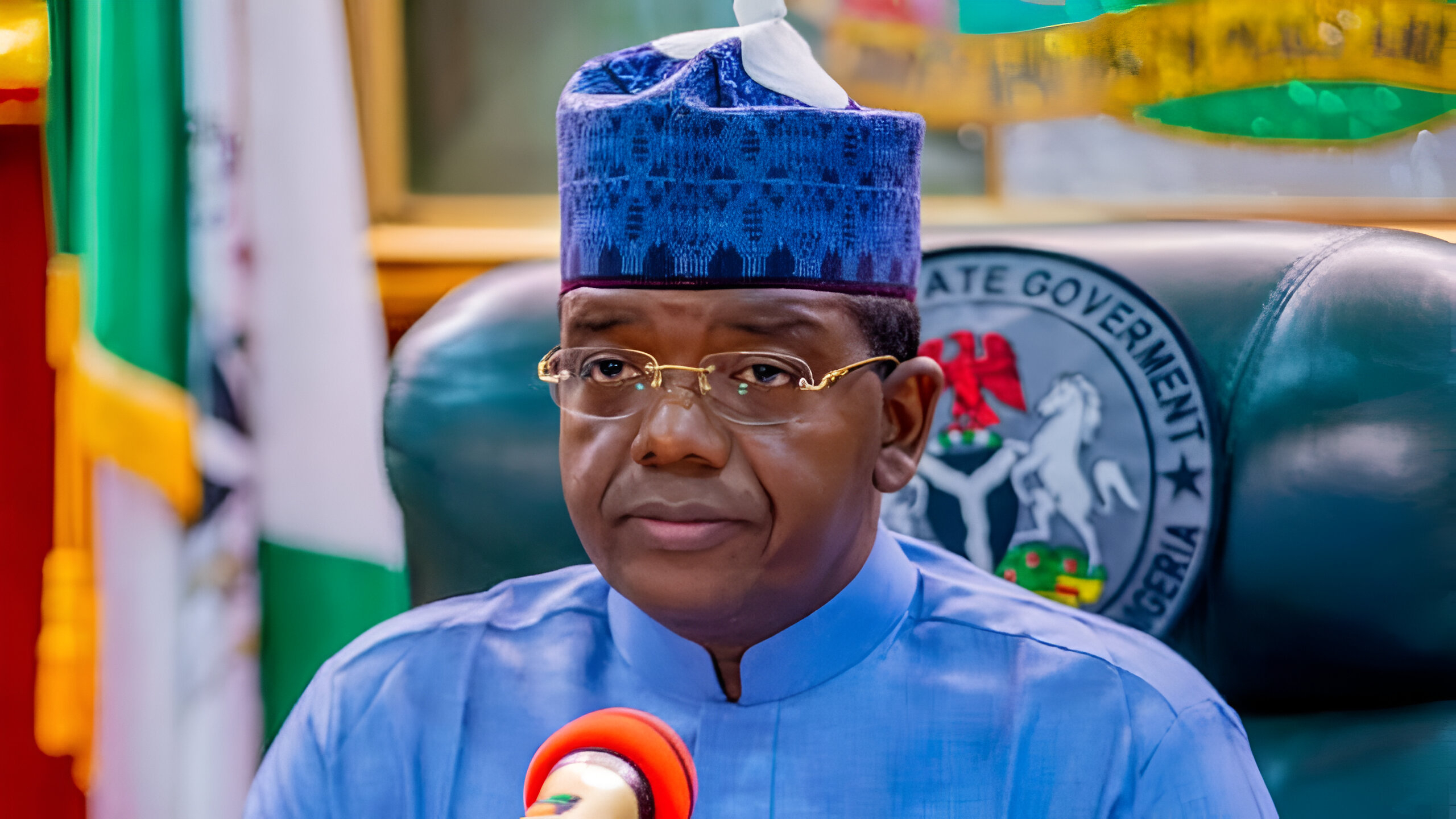
EFCC Moves Against Former Governors, Ministers in Corruption Crackdown

The Economic and Financial Crimes Commission (EFCC) has taken decisive legal action against four former governors and two ex-ministers over corruption allegations in the past year under Executive Chairman Ola Olukoyede’s leadership.

At a press conference in Abuja, EFCC Director of Public Affairs, Wilson Uwujaren, highlighted the agency’s successes in asset recovery and fraud prevention. The former governors charged include Yahaya Bello (Kogi), Abdulfatah Ahmed (Kwara), Willie Obiano (Anambra), and Darius Ishaku (Taraba), all accused of misappropriating billions in state funds. Bello, for instance, faces allegations involving over N190 billion, while Ishaku’s case involves N27 billion. Ahmed and his finance commissioner are accused of mismanaging N10 billion, and Obiano is alleged to have laundered N4 billion.

Former ministers Saleh Mamman and Olu Agunloye also face charges for alleged misappropriation related to the Mambilla Hydroelectric Power Project, totaling N33.8 billion and $6 billion. Additionally, Hadi Sirika is under investigation for suspected fraud involving N5.8 billion, and the recently dismissed Minister of Humanitarian Affairs, Betta Edu, is under ongoing scrutiny.

EFCC has reported significant financial recoveries under Olukoyede’s tenure, totaling N248.75 billion and $105.4 million in foreign currencies, alongside asset reclamation including 14 properties returned to Enugu State. The agency has also repatriated $180,300 and 53 vehicles to Canada, and €5,100 to Spain.

With a focus on prosecuting financial crime, the EFCC achieved 3,455 convictions within the year. Olukoyede noted the agency’s commitment to tackling electoral corruption despite challenges in prosecuting electoral offenses, emphasizing the EFCC’s role in ensuring electoral integrity in recent elections.

Since assuming office on October 18, 2023, Olukoyede’s administration has been active in various sectors, including the mining sector, with broad-reaching anti-corruption efforts and ongoing vigilance against electoral offenses.
Black Market Dollar to Naira Exchange Rate Today – 1st November 2024

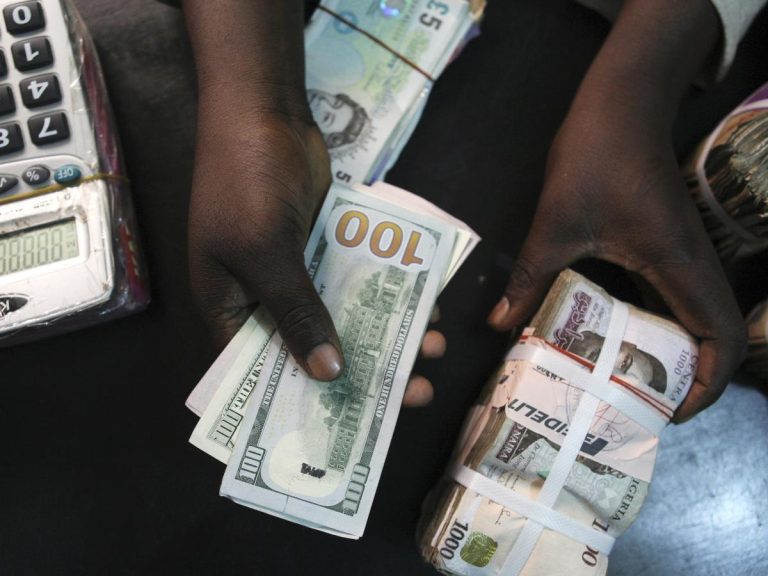
Dollar to Naira Black Market Exchange Rate Today – 1st November 2024

Here is the latest information on the Dollar to Naira exchange rate at the black market, commonly referred to as the parallel market (Aboki fx).

For Thursday, 1st November 2024, sources from Bureau De Change (BDC) in Lagos indicate that the Dollar is being bought at N1745 and sold at N1750 in the parallel market.

Please note that the Central Bank of Nigeria (CBN) does not officially recognize the black market and advises individuals needing foreign exchange to approach their banks directly.

Dollar to Naira (USD to NGN)Black Market Rate
Buying RateN1745
Selling RateN1750

In contrast, the official CBN rate differs, reflecting N1650 for buying and N1651 for selling.

Dollar to Naira (USD to NGN)CBN Official Rate
Buying RateN1650
Selling RateN1651

The exchange rate may fluctuate slightly, so rates may vary depending on location and time of transaction.

Economic Impact: Companies Leaving Nigeria Due to Economic Instability

Nigeria’s economic challenges, including currency instability and high operational costs, have led to an increase in companies exiting the market. Recently, South African retailer Pick n Pay announced its departure from Nigeria, selling its 51% stake after only a few years of operation. Since 2020, over 20 companies have closed or relocated operations due to ongoing economic difficulties, reflecting broader concerns within Nigeria’s business landscape.

NAFDAC Urges Nigerians to Avoid Recalled Nivea Deodorant Over Safety Risks

The National Agency for Food and Drug Administration and Control (NAFDAC) has issued an alert to Nigerians, cautioning them to stop using the recently recalled batch of Nivea Black & White Invisible Roll-on deodorant (50ml).

The product recall aligns with a warning issued by the European Union Rapid Alert System for Dangerous Non-Food Products. NAFDAC disclosed that the recall specifically affects batch number 93529610, which contains the banned chemical 2-(4-tert-Butylbenzyl) propionaldehyde. This ingredient is prohibited in cosmetics due to its potential to cause reproductive harm, risks to unborn children, and skin irritation or burns.

The recalled deodorant, promising 48-hour protection, was manufactured in Germany and bears the Bar Code Number 42299882. NAFDAC urges importers, distributors, retailers, and consumers to be vigilant, ensuring that this specific batch is neither sold nor used.

Public members in possession of the affected deodorant batch are advised to halt usage immediately and submit remaining stock to the nearest NAFDAC office. NAFDAC encourages healthcare professionals and consumers to report any adverse reactions related to regulated products through pharmacovigilance@nafdac.gov.ng, the E-reporting platforms on www.nafdac.gov.ng, or the Med-safety app for Android and iOS.

Kaduna State Approves ₦72,000 Minimum Wage and Free Transport Scheme for Workers

Governor Uba Sani of Kaduna State has announced the approval of a new minimum wage of ₦72,000 for the state’s civil servants, set to take effect in November 2024. This wage increase, confirmed in a statement by the governor’s Chief Press Secretary, Ibrahim Musa, underscores the administration’s commitment to improving worker welfare and supporting vulnerable populations in the state.

Beyond the wage hike, Governor Sani is also launching a Free Transportation Scheme for civil servants, which will see 100 CNG buses deployed to ease transportation for workers commuting to and from work. This initiative, managed by a Joint Management Committee with representatives from organized labor groups (NLC and TUC) and the state government, aims to reduce transportation burdens and enhance productivity.

The Kaduna State Government reaffirmed its commitment to social welfare initiatives, with Governor Sani emphasizing a dedication to transforming the lives of underserved communities and ensuring that Kaduna sets a benchmark for worker welfare in Nigeria.

Governors and Ministers Gather as Shettima Leads 145th NEC Meeting

Vice President Kashim Shettima chaired the 145th National Economic Council (NEC) meeting at the Council Chamber of the Presidential Villa in Abuja on Thursday. The gathering brought together state governors, ministers, and other stakeholders to discuss strategies for tackling Nigeria’s current economic challenges.

This marks the seventh NEC meeting of 2024, with a focus on developing effective economic solutions amid rising national concerns.

In other news, Labour Party presidential candidate Peter Obi criticized Borno State Speaker Abdulkareem Lawan’s recent call for a new aircraft for Vice President Shettima. Lawan cited safety concerns due to recurring issues with the existing presidential aircraft, which led to Shettima’s last-minute cancellation of his Commonwealth Summit appearance in Samoa.

Peter Obi responded to Lawan’s demand on X, pointing out that such luxury considerations are insensitive in the face of Nigeria’s economic struggles. He urged leaders to prioritize initiatives that address the needs of the masses over personal luxuries.

Special Needs News, Abuja Special Needs Therapy Host Training on Early Dyslexia Detection

As Nigeria joins the global community to mark the International Dyslexia Day 2024, experts have emphasized the importance of early detection and intervention to support children with dyslexia—a specific learning disability that primarily affects reading and writing.

International Dyslexia Day, celebrated annually on October 8, highlights its impact on literacy and learning.

According to the British Dyslexia Association, dyslexia is a specific learning difficulty that hinders reading skills and the ability to process and retain information seen or heard.

Speaking at an event organized by Special Needs News in collaboration with Abuja Special Needs Therapy Limited in Abuja, the CEO of Special Needs Therapy Limited, Happy Maram shared evidence-based methods to address the condition.

Maram underscored the need for heightened awareness, noting that dyslexia affects millions of children worldwide.

“Early detection is key,” Maram stated, detailing methods to identify children at risk. These include monitoring linguistic development such as difficulties with pronunciation and rhyming, observing struggles with recognizing letters and considering family history, as dyslexia often has a genetic component.

“It is not a disease but a reading difficulty,” Maram explained, “affecting a child’s ability to manipulate linguistic sounds and understand new words.” She cited statistics revealing that one in five children have dyslexia, with 80-90 percent of children with learning disabilities being dyslexic. Left undiagnosed, it can lead to challenges in school, low self-esteem, anxiety and depression.

Maram highlighted the benefits of early intervention, noting that 70 percent of dyslexic children who receive help in kindergarten or first grade develop proficient reading skills and discover other talents.

Ladi Patrick-Okwoli, founder of Special Needs News, called on government, policymakers, parents and educators to unite in creating and implementing policies to address dyslexia nationwide. “Many communities lack adequate support for children with learning disabilities. Our mission is to bridge that gap through awareness and training for families and educators, ensuring that every child receives the understanding and support they need,” Patrick-Okwoli noted.

She identified public figures such as Richard Branson, Anderson Cooper and Jennifer Aniston, whose success demonstrates that individuals with dyslexia can excel.

Parents and educators expressed gratitude for the training, with many reporting a greater understanding of dyslexia’s impact. “Before today, I did not know what dyslexia was or how it affected learning. Now, I feel more confident supporting my students and communicating with parents who might not understand why their child struggles with reading,” Jumai Makama, a local teacher said.

The event also underscored the importance of community partnership, with representatives of Lugbe Community pledging to support similar programmes. By fostering understanding and facilitating early intervention, this training marks a step forward in enhancing educational inclusion for children with learning disabilities in Lugbe and beyond.

Following this success, Special Needs News and Abuja Special Needs Therapy Limited plan to expand these initiatives to more communities, promoting inclusive education and improving awareness of dyslexia and other learning disabilities across Nigeria.

Matawalle and the Truth We Knew All Along

In recent appearances on Channels Television and TVC, the Governor of Zamfara State, Dauda Lawal, spent considerable airtime casting aspersions on his predecessor, now the Minister of State for Defense, Dr. Bello Matawalle. With accusations ranging from alleged financial support for banditry to outright complicity in Zamfara’s security woes, Lawal’s claims stirred controversy and pointed a finger at the very individual now entrusted with a critical national security portfolio.

Governor Lawal’s use of public funds for these media campaigns against Dr. Matawalle raised eyebrows. His accusations, heavy with implication but thin on proof, came at a significant expense to the Zamfara State treasury, with private jets ferrying him from Gusau to media platforms in a determined but ultimately baseless crusade. Notably, the Governor’s statements shed no light on his own administration’s achievements or his approach to resolving the security challenges facing Zamfara, a curious omission that left many questioning his priorities.

In an interview with Channels Television, Dr. Matawalle decisively addressed Lawal’s allegations. With characteristic directness, Matawalle explained that his fallout with Lawal stemmed from an incident in which Lawal allegedly attempted to solicit financial gain under false pretenses while Matawalle was Governor. Matawalle went further to refute the accusations outright, insisting on his unwavering opposition to banditry and his extensive efforts to stabilize Zamfara through non-kinetic measures. Under Matawalle’s tenure, local governments in Zamfara reportedly saw a significant reduction in bandit attacks—a legacy that, by his account, earned him the respect and trust of President Bola Ahmed Tinubu, who appointed him to a key role in the Ministry of Defense.

President Tinubu’s decision to appoint Dr. Matawalle speaks to the President’s confidence in the Minister’s capacity to tackle insecurity effectively. The President, it seems, recognized the former Governor’s commitment, demonstrated by tangible security gains in Zamfara. Matawalle’s interview was unambiguous: he categorically denied any connection to banditry, even challenging both Lawal and General Aliyu Gusau to publicly swear, as he had, on the Holy Quran that they, too, had no ties to banditry. Neither man has taken up Matawalle’s challenge, fueling speculation about the weight of his words and the silence of his accusers.

On October 23, 2024, a statement by the Special Adviser on Information and Strategy to President Tinubu echoed what many had suspected: The National Security Adviser (NSA) had conducted a thorough investigation into Lawal’s accusations against Dr. Matawalle, ultimately finding them groundless. NSA Malam Nuhu Ribadu affirmed that, after careful examination, the accusations were categorically false—a conclusion that, for many, underscored Matawalle’s long-held claims and his evident dedication to uprooting banditry. Since taking office as Minister of State for Defense, Matawalle has overseen operations that resulted in the elimination of seven notorious bandit leaders in the North West, a rare achievement that bolsters his reputation.

Dr. Bello Matawalle’s steadfast approach to governance and security has proven him a capable leader in a deeply challenging role. The rigorous scrutiny and investigations have cleared his name, reinforcing what many suspected all along: that Matawalle, as a defender of peace, remains resolute in his fight against banditry, securing both his own legacy and his position in Nigeria’s ongoing battle for stability and security.

Ibrahim Tahir, writes from Katsina State.

Governors, Ex-VP Sambo, DSS Chief, and NNPC’s Kyari Discuss Critical Issues at NGF Meeting

The Nigeria Governors Forum (NGF) convened a high-level meeting on Wednesday night in preparation for the National Executive Council (NEC) session, focusing on vital issues like local government autonomy, the excess crude account (ECA), and petroleum profit tax (PPT). Held at the NGF Secretariat in Abuja, the meeting was chaired by Kwara State Governor AbdulRahman AbdulRasaq and saw attendance from prominent figures such as former Vice President Namadi Sambo, DSS Acting Director General Adeola Oluwatosin Ajayi, and NNPC’s Group Chief Executive Officer Mele Kyari.

The forum’s agenda covered discussions on UN General Assembly outcomes, reconciliations of the ECA and PPT accounts, the $825 million agri-food sector funding initiative, and ongoing legal matters involving the NGF.

Black Market Dollar to Naira Rate Today, October 31, 2024: Naira Hits Record Low

Dollar to Naira Exchange Rates on October 31, 2024

The black market dollar to naira exchange rate today shows continued volatility as the naira struggles amid low dollar liquidity. In Lagos’ parallel market, traders buy dollars at N1745 and sell at N1750, while the Central Bank of Nigeria (CBN) rate remains significantly lower, with buying at N1664 and selling at N1665.

The naira’s value has declined sharply, positioning it as the world’s third-worst performing currency this year, trailing only the Lebanese pound and Ethiopian birr. This depreciation, fueled by a 72% drop in dollar liquidity, underscores ongoing challenges in Nigeria’s foreign exchange market. The Finance Minister, Wale Edun, has cited increasing crude oil production as a vital step to stabilize the naira.

Nigerian Evacuation from Lebanon Faces Delays Amid Regional Tensions

The Federal Government’s plan to evacuate stranded Nigerians from Lebanon has hit a roadblock. While an evacuation initiative was initially announced in response to escalating Middle Eastern tensions following Iran’s missile attack on Israel on October 1, 2024, many Nigerians remain stranded in Lebanon.

Low registration numbers and reluctance among Nigerians in Lebanon have further complicated the process, according to a report by Punch. The situation stems from an intense missile barrage from Iran to Israel, heightening security concerns across neighboring regions, including Lebanon.

Following the crisis, the Ministry of Foreign Affairs, in coordination with the National Emergency Management Agency and the Department of State Services, activated emergency protocols to ensure Nigerians’ safe return. Despite initial efforts, the operation is currently on hold, with the Ministry spokesperson, Amb Eche Abu-Obe, indicating that the “situation is under observation.”