Dollar to Naira Black Market Exchange Rate Today, October 16, 2024

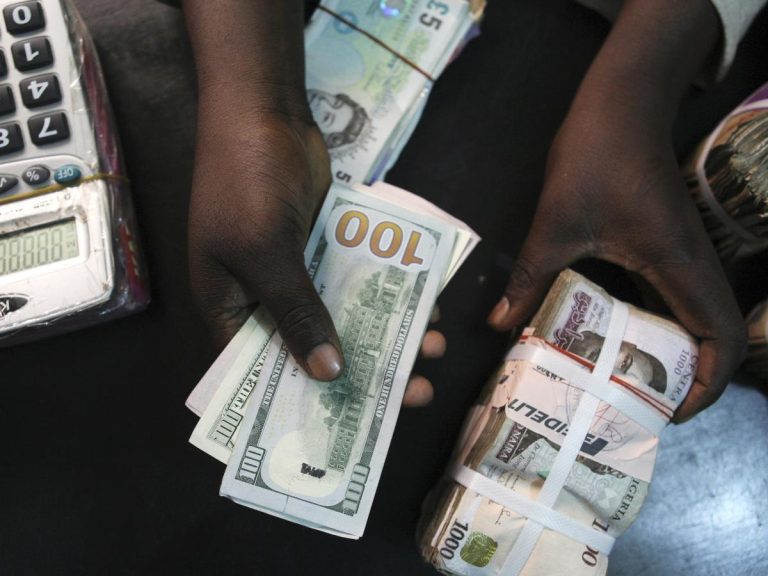
As of Tuesday, October 15, 2024, the black market (parallel market) exchange rate for the U.S. dollar to the Nigerian naira was ₦1663 for buying and ₦1670 for selling at the Lagos Parallel Market, according to Bureau De Change (BDC) sources.

Black Market Dollar to Naira Exchange Rate:

  • Buying Rate: ₦1663
  • Selling Rate: ₦1670

CBN Official Exchange Rate:

  • Buying Rate: ₦1602
  • Selling Rate: ₦1603

Please note that rates may vary across different locations, and individuals are advised to approach their banks for Forex transactions, as the Central Bank of Nigeria (CBN) does not recognize the parallel market.

Cooking Gas Prices Surge to ₦1,500/kg Amid Petrol Price Hikes

In addition to rising dollar-to-naira rates, Nigerians are also facing surging prices for Liquefied Petroleum Gas (LPG), or cooking gas, which has hit ₦1,500 per kilogram in some areas of Ogun and Lagos States.

This price hike has heavily impacted consumers, with a 12.5kg cylinder now costing an average of ₦17,000 in Abuja, up from ₦12,000 in July 2024. NIPCO Plc’s Managing Director, Suresh Kumar, expressed hope that local refineries like the Dangote refinery will help reduce LPG prices. Currently, over 60% of Nigeria’s cooking gas is imported, raising concerns about dependency on foreign supply.

In different areas of Abuja, prices vary, with costs ranging from ₦1,300 to ₦1,400 per kilogram.

No National Grid Collapse, Only Line Tripping – Power Minister Clarifies Nationwide Blackout

The Minister of Power, Adebayo Adelabu, has dismissed claims that Nigeria’s national grid collapsed twice within 24 hours, clarifying that the incident was merely a line tripping.

Adelabu explained that what happened was not a full grid collapse, as the major cities of Abuja, Lagos, and Ibadan were unaffected, and the issue was resolved within two hours. “Grid disturbances are a global phenomenon,” the minister said, emphasizing that the rapid response was key.

The Transmission Company of Nigeria (TCN) is investigating the cause of the power grid issues that occurred on both Monday and Tuesday. According to TCN spokesperson Ndidi Mbah, the grid recovery faced a setback on Tuesday but had restored power to 90% of substations nationwide by 10:24 am, with the Abuja region and major load centers regaining power.

However, some areas remained without electricity as of 7 pm on Tuesday. The Ibom Gas generating station in the South-South region continued to supply power during the disturbance, keeping regions like Eket, Uyo, and Itu online. TCN has promised to fully investigate the cause of the incident once the grid is completely restored.

World Bank Lists Naira Among Sub-Saharan Africa’s Worst-Performing Currencies

The Nigerian naira has been ranked as one of the worst-performing currencies in Sub-Saharan Africa for 2024, according to the latest report by the World Bank.

By August 2024, the naira had depreciated by about 43% year-to-date, placing it in the same category as the Ethiopian birr and the South Sudanese pound. This steep decline has been attributed to a high demand for U.S. dollars in Nigeria’s parallel market, combined with limited dollar inflows and slow foreign exchange allocations from the central bank.

The World Bank report highlights that financial institutions and money managers have worsened the strain on the naira by driving up demand for U.S. dollars.

While the Nigerian government has implemented reforms, including the liberalization of the official exchange rate in June 2023, these measures have not been enough to stabilize the currency. Broader economic challenges, such as dwindling foreign reserves and inflationary pressures, continue to impact the naira’s performance.

The currency depreciation has led to higher domestic prices, particularly for imported goods, further straining Nigerian consumers. However, on October 14, the naira showed a brief improvement, appreciating by 5.69% against the dollar, moving from ₦1,641.27/$1 to ₦1,552.92/$1. Despite this, foreign exchange turnover dropped by 44.27% during the same period.

Looking ahead, the World Bank forecasts a 3.3% growth in Nigeria’s economy for 2024, with a slight increase to 3.6% in 2025 and 2026 as reforms take root. However, inflation remains a major concern, particularly following the removal of fuel subsidies in mid-2023, which has tripled gasoline prices and pushed up transportation and logistics costs across the country.

HURIWA Criticizes Tinubu, Calls for Immediate Removal of Power Minister After Latest Grid Collapse

The Human Rights Writers Association of Nigeria (HURIWA) has strongly condemned the recent collapse of the national electricity grid, which occurred on October 14 and 15, 2024. In response, HURIWA has called for the immediate removal of the Minister of Power, Adebayo Adelabu, citing his “gross incompetence” and lack of qualifications for the role.

Comrade Emmanuel Onwubiko, HURIWA’s National Coordinator, expressed frustration over what he described as a revolving door of ineffective politicians in the Ministry of Power over the last two decades. According to Onwubiko, these ministers have repeatedly failed to deliver on the promise of reliable electricity, leaving Nigeria’s economy and infrastructure suffering from chronic power outages.

The group criticized President Tinubu for appointing a politician without expertise in power management to such a crucial ministry, emphasizing that electricity is essential for economic growth, particularly for small and medium-scale enterprises. HURIWA argued that the government’s excuses for frequent grid collapses—citing system disturbances or infrastructure issues—fail to address the core problems, with no concrete action plan in sight.

The latest grid collapse marks the seventh in 2024 alone, worsening an already challenging economic situation as Nigerians continue to face increased outages and higher electricity tariffs with no noticeable improvement in power supply.

NNPC Agrees to Sell Petrol to IPMAN at ₦995/Litre Following DSS Intervention

The Nigerian National Petroleum Company Limited (NNPCL) has reached an agreement to sell Premium Motor Spirit (PMS) to members of the Independent Petroleum Marketers Association of Nigeria (IPMAN) at a price of ₦995 per litre. This agreement comes after the Department of State Services (DSS) intervened in ongoing disputes between the parties.

Hammed Fashola, the National Vice President of IPMAN, expressed appreciation for the DSS’s role, which helped resolve several issues. Additionally, the Nigerian Midstream and Downstream Petroleum Regulatory Authority has agreed to settle IPMAN’s outstanding ₦10 billion and address concerns regarding the direct purchase of petrol from the Dangote refinery.

While the ex-depot price of ₦995 is expected to reduce petrol prices slightly, Fashola mentioned that factors such as transportation costs would affect the final price in different locations. IPMAN aims to close the price gap between independent marketers and major marketers, which has led to higher prices and fuel queues.

Fashola also confirmed that IPMAN plans to meet with Dangote to discuss direct petrol supply, following a recent government directive allowing marketers to buy directly from local refineries.

Naira Appreciates as Dollar Turnover Drops by 44% in Official Market

Nigeria’s currency, the Naira, appreciated significantly on October 14, 2024, gaining N10 in the parallel market, trading at N1,680 per US dollar compared to last weekend’s rate of N1,690. In the Nigerian Autonomous Foreign Exchange Market (NAFEM), the Naira also strengthened, reaching N1,552.92 per dollar, a gain of N88.35 from last weekend’s rate of N1,641.27.

Despite the Naira’s gains, dollar turnover in the official market saw a sharp decline, dropping by 44% to $343.71 million from the previous $616.73 million traded on Friday. This led to a growing disparity between the parallel market and NAFEM rates, which widened to N127.08 per dollar, up from N48.73 last weekend.

Nigeria Extends Deadline for Private Jet Owners to Verify Import Duties Compliance

The Federal Government of Nigeria has extended the deadline for private jet owners to complete the mandatory verification process regarding unpaid import duties. Initially scheduled to conclude on October 14, 2024, the deadline has now been moved to November 14, 2024, allowing an additional month for compliance.

This extension was confirmed in a statement by Abdullahi Maiwada, the spokesperson for the Nigeria Customs Service (NCS). The verification aims to recover unpaid import duties for private aircraft that were allegedly brought into the country illegally. Failure to comply could result in sanctions, including grounding of the aircraft.

It was previously reported that the government had plans to ground over 60 private jets due to the unpaid import duties, which amount to billions of naira. The NCS enforcement of these regulations was expected to begin on October 14, 2024. However, the new extension provides an opportunity for aircraft owners to regularize their payments and meet the legal requirements without facing immediate penalties.

In a press release, the NCS emphasized its commitment to promoting transparency in the aviation sector. The agency is actively working to recover outstanding duties and ensure that all aircraft operators comply with the law. The NCS statement reads: “The Nigeria Customs Service (NCS) wishes to inform the general public, particularly operators of privately-owned aircraft, that the verification exercise for the recovery of import duties on illegally imported private aircraft has been extended by one month, from Monday, 14th October 2024, to Thursday, 14th November 2024.”

The extension is aimed at providing a final window for jet owners who have expressed their willingness to regularize their import status. The Comptroller General of Customs, Bashir Adewale Adeniyi MFR, reiterated the importance of compliance and expressed appreciation for the cooperation of stakeholders. He also stressed that failure to meet the new deadline would lead to enforcement actions and possible penalties.

The NCS urges all private jet operators to take advantage of this extension to ensure they are in full compliance before the November 14 deadline.

TCN Clarifies Partial National Grid Collapse, Begins Power Restoration

The Transmission Company of Nigeria (TCN) has clarified that the national grid collapse on Monday, October 14, 2024, was only partial. The incident, which occurred around 6:48 PM, led to a significant power outage across the country, with zero load allocation reported to all eleven Electricity Distribution Companies.

The TCN spokesperson, Ndidi Mbah, explained that the Akwa Ibom Generating Station was “islanded” to continue supplying power to certain areas, preventing a total system collapse. Power was maintained through substations in Eket, Ekim, Uyo, and Itu. Mbah confirmed that system recovery efforts were underway and had already made significant progress.

Electricity distribution companies, including Enugu, Abuja, and Eko, also confirmed the grid collapse, but as of the time of the report, power had been restored in some parts of the country.

Dollar to Naira Black Market Exchange Rate Hits N1700 on October 15, 2024

On October 15, 2024, the dollar to naira exchange rate in the black market (also known as the parallel market) reached N1696 for buying and N1700 for selling, according to reports from Bureau De Change (BDC) operators in Lagos.

The Central Bank of Nigeria (CBN) maintains that it does not recognize the black market for foreign exchange transactions and encourages individuals to seek forex services through official banking channels.

Meanwhile, the official CBN exchange rate for the dollar stood at N1625 for buying and N1626 for selling.

In related news, the Independent Petroleum Marketers Association of Nigeria (IPMAN) is preparing for discussions with Dangote Petroleum Refinery regarding petrol pricing. IPMAN anticipates a potential drop in petrol prices as competition within the downstream sector increases with marketers gaining direct access to lifting petrol from local refineries, including Dangote’s state-of-the-art facility.

FG Completes Upgrade of Maiduguri Airport, International Operations Set for January 2025

The Federal Government has successfully upgraded Maiduguri’s Muhammadu Buhari International Airport, with international operations scheduled to commence on January 1, 2025. This was confirmed in a statement by Odutayo Oluseyi, Director of Press for the Minister of Aviation.

Festus Keyamo, Minister of Aviation and Aerospace Development, emphasized the strategic importance of the airport in northeastern Nigeria, particularly in Borno State, as a commercial link to the Middle East. The upgrade is expected to boost the region’s economic potential.

Borno State Governor Babagana Zulum welcomed the development, praising the Federal Government’s efforts in enhancing the aviation sector. He also called for the establishment of a national air carrier to benefit Nigerians.