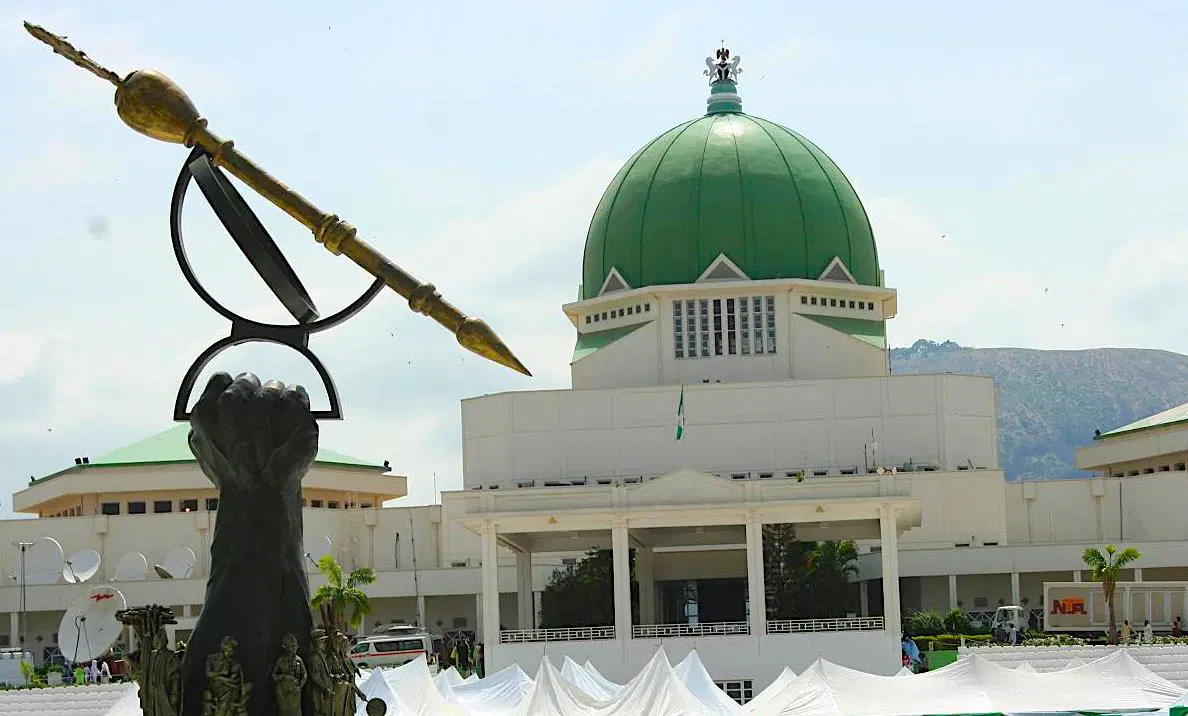
Northern Leaders Should Back Tinubu in 2027 to Secure Power in 2031, Says Kwankwaso

Ilyasu Musa Kwankwaso, a prominent All Progressives Congress (APC) figure from Kano State, has called on northern politicians to support President Bola Tinubu’s re-election in 2027. He argued that doing so would ensure a smoother power transition back to the North in 2031. Speaking in Kano, Kwankwaso highlighted the potential setback for the North if an alternative candidate from the South won, which could extend the wait for power to return to the region by eight years.

Kwankwaso further emphasized that recent security challenges shouldn’t deter northern leaders from backing Tinubu, noting efforts by Defence Minister Bello Matawalle to counter regional instability. He urged unity among northern politicians, stressing that rallying around Tinubu would promote stability and strengthen the region’s future political prospects.

Labour Ministry Summons National Assembly Staff Union Leaders Over N3 Billion Fraud Allegations


The Federal Ministry of Labour and Employment has scheduled a meeting with the leadership of the National Assembly’s Parliamentary Staff Association of Nigeria (PASAN) and several discontented members following allegations of a N3 billion fund misappropriation by PASAN’s executives.

The letter, signed by Amos Falonipe, Director/Registrar of Trade Union Services, called for PASAN officials and the aggrieved members to meet tomorrow. This summons follows a public accusation made earlier this month by PASAN member Yusuf Abiola, who claimed mismanagement of union funds and demanded audited financial records dating back to 2019. In response, PASAN’s National Assembly chapter leadership dismissed the allegations as groundless.

Despite PASAN’s statement refuting the claims, the ministry’s letter, dated October 25, 2024, officially invites both parties to discuss and address these serious accusations.

Current Dollar to Naira Black Market Exchange Rate – October 28, 2024


As of October 28, 2024, the dollar-to-naira exchange rate in Nigeria’s black market remains high, with buyers paying N1696 per dollar and sellers offering it at N1710. The Central Bank of Nigeria (CBN) does not officially recognize the black market rate, advising Nigerians to use banks for forex needs.

Meanwhile, the official CBN rate today stands slightly lower, with the dollar buying at N1634 and selling at N1635. These rates may vary based on location and provider, so buyers and sellers should check local sources for the most accurate figures.

In other news, Finance Minister Wale Edun and Oando Group President Wale Tinubu met with Afreximbank’s Prof. Benedict Oramah in Washington, D.C., discussing strategic financing for Nigeria’s energy and trade growth as part of President Tinubu’s economic reform agenda.

Top Nigerian Headlines You Need to Know for Monday, October 28, 2024

Top Nigerian Headlines for Today, October 28, 2024

Welcome to today’s news roundup, Nigeria. Here are the major stories making headlines for Monday, October 28, 2024:

  1. Tinubu Responds to “T-Pain” Nickname
    Bayo Onanuga, President Tinubu’s Special Adviser, addressed the recent “T-Pain” nickname, clarifying the president’s intentions to rebuild Nigeria’s economy.
  2. Tinubu’s Jet Purchase Explained
    The presidency clarifies that Tinubu acquired a refurbished jet to save on maintenance costs, sparking mixed reactions from Nigerians.
  3. NLC Criticizes IMF’s Influence on Nigerian Policies
    The Nigeria Labour Congress holds the IMF responsible for Nigeria’s subsidy removal and other policies affecting citizens.
  4. TCN Faces Delays in Northern Power Restoration
    Due to security concerns, the Transmission Company of Nigeria says repairs to restore electricity in the North are taking longer than expected.
  5. NASU, SSANU Begin Indefinite Strike Over Withheld Salaries
    Non-teaching staff unions at Nigerian universities commence an indefinite strike due to unpaid salaries.
  6. PANDEF Forms Committee to Mediate Wike and Fubara’s Conflict
    PANDEF has initiated a reconciliation committee to resolve ongoing political disputes in Rivers State.
  7. Senator Calls for Food Vouchers Amid Growing Hardship
    Senator Jimoh Ibrahim urges the government to issue food vouchers to alleviate poverty and hunger.
  8. Presidency Explains EFCC’s Challenges in Yahaya Bello’s Case
    President Tinubu’s adviser discusses complications in arresting former Governor Yahaya Bello due to political immunity issues.
  9. NDLEA Rejects Bribe, Seizes Major Drug Haul in Lagos
    NDLEA arrests suspects and seizes narcotics valued at billions while rejecting a significant bribe offer.
  10. Peter Obi Reacts to Power Crisis in Northern Nigeria
    The former presidential candidate calls for a long-term solution to the Northern power outage affecting businesses.

Catch up on the latest Nigerian news every day.

5 Foods and Drinks to Help You Fight Bad Breath Naturally

Bad breath can be uncomfortable, but what you eat plays a major role in keeping your breath fresh. Here are five foods and drinks to include in your diet for naturally better-smelling breath:

1. Fruits and Vegetables

Fruits and vegetables, especially apples, carrots, and celery, are high in fibre and water, which promote saliva production. Saliva helps wash away bacteria and food particles, reducing the chance of bad breath.

2. Yoghurt

Probiotic-rich yoghurt can reduce the bacteria in your mouth. Studies have shown that eating three ounces of yoghurt daily can cut hydrogen sulphide levels (which causes bad breath) by up to 80%.

3. Green Tea

Green tea’s polyphenols combat the sulphur compounds that contribute to bad breath. Try drinking it between meals to maintain fresh breath and aid digestion.

4. Herbs and Spices

Herbs like parsley, rosemary, and spearmint, as well as spices like cloves and fennel seeds, have been used for centuries to mask odour and freshen breath. These can be chewed raw or added to your meals.

5. Water

Staying hydrated is essential for fresh breath. Water naturally clears out food particles and bacteria in the mouth, helping to combat odour.

By regularly consuming these foods and drinks, you can keep your breath fresher and feel more confident.

Hong Kong-Zhuhai-Macao Bridge accelerates integrated development of three places

By He Linping, People’s Daily

At the mouth of the Pearl River, across the vast Lingdingyang waters, the Hong Kong-Zhuhai-Macao Bridge stretches across the “golden inner bay” of the Guangdong-Hong Kong-Macao Greater Bay Area (GBA).

At 10 a.m., the Zhuhai port of the Hong Kong-Zhuhai-Macao Bridge was bustling with traffic. In the outbound lane, a freight truck was slowly making its way through.

“This truck carries electronic equipment produced across the GBA. These equipment were gathered and loaded onto the truck in Zhuhai, and will be sent to the Hong Kong Airport via the bridge, where they’ll finally be shipped overseas by air,” said a customs officer.

In less than 20 minutes, after a swift check on a “one-stop” customs clearance form, the truck cleared customs and was on its way east across the bridge.

On Oct. 23, 2018, the Hong Kong-Zhuhai-Macao Bridge officially opened. Over the past six years, this bridge has significantly facilitated interconnectivity in the GBA.

According to statistics, as of Oct. 22 this year, more than 62.3 million passengers and over 12.76 million vehicles have traveled through the Zhuhai Highway Port of the bridge.

By the end of September, the total value of imports and exports of goods passing through the Zuhai port of the bridge has reached 942.7 billion yuan ($132.36 billion).

On the western end of the Hong Kong-Zhuhai-Macao Bridge, just a 20-minute drive from the Zhuhai Highway Port along the bridge’s extension, lies a Hong Kong-Zhuhai-Macao warehouse for cross-border commerce.

Lin Sheng, chairman of the Bay Area Group, which invested in and built the warehouse, noted that since its launch, the warehouse has attracted multiple e-commerce platforms. It receives packages from various regions and then distributes them to Hong Kong and Macao, with peak daily volumes reaching 60,000 packages.

Just a street across the warehouse, there is the Guangdong-Hong Kong Macao Logistics Park. The first phase of the logistics park is now operational, and the second phase has been completed. The park focuses on shipment consolidation and cross-border e-commerce. It is home to 10 logistics companies, cooperating with several e-commerce platforms. The park is seeing steady growth in export volumes.

Further west, there lie a series of key facilities including the Zhuhai Gaolan Port Comprehensive Free Trade Zone and an airport international smart logistics park. The Zhuhai Highway Port of Hong Kong-Zhuhai-Macao Bridge has become one of China’s major ports for cross-border direct purchase exports. As the logistics infrastructure and services continue to improve, cross-border e-commerce, a new driver of foreign trade, is booming.

Today, the Hong Kong-Zhuhai-Macao Bridge ports handle cargos from 31 provincial-level regions across China. They receive and ship an average of around 700,000 parcels on a daily basis, which reach over 230 countries and regions.

According to a customs official, the construction of this new trade route has spurred continuous growth in import and export cargo volumes through the Hong Kong-Zhuhai-Macao Bridge ports. This year, over 500,000 freight vehicles have crossed the bridge, a year-on-year increase of 13.7 percent. From January to September, the total value of imports and exports of goods passing through the bridge reached 164.97 billion yuan, marking a 10.4 percent growth year on year.

Over the past six years, Hong Kong, Zhuhai and Macao have continuously relaxed access to the Hong Kong-Zhuhai-Macao Bridge, making road trips to the mainland an increasingly popular option for residents of Hong Kong and Macao.

On a weekend, a Hong Kong resident surnamed Shi drove with his family across the bridge to Zhuhai, enjoying a day of shopping, dining, and entertainment.

“Since the ‘Northbound Travel for Hong Kong Vehicles’ scheme was implemented, it’s been so convenient for us to take road trips to the mainland during holidays and tour the GBA,” said Shi.

Since the scheme and a similar one in Macao were launched in 2023, the Hong Kong-Zhuhai-Macao Bridge ports, being the only designated ports for vehicles, have seen a surge in cross-border traffic. Since the beginning of this year, a total of 4.35 million vehicles have been inspected entering and leaving through the ports, an 82.8 percent year-on-year increase, and 5.75 times the traffic volume compared to the same period in 2019.

With reduced travel time and expanded living sphere, the GBA’s “one-hour living circle” has become a reality, thanks to geographical advantages and the convenience of 24-hour customs clearance.

As of October 22, the total number of “northbound” single-license plate vehicles from Hong Kong and Macao has surpassed 3.84 million, and over 35.6 million Hong Kong and Macao residents have traveled into the Chinese mainland via the bridge.

In response to the growing traffic, a series of customs facilitation measures have been introduced, and various new technologies and models for swift, efficient clearance have been implemented.

The bridge ports have completed upgrades to dual-use passenger and freight lanes, increasing the number of outbound passenger vehicle inspection lanes from 22 to 35. Additionally, customs and border inspection have shifted from sequential processing to parallel processing, improving clearance efficiency by approximately 50 percent. During peak hours, 1,500 outbound vehicles can be cleared per hour in a single direction.

10 Everyday Habits That Cause Bad Breath, Even After Brushing

Even with regular brushing, some daily habits can cause lingering bad breath. Persistent mouth odour can be embarrassing, affecting social interactions and self-confidence. Here’s a list of habits that might be contributing to unpleasant breath:

  1. Not Scraping Your Tongue
    Bacteria accumulate on the tongue, causing bad odour. Use a tongue scraper after brushing.
  2. Skipping Flossing
    Leftover food and plaque between teeth provide bacteria with fuel to create bad breath.
  3. Replacing Brushing with Mouthwash
    Mouthwash is a quick fix and may dry out your mouth, leading to odour. Brushing is essential.
  4. Not Drinking Enough Water
    Dehydration leads to a dry mouth, allowing bacteria to thrive.
  5. Avoiding Dentist Visits
    Dentists can detect hidden issues like gum disease or tartar, both of which cause bad breath.
  6. Using an Old Toothbrush
    Replace your toothbrush every three to four months to avoid reintroducing bacteria into your mouth.
  7. Mouth Breathing
    Breathing through your mouth dries it out, reducing saliva that helps cleanse bacteria.
  8. Chewing Gum and Mints
    Sugary mints and gum only offer temporary relief and feed bacteria, worsening odour.
  9. Consuming Certain Foods
    Garlic, onions, and dairy can linger in your system, causing breath issues.
  10. Not Brushing After Coffee or Smoking
    Coffee and tobacco leave residues that encourage bacteria. Rinse or brush afterward to minimize odour.

Stay mindful of these habits to maintain fresh breath and boost your oral hygiene.

NW China’s Hotan, Xinjiang explores key technologies for speed breeding

By Li Yanan, People’s Daily

Amid the sprawling desert of Hotan prefecture, northwest China’s Xinjiang Uygur autonomous region, greenhouses spread across vast expanses, providing abundant light and heat resources for the growing crops.

These greenhouses are within a plant factory of an agricultural industrial park. Here, the soilless cultivation has been made possible by three-layer frames, which provide a vertical space for the rice seedlings to grow, leading to a significant increase in the per-unit yield.

With this cultivating technology, it takes just 60 days for the rice seedlings to harvest, a remarkable improvement compared to ordinary farming practices that usually take 120 to 150 days on average for rice to mature.

“We used the local new rice for this cultivation by taking fast breeding technology. The seedling cultivation took 15 days, and the entire production cycle is 60 days by far,” said Wang Sen, a researcher with the Institute of Urban Agriculture (IUA) of the Chinese Academy of Agricultural Sciences.

The significant reduction of the rice growth cycle was accomplished by the research team led by Yang Qichang, chief scientist with the IUA. By adopting the speed breeding technology, the team has not only cut the growth cycle of rice by half, but allowed rice to be cultivated throughout the year, without being limited by seasonal factors.

According to Shi Dawei, a member of Yang’s team, the plant factory is equipped with numerous LED lights, which are indispensable for speed breeding. The team has managed to adjust the lighting conditions to meet the photosynthesis needs at different stages of rice cultivation, thereby achieving precise lighting and a shortened rice growth cycle, Shi noted.

Yang said that the plant factory can precisely control temperature, humidity, lighting, carbon dioxide, and nutrition in the root zone of the rice. In April 2024, the factory harvested the first batch of rice using speed breeding technology, achieving a yield of 1,051.5 kilograms per mu (about 70 kg per hectare). Since May, two more batches of the same rice variety have been harvested, both yielding over 1,000 kg per mu. Currently, the fourth batch of rice seedlings is being cultivated.

“We plan to further enhance grain production in the greenhouses of the Gobi Desert. With the potential to harvest five batches of rice annually, we could increase the yield to approximately 5,000 kg per mu every year, thereby contributing to food security,” said Yang.

The research team has also adopted a three-dimensional seedling cultivation machine that keeps rotating to ensure ample sunlight and even growth of each seedling, according to Yang Jun, another member of Yang’s team.

“The seedlings can mature in 15 days. Covering about 10 square meters, a single machine can provide seedlings for 50 mu of land,” he said.

Hotan is an ideal place for experimentation and building greenhouses because the land and operating costs are relatively low here with its vast deserts, abundant sunlight and heat resources. “We can make the most of natural light and accumulate heat without relying on coal heating to control temperature,” Yang said.

After more than two years of trial planting, Yang’s team has successfully addressed the main obstacles to speed breeding in desert greenhouses.

“The building cost of these efficient and energy-saving desert greenhouses is approximately 350 yuan (about $49.19) per square meter. The use of technologies such as new energy, machinery, and smart equipment will help to further reduce the costs,” said Yang Qichang.

The agricultural industrial park in Hotan has four plant factories. In addition to rice, other crops such as corn, tomatoes, and pepino melons are also cultivated here. Currently, Yang and his team are working on key technologies for speed breeding of staple crops like soybeans, corn, and wheat, as well as rapeseed, cotton, and alfalfa. Their goal is to provide technological support for speed breeding and efficient production of greenhouse crops.

Why the Kuwaiti Dinar is the Strongest Currency in the World


The Kuwaiti dinar (KWD) holds the title as the strongest currency in the world, surpassing the US dollar, British pound, and euro in value. Kuwait’s wealth, centered on its substantial oil reserves, is one of the primary reasons for this, as the oil sector generates 90% of government revenue. Unlike other oil-dependent nations, Kuwait has established economic stability through effective management of its oil income.

The dinar’s value is also supported by its pegged exchange rate to a basket of currencies, heavily weighted towards the US dollar, protecting it from volatile global currency shifts. Kuwait’s small population and high GDP per capita further bolster the dinar’s strength, along with government financial reserves managed by the Kuwait Investment Authority (KIA).

Hefei’s innovation endeavors lead to new industrial opportunities

By Qiu Chaoyi, People’s Daily

Hefei, capital of east China’s Anhui province, has been making headlines with a series of innovation breakthroughs recently.

In the first quarter of this year, Hefei’s high-tech manufacturing sector saw a 42.4 percent increase in added value, up 7.5 percentage points year-on-year. Meanwhile, the production of new energy vehicles (NEVs) in the city grew by 28.8 percent, and the export of integrated circuits increased by 31.4 percent, signaling rapid growth of new quality productive forces.

The Comprehensive Research Facility for Fusion Technology located in Hefei is expected to be completed next year; the chip “Xiaohong” independently developed by a Hefei-based research institution has been successfully delivered; the third-generation autonomous superconducting quantum computer, Origin Wukong, developed by a company in Hefei, has been accessed remotely by users from over 100 countries.

At the High Magnetic Field Laboratory of the Hefei Institutes of Physical Science (HFIPS), Chinese Academy of Sciences (CAS), in Science Island, a hub for nuclear fusion research in the outskirts of Hefei, stands a huge “iron can” as high as six meters.

“This is the Steady High Magnet Field Facility (SHMFF). It boasts world-leading comprehensive performance and internationally leading experimental conditions,” said Liu Jianguo, president of the HFIPS.

According to Liu, the facility is used to facilitate studies in physics, chemistry and material science, which not only promotes basic research, but also contributes to industrial innovation.

“For example, leveraging scientific facilities such as the SHMFF and the experimental advanced superconducting tokamak, also known as the “artificial sun,” a series of breakthroughs like proton therapy systems and new targeted drugs have been developed. Since the start of China’s 14th Five-Year Plan period (2021-2025), over 1,500 technology transfer agreements have been signed with enterprises,” Liu told People’s Daily.

Hefei is actively positioning itself as a hub for scientific and technological innovation by aligning the innovation chain with the industrial chain.

The city has deployed 13 large-scale scientific facilities, established 35 high-level new research institutes, and co-founded 53 collaborative innovation platforms with leading academic institutions. On Science Island alone, over 450 companies have been incubated, and around 80 of them have been nurtured into national high-tech enterprises.

Nestled among lush meadows, the Second Advanced Manufacturing Base of Chinese electric vehicle manufacturer NIO looks like a serene garden.

In the workshops of the factory, industrial robotic arms work swiftly, automatically welding car frames. On the ground, transport robots busily move about, while elevators go up and down for faster assembly.

“We’ve achieved 100 percent paperless operations here, and one car rolls off the line every minute,” said Jiang Zhaojun, head of the factory.

According to Jiang, the production line is flexible and of high precision, offering more than 3 million configuration combinations across different models to better meet diverse consumer needs.

Hefei has built a complete industrial chain for the NEV industry that covers key components, vehicle manufacturing and the aftermarket, and developed the most advanced industrial cluster in China for new display technologies. It also leads the world in terms of photovoltaic inverter shipments.

In recent years, Hefei has accelerated the formation of strategic emerging industrial clusters. Its capability is growing stronger and stronger in the development of such industries as chip, display, NEV, AI-business fusion, integrated circuit, smart terminal, biomedicine and AI speech.

In an exhibition hall of QuantumCTek in Hefei, a leader in the commercialization for quantum information technology, a seemingly ordinary smartphone catches the attention of many. When a text is typed in the communication app of the phone, the phone’s screen displays an entirely different sentence.

“This phone is equipped with quantum key technology, which can encrypt texts, voices, images, and other information, making it valuable for secure communications,” said Tang Shibiao, vice president of QuantumCTek. The company holds the highest number of patents in quantum communication globally, with its products applied in sectors such as government services and finance.

China’s leading AI and intelligent speech company iFLYTEK has an AI experience center in Hefei, where various intelligent products and services are exhibited. For instance, it houses an industrial diagnostic system that detects equipment anomalies by “listening” to sounds, iFLYTEK’s large language model SparkDesk has been installed in nearly 60 million vehicles, and the company’s smart education services are used by over 50,000 schools across the country.

“We are leveraging our expertise in AI to provide intelligent support for people’s work and life,” said Han Yuchen, deputy general manager of branding and marketing at iFLYTEK.

An official with the Hefei Development and Reform Commission said that in the future, the city will continue to promote the synchronized growth of technological innovation and industrial development, injecting new momentum into the advancement of new quality productive forces.