Chinese winter sports equipment industry gains global traction 

By Guo Xiaolong, Dou Hao, People’s Daily

Driven by surging interest in winter sports, China’s winter sports equipment industry has expanded rapidly in recent years. Supported by a maturing industrial ecosystem, Chinese manufacturers continue to deliver high-quality products and steadily strengthen their competitiveness and brand recognition in overseas markets.

Customs data reveal that since the latter half of 2025, China’s exports of ice skates to Central and Eastern Europe and ski apparel to North America have recorded double-digit growth. Globally, Chinese ice and snow equipment is gaining broader acceptance and increasing trust among consumers.

This trend was on evident at the Harbin International Ice and Snow Economy Expo 2026. At a  booth from Harbin, northeast China’s Heilongjiang province, Belarusian ski enthusiast Sergeyevich examined a pair of competition skis. “They offer better responsiveness in turns, improved flex, and rebound — comparable to leading international brands.”

According to Li Zhibo, general manager of the exhibitor, this pair of skis, emblazoned with a five-star red flag, were developed for the Chinese national aerial skiing team. The product has passed four rounds of rigorous testing and is expected to appear at the 2026 Milan-Cortina Winter Olympics.

The skis utilize aerospace-grade composite materials and precision 3D printing technology, achieving superior toughness-to-weight ratios at half the cost of comparable imports. Its R&D team adjusts core materials to match athlete’s power application and technique, shifting from “athlete adapts to equipment” to “equipment adapts to athlete.” This ensures top-tier performance, with multiple technical metrics meeting leading international standards. 

“Using equipment development for the 2026 Milan-Cortina Winter Olympics as a springboard, we plan to expand into elite-grade snowboards and alpine skis, so that our homegrown products can gain traction both on the global circuit and and in overseas markets,” said Li.

Not just skis — Chinese-made ski poles are also gaining popularity among international consumers.

At the showcase of Ninghai Better Outdoor Products Co., Ltd. (Better) in Ninghai county, Ningbo, east China’s Zhejiang province, a wide variety of ski poles are displayed — foldable, telescopic, ultra-lightweight.

A training pole designed for beginner alpine skiers has emerged as a star product, especially popular overseas. Exceptionally light and constructed from aerospace-grade aluminum alloy, each pole weighs under 200 grams. Besides, it offers reliable stability, featuring an ergonomically designed grip made from a special anti-slip material that ensures a firm hold even when wearing gloves.

“To align with European and American consumers, we enlarged the grip size and refined the telescopic mechanism,” said Guo Jinlong, the company’s foreign trade manager. During the 2025 snow season, overseas orders for this model exceeded 400,000 pairs, a 30 percent increase from a year ago.

The company currently exports over 5 million pairs of sports poles annually, primarily to Europe and North America, and is actively expanding into new markets, including South American countries like Chile and Colombia.

Better is not alone in Ninghai. In fact, about 70 percent of China’s exported ski poles originate from this county. Centered around products like ski poles, the local winter sports equipment industry has built a complete supply chain covering tubing, locks, grips, and assembly, with an annual output value approaching 1 billion yuan ($143.96 million).

Today, the journey from an aluminum alloy tube to a finished ski pole can be completed entirely within the county. “We can deliver a sample from a client’s idea in just seven days and move into mass production within 30,” said Zhu Xuefeng, the company’s general manager. 

Thanks to a well-developed industrial cluster and highly efficient, flexible production systems, manufacturers in Ninghai maintain robust capacity and a strong price-performance advantage. For comparable performance, Better’s offerings are priced at around 60 percent of what European or American brands charge.

To succeed in global markets, products must align with international rules and practices. Customs officials frequently visit factories during peak seasons to expedite clearance, offering technical guidance, establishing priority clearance channels for ski equipment exports, and providing compliance briefings to help companies navigate regulatory risks.

“To help enterprises seize opportunities and expand international markets, we actively promote customs clearance models like ‘advance declaration’ and implement facilitation measures to accelerate processing and reduce costs,” said Tian Mingchao, an official with Ningbo Customs.

New landscape of opening up reflected in world’s first port to handle 1.4 billion tons

By He Yin, People’s Daily

Ningbo-Zhoushan Port, located in east China’s Zhejiang province, recently released its 2025 performance results, marking a significant global milestone. figures for 2025. The port achieved a total cargo throughput exceeded 1.4 billion tons, securing its position as the world’s busiest port for 17 consecutive years. It also became the first port globally to enter the “1.4-billion-ton” club. 

This accomplishment is particularly noteworthy given the challenging global context of economic headwinds, complex geopolitical dynamics, and shifting trade policies. Achieving this milestone reflects remarkable foresight in strategic planning and a profound shift in development philosophy.

The conditions that once supported an extensive, volume-driven model of imports and exports have changed, making it necessary to develop new ideas to guide development under the new circumstances, Chinese President Xi Jinping stressed when visiting Ningbo-Zhoushan Port during an inspection tour in Zhejiang province in 2020.

Shortly after, he proposed building a new pattern of development that is focused on the domestic economy and features positive interplay between domestic and international economic flows. The development of Ningbo-Zhoushan Port over the past six years exactly mirrors China’s new landscape of high-level opening up.

China’s trade focus has transitioned from volume expansion to quality enhancement. Ningbo Port’s 2025 export data reveals this shift: shipments of the “new trio”(new energy vehicles, lithium-ion batteries, and photovoltaic products) rose 76.3 percent year on year, while exports of industrial robots surged 113 percent. Concurrently, high-tech imports grew 13.5%, demonstrating China’s upgraded market opportunities and expanding global value.

Despite pandemic disruptions and tariff escalations, Ningbo-Zhoushan Port achieved a historic breakthrough with container throughput exceeded 40 million TEUs (twenty-foot equivalent units) . New energy vehicles illustrate this trend. Exports through Ningbo port rose 305.8 percent year on year, with more than 700 vehicles shipped overseas every day on average.

Behind these figures lies the solid strength of highly competitive industrial clusters. In 2025, Ningbo newly recognized 2,666 high-tech enterprises in its first batch alone, with cluster effects continuing to gain momentum and driving comprehensive upgrading from technology to products and along the entire industrial chain. A large number of enterprises are connecting with global markets via Ningbo-Zhoushan Port, securing their position in global industrial chains through strong competitiveness.

The shift from an opening-up model centered on the flow of production factors to one that emphasizes rule-setting and standards alignment highlights the steady progress of institutional opening up.

From exploring rules for cross-border data flows in bulk commodity trading to improving mechanisms for international maritime arbitration and commercial mediation, Ningbo-Zhoushan Port — backed by the China (Zhejiang) Pilot Free Trade Zone — has remained at the forefront of institutional opening up.

Today, the port is working with Germany’s ports of Hamburg and Wilhelmshaven, as well as Spain’s Port of Valencia, to jointly build green shipping corridors and explore unified green standards “from terminal to terminal.” It has also established platforms such as the Maritime Silk Road Port Cooperation Forum to promote international cooperation among friendly ports. From proactive alignment to joint standard-setting, China’s voice and influence in international rule-making continue to grow.

The evolution from a “cargo transport channel” to an “opening-up hub” underscores the expanding network of mutually beneficial partnerships. 

On Jan. 8, the container vessel MSC Jessinia, on its maiden voyage of a new Australia-bound route, berthed at the Chuanshan Port Area of Ningbo-Zhoushan Port. The port now operates more than 300 shipping routes, connecting over 700 ports in more than 200 countries and regions worldwide. Its port connectivity index consistently ranks second globally.

As the port’s global partnerships expand, market structures are diversifying. In 2025, Zhejiang recorded import-export growth with over 180 countries and regions. Its trade with Belt and Road partner countries exceeded 3 trillion yuan ($430.19 billion) for the first time, up 8.7 percent year on year. 

On a broader scale, China is strengthening links with more partners, expanding the convergence of shared interests, and injecting fresh momentum into economic globalization through opening up and cooperation.

Ningbo-Zhoushan Port offers a clear case in point: China’s resolve to open up remains unwavering, despite rising unilateralism and protectionism globally. Its openness is becoming more robust, and it is creating more new opportunities for the world.

‘Food banks’ mirror China’s new approaches to food conservation

By Xiao Le

As evening fell over Jilong Yicun village in Shenzhen’s Futian district, south China’s Guangdong province, a green smart cabinet stood out in the night. 

Following a quick mobile verification, its door clicked open to reveal a free food package. 

This is China’s much-discussed “food bank” initiative. Over three years, nearly 500,000 portions of near-expired or surplus food have been redirected here, benefiting approximately half a million recipients.

The 24-hour food banks introduced in Shenzhen and other cities channel soon-to-expire food to those in need — offering complimentary provisions to vulnerable groups and residents while combating food waste.

Why has this model garnered significant attention? Its innovation lies in addressing a persistent challenge: preventing near-expired and surpluses from becoming waste.

Through a collaborative framework of government coordination, business engagement, and social organizations operation — with public engagement in co-creation and benefit-sharing — Futian district has formed stable partnerships with nearly 100 enterprises, including Freshippo, Ole’ Supermarket, and Yonghui Superstores. This initiative has helped save approximately 202 tons of food and cut carbon emissions by around 404 tons.

Yet this represents only an initial step. Food waste runs through the entire supply chain. According to estimates by relevant institutions, China loses and wastes around 460 billion kilograms of food every year. 

From harvesting and storage to transportation, processing, and consumption, losses occur at every stage. This underscores the need to firmly embrace the idea that reducing loss and waste is equivalent to increasing output, and to promote conservation and loss reduction across the entire chain.

How can these persistent issues be effectively tackled? The “food bank” initiative offers a forward-looking approach. 

At its heart lies a simple yet powerful idea: to prevent near-expiry and surplus food — often considered “hard to sell yet too good to waste” — from ending up as trash, and instead channel it to meaningful use. By intervening at the post-consumption stage, the model builds a bridge between circular resource use and compassionate community support. 

At the same time, it complements upstream efforts: scientific grain storage at the production stage, appropriate processing in manufacturing, and consumption-side initiatives like the “Clean Your Plate” campaign. This integrated approach facilitates resource cascading and efficient use throughout the system.

Food conservation has never been a new topic. Thrift is a traditional virtue of the Chinese nation. “Who knows that of our meal in the dish, every grain comes after hard toil?” This line in a Tang Dynasty (618-907) poem has been passed down for over 1,000 years and remains one of the most effective lessons in saving food. 

Similar models operate globally. Singapore runs the national “Clean Plate Campaign;” Germany promotes food-saving apps for smarter household ingredient management; and Chile’s “Zero Food Waste Outdoor Market” project encourages donating near-expired items while composting inedible waste.

Today, China’s approaches to food conservation are growing more diverse and dynamic. Among young people, initiatives such as “surprise leftover boxes,” pay-by-weight canteens, and dedicated near-expiry food sections in supermarkets are gaining traction. Food saving is evolving beyond mere awareness into tangible, participatory action.

Ultimately, food conservation rests on individual choices. For households, buying only what is needed and preparing sensible portions are simple yet effortless practices. For catering businesses, promoting smaller servings and participating in near-expiry food donation not only fulfill social responsibility but also cut operational waste.

A single smart cabinet weaves together the collaborative efforts of the government, businesses, social organizations, and the public — reflecting, in its own way, the warmth and civility of a city.

Reading China’s modernization through 50,000 kilometers of high-speed rail

By He Yin, People’s Daily

A U.S. media outlet recently noted that China’s high-speed rail network, now exceeding 50,000 kilometers in operation, has set a new global benchmark. It said that China’s experience offers useful reference for other countries seeking to modernize their railway infrastructure.

This milestone transcends numerical significance. It marks a defining phase in China’s modernization journey and provides a lens through which the world can better understand China’s governance approach and the tangible opportunities presented by its development model.

The 50,000-kilometer network reflects China’s commitment to long-term planning. Given the extended timelines and substantial investments required for rail projects, forward-looking strategies have been critical to their systematic development.

From the first edition of the Medium-and Long-Term Railway Network Plan in 2004, which laid out a clear framework for high-speed rail development, to its optimization in 2008, and its further upgrade in 2016, which proposed “eight vertical and eight horizontal” lines, China’s high-speed rail development exactly explains what perseverance is.

Throughout this process, China has fully leveraged the strengths of the new system for mobilizing resources nationwide, integrating enterprises, universities, research institutions, and the user end, and turning the world’s largest high-speed rail market into the most dynamic driver for innovation. 

Such institutional strength enabled China to overcome technological barriers and emerge as a pioneer in fields like intelligent and green rail systems.

International media have attributed China’s achievements to its exceptional focus. This, they note, also reflects a way of thinking — the result of a country building for the next century rather than the next election. While some nations grapple with legislative gridlock on long-term infrastructure, China has demonstrated consistent policy stability. This capacity to transcend electoral timelines has made certainty a hallmark of its development.

The 50,000-kilometer milestone also highlights the value of China’s people-centered approach. During the 14th Five-Year Plan period (2021-2025) alone, 128 counties — including Fuping in northwest China, Badong in central China, and Longzhou in south China — ended their history of having no access to high-speed rail. 

Take the recently opened Xi’an-Yan’an High-Speed Railway as an example. The line connects Yan’an, long known as a cradle of Chinese revolution, with the national high-speed rail network, dramatically shortening travel times and improving access to major markets. 

The benefits are tangible: apples from Luochuan and persimmon cakes from Fuping can now reach a much wider consumer base, while new forms of industrial collaboration are taking shape along the route.

By extending high-speed railways to remote and mountainous regions, China advances regional development and common prosperity. The commitment that no one will be left behind on the path to modernization is being translated into concrete progress across the country.

The value of railways lies not only in the extension of tracks, but also in the pursuit of connectivity and shared development. Today, China’s railways are injecting stronger momentum into global modernization. 

The Jakarta–Bandung High-Speed Railway has realized Indonesia’s long-standing goal of developing high-speed rail, accelerating the rise of industrial clusters along the route. The China–Laos Railway has helped Laos move from a landlocked country into a land-linked one, creating more than 100,000 jobs. The Mombasa–Nairobi Railway has reshaped East Africa’s transportation hub, improving livelihoods along the route through public welfare programs and community development. The China–Kyrgyzstan–Uzbekistan Railway currently under construction is unfolding a new vision of connectivity across the Eurasian continent. 

Chinese modernization does not seek progress for China alone; rather, it advances global development and prosperity through enhanced international cooperation. 

These achievements demonstrate China’s capacity for both strategic planning and concrete implementation. What expands is not merely track mileage, but globally applicable standards and shared prosperity pathways. 

As observed by Kenyan media, China’s modernization narrative emphasizes partnership over hierarchy and cooperation over dependency, offering countries of the Global South a distinctive and increasingly important framework.

China’s achievements are shared with the world. Turning blueprints into reality and visions into tangible outcomes, What expands is not merely track mileage, but globally applicable standards and shared prosperity pathways. 

Through openness and win-win cooperation, China continues contributing momentum to building a community with a shared future for humanity.

Audi: Trajectory of Success and Changing the Narrative

From a plethora of achievements and milestones—despite daunting challenges and shortcomings—the foresight, vision, and focused leadership of the present administration have transformed and repositioned the Service like never before in its history. In spite of limited funding and other grey areas yet to be addressed, the leadership has successfully turned around the narrative through deliberate rebranding efforts since assuming office.

Staff welfare remains paramount to the Commandant-General, who has consistently prioritized boosting esprit de corps and high personnel morale through the prompt payment of salaries, allowances, and other official entitlements as and when due. The leadership has also entrenched core values of integrity, intelligence-based security response systems, and professionalism across all operations. These measures have significantly reduced the activities of criminals, vandals, kidnappers, herdsmen, and illegal miners across the country.

In a press release signed by Mahmud Bello, Director of Media and Stakeholders Engagement of the Citizen Watch Advocacy Initiative (CWAI) in Kaduna State, the organization stated that the paramilitary agency has demonstrated genuine commitment to the interest of Nigerians through its open-door policy and robust engagement with its various publics. This approach has greatly reduced threats and disaster incidences nationwide through professional intelligence gathering, investigation, information sharing, manpower development, and strong collaboration with sister agencies—leading to remarkable improvement in disaster management as first responders.

Accordingly, transparency, accountability, and good governance have remained at the forefront of the present administration’s transformational philosophy. This has resulted in far-reaching reforms, including the regulation of private security companies, the introduction of Mining Marshals to secure strategic mining sites nationwide, containment of vandalism of critical national assets, reduction of oil theft in the Niger Delta region, and the assumption of VIP protocol protection responsibilities. These achievements surpass those of previous administrations and mark a significant milestone in the Service’s evolution.

CWAI authoritatively confirmed that the present management has introduced comprehensive institutional reforms that have repositioned the Service for greater productivity, efficiency, and effectiveness in delivering its mandate of safeguarding lives, property, and critical national assets—thereby reducing criminal activities and enhancing national security.

The Commandant-General, Professor Abubakar Ahmad Audi, reiterated that the reforms introduced align with his vision to upgrade the operational machinery of the Corps. He noted that the reorganization and revitalization of the training department are aimed at sharpening the skills and competencies of personnel to effectively address contemporary security challenges posed by hoodlums, bandits, kidnappers, and insurgents.

The establishment of the Mining Marshals and the Special Female Squad (SFS) are novel initiatives and the first of their kind in the history of the Corps. In response to the Federal Government’s Safe Schools Initiative, the NSCDC conducted audits and surveys of schools nationwide and developed a framework for proactive security measures to address the persistent attacks on educational institutions. These squads, like the Mining Marshals, are strengthening partnerships with local communities and stakeholders while prioritizing surveillance and monitoring to curb violent attacks and criminal activities.

The statement further emphasized that the Directorate of Legal Services has been reinvigorated and strengthened with enhanced prosecutorial competence, improving law enforcement and accountability. Similarly, the Anti-Vandal Unit has undergone major reforms and has been strategically deployed across the South-South geopolitical zone to curb pipeline vandalism, crude oil theft, and destruction of critical national assets. Over 2,500 suspects have been arrested since the beginning of the year for offences ranging from vandalism and attacks on national infrastructure to cattle rustling, banditry, attacks on farmers and farmlands, and illegal mining.
The Commandant-General attributed these successes to effective inter-agency collaboration, synergy, and partnerships, calling for comprehensive manpower development within the national security architecture.
Sports have also received significant attention under the present leadership, with officers and men of the NSCDC winning numerous laurels and trophies in various sporting engagements. All personnel, regardless of rank, have been provided with insurance cover against accidents, disability, or death in the course of duty. The Commandant-General views sports as a unifying platform that promotes wellness, camaraderie, information sharing, and mutual trust among paramilitary agencies.

CWAI further noted that the crackdown on illegal mining activities has saved the economy substantial revenue losses, while the destruction of over 450 illegal refineries has reduced oil theft. Additionally, the arrest of suspects and recovery of critical assets and railway materials valued at over ₦5 billion represent major milestones of the Service.
The organization therefore endorsed the change mantra of the Audi-led management and expressed confidence in the present leadership, noting that Nigerians are proud of its achievements despite prevailing challenges.
CWAI urged personnel to remain good ambassadors of the Corps—incorruptible and aligned with international best security practices wherever they serve. Nigerians were also encouraged to support the management in strengthening efforts against vandals and criminals nationwide.

The organization appealed to corporate bodies and public-spirited individuals to support President Bola Ahmed Tinubu’s Renewed Hope Agenda, particularly efforts to modernize the NSCDC through funding, partnerships, manpower development, capacity building, and the acquisition of modern security equipment.

Finally, CWAI emphasised the need for increased national budgetary allocation to the NSCDC in view of its critical role in the nation’s security architecture, including its added responsibility of VIP protocol protection. It also called for the entrenchment of a standard training curriculum to enhance career progression, effective supervision, and transparent regulation of Private Guard Companies across the country.

Jin Yipeng: guardian of endangered species

By Ding Yasong, People’s Daily

For Jin Yipeng, vice dean and professor at the College of Veterinary Medicine of China Agricultural University, clinical practice rarely unfolds in a conventional operating room. His patients — some of the world’s most endangered species — are often found deep in mountain forests or high on alpine plateau.
Specializing in wildlife medicine, Jin has devoted his career to the rescue and treatment of endangered animals, from giant pandas to snow leopards. Over the years, each successful rescue has left behind not only medical records but also vivid moments captured on his phone.
Scrolling through the photos, the 47-year-old recalled each encounter. “This is Tangtang, a giant panda — when released back into the wild, a butterfly landed on its back,” he shard. “And this is Meng’er; the discoloration around its eyes was later resolved.”
Jin smiled as he spoke of Yimao, a male panda: “Now when Yimao sees me, it sometimes rolls over and sits close beside me. That kind of mutual trust — it feels really rewarding.” Among the animals he has treated, giant pandas account for the largest share.
“Our team began rescuing giant pandas in 2008 at the Foping National Nature Reserve in Shaanxi,” Jin recalled.
“As a male, Yimao often gets injured in fights,” Jin explained. Once, Yimao was bitten by another panda — its teeth were loosened and displaced, its face covered in blood, and immediate treatment was needed.
Startled, Yimao fled ahead, with Jin and his team chasing after it at full speed. The panda eventually stopped by a stream, exhausted. To avoid alarming it further, Jin laid down in the icy water.
“It was winter, and I was wearing a down jacket,” Jin recalled. “I half swam, half crawled through the stream for over 20 minutes, inching closer until I was within about four meters. I then shot it with a blow dart to administer anesthesia and carried out the subsequent treatment.”
Over more than a decade, Jin has conducted over 10 medical examinations and treatments of varying complexity on Yimao. Now 21 years old — considered elderly for a giant panda — Yimao has seen its foraging ability decline significantly.
In May 2025, Jin’s team launched a field-based rehabilitation and health maintenance program for wild giant pandas. “We assigned a full-time veterinarian to locate Yimao daily, supplement its nutrition through dietary therapy, and administer targeted medication,” Jin said. “The animal’s recovery has been very encouraging.”
“Recent follow-up examinations show that all indicators are close to normal,” he added. “We hope this approach will help extend its lifespan.”
Why did Jin choose to dedicate himself to wildlife rescue? He has a clear answer.
In 2007, Jin went to the United States as a visiting scholar to study wildlife medicine, marking the beginning of his professional journey in this field.
“After returning to China, I interned at a wildlife breeding institution,” he said. “During one giant panda rescue operation, I realized the limits of our treatment capabilities — we still need to consult foreign experts and follow overseas medical standards.”
“That moment solidified my resolve to change the situation,” Jin recalled.
Over more than decade-long career, Jin has treated more than 1,000 wild animals, ranging from giant pandas and snow leopards to Asian black bears and Chinese mountain cats.
In early 2019, his team received an emergency case at the the Qinghai Wildlife Rescue and Breeding Center in northwest China’s Qinghai province: a severely injured elderly male snow leopard, near shock from life-threatening wounds. Jin and his team immediately rushed to Xining, Qinghai’s provincial capital. “During the examination, we found that its left eye had a corneal perforation caused by trauma, and the right eye had a severe cataract that required surgical treatment,” Jin added.
Performing phacoemulsification cataract surgery on a wild snow leopard was unprecedented. “While this technique is routine for domestic cats and dogs, the real challenge was designing a suitable intraocular lens,” Jin said. “We contacted every manufacturer but found no existing snow leopard lens molds.”
Undeterred, Jin adapted equine three intraocular lenses — ordering three from overseas and modifying them based on years of research. The successful surgery restored the snow leopard’s vision.
“Just two years ago, we performed another cataract surgery on a snow leopard,” Jin stated proudly. “This time, we used China’s first domestically developed snow leopard-specific intraocular lens — a technologically superior and more cost-effective breakthrough.”
Through years of hands-on rescue work, Jin has witnessed the rapid development of wildlife medicine in China.
“In the early days, we could only perform basic examinations using stethoscopes and test strips,” he said. “Today, we have wildlife medical vehicles, portable ultrasound devices, and X-ray machines with fully independent intellectual property rights, enabling on-site examinations and treatment directly in the field.”
In recent years, Jin has devoted considerable effort to preventive conservation. At the Foping National Nature Reserve in Shaanxi, he has gone door to door vaccinating villagers’ dogs.
“Unvaccinated domestic can transmit fatal diseases to pandas and other wildlife,” Jin explained. “Small preventive measures yield significant protection,” Jin observed. He remains committed to raising public awareness, fostering a shared societal responsibility for wildlife conservation.

Life can be this fun at 100

By Zhong Wenyu

My name is Zhong Wenyu. I am 100 years old ~and~ live in Shanghai. On winter afternoons, I sit by the window, basking in the sun. A cup of hot milk tea rests on the coffee table, and my fingers glide across the screen of my tablet — I’m nearly finished with this level of the match-three game.
My youngest daughter likes to tease me, calling me a “playful old child.” But I feel there is still a little girl inside me, curious about the world.
I love food and enjoy trying new things.
When it comes to eating, I like to keep up with young people. Knowing my fondness for good food, my children often bring home novel treats — burgers, fried chicken, all kinds of desserts. I taste whatever they hand me. If it’s good, my eyes light up: “This is nice, let’s get more next time.” If it doesn’t suit my palate, I simply say nothing more.
I especially love crabs. Dipped in ginger and vinegar sauce, they are incredibly fresh. Although I have almost no teeth left and my gums are shallow — doctors advise against dentures for me — none of this stops me from enjoying good food.
Recently, my granddaughter set up a social media account for me called Baisui Zhongjie, which means centenarian sister Zhong, and filmed a short video: I sit at the dining table, fully focused on eating a marinated crab, slowly turning the shell in my hands and picking it clean, savoring every bit of meat. After the video was posted online, it received many warm messages from young people I had never met.
My daughter often says that I don’t watch what I eat and don’t quite live up to their ideas of healthy eating. But the truth is, at my age, being able to indulge a little within reason and savor such simple pleasures feels like a gift — a small blessing from life itself.
As one grows older and less mobile, it becomes all the more important to find small joys — life cannot be too dull.
I love reading. In the past, my favorites were Chinese novelist Jin Yong’s martial arts novels, which I would read page by page with a magnifying glass, utterly absorbed. As heavy books became difficult to hold, my daughter replaced them with a tablet.
At first, I watched TV dramas on it. My daughter joked that drama producers couldn’t keep up with my speed of viewing them. Later, my granddaughter taught me how to play games — solitaire, match-three games. Sliding my fingers across the screen and watching colorful blocks disappear is quite entertaining.
During pleasant spring and autumn days, my children wheel me outdoors. I prefer supermarkets and wet markets over parks. When I spot snacks or household items I’ve never seen before, I point them out and my children put them into the shopping cart. This joy of “discovery” makes me feel closely connected to the world.
With an open mind, everything looks agreeable.
Though I enjoy new foods, my daily rhythm is unwavering: I rise at 8 a.m., sleep before midnight, eat three meals punctually, and rest eight full hours. This routine has endured for decades.
When asked about longevity, I reflect that it comes down to “not holding on too tightly” — to opinions, grievances, or rigid ways. Among neighbors, I’ve never sow discord; in decades, we’ve never quarreled. With my children, I highlight their mutual virtues, encouraging the family to view each other’s struggles and strengths with kindness.
I follow the news closely. Last year’s September 3rd military parade — I watched every moment. Seeing my country getting strong, the soldiers marching in perfect formation, the formidable new equipment brought profound reassurance. When the Global Leaders’ Meeting on Women was held in Beijing, I followed the live broadcast intently. Over these 100 years, Chinese women’s status has undergone seismic transformation..
My daughter once asked, “Mom, do you really understand all this?”
Of course I do. I’ve lived through much.
Born in Chongqing in 1925 during the Chinese People’s War of Resistance against Japanese Aggression, I carried wounded soldiers on stretchers with classmates. Later I met my husband, moving from Hangzhou to Shanghai where we settled. Only those who’ve heard the thunder of war truly cherish peace..
That’s why I seek the bright side. Late-night neighbor noises? Perhaps a child needs care. Community renovation racket? It’s for better living. Whether neighborhood matters or national affairs, I tell my children: “Life is hard for all — we should be more understanding.”Life remains this vibrant at 100. Each dawn brings anticipation — what new wonders will today hold? That warm afternoon milk tea awaits. Such a rich, flavorful life is never quite enough.

Harbin’s winter wonderland illuminates China’s thriving ice-snow tourism

By Wang Donghui, Zheng Zhiwen, Li Kaixuan, Shang Rongzheng, People’s Daily

As night falls, the Harbin Ice and Snow World in Harbin, northeast China’s Heilongjiang province transforms into a luminous spectacle, resonating with laughter and cheers from enthusiastic crowds. This vibrant scene transcends mere winter festivities — it embodies the dynamic growth of China’s surging ice-and-snow tourism. On Jan. 1, 2026 alone, Harbin received more than 1.4 million visitors, up 11.4 percent year on year.
The “Harbin phenomenon” reflects the robust expansion of China’s ice-and-snow economy. Between 2016 and 2024, the size of China’s ice-and-snow industry surged from 364.7 billion yuan ($52.37 billion) to 980 billion yuan, with an average annual growth rate of 21.09 percent. The number is expected to surpass the one-trillion-yuan mark in 2025. For three consecutive winter seasons, over 300 million trips have been made to ice and snow-related destinations in China.
Upgraded products, stronger supply
Advances in materials science and industrial innovation are driving recognition of domestically produced winter sports equipment among Chinese consumers.
At the Lake Songhua Resort in Jilin city, northeast China’s Jilin province, a young visitor, Tang Wenhao, examined a newly introduced snowboard made of carbon fiber. “It’s domestically made, lightweight, and easy to use,” he said after receiving the board from staff of Xifei, a homegrown brand.
“Xifei” is a registered trademark of Jilin Chemical Fiber Group, one of China’s major carbon fiber producers. In recent years, the company has set its sights on the winter sports equipment market, leveraging its integrated industrial chain to develop carbon-fiber skis and snowboards.
“We began developing carbon-fiber snowboards in 2023,” said Zhou Zhiyou, deputy director of market development at the company’s sales center. “Our products are benchmarked against leading international brands, but are offered at more affordable prices.”
According to Zhou, carbon-fiber boards are about 30 percent lighter than conventional models, while offering three to five times greater strength and improved resistance to impact.
Industry experts confirm China has established a comprehensive winter sports equipment ecosystem spanning 15 major categories — from individual gear to venue facilities, catering to both professional and recreational needs. The sector is transitioning from contract manufacturing to independent R&D and standards development, fueled by smart technologies and advanced materials.
Innovative Operations Models
China’s winter sports boom is overcoming traditional climate limitations, expanding southward through year-round indoor facilities in cities such as Guangzhou, Chengdu and Shenzhen. These venues serve dual purposes as urban leisure destinations and professional training hubs.
Southern cities are developing competitive differentiation through creative projects. At the ICE PANDA, an indoor ice-climbing venue in Chengdu, southwest China’s Sichuan province, the crisp sound of ice axes striking the wall echoes through the hall as enthusiasts, guided by coaches, savor the thrill of scaling icy heights.
“Ice climbing is an extreme sport that combines strength, technique and courage. It tests physical ability and offers visual spectacle,” said Li Changchen, the venue’s general manager. As China’s first indoor ice-climbing facility, the venue features professional-grade ice walls about 12.5 meters high, with slopes ranging from 60-degree inclines to 90-degree vertical faces, offering suitable challenges for both beginners and seasoned climbers.
Enthusiast Jiang Shou noted: “Urban venues dramatically reduce barriers to entry compared to outdoor climbing, which requires significant equipment and travel investment. With Chengdu’s proximity to snow-capped mountains, our ‘indoor training + outdoor application’ model offers exceptional practicality.”
Refreshed Consumption Experiences
At dusk, a group of tourists clad in specially designed suits that are both cold- and water-resistant floated serenely on the surface of a frozen lake, immersed in a tranquil blue stillness. They struck creative poses as a drone rose overhead and captured the moment.
This is “ice floating,” a new ice-and-snow program introduced this winter in Altay, northwest China’s Xinjiang Uygur autonomous region.
According to Cheng Hou, head of an ice-floating tourism studio in Altay, the project is designed to immerse visitors in nature while promoting relaxation. Openings are carved into sealed ice lakes, allowing tourists to float effortlessly and savor the poetic beauty of winter.
“Since being launched, it has been extremely popular, especially among young people. We expect to welcome around 10,000 visitors over the winter,” Cheng said.
In recent years, Xinjiang has stepped up policy support for winter tourism, diversifying relevant offerings and building distinctive tourism brands. In Altay alone, a range of new activities has been introduced, including ice fishing, ice-and-snow theme parks, and horse riding on snow. Ski resorts have also added hot-air balloons, paragliding and snowmobiles, expanding the “skiing-plus” model and enriching the supply of ice-and-snow tourism products.
This winter season, Xinjiang rolled out more than 500 featured cultural and tourism events. During the 2026 New Year holiday, the region received 1.68 million visitors, generating total tourism spending of 1.53 billion yuan.

Technology drives development of Xinjiang’s cotton industry

By He Yong, Ardak, People’s Daily

In the depths of winter, a light snowfall blanketed the vast cotton fields of Xayar County in Aksu prefecture, northwest China’s Xinjiang Uygur autonomous region.
Indoors, farmer Ababekri Memet smiled as he reviewed his harvest figures on his mobile phone. “Cotton farming is less labor-intensive now, and the returns are much more stable,” he remarked.
According to a 2025 cotton output bulletin released by China’s National Bureau of Statistics, in Xinjiang, the country’s main cotton-producing region, cotton output reached 6.165 million tons, crossing the 6-million-ton mark for the first time and accounting for 92.8% of the national total.
The evolution from hand picking to mechanized operations, and from a single crop to a complete industrial chain, reflects the cotton industry’s steady advancement toward greater intelligence and higher value.
Though not peak season, activity hummed in Ababekri’s machinery shed as he and his brother maintained their fleet: 12 tractors, three high-horsepower tractors, one cotton picker and three specialized sprayers. “They are now the backbone of our work,” he noted.
In 2007, Ababekri’s family planted 100 mu (6.67 hectares) of cotton. “Our greatest concern was the harvest season — finding pickers and rising wages consumed nearly 30% of our income,” he recalled. Back then, fields teemed with manual laborers.
Specialized sprayers are 50 times more efficient than manual labor while thinning and fertilizing tasks can be carried out with precision. Harvesting is dominated by high-efficiency cotton pickers.
“In the past, harvesting 100 murequired 12 people over two months. Now, one machine harvests 5,000 mu in just 12 days,” he explained.
Data from the Xayar county’s bureau of agriculture and rural affairs show that the county now operates 54,700 agricultural machines, maintaining a cotton cultivation mechanization rate above 95% for five consecutive years. More and more cotton growers have set up agricultural cooperatives, purchased advanced machinery and provided mechanized services.
Ababekri runs one such cooperative. “Last year, we serviced more than 7,000 mu of farmland,” he shared. The cooperative’s revenue exceeded 1.1 million yuan ($157,845), with machinery services contributing 40%.
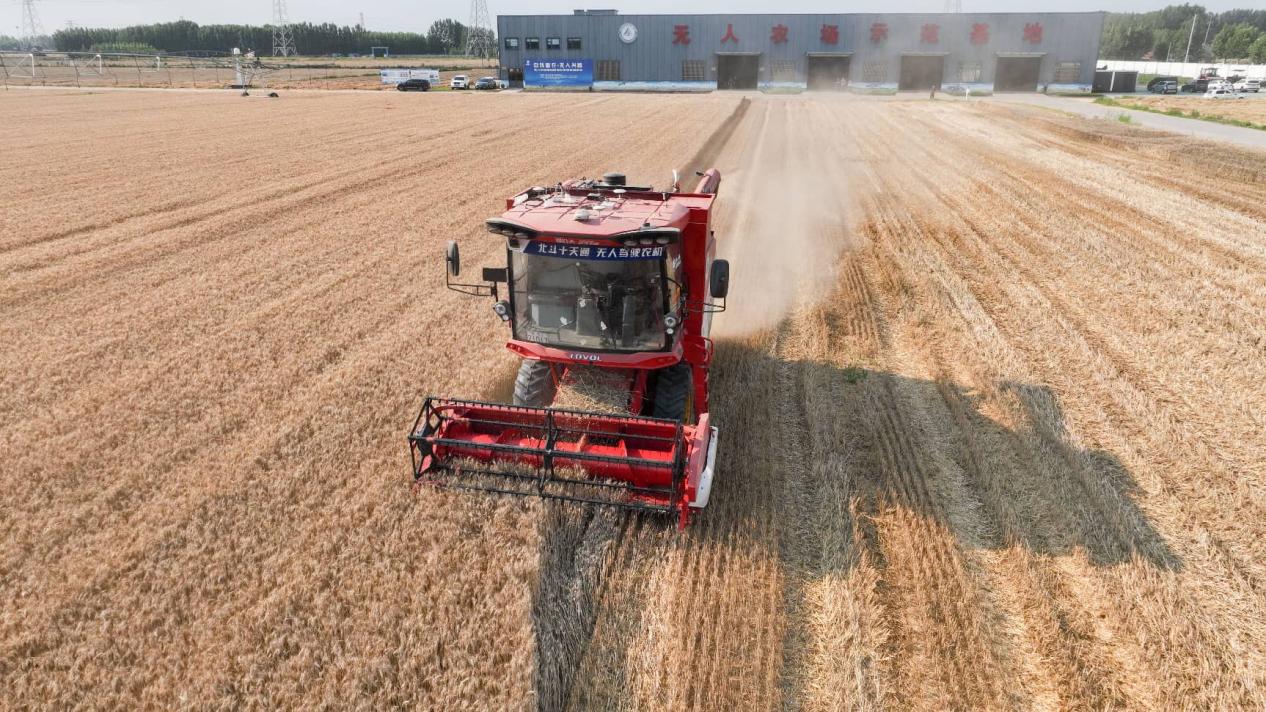
At present, highly automated technologies — including precision seeding, integrated drip irrigation, and drone-based crop protection — are widely adopted in Xinjiang, steadily boosting productivity across the cotton industry.
Winter marks a critical period for cotton farmers as they select seeds for the upcoming season.”Seeds are the foundation. Choose the wrong ones risks wasting an entire year’s effort,” explained Ababekri Memet.
At the beginning of each year, the Xayar county seed industry development center organizes variety promotion events and distributes comparative trial reports. Ababekri studies the report carefully, focusing on indicators such as disease resistance, heat tolerance, fiber length and lint percentage. “I check the statistics and combine them with the conditions of my own fields. This approach ensures precision and efficiency,” he noted.
In the summer of 2025, Ababekri’s cotton fields were hit by a prolonged heat wave. “If I had used the old varieties, the yield would certainly have dropped a lot, he recalled. “But the stress-resistant variety I selected minimized the impact, resulting in strong output and income growth.”
Through measures such as releasing region-specific high-yield, high-quality varieties and vigorously promoting improved seeds, Xinjiang has raised the coverage rate of improved cotton varieties to over 98%.
In 2025, the Institute of Cotton Research of the Xinjiang Academy of Agricultural Sciences introduced more than 3,400 germplasm resources from home and abroad, developed over 40 new valuable germplasm lines with traits such as drought tolerance, salinity-alkali tolerance and heat resistance, and bred and approved more than seven new types of cotton varieties.
These breakthrough breeding achievements, through a region-wide system of seed multiplication and extension, have been transformed into tangible gains in yield and quality in the fields. In Xayar county, average cotton yield per mu rose from 285 kilograms in 2017 to 442 kilograms in 2025, increasing farmers’ income by 1,000 yuan per mu on average.
In Xayar county, the cotton industrial chain is being continuously extended.
“We harvest the cotton in the morning and deliver it to the ginning mill in the afternoon. Processing is finished the next day, and the payment is received within a week,” Ababekri said.
In the past, cotton had to be processed hundreds of kilometers away, with transport costs of several thousand yuan for a single trip. Now, the harvested cotton is sent directly to a local ginning plant within 20 kilometers, processed into lint and supplied straight to local textile enterprises.
At a textile company in an industrial park in the county, machines roared as snow-white cotton rolls went through multiple processes to become fine yarn, ready for shipment to coastal cities.
“In the past, we only sold raw cotton, with low added value. Now we can process it locally into fabrics and textiles, and the value added has multiplied several times over,” said Zhao Qiqi, deputy director of the county’s bureau of commerce, science, technology and industry.
It is reported that Xinjiang has now built a full industrial chain covering cotton, chemical fibers, spinning, weaving, printing and dyeing, garments, home textiles and industrial textiles. This not only enables cotton farmers like Ababekri to secure faster and more stable returns, but also creates more jobs locally and brings about greater industrial value.

A Yangtze riverside chemical maker’s decade-long turn toward high-quality, green growth

By Yu Weiliang, Lu Yanan, Tang Luwei

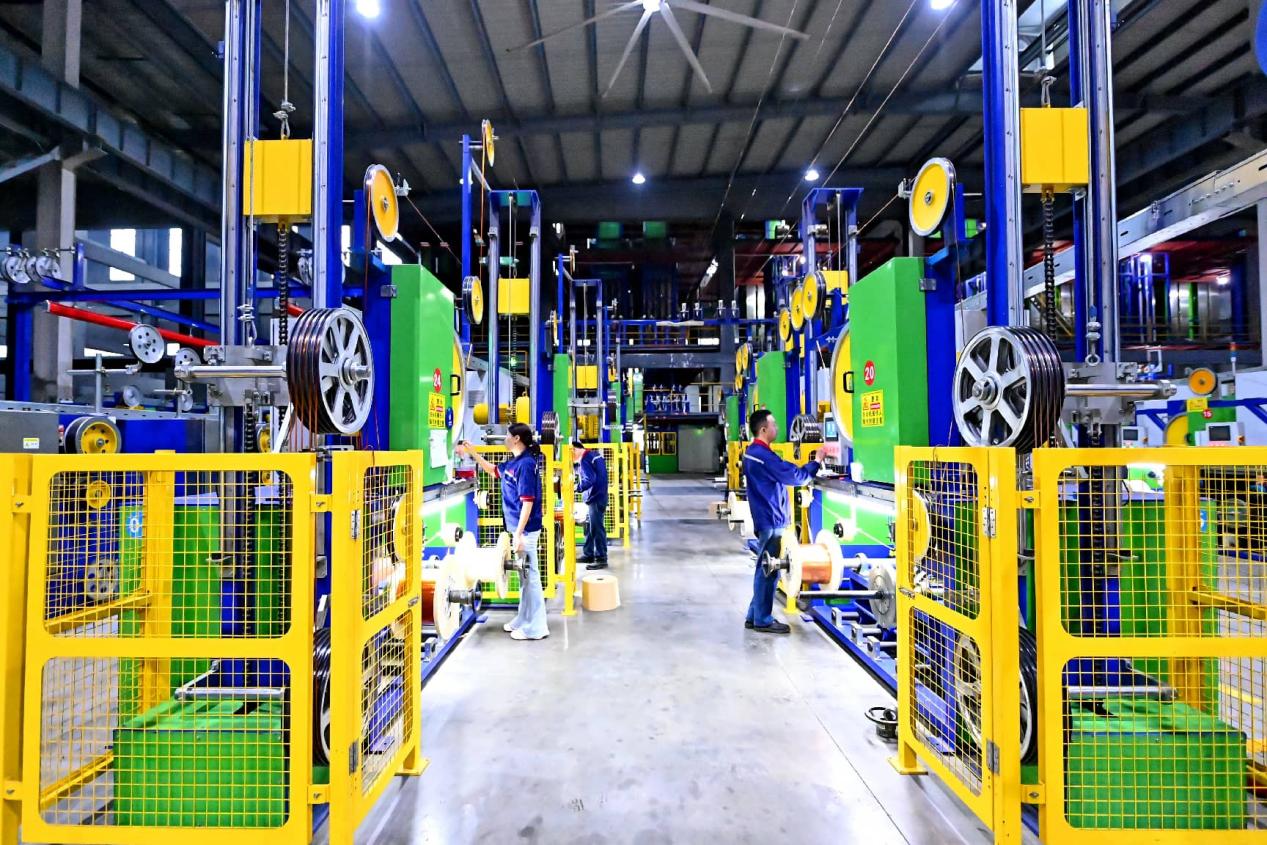
Robots have replaced manual labor on the production line; old workshops and smokestacks are dismantled; pilot-scale testing of nanomaterials are moving forward steadily — New quality productive forces are quietly reshaping the Chinese traditional chemical industry, including Chuyuan High-Tech Group (Chuyuan), a traditional chemical manufacturer located along the Yangtze River in Shishou, Jingzhou, central China’s Hubei province.
Once the world’s largest producer of intermediates for reactive dyes, the company is now chaired by Yang Peng, who succeeded his father and founder, Yang Zhicheng. Its rise, however, was anything but smooth.
A pivotal moment came in 2016 when Chuyuan faced a landmark environmental penalty — a fine exceeding 27 million yuan ($3.87 million) for illegal wastewater discharges. At the time, this constituted the largest environmental fine ever imposed within the Yangtze River basin.
The fine triggered a fundamental shift in mindset for both father and son. Moving from initial frustration and passivity, they embarked on a path of active rectification and development-oriented upgrading over the subsequent decade.
Today, Chuyuan’s manufacturing base spans 1,800 mu (120 hectares). Yet its origins were remarkably humble. It was established in 1982 by 30 farmers, led by Yang Zhicheng. It started with only with five small rooms and modest equipment.
After China joined the WTO, chemical plants sprang up along the Yangtze River. The company’s production capacity of H-acid, para-esters and reactive dyes ranked first in Asia, making it Hubei’s largest private exporter.
Its prominence was underscored on January 10, 2016, when the Jingzhou municipal tax bureau listed it as the city’s third-largest taxpayer, with annual payments exceeding 100 million yuan — a status achieved just before the environmental penalty reshaped its future.
On January 5, 2016, Chinese President Xi Jinping chaired a symposium on boosting the development of the Yangtze River Economic Belt in southwest China’s Chongqing municipality, also a major city along the Yangtze River.
He stressed that the Yangtze River boasts a unique ecological system. Restoring its ecological environment will be an overwhelming task and no large-scale development will be allowed along the river at present and for a rather long period to come.
Chuyuan’s long-standing environmental issues came under security and again drew the attention of environmental authorities. By the end of March that year, the Jingzhou environmental protection bureau imposed the 27-million-yuan fine, aiming to force the closure of heavily polluting and technically unreformable production lines. The scale of the penalty was rare even by national standards.
At the time, Chuyuan was a top-100 private enterprise in Hubei, employing over 4,000 people. Nearly 12 percent of Shishou’s GDP and about 60 percent of its tax revenue came from the company.
“After such contributions, couldn’t there be some leniency?” Yang Zhicheng asked himself.
He pursued legal appeals, publicized the dispute online, and encountered polarized public opinion. Yet a consensus emerged: China was enforcing environmental accountability, rejecting growth-at-all-costs development.
The local leadership made its stance clear. Then Shishou Party secretary Liu Zhongcheng pledged that no enterprise failing rectification would be allowed to resume production, and that development must not come at the expense of future generations.
Chuyuan ceased operations for remediation. After three visits by provincial officials — during which Yang evolved from avoidance to engagement — Liu conveyed a pivotal message: “Ecological priority and green development are the new norms. Clinging to outdated practices is like choosing slow trains in the high-speed rail era — you will fall behind.”
Resistance turned to reflection. “That fine was a wake-up call,” the two later admitted. “It wasn’t meant to crush us, but to awaken us.”
More than ten production lines were permanently shut down. Rainwater collection systems were built. A second-phase wastewater treatment plant was launched. Over nine months of suspension, Chuyuan moved step by step to balance development with safety.
In November 2016, the company withdrew its lawsuit and accepted the penalty. A month later, after passing official inspections, it resumed operations.
From 2016 to 2022, Chuyuan invested about 200 million yuan in environmental upgrades, reducing energy consumption by 59%. The company became one of Hubei’s first participants in the national carbon trading pilot. In May 2025, its plant obtained the highest-level certification for safety risk management.
Tempting offers came along the way. A pesticide intermediate project promised profit margins of nearly 100%. Yang Peng turned it down.
“The environmental risks were unacceptable,” he said. “Stability outweighs short-term gains.”
In Chuyuan’s plant today, reclaimed water flows clearly through on-site ponds, while emissions data are uploaded around the clock.
Still, as the chemical sector faced mounting pressure, Chuyuan no longer enjoyed its former lead. Yang Peng grew uncertain and even considered leaving the industry.
Then, in July 2023, a national conference on ecological and environmental protection was convened. Xi emphasized that “it is crucial not to dismiss traditional industries as uniformly ‘low-end’ or ‘backward’ and simply phase them out, as doing so could lead to a disruption in the transition from old to new growth drivers, cause a loss of momentum, and exacerbate the pains of structural adjustment.”
“That line hit home,” Yang said. “Transformation doesn’t mean quitting the industry. Modern life still depends on chemicals. With the right upgrades, traditional sectors can also foster new quality productive forces.”
Inspired by this, Chuyuan Group invested 50 million yuan to fully utilize waste residues and liquids, entering circular economy practices. It shut down a flagship product with hard-to-treat emissions and invested another 60 million yuan in a new chlorosulfonic acid line, achieving environmental, safety and economic gains simultaneously.
It installed biomass boilers, embraced intelligent manufacturing and put robots on the shop floor, boosting efficiency by 40 percent. Partnerships with Hubei universities helped it build a platform for transforming scientific results into applications. New synthesis processes for two reactive dyes filled gaps in domestic capabilities in related fields. High-performance nano metal materials are now moving toward mass production, with potential applications in semiconductors and other emerging industries.
Since 2024, Chuyuan has been running at full capacity. Revenue in 2025 is expected to reach about 2 billion yuan, with tax payments exceeding 80 million yuan — up 55.4 percent and 53.5 percent respectively from 2022.
Yang Peng recalled, over the past decade, new thinking served as a guiding light, the updated environmental law acted as a binding constraint, and the law on promoting the private economy provided much-needed reassurance. In his words, the rule of law remains the best business environment, and high-quality development is the only viable path forward.