
Real Madrid coach Carlo Ancelotti has confirmed the injuries of two key players, Vinicius Junior and Dani Carvajal, during their 2-0 La Liga win over Villarreal. Vinicius, who scored in the match, was forced off with a shoulder injury, while Carvajal suffered a serious knee injury and had to be stretchered off. Ancelotti expressed concern, particularly over Carvajal’s condition, and stated that Vinicius would undergo further tests. The injuries are a blow to Madrid, currently second in the league, as they continue their title defense.
Nottingham Forest Hold Chelsea to 1-1 Draw with 10 Men, Manchester United Held by Aston Villa
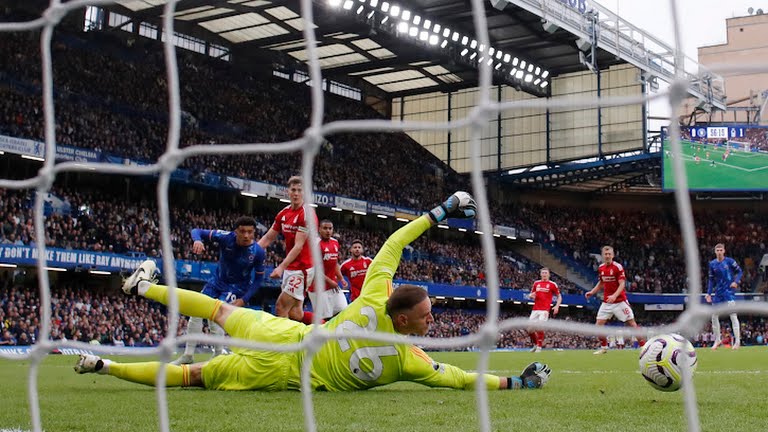
Nottingham Forest managed a 1-1 draw against Chelsea despite being reduced to 10 men, while Manchester United endured a goalless draw against Aston Villa in Premier League action today. Forest’s Chris Wood opened the scoring before Chelsea’s Noni Madueke equalized, with Forest’s James Ward-Prowse sent off late in the game. At Old Trafford, United showed defensive resilience but couldn’t find a breakthrough against Villa. Both matches highlighted the intensity of the Premier League, with Chelsea’s unbeaten run continuing and Forest remaining undefeated away.
Obasanjo, South-East Governors, and Top Nigerian Figures Set to Attend Iwuanyanwu’s November Burial
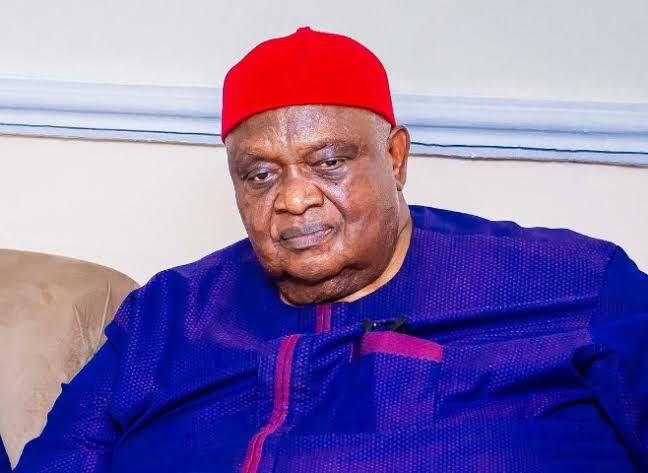
Prominent Nigerians, including former President Olusegun Obasanjo and South-East governors, have confirmed their participation in the burial of the late President-General of Ohanaeze Ndigbo, Chief Emmanuel Iwuanyanwu. The ceremony is slated for November 1 at his hometown, Attah, Imo State.
Senator Ben Obi, Head of the Burial Planning Committee, revealed that national leaders like Yoruba leader Ayo Adebanjo and other dignitaries will attend to honor Iwuanyanwu, who was a notable politician and businessman.
Represented by Prof. Ike Ikechukwu, Chairman of the Media Sub-committee, Obi highlighted ongoing efforts to reach out to elder statesmen, stakeholders, and well-wishers, both locally and internationally.
“The South-East governors reaffirmed their commitment to giving Iwuanyanwu a dignified farewell, supported by national figures and the Diaspora community, which is also organizing activities in his honor,” Obi said.
The burial event will culminate on November 1, 2024, with the final interment.
Railway is the new oil, Senate commends ongoing work at Kano-Maradi rail line
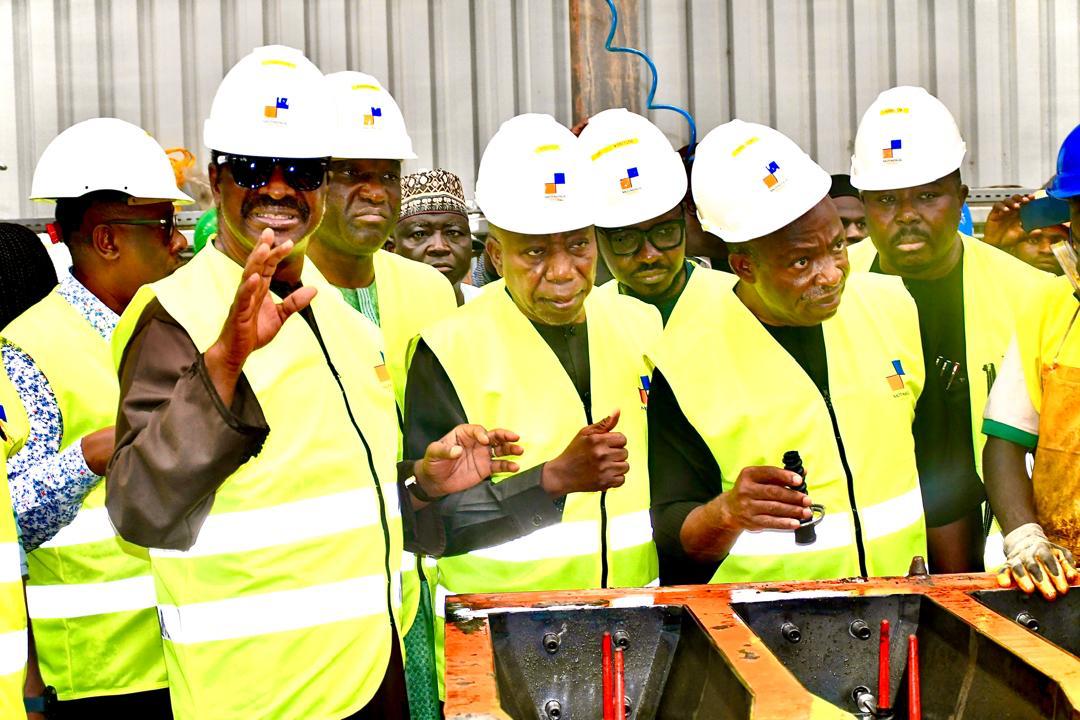
The Minister of Transportation, Senator Said Ahmed Alkali has disclosed that the potential of rail transport system will make it displace the oil sector as the greatest contributor to Nigeria’s revenue in a short while.
The Minister made this known Friday while on an inspection of the ongoing Kano-Daura-Maradi rail project alongside members of the Senate Committee on Land Transportation who were also on an oversight visit of the project.
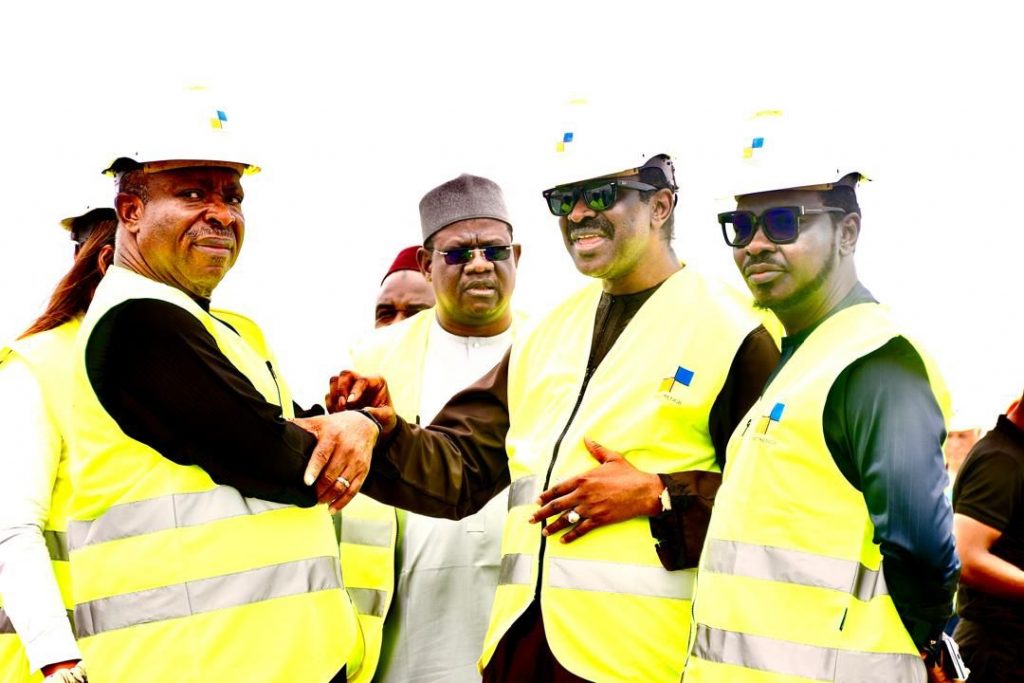
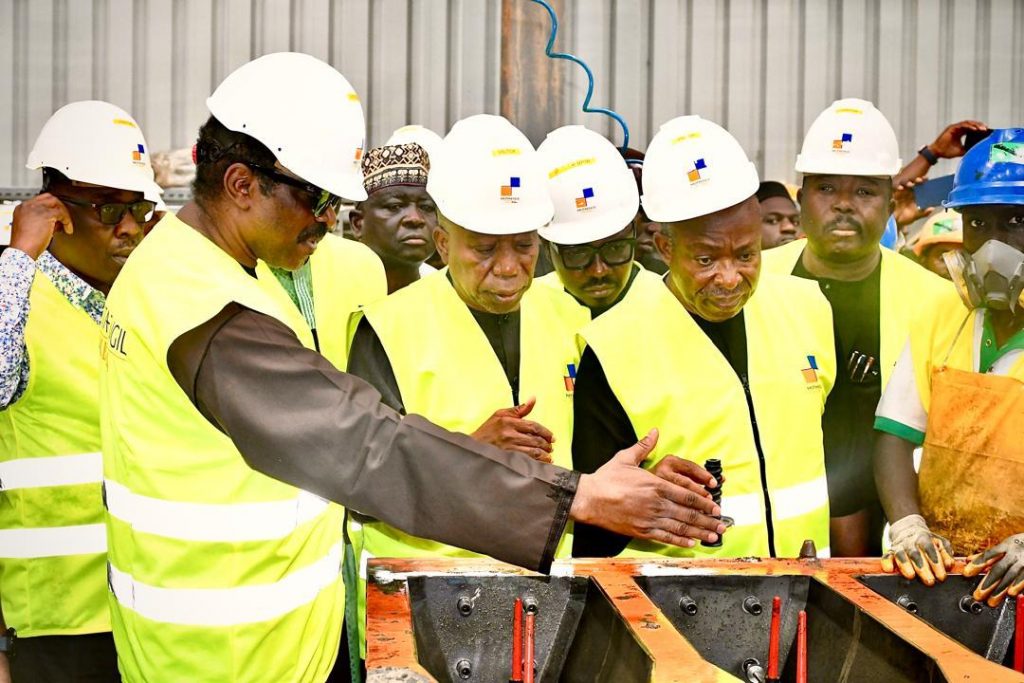
According to the Minister, a lot of governors are already investing in the rail sector, from Lagos to Plateau, and even that of Kaduna, they have all indicated their interest in expanding railways in their states.
He said “The idea of unbundling the sector is to allow private sector participation. You can also see the huge investment the federal government is making in the sector to ensure infrastructure is in place.
“By the time you start freight from Lagos to Maradi, in line with the African Continental Free Trade Agreement, we are going to generate a lot of money, it will make a lot of impact on the GDP of the country. By the time we link Port Harcourt and Onne ports through Aba to Maiduguri, you will see the transformation and you will see how it will be next to oil.
At the University of Transportation Daura, the Minister disclosed plans to give students specialised training that will make them take over the transportation system as a whole.
The minister also disclosed that there have been serious improvements by the contractors handling the rail construction since his last visit. “I have also directed the contractor to ensure the payment of compensations for those affected along the construction corridor,” he added.
Meanwhile, the Chairman Senate Committee on Land Transportation, Senator Adamu Aliero who led the delegation of the National Assembly, has pledged full support for the project which he said will be of great economic benefit to the country. He said the committee is really impressed by what it is seeing but a lot more needs to be done.
According to him, the inspection visit underscores the commitment of the current administration to give Nigerians a new lease of life.
He disclosed however that the progress made so far has been from the counterpart funds from the Nigerian government as that from other partners are yet to come.
At the University of Transportation Daura, the Senator confirms that a lot has been done to put the institution in good standing while insisting that much more needs to be done.
“It is a national university and for it to be able accommodate students from all over the country, it needs to expand its facilities. So far, with what we have seen, the federal government must build more facilities.
Currently, it can only receive about 1,300 students out of about 5000 requests for admission received.”
The Kano-Maradi railway project will cost Nigeria over $1.9B which is equivalent to N400 Billion.
According to Minster, the Federal government is to pay 15% of the project while the partnership company source for the 85% funds on loan which the Federal government would pay within 50 years duration.
The project which started in 2022 by the Buhari administration is expected to be completed in December 2026.
The Nigerian government, through the Federal Ministry of Transportation is building a railway line that will connect Kano to Jigawa States, on northern border of Nigeria, and will extend across Niger to Maradi. In addition, a new branch line will be constructed from Kano to Dutse in Jigawa State, Nigeria. The new railway line with around 400 km and 13 stations, in three federated states of Kano, Jigawa, and Katsina and will extend to Niger.
This new infrastructure will integrate rail transport with existing road transport to improve passenger and cargo transportation in the served states.
The objective is to develop the Nigerian rail network by promoting logistical integration with other transport networks, thus creating a fast, safe and ecological rail infrastructure to optimize and improve means.
Once completed, the railway is expected to transport 9,300 passengers and 3,000 tons of freight daily, stimulating agricultural and manufacturing growth along the route.
Tension in Rivers as Explosion Hits APC Secretariat Ahead of Local Government Elections
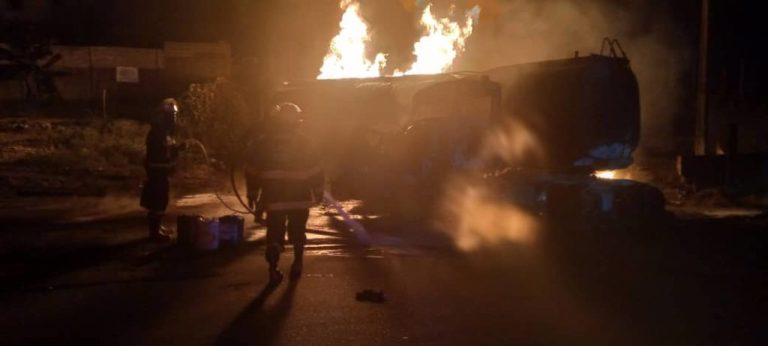
An explosion occurred at the All Progressives Congress (APC) secretariat in Rivers State early Saturday morning, just hours before the local government elections. The blast, suspected to be an act of arson, has heightened tensions in the area. The APC is the main opposition party in the state, and the incident has raised concerns about election security.
Black Market Dollar to Naira Exchange Rate and Petrol Imports Decline: Key Updates for October 5, 2024

Today’s Dollar to Naira exchange rate at the black market, also known as the parallel market, is detailed below for 4th October 2024. As of Friday, 4th October, the Lagos Parallel Market (Black Market) exchange rates are:
- Buying rate: N1660 per dollar
- Selling rate: N1670 per dollar
These rates, sourced from Bureau De Change (BDC) operators, do not align with the Central Bank of Nigeria (CBN), which urges individuals to engage with their respective banks for foreign exchange.
CBN Exchange Rate
The official CBN rate is marginally lower, with:
- Buying rate: N1656 per dollar
- Selling rate: N1657 per dollar
It’s important to note that actual exchange rates may vary slightly depending on the location and service provider.
Petrol Imports Drop by 3.58 Billion Litres in One Year
The National Bureau of Statistics (NBS) reported a significant decrease in petrol imports between 2022 and 2023. The total importation of Premium Motor Spirit (PMS) dropped by 13.77%, from 23.54 billion litres in 2022 to 20.30 billion litres in 2023.
The decline was especially pronounced in the second half of 2023, which saw a 29.99% drop in imports compared to the first half of the year.
Rivers Governor Fubara Accuses Police of Attempted Electoral Material Theft

Rivers State Governor, Siminalayi Fubara, has expressed shock and disappointment over an alleged attempt by the Nigerian police to interfere in the upcoming local government elections scheduled for October 5, 2024. During a press conference held at the Government House in Port Harcourt, Governor Fubara detailed how officers stormed the Rivers State Independent Electoral Commission (RSIEC) premises in an apparent effort to steal sensitive electoral materials.
Fubara revealed that early on Friday morning, he received a security report that the police had withdrawn from guarding the RSIEC premises. Concerned, he personally visited the site and discovered police officers attempting to break into the commission’s office.
The governor claimed that the officers, acting under directives from the Rivers State Command and Abuja headquarters, were deliberately trying to disrupt the election. However, their actions were thwarted. Fubara voiced concerns over the police’s involvement, accusing them of becoming adversaries to the state’s lawful processes.
Fubara questioned why the RSIEC, a state-controlled body, was being targeted and if any court ruling justified such actions. He emphasized that legal and security preparations for the election were completed, with citizens fully informed, and accused the police of acting on behalf of political interests.
The incident has sparked concerns about the integrity of the upcoming election in Rivers State.
Governor Fubara Vows to Ensure Local Government Elections Go Ahead Despite Police Interference

Rivers State Governor Condemns Police Attempts to Disrupt Electoral Process
Rivers State Governor, Siminalayi Fubara, has expressed strong discontent over multiple attempts to obstruct the upcoming Local Government elections scheduled for October 5, asserting emphatically that the elections will proceed as planned.
His comments followed an incident early Friday morning when individuals dressed in police uniforms allegedly attempted to seize control of the Rivers State Independent Electoral Commission (RSIEC) office, aiming to access sensitive electoral materials necessary for the elections.
Speaking to reporters outside the RSIEC office on Aba Road in Port Harcourt, Fubara stated, “We came here this morning upon hearing reports that individuals claiming to be from the Nigeria Police were trying to take over this premises. I felt compelled to investigate such a serious allegation.”
He revealed that a Deputy Commissioner of Police had reportedly orchestrated the attempted takeover to replace the officers currently securing the location with new personnel. “We have tolerated enough nonsense from this institution. Everyone knows the court’s judgment; did it specify that elections should not take place? It merely stated not to provide a voters’ register. What’s the issue?” he questioned.
Fubara further criticized the relationship between the Inspector-General of Police and certain individuals in the state, suggesting that it has strayed from professional norms. “The government sent a letter regarding the court ruling, yet the actions being taken stem from a judgment the Federal High Court issued. But did that judgment ban elections?” he asked.
He reiterated that the Federal High Court ruling only stated that the Nigeria Police should not provide security during the election and that the voters’ register should not be distributed.
In a passionate defense of the electoral process, Fubara declared, “The judge who issued that questionable ruling did not say no elections; rather, he stated to withhold security. We will manage our own security. This election will take place, regardless of any actions taken to prevent it. Results will be announced, and elected officials will be inaugurated.”
Fubara’s remarks reflect a resolve to proceed with the elections despite any interference. He warned, “If I hear of any further attempts to disrupt the process, I will be back here. This is our space, and no one can prevent me from accessing it. Enough is enough!”
He assured the citizens of Rivers State that the elections would happen as planned, stating, “We are prepared for any challenges. This is our final stand, and we will see it through.”
Efforts to contact the Force Public Relations Officer, Olumuyiwa Adejobi, for comment were unsuccessful at the time of this report.
Kogi Governor Distributes N100,000 Livelihood Grants to 8,000 Women and Youths

Empowerment Initiative Aims to Boost Local Businesses and Support Vulnerable Groups
Kogi State Governor, Usman Ododo, has officially launched a cash grant initiative aimed at empowering 8,000 women and youths across the state. Each beneficiary will receive N100,000 to support their existing and new businesses. The program was inaugurated on Thursday at the Banquet Hall of the Government House in Lokoja.
Governor Ododo, represented by his deputy, Joel Oyibo, described the cash distribution as a significant milestone for the state, promoting equitable and prosperous livelihoods among the beneficiaries, who come from all 21 Local Government Areas of Kogi State.
The cash grants are part of a collaboration with the World Bank under the Kogi State Community Action for Resilience and Economic Stimulus program. The governor emphasized that the support is designed to provide essential resources for vulnerable individuals and households, enabling them to meet their basic needs, invest in education and healthcare, and participate more actively in the local economy.
“This transfer cannot be equated by the amount, but by the various value possibilities that it would add to the beneficiaries, enabling them to meet their basic needs, invest in their education, and health, and participate more fully in the economic vibrancy of the state,” Ododo stated.
He expressed hope that the initiative would have a transformative impact on communities, improving school enrollment, health conditions, reducing child labor, and empowering women and small-scale businesses. The governor urged beneficiaries to utilize the support wisely and view it as a critical step toward enhancing their quality of life and that of their families.
In her remarks, Mrs. Aishat Omade, the State Coordinator/CEO of the Kogi State Social Investment Program Agency, highlighted the importance of inclusivity in the empowerment initiative, noting her commitment to ensuring all 21 LGs are represented in the program.
Mr. Kehinde Olorunmosunle, Head of Delivery Platform State Cash Transfer Unit, added that the empowerment initiative would lay the groundwork for a brighter future, providing Kogi youths and women with the skills and knowledge necessary for a more promising future.
ATACA Workshop: Government has no business selling train tickets – Expert
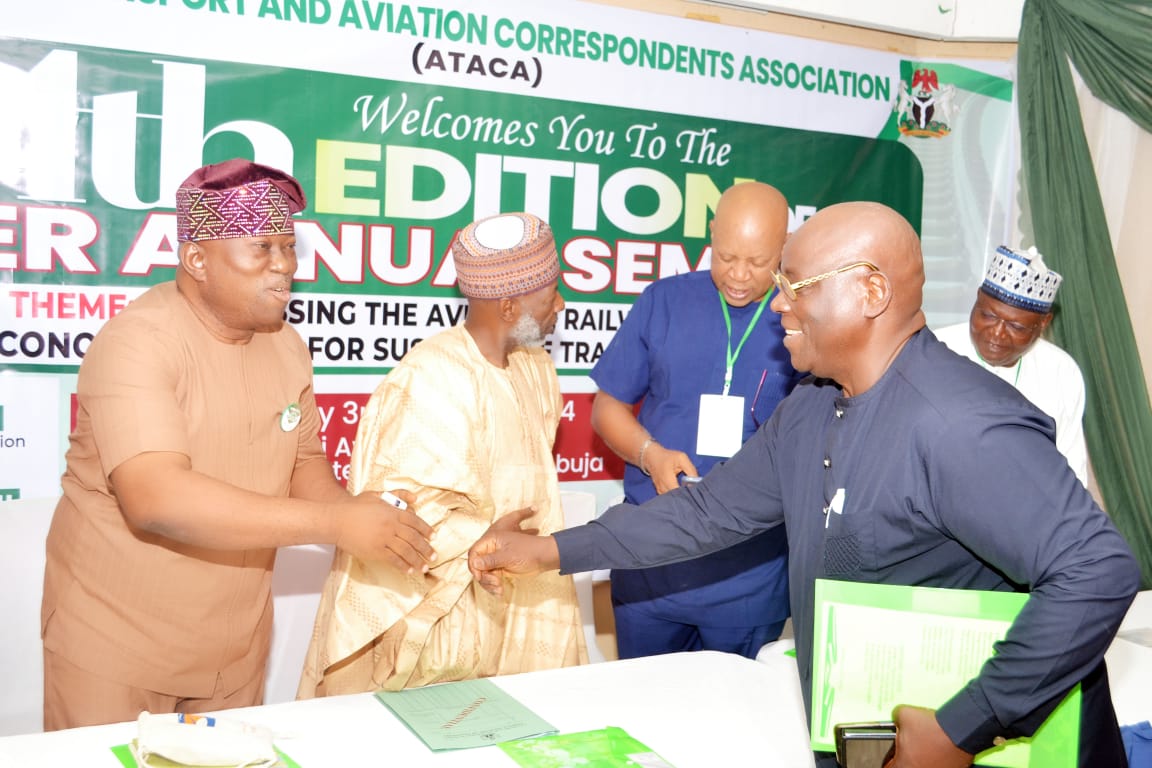
Responding to concerns on the increasing cases of racketeering of passenger train tickets in Nigeria railway system, the Executive Director of Aulic Group, Prof. Nick Ezeh, who is also an expert in the transportation industry has said the government has no business selling train tickets.
Prof. Ezeh who was speaking Thursday at the 4th edition of Abuja Transport and Aviation Correspondents Association (ATACA) Annual Workshop, in Abuja. stressed that such should be left for the private sector to handle.
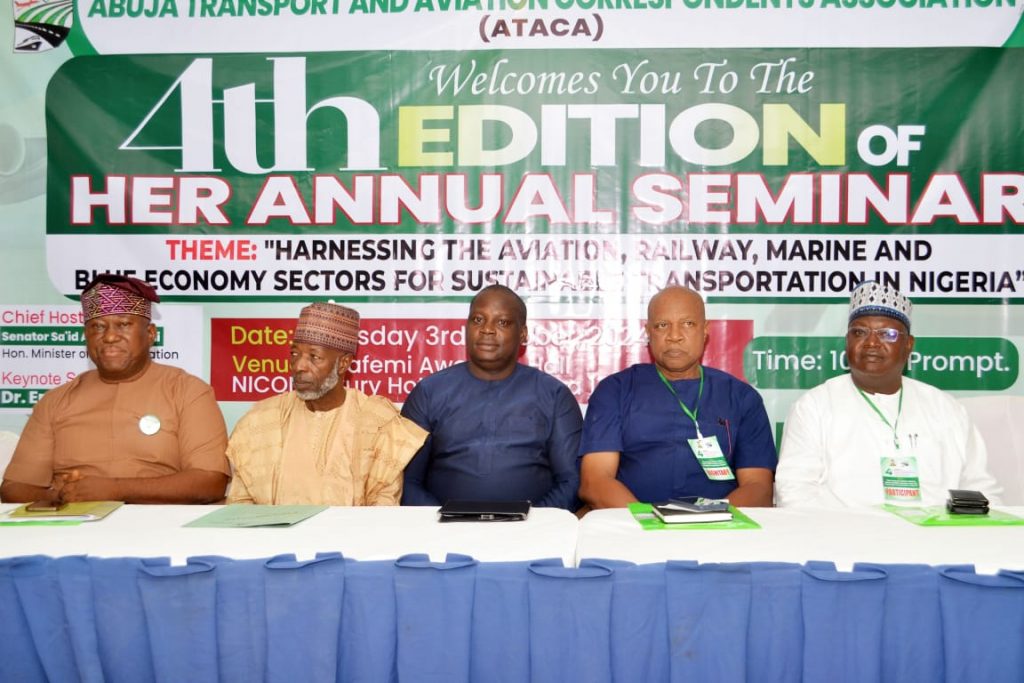
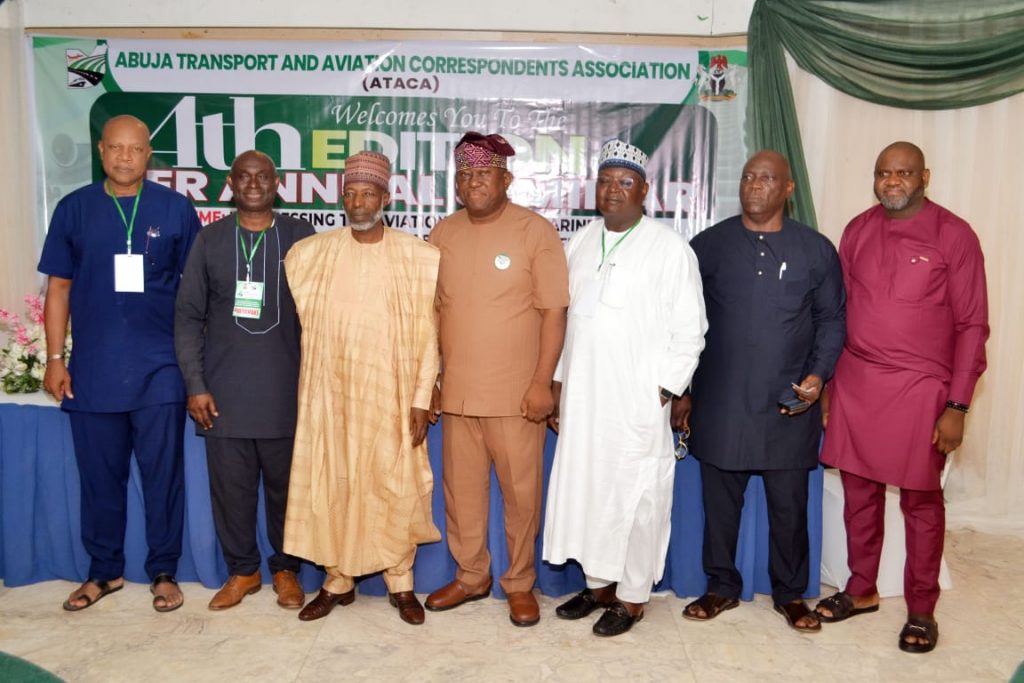
The workshop had the theme: Harnessing the Aviation, Railway, Marine and Blue Economy Sectors for Sustainable Transportation in Nigeria.
The expert said what the government needs to do is to create a transport system and ensure the system is working.
Meanwhile the Minister of Transportation, Sen. Said Alkali, disclosed that the Ministry has constituted a committee to investigate the irregularities.
This, Sen. Alkali said was a response to reports of some officials of the Abuja-Kaduna railway station exploiting passengers’ difficulties with the online booking platform to engage in ticket racketeering.
The Minister who was represented at the event by his Special Assistant, Technical Shuaib Damoaka, said the station manager has been redeployed, and another manager directed to take over with immediate effect to enable the committee to investigate the irregularities with high sense of objectivity and transparency.
“About three or four days ago, in response to the increasing complaints of irregularities and malpractice associated with e-ticketing in the railway stations, particularly Abuja-Kaduna route, the Minister has set up a committee to critically investigate the matter with very comprehensive terms of reference.
“He directed the committee to investigate and report within a period of two weeks and also urged the committee to make appropriate recommendations for administrative and quality measures that will be taken against any defaulter,” he said.
The Minister earlier, while delivering his keynote address called for effective media reportage that would market the essential services carried out by the transportation sector in supporting the economy.
He urged the media to remain committed, diligent and professional in discharging its role and to carry Nigerians along in appreciating the dynamics of the present administration’s transformative agenda of prioritising transportation as its governance strategy.
Delivering a lecture, President, Nigeria Bangladesh Business Technology Forum, Arc. Bob Achanya, who spoke on the ‘Nexus of Multimodal Transportation Systems’, noted that its strategic integration within Nigeria’s emerging blue economy framework offers unparalleled opportunities.
While noting that the aviation, railway, and marine sectors, when interconnected efficiently, will create a seamless and resilient transportation network, which will enhance connectivity, reduce transportation costs, and boosts the overall efficiency of the country’s logistics and supply chain systems.
Speaking on some ongoing projects within the sectors, Achanya said in the Aviation sector, we have the expansion of the Murtala Muhammed International Airport in Lagos and the new terminals at Nnamdi Azikiwe International Airport in Abuja; in the marine sector, we have the Lekki Deep Sea Port project, valued at $1.5 billion, which is a game-changer, poised to become the largest deep-sea port in West Africa; also, on the Blue economy, he noted that initiatives like the Nigeria-Kenya Integrated Blue Economy Strategy Forum and the proposed Nigeria-Kenya Blue Economy Transition Strategy Summit are all steps in the right direction.
In his welcome address, Chairman of ATACA, Leonard Oru called for more security measures to ensure the safety of the transportation system and business in Nigeria.
“For our transportation system and businesses, whether Air, Land or Sea to thrive, Security and Safety is key. Therefore, we implore Security agents, regulators and enforcers of the relevant laws to step up their game.
The workshop attracted various experts as well as journalists covering the Transportation and Aviation sectors in the Federal Capital Territory (FCT).