Aiyedatiwa Congratulates Okpebholo as INEC Declares Him Edo Governor-elect

ndo State Governor Lucky Aiyedatiwa has expressed his support for Monday Okpebholo, the All Progressives Congress (APC) candidate, following his confirmation as the winner of the Edo State governorship election by the Independent National Electoral Commission (INEC)

In a statement released by his Chief Press Secretary, Ebenezer Adeniyan, Aiyedatiwa congratulated Okpebholo and his running mate, Dennis Idahosa, on their victory in the September 21 election. Aiyedatiwa, who served as the Chairman of the APC’s Election Planning and Strategy Committee for the Edo election, thanked the people of Edo State for their trust in the APC to govern.

“I want to congratulate our party, the APC, Senator Okpebholo, and Hon. Idahosa on the well-deserved victory,” Aiyedatiwa stated. He emphasized the importance of the election, noting, “I join millions of our party faithful to give glory to God for granting us a peaceful victory to reclaim Edo back into the fold of the progressives.”

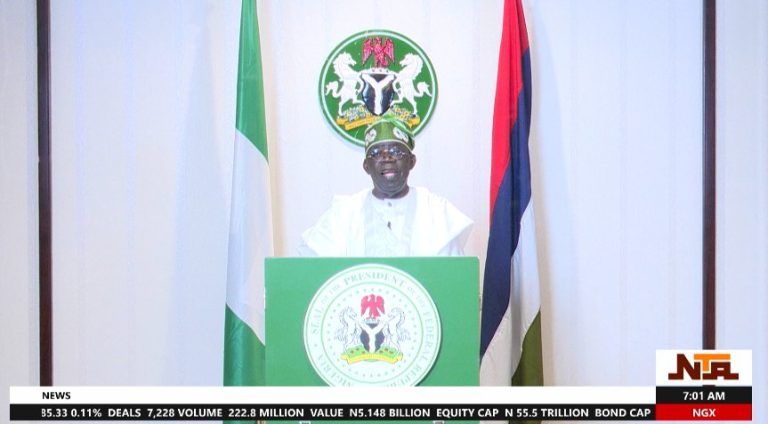
Aiyedatiwa also praised President Bola Ahmed Tinubu for his leadership, which he credited for ensuring a free and fair election. He extended his commendation to the party’s leadership, particularly Alhaji Abdullahi Ganduje, the APC National Chairman, and the campaign committees for their efforts.

He expressed confidence in Okpebholo’s vision for governance, anticipating that his administration will implement progressive policies to positively impact the lives of Edo residents. Aiyedatiwa further acknowledged the peaceful conduct of the people of Edo throughout the election process.

Fintiri Condemns Ganduje’s Private Jet Use on Edo Election Day, Calls Voting Process ‘Shameful’

Governor Ahmadu Fintiri of Adamawa State has criticized Abdullahi Ganduje, the national chairman of the All Progressives Congress (APC), for flying into Edo State on election day via a private jet, allegedly defying movement restrictions imposed by the Nigerian police during the governorship poll.

Fintiri’s comments follow the Independent National Electoral Commission’s (INEC) declaration of Monday Okpebholo from the APC as the winner of the September 21, 2024 election. In a statement released on Sunday, Fintiri expressed dismay at the election process, stating that he “weeps for Nigeria’s democracy,” and condemned the widespread vote-buying, disruptions during collation, and results showing more votes than accredited voters.

Fintiri accused the APC of resorting to undemocratic tactics, stating, “What’s truly shameful is APC’s national chairman flying into Edo with a private jet on election day, defying movement restrictions, while their governors used armoured escorts to intimidate voters.”

He also criticized INEC for what he described as a compromised election process that allegedly favored the APC. According to Fintiri, Nigeria’s democracy is under attack, and he called for accountability, urging citizens to speak up against the “rape of democracy.”

Fintiri shared results from INEC’s IReV portal to counter the APC’s allegations against him and called on Nigerians to stand against electoral malpractice, stating that the world is watching, and Nigeria deserves better.

HURIWA Criticizes President Tinubu’s ‘No Free Beer Parlour’ Comment, Cites Government Spending Hypocrisy

The Human Rights Writers Association of Nigeria (HURIWA) has sharply criticized President Bola Tinubu over his recent comments urging Nigerians to remain patient during the nation’s economic crisis. The president remarked that there is “no free beer parlour” anymore, emphasizing the need for hard work and resilience to address the country’s challenges.

Tinubu made these statements during a meeting with former Nigerian lawmakers at the State House in Abuja. However, HURIWA, through its National Coordinator, Emmanuel Onwubiko, condemned the comments, calling them hypocritical.

HURIWA pointed out that while the government asks citizens to make sacrifices, billions of naira are spent on the upkeep and entertainment of the president’s and vice president’s families at the Presidential Villa, Aso Rock. They also highlighted what they described as unconstitutional expenses for luxury foreign trips taken by the first lady.

The rights group argued that there is a glaring contradiction between the government’s rhetoric and its actions, especially in light of the economic hardships faced by millions of ordinary Nigerians, who are struggling with inflation and a rising cost of living. According to HURIWA, the government’s lavish spending shows a disconnect between Nigeria’s leadership and the citizens enduring economic hardship.

HURIWA further pointed to the federal budget, criticizing the billions of naira allocated annually for food, accommodation, and entertainment for the president’s and vice president’s households, all funded by taxpayers. The group argued that these expenses contradict Tinubu’s claim that there is no “free beer parlour,” as the country’s leaders continue to benefit from a system that shields them from the financial burdens borne by everyday Nigerians.

They also referenced research from the 2023 budget, revealing substantial allocations for foodstuffs, catering, vehicles, and other expenses aimed at ensuring the comfort of the president’s family. HURIWA argued that if the government were serious about austerity measures, these expenses should be significantly reduced, with the president’s family shouldering their own personal costs, just as most Nigerian citizens do.

NiMet Issues 3-Day Thunderstorm Forecast Across Nigeria Starting Monday

The Nigerian Meteorological Agency (NiMet) has predicted thunderstorms across multiple regions of the country from Monday to Wednesday. In a weather outlook released on Sunday, NiMet provided detailed forecasts for the upcoming days.

On Monday, thunderstorms are expected in the morning over Sokoto, Kebbi, and Borno, with afternoon storms anticipated in Borno, Yobe, Jigawa, Taraba, Adamawa, Gombe, Bauchi, Kano, Katsina, Kaduna, Zamfara, Kebbi, and Sokoto.

The Federal Capital Territory (FCT), Niger, Nasarawa, Benue, Plateau, and Kwara will also see morning thunderstorms. Later in the day, isolated thunderstorms are expected in Kwara, the FCT, Niger, Benue, and Kogi.

In the southwest, morning rains are forecast over Oyo, Ondo, Osun, Ekiti, and Ogun, extending to coastal areas such as Lagos, Delta, Rivers, Cross River, Akwa Ibom, and Bayelsa. Thunderstorms will continue into the evening for Enugu, Edo, Ebonyi, Ondo, Abia, Osun, Imo, Ekiti, Delta, Bayelsa, Cross River, Rivers, and Lagos.

On Tuesday, morning thunderstorms will hit Taraba, Kaduna, Katsina, Kano, Sokoto, and Zamfara, with afternoon storms expected in Borno, Yobe, Jigawa, Bauchi, Taraba, Gombe, and Adamawa. The FCT, Niger, Benue, and Nasarawa will see storms both in the morning and later in the day, with storms also forecast for Plateau and Kwara.

In the southern region, morning rains are expected in Enugu, Ebonyi, Abia, Imo, Lagos, Bayelsa, Akwa Ibom, Cross River, and Rivers, while the rest of the region will remain cloudy. Evening thunderstorms are forecast in Oyo, Ekiti, Ogun, Ondo, Imo, Edo, Delta, Lagos, Bayelsa, Akwa Ibom, Cross River, and Rivers.

By Wednesday, thunderstorms will affect Bauchi, Gombe, Adamawa, Borno, Zamfara, Sokoto, and Kebbi in the morning, with isolated storms later in Yobe, Bauchi, Gombe, Taraba, Kaduna, Kano, and Katsina. Thunderstorms will also be observed in parts of Niger and Kwara, with the rest of North Central remaining cloudy in the morning and experiencing storms in the afternoon.

For the southern region, morning rains will hit Cross River, Rivers, and Akwa Ibom, while the rest of the area remains cloudy. Later in the day, thunderstorms are expected across multiple states including Imo, Abia, Anambra, Enugu, Ebonyi, Oyo, Osun, Ogun, Ekiti, Lagos, Cross River, Akwa Ibom, Rivers, Bayelsa, Edo, and Delta.

NiMet has advised residents in flood-prone areas to take precautions against potential flooding from heavy rainfall. Strong winds are also likely to accompany the thunderstorms, and the public is urged to follow safety advisories. Airline operators are also advised to stay updated on weather conditions to ensure safe operations.

Dollar to Naira Exchange Rate: Black Market Rates for 22nd September 2024

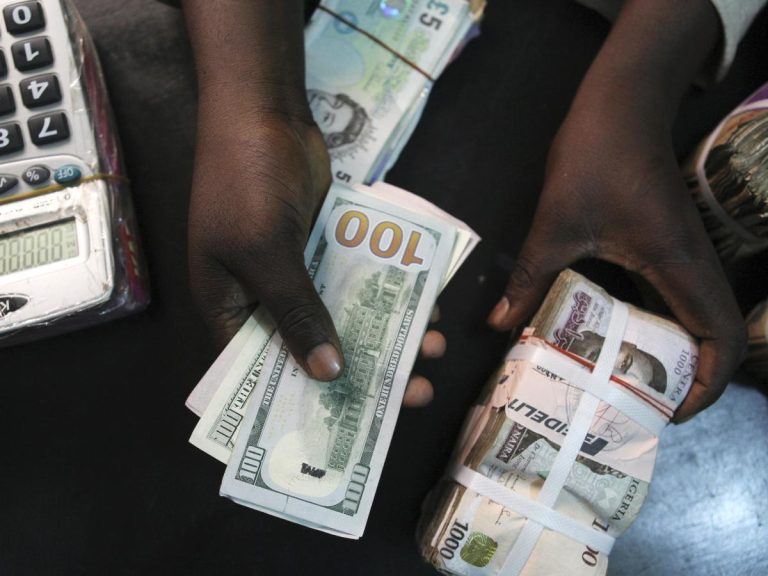
The exchange rate for the dollar to naira in Nigeria’s black market, also known as the parallel market (Aboki fx), remains highly competitive. According to information gathered from Bureau De Change (BDC) operators, the rates on Sunday, 22nd September 2024 are as follows:

  • Buying Rate: ₦1642
  • Selling Rate: ₦1650

For those using the official Central Bank of Nigeria (CBN) rates, the exchange stands at:

  • Buying Rate: ₦1593
  • Selling Rate: ₦1594

It is important to note that while these rates are indicative, individual prices may differ slightly depending on the Forex dealer or location. The CBN continues to emphasize that individuals looking to trade foreign exchange should utilize official bank channels, as the central bank does not recognize the parallel market.

In related news, Nigeria’s Vice President Kashim Shettima has reassured stakeholders in the aviation sector of the federal government’s commitment to improving the operational environment for airlines.

Exclusive: Dauda Lawal’s Role in December 2009 Bombing Exposed

Facts have emerged about how Zamfara State Governor Dauda Lawal played a role in the Christmas 2009 attempted bombing of Northwest Airlines Flight 253 by Umar Farouk Abdulmutallab, better known as the “underwear bomber”.

Abdulmutallab was sentenced to life in prison following his guilty plea to all eight counts of a United States federal indictment charging him with the attempted bombing.

Governor Lawal, who has continued to court controversy, had declared N9 trillion from undeclared sources, is the brother-in-law of Umar Farouk Abdulmutallab. He is Lawal’s wife’s younger brother.

Lawal, who had resided outside Nigeria for years before becoming Zamfara State Governor, has not given up trying to get AbdulMutalab out of jail in the Administrative Maximum Facility, commonly known as ADX Florence or the Florence Supermax in Florence, Colorado, 90 miles south of Denver.

He reportedly helped to radicalise the then-young boy. A source familiar with the development but who does not want to be named for family reasons revealed that “Dauda has radicalised many other young persons in society through clandestine means including posing as their teacher or mentor. As such, the family continues to hold Dauda responsible for how Farouk turned out. His being governor today has not lessened that moral burden. So, if he concludes his US visit without checking on Farouk it would be interpreted as abandoning him because of his current position.”

Lawal who had in the past been circumspect in openly associating with Abdulmutallab for fear of being linked with his role in the attempted bombing is now boldly intervening in his matter using the cover of his immunity as Governor of Zamfara State and by implication a Nigerian government official with diplomatic cover.

Another source in the Zamfara State Government House confirmed that Lawal, who is currently in the US, plans to visit Abdulmutallab in Colorado. “The Government House Protocol perfected the travel plans, including the car to take His Excellency on the two hours thirty minute drive from Denver to Florence, where the boy is serving his jail term. He opted for a road trip so that he would not trigger the interest of US authorities because of the documentation that would be required for local flights.”

Pressed further, the source disclosed that Governor Lawal is careful to avoid reviving US interest in the source of his wealth, which some of their law enforcement agencies had in the past linked to terrorist networks. “With the whole thing being mentioned about his interaction with bandits, which is not so, His Excellency is careful so that they will not start asking new questions.

Abdulmuttallab, who attempted to bomb Northwest Airlines Flight 253 using explosives worked into his underwear, was on 16 February 2012 sentenced to 4 life terms plus 50 years without parole and is being held at ADX Florence, the supermax federal prison in Colorado.

Tinubu: Don’t Scrap Humanitarian Ministry, Appoint a Competent Leadership

By MUKHTAR Ya’u Madobi

The most current and widely circulated topic in Nigeria’s public domain is the purported cabinet reshuffling of the President Bola Ahmed Tinubu-led administration. According to sources, the move is aimed at strengthening the mode of governance whereby some heads of Ministries, Departments and Agencies (MDAs) will be redeployed while others may even lose their positions.

Amidst this anticipated saga, one issue that caught the attention of citizens is the speculations surrounding the plan by President Tinubu to scrap the Ministry of Humanitarian Affairs and Poverty Alleviation. This ‘unconfirmed’ leaked information has raised concerns among various sectors of the populace, especially looking at the strategic roles played by the Ministry in uplifting the lives of Nigerians.

While the administration’s pursuit of efficiency and the fight against corruption is commendable, the decision to dissolve a ministry that addresses the welfare of Nigeria’s most vulnerable citizens would be a grave mistake and at the same time counterproductive.

Because, stakeholders, pundits and analysts believed that instead of abandoning the ministry, President Tinubu should consider reforming and reinvigorating it to serve as a powerful tool in improving the lives of millions of Nigerians thereby serving the purpose of its creation.

The Ministry which was established in 2019 by the administration of former President Muhammadu Buhari, was designed to provide essential services to Nigeria’s most disadvantaged populations, including people with special needs, displaced persons, and those living in abject poverty. The ministry’s scope spans a wide range of humanitarian efforts, from managing social safety nets and alleviating poverty to responding to natural disasters and emergencies.

In a country with widespread poverty, high unemployment, and ongoing humanitarian crises, occasioned by insecurity and natural disasters such as flooding, the ministry plays a crucial role in ensuring that vulnerable Nigerians do not fall through the cracks.

Nigeria has a staggering population of internally displaced persons (IDPs) due to terrorism, banditry, and natural disasters. As of December 2023, Displacement Tracking Matrix (DTM) reported a total of 3,397,531 internally displaced persons (IDPs), 1,874,283 IDP returnees, and 209,552 refugee returnees living in more than 3,900 locations across 14 states in Nigeria.

Based on statistics, disbanding the ministry would lead to a vacuum in the delivery of humanitarian services, particularly to IDPs, people living with disabilities, and marginalized communities who depend on government interventions for survival.

Moreover, scrapping the ministry would erode the capacity to coordinate responses during disasters such as floods, pandemics, and other emergencies, leaving Nigeria less equipped to handle crises. The existence of a dedicated humanitarian ministry serves as an institutional framework that can effectively mobilize resources, both from within and outside the country, to manage these challenges.

No doubt, for the past years, the ministry has been marred by allegations of corruption and mismanagement, notably involving the immediate past minister, Sadiya Farouq, and more recently, the suspended minister, Dr. Betta Edu. However, corruption in the ministry should not justify its dissolution. Instead, it underscores the need for a stronger leadership structure—one based on transparency, accountability, and commitment to humanitarian ideals.

Therefore, President Tinubu’s administration, with its pledge to tackle corruption and restore public trust, should prioritize appointing an individual who embodies the values of integrity, dedication, and genuine concern for the plight of the underprivileged.

Only such a leader could transform the ministry into an efficient vehicle for poverty alleviation, disaster management, and humanitarian assistance, thereby restoring the confidence of Nigerians in the government’s commitment to their welfare.

It is an evident and undeniable fact that one of the most promising candidates for leading this transformation is Hajiya Halimat Adenike Tejuosho, the Chief Executive Officer of the QAT Foundation. Hajiya Tejuosho is widely known for her philanthropic work, and her dedication to serving Nigeria’s vulnerable populations is second to none.

Over the years, she has been using her resources through the Foundation to provide scholarships for underprivileged students, empower women and youths, and support people living with disabilities. Her hands-on experience in humanitarian service, along with her impeccable track record, makes her an ideal candidate to restore the ministry to its full potential.

Appointing Hajiya Halimat Tejuosho as the Minister of Humanitarian Affairs and Poverty Alleviation would not only ensure that the ministry continues to serve its vital role but also restore its lost glory. Her principles of inclusiveness and her deep commitment to providing relief and support to those in need resonate with the ministry’s core mission.

Hajiya Tejuosho’s work through the QAT Foundation has reached countless Nigerians across the length and breadth of the country, and her influence has been felt in urban and rural communities alike. Under her leadership, the ministry could shift from being seen as a corrupt and ineffective institution to one known for its compassion, transparency, and efficiency.

Moreover, beyond the direct impact on citizens’ lives, the Ministry of Humanitarian Affairs can serve as a strategic tool for the Tinubu administration to enhance its public image. By appointing a capable and compassionate leader like Halimat Tejuosho, President Tinubu would signal his administration’s commitment to prioritizing the welfare of ordinary Nigerians. This would resonate well with the Nigerian public, especially in this time of economic hardship exacerbated by the removal of fuel subsidies and other structural adjustments.

A well-functioning humanitarian ministry would provide immediate and tangible benefits to Nigerians, especially the most vulnerable, creating goodwill towards the administration. Social protection programs, like those handled by the ministry, can help alleviate poverty, reduce inequalities, and foster social stability.

It is evident that when citizens see their lives improve through government programs, it builds trust in the government and strengthens the social contract. In this sense, the ministry could play a key role in promoting and selling the image of President Tinubu as a leader who truly cares about the people.

Nevertheless, rather than dismantling the Ministry, the Tinubu administration should focus on its reform and rejuvenation. By placing the right leadership at the helm, particularly someone like Hajiya Halimat Adenike Tejuosho, the ministry can be revitalized to serve its intended purpose. The focus should be on expanding social safety nets, improving disaster response mechanisms, and creating more opportunities for people living with disabilities, women, and youths.

In the broader context of national development, the ministry can help address Nigeria’s pressing socio-economic challenges. Poverty and inequality remain critical issues that demand focused government intervention. Effective humanitarian assistance and poverty alleviation efforts can mitigate the effects of these problems, contributing to national stability and growth.

Ultimately, the Tinubu administration has an opportunity to turn this moment of uncertainty into one of promise by re-envisioning the Ministry of Humanitarian Affairs as a cornerstone of its social agenda.

Therefore, reforming the ministry by assigning a capable leadership, the Tinubu administration can leave a lasting legacy that reflects its commitment to building a fairer, more just society.

Believe me, appointing Hajiya Halimat Adenike Tejuosho would mark the beginning of that transformative journey, bringing new hope to the vulnerable populations that the ministry was designed to serve.

MUKHTAR Ya’u Madobi is a concerned citizen. He wrote from Kano via: ymukhtar944@gmail.com

Tinubu: Don’t Scrap Humanitarian Ministry, Appoint a Competent Leadership

By MUKHTAR Ya’u Madobi

The most current and widely circulated topic in Nigeria’s public domain is the purported cabinet reshuffling of the President Bola Ahmed Tinubu-led administration. According to sources, the move is aimed at strengthening the mode of governance whereby some heads of Ministries, Departments and Agencies (MDAs) will be redeployed while others may even lose their positions.

Amidst this anticipated saga, one issue that caught the attention of citizens is the speculations surrounding the plan by President Tinubu to scrap the Ministry of Humanitarian Affairs and Poverty Alleviation. This ‘unconfirmed’ leaked information has raised concerns among various sectors of the populace, especially looking at the strategic roles played by the Ministry in uplifting the lives of Nigerians.

While the administration’s pursuit of efficiency and the fight against corruption is commendable, the decision to dissolve a ministry that addresses the welfare of Nigeria’s most vulnerable citizens would be a grave mistake and at the same time counterproductive.

Because, stakeholders, pundits and analysts believed that instead of abandoning the ministry, President Tinubu should consider reforming and reinvigorating it to serve as a powerful tool in improving the lives of millions of Nigerians thereby serving the purpose of its creation.

The Ministry which was established in 2019 by the administration of former President Muhammadu Buhari, was designed to provide essential services to Nigeria’s most disadvantaged populations, including people with special needs, displaced persons, and those living in abject poverty. The ministry’s scope spans a wide range of humanitarian efforts, from managing social safety nets and alleviating poverty to responding to natural disasters and emergencies.

In a country with widespread poverty, high unemployment, and ongoing humanitarian crises, occasioned by insecurity and natural disasters such as flooding, the ministry plays a crucial role in ensuring that vulnerable Nigerians do not fall through the cracks.

Nigeria has a staggering population of internally displaced persons (IDPs) due to terrorism, banditry, and natural disasters. As of December 2023, Displacement Tracking Matrix (DTM) reported a total of 3,397,531 internally displaced persons (IDPs), 1,874,283 IDP returnees, and 209,552 refugee returnees living in more than 3,900 locations across 14 states in Nigeria.

Based on statistics, disbanding the ministry would lead to a vacuum in the delivery of humanitarian services, particularly to IDPs, people living with disabilities, and marginalized communities who depend on government interventions for survival.

Moreover, scrapping the ministry would erode the capacity to coordinate responses during disasters such as floods, pandemics, and other emergencies, leaving Nigeria less equipped to handle crises. The existence of a dedicated humanitarian ministry serves as an institutional framework that can effectively mobilize resources, both from within and outside the country, to manage these challenges.

No doubt, for the past years, the ministry has been marred by allegations of corruption and mismanagement, notably involving the immediate past minister, Sadiya Farouq, and more recently, the suspended minister, Dr. Betta Edu. However, corruption in the ministry should not justify its dissolution. Instead, it underscores the need for a stronger leadership structure—one based on transparency, accountability, and commitment to humanitarian ideals.

Therefore, President Tinubu’s administration, with its pledge to tackle corruption and restore public trust, should prioritize appointing an individual who embodies the values of integrity, dedication, and genuine concern for the plight of the underprivileged.

Only such a leader could transform the ministry into an efficient vehicle for poverty alleviation, disaster management, and humanitarian assistance, thereby restoring the confidence of Nigerians in the government’s commitment to their welfare.

It is an evident and undeniable fact that one of the most promising candidates for leading this transformation is Hajiya Halimat Adenike Tejuosho, the Chief Executive Officer of the QAT Foundation. Hajiya Tejuosho is widely known for her philanthropic work, and her dedication to serving Nigeria’s vulnerable populations is second to none.

Over the years, she has been using her resources through the Foundation to provide scholarships for underprivileged students, empower women and youths, and support people living with disabilities. Her hands-on experience in humanitarian service, along with her impeccable track record, makes her an ideal candidate to restore the ministry to its full potential.

Appointing Hajiya Halimat Tejuosho as the Minister of Humanitarian Affairs and Poverty Alleviation would not only ensure that the ministry continues to serve its vital role but also restore its lost glory. Her principles of inclusiveness and her deep commitment to providing relief and support to those in need resonate with the ministry’s core mission.

Hajiya Tejuosho’s work through the QAT Foundation has reached countless Nigerians across the length and breadth of the country, and her influence has been felt in urban and rural communities alike. Under her leadership, the ministry could shift from being seen as a corrupt and ineffective institution to one known for its compassion, transparency, and efficiency.

Moreover, beyond the direct impact on citizens’ lives, the Ministry of Humanitarian Affairs can serve as a strategic tool for the Tinubu administration to enhance its public image. By appointing a capable and compassionate leader like Halimat Tejuosho, President Tinubu would signal his administration’s commitment to prioritizing the welfare of ordinary Nigerians. This would resonate well with the Nigerian public, especially in this time of economic hardship exacerbated by the removal of fuel subsidies and other structural adjustments.

A well-functioning humanitarian ministry would provide immediate and tangible benefits to Nigerians, especially the most vulnerable, creating goodwill towards the administration. Social protection programs, like those handled by the ministry, can help alleviate poverty, reduce inequalities, and foster social stability.

It is evident that when citizens see their lives improve through government programs, it builds trust in the government and strengthens the social contract. In this sense, the ministry could play a key role in promoting and selling the image of President Tinubu as a leader who truly cares about the people.

Nevertheless, rather than dismantling the Ministry, the Tinubu administration should focus on its reform and rejuvenation. By placing the right leadership at the helm, particularly someone like Hajiya Halimat Adenike Tejuosho, the ministry can be revitalized to serve its intended purpose. The focus should be on expanding social safety nets, improving disaster response mechanisms, and creating more opportunities for people living with disabilities, women, and youths.

In the broader context of national development, the ministry can help address Nigeria’s pressing socio-economic challenges. Poverty and inequality remain critical issues that demand focused government intervention. Effective humanitarian assistance and poverty alleviation efforts can mitigate the effects of these problems, contributing to national stability and growth.

Ultimately, the Tinubu administration has an opportunity to turn this moment of uncertainty into one of promise by re-envisioning the Ministry of Humanitarian Affairs as a cornerstone of its social agenda.

Therefore, reforming the ministry by assigning a capable leadership, the Tinubu administration can leave a lasting legacy that reflects its commitment to building a fairer, more just society.

Believe me, appointing Hajiya Halimat Adenike Tejuosho would mark the beginning of that transformative journey, bringing new hope to the vulnerable populations that the ministry was designed to serve.

MUKHTAR Ya’u Madobi is a concerned citizen. He wrote from Kano via: ymukhtar944@gmail.com

DHQ Refutes Allegations of Naval Rating’s Six-Year Detention

The Defence Headquarters (DHQ) has denied allegations that Seaman Abbas Haruna was detained for six years, as claimed by his wife, Hussaina Iliya. Hussaina had accused Brig. Gen. A.S. Adamu of ordering her husband’s detention since 2018. The accusation gained widespread attention, prompting Chief of Defence Staff Gen. Christopher Musa and Minister of State for Defence Bello Matawalle to call for an investigation.

Brig. Gen. Tukur Gusau, Director of Defence Information, dismissed the claims, stating that Haruna was never under arrest and that an investigation is ongoing. He assured that the public would be informed once the investigation is complete.

Mpox in Nigeria: Symptoms, Spread, and Prevention Measures

Mpox, previously known as Monkeypox, has become a growing health concern in Nigeria. Caused by the Mpox virus, which belongs to the Orthopoxvirus genus (the same family as smallpox), this infectious disease presents symptoms such as a painful rash, swollen lymph nodes, fever, and muscle aches. While the illness is typically mild and most people recover within weeks, it can become severe, particularly in vulnerable groups like children, pregnant women, and those with weakened immune systems.

Transmission occurs through contact with infected animals, humans, or contaminated objects, as well as respiratory droplets. Despite efforts to control the outbreak, Mpox remains a significant challenge in Africa, with the World Health Organization recently declaring it a global public health emergency.

Nigeria has recorded 55 confirmed cases of Mpox across 21 states, though no deaths have been reported in 2024. The Nigerian Centre for Disease Control (NCDC) noted that the majority of cases are in males, who account for 70% of infections. To combat the spread, health officials are focusing on early detection, isolation, and personal protective measures in healthcare settings. A donation of 10,000 Jynneos vaccine doses from the U.S. offers hope for prevention, though challenges remain, including public misconceptions and insufficient healthcare resources.