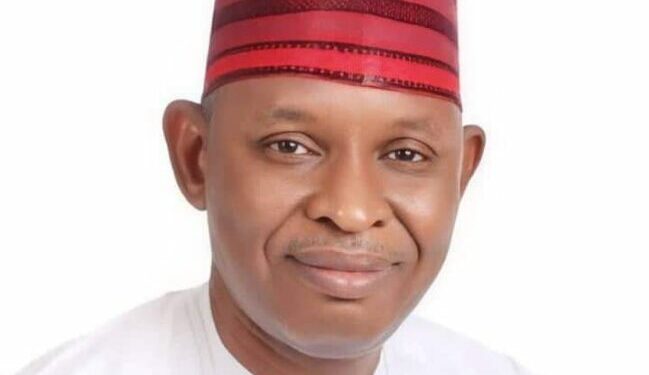
Damagum Considers Presidential Run Amid Rising Popularity and PDP Criticisms

Iliya Damagum, the acting National Chairman of the Peoples Democratic Party (PDP), revealed that he is contemplating a run for the presidency in 2027. His growing popularity, despite negative media coverage, has led him to consider the possibility. Damagum addressed critics who attacked him over a letter he sent to the Court of Appeal in Port Harcourt, stating that he would not be intimidated as he had consulted widely before taking action.

Damagum emphasized that his decisions are in the best interest of the party and urged party members to maintain unity, cautioning that internal conflicts could harm the PDP. He acknowledged the challenges he faces as the party’s leader but remained resolute in his commitment to the party’s stability.

Meanwhile, PDP Board of Trustees Chairman, Senator Adolphus Wabara, urged the newly inaugurated reconciliation and disciplinary committees to operate impartially, emphasizing their critical role in maintaining the party’s integrity.

Separately, Nyesom Wike, Minister of the Federal Capital Territory, reaffirmed his loyalty to the PDP, vowing not to leave the party despite ongoing internal crises. Wike dismissed speculation about his potential defection to the ruling APC and criticized those who label him a fifth columnist within the PDP. He reiterated his commitment to the party and the importance of adhering to its constitution.

NSA: Terrorism Has Left Deep Scars on Nigeria, Calls for Global Cooperation

Nigeria’s National Security Adviser (NSA), Mallam Nuhu Ribadu, has emphasized the profound and painful impact terrorism has had on Nigeria, Africa, and many other parts of the world. Speaking at the International Day of Remembrance and Tribute to the Victims of Terrorism in Abuja, Ribadu called for increased global collaboration to combat the ongoing insecurity in Nigeria.

Represented by Major General Adamu Laka, Ribadu highlighted the devastating effects of numerous terror attacks, particularly the 2011 bombing of the United Nations House in Abuja, which claimed 23 lives and injured over 60 people. He paid tribute to the victims and the security agencies fighting terrorism, stressing that no country can tackle terrorism alone—it requires a concerted global effort.

In related developments, Chief of Army Staff (COAS) Lt. Gen. Taoreed Lagbaja inaugurated several projects at the Guards Brigade in Abuja, aimed at enhancing the efficiency and welfare of the troops. The United States also reaffirmed its commitment to working with Nigeria and other African nations to address the drivers of instability on the continent.

President Bola Tinubu, responding to recent acts of terrorism, assured Nigerians that his administration is taking firm steps to secure the nation and counter these desperate acts. He condemned the recent assassination of a traditional ruler in Sokoto State and vowed a decisive response to such heinous acts.

Experts Urge Nigeria to Adopt India’s Approach for Effective Crypto Regulation

Stakeholders in Nigeria’s cryptocurrency sector have urged the federal government to consider India’s model for addressing crypto regulation challenges. This comes after India successfully resolved its dispute with Binance, a major cryptocurrency exchange, over allegations of violating operating rules.

India’s Financial Intelligence Unit (FIU) imposed a $2.25 million fine on Binance and required the exchange to register as a reporting entity, allowing it to resume normal operations. Tech experts and crypto trading professionals in Nigeria believe this approach offers a mature and profitable way of handling similar issues in the country.

Currently, Binance is facing legal challenges in Nigeria, including charges of money laundering and tax evasion, leading to the arrest and detention of one of its executives, Tigran Gambaryan. At a recent event in Lagos, crypto trader Mark Nduagibe advocated for Nigeria to follow India’s example, emphasizing that crypto is a legitimate technological trading system, not a fraudulent scheme.

Nduagibe pointed out that India’s resolution with Binance marks a significant milestone in global crypto regulation, contrasting sharply with Nigeria’s more aggressive and punitive approach. Another trader, Joshua Michael, echoed this sentiment, highlighting the importance of fair regulatory practices that encourage innovation and growth while respecting individual rights.

They believe that adopting India’s balanced approach could help Nigeria create a thriving and sustainable crypto ecosystem.

Wike Vows to Stay in PDP Despite Internal Crisis

The Minister of the Federal Capital Territory, Nyesom Wike, has reaffirmed his commitment to the Peoples Democratic Party (PDP), stating that he has no intention of leaving the party despite its ongoing internal issues. Speaking during a media briefing on Wednesday to mark his first anniversary as FCT minister, the former Rivers State governor emphasized that he will remain in the PDP and confront the challenges head-on.

Addressing speculations about his potential exit from the party, Wike dismissed the idea of fleeing from the conflict or from what he described as “vampires” within the party. “I’ve told you I do not run from any fight. I will stay there, I will fight it out. Who am I going to run from? The vampires? How can you say that?” he asserted.

Wike also hinted that he could have joined the All Progressives Congress (APC) if he had wanted to, but stressed that he maintained his integrity by not supporting the PDP’s presidential candidate during the 2023 elections, while still securing victories for the party in Rivers State. He underscored the importance of standing by one’s principles, noting, “People should know you for something. Integrity is very important.”

Wike Responds to Edwin Clark, Tells Fubara to Face Rivers Crisis

The Minister of the Federal Capital Territory (FCT), Nyesom Wike, has addressed recent comments made by elder statesman Edwin Clark, who accused Wike of using his influence with President Bola Tinubu to undermine Rivers State Governor Sim Fubara.

The tension between Wike and Fubara has been escalating as they vie for control over the political landscape and resources in Rivers State. In response to the ongoing conflict, Clark had urged the Peoples Democratic Party (PDP) to expel Wike, claiming that Wike’s actions were detrimental to the state’s stability.

Speaking to journalists on Wednesday to mark his one year in office as FCT Minister, Wike dismissed Clark’s criticisms, asserting that Fubara should confront the challenges in Rivers State as part of his leadership responsibilities.

Wike emphasized that leadership involves navigating crises and that Fubara must rise to the occasion rather than seeking to blame others. He recalled his own experiences facing challenges during his time as governor, highlighting that he never attributed his struggles to ethnic groups or external influences.

Wike stated, “In leadership, everything must not be smooth; I had my own crisis when I was there. Did I blame anybody? I faced the crisis squarely.”

He further argued that facing adversity is an integral aspect of leadership and that Fubara, like any leader, should be prepared to handle both good and difficult times in politics.

Lessons from Oyebanji’s meeting with Ekiti in the Diaspora

In order not to massage the ego of ingratitude, I would like to extend heartfelt commendations to His Excellency, Governor Biodun Abayomi Oyebanji, for his remarkable initiative in connecting with Ekiti citizens in the Diaspora through a recent Zoom meeting. This initiative not only highlights the Governor’s commitment to inclusivity but also underscores his visionary leadership in fostering a people-driven approach to governance. The virtual meeting was a testament to the governor’s understanding of the invaluable contributions that Ekiti indigenes abroad can offer towards the development of our beloved state. By creating this platform, the Governor has opened a crucial channel for the exchange of creative ideas, allowing Ekiti citizens in the Diaspora to actively participate in shaping the future of our state. This approach has the potential to harness the diverse experiences and expertise of Ekiti citizens globally, thereby driving sustainable growth and development within the state. The significance of this meeting cannot be overstated. It has provided an opportunity for Ekiti indigenes in the Diaspora to voice their concerns, share innovative solutions, and collaborate with the state government in a meaningful way. This engagement is a clear indication that the current administration is not only focused on immediate gains but is also deeply invested in the long-term prosperity of Ekiti State. I would also like to shine a spotlight on the organizers of this successful Zoom meeting under the leadership of Dr Adeola Adeleye-Fasuba, Ekiti Diaspora Relations Their efforts in facilitating this dialogue have laid a strong foundation for continuous interaction and collaboration between the state government and its diaspora community. Hon Abike Dabiri, Chairman of Nigerians In Diaspora Commission, is highly appreciated  for her robust participation in the dialogue.

The seamless execution of the meeting, despite the geographical barriers, is a reflection of their dedication to ensuring that the voices of Ekiti citizens are heard and valued.  Governor Biodun Abayomi Oyebanji’s recent Zoom meeting with Ekiti citizens in the diaspora was more than just an exchange of ideas; it was a masterclass in leadership, collaboration, and the power of inclusivity. Here are some key take-home lessons from this significant engagement: 1. The Power of Inclusivity in Governance:

Governor Oyebanji’s initiative to engage Ekiti indigenes abroad highlights the importance of inclusive governance. By reaching out to the diaspora, he demonstrated that every Ekiti citizen, regardless of their location, has a role to play in the state’s development. This approach fosters a sense of belonging and ensures that diverse perspectives contribute to policy-making and implementation. 2. Leveraging Global Expertise for Local Development: The meeting underscored the value of tapping into the global expertise and experiences of Ekiti citizens abroad. The diaspora community, with its wealth of knowledge in various fields, offers innovative solutions to local challenges. The Governor’s willingness to listen and integrate these ideas into the state’s development plans is a powerful reminder of the benefits of global-local collaboration. 3. The Importance of Communication and Transparency:

Regular communication between the government and its citizens, both at home and abroad, is crucial for building trust and ensuring transparency. The meeting exemplified how modern technology can be used to maintain open lines of communication, making governance more accessible and participatory. This transparency fosters accountability and strengthens the relationship between the government and its people. 4. People-Centered Leadership:  Governor Oyebanji’s people-driven approach in this meeting highlighted the significance of leadership that prioritizes the needs and aspirations of the people. By actively listening to the concerns and ideas of Ekiti indigenes in the Diaspora, he reaffirmed his commitment to serving the interests of the citizens. This lesson is a reminder that effective leadership is rooted in empathy, responsiveness, and a genuine desire to improve the lives of the people. 5. The Role of Technology in Bridging Gaps:  The successful execution of the Zoom meeting demonstrated the potential of technology to bridge geographical gaps and bring people together. In today’s digital age, leveraging technology to facilitate dialogue and collaboration is essential for driving development. This meeting sets a precedent for future engagements, showing that distance is no barrier to meaningful participation in the governance process. 6. Collaborative Problem-Solving: The exchange of ideas during the meeting emphasized the importance of collaborative problem-solving. Governor Oyebanji’s willingness to engage with the diaspora community in addressing the state’s challenges showcases the power of collective intelligence. This lesson reinforces the idea that complex issues can be more effectively addressed when diverse voices and expertise are brought together.

In conclusion, the Zoom meeting with Ekiti citizens in the diaspora was a groundbreaking event that offered numerous lessons in leadership, collaboration, and the use of technology in governance. Governor Oyebanji’s initiative serves as an inspiring model for other leaders, highlighting the immense value of inclusivity, communication, and global-local partnerships in driving sustainable development

Jennifer Lopez Files for Divorce from Ben Affleck After Two Years of Marriage

American singer and actress Jennifer Lopez, widely known as J.Lo, has filed for divorce from her husband, Ben Affleck, after two years of marriage. The divorce papers were filed on Tuesday in the Los Angeles County Superior Court, with reports indicating that the couple had been living separately for some time. The official date of their separation is listed as April 26, 2024.

Lopez and Affleck, whose romance originally began in the early 2000s, tied the knot in a Las Vegas ceremony in July 2022. The couple first met in 2001 while filming the movie Gigli, where they played criminals working together on a job. Their on-screen chemistry soon translated into a real-life relationship, earning them the celebrity couple nickname “Bennifer.”

The couple got engaged in November 2002, but their relationship hit a rough patch, leading them to postpone their wedding, which was initially set for September 2003. They ultimately parted ways in January 2004.

Following their breakup, both stars moved on with their lives. Lopez married singer Marc Anthony in 2004, and Affleck married actress Jennifer Garner in 2005. However, Lopez and Affleck rekindled their romance in April 2021 and became engaged once more a year later.

This marks the fourth marriage for the 55-year-old pop star and actress Jennifer Lopez, and the second for the 52-year-old Oscar-winning actor and director Ben Affleck.

UNICEF Decries Poor Justice for Child Abuse Victims in Nigeria

The United Nations Children’s Fund (UNICEF) has raised concerns about the limited access to justice for child victims of sexual abuse in Nigeria. During a one-day stakeholders’ meeting in Maiduguri, Borno State, Tushar Rane, Chief of UNICEF’s Borno Field Office, highlighted the alarming statistic that less than five percent of children who suffer sexual violence in Nigeria gain access to justice. He also noted that over 70 percent of children in detention lack access to diversion and non-custodial services.

Rane emphasized the vulnerabilities faced by children in Nigeria, where over 50 percent of the population is under 18. Despite the existence of the Borno State Child Protection Law, which provides a comprehensive legal framework, the implementation remains a significant challenge.

The meeting, aimed at promoting access to justice for children, reviewed and validated a draft government/UNICEF work plan on justice for children. UNICEF has committed to supporting the Borno State government in implementing the “Reimagine Justice for Children” agenda.

Borno Commissioner of Justice Hauwa Mohammed expressed the need to strengthen the state’s justice system to better protect children’s rights. She acknowledged that the existing Child Protection Law is insufficient and called for more efforts to ensure easy access to justice for children. Mohammed also emphasized the importance of addressing the root causes of the Almajiri system and other issues contributing to violence against children.

The meeting was attended by several key stakeholders, including Chief Justice of Borno State Justice Kashim Zannah, Commissioner of Women Affairs Zuwaira Gambo, and Borno Police Commissioner CP Yusufu Lawan. They all pledged to ensure the immediate application of juvenile law to safeguard the future generation and reduce the risk of children being associated with crime and conflict.

TSNL Commends President Tinubu for Prioritizing Merit in NDPHC Leadership Selection

Commander of Ondo Tantita Security Nigeria Limited (TSNL), Senior High Chief Idowu Asonja, has praised President Bola Ahmed Tinubu for his emphasis on merit and competence in selecting the new leadership team for the Niger Delta Power Holding Company (NDPHC). In a statement released on Wednesday, Chief Asonja highlighted the appointment of Ms. Jennifer Adighije as the head of NDPHC as a particularly commendable decision.

Chief Asonja described the selection of Ms. Adighije as a “masterstroke,” noting that her leadership is expected to revitalize the organization and steer it toward achieving its strategic objectives. He further expressed admiration for President Tinubu’s commitment to excellence, as demonstrated by the recent appointments to the NDPHC management team.

“The President’s resolve to assemble a team of highly skilled and experienced professionals, led by the exceptional Ms. Jennifer Adighije, is a testament to his visionary leadership and dedication to the nation’s progress,” Asonja stated.

He added that this strategic move would enhance the operational efficiency of NDPHC and foster a culture of excellence, accountability, and transparency within the organization. Asonja also commended the President for recognizing the importance of technical expertise and administrative acumen in driving the NDPHC’s mandate, particularly in managing the National Integrated Power Projects (NIPP).

In addition to Ms. Adighije’s appointment, Asonja lauded the selection of Mr. Omololu Agoro as Executive Director of Finance & Accounts, describing him as “a symbol of integrity and a pillar of productivity.” He emphasized that Mr. Agoro’s expertise would be crucial in ensuring the financial sustainability and accountability of the NDPHC.

Asonja concluded by expressing TSNL’s unwavering support for President Tinubu’s initiatives and expressed eagerness to collaborate with the NDPHC management to ensure the successful implementation of their strategic plans.

NIMASA Debunks Rumours of NSDP Beneficiaries’ Recall from Indian University

The Nigerian Maritime Administration and Safety Agency (NIMASA) has denied reports suggesting that it plans to recall beneficiaries of the Nigerian Seafarers Development Programme (NSDP) from Centurion University in India. The Director General of NIMASA, Dr. Dayo Mobereola, reaffirmed the Agency’s commitment to ensuring that the 296 NSDP beneficiaries receive quality training and become globally employable seafarers.

Dr. Mobereola clarified that the rumors of recalling the cadets were baseless. Instead, NIMASA is conducting due diligence on the existing Memorandum of Understanding (MoU) with the institution to address any identified gaps and ensure the program’s effectiveness.

“We are not recalling any NSDP beneficiary from Centurion University. We are only working to close out all identified gaps in the existing MoU before proceeding to the next stage,” Dr. Mobereola stated.

He highlighted issues encountered, including the unauthorized change of course from Marine Engineering to Mechanical Engineering and the non-accreditation of certain courses, which could potentially extend the duration of studies. These changes were made without the Agency’s consent, leading to complications regarding funding and student progress.

Dr. Mobereola emphasized that NIMASA’s actions are aimed at protecting the students’ interests and ensuring the program’s success, not recalling them from their studies.