Dino Melaye Accuses PDP Leadership of Irreparably Damaging the PartyNew Title:

Former Kogi West senator, Dino Melaye, has accused three key figures within the Peoples Democratic Party (PDP) of irreversibly damaging the party. In a statement posted on his X account, Melaye pointed fingers at PDP National Chairman Iliya Damagum, National Secretary Samuel Anyanwu, and Organizing Secretary Umar Bature for their roles in what he described as the downfall of the party.

Melaye also suggested that the party has been commercialized and privatized, stating, “End of the road for PDP as Damagum, Bature, and Anyanwu irredeemably destroyed the party. We will talk about the commercialization and privatization of PDP. PDP is now once upon a time.”

Naija News reports that there are indications the PDP National Working Committee (NWC) may sanction Damagum and Anyanwu over an alleged letter sent to the Court of Appeal in Port Harcourt, which was perceived as an anti-party move. This has led to calls for disciplinary action from some members of the party’s National Executive Committee (NEC).

However, Damagum has dismissed these calls, asserting that he will not be intimidated into resigning and claiming that the controversy only increases his popularity. Speaking at the inauguration of the National Reconciliation and Disciplinary Committees, the acting chairman criticized those spreading misinformation about the NWC’s operations.

Jonathan Stands a Better Chance in 2027 – PDP Deputy Spokesman, Abdullahi

Ibrahim Abdullahi, the Deputy National Publicity Secretary of the Peoples Democratic Party (PDP), has stated that former President Goodluck Jonathan stands a strong chance of winning the 2027 presidential election if he runs under the party’s banner. Abdullahi emphasized that the PDP’s primary concern is winning elections and controlling the central government to drive national development, rather than strictly adhering to zoning arrangements.

He criticized the ruling All Progressives Congress (APC) for exacerbating security challenges in Nigeria, contrasting this with the period of Jonathan’s presidency. Abdullahi noted that Jonathan has remained a respected figure, even among members of the APC, since leaving office in 2015.

Abdullahi highlighted Jonathan’s democratic principles, particularly his concession of defeat in the 2015 election before all votes were counted, as evidence of his suitability to lead Nigeria again. He argued that Jonathan’s open-mindedness and ability to manage Nigeria’s diverse and complex society make him a strong candidate for 2027.

Abdullahi’s comments reflect the PDP’s belief that Jonathan could address the loss of hope and confidence in Nigeria’s democratic process, given his previous tenure and continued influence. He also pointed out that Jonathan allowed the Independent National Electoral Commission (INEC) to operate freely, a practice he believes contrasts with the approach taken by subsequent administrations.

The PDP deputy spokesman also underscored the significant security challenges that have emerged under the APC, asserting that the party has failed to address these issues despite previously using Boko Haram as a major point of criticism against Jonathan’s administration. Abdullahi concluded by suggesting that Jonathan is deserving of another opportunity to lead Nigeria, given his past contributions and the ongoing recognition of his leadership qualities across the political spectrum.

Heartland FC Involved in Tragic Bus Accident, Coach Christian Obi Passes Away

Heartland Football Club, a former Nigeria Premier Football League (NPFL) team, was involved in a tragic bus accident on their way to Abakaliki, Ebonyi State, for the Ifeanyi Ekwueme TICO/SELECT preseason tournament. The accident claimed the life of their head coach, Christian Obi, a former Super Eagles goalkeeper.

The incident occurred in Umunna, near Okigwe in Imo State, when the team’s bus attempted to avoid an oncoming vehicle and collided with another vehicle that had been carelessly parked after a separate accident. Several players and officials sustained injuries and were rushed to the hospital for treatment. Unfortunately, Coach Christian Obi, 57, succumbed to his injuries at the hospital.

Initial reports from Heartland FC, which is owned by Imo State, stated that no lives were lost. However, it was later confirmed that Coach Obi had passed away as a result of the crash.

The accident has cast a shadow over the team’s recent appointment of former Nigeria international Emmanuel Amuneke as technical adviser. Amuneke, who was unveiled by Imo State Governor Hope Uzodinma on August 5, was not confirmed to be with the team at the time of the accident.

This tragedy follows rumors that Heartland FC was planning to acquire the NPFL slot of Beyond Limits Football Academy, which is owned by the founder of another NPFL club, Remo Stars.

Northern Political Figures Express Dissatisfaction with Tinubu’s Administration, Hint at 2027 Opposition

Several northern political leaders and groups have voiced growing dissatisfaction with President Bola Tinubu’s administration, citing concerns about neglecting northern interests and marginalizing the politicians who supported his rise to power.

Critics argue that Tinubu has favored the Yoruba ethnic group in key government appointments, leaving northern representation sidelined. They highlight the concentration of crucial positions, such as the Petroleum Minister, Finance Minister, and Chief Justice of Nigeria, among the Yoruba, a situation they claim is unprecedented in Nigeria’s history.

The Northern Elders’ Forum (NEF), a prominent socio-political group, has expressed regret over supporting Tinubu in the 2023 elections. Professor Usman Yusuf, a member of NEF, criticized Tinubu’s leadership, describing it as leading to “deception, destitution, and hopelessness” in the North. He lamented the dire economic conditions and the widespread disillusionment among the northern populace.

The North-East Governors’ Forum has also raised concerns, particularly about the region’s neglect in infrastructure development and electricity provision. Governor Babagana Zulum of Borno State pointed out the lack of road and rail connections between the South-East and North-East as a major grievance.

Recent gatherings of northern political figures, including former Kaduna State Governor Nasir El-Rufai and NNPP’s Rabiu Kwankwaso, along with visits by former Vice President Atiku Abubakar to former President Muhammadu Buhari, have fueled speculation about a potential northern realignment ahead of the 2027 elections.

While Atiku’s visit was officially described as a Sallah homage, many analysts believe it signals strategic positioning for the next presidential race. The northern political establishment appears increasingly inclined to reconsider its support for Tinubu in 2027.

ICPC Warns of Consequences for Defying Supreme Court Ruling on Local Government Autonomy

The Independent Corrupt Practices and Other Related Offences Commission (ICPC) has issued a stern warning that it will take action against any official or individual who defies the Supreme Court’s ruling on local government autonomy. This follows the Supreme Court’s landmark judgment on July 11, 2024, which affirmed the financial independence of Nigeria’s 774 Local Government Councils.

ICPC Chairman Musa Adamu Aliyu (SAN) emphasized during the 6th Annual General Assembly of the Network of Anti-Corruption Institutions in West Africa (NACIWA) that the Commission is committed to ensuring compliance with the ruling. He stressed that local governments must remain politically independent and that any state-level official violating this decision would be held accountable for gross misconduct and abuse of office.

Aliyu further highlighted the ICPC’s dedication to reducing corruption and holding key stakeholders accountable, stating that a summit will be held in September to discuss collaborative efforts to uphold local government autonomy. The ICPC’s commitment underscores the importance of adhering to the Supreme Court’s ruling and maintaining the integrity of local governance in Nigeria.

Nigerian Cargo Rejections Abroad: Experts Identify Key Causes

LAGOS – The frequent rejection of Nigerian cargo in international markets is primarily due to the lack of goods integrity and exporters’ failure to adhere to best practices throughout the intermodal supply chain. This was the consensus at the fourth CHINET Aviacargo Conference held in Lagos, themed ‘e-Commerce and the Future of Air Cargo in Africa: The Building Blocks.’

Industry leaders in aviation, cargo business, and insurance expressed concerns over Nigeria’s unpreparedness to compete effectively in the global air cargo sector. Despite possessing raw materials, the country has allowed foreign companies to dominate air and water transport, thereby losing control of market dynamics.

Mrs. Nkechi Onyenso, Managing Director of Pathfinders International Limited, emphasized that ensuring cargo integrity requires more than just safe and timely delivery; it involves maintaining a transparent and honest supply chain. She identified poor packaging, inadequate documentation, lack of incident reporting, and insecure transportation as major issues hindering Nigerian cargo exports.

Onyenso highlighted the critical role of proper packaging in protecting goods from physical damage, contamination, theft, and tampering, while also facilitating compliance with international regulations. She stressed that maintaining thorough documentation and implementing secure transportation practices are essential for building trust and confidence in Nigeria’s logistics sector.

She also pointed out the importance of a clear policy framework, transparent procedures, high professionalism, and robust internal audits in guaranteeing cargo integrity. According to her, these measures are not just about compliance but are strategic imperatives to protect businesses from financial losses, reputational damage, and legal liabilities.

Additionally, Mr. Olusegun Ayo Omosehin, Commissioner for the National Insurance Commission (NAICOM), dismissed claims that Nigerian insurance companies lack the capacity to cover aviation-related risks. He assured stakeholders that Nigerian insurers, supported by global re-insurance practices, are fully capable of underwriting all aspects of the aviation industry, including cargo and aircraft acquisition.

Dollar to Naira Exchange Rate in Black Market on August 24, 2024

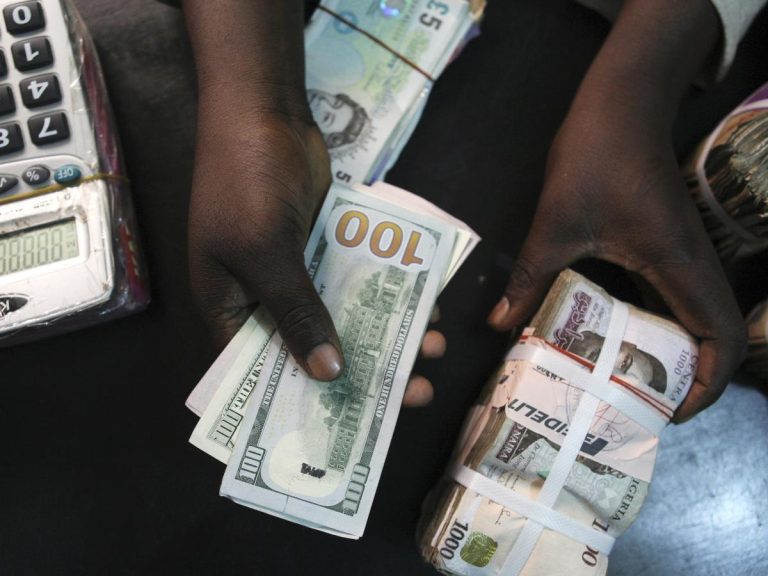
The exchange rate for the dollar to naira in the black market (also known as the parallel market) is a crucial piece of information for those looking to convert currency outside of official channels. On Friday, August 23, 2024, in Lagos, black market traders were buying dollars at N1610 and selling at N1615, according to sources from the Bureau De Change (BDC).

It’s important to note that the Central Bank of Nigeria (CBN) does not officially recognize the parallel market and advises individuals seeking foreign exchange to approach their respective banks for transactions.

Black Market Rates:

  • Buying Rate: N1610
  • Selling Rate: N1615

CBN Official Rates:

  • Buying Rate: N1591
  • Selling Rate: N1592

Please be aware that the rates at which you buy or sell forex may vary from those mentioned here, as market conditions can fluctuate.

NNPC’s Revenue from Crude Oil Sales in 2023

The Nigerian National Petroleum Company (NNPC) Limited has reported a significant increase in revenue from crude oil sales in 2023, totaling ₦14.07 trillion. This represents a staggering 298.7% increase from the ₦3.52 trillion generated in 2022, as disclosed in its Audited Financial Statements (AFS) for the fiscal year ending December 31, 2023.

Additionally, NNPC reported ₦7.14 trillion in revenue from petroleum product sales in 2023, marking a 58.74% rise from the ₦4.5 trillion earned in 2022. Revenue from natural gas sales also saw impressive growth, reaching ₦2.3 trillion, a 237.31% increase compared to the ₦683 billion recorded in 2022.

In a noteworthy development, the NNPC revealed that the country earned ₦94 million from power sales in 2023, a significant improvement from zero revenue in the previous year. Revenue from services also surged, reaching ₦464.94 billion, up 362.5% from the ₦100.5 billion earned in 2022.

Dollar to Naira Exchange Rate in Black Market on August 24, 2024

The exchange rate for the dollar to naira in the black market (also known as the parallel market) is a crucial piece of information for those looking to convert currency outside of official channels. On Friday, August 23, 2024, in Lagos, black market traders were buying dollars at N1610 and selling at N1615, according to sources from the Bureau De Change (BDC).

It’s important to note that the Central Bank of Nigeria (CBN) does not officially recognize the parallel market and advises individuals seeking foreign exchange to approach their respective banks for transactions.

Black Market Rates:

  • Buying Rate: N1610
  • Selling Rate: N1615

CBN Official Rates:

  • Buying Rate: N1591
  • Selling Rate: N1592

Please be aware that the rates at which you buy or sell forex may vary from those mentioned here, as market conditions can fluctuate.

NNPC’s Revenue from Crude Oil Sales in 2023

The Nigerian National Petroleum Company (NNPC) Limited has reported a significant increase in revenue from crude oil sales in 2023, totaling ₦14.07 trillion. This represents a staggering 298.7% increase from the ₦3.52 trillion generated in 2022, as disclosed in its Audited Financial Statements (AFS) for the fiscal year ending December 31, 2023.

Additionally, NNPC reported ₦7.14 trillion in revenue from petroleum product sales in 2023, marking a 58.74% rise from the ₦4.5 trillion earned in 2022. Revenue from natural gas sales also saw impressive growth, reaching ₦2.3 trillion, a 237.31% increase compared to the ₦683 billion recorded in 2022.

In a noteworthy development, the NNPC revealed that the country earned ₦94 million from power sales in 2023, a significant improvement from zero revenue in the previous year. Revenue from services also surged, reaching ₦464.94 billion, up 362.5% from the ₦100.5 billion earned in 2022.

Clark Urges Tinubu to Declare State of Emergency on Food Crisis

Chief Edwin Clark, former Federal Commissioner for Information and South-South Leader, has called on President Bola Tinubu to urgently declare a state of emergency on food security in Nigeria. Speaking at his Asokoro residence in Abuja, Clark emphasized the growing hunger and anger among Nigerians, urging immediate government action.

During a visit from the President of Host Communities of Nigeria Producing Oil and Gas (HOSTCOM), High Chief Benjamin Tamaranebi, Clark highlighted the dire situation facing the country, noting that citizens have the right to protest against the harsh economic conditions. He mentioned that while Tinubu is not to blame for the removal of fuel subsidies, the government must find effective ways to alleviate poverty and reduce the suffering caused by the decision.

Clark also criticized the poor management and leadership that have plagued Nigeria’s oil sector, making the Petroleum Industry Act (PIA) ineffective two years after its passage. He urged the government to ensure the proper functioning of the nation’s refineries and to address the ongoing fuel scarcity, which has been exacerbated by the alleged refusal of International Oil Companies (IOCs) to supply crude oil to the Dangote Refinery.

HOSTCOM President, High Chief Benjamin Tamaranebi, echoed these concerns, calling for the immediate repair and optimal functioning of the Port Harcourt, Warri, and Kaduna refineries. He also urged the federal government to compel IOCs to sell crude oil to local refineries in Naira, which would reduce the reliance on imported refined petroleum products and help lower the cost of petrol and other essential goods.

Urban Farming: A Lifeline for Nigeria’s Food Crisis

As Nigeria grapples with severe food scarcity, the need for innovative solutions to boost food production has become more urgent than ever. With pervasive challenges such as insecurity, inflation, and a growing population, traditional farming methods are struggling to meet the nation’s needs. However, a new approach—urban farming—offers a glimmer of hope.

First Lady Mrs. Tinubu has taken a bold step by introducing urban farming in the nation’s capital, encouraging city dwellers to cultivate their own food. This initiative mirrors successful strategies in countries like India and China, where urban farming has transformed them from food-deficit to food-surplus nations. Mrs. Tinubu’s efforts could potentially revolutionize Nigeria’s approach to food security, providing a sustainable solution to a crisis that threatens millions.

With rural farms increasingly abandoned due to violence and other factors, urban and suburban Nigerians must step up to ensure the nation’s food supply. The shift towards urban farming could not only alleviate the immediate crisis but also set Nigeria on a path to long-term food sufficiency.

12 Governors Hire Over 4,800 Aides Amid Rising State Debts

Despite ongoing calls to reduce governance costs and limit borrowing, 12 state governors have collectively appointed more than 4,835 aides since taking office in 2023, Saturday PUNCH reports.

The 1999 Constitution allows governors to appoint various aides, including Special Assistants, Special Advisers, and others, to help in their duties. However, some governors have significantly increased their number of aides, contributing to concerns about excessive spending.

Among the most notable, Kogi State Governor Usman Ododo appointed 170 aides in May 2023, followed by Yobe State Governor Mai Mala Buni, who appointed 24 aides around the same time. The trend continued with Adamawa, Kano, and Plateau States, among others, making similar appointments.

This increase in the number of aides comes as these states face rising domestic and external debts. For example, Niger State’s domestic debt grew from N121.95 billion to N139.80 billion in just six months under Governor Mohammed Bago, while Plateau State saw its debt rise from N157.62 billion to N173.93 billion in the same period under Governor Caleb Mutfwang.

The domestic and foreign debts of these states have surged, raising concerns about financial management and the sustainability of such appointments. Experts, including Olujide Oke, Chairman of the Nigerian Institute of Quantity Surveyors in Lagos, have emphasized the need to cut unnecessary spending and reduce the number of government appointees to ensure more funds are available for critical development projects.