UK Expands List of Companies Licensed to Sponsor Work Visas for Nigerians

The United Kingdom (UK) has expanded the number of organizations authorized to sponsor workers under the worker and temporary worker immigration routes, effective Friday, August 23, 2024.

The list now includes 119,195 approved companies. Nigerians seeking employment opportunities in the UK are encouraged to visit the websites of these companies to explore available job openings.

The approved companies span various sectors, including technology, commerce, education, media, advertisement, and engineering.

The UK government has clarified that a Skilled Worker visa permits individuals to work or remain in the UK if they have a job offer from an approved employer. The skilled worker route covers various categories, including charity workers, creative workers, global business mobility specialists, and international sportspersons.

To apply for a Skilled Worker visa, applicants must first secure a job offer from an approved UK employer, also referred to as a sponsor.

Here are some of the approved companies:

  1. McMullan Shellfish
  2. Independent Excel Care Consortium Limited (IECC Care)
  3. ABOUTCARE HASTINGS LTD
  4. £ ESS LTD
  5. @ Architect UK Ltd
  6. Home Accommodation Services Ltd
  7. 107 Cannon Street Limited
  8. Ur Eaz Ltd
  9. FILER LIMITED
  10. [AI] INFINITI LIMITED
  11. Brunswick Stores Limited
  12. 003 Ltd
  13. 007 Taxi Limited
  14. 0086 Ltd
  15. 00Nation Limited
  16. 01 ACCOUNTING SERVICES LTD
  17. 012 Global Ltd
  18. 023 LTD
  19. 09 Care Limited
  20. 0xA Technologies Ltd
  21. 1 ACE TRAINING LIMITED
  22. 1 ALS LIMITED
  23. 1 AND 1 ROUGAMO LIMITED
  24. 1 And 5 Tech Ltd
  25. 1 Answer Insurance Services LTD
  26. 1 Bishops Avenue Limited
  27. 1 Digitals Europe Limited
  28. 1 Eclipse Care Solutions Limited
  29. 1 Green Foods Ltd
  30. 1 Homecare ltd
  31. 1 Indus Limited
  32. 1 Key Solution Limited
  33. 1 Kings Dental Limited
  34. 1 Life London Limited
  35. 1 MODEL MANAGEMENT LONDON LIMITED
  36. 1 Oak Home Care
  37. 1 Oak Leisure Ireland Ltd
  38. 1 PhysioUK Limited
  39. 1 REPAIR LTD
  40. 1 Stop Print Ltd
  41. 1 STOP REC LIMITED
  42. 10 Europe Limited
  43. 10 Squared Ltd
  44. 100 Percent Cornwall Ltd
  45. 100 SHAPES LTD
  46. 100% HALAL MEAT STORES LTD
  47. 1000 Trades Limited
  48. 1000heads Ltd
  49. 100Starlings Ltd
  50. 101 A+D Ltd
  51. 101 Harley Street LTD
  52. 101 Healthcare ltd
  53. 101 Ways Limited
  54. 1010 Restaurant @ The Blacksmiths Arms
  55. 105 West Architects Ltd
  56. 1066 PLUMBING AND HEATING LTD

For the complete list, please refer to the UK government website.

Manchester United Secure Key Midfield Reinforcement, Manuel Ugarte

Manchester United have successfully reached a transfer agreement with Paris Saint-Germain for their top summer target, Manuel Ugarte.

The Premier League club will pay PSG an initial €50 million, with an additional €10 million in performance-related bonuses for the Uruguayan midfielder.

After agreeing on personal terms with Ugarte back in July 2024, negotiations between Manchester United and PSG stalled over the transfer fee. However, both clubs have now settled on a deal, according to transfer expert Fabrizio Romano.

Ugarte is set to sign a five-year contract with Manchester United, with an option to extend for an additional year. He is expected to undergo medical tests later today, August 27, before finalizing his move to Old Trafford.

Manchester United’s summer transfer strategy focused heavily on securing Ugarte, underscoring his importance as their prime midfield reinforcement.

Ugarte’s playing style is considered an ideal match for United’s midfield, which has been identified as a key area for strengthening. Although Casemiro remains a valuable asset, there are concerns about his pace in fulfilling the defensive midfield role.

Ugarte, who has been compared to a younger Casemiro due to his combative approach, physicality, and strong tackling skills, also offers the ability to initiate attacking plays from deep in the midfield.

The Uruguayan joined PSG from Sporting Lisbon on June 7, 2023, for a fee of €60 million. Last season, he made 37 appearances for the French club, contributing 3 assists across all competitions.

This move makes Ugarte Manchester United’s fifth signing of the summer, following the acquisitions of Leny Yoro, Joshua Zirkzee, Matthijs de Ligt, and Noussair Mazraoui. The club has also completed deals for Chido Obi-Martin from Arsenal, Samuel Lusale from Crystal Palace, and Malian prospect Sekou Kone.

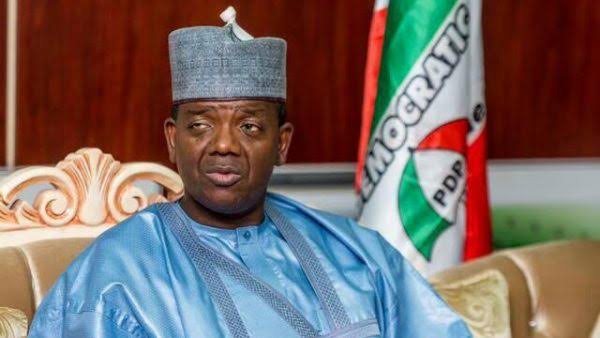
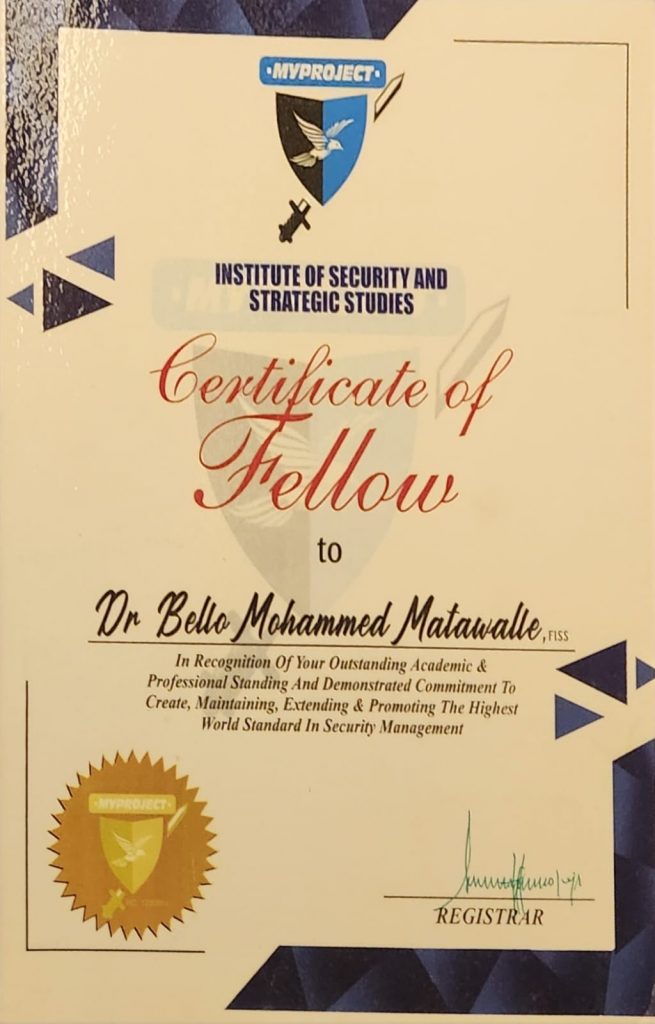
Matawalle, Awarded Fellowship At Institute of Security and Strategic Studies

The Honourable Minister of State for Defense, Dr. Bello Muhammad Matawalle MON has been awarded a Fellowship at the Nigerian Institute of Security and Strategic Studies.

The Honorable Minister of State, Defence joins other notable Nigerians who have been elected to the Institute’s Board of Fellows including the Controller General, Nigeria Immigration Service, Kemi Nanna Nandap and the immediate past Director General, State Security Services, Mr. Yusuf Magaji Bichi.

The Institute of Security and Strategic Studies (ISSS) is a research institution dedicated to national security and strategic studies. The institute conducts research, analysis, and policy recommendations in areas such as defense, foreign policy, intelligence, terrorism, and cybersecurity. It also offers training and instructional programs to government officials, military personnel, and other national security stakeholders.

The institute noted that being elected to its Board of Fellows “is a significant honor and demonstrates a high level of achievement and expertise in one’s field.”

Dr. Bello Matawalle was elected into the Institute’s fellowship board in recognition of his “outstanding academic and professional standing” and how he has demonstrated commitment to creating, maintaining, extending and promoting the highest world standard in security management.

ORTOM: BENUE GOVERNOR WHO FACED THE TOUGHEST HURDLES

By Prince Tyodoo Livinus

His two tenures as the governor of Benue State were marked by significant challenges that badly affected his administration and the state’s development trajectory. His leadership coincided with a tumultuous period in Nigeria’s history, characterized by economic downturns, security crises, and public health emergencies.
That man is Samuel Ortom. He led Benue State between 2015 and 2023.

The above scenario accounted for the difficulty that Governor Ortom experienced in paying salaries, pensions and gratuity regularly. I dare say that no other governor of Benue State has ever faced a quarter of the troubles that confronted Governor Ortom.

He met a state treasury in deficit with a monthly wage bill of N4.1 billion at the state level and N3.7 billion at the local government level. Meanwhile, the monthly allocation to the state had dropped from N5.6 billion in early 2015 to a mere net allocation of N2.4 billion in June 2015. It was therefore practically impossible for the Benue State Government to pay the workers with such a significant deficit. The internal revenue was merely at an average of N250 million monthly.

By the beginning of 2016, no fewer than 27 states in the country including Benue State were owing workers’ salaries and pensioners’ entitlements. Benue, a state heavily reliant on federal allocations, was one of the worst hit.
In the month of April 2016, the federal allocation to Benue State dropped to as low as N1.3 billion!
The situation was that bad! To make matters worse, Benue State had the highest wage bill in Northern Nigeria and the 3rd highest in the country after Lagos and Rivers States.

Despite all those challenges, Governor Ortom, who had made labour leaders a part of the state and local government joint allocation committee for transparency, was managing to pay the workers by combining the allocations of two months to pay. There was no other alternative.

Some states such as Kaduna and Nasarawa opted for a pay cut of 25 percent because they could no longer afford the payment of salaries and pensions.

By 2016, Nigeria had sunk into the first of the two devastating recessions! A barrel of crude oil which was $98.97 in 2014 had dropped to $52.32 in 2015, $43.67 in 2016. it dropped to about $10 per barrel in 2020. Nigeria went into a second recession in 2020 and disbursements from the Federation Account to the three tiers of government plunged by 31 percent.

Benue Pension arrears: clearing the Augean stable

Governor Ortom inherited huge unpaid pensions and gratuities from his predecessor, Gabriel Suswam. The total size of the pensions and gratuity payable by the state government between 2015 and October 2020 alone stood at N68.195. This represented 63% of the 2020 budget. Out of that amount, the state government paid N25.465 billion by the end 2020, leaving a balance of N42.273 billion, made of N14.522 billion in pension arrears and N28.208 billion in gratuity arrears. The government paid a subsequent N3.283 billion (50%) of the average ministry’s budgetary allocation for the year.

For the 23 Local Government areas, the cost of pension, gratuity, death benefits and cumulative pension arrears that Ortom inherited was a whopping N72.456 billion. Out of this, he was able to offset N10.630 billion by the end of his first term in 2019.
This was almost an impossible task to accomplish. It was like an Augean stable. Yet, the arrears must be paid somehow, someday and – possibly – gradually, so that the government could also attend to its other obligations. Yet, serving civil servants continued to retire and add to the existing pension bill of the government.

Aware of the magnitude of the existing and potential challenge posed by the growing pensions and gratuity bill, Governor Ortom adopted a multi-pronged approach to take the bull by the horns. The administration took steps to provide immediate, short and long term solutions to the pension problem, through the establishment of the Benue State Pension Commission (BEPCOM). Modeled after the Federal Government’s National Pension Commission (PENCOM).

The Ortom administration was consistently making its own part of the contributions. By the time he was leaving office in 2023, the state’s pension contributions stood at about N6 billion, waiting to reach the threshold of N10 billion to enable the state government access funds from PENCOM to tackle the pensions and gratuity situation. It must be emphasized that the introduction of the contributory pension scheme did not stop the payment of pensioners by the Ortom administration.

Insecurity: Invasion of Benue

In addition to economic woes, Ortom’s administration was plagued by escalating insecurity, particularly due to the invasion of Benue State by armed Fulani herders. The situation grew dire as herders attacked communities in the state, leading to tragic loss of lives and displacement of over one million people. In response to this crisis, Ortom’s government enacted the Open Grazing Prohibition and Ranches Establishment Law in 2017, which aimed to curb the violence by regulating cattle grazing. However, this move was met with resistance and heightened tensions between the state government and the Federal Government, which was perceived as favouring the interests of herders over the safety of Benue people. Benue had over 1.5 million displaced people as a result of the herders attacks! The humanitarian crisis was devastating and adversely affected the resources of the state government.

The fallout from these security challenges strained Ortom’s relationship with the federal administration led by President Muhammadu Buhari. Ortom’s vocal opposition to the federal government’s handling of the herder-farmer conflict resulted in a loss of support from federal authorities, manifesting in the denial of certain privileges and incentives that other states received. This political isolation compounded the challenges faced by his administration.

Health Crisis and Economic Disruption

The Covid-19 pandemic further exacerbated the difficulties facing Benue State. As with many parts of the country and the globe, the pandemic brought economic activities to a halt, impacting local businesses and reducing state revenues even further. The government’s response required not only the implementation of health measures to curb the spread of the virus but also the introduction of economic relief efforts to support vulnerable populations. Ortom’s administration had to navigate these dual challenges, balancing public health requirements with the urgent need for economic recovery. The COVID emergency also brought with it unplanned spending as the state government had to approve the purchase of expensive health equipment such as ventilators and create fully functional isolation units and other special services to accommodate those infected by the virus.

Time is coming that Benue people will look back at the Ortom years and admit that indeed he faced the greatest challenges as governor of the state. His administration’s legacy is one of resilience in the face of adversity, highlighting the complexities of governance in a turbulent socio-political landscape. The lessons learned during Ortom’s time in office will undoubtedly shape the future of governance in Benue State as it continues to confront ongoing challenges.

The current Governor of Benue State, Hyacinth Alia is the luckiest man to lead the state. He has assumed office at a time when federal allocations to states have tripled since June 2023. He has no reason to owe salaries and pensions or fail to execute projects!
Since President Bola Tinubu removed fuel subsidy in May 2023, federal allocations to the state have tripled. What Benue people want to see is not just the payment of salaries and pensions but the clearing of the arrears of salaries and pensions. So far, the current government of Hyacinth Alia has not shown any sign of fulfilling his promise to clear the arrears, despite getting huge allocations and taking loans more than N130 billion in less than a year.

  • Prince Tyodoo is former Senior Special Assistant to the Benue State Governor.

ORTOM: BENUE GOVERNOR WHO FACED THE TOUGHEST HURDLES

By Prince Tyodoo Livinus

His two tenures as the governor of Benue State were marked by significant challenges that badly affected his administration and the state’s development trajectory. His leadership coincided with a tumultuous period in Nigeria’s history, characterized by economic downturns, security crises, and public health emergencies.
That man is Samuel Ortom. He led Benue State between 2015 and 2023.

The above scenario accounted for the difficulty that Governor Ortom experienced in paying salaries, pensions and gratuity regularly. I dare say that no other governor of Benue State has ever faced a quarter of the troubles that confronted Governor Ortom.

He met a state treasury in deficit with a monthly wage bill of N4.1 billion at the state level and N3.7 billion at the local government level. Meanwhile, the monthly allocation to the state had dropped from N5.6 billion in early 2015 to a mere net allocation of N2.4 billion in June 2015. It was therefore practically impossible for the Benue State Government to pay the workers with such a significant deficit. The internal revenue was merely at an average of N250 million monthly.

By the beginning of 2016, no fewer than 27 states in the country including Benue State were owing workers’ salaries and pensioners’ entitlements. Benue, a state heavily reliant on federal allocations, was one of the worst hit.
In the month of April 2016, the federal allocation to Benue State dropped to as low as N1.3 billion!
The situation was that bad! To make matters worse, Benue State had the highest wage bill in Northern Nigeria and the 3rd highest in the country after Lagos and Rivers States.

Despite all those challenges, Governor Ortom, who had made labour leaders a part of the state and local government joint allocation committee for transparency, was managing to pay the workers by combining the allocations of two months to pay. There was no other alternative.

Some states such as Kaduna and Nasarawa opted for a pay cut of 25 percent because they could no longer afford the payment of salaries and pensions.

By 2016, Nigeria had sunk into the first of the two devastating recessions! A barrel of crude oil which was $98.97 in 2014 had dropped to $52.32 in 2015, $43.67 in 2016. it dropped to about $10 per barrel in 2020. Nigeria went into a second recession in 2020 and disbursements from the Federation Account to the three tiers of government plunged by 31 percent.

Benue Pension arrears: clearing the Augean stable

Governor Ortom inherited huge unpaid pensions and gratuities from his predecessor, Gabriel Suswam. The total size of the pensions and gratuity payable by the state government between 2015 and October 2020 alone stood at N68.195. This represented 63% of the 2020 budget. Out of that amount, the state government paid N25.465 billion by the end 2020, leaving a balance of N42.273 billion, made of N14.522 billion in pension arrears and N28.208 billion in gratuity arrears. The government paid a subsequent N3.283 billion (50%) of the average ministry’s budgetary allocation for the year.

For the 23 Local Government areas, the cost of pension, gratuity, death benefits and cumulative pension arrears that Ortom inherited was a whopping N72.456 billion. Out of this, he was able to offset N10.630 billion by the end of his first term in 2019.
This was almost an impossible task to accomplish. It was like an Augean stable. Yet, the arrears must be paid somehow, someday and – possibly – gradually, so that the government could also attend to its other obligations. Yet, serving civil servants continued to retire and add to the existing pension bill of the government.

Aware of the magnitude of the existing and potential challenge posed by the growing pensions and gratuity bill, Governor Ortom adopted a multi-pronged approach to take the bull by the horns. The administration took steps to provide immediate, short and long term solutions to the pension problem, through the establishment of the Benue State Pension Commission (BEPCOM). Modeled after the Federal Government’s National Pension Commission (PENCOM).

The Ortom administration was consistently making its own part of the contributions. By the time he was leaving office in 2023, the state’s pension contributions stood at about N6 billion, waiting to reach the threshold of N10 billion to enable the state government access funds from PENCOM to tackle the pensions and gratuity situation. It must be emphasized that the introduction of the contributory pension scheme did not stop the payment of pensioners by the Ortom administration.

Insecurity: Invasion of Benue

In addition to economic woes, Ortom’s administration was plagued by escalating insecurity, particularly due to the invasion of Benue State by armed Fulani herders. The situation grew dire as herders attacked communities in the state, leading to tragic loss of lives and displacement of over one million people. In response to this crisis, Ortom’s government enacted the Open Grazing Prohibition and Ranches Establishment Law in 2017, which aimed to curb the violence by regulating cattle grazing. However, this move was met with resistance and heightened tensions between the state government and the Federal Government, which was perceived as favouring the interests of herders over the safety of Benue people. Benue had over 1.5 million displaced people as a result of the herders attacks! The humanitarian crisis was devastating and adversely affected the resources of the state government.

The fallout from these security challenges strained Ortom’s relationship with the federal administration led by President Muhammadu Buhari. Ortom’s vocal opposition to the federal government’s handling of the herder-farmer conflict resulted in a loss of support from federal authorities, manifesting in the denial of certain privileges and incentives that other states received. This political isolation compounded the challenges faced by his administration.

Health Crisis and Economic Disruption

The Covid-19 pandemic further exacerbated the difficulties facing Benue State. As with many parts of the country and the globe, the pandemic brought economic activities to a halt, impacting local businesses and reducing state revenues even further. The government’s response required not only the implementation of health measures to curb the spread of the virus but also the introduction of economic relief efforts to support vulnerable populations. Ortom’s administration had to navigate these dual challenges, balancing public health requirements with the urgent need for economic recovery. The COVID emergency also brought with it unplanned spending as the state government had to approve the purchase of expensive health equipment such as ventilators and create fully functional isolation units and other special services to accommodate those infected by the virus.

Time is coming that Benue people will look back at the Ortom years and admit that indeed he faced the greatest challenges as governor of the state. His administration’s legacy is one of resilience in the face of adversity, highlighting the complexities of governance in a turbulent socio-political landscape. The lessons learned during Ortom’s time in office will undoubtedly shape the future of governance in Benue State as it continues to confront ongoing challenges.

The current Governor of Benue State, Hyacinth Alia is the luckiest man to lead the state. He has assumed office at a time when federal allocations to states have tripled since June 2023. He has no reason to owe salaries and pensions or fail to execute projects!
Since President Bola Tinubu removed fuel subsidy in May 2023, federal allocations to the state have tripled. What Benue people want to see is not just the payment of salaries and pensions but the clearing of the arrears of salaries and pensions. So far, the current government of Hyacinth Alia has not shown any sign of fulfilling his promise to clear the arrears, despite getting huge allocations and taking loans more than N130 billion in less than a year.

  • Prince Tyodoo is former Senior Special Assistant to the Benue State Governor.

ASUU Protests Dismissal of LASU Lecturers, Labels VC as ‘Enemy of the Union’

The Academic Staff Union of Nigerian Universities (ASUU) has strongly protested against Lagos State University’s (LASU) refusal to reinstate five lecturers who were allegedly dismissed unjustly. During a meeting at the University of Ibadan on August 17-18, 2024, ASUU resolved to terminate all academic collaborations with LASU until the issue is resolved.

In 2019, LASU dismissed several ASUU members, including the union’s chairman and vice chairman, citing unauthorized handling of confidential documents as the reason. However, the affected lecturers have denied these allegations.

ASUU has reaffirmed its sanctions against LASU and declared the Vice-Chancellor an “enemy of the union,” instructing its members to cease all academic activities associated with the university. The union’s national president, Emmanuel Osodeke, stated that efforts to resolve the issue with the state government are ongoing. The university’s spokesperson was unavailable for comment.

FG Considers Converting Arik and Aero Contractors into National Carriers

The Federal Government, through the Asset Management Corporation of Nigeria (AMCON), is contemplating merging Arik Air and Aero Contractors to form a national carrier. AMCON’s Managing Director, Gbenga Alade, revealed this plan during a media session in Lagos, citing the significant financial difficulties and debts faced by both airlines.

Alade mentioned that this proposal had previously been presented to a former Minister of Aviation but was rejected. However, given the ongoing financial struggles, AMCON believes that merging the airlines into a national carrier could be the best solution to ensure the sustainability of Nigeria’s aviation industry.

This move comes amidst broader discussions on the future of Nigeria’s national carrier project, which was previously suspended due to concerns over its ownership structure and operational integrity.

Presidency Dismisses Criticism from Former APC Chieftain Lukman on Governance Decline

The Presidency has responded to criticisms made by Salihu Lukman, former National Vice Chairman (Northwest) of the ruling All Progressives Congress (APC), who voiced concerns about the deteriorating state of governance in Nigeria. Lukman had argued that each administration, including the current one under President Bola Tinubu, has performed worse than its predecessor.

Lukman also highlighted the lack of unified dialogue among key opposition figures, expressing concerns about the direction of the country ahead of the 2027 elections.

In a rebuttal, the Presidency, through Special Adviser on Information and Strategy Bayo Onanuga, dismissed Lukman’s remarks, stating that the administration is focused on governance and that the positive outcomes of its reforms will eventually become evident. Onanuga emphasized that the government will not be distracted by criticisms aimed at undermining its efforts.

FG Threatens to Close Fuel Stations as Petrol Prices Soar to ₦1,000 per Litre

Independent oil marketers in Nigeria have increased the pump price of Premium Motor Spirit (PMS), commonly known as petrol, to between ₦900 and ₦1,000 per litre. This sharp rise has caused significant frustration, particularly as Nigerian National Petroleum Company (NNPC) stations continue to sell petrol at much lower prices, ranging from ₦568 to ₦617 per litre.

The price disparity has led to long queues at NNPC stations as consumers seek more affordable options. Independent marketers defend their price hikes, citing high purchasing costs from private depots, with some claiming to buy petrol at rates as steep as ₦850 per litre.

In response, the Federal Government has vowed to shut down any filling stations found selling petrol at excessive rates. The Nigerian Midstream and Downstream Petroleum Regulatory Authority (NMDPRA) issued a warning to marketers, stating that any station caught profiteering would face closure.

NMDPRA spokesperson, George Ene-Ita, stressed that the prices reported by the regulator at depots did not match the claims made by independent marketers. He assured that the agency would take decisive action against any station overcharging consumers, urging marketers to refrain from exploiting Nigerians during the ongoing economic challenges.

New Super Eagles Head Coach Bruno Labbadia: 10 Key Facts You Should Know

After an extensive search, the Nigeria Football Federation (NFF) has appointed Bruno Labbadia as the new head coach of the Super Eagles of Nigeria. His primary task will be to guide the team to qualify for the 2025 AFCON and the 2026 FIFA World Cup. Here are ten important facts about the new coach:

  1. Age and Origin: Bruno Labbadia was born on February 8, 1966, in Darmstadt, West Germany, making him 58 years old.
  2. Playing Career: Labbadia was a striker who played for eight different clubs, including Bayern Munich, Werder Bremen, and 1. FC Köln. He also made two appearances for the German national team.
  3. Goal Scoring Record: Throughout his Bundesliga career, Labbadia scored 103 goals in 328 games, with notable contributions of 50 goals for Arminia Bielefeld and 44 for his hometown club, Darmstadt 98.
  4. Top Season: His most successful season as a player was in 1998-1999 when he netted 29 goals for Arminia Bielefeld.
  5. Coaching Career: Labbadia began his managerial career at Darmstadt 98 in 2003 and has since managed several German clubs, including Greuther Fürth, Bayer Leverkusen, Hamburger SV, VfB Stuttgart, VfL Wolfsburg, and Hertha BSC.
  6. Recent Role: He last managed VfB Stuttgart during the 2022-2023 season.
  7. German Legacy in Nigeria: Labbadia is the sixth German coach to lead the Super Eagles, following in the footsteps of Karl-Heinz Marotzke, Gottlieb Göller, Manfred Höner, Berti Vogts, and Gernot Rohr.
  8. Coaching Credentials: He holds a UEFA Pro License, the highest coaching certification in European football.
  9. Italian Roots: Though of Italian descent, Labbadia chose to represent Germany at 18, aligning with his birth country.
  10. Historical Appointment: Labbadia becomes the 37th head coach in the history of the Nigerian national team.