House of Reps Minority Caucus Decries Rising Insecurity, Urges Immediate Action on Kidnappings

The minority caucus in the House of Representatives has voiced deep concern over the worsening security situation in Nigeria, highlighting the alarming rise in kidnappings and killings that have instilled widespread fear among citizens.

In a statement released on Monday, Kingsley Chinda, the caucus leader, strongly condemned the recent abductions of travelers, including the kidnapping of 29 medical students in Benue who were en route to a conference. The lawmakers warned that such incidents pose a serious threat to the future of education and healthcare in the country.

The caucus also criticized the abduction of traditional leaders, such as the Sarkin Gobir of Gatawa district in Sokoto and his son, and the murder of the Gara of Chanchanji and his son in Taraba state. They described these events as indicative of a complete breakdown of security in the nation.

In response, the lawmakers called on security agencies to revise their strategies, act swiftly to rescue those kidnapped, and ensure that the criminals responsible are brought to justice. They urged the government to prioritize the safety of all Nigerians by enhancing intelligence gathering, improving coordination among security agencies, and implementing community-based security measures.

Additionally, the caucus urged President Bola Tinubu to take immediate action in safeguarding lives and properties by declaring a state of emergency in the security sector. The statement emphasized that the 29 abducted medical students, who are committed to advancing education and healthcare in Nigeria, must not be abandoned to suffer at the hands of criminals.

NNPCL Announces N3.3 Trillion Profit for 2023, Distributes N2.1 Trillion in Dividends to Shareholders

On August 20, 2024, the Nigerian National Petroleum Company Limited (NNPCL) declared a net profit of N3.297 trillion for 2023, a significant increase from the previous year’s profit. The company also announced that N2.1 trillion would be distributed as dividends to its shareholders, marking a 28% increase compared to the 2022 dividends.

NNPCL’s Chief Financial Officer, Umar Ajiya, emphasized the company’s commitment to transparency and operational resilience, attributing the success to strategic foresight and adherence to the Petroleum Industry Act (PIA) 2021.

The company also provided updates on the Port Harcourt Refinery, with its Crude Distillation Unit (CDU) now operational. NNPCL continues to work on addressing current distribution challenges affecting petrol supply, particularly due to adverse weather conditions and infrastructure issues.

NNPCL’s impressive financial turnaround, from a loss of N803 billion in 2018 to a record profit in 2023, highlights its ongoing commitment to profitability and national energy security.

Oyo APC Chairman, Isaac Omodewu, Passes Away in the United States

The Chairman of the All Progressives Congress (APC) in Oyo State, Isaac Omodewu, has passed away in the United States of America. Omodewu, who traveled to the U.S. in November 2023 for medical treatment, succumbed to an undisclosed illness after nearly a year of receiving care. He was also a U.S. citizen.

The news was confirmed by the Oyo APC’s Publicity Secretary, Olawale Sadare, who stated simply, “Our chairman is dead.”

Further details are expected to follow.

Tech Tycoon Mike Lynch Missing After Yacht Sinks in Sicilian Storm

British tech entrepreneur Mike Lynch is among six people unaccounted for following the sinking of his 56-meter luxury yacht off the coast of Sicily. The vessel, anchored near Palermo, was struck by a sudden storm early Monday morning.

Lynch’s wife, Angela Bacares, and 14 others were rescued, but Lynch and his daughter, Hannah, remain missing. Sicily’s Civil Protection Agency has confirmed the search efforts, which discovered one body trapped inside the sunken yacht.

Witnesses reported the yacht was hit by a waterspout, causing it to sink rapidly. Survivors, including a British woman who nearly lost her child, described the chaos and subsequent rescue. The yacht, named Bayesian, was flying a British flag and had 22 people onboard, including 10 crew members.

Rescue operations continue as Italian authorities investigate the incident, with the yacht’s management company, Camper & Nicholsons, aiding in the search.

Bandits Attack Katsina Communities, Kill Governor’s Aide and His Wife

In a devastating raid on Katsina State, Salisu Ango, the liaison officer for Governor Umar Dikko Radda, and his first wife were killed by bandits. The attack occurred around 10:00 p.m. in the Gyaza community, with Ango’s second wife still missing.

The assailants also targeted the Shirgi Community in Batsari Local Government Area, abducting 28 individuals and causing injuries and fatalities, including the death of Amadu Suru, who was shot while protecting his livestock. The bandits stole domestic animals and other valuables during their raids.

Police have confirmed the attacks in Kankia communities but have not yet issued a detailed statement.

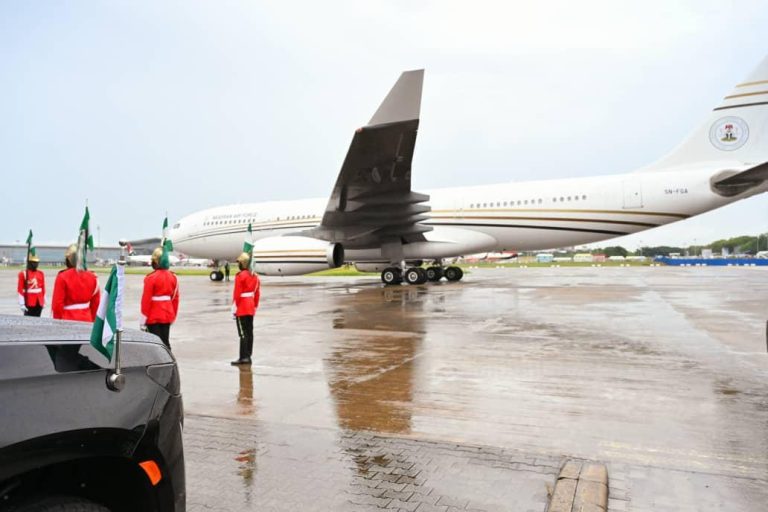
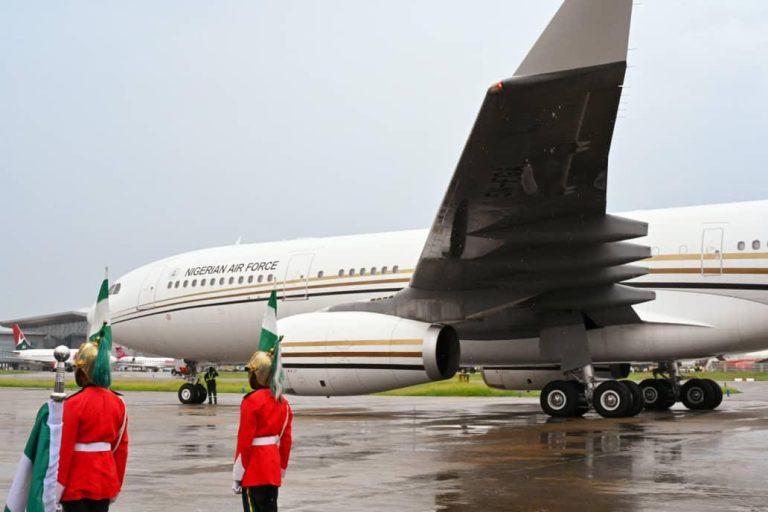
Tinubu Unveils New Presidential Jet, Cost Remains Undisclosed

On Monday, the administration of President Bola Tinubu unveiled Nigeria’s new presidential jet, an Airbus A330. The aircraft, which replaces the 19-year-old Boeing B737-700(BBJ) bought during former President Olusegun Obasanjo’s tenure, was revealed by Bayo Onanuga, Special Adviser to the President on Information and Strategy.

While Onanuga showcased the jet’s pictures, he did not disclose the purchase cost. He highlighted that the new aircraft would save Nigeria significant maintenance and fuel costs, amounting to millions of dollars annually.

The decision to replace the older jet followed a parliamentary investigation that raised concerns about its safety and cost efficiency after it malfunctioned during a trip to Saudi Arabia. The Nigerian Senate’s security and intelligence committee recommended the replacement to reduce operational expenses.

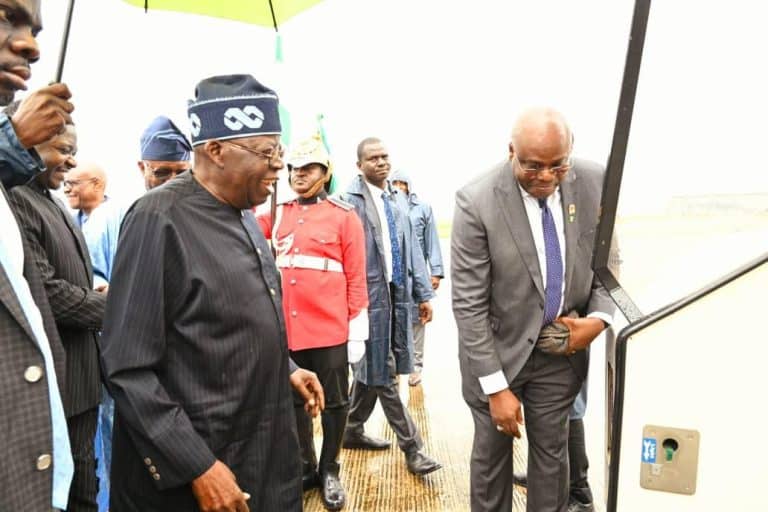
Meanwhile, President Tinubu has departed for France on the newly acquired Airbus A330, leaving Abuja at 04:08 PM on Monday, August 19.

Pictures below:

Tinubu Removes Jalal Arabi, Appoints Professor Abdullahi Usman as New NAHCON Chairman

President Bola Ahmed Tinubu has removed Jalal Arabi from his position as Chairman of the National Hajj Commission of Nigeria (NAHCON) and has appointed Professor Abdullahi Saleh Usman as his replacement. The decision comes as Arabi faces corruption charges from the Economic and Financial Crimes Commission (EFCC).

Ajuri Ngelale, Tinubu’s Special Adviser on Media and Publicity, announced the change on Monday. Professor Usman, an accomplished academic with credentials from the University of Madinah and Peshawar University in Pakistan, brings extensive experience in Hajj operations, having previously chaired the Kano State Pilgrims Board.

The appointment of Professor Usman is pending confirmation by the Nigerian Senate. President Tinubu has called on the new NAHCON Chairman to perform his duties with integrity and transparency.

Falana Threatens Legal Action Against Senators Over ₦21 Million Monthly Allowance

Human rights lawyer and Senior Advocate of Nigeria (SAN), Femi Falana, has issued a warning to the National Assembly regarding the recent disclosure that Nigerian Senators receive a monthly “running cost” allowance of ₦21 million. The increase from the previous ₦14 million has been labeled by Falana as both “illegal and contemptuous.”

Falana referred to a 2021 Federal High Court ruling by Justice Chuka Obiozor, which established that only the Revenue Mobilisation, Allocation, and Fiscal Commission (RMAFC) is authorized to determine the salaries and allowances of federal legislators. He condemned the National Assembly’s unilateral decision to increase these payments, highlighting it as a clear violation of the court’s ruling.

He also pointed out the discrepancies between these payments and the 2024 Appropriation Act, which makes no provision for such high running costs. Falana stressed that this move worsens economic inequality, particularly after the enactment of the Minimum Wage Act, which sets the minimum wage for workers at ₦70,000.

Falana has threatened to pursue legal action if the National Assembly fails to comply with the court’s decision and adjust the Senators’ remuneration to reflect the country’s legal and economic realities. He emphasized that no legislator is above the law and is prepared to initiate contempt proceedings if necessary.

Belt and Road cooperation brings tangible benefits to Panama

By Shi Yuanhao, Song Yiran, Chen Yiming, People’s Daily

On the vast Pacific Ocean, container ship Jasmine owned by China’s COSCO Shipping Lines was braving the winds and waves.

Upon arriving in Panama city, the ship slowly docked at the Port of Colon, close to the terminus of the Panama Canal on the shores of the Atlantic Ocean. 

There, the containers carried by the ship were transferred to an overseas warehouse built by China COSCO Shipping Corporation Limited (hereafter referred to as “China COSCO Shipping”), the parent company of COSCO Shipping Lines, and then distributed to merchants in Latin America and the Caribbean before reaching hundreds of thousands of consumers in the region.

This full-process comprehensive logistics service developed by China COSCO Shipping combines shipping, warehousing and customs clearance. It has made significant contributions to Panama’s employment and shipping industry.

The Colon Free Zone (CFZ) in Panama, one of the world’s busiest FTZs, is located at the Atlantic gateway to the Panama Canal. It boasts an advantageous maritime location and many tax incentives. Re-export trade is its core business.

In October 2020, China COSCO Shipping set up an overseas warehouse in CFZ, covering more than 20,000 square meters, to better leverage the CFZ’s geographical advantage and its shipping line strengths, in response to the growing needs of Chinese companies operating in Latin America.

Wang Zhen, deputy general manager of COSCO Shipping Lines (Panama) Inc., said that the overseas warehouse not only helps remove logistics bottlenecks in Latin America, but reduces overall transportation costs and makes industrial and supply chains stable and unimpeded.

According to Wang, Cargos are kept in the warehouse for quick dispatch and delivery to buyers from Latin America and the Caribbean.

“Cargo traders had to invest a large amount of money in advance, which could only be regained once all the goods were sold. Prolonged shipping time could inevitably lead to significant financial strain,” said Guo Jialun, logistics manager of COSCO Shipping Lines (Panama) Inc.

By reducing delivery times, the warehouse has helped relieve cash flow pressures and has received high appraisals from buyers in Latin America and the Caribbean, Guo added.

“I feel a strong sense of satisfaction every time I think about how we are moving these cargos to other countries and ensuring their safe and efficient delivery to businesses and consumers,” said warehouse supervisor Carlos Bandini of COSCO Shipping Lines (Panama) Inc.

Bandini has been working at the warehouse for more than two years. “The warehouse can secure punctual delivery of goods and achieve considerable cost reductions by implementing streamlined management techniques and adopting the latest technologies,” said Bandini.

China COSCO Shipping has employed a number of local workers at its office and terminals in Panama city. The overseas warehouse in the CFZ alone has created nearly 100 jobs for local residents.

The company is an active supporter of the development of Panama’s shipping industry. It has offered different types of vessel console simulators for local maritime colleges, and worked with these colleges and relevant organizations to provide internships for students.

On the campus of International Maritime University of Panama, there is a building donated by China COSCO Shipping. The university’s simulator and application technology center is also equipped with devices aided by the company.

Panama’s connectivity to the rest of the world is the country’s core competitiveness, said Giovanni Bruno Ferrari, general manager of the CFZ. 

“More and more Chinese companies are doing business in Panama, which is further enhancing such competitiveness,” said Ferrari.

According to statistics from the Panama Canal Authority, in the fiscal year of 2023, the Panama Canal saw more than 25 million tons of cargo originating from China and over 39 million tons destined for China, totaling more than 64 million tons, which account for a substantial 22.7 percent of the canal’s total traffic of the year.

Ferrari said China has long been the largest commodity supplier of the CFZ and the second-largest user of the Panama Canal. The vast amount of Chinese commodities shipped to Latin America and the Caribbean via the CFZ not only facilitates the development of the CFZ itself, but also plays an important role in maintaining unimpeded global trade and stabilizing the global supply chain.

Panama is the first Latin American country to sign a memorandum of understanding with China on the Belt and Road Initiative (BRI) cooperation. The two countries have agreed to take the opportunity of aligning the BRI with the National Logistics Strategy of Panama 2030, to strive for more highlights of bilateral cooperation.

Panamanian economist Eddie Tapiero said that Panama, as an international shipping center and regional aviation, logistic and financial hubs, enjoys natural advantages in Belt and Road cooperation. The country will leverage its geographical advantage and play a positive role in deepening Latin America-China cooperation, Tapiero added.

“Belt and Road cooperation has brought tangible benefits to Panama,” said Rogelio Paredes, former minister of Housing and Territorial Planning in Panama. The global connectivity network built by the BRI has significantly promoted global trade, making the geographical advantage of Panama even more prominent, he noted.

Highway-railway bridge in China Jiangxi boosts regional development


By Li Xinping, People’s Daily

In the first six months of this year, fixed-asset investment in China’s railway sector reached a
record high. The investment has fully leveraged the advantages of the railway industry’s long
supply chain, wide-ranging impact, and strong driving effects.
A railway project under construction today well explains the multiplier effect of this investment.
Standing on top of the 141-meter-high main tower G32 of the main bridge that spans the west
tributary of the Ganjiang River, a part of the Yangzizhou Ganjiang Highway-Railway Bridge, one
can overlook the sparkling Ganjiang River with cargo ships shuttling back and forth.
Factories, high-rise buildings, and vast fields in the distance are all within sight. Up close,
construction workers on the bridge are busy, many of whom come from counties and townships
nearby.
The Yangzizhou Ganjiang Highway-Railway Bridge is the controlling project of the entire route of
the Nanchang-Jiujiang high-speed railway, while the latter remains an important part of the
Beijing-Hong Kong high-speed railway, connecting the north and south, and integrating the east
and west.
Upon completion, the Nanchang-Jiujiang high-speed railway, will be crucial for the high-quality
development of the Yangtze River Economic Belt and the social and economic development along
the rail.
The driving force of the bridge has already become evident as the project commenced.
Let’s first look at the investment stimulation. The Nanchang-Jiujiang high-speed railway,
connecting Nanchang and Jiujiang in east China’s Jiangxi province, has drawn a total investment
of 32.41 billion yuan ($4.51 billion). The investment in the main bridge that spans the west
tributary of the Ganjiang River alone was nearly 1.08 billion yuan. Since the construction began,
the purchases of local materials have added up to 13.99 million yuan, effectively driving
procurement demand.
Xia Xiaoren, head of the Yangzizhou Ganjiang Highway-Railway Bridge with Nanchang-Jiujiang
Intercity Railway Co. Ltd., said that apart from purchasing local materials such as stone, sand,
steel bars, and cement, the company also leased machinery and vehicles from local providers. The
project has created job opportunities for local people and cultivated a group of skilled personnel in
project management, Xia added.
According to Xia, the construction of the Nanchang-Jiujiang high-speed railway, has provided
jobs to over 5,100 people, whose everyday needs have boosted the businesses of convenience
stores and restaurants in local villages.
The project has effectively increased the income of local residents and propelled economic
development, Xia noted.
Upon completion, the Yangzizhou Ganjiang Highway-Railway Bridge will set a number of world
records: it will become a highway-railway hybrid bridge with the most road lanes and largest
capacity in the world, the world’s largest-span highway-railway bridge, and the world’s first harp-
shaped cable-stayed bridge designed for trains running at 350 km/h.
New records mean new challenges. To address the difficulties, new technologies are
indispensable. Before the construction began, we virtually simulated the entire building process,

identified the engineering difficulties, improved design parameters, and streamlined the
construction process, said Zhong Lianggen, deputy head of the Yangzizhou Ganjiang Highway-
Railway Bridge with Nanchang-Jiujiang Intercity Railway Co. Ltd. The three-dimensional
visualization of the simulation was equivalent to an online rehearsal.

The construction site of the main tower G32 resembled a sophisticated intelligent factory, with 31
monitoring points in each cofferdam foundation pit. Real-time monitoring was carried out through
different methods such as radar water level gauges, strain gauges, and video surveillance.
Sensors provide real-time monitoring, and intelligent algorithms can automatically alert and
correct any deviations, achieving precise construction, said Zhong.
When the bridge is completed, its virtual version will also be delivered simultaneously for future
maintenance. The virtual bridge contains all the information during construction processes,
including design, material, plan, quality and examination, and will serve as the digital archive of
the physical bridge.
The Beijing-Hong Kong high-speed railway, along which the Nanchang-Jiujiang high-speed
railway is located, is an important vertical line of China’s high-speed rail network that centers
around eight main vertical lines linking the north and south and eight horizontal lines connecting
the east and west. It connects major city clusters such as Beijing-Tianjin-Hebei, the middle
reaches of the Yangtze River, and the Pearl River Delta.
The Beijing-Hong Kong high-speed railway will become another important route connecting the
north and south of China. It will not only facilitate travel and transportation, but provide more
capacity resources for railway freight transportation, said Xia.