ANOG Group Chairman Denounces Allegations Against Aliko Dangote as Baseless

Dr. Sami Charles, Chairman of ANOG Group, a leading global oil and gas company, has expressed deep concern over recent allegations made by the Nigerian government against Aliko Dangote and the Dangote Group.

Charles labeled the accusations as unfounded and indicative of a troubling trend of harassment against committed investors in Nigeria’s development.

“Our nation is at a crossroads, battling economic challenges exacerbated by years of mismanagement and corruption. It is imperative that we foster an environment conducive to business growth, job creation, and national development. Aliko Dangote’s investment in the Dangote Refinery is a testament to his faith in Nigeria’s potential,” Charles stated.

He found it perplexing to accuse a private enterprise of monopolistic practices while the Nigerian National Petroleum Company Limited (NNPCL) operates inefficiently and without accountability. “The NNPCL’s decades-long failure to refine petroleum products is a glaring indictment of the government’s mismanagement of the oil and gas sector,” he said.

Charles also highlighted the recent report by the House of Representatives on the downstream subsidy scam as a stark reminder of pervasive corruption. He expressed dismay that those responsible for this colossal fraud have escaped justice.

“I urge the government to prioritize addressing the core issues hindering our nation’s progress, such as oil theft, corruption, and the creation of a favorable business climate. By targeting successful entrepreneurs like Aliko Dangote, the government is sending a negative message to both domestic and foreign investors,” Charles concluded.

FAAN Chief Urges Faster Action on Aviation Cargo Enhancements

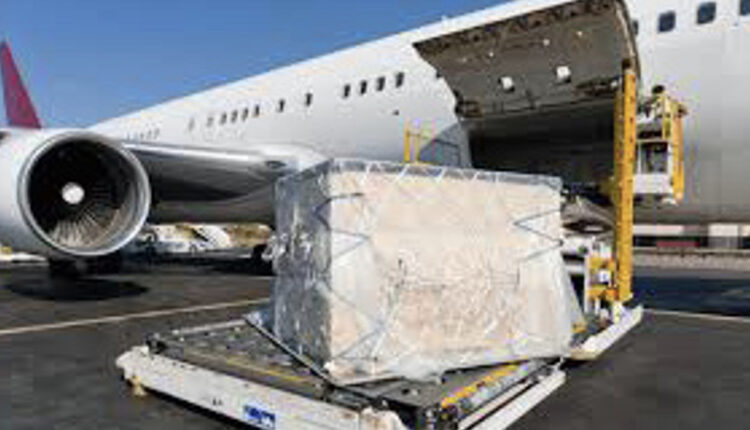
LAGOS – Mrs. Olubunmi Kuku, Managing Director of the Federal Airports Authority of Nigeria (FAAN), has called on the Aviacargo Roadmap Committee to expedite the implementation of their recommendations for improving aviation cargo in Nigeria.

In a statement from Mr. Ikechi Uko, Coordinator of the Aviacargo Roadmap Committee, Kuku emphasized the importance of air cargo to the Federal Government during her maiden meeting with the team at Murtala Muhammed Airport (MMA), Lagos, on Wednesday.

She stated, “Air cargo is of great importance to the Federal Government, and we would like to see progress made at a faster pace.”

Kuku praised the committee members for their dedication and urged them to accelerate the project, noting that FAAN had bolstered its support for their efforts.

The Aviacargo Roadmap Committee, established in December 2022, aims to elevate Nigeria’s air cargo ranking from fifth to first in Africa.

Mr. Uko briefed Kuku on the committee’s progress, noting that this was the first enlarged committee meeting in the past 10 months. He appreciated Kuku for her renewed commitment to the project amid the recent changes in FAAN leadership, which had previously stalled progress.

The committee has seen three changes in FAAN’s Chief Executives, with Kuku succeeding Kabir Muhammed on December 13, 2023, following Capt. Rabiu Yadudu’s tenure.

Uko mentioned that despite these disruptions, FAAN had implemented some of the committee’s suggestions, including the creation of a new Directorate of Cargo Development and Services. Recent meetings between the committee and this directorate have aimed to synchronize their efforts.

The meeting resulted in the launch of a pilot project for exports through four selected airports: a trial run of perishables from farm to Lagos Airport in under 24 hours, cereals through Kano Airport, and exports via Enugu and Jos Airports. These trial runs will test the efficiency of the air cargo pathways developed by the roadmap committee.

The trials will involve various stakeholders in the air cargo ecosystem, including the Standards Organisation of Nigeria (SON), National Drug Law Enforcement Agency (NDLEA), Nigerian Agricultural Quarantine Service (NAQS), and Nigerian Customs Services (NCS). A sub-committee headed by a NAQS representative was established to strategize and expedite the implementation of these trials, with a report due within two weeks.

FAAN management representatives at the meeting included Directors of Special Duties, Legal Services, and Cargo Development and Services.

FUPRE Launches Academia-Industry Advisory Board to Boost Petroleum Education

The Federal University of Petroleum Resources, Effurun (FUPRE), Delta State, inaugurated its Academia-Industry Advisory Board on Thursday, July 25th, 2024. This initiative aims to forge strong industry connections and shape the future of petroleum education in Nigeria.

Engr. Prof. Akpofure Rim-Rukeh FNES, Vice-Chancellor of the University and Chair of the Advisory Board, highlighted the significance of aligning academic programs with industry needs to foster innovation and progress in the energy sector. He stated, “Establishing the advisory board is a strategic move to bridge the divide between the university and the industry,” emphasizing the board’s role in equipping graduates with the skills required to meet the industry’s evolving demands.

The advisory board comprises distinguished professionals from leading petroleum firms and research institutions. It will oversee curriculum development, research direction, commercialization of research outputs, and workforce training.

During the board’s inaugural meeting, discussions focused on updating the curriculum with emerging technologies, expanding internships, and enhancing research collaborations and funding. Additionally, the board plans to partner with indigenous companies to address manpower gaps left by international oil companies and tackle industry challenges through innovation.

External Board Members include:

  • Engr. A. O. Anyaoku, Former Executive Director of NNPC
  • Mr. Senibo Tom, Assistant Director at the Nigerian Upstream Petroleum Regulation Commission
  • Mr. Amimbola Peter Alamu and Mr. Ovraiti Oghenekaro from Shell Petroleum Development Company
  • Mr. Victor Ohwodiasa from NMDPRA
  • Engr. Dr. N. J. D. Erinne, CEO of Matrix Petrochemicals Nig. Limited
  • Dr. Oli Olowhu, Production Facility Manager at Elerest Exploration and Production Nig. Limited

Other members include:

  • Mr. Anin Osadebe John, Managing Director of Platform Petroleum Limited
  • Engr. Adekunle Olusile, National Advisor for Investment & Technology at UNIDO
  • Associate Professor Bryan R. Goldsmith
  • Dr. Amos Kome Onokpise of First Hydrocarbon Nig. Ltd.
  • Engr. Adekunle Olusile from the UNIDO Promotion Office

Internal members include:

  • Prof. Difference Ogagarue (Earth Science Department)
  • Engr. Dr. Teddy Odisu (Petrochemical Engineering Department)
  • Engr. Sylvester Okotie (Petroleum Engineering Department)
  • Barr. Chidi Onyeneke (Secretary)

The establishment of this board marks a significant step towards enhancing the synergy between academia and industry, aiming to propel the petroleum education sector forward.

CSO Accuses Billy Osawaru, Others Over Support for Alleged Oil Sector Fraud

A rights group, Save Nigeria Proactive Coalition (SNPC) has accused some members of the House of Representatives led by Hon. Billy Osawaru of supporting corruption in Nigeria’s oil and gas sector.

The CSO which made this known in a press statement on Friday also accused Osawaru and others of receiving over $10 million as kickbacks to support the nation’s oil regulatory agencies.

This comes after the House of Representatives called for the investigation of the international oil companies (IOCs) in Nigeria for allegedly conspiring to frustrate the survival of Dangote Oil Refinery and Petrochemicals.

The House had also demanded the sack of Nigerian Midstream and Downstream Petroleum Regulatory Authority (NMDPRA) boss Farouk Ahmed with Mele Kyari of the Nigerian National Petroleum Company (NNPCL) Limited coming under serious pressure.

In a statement co-signed by its National President and Secretary General Arome James Otairu And Bilikus Adamu, the Save Nigeria Proactive Coalition described Osawaru and his colleagues as “dishonourable members of the National Assembly who are masquerading as agents of the people, but their actions betray their true allegiance to corruption and mismanagement.”

The group, therefore, dared Osawaru’s other “faceless” lawmakers to publish their full identities and constituencies within the next 24 hours and see if their constituents would not recall them.

Additionally, the Coalition said it would not hesitate to mobilise Nigerians against Osawaru and his cohorts in Abuja, Lagos, and Kaduna to force them to resign after Kyari and Ahmed had been shown the way out.

“We are outraged and disappointed by the actions of some so-called 50 lawmakers who rallied support for Mele Kyari and Farouk Ahmed, despite their glaring failures and incompetence in managing the oil industry,” the statement said.

“These dishonourable members of the National Assembly are masquerading as agents of people, but their actions betray their true allegiance to corruption and mismanagement.

“Their attempt to shield Kyari and Farouq from accountability is a clear indication of their complicity in the massive failure, corruption, and mismanagement that has characterised the oil industry under their watch.

“It is unacceptable that they would prioritize the interests of these failed appointees over the welfare of Nigerians who are suffering from the consequences of their incompetence.

“We warn these lawmakers that their actions will not go unchallenged. Their constituents will not forget their betrayal, and they will be held accountable for their actions.

“We call on Nigerians to begin the process of recalling these lawmakers who have clearly demonstrated that they are not representing the interests of their constituents.

“Their threat to the investigative committee to be impartial is a clear indication of their desperation to cover up the truth.

“We demand that the committee ignores their threats and continues to uncover the truth behind the failures in the oil industry. Nigerians deserve to know the truth, and those responsible must be held accountable.

“Furthermore, we challenge these lawmakers to disclose the source of the $10 million received to run their scheme, with only 12 lawmakers invited by Hon. Billy Osawaru, who is notorious for raising nebulous groups within the new members’ caucus to attract favour from the House leadership. This is a clear case of corruption and abuse of office.

“We demand that Kyari and Farouq resign and go home, or face the wrath of Nigerians who will not hesitate to call for their removal. Their continued presence in office is an insult to the intelligence and patience of Nigerians.

“We also call on President Bola Tinubu to take immediate action to address the crisis in the oil industry. The removal of Kyari and Farouq is a necessary step towards restoring sanity and accountability in the industry.

“Furthermore, we demand that these dishonourable lawmakers publish their full identities and constituencies within the next 24 hours. We dare them to make this information public and see if Nigerians will not recall them within 21 days.

“Their constituents have the right to know their true representatives and hold them accountable. We are confident that once their identities are revealed, Nigerians will take swift action to recall them.

“Finally, we warn these lawmakers that their actions will have consequences. They will be forced to face the wrath of Nigerians who will not tolerate their antics forever.

“We will organise mass protests and rallies to demand their resignation and ensure that they are held accountable for their actions. We will not rest until they are removed from office and replaced with true representatives of the people.”

Smearing China over Ukraine crisis exposes hypocrisy, double standards

By Zhong Sheng, People’s Daily

Recently, some American politicians groundlessly hyped up claims that China is supporting Russia’s defense industry, and threatened to intensify sanctions on specific Chinese entities and individuals.

NATO, led by the United States, has also baselessly claimed that China has become a “decisive enabler” of the Ukraine crisis.

By pushing the narrative of “China’s responsibility” in the Ukraine crisis, the United States and NATO are not only failing to cover up the fact that their continuous fueling of the conflict has prolonged the crisis, but also clearly showing the international community that their obsession with provoking bloc confrontation is the major security threat facing the world today.

Regarding the Ukraine crisis, the United States and NATO are making a fuss about normal economic and trade relations between China and Russia, spreading rumors about China providing military support to Russia. However, they cannot present any substantial evidence. In fact, the United States itself has acknowledged that China has not provided military aid to Russia in the conflict.

According to statistics, over 60 percent of Russia’s imported military components and dual-use items come from the United States and other Western countries, 95 percent of Russia’s key components destroyed by Ukraine come from the West, and 72 percent of Western parts of Russian-made weapons come from U.S. companies.

As a responsible major country, China has never provided weapons to any party in the conflict and strictly controls the export of dual-use items.

Trade and economic relations between China and Russia are open and above-board, adhering to WTO rules and market principles. The United States and its allies have violated international law by imposing unilateral sanctions on Chinese companies under the pretext of false information they themselves have spread.

Currently, the majority of countries in the world have not imposed sanctions against Russia or suspended trade with Russia. The United States and its allies have not halted trade with Russia either, with their trade volume reaching over $130 billion last year, accounting for 18 percent of Russia’s total foreign trade. The efforts by the United States and NATO to stigmatize normal economic and trade relations between China and Russia clearly demonstrate their hypocrisy and double standards.

The United States and NATO’s promotion of the so-called “China’s responsibility” narrative regarding the Ukraine crisis conceals sinister motives. One important aim is to drive a wedge between China and Europe and undermine China-Europe cooperation.

Ukraine is located in the heart of the European continent, and the prolonged crisis has put enormous pressure on European countries in political, economic, security, and other aspects. China is neither the creator of the Ukraine crisis nor a party to it. China has not and will not do anything to fuel the fire or profit from the situation.

China is always committed to promoting peace talks, encourages all efforts conducive to the peaceful settlement of the crisis, and promotes the building of a balanced, effective and sustainable European security architecture.

China always believes that an early ceasefire and political settlement of the crisis is in the interest of all parties, including Europe. The priority now is to observe the three principles of no expansion of the battlefield, no escalation of fighting and no fanning up the flames by any party, and to work for deescalation as quickly as possible.

The international community should provide conditions and support for the resumption of direct dialogue and negotiation between the two parties. Only when all major countries play a positive rather than negative role, can this conflict see an early prospect of ceasefire.

In promoting the restoration of peace, China has sincerity, takes action, and adheres to principles. China will never accept any words or actions that use the crisis to smear China or incite a “new Cold War.”

Regarding the Ukraine crisis, there’s no doubt about who is fueling the fire and exacerbating the situation. For more than two years, the United States has provided a large amount of military aid to Ukraine. The destructive power of the weapons supplied to Ukraine has gradually increased, and restrictions on Ukraine’s use of U.S.-made weapons have been relaxed again and again.

At the end of May this year, a U.S. official confirmed that the United States had conditionally agreed to allow Ukraine to use American-made weapons to strike targets within Russian territory. Another U.S. official recently stated that some NATO countries have begun transferring U.S.-made fighter jets to Ukraine. The ongoing supply of weapons by the United States and NATO has made it harder to resolve the crisis through political means and has undermined prospects for peace.

The early resolution of the Ukraine crisis through political means is a common aspiration of the international community. It is advised that the United States and NATO reflect on the root causes of the Ukraine crisis and their own actions, take concrete steps to ease the situation, rather than shifting blame and scapegoating others.

The United States and NATO should abandon the Cold War mentality of bloc confrontation and zero-sum games, correct their misperceptions about China, and stop smearing China and using this opportunity to suppress and contain China’s development.

Compressed air energy storage embraces large-scale industrial application in China

By Ding Yiting, People’s Daily

At a 300 MW compressed air energy storage station in Yingcheng, central China’s Hubei province, eight heat storage and exchange tanks are erected. Five hundred meters underground, abandoned salt caverns with over 1 million cubic meters of air storage space are undergoing gas injection and brine discharge testing. The project is expected to start full-capacity operation within this year.

“This is the world’s first 300 MW compressed air energy storage station, similar to a ‘super power bank,'” said Li Jun, deputy general manager of China Energy Digital Technology Group Co.,Ltd.

“It can store energy for 8 hours and release it for 5 hours daily, with an annual power generation of about 500 million kilowatt-hour.” Li added.

Though China’s installed capacity of new energy sources like wind and solar power continues to increase, they are relatively “unpredictable,” and power supply can sometimes be excessive and at other times insufficient, with fluctuating frequencies. Energy storage is needed to act as a “green electricity manager” to balance the power grid’s supply and demand, Li explained.

How does invisible and intangible air transform into a “super power bank?”

During off-peak electricity hours, surplus power drives compressors to compress air into a high-pressure state. The compressor, similar to a bicycle pump, can push air into a “tire” – in this case, sealed air storage reservoirs like salt caverns or artificial chambers. The heat generated during air compression is stored in heat storage tanks on the ground in forms such as hot water or fused salt.

During peak electricity hours, the underground air storage releases the stored high-pressure air, while the heat storage tanks release the stored heat. At this point, the high-pressure air is heated, which gives it tremendous expansive force to drive air turbine generators. This process is similar to wind turning the blades of large wind turbines, generating electricity to supply the power grid.

Compressed air energy storage has features such as high power, long lifespan, deep peak regulation, and flexible site selection. A single unit can achieve storage capacities of hundreds of megawatts or even gigawatts, with a typical lifespan of over 30 years.

Currently, the construction period for such a power station is usually 18 to 24 months, with a unit construction cost of 6,000 yuan ($827.54) to 8,000 yuan per kilowatt. As economies of scale become apparent and engineering technology matures, construction costs are expected to further decrease.

In recent years, China’s compressed air energy storage technology has developed rapidly, with research achievements and engineering applications leading the world. From 500-kilowatt experimental installations to 10 MW demonstration projects, 60 MW commercial operations, grid connection of 300 MW units, and the completion of feasibility studies for the first 600 MW project, compressed air energy storage technology is gradually entering large-scale engineering applications. Meanwhile, system efficiency continues to improve, with many power stations reaching 65 percent to 70 percent.

Zhang Jian, vice president of China Electric Power Planning and Engineering Institute, said that from an industry chain perspective, compressed air energy storage mainly includes key components and equipment such as compressors, heat storage and exchange equipment, air storage facilities, and expanders. This is similar to thermal power and power equipment industries, with a high degree of independent control.

Currently, compressed air energy storage still has shortcomings such as relatively low energy storage per unit volume or mass, room for efficiency improvement, and relatively complex systems.

Zhang suggested that to promote large-scale industrial application of the technology, efforts are needed in technological innovation and efficiency improvement, reducing construction and maintenance costs, expanding application scenarios, policy support, and talent cultivation.

This year, China’s National Energy Administration officially released a list of 56 new energy storage pilot demonstration projects, 11 of which are compressed air energy storage projects.

“As the technology continues to improve and more projects are implemented, China’s compressed air energy storage industry is expected to embrace broader development prospects, providing strong support for building a clean, low-carbon, safe, and efficient energy system,” said Wan Mingzhong, chief expert of China Energy Engineering Corporation and chairman of China Energy Digital Technology Group Co.,Ltd.

Low-altitude economy widely applied across industries in China

By Qiu Chaoyi, Yao Xueqing, You Yi, People’s Daily

In recent years, China’s low-altitude economy has flourished, with applications continually expanding and becoming increasingly integrated into people’s work and life.

Aviation operations such as agricultural and forestry protection and power line inspections have seen steady growth. New consumption models like air touring and aviation sports are rapidly emerging. Novel drone scenarios, including emergency rescue and meteorological detection, are being introduced one after another. Drone-based last-mile logistics delivery is being applied on a large scale.

Now, China is home to more than 14,000 drone companies holding valid civil unmanned aircraft operation certificates, while the number of licensed drone operators has surpassed 225,000 in the country.

In the first half of this year, nearly 608,000 new drones were registered, representing a 48 percent increase compared to the end of last year. The cumulative flight hours by drones exceeded 9.81 million, 134,000 hours more compared to the same period last year.

Gong Yang is a photo photography enthusiast from southwest China’s Sichuan province who has been using drones for aerial photography for many years.

“These were all taken with my drones,” he told People’s Daily, pointing to photos of the clear and enchanting water of the Tuojiang River, as well as the steep cliffs reaching into the clouds of the Yunding Mountain.

“Photos I once had to climb a mountain to get can now be quickly captured by a drone, and the perspective is even more expansive,” Gong said.

In his view, as drone products have become increasingly sophisticated, they’ve lowered both the equipment costs and technical barriers for aerial photography, attracting an increasing number of photography enthusiasts to make purchases.

In recent years, many regions have been encouraging the development of featured projects such as low-altitude flying, air touring, and aviation exhibitions to create more commercial opportunities.

Low-altitude aviation passenger transport has also become a regular service in multiple areas, with over 100 short-haul routes established. The peak annual passenger traffic has reached about 70,000, meeting specific transportation needs.

Qin Rui, a professor at the Civil Aviation University of China, believes that as relevant technologies are refined and more widely applied, low-altitude flight scenarios will see further expansion.

Beyond the consumer sector, the low-altitude economy is empowering numerous industries, seeing into logistics, agriculture, as well as surveying and mapping.

“It’s even faster than I imagined!” exclaimed Zhang Xin, who works in Liangxi district of Wuxi, east China’s Jiangsu province. He had just received a contract delivered by another company in the city’s Xinwu district via a drone delivery service by SF Express.

Li Zhiyuan, head of SF Express’s Baolong business unit in Xinwu district, told People’s Daily that the drones mainly transport lightweight items such as documents, keys, and medicines. Compared to conventional delivery methods, direct drone delivery can save about half the time.

An official from the Civil Aviation Administration of China (CAAC) explained that in recent years, the CAAC has successively introduced relevant standards and regulations to facilitate the implementation of urban lightweight drone logistics applications.

The Suining hydrological and water resources survey center in Sichuan province has employed a multi-rotor drone to collect data on both banks of the Fujiang River.

According to Peng Jian with the survey center, drone operations cover a large survey area with minimal manpower and higher efficiency. Compared to traditional surveying methods, this approach can save about 2/3 of the cost.

“These image data will be used to build a digital base for a digital twin platform of the river basin, providing fundamental support for smart water conservancy operations,” Peng explained.

“The low-altitude economy represents a deep integration of the real economy and the digital economy,” said Wu Qihui, vice president of Nanjing University of Aeronautics and Astronautics.

“It not only directly serves agriculture, industry, and the service sector, but its production and innovative applications can also drive the development of industries such as new materials, finance, communication technology, and artificial intelligence, continuously spawning new industries, new professions, and new growth drivers,” Wu noted.

Moreover, from emergency rescue and medical care to law enforcement, drones are being used in an increasing number of public management and service scenarios.

One evening, a patient with hemorrhagic shock was brought to the emergency room of Nanjing Pukou People’s Hospital in Jiangsu province. After an emergency blood transfusion, the patient still required a large amount of blood for surgery. The hospital’s blood transfusion department immediately contacted the Nanjing Red Cross Blood Center. With the evening rush hour causing traffic jams, how could timely delivery be ensured? The blood center promptly activated a “low-altitude blood delivery route”. With a straight-line distance of nearly 15 kilometers, the drone delivered the blood to the hospital in just 16 minutes.

An official with CAAC told People’s Daily that in recent years, 32 flight service stations at provincial and municipal levels have been established, and “green channels” for flight plan approvals under special circumstances such as emergencies, disaster relief, and rescue operations have also been opened, further improving the support system for low-altitude flight services.

Four Killed Amidst Protest at Borno Filling Station

Four protesters were killed at Kime filling station, Bolori Junction in Maiduguri, the capital of Borno State. According to Daily Trust, officials at the petrol station identified the deceased as their workers and provided differing accounts of how they died.

“As I’m speaking to you now, they are still lying in the pool of their blood,” said one of the attendants, Malam Musa. Musa, who was with the victims at the time, claimed they died from an explosion. “I nearly got affected, but as God would have it, I escaped unhurt.”

However, another source, who requested anonymity, stated that the deceased were hit by stray bullets. “I was opposite the filling station when the incident happened. There was nothing like a blast; we just heard sporadic gunshots and the boys were down. Four of them died instantly,” he said.

In response to the violence, the Borno State Police have imposed a curfew, citing a bomb blast in Kawuri village, Konduga local government area, which claimed 19 lives.

Burna Boy Passes “African Giant” Title to Falz Amid ‘End Bad Governance’ Protest

Nigerian music star Burna Boy has reacted to the ongoing “End Bad Governance In Nigeria” protest by crowning fellow musician Falz as the new African Giant. Burna Boy, known for his rapid rise in the music world and widespread acceptability, has often referred to himself as the African Giant. His music, similar in style to Afrobeat founder Fela Kuti, frequently encourages listeners to stand up against oppression.

Despite his influential music, Burna Boy is not known for being very vocal about Nigeria’s political affairs. In a surprising move, he took to his X page to express his disillusionment with the current protests, writing: “The fight in me died on this day. Ogun go doggy anybody wey call my name this time around.”

His followers quickly engaged with him on the platform. One user replied, “Oga shut up. Because they did you bad doesn’t mean you give up. You taught us to keep fighting in your songs but you dey here dey cap nonsense.” Burna Boy responded, “I taught you to keep fighting your oppressors but you chose to fight me.” Another user added, “Because you wan ghost and you de call yourself African giant.”

Impressed by Falz’s activism, Burna Boy declared that Falz is the new African Giant, writing, “I don hand am over to Falz bros.”

The “End Bad Governance In Nigeria” protest continues across the country, with casualties reported in several states so far.

Breaking News: Protesters Block Kano Government House Amid Tensions

Protests erupted in front of the Kano Government House today as demonstrators set up burning fires using tyres and other materials. The unrest unfolded as protesters from various parts of Kano assembled, awaiting a scheduled address from Governor Abba Kabir Yusuf.

Security forces were deployed to manage the situation, and efforts were made to disperse the crowd. The protest reflects growing tensions in the region, with citizens voicing their concerns and demands at the government’s doorstep.