China’s Spring Festival becomes international cultural event

By Ye Ban

The 78th UN General Assembly has adopted a resolution by consensus to list the Lunar New Year, known as Spring Festival in China, as a UN floating holiday.

It’s another example of the increasing international appeal of the Spring Festival, showcasing once again the influence of Chinese culture.

The festival, born in China, has become a global cultural event, bringing joy to people around the world.

The Spring Festival is becoming a global holiday. Some rough estimates suggest that the festival is a public holiday in almost 20 countries and is celebrated in various ways by about one-fifth of humanity.

In recent years, a “Spring Festival fever” has been heating up overseas. Every Spring Festival, dignitaries from various countries send greetings to the Chinese people.

Since 2010, a series of activities celebrating the festival have been hosted across the world, from New York in the United States to Tokyo in Japan, from Madrid in Spain to Belgrade in Serbia, and from Moscow in Russia to Auckland in New Zealand.

Splendid events such as traditional dragon and lion dances, Chinese New Year painting, dumpling making, and temple fairs have been hosted globally, allowing people of different nationalities and cultural backgrounds to experience traditional Chinese culture immersively and have a great time.

The adoption of the resolution shows that the Spring Festival has been warmly welcomed and supported by UN member states and staff of the UN Secretariat. The festival will become more and more international.

The Spring Festival is a window for the world to better perceive China. As the most ancient and important traditional festival in Chinese culture, the Spring Festival is a time for family reunions and ringing in the new year.

For Chinese people both at home and abroad, no matter where they are or how far they have traveled, going home for the Chinese New Year is a tradition always cherished.

The New Year’s atmosphere comes with the warmth of a family reunion after a long journey, the hustle and bustle of visiting relatives and friends with gifts, the joyous celebrations in streets decorated with lanterns, and the wishes for a better life in the coming new year.

As times change, Chinese people have found more ways to celebrate the Chinese New Year. Digital red envelopes have become a new festive element, and many families are spending the festival on trips. Regardless of the changing forms, what remains unchanged is the deep-rooted family culture ingrained in the Chinese people.

A BBC documentary introducing the Spring Festival focused on the spectacular sight of hundreds of millions of Chinese people traveling home for family reunions. Understanding the Spring Festival means understanding the deep-rooted longing for family reunions and the strong sense of patriotism that binds the Chinese people together.

The Chinese Lunar New Year builds a bridge for exchanges and mutual learning among civilizations. It symbolizes joy, harmony and peace and its Chinese name “Spring Festival” conveys the greetings and warmth of the spring season. The festival embodies the core values of harmony, love and peace in Chinese culture, and carries the common values of humanity including harmonious family, social inclusion and sound relationship between man and nature.

China’s promotion of the festival as a UN floating holiday is a pragmatic step toward implementing its Global Civilizations Initiative and advocating respect for the diversity of the world’s civilizations, conveying the hope for harmonious coexistence, mutual reinforcement, and exchanges and mutual learning among different civilizations. The efforts also represent the aspiration for people from all countries to understand and befriend each other, and to work together hand in hand.

Egyptian Ambassador to China Assem Hanafi saw the similarities between the Egyptian and Chinese people in cherishing family and kinship through traditional Chinese festivals such as the Spring Festival. He said that people from all countries are in greater need of the happiness that festivals bring in the turbulent world today.

Sitting together with family, listening to each other, and sharing laughter are the most comforting times for people. The Spring Festival is exactly a perfect opportunity for Chinese and friends from all over the world to share Chinese culture and enjoy wonderful moments together.

With the adoption of the UN resolution, the cultural significance of the festival will resonate more widely among people from different countries. This will effectively promote the exchanges and mutual learning among civilizations, and showcase the values of diversity and inclusiveness advocated by the UN.
Infrastructure: CSOs Laud NEDC MD, Alkali For Developing North East

…urge public office holders to emulate his giant strides

Civil Society Organizations, CSOs, numbering 300 under the auspices of the Coalition of Civil Society Organizations in Nigeria, COCSON, Tuesday, unanimously passed a vote of confidence on the Managing Director, North East Development Commission, NEDC, Dr. Mohammad Alkali, over his landmark achievements and transparent leadership.

This is just as the coalition called on public office holders across the various agencies of government to emulate the giant strides of the NEDC managing director.

The Coalition made this stance known during a press conference held in Abuja, where they pointed out that the Alkali-led NEDC has been on track and really addressing the socioeconomic issues affecting the North East States, and are all out to support his efforts to change the narrative in the region.

Spokesperson for the coalition, Mr Obiora Bartholomew said: “We, the Coalition of Civil Society Organizations in Nigeria (COCSON), have gathered here today to address important developments regarding the North East Development Commission (NEDC), specifically the leadership of its Managing Director appointed by President Bola Ahmed Tinubu.

“COCSON, as a coalition committed to the promotion and protection of the interests of the Nigerian people, recognizes and appreciates the significant achievements made by the Managing Director since his appointment.

“We have extensively analyzed his performance, engaging closely with stakeholders involved in the North East Development, and we are pleased to announce the passing of a vote of confidence on the Managing Director.

“We commend the Managing Dr. Mohammad Alkali Director for his tireless efforts in addressing the challenges faced by the people of the North East region. Under his leadership, the NEDC has successfully implemented various development projects aimed at improving the socio-economic conditions of the region.

“Notable achievements include; Infrastructure Development: The NEDC, under the guidance of the Managing Director, has constructed and rehabilitated critical infrastructure such as roads, schools, hospitals, and bridges. These projects have enhanced accessibility, connectivity, and essential services for the people of the region.

“Empowerment Programmes: The Managing Director’s leadership has resulted in the successful implementation of numerous empowerment programs, including skills acquisition initiatives, microfinance schemes, and vocational training. These programs have provided opportunities for sustainable livelihoods and economic growth in the region.

“Humanitarian Aid and Reconstruction: The NEDC, under the guidance of the Managing Director, has effectively coordinated humanitarian aid efforts and reconstruction projects in conflict-affected areas in the North East. This has facilitated the safe return and resettlement of internally displaced persons, rejuvenating communities and fostering social cohesion.

“Stakeholder Engagement: The Managing Director Mohammad Alkali has actively engaged with various stakeholders, including local communities, government agencies, and civil society organizations, to ensure the sustainable development of the North East region. This inclusive approach has facilitated collaboration, transparency, and accountability in the implementation of development projects.

“Based on these achievements and the significant progress made under his leadership, COCSON confidently passes a vote of confidence on the Managing Director of the North East Development Commission. We believe that his exemplary commitment to service, dedication, and results-oriented leadership will continue to drive the development agenda in the North East region.”

“Additionally, we urge other public office holders to emulate the good work demonstrated by the managing President and also ensure that the renewed hope agenda of President bola Ahmed Tinubu is sustained for the benefit of all Nigerians.

We call on all relevant stakeholders to recognize and appreciate the accomplishments made thus far, demonstrating their commitment to the development, stability, and prosperity of the North East region”, they stated.

It is recalled that some of the CSOs include, Society for Community Development and Empowerment (SCODE), Progressive Initiative for Sustainable Development (PRISD), Justice and Equality Advocacy Network (JEAN), Civic Engagement and Governance Institute (CEGI), Grassroots Empowerment Network (GEN), Advocates of Social Change and Responsibility (ASCR), Transparency and Accountability Initiative (TAI).

Others are, Generation for Human Rights and Development (GHURID), Sustainable Development and Advocacy Movement (SDAM), Health and Education Research Alliance (HERA), Urban Renewal and Livelihood Enhancement Organization (URLEO), Initiative for Democratic Governance and Economic Development (IDGE), Youth Empowerment and Leadership Foundation (YELF), Women’s Empowerment and Rights Organization (WERO), and Civil Society Alliance for Good Governance (CSAGG).

ORTOM’S SECURITY LEGACY NOW A NATIONAL REFERENCE POINT

By Dennis Ogbaji

On the 4th of August, 2022, the then Benue State Governor, Samuel Ortom inaugurated the first batch of 500 Community Volunteer Guards, a security outfit he initiated to complement the operations of conventional security agencies. And on 15th October of the same year, the Governor inaugurated the 2nd batch of the guards numbering 1,100.

It was the first time that a single state in the country had taken the bold step to own its security organization and confront terrorism as well as other crimes. Ortom no doubt received criticisms from some people who felt that it was unnecessary for a state to launch a security outfit. Some even accused him of planning to use the community volunteer guards for the 2023 elections.

But in his usual style of not letting criticisms distract him or weigh him down, Ortom maintained a calm and composed demeanor and gave the new security organization the life it deserved to commence operations across the 23 local government areas of Benue State.

Last month, it was reported in the media that the Benue State Community Volunteer Guards played a key role in the successful rescue of 9 kidnapped victims in Owukpa forest in Ogbadibo Local Government Area of the state in collaboration with troops of Operation Whirl Stroke. The rescued victims were said to have been abducted in a commercial vehicle along Otukpa/Enugu federal highway on January 11, 2024.

The Operation Whirl Stroke Commander, Major General Sunday Igbinowanhia who confirmed the incident, commended the bravery of the Community Volunteer Guards which he said was key to the operation.

The Ortom pathway in security measures was followed by the Katsina State Government, on 10th October, 2023 when it inaugurated 1,466 community watch corps officers and deployed them to seven frontline local government areas of the state to tackle security challenges along with conventional security operatives. Governor Dikko Radda who performed the ceremony said the state community watch officers were the first batch of the corps being trained to augment the efforts of security operatives in the state.

On Wednesday last week, the Ortom initiative was emulated by the Zamfara State Governor Dauda Lawal when he launched the state’s Community Protection Guards (CPG) made up of 2,969 personnel also given the mandate to complement the efforts of the regular security forces.

The Zamfara launch of the security organization was witnessed by other North West Governors who are also planning to launch similar outfits in their respective states.

This should serve as a wake up call for other states of this country to realize that security is a fundamental right of the people and government has no choice than to prioritize security.

I wish to encourage the present government of Benue State to build on what Ortom did and strengthen the Community Volunteer Guards to support conventional forces to guarantee the safety of the people. Ortom too only inherited the law passed by Governor George Akume in the year 2000 and established the Guards and inaugurated them in 2022. I believe that if the current government of the state strengthens the security organization, the gains of their operations will be unquantifiable. Members of the Guards live and operate in their communities, so they know all persons of questionable character.

There is frightening insecurity in most parts of Benue State at the moment. Children, women and another innocent people are being slaughtered by armed herdsmen in different communities of the state. Just a few days ago, a good number of people were killed in Agatu. I returned from that axis of the state two weeks ago and I can say that not even a quarter of what is happening in Benue State is being reported in the media. We cannot continue to pretend that all is well. All is not well with our people.

And the herders are not done yet. The other day, Miyetti Allah Kautal Hore, a Fulani socio-cultural group, unveiled a vigilante group in Nasarawa State known as “Nomad Vigilante Group”. The launch of that group portends grave danger for neighboring states like Benue. I am happy that Bello Bodejo, the national president of Miyetti Allah has since been arrested. They cited the launch of the Benue State Community Volunteer Guards as an example of what they were doing in Nasarawa State, but what they forgot is that Benue State made a legitimate law which went through due process at the State House of Assembly before the Guards were established. But their Nomad Vigilante is an illegal group which has no place in our laws.

I must commend former Benue State Governor, Samuel Ortom for his tireless efforts in the area of security. He deserves all the respect and commendation he can get for the establishment of the Benue State Community Volunteer Guards and other initiatives he made during his time as governor. He demonstrated visionary leadership and foresight in establishing the Guards.

The initiative to create a local security outfit to complement the efforts of conventional security agencies has set a remarkable precedent and has proven to be a significant step towards enhancing the security and well-being of the people.

By taking the bold step, Ortom showed exceptional courage and determination to proactively tackle terrorism and other crimes that were threatening the safety and stability of his state.

Despite facing criticism and skepticism from some quarters, he remained resolute in his decision and exhibited remarkable composure in the face of adversity. His steadfastness and dedication to the welfare of the people of Benue State are truly commendable and will remain a reference point in many years to come.

The Ortom initiative has not only had a positive impact within Benue State but has also inspired other state governors, as evidenced by the recent replication of the programme in Zamfara State.

Ortom’s commitment to the safety and security of the people of Benue State has left a lasting legacy and has paved the way for a new model of community-based security initiatives.
The Ortom legacy will no doubt continue to inspire others to prioritize the security and welfare of their people.

Lastly, I wish to state that in view of growing concerns and calls from many Nigerians including governors, there is the need for the National Assembly to consider a legislation for the creation of state police to help stem the tide of the recurring security challenges bedevilling the country. The fear that state governments will use police under their control to intimidate political opponents is no longer tenable.

  • Ogbaji writes from Abuja.

Talebearers causing havoc in TCN, misrepresenting information- Bukhar

Nigerians are being misinformed by mischievous Talebearers against the Transmission Company of Nigeria (TCN) for “self-centered goals”, Alhaji Gimba Bukhar, former staff of the company has alleged.

Referring to an article on TCN’s procurement process published mid January on an online blog, he said “there is a grand plan by some individuals to distract the progress being made by TCN”.

“These individuals see nothing good in TCN, they don’t report the achievements being recorded through commissioning of new substations, stringing new lines or upgrading existing substations. And it seems both the writers and the originators of the story do not have or forgot to provide evidence that, all the system collapses being referred to are caused by TCN.

“For avoidance of doubt, there is no single hard evidence that TCN was responsible for system collapse despite its challenges. Yes, there are challenges, yes TCN loses transformers, breaker and other equipment from time to time but most open manage the situation.

The purveyors of disinformation prey on the vulnerability or partisan potential of recipients whom they hope to enlist as amplifiers and multipliers. In this way, they seek to animate us into becoming conduits of their messages by exploiting our propensities to share information for a variety of reasons,” he said in a statement.

“As a former staff of TCN and indeed a stakeholder in the Nigerian Supply industry, I find it duty bound to start responding to the talebearing’s on TCN by these mischief makers. There was no single report by the cartels on TCN that was balance according to the rules of journalism.

“I want to emphasize that TCN has always conducted itself with the highest level of professionalism and integrity and always try to mitigate any behaviour that is inappropriate or unethical, and it committed to upholding these values in all aspects of its operations as we know it.

“There are four major players in Nigerian Energy Supply Industry (NESI) today, namely Generation, Transmission, Distribution and the Regulatory commission as a subset. These segmented fractions constitute whole, known as NESI. The NESI is system, and each fraction of the system is not only important but necessary for the survival and smooth operation of the system. The mystery is that, this complain and the wrong analysis of conjoining loss of transformer with procurement process is not originating from the NESI fractions but from men behind the masks of media cartels of misinformation,” Bukhar added.

Nasarawa Speaker hails victory of two lawmakers, Omadefu, Musa at re-run elections

“… congratulates Hon. Omadefu, Hon. Musa says their victory justify their popularity, trust among the electorates…”

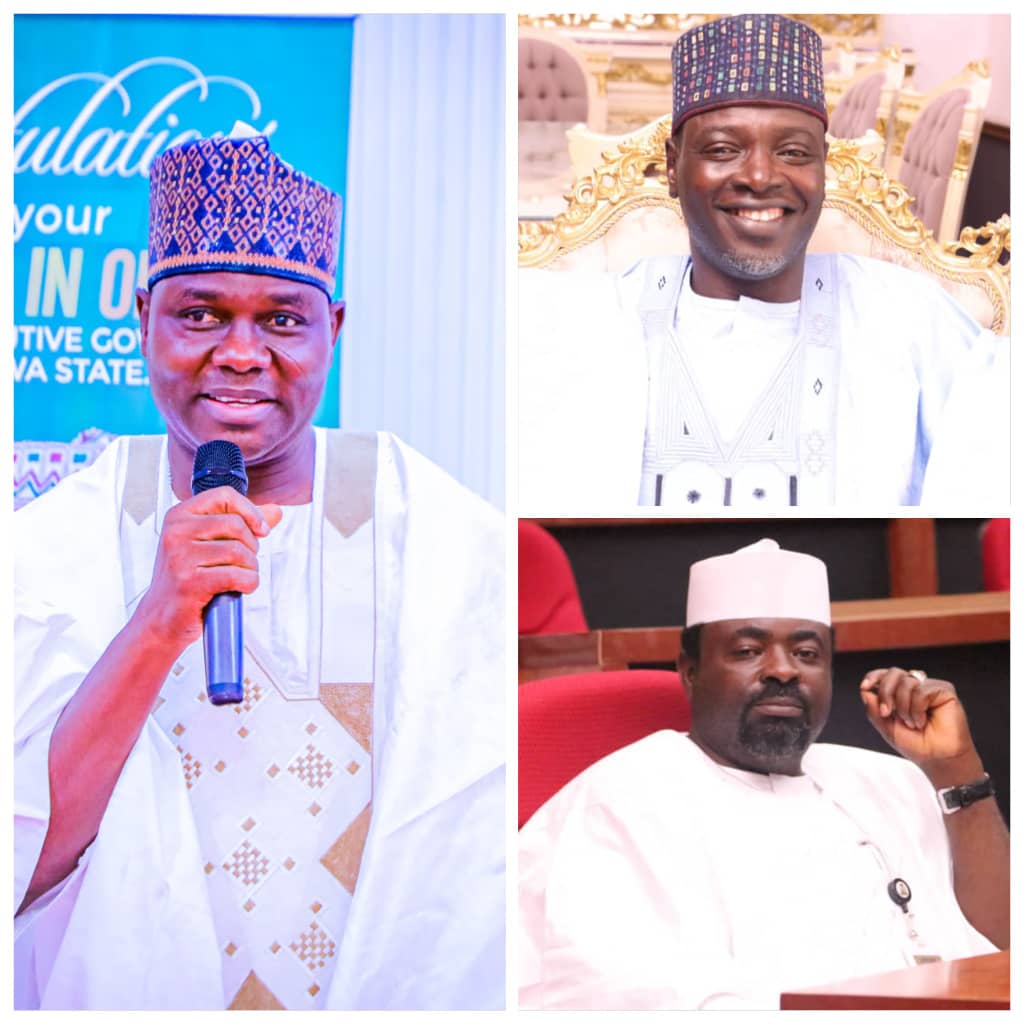
Speaker, Nasarawa State House of Assembly, Rt. Hon. Danladi Jatau, has hailed the victory of two members of the House, Hon. Muhammed Adamu Omadefu and Hon. Musa Abubakar Ibrahim at the just concluded re-run elections in Nasarawa State.

Speaker Jatau while reacting to their victory said it has justified the lawmakers popularity and trust among their people and called on the opponents to join hands with the lawmakers to build their constituencies and the State at large.

The Nasarawa State Number Three Citizen congratulated Hon. Muhammed Adamu Omadefu of APC Keana constituency and Hon. Musa Abubakar Ibrahim of NNPP Doma South constituency for their resounding victories at the re-run elections.

Speaker Jatau commended the Independent National Electoral Commission (INEC) for conducting a hitch free exercise and the security agencies for ensuring a peaceful atmosphere through out the exercise.

Speaker Jatau also commended the electorates for having faith in the lawmakers and re-elected them during the re-run elections while emphasizing that with the completion of the exercise, the Nasarawa State House of Assembly is now fully completed to carry out its responsibilities.

The Nasarawa State Number One Lawmaker re-affirmed the 7th Assembly’s commitment under his watch to leave no stone unturned to deliver on their mandate as well as enhance effective synergy with other arms of government for accelerated development.

DSS advocates for peaceful rerun and bye-elections, denouncing violence.

The Department of State Services (DSS) has called on the electorate and participating political parties in the 3rd February, 2024 re-run and bye-elections to be of good conduct during and after the exercises in the affected States.

The appeal was contained in a statement signed by the Service’s spokesman, Mr. Peter Afunanya, the Service tasks the contending parties to shun all acts capable of causing a breakdown of law and order. Also, politicians and their supporters must strive to adhere to the electoral act and procedure.

He said, “beyond the elections, the DSS enjoins citizens to be patriotic and loyal to the Nigerian nation. Public commentators, social critics and key players in the public space should consider the peace of the country over and above their personal or group interests.

“Similarly, the Media, Civil Society and Community Based Organisations are encouraged to shun divisive tendencies and fake narratives likely to undermine national order. It is unarguable that it is only if there is a livable country that individuals, groups or corporate bodies can pursue and realise their legitimate businesses and ambitions. The Service, therefore, advises those engaging in subversive endeavours or desirous of doing so to desist from such; consequently, it will not hesitate to bring defaulters, no matter how highly placed, to face the full weight of the law”.

He assured that the Service will work with the Independent National Electoral Commission (INEC), other sister security and law enforcement agencies and indeed all stakeholders to ensure a hitch-free election.

He emphasised that the Service will continue to implement proactive measures to achieve the desired stability in the country.

China, France see mutual benefit from bilateral economic, trade cooperation

By Shang Kaiyuan, People’s Daily

This year marks the 60th anniversary of the establishment of diplomatic relations between China and France.

Over the past 60 years, bilateral trade between the two countries has increased by over 800 times. Today, France is China’s third-largest trading partner in the European Union and the third-largest source of actual investment, while China is France’s largest trading partner in Asia and the seventh-largest globally.

The economic cooperation between China and France has not only contributed to the development of both countries’ economies and improved people’s well-being but also injected momentum into the global economic recovery.

In recent years, French delicacies such as Bordeaux wine, Charolais beef, Bonne Maman jam, and President cheese have become increasingly popular in China. Similarly, Chinese home appliances like Midea air fryers, Bear rice cookers, Haier refrigerators, Hisense televisions, and Xgimi projectors are gradually gaining recognition in France.

China and France have strong complementarity in terms of their economies, which creates immense potential for cooperation. China has a competitive advantage in manufacturing, electronic products, and machinery, while France excels in aerospace, nuclear energy, high-end consumer goods, agricultural products, and wines. This provides both countries with vast opportunities for trade and investment.

Soumia Malinbaum, president of the Paris Chamber of Commerce and Industry and vice president of the Paris Île-de-France Chamber of Commerce and Industry, noted that the Chinese consumer market is vast, and China’s economic transformation and upgrading in recent years has brought new opportunities for the French consumer goods and services industry.

The French Pavilion at the previous sessions of the China International Import Expo (CIIE) has garnered immense popularity. France has been invited to serve as the Guest Country of Honor for the 2024 China International Fair for Trade in Service and the 7th CIIE.

“French companies are full of confidence in the Chinese market,” said French Ambassador to China Bertrand Lortholary.

According to statistics, by the end of 2021, over 6,000 French companies had been established in China, with a total investment of over $18 billion.

As China’s economy enters a stage of high-quality development and its industrial transformation and upgrading keeps advancing, the country is providing more development opportunities for French companies. In the past two years, many French enterprises have chosen to increase investment and expand their businesses in China.

In October 2022, international beauty giant L’Oreal officially laid the foundation for the world’s first self-built intelligent fulfillment center in Suzhou, east China’s Jiangsu province. In July 2023, the Chinese-French (Wuxi) Industrial Cooperation Park was inaugurated, with five key projects signed, totaling an investment of over $1 billion. In September 2023, Airbus broke ground on its second final assembly line for the A320 family aircraft in Tianjin municipality. In November 2023, Faurecia under Forvia officially inaugurated its new electronics mega plant in Fengcheng, Jiangxi province.

“Investing in China is investing in the future,” said Jean-Paul Agon, Chairman of L’Oreal.

According to a spring 2023 survey on French companies in China conducted by the Chinese Chamber of Commerce and Industry in France, compared to the previous survey, member companies have shown an increased willingness to expand their businesses in China in the next three years. Forty-seven percent of them are planning to further invest in China, the survey said.

China has been the largest Asian country in terms of investment and job creation in France for three consecutive years. China’s total direct investment in France stands at nearly $4.9 billion. So far, Chinese investors have invested in over 900 French companies, employing over 50,000 local employees in France.

The Dongtai offshore wind power project, jointly invested and constructed by Chinese and French companies, has pioneered the cooperation between Chinese and foreign enterprises in building offshore wind power projects in China.

In recent years, Schneider Electric has continuously increased its research and development investment in the Chinese market and has established five major R&D centers.

Alongside deepening cooperation in traditional fields, China and France have actively explored the potential for cooperation in emerging sectors such as green industries and clean energy. This not only promotes economic development and improves people’s well-being in both countries but also enhances confidence and stability in global economic recovery.

In terms of third-party market, China and France are pioneers in exploring new models of international cooperation. The successful collaboration between China and France in operating the Kribi Deep Seaport in Cameroon serves as a shining example. The growth of port operations has not only significantly promoted the economic development of Cameroon but also benefited landlocked African countries such as the Central African Republic and Chad.

In February 2022, China and France signed a document on the list of the fourth-round demonstration projects of developing third-party market cooperation. The list includes seven projects worth over $1.7 billion, covering infrastructure, environmental protection, new energy and others. These projects are launched in areas including Africa and Central and Eastern Europe.

French international affairs expert Bruno Guigue said the real driving force behind cooperation between the two countries is mutual respect, mutual trust, and the recognition of the other as a true partner.

He noted France and China must continue to strengthen their economic relations by striving to build more efficient supply chains.

“By joining hands and working together, France and China can definitely achieve mutual benefits and win-win outcomes,” the expert added.

Abuse of force only makes bigger crises

By Huan Yuping

Recently, the coalition forces of the United States and Britain launched new strikes on Houthi targets in Yemen. The escalation of the crisis in the Red Sea has triggered widespread concerns in the international community about the further rise in the overall security risks in the region.

The use of force will not help resolve the issue, but only exacerbate tensions.

The waters of the Red Sea are an important international transportation route for goods and energy. It is in the common interest of the international community to ensure unimpeded access to the waterway and the safety of passing vessels. All parties should work together to safeguard the security of the waters.

Major countries should play a constructive and responsible role in keeping the shipping lanes safe in the Red Sea waters. Any action must abide by the norms governing international relations, and respect the sovereignty and territorial integrity of Yemen and other countries bordering the Red Sea.

The military actions taken by the U.S. and Britain have damaged infrastructure and caused casualties of civilians. They couldn’t help to protect the safety of merchant shipping, and even increased the overall security risks in the region. This is something that the international community does not want to see.

The international community has voiced concerns and opposition after the U.S. and Britain launched military strikes.

UN Secretary-General Antonio Guterres called upon all parties involved not to escalate even more the situation in the interest of peace and stability in the Red Sea and the wider region. He called for every effort to be made to ensure that Yemen pursues a path towards peace and that the work undertaken thus far to end the conflict in Yemen should not be lost.

Saudi Arabia stressed in a statement the importance of maintaining the security and stability of the region. It demanded freedom of navigation in the Red Sea and called on all parties involved to exercise restraint and avoid escalation.

Egypt called for unifying international and regional efforts to ease tensions in the region and ensure the safety of navigation in the Red Sea.

Iran believed that arbitrary attacks would only make the Middle East more insecure and unstable.

Iraq said in a statement that expanding the scope of targets does not represent a solution to the problem, rather, it will lead to continued spillover and proliferation of risks.

The international community has a clear understanding of the negative effects brought about by military strikes on the regional situation. It hopes to resolve the crisis with political means that address both the symptoms and root causes.

The escalating tensions in the Red Sea indicate that the abuse of force will only make bigger crises. The world is seeing the spillover effects of the new round of conflict between Palestine and Israel, and as the factors of instability in the region are clearly upswing, the risk of more forces being dragged into the conflict is on the rise. 

It’s obviously contradictory that some countries are actually abusing military force while stressing the importance of preventing the spillover of the conflict. The UN Security Council has never authorized any country to use force against Yemen. The military actions taken against Yemen not only have increased security risks in the Red Sea, but also could possibly impact the political process of Yemen.

Since the 21st century, the abuse of force has only brought turmoil and humanitarian disasters to the Middle East, as evidenced by what has happened in Afghanistan, Iraq, Libya and Syria.

U.S. magazine Foreign Policy said that Washington’s unwavering devotion to its current approach to the Middle East has produced a vicious cycle: By committing itself to the root of regional instability, the U.S. repeatedly finds itself having to confront challenges that are largely the product of its own presence and policies in the region.

The escalating tensions in the Red Sea indicate that an ultimate solution never comes from the ignorance of justice. Conflicts in the Middle East are complex. The participation of extra-regional countries in Middle East affairs should consider the region’s reality, coordinate the interests of all relevant parties and stick to the principle of fairness and justice.

However, some countries have long implemented tactics like “bolster one and bash the other” and “divide and rule” in the Middle East for their own geopolitical interests, which makes it difficult for the region to establish stable security orders.

The current crisis in the Red Sea is a spillover of the conflict in Gaza, and the prolonged failure to resolve the Gaza conflict is attributed to certain countries’ blatant prejudices and repeated obstruction of UN Security Council draft resolutions calling for a ceasefire.

The fundamental problems of the tensions in the Red Sea cannot be solved by “cut-the-knot” military actions with an ignorance of the root cause. As a commentary published on the website of Al Jazeera said, the military strikes “clash with the Biden administration’s stated goals of de-escalation and fail to address the root cause of the soaring tensions in the region.”

The Middle East is on the edge of extreme danger. What’s the most urgent now is to cease fire in Gaza, and major countries must play a constructive role in stopping violence.

Qatari Prime Minister and Foreign Minister Sheikh Mohammed bin Abdulrahman Al-Thani said that the central issue that needed to be addressed lies in Gaza, and only by resolving the Gaza issue can all other issues be resolved.

The ceasefire is the prevailing priority, and humanitarian aid is the imperative moral responsibility. The future arrangement of Gaza must fully respect the Palestinian people’s aspiration, and the two-state solution is the sure path to a just settlement of the Palestinian issue. Justice has already been delayed, but it should never be denied.

Major countries should exert their influence by abandoning geopolitical self-interests, bearing in mind the real interests of the people in the Middle East, solving disputes and conflicts through political means and playing a constructive role in promoting peace in the region.

Only when all parties stand on the side of peace and justice, implement the two-state solution and push for a comprehensive, just and sustainable solution to the question of Palestine at an early date, can the Middle East achieve lasting peace and stability.

China sets example for international human rights development

By He Yin, People’s Daily

On January 26, local time, the 45th session of the UN Human Rights Council’s Universal Periodic Review (UPR) Working Group was held in Geneva, Switzerland, during which China’s report for the fourth UPR was unanimously adopted.

It fully indicated the international community’s recognition of China’s unremitting efforts and historic achievements in promoting and safeguarding human rights.

The UPR serves as a crucial platform for countries to engage in equitable and candid discussions on human rights matters within the framework of the UN, fostering constructive dialogue and collaboration.

China attached great importance to this round of the UPR. The delegation of the Chinese government had a constructive dialogue with representatives of other countries in an open and candid manner.

During the UPR, China has won international acclaim for its achievements in the cause of human rights. More than 120 countries fully acknowledged China’s great achievements in promoting and protecting human rights, highly evaluated the human rights concepts and practices with Chinese characteristics, and appreciated the significant contributions China has made to the global cause of human rights through its development and progress.

China is the only major country that has formulated and implemented four consecutive national human rights action plans. China adheres to a systematic approach to planning for human rights development, and has made historic accomplishments in the cause of human rights.

China applies a people-centered development philosophy, regards the rights to subsistence and development as its primary and basic human rights, ensures and improves people’s livelihoods through development, ensures the fruits of development are shared by the people, and strives for the comprehensive and coordinated development of economic, social and cultural rights as well as civil and political rights. It has significantly improved its capability in ensuring human rights.

Since joining the third round of the UPR in 2018, the country has made tangible achievements in the promotion and protection of human rights.

China has secured a complete victory in the battle against extreme poverty, and explored whole-process people’s democracy that covers all aspects of the democratic process and all sectors of society. It has formulated new laws to safeguard various rights of the people, including the Civil Code, the law on personal information protection, and the law on barrier-free living environment.

During this round of the UPR, many representatives from developing countries said that China’s path to human rights is in line with China’s national conditions and meets the aspirations of its people.

China has found a human rights development path that echoes the trend of the times and suits our national conditions, setting an example for the development of the international cause of human rights, and providing a new choice for other countries, especially those in the Global South, to independently explore the path of human rights development.

For a long time, some Western countries, under the so-called “one-size-fits-all human rights” and “human rights over sovereignty” banners, have been forcibly promoting Western conceptions and systems of democracy and human rights on others, meddling in the internal affairs of other countries. This has led to frequent military conflicts, prolonged social unrest, and the displacement of many from their homes in a number of countries.

There is no one-size-fits-all path or model of human rights development in the world. People of all countries have the right to and should independently explore their own human rights development that is in line with their own realities.

China has advocated respect for the diversity of world civilizations, implemented the Global Civilization Initiative, strengthened exchanges and mutual learning, and encouraged and respected countries in choosing their own path to human rights development, so that people of all countries are ensured of human rights fairly through their own modernization drives.

China has been actively promoting the high-quality development of its own human rights cause while engaging in extensive exchanges and cooperation in the field of human rights, making contributions to global human rights governance.

Since the third round of the UPR, China has joined human rights treaties such as the Marrakesh Treaty and actively participated in the UPR.

As Chinese President Xi Jinping noted, China stands for safeguarding human rights with security, promoting human rights with development, and advancing human rights with cooperation, which has exerted profound influence.

The 53rd session of the UN Human Rights Council adopted again the resolution on “the contribution of development to the enjoyment of all human rights” submitted by China.

In October 2023, a draft resolution on promoting and protecting economic, social and cultural rights within the context of addressing inequalities, of which China is the major initiator, was adopted with consensus for the first time by the UN Human Rights Council. It demonstrated China’s contributions to promoting global human rights progress.

During this round of the UPR, China announced 30 new initiatives to safeguard human rights, which cover such fields as enhancing people’s well-being, strengthening legal safeguards for human rights, promoting international cooperation in human rights and supporting the work of the UN human rights mechanisms.

Representatives from multiple countries expressed their anticipation for China to play a leading role in global human rights governance and uphold international fairness and justice.

While advancing the great rejuvenation of the Chinese nation on all fronts through the Chinese path to modernization, China will always hold high the banner of peaceful development and win-win cooperation, advocate an equal and orderly multipolar world and a universally beneficial and inclusive economic globalization, create new opportunities for the world with its own development, steer global human rights governance toward greater fairness, justice, equity and inclusiveness, and jointly write a new chapter of the world human rights cause with other countries.

China, Africa see broad cooperation prospects in automotive industry

By Zou Song, People’s Daily

More and more Chinese cars are appearing on the streets of South Africa, such as Haval series of Great Wall Motors (GWM), Rubik’s Cube of Beijing Automotive Group Co., Ltd. (BAIC) and Tiggo 5X of Chery.

According to recent statistics released by the National Association of Automobile Manufacturers of South Africa, the cumulative sales of Chinese vehicles in South Africa exceeded 22,000 units in the first three quarters of 2023. Currently, two Chinese car brands rank among the top 10 in the country in terms of sales volume.

South Africa is the largest automotive market in Africa. An insider said that Chinese vehicles offer good value and provide local consumers with more choices.

More Chinese automakers are investing in South Africa, establishing factories, and gradually gaining a foothold, contributing to the overall rapid development of the South African automotive industry.

“Three generations of my family are owners of GWM vehicles, from sedans to pickups and to SUVs. We are loyal fans of Chinese vehicles,” said Thomas Walkford from South Africa.

“The GWM vehicles offer perfect durability and comfort, with a remarkable advancement in technological features. The performance of my recently purchased Haval H6 is beyond all my expectations,” Walkford noted.

“That’s awesome! This car has an interior design inspired by an aircraft cockpit, with hidden door handles and distinctive headlight design that makes it easily recognizable on the streets,” said a young South African named Elvin, who’s a fan of the BAIC Senova X55, which was honored as the Compact Family Car of the Year in South Africa last year.

In 2023, Chinese vehicles have consistently received accolades in the South African Car of the Year Awards and the Johannesburg International Motor Show. During the 15th BRICS Summit held in Johannesburg last year, models of Chinese brands such as GWM, BAIC, and Chery were chosen as official vehicles.

In recent years, the overall quality of Chinese automobiles has significantly improved, leading to increased acceptance among South African consumers.

Andlye Durmanzwini, a South African car dealer, said African consumers value good performance and low fuel consumption, reliability, as well as comprehensive after-sales services and easily accessible spare parts.

“It is rare that most Chinese brands possess all of these characteristics,” he said.

In 2023, an off-road pickup truck of GWM won the “best pickup of the year” award in South Africa. Li Qiang, general manager of GMW South Africa, noted that Chinese automotive brands are increasingly focusing on product quality, emphasizing vehicle features and suitability, which is a key reason for gaining trust from local consumers.

Chinese commercial vehicles are also favored in the South African market. Larry Tao, who drives a medium-sized bus in Johannesburg, bought a vehicle manufactured by BAIC Foton five years ago.

“This Chinese vehicle was reasonably priced, has sufficient power and low fuel consumption, and performs well on uphill and downhill terrains. The passengers are also very satisfied with it,” Tao said, adding that he has recommended Chinese vehicles to fellow drivers.

By the first half of 2023, the Coega assembly plant of Chinese automaker FAW in South Africa had sold over 15,000 trucks, and secured the largest share in the South African truck market in the first quarter.

Hiraaz Kalman, who owns a transportation company that operates freight services between South Africa and Mozambique, said that FAW trucks are covered by special paints so that they can adapt to the humid coastal climate, resulting in durable bodies and higher resale value.

In the facility of BAIC in South Africa’s Coega Special Economic Zone, multiple batches of local employees have become proficient in the production process under the guidance of Chinese workers.

This facility is the first overseas vehicle production plant of BAIC. With a total investment of $226 million, it aims to become a global production and export base focusing on South Africa and radiating Africa, Europe, the Middle East, Latin America, and other regions.

Over the past seven years, it has directly or indirectly created over 3,000 jobs and benefited more than 150 local small- and medium-sized enterprises through subcontracting.

Farhana Paruk, a senior executive at the Gordon Institute of Business Science at the University of Pretoria in South Africa, noted that Chinese automotive investments in South Africa have effectively stimulated local employment. Additionally, Chinese vehicles are better suited to the market, leading to an increase in brand value.

The rapid development of the Chinese automotive industry, particularly in the field of electric vehicles, offers valuable lessons for the South African automotive sector to learn from, she added.

Paul Zilungisele Tembe, a senior researcher with the Thabo Mbeki African Leadership Institute at the University of South Africa, said that South Africa has a relatively well-established foundation and marketing network of the automotive industry, and is actively attracting foreign investments to achieve industrial upgrading.

Chinese automotive brands can leverage the South African market to expand their presence in more regions globally, leading to mutual benefits and win-win outcomes, he noted.