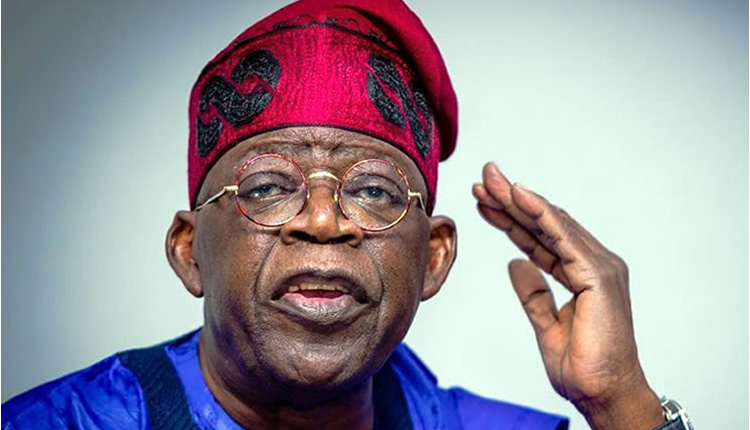
PDP Concern Group Expresses Concerns Over Appeal Court Ruling in Nasarawa State

The PDP Concern Group Nasarawa State has conveyed its profound disappointment and apprehension in response to the recent Appeal Court judgment that overturned the PDP’s gubernatorial victory from the lower tribunal, awarding it to the APC on technical grounds rather than the case’s merit.

Expressing concerns about the departure from democratic principles, particularly the principle of majority rule, the group questions the credibility of our electoral processes. They highlight instances of irregularities, notably in Gayam ward and Chiroma ward, where discrepancies in accredited voters and votes cast were seemingly overlooked by the tribunal.

The group asserts that the judgment raises doubts about the judiciary’s commitment to justice, fairness, and merit. They emphasize the need for a thorough investigation into the alleged irregularities and call on competent authorities, notably the Supreme Court, to scrutinize the matter and rectify perceived injustices.

In addition, the PDP Concern Group urges the Independent National Electoral Commission (INEC) to address grievances seriously, ensuring the prevention of irregularities in future elections. They underscore the importance of safeguarding citizens’ right to participate in free and fair elections.

COM. ADAMU DAVIDSON HENRY, Convener of the PDP Concern Group Nasarawa State, reaffirms the group’s commitment to justice and fairness, pledging ongoing efforts to uphold the will of the people in Nasarawa State and beyond.

To make greater contributions to Asia-Pacific’s stability, prosperity

By Yu Yichun, Cao Shiyun, People’s Daily

This year marks the 30th anniversary of the first Asia-Pacific Economic Cooperation (APEC) Economic Leaders’ Meeting. Over the past 30 years, China’s deepening reforms and expanding opening up have gone hand in hand with the continuous expansion of Asia-Pacific economic cooperation.

Since 2013, Chinese President Xi Jinping has attended or chaired APEC Economic Leaders’ Meetings and delivered important speeches.

From “building an Asia-Pacific community with a shared future” to “creating and fulfilling an Asia-Pacific dream,” and from “forging an Asia-Pacific partnership” to “building a high-quality Asia-Pacific connectivity network,” Chinese ideas and proposals have sparked strong resonance in the Asia-Pacific region, making significant contributions to the stability and prosperity of the region.

China’s opening up and development are closely related to the Asia-Pacific region. China has always been a staunch supporter and active promoter of Asia-Pacific regional economic cooperation, integrating its own development with regional development and driving the opening up of the whole region through its own opening up.

In 2022, China’s trade volume with Asia-Pacific economies reached $3.1 trillion, a year-on-year increase of 19.2 percent, accounting for 36.8 percent of China’s total foreign trade.

During the same period, China’s high-quality implementation of the Regional Comprehensive Economic Partnership (RCEP) resulted in a total of 12.95 trillion yuan ($1.78 trillion) in imports and exports to other RCEP members, growing 7.5 percent from a year ago.

According to the Asian Economic Integration Report 2023 by the Asian Development Bank, Asia’s economic recovery is driven particularly by China, which accounted for 64.2 percent of total growth.

China has been making continuous and concrete efforts to deepen trade and investment cooperation with regional economies, contributing its part to building an open economy in the Asia-Pacific.

It pushed for the launch of the process to build a Free Trade Area of the Asia-Pacific at the 2014 APEC meeting in Beijing, and actively worked to join the Comprehensive and Progressive Agreement for Trans-Pacific Partnership and the Digital Economy Partnership Agreement. Furthermore, China has been actively promoting the China-ASEAN Free Trade Area 3.0 with ASEAN members.

The 30th APEC Economic Leaders’ Meeting, with the theme of “Creating a Resilient and Sustainable Future for All,” conveys the significance of green development and innovation for the Asia-Pacific region.

Under the active promotion by the Chinese government and the vigorous participation of Chinese enterprises, cooperation platforms such as the APEC Sustainable Energy Center and the China-Pacific Island Countries Climate Change Cooperation Center have gradually been established. Green development projects, including the Dzilam State Reserve located in Mexico’s Yucatan Peninsula, have commenced, contributing Chinese wisdom and solutions to building a clean and beautiful Asia-Pacific region.

APEC Secretariat Executive Director Rebecca Sta Maria noted that China has demonstrated its determination to achieve sustainable development through practical actions and has fulfilled its international commitments in the field of sustainable development.

Leveraging the digital twin technology, Chinese scientists are providing more solutions for the protection of marine biodiversity in Latin American countries. By introducing technologies such as 5G, cloud computing, and artificial intelligence, Chinese companies are helping Thai hospitals achieve comprehensive intelligent transformation in their services. With the assistance of the China-ASEAN Information Harbor, the level of cross-border trade and economic services between China and ASEAN countries continues to improve.

China not only leads the world in technological innovation and digital economic development, but also actively promotes digital transformation in the Asia-Pacific region and even the world at large.

Working with its partners to promote high-quality Belt and Road cooperation, China is improving the connectivity level in the Asia-Pacific region. It proposed to establish the Asian Infrastructure Investment Bank, aiming to provide financial support for regional infrastructure development.

China has hosted a series of international exhibitions such as the China Import and Export Fair, China International Fair for Trade in Services, and the China International Consumer Products Expo at high standards, collaborating with various parties to write stories of open cooperation and mutual benefit.

The just-concluded sixth China International Import Expo achieved fruitful results, with tentative deals reaching a new high of $78.41 billion, a 6.7 percent increase from the previous year.

China is committed to advancing high-level opening up, continuously providing new opportunities for the Asia-Pacific region and the world through its new development, and contributing Chinese strength to the construction of an open world economy.

Major countries should shoulder great responsibility. The United States is the host of the 30th APEC Economic Leaders’ Meeting. China and the United States are the world’s top two economies, accounting for over 1/3 of the global economic output, nearly 1/4 of the world’s population, and approximately 1/5 of global bilateral trade. They play a unique and important role in driving economic growth in the Asia-Pacific region and promoting regional cooperation.

The wide globe is fully capable for the two countries to develop themselves and prosper together. Stabilizing and improving China-U.S. relations not only serves the fundamental interests of both countries and their peoples, but also contributes to peace and prosperity in the Asia-Pacific region and even the world.

The world is once again at the crossroads of history. Under the new situation, Asia-Pacific economies need to learn from past experiences and lessons, respond to the challenges of the times and steadfastly advance Asia-Pacific regional economic integration, so as to jointly break new ground in development and build an Asia-Pacific community with a shared future. They will contribute wisdom and strength to world peace and development with the stability and prosperity of the Asia-Pacific region.

CIIE contributes to global recovery, development, prosperity

By He Yin, People’s Daily

The sixth China International Import Expo (CIIE) recently came to a close. It saw tentative deals worth $78.41 billion signed, 6.7 percent higher from the previous expo.

The continuous success of the CIIE showcases China’s increasing appeal in promoting high-level opening up, injecting positive energy into global recovery.

During this year’s CIIE, various parties further demonstrated their confidence in China’s development prospects.

The number of Fortune Global 500 companies and industry leaders participating in the expo exceeded that in previous years, with a flurry of “global debuts,””Asia debuts,” and “China debuts.”

Foreign companies have shown their trust in the Chinese economy through concrete actions. According to data released by the China’sMinistry of Commerce, the number of newly established foreign-invested enterprises in China increased by 32.4 percent year-on-year from January to September this year.

A survey conducted by the China Council for the Promotion of International Trade showed that nearly 70 percent of surveyed foreign companies are optimistic about the market prospects in China over the next five years.

The International Monetary Fund recently raised its growth forecast for China’s economy in 2023 to 5.4 percent, and major financial institutions such as JPMorgan, UBS Group, and Deutsche Bank have also lifted their predictions for China’s economic growth this year.

Business leaders from multinational companies who participated in the CIIE highly praised the resilience and potential of the Chinese economy, expressing their firm confidence in deepening their presence in the Chinese market.

One said that the Chinese supply chain system boasts huge resilience and potential, and the resilience and innovation of the Chinese economy mean an opportunity for foreign companies to satisfy the Chinese consumption market and the country’s economic demand.

This year’s CIIE has further demonstrated China’s determination to expand its opening-up. Before the first CIIE officially kicked off, Chinese President Xi Jinping remarked that the CIIE is hosted by China but for the world. He stressed that it is not an ordinary expo, but a major policy for China to push for a new round of high-level opening-up and a major measure for China to take the initiative to open its market to the world.

The CIIE fulfills its platform function for international procurement, investment promotion, people-to-people exchanges and open cooperation, creating market, investment and growth opportunities for participants.

Be it specialty from the least developed countries or high-tech products from developed countries, they are all getting on board the express train of the CIIE to accelerate their entry into the global trade market.

International observers have noted that an open China creates more cooperation opportunities for the world and China’s commitment to building an open economy injects tremendous certainty and momentum into the global economy.

This year marks the 45th anniversary of China’s reform and opening-up and the 10th anniversary of the establishment of China’s first pilot free trade zone. Recently, the 22nd pilot free trade zone of the country, the China (Xinjiang) Pilot Free Trade Zone, was officially launched.

From the establishment of the Lingang Special Area of the China (Shanghai) Pilot Free Trade Zone to the implementation of the integrated development of the Yangtze River Delta, and from the release of theMaster Plan for the Construction of the Hainan Free Trade Port and the ImplementationPlan for Further Reform and Opening-up in Shenzhen to the continuous improvement in business environment and intellectual property protection, a series of opening-up measures announced by China at the CIIE have been implemented, continuously creating new market opportunities for the world.

Thailand’s Deputy Prime Minister and Commerce Minister Jurin Laksanavisit noted that the CIIE has demonstrated China’s commitment to opening up and showcased the willingness of all parties to expand cooperation. It is creating new opportunities for global enterprises, especially small and medium-sized ones, he added.

The global economy is experiencing a weak recovery, with sluggish global trade. Countries need to strengthen open cooperation and work together to address challenges.

China will continue to host major exhibitions such as the CIIE to provide platforms for open cooperation, help build more consensus on open cooperation and contribute to global recovery and development.

To strive for lasting peace, common prosperity in Asia-Pacific region

By Huan Yuping, People’s Daily

The 30th Asia-Pacific Economic Cooperation (APEC) Economic Leaders’ Meeting is scheduled for Nov. 15-17.

Currently, the Asia-Pacific region enjoys overall stability, and regional cooperation continues to make progress. Peaceful development and win-win cooperation remain the mainstream.

At the same time, the world enters a new period of turbulence and transformation, with geopolitical tensions and an evolving economic landscape impacting the development environment and cooperation framework in the Asia-Pacific region.

Standing at a new crossroads, whether Asia-Pacific cooperation can stay true to its original aspiration, follow the correct direction, and steadfastly move towards the goal of building an Asia-Pacific community with a shared future, is crucial to world peace and development, and tests the wisdom and responsibility of all parties in the region.

The 21st century is the Asia-Pacific century. The establishment and development of APEC are in line with the historical trend of openness and integration, the strong aspiration for development in the Asia-Pacific region, and the common demand of people from various countries for jointly addressing challenges.

Over the past more than 30 years since its establishment, APEC has gradually grown into the highest-level and most influential mechanism for economic cooperation covering the broadest area in the Asia-Pacific region. It has witnessed the historical achievements of Asia-Pacific development and is an important propeller of the “Asia-Pacific miracle.”

According to the Regional Economic Outlook for Asia and Pacific recently released by the International Monetary Fund, the region is expected to grow by 4.6 percent this year, and economic activity in Asia and the Pacific remains on track to contribute about 2/3 of global growth in 2023. This once again highlighted the Asia-Pacific region as the most dynamic and promising economic area of the world, and a crucial engine for global economic growth.

The success story of APEC is a remarkable chapter in the construction of an open world economy. Guided by the Bogor Goals, APEC has continuously enhanced regional economic integration. It has advanced trade and investment liberalization and facilitation in tandem with economic and technical cooperation, with a view to realizing mutual complementarity and balanced development of the “two wheels” of APEC cooperation.

APEC, guided by open regionalism and the principles of diversity and non-discrimination, has become an architecture for inclusive and win-win regional cooperation. It has not only benefited the region, but also played a significant role in leading the evolution of the multilateral trading system.

Over the past decades, economies in the Asia-Pacific region have broken market barriers, strengthened economic ties, and actively embraced the world, creating vast opportunities for economic development.

In the 26 years since the implementation of the Bogor Goals, the region’s trade volume increased five times with an average annual growth rate of 6.7 percent, and two-way investment increased 12 times with an average annual growth rate of over 10 percent.

Currently, the international situation is complex and volatile. The Asia-Pacific region has seen practices that distorted international norms, impeded economic ties, and exacerbated regional tensions.

At this critical juncture, all parties in the region need to take a strategic and long-term perspective on Asia-Pacific cooperation. By upholding APEC’s role as the main channel in regional cooperation and keeping Asia-Pacific cooperation in the right direction, the region can effectively respond to the challenges of the times and jointly forge a new path for development.

To further strengthen APEC cooperation, it is important to adhere to the established goals. APEC members, based on the initial realization of the Bogor Goals, have launched the Putrajaya Vision 2040, aiming to build an open, dynamic, resilient and peaceful Asia-Pacific community, which offers important guidance for economic cooperation in the region in the near future.

With clear objectives in place, it is crucial to take action. APEC members should deepen cooperation within the APEC framework, advance the Free Trade Area of the Asia-Pacific, and implement the Putrajaya Vision 2040.

Deliberate attempts to dilute the concept of “Asia-Pacific” and replace the region’s well-established cooperation structure with a new one will only divert Asia-Pacific cooperation from the right track and hinder the development of the region.

To further strengthen cooperation within the APEC framework, it is necessary to build closer partnerships. APEC is a big family, and it is in the common interest of all members to build an open Asia-Pacific economy featuring innovative development, interconnected growth, and shared interests. The Asia-Pacific partnership featuring mutual trust, inclusiveness and mutually beneficial cooperation is the spiritual bond of the APEC family and an important guarantee for keeping APEC cooperation on the right track.

There are various national conditions in the Asia-Pacific region, thus there will be differences. The key is to adhere to the common goal of seeking development, promote the spirit of partnership, negotiate and address differences, and explore solutions to common challenges.

Only by adhering to the right direction can regional countries renew the “Asia-Pacific miracle” together. Each APEC member should uphold the purposes and principles of APEC, continuously deepen partnerships in the Asia-Pacific region, promote the spirit of the Asia-Pacific family, and work together in solidarity and with mutual assistance. Building an Asia-Pacific community with a shared future is the correct choice that conforms to the trend of history, regional consensus, and the will of the people.

Music renewing chapters of friendship between Chinese, American people

By Wu Lejun, Zhang Mengxu, People’s Daily

Chinese President Xi Jinping recently replied to a letter from Matias Tarnopolsky, president and CEO of the Philadelphia Orchestra, the first American orchestra to perform in China after the founding of the People’s Republic of China.

Xi said in his reply that half a century ago, the orchestra’s historic China tour marked a thaw in China-U.S. cultural exchange, which was a very important part in the normalization of the two countries’ diplomatic relations.

Since then, the orchestra visited China 12 times as an active cultural envoy, playing an instrumental role in strengthening China-U.S. ties.

Xi said it was a pleasure to learn that the Philadelphia Orchestra would visit China in November for the 13th time and join the Chinese side to celebrate the orchestra’s China tour in September 1973 with musical performances and activities and renew the 50-year musical friendship between the orchestra and the Chinese people.

On the evening of Nov. 10, the 50 Years of Friendship Special Anniversary Concert of the Philadelphia Orchestra’s 1973 China Tour was staged at the National Center for the Performing Arts in Beijing.

The concert was jointly presented by the Philadelphia Orchestra and the China National Symphony Orchestra. As young conductor Tristan Rais-Sherman of the Philadelphia Orchestra gently lifted his baton, the Overture to Candide composed by American conductor Leonard Bernstein was performed. After the uplifting piece, a serene and melodic tune started, the well-known Er Quan Ying Yue (Two Springs Reflecting the Moon), which witnessed the 50-year friendship between the Philadelphia Orchestra and the China National Symphony Orchestra.

Rais-Sherman said the concert was an honorable moment, and its repertoire was a homage to the Philadelphia Orchestra’s 1973 China tour.

He noted that the Echoes of Ancient Tang Poems staged in this concert was a new composition combining Western and Chinese symphonic music. In January this year, he performed excerpts from it in Philadelphia and New York, and received positive response.

It was through that performance that Rais-Sherman was exposed to Chinese Tang poetry and characters. He called it a fascinating cultural interaction, which made him appreciate China’s rich historical and cultural heritage. He said he will learn and study Chinese culture his entire life.

Philadelphia Orchestra cellist Ohad Bar-David said that Xi’s reply made the concert this time even more extraordinary.

He told People’s Daily that he was touched and honored to hear that Xi said the musical performances and activities this time would renew the 50-year musical friendship between the orchestra and the Chinese people.

Music is a bridge of communication for people, and music and friendship are the common assets of the Chinese and Americans, he noted, adding that the assets should be passed on by musicians.

Ryan Fleur, executive director of the Philadelphia Orchestra, said he believes that music transcends borders and facilitates communication in ways that words cannot express.

The Philadelphia Orchestra’s visit to China this time aimed at using music as a medium to promote understanding between the Americans and Chinese, he told People’s Daily, adding that he was delighted to share these cross-cultural musical works with the Chinese people.

“President Xi’s reply has further strengthened our confidence in continuing to promote cultural exchanges between China and the United States,” said Zhou Yu, Party secretary of the China National Symphony Orchestra.

In his reply, Xi emphasized the importance of cultural exchanges between China and the U.S., which is a great encouragement to artists, Zhou said, adding that as the first national-level orchestra in the history of the People’s Republic of China, the China National Symphony Orchestra has played an important role in music exchanges between China and other countries.

“Music originates from life, yet transcends it. It interprets a country or a nation’s understanding of the world and its thoughts on the future. Artists from China and the U.S. can better serve as bridges and messengers, thus playing a greater role in promoting cultural exchanges and mutual learning,” Zhou remarked.

To develop China-U.S. relations with sense of responsibility for history, people, world

By Zhong Sheng, People’s Daily

At the invitation of U.S. President Joe Biden, Chinese President Xi Jinping will attend a China-U.S. summit meeting and the 30th Asia-Pacific Economic Cooperation (APEC) Economic Leaders’ Meeting in San Francisco.

The two Presidents will have in-depth communication on issues of strategic, overarching and fundamental importance in shaping China-U.S. relations and major issues concerning world peace and development.

It will be the first visit of Xi to the U.S. in the recent six years, and the first face-to-face meeting between the two heads of state since their Bali meeting last year. The meeting will be of significant importance and attract worldwide attention.

The China-U.S. relationship is the most important bilateral relationship in the world. Whether China and the U.S. can handle their relationship well bears on the future of the world.

Head-of-state diplomacy plays an irreplaceable strategic role in growing bilateral ties. Since February 2021, Xi has had multiple phone talks and meetings with Biden, aiming to steer the China-U.S. relationship along the right track.

During a virtual meeting with Biden in November 2021, Xi pointed out that the most important event in international relations in the coming 50 years will be for China and the U.S. to find the right way to get along.

China’s policy toward the U.S. is consistent, which is mutual respect, peaceful coexistence and win-win cooperation. China is ready, on this basis, to explore with the United States the right way for the two countries to get along and take their relations steadily forward.

Last November, Xi and Biden met in Bali, Indonesia, and reached a series of important common understandings, which had profound impacts on China-U.S. relations.

The meeting identified a clear direction, that is, to prevent China-U.S. relations from getting derailed or out of control, and to find the right way for the two major countries to get along with each other.

It established a framework, i.e., jointly working out the guiding principles, or a strategic framework, for China-U.S. relations. It also kicked off a process, i.e., implementing the important common understandings reached by the two heads of state to manage and stabilize China-U.S. relations.

In recent times, the two countries have implemented the consensus reached by the two heads of state during their meeting in Bali, increased high-level exchanges and initiated a series of dialogue mechanisms, thus activating exchanges and cooperation in sub-national, non-governmental, and people-to-people levels. As a result, bilateral relations between the two countries have shown signs of stabilization.

The face-to-face meeting between Xi and Biden this time, a year after they met in Bali, will be of great significance for stabilizing and improving China-U.S. relations, and for the two countries in jointly coping with global challenges and promoting world peace and development. China and the U.S. “returning to Bali and leading to San Francisco” is in line with the common interests of the two countries and the general expectation of the international community.

The fluctuation of China-U.S. relations in recent years has proved that both countries should always adhere to the principles of mutual respect, peaceful coexistence, and win-win cooperation. Mutual respect is the prerequisite for the two countries’ interactions; peaceful coexistence is the red line they must keep to; win-win cooperation is the goal they should aim at.

There have been and will continue to be differences between the two countries, but this should not hinder China and the U.S. from seeking common ground while shelving differences and pursuing win-win cooperation.

China will not become another U.S., and the U.S. cannot reshape China according to its own likes and dislikes. Mutual respect and inclusiveness is the only choice for both countries.

Adhering to the basic norms of international relations and the three China-U.S. joint communiques is crucial for managing differences, preventing confrontation, and avoiding conflicts between the two sides.

The U.S. should abandon the Cold War mentality and confrontational mindset, take concrete actions and policies to address the “action deficit,” and increase strategic mutual trust with China.

Win-win cooperation is the true narrative of China-U.S. relations in the past half a century. Defining the entire China-U.S. relationship solely by competition not only disrespects history but also goes against the facts.

The common interests of the two countries far outweigh their differences, and the respective success of China and the U.S. is an opportunity, rather than a challenge, to each other. Both sides should seek common development and prosperity that benefit not only themselves but also the rest of the world.

As two major countries, China and the U.S. shoulder special responsibilities and should demonstrate the broad-mindedness, vision, and commitment of major countries. Only by handling the China-U.S. relations with a sense of responsibility for history, for the people and for the world can the two countries continuously enhance the well-being of their peoples, promote the progress of human society, and contribute to world peace and development.

To be responsible for history means to learn from historical experience and grasp the initiative of history.

History is today’s past, and today is the history of the future. The Chinese and American people have joined forces in the World Anti-Fascist War, defending peace and justice, The relationship between the two sides has continued to develop through thick and thin since the establishment of diplomatic ties, which has benefited the two countries and the rest of the world.

Historical facts have repeatedly proven that both China and the U.S. gain from cooperation and lose from confrontation, and that cooperation is always the best choice for them.

The assertion that “U.S. policy of engagement with China has failed” is being hyped by some in the U.S., which goes against historical truth. The U.S. labeling China as the “most serious competitor” and the “most significant geopolitical challenge” is not in line with facts and is irresponsible to history.

Competition between major powers does not conform to the trend of the times and cannot solve real challenges. At this critical juncture of historical development, every decision made by China and the U.S. will be justly recorded by history.

Both sides should view and handle their relationship from the perspective of history, and jointly explore the right way for the two countries to get along with each other in the new era, so as to ensure that China-U.S. relations are a force promoting historical progress.

To be responsible for the people means to face up to common interests and pursue mutual achievements.

Recently, new inspiring stories have been written in the continuous people-to-people exchanges between China and the U.S.

The group “Kuliang Friends” has continued the legacy of friendship forged a hundred years ago. The U.S.-China Youth and Student Exchange Association has taken active actions to promote friendly exchanges between youth from both countries. The Flying Tigers veterans inherit and carry forward the precious spiritual wealth of cooperation between China and the U.S. The Philadelphia Orchestra is extending its musical bond with the Chinese people that has spanned half a century.

Strengthening exchanges, deepening friendship, and achieving win-win cooperation are the common expectations and choices of the people of both countries.

In recent years, China-U.S. relations have faced difficulties, which do not align with the fundamental interests of the two peoples. The cost of “decoupling and severing industrial and supply chains” will ultimately be borne by the people. Blocking exchanges cuts off the channels for people to know and understand each other, and confrontation between major powers leads to the loss of people’s opportunities for development.

Both China and the U.S. should consider the aspirations of their peoples and act in what the two peoples want. They should engage in more interactions, dialogues, and exchanges, melt the icy misunderstandings and misjudgments, and build bridges of mutual understanding.

To be responsible for the world means to listen to international voices and lead global cooperation.

China and the U.S., as permanent members of the United Nations Security Council and the world’s top two economies, account for over 1/3 of the global economy, nearly 1/4 of the world’s population, and approximately 1/5 of global bilateral trade. They bear significant responsibilities for the peace, stability, and development of the world.

As the world enters a new period of turbulence and transformation, uncertainties, instabilities, and unpredictable factors are increasing. The international community universally hopes for an early return to the track of healthy and stable development in China-U.S. relations, which would inject stability, certainty, and constructiveness into the uncertain world.

In today’s world, coordination and cooperation between China and the U.S. are indispensable to the post-pandemic global recovery, the response to climate change, and the resolution of regional hotspot issues. The two countries jointly tackling global challenges is not only a necessity for world peace and development, but also a responsibility of major countries.

Given the profound changes unseen in a century, every responsible politician must answer the questions of the times and make historic choices with confidence, courage, and a sense of responsibility.

Both China and the U.S. should adhere to the principles of mutual respect, peaceful coexistence, and win-win cooperation. With a sense of responsibility for history, for the people and for the world, the two countries should meet each other halfway and strive for sound and stable development of their relations.

(Zhong Sheng is a pen name often used by People’s Daily to express its views on foreign policy and international affairs.)

“Helen Paul Reveals Boss’s Attempt to Discourage Husband from Marrying Her”

Renowned comedienne, Helen Paul, shared a surprising revelation about her past on The Honest Bunch Podcast, where she disclosed that her boss at work attempted to dissuade her husband, Femi Bamisile, from dating or marrying her. According to Helen, her boss went as far as suggesting to Femi that she wasn’t a suitable match for him, advising him to consider just enjoying himself with her.

In addition to her boss, Helen mentioned that even her Human Resources (HR) manager at work tried to interfere with her relationship, questioning Femi’s choice of her as a partner. She recounted the HR manager commenting on Femi’s clean image and legal profession, seemingly expressing disbelief at the pairing.

Despite these challenges, Helen Paul and Femi Bamisile, who got married in 2010, have built a family together, blessed with two children. The comedienne’s revelation sheds light on the obstacles she faced in her personal life and the resilience that has defined her successful marriage.

“Abia Church Calls off Wedding Amidst Controversy Over Pregnant Bride”

A situation unfolded at the Assemblies of God Church in Ehere, Ogbor Hill, Aba, Abia state, as Reverend Eze Ogba refused to officiate a wedding between Mr. Isreal Kennedy and Miss Rose due to the revelation of the bride’s pregnancy. The church, adhering to its tradition, conducted a pregnancy test, leading to the cancellation of the wedding.

The couple, their families, and attendees were left in confusion as the priest announced the cancellation after the test results. Despite efforts by the families to reverse the decision, the church stood firm. The groom’s and bride’s families reportedly sought an alternative church for the wedding and reception.

A church member explained that the Assemblies of God Church has a tradition of not conducting weddings for pregnant brides, regardless of their status. The decision faced criticism from some members who believed the ceremony should have proceeded, with disciplinary action taken afterward.

Notably, both the groom and the bride were later suspended in accordance with the church’s constitution. Efforts to obtain the priest’s reaction were unsuccessful as he was reportedly in a meeting during Vanguard’s visit to the church.

“Cameroonian Artist Sabrina Unveils ‘Sabrigang’ Persona in Latest Single”

Cameroonian artist Sabrina introduces her distinct identity, ‘Sabrigang,’ in her latest single, aiming to forge a strong connection with fans. The 21-year-old artist, born Wamba Kuegou Sabrina, signed to Afrobit Productions in 2019, gained recognition with her Makossa-style collaboration with Koffi Olomidé in 2021. Influenced by various artists, including Yemi Alade, Sabrina’s musical journey embraces Nigerian pop culture, evident in her songs inspired by Burna Boy and Asake. The artist’s dynamic approach to identity and language, shifting between French and English, reflects her strategic appeal to diverse audiences, particularly in the lucrative Nigerian music market. Sabrina’s upcoming debut album promises a continuation of her versatile and evolving musical identity.

“433 Foreign-Trained Doctors Fail MDCN Exam”

A total of 433 out of 836 foreign-trained medical graduates who participated in the qualifying examination organized by the Medical and Dental Council of Nigeria (MDCN) did not pass.

The qualifying examination took place at the Aminu Kano Teaching Hospital from November 22 to 23, 2023. The examination, conducted in a Computer-Based Test (CBT) format, featured graduates taking the test at four different centers in Kano State: BMG Institute of Information Technology, JAMB Professional Test Centre, Kano Cooperative CBT Centre, and Treztech.

The examination included components such as a computer-based test, a picture-based test, and an objective structural clinical examination. Findings revealed that a significant number of medical and dental graduates struggled, particularly in the CBT section.

The initial list of shortlisted candidates, comprising 836 foreign-trained medical degree holders, highlights the competitive nature of the examination. Annually, numerous Nigerians pursue medical degrees abroad, investing substantial resources in tuition and accommodation fees, and dedicating several years to their studies. Popular destinations for Nigerian medical students include Ukraine, Sudan, Cyprus, Egypt, The Caribbean, Russia, Belarus, India, Hungary, Guyana, Niger Republic, and Benin Republic.

However, upon completion of their studies, these graduates must pass the MDCN assessment to obtain a license to practice in Nigeria. The MDCN serves as the regulatory body for Medicine, Dentistry, and Alternative Medicine in Nigeria, safeguarding the nation’s healthcare system. The assessment, conducted biannually, evaluates candidates’ proficiency in applying basic medical sciences and clinical skills in a healthcare setting. Dr. Tajudeen Sanusi, the MDCN Registrar, emphasized in a recent interview with The PUNCH that the assessment examination aligns with global practices.