
In summary, the Russia-Ukraine war has reshaped the dynamics of global crude oil flows, impacting Nigerian exports. While demand from India has decreased due to increased preference for discounted Russian barrels, Europe has seen a rise in Nigerian crude imports to fill the gap left by the ban on Russian crude. The conflict, coupled with domestic production challenges, has prompted Nigeria to explore new strategies and partnerships to revitalize its oil industry. The implementation of the Petroleum Industry Act and collaborations with financial institutions signal efforts to boost production and achieve higher output targets in the coming years.
Judiciary’s Double Standards: A Danger to Our Democracy

Ochereome Nnanna, in his piece, raises concerns about the perceived double standards in the Nigerian judiciary, particularly in election-related cases. He points out instances where pre-election matters are brought before election tribunals, contrary to established legal procedures. Nnanna expresses worry about the potential erosion of the judiciary’s credibility and calls for adherence to the principles of judicial precedence. He emphasizes the importance of upholding justice to maintain the integrity of Nigeria’s democracy.
Secondary School Teacher Arrested for Allegedly Raping Two Girls in Ogun State

A secondary school teacher identified as Olaniran Lateef has been arrested in Abeokuta, Ogun State, for allegedly raping two girls. Lateef, a 43-year-old mathematics teacher at Ebenezer Grammar School, was apprehended after a complaint was lodged against him. The Commissioner for Women Affairs in Ogun State, Motunrayo Adeleye, stated that a member of their team received a call from a young lady reporting the rape. The team, along with the police, visited Lateef’s house and caught him in the act of raping another girl. The suspect has been remanded at the Ogun State police command headquarters pending further investigation.
Advances in HIV Treatment Transform the Outlook for People Living with the Virus
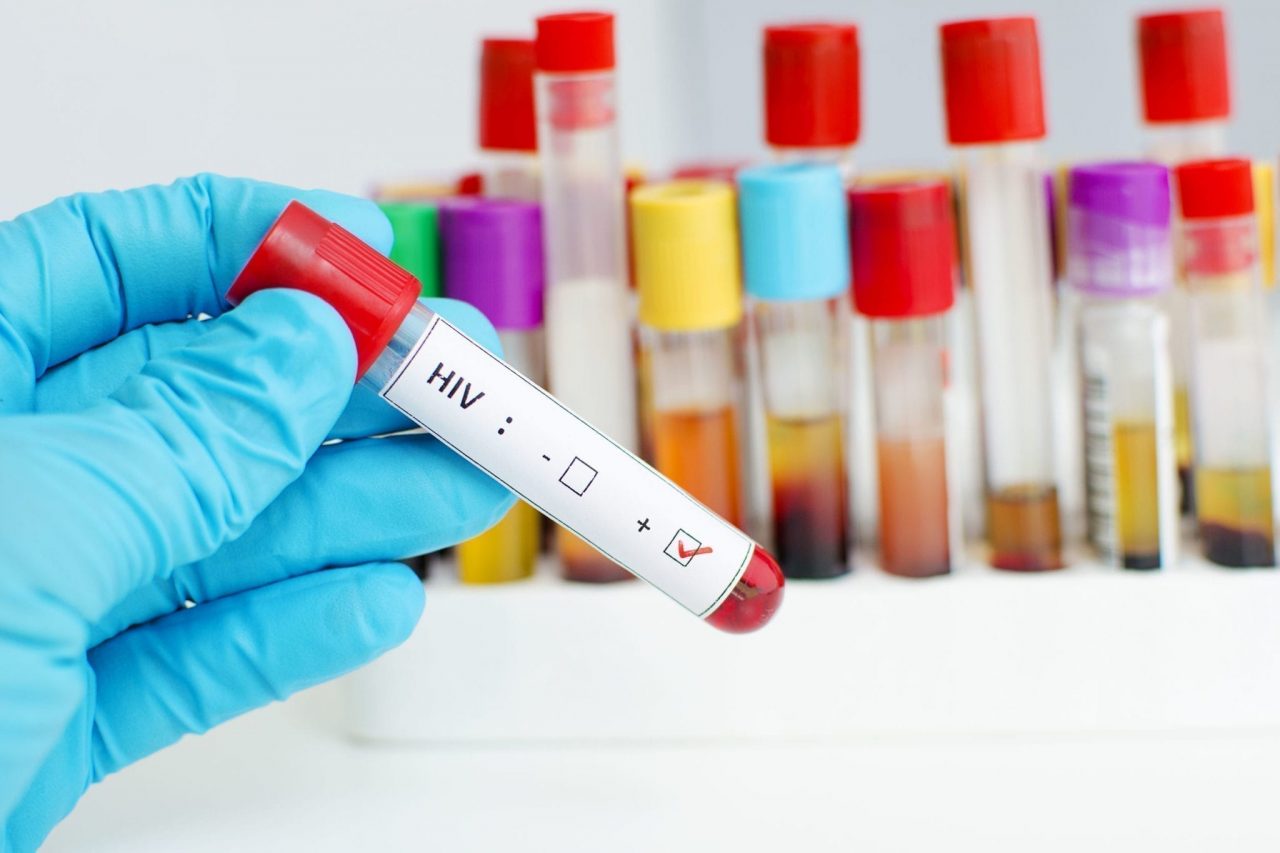
Human Immunodeficiency Virus (HIV), the cause of Acquired Immunodeficiency Syndrome (AIDS), has undergone a significant transformation in recent years, turning from a once-certain death sentence to a chronic disease that people can live with. Stakeholders at a meeting in Abuja discussed the progress in HIV treatment, highlighting breakthroughs that make the virus undetectable and untransmittable.
The meeting, organized by the United States President’s Emergency Preparedness Fund for AIDS Relief (PEPFAR) in collaboration with partners, aimed to assess communication gaps and opportunities for the HIV response in Nigeria. Stakeholders emphasized the use of antiretroviral therapy (ART) to suppress the virus, making it undetectable and preventing transmission. Pre-Exposure Prophylaxis (PreEP) before risky behaviors and Post-Exposure Prophylaxis (PEP) after potential exposure were also discussed as preventive measures.
The stakeholders expressed optimism that addressing observed gaps and meeting the Joint United Nations Programme on HIV and AIDS (UNAIDS) targets, known as 95-95-95, could lead to the elimination of the virus by 2030. The 95-95-95 targets aim to diagnose 95% of all HIV-positive individuals, provide ART for 95% of those diagnosed, and achieve viral suppression for 95% of those treated.
Dr. Murphy Akpu, an Advisor on Science Systems and Services at UNAIDS in Nigeria, highlighted the transformative impact of modern medicines on the lives of people living with HIV. He emphasized that with ART, HIV is no longer a death sentence, and individuals can live as long as anyone else. The meeting brought together various stakeholders, including journalists, program implementers, affected communities, religious leaders, communication specialists, academics, government agencies, and development partners.
“DJ Khaled Confirms Burna Boy Collaboration in His Upcoming Album”

In an interview with Rolling Stone, DJ Khaled has officially announced that he is teaming up with Nigerian Grammy-winning artist Burna Boy for a track on his forthcoming album. This exciting collaboration comes as DJ Khaled expresses his deep appreciation for Afrobeats and the global influence of Burna Boy in Nigerian mainstream music. Burna Boy, who has seen international success with hits like “YE,” has previously worked with prominent international artists, such as Ed Sheeran, Future, J Balvin, and more.
Burna Boy’s recent album, “I Told Them,” features collaborations with rap icons GZA and RZA from the Wu-Tang Clan, as well as 21 Savage and J. Cole. DJ Khaled hinted at the partnership by sharing videos of himself enjoying Burna Boy’s music and their dinner gatherings on social media.
In the interview, DJ Khaled mentioned his plans to take a break from music after the release of his next album to explore other entertainment avenues, including filmmaking. This eagerly anticipated collaboration will mark DJ Khaled’s first collaboration with a Nigerian artist and is expected to include other big names like Drake in the upcoming album.
FG Spends N90 Billion on Presidential Air Fleets in 9 Years

The Nigerian federal government has allocated a total of N90 billion to the presidential air fleets over a nine-year period. This significant allocation has raised concerns about the government’s financial priorities and the responsible use of public funds.
During the first four years of former President Muhammadu Buhari’s tenure, N20.42 billion was allocated for the presidential fleets, which doubled to N41 billion in his second term.
In the 2023 supplementary budget proposal presented by President Bola Tinubu, the Presidential Air Fleet is set to receive an additional N12.7 billion, bringing the total allocation to N25.7 billion, including the previously approved N13 billion.
The presidential air fleet, often referred to as Nigeria Air Force One, consists of various aircraft, including Boeing Business Jets (BBJ) 737, Gulfstream G550, Gulfstream G500, Falcon 7X, HS 4000, Agusta 139, and Agusta 101.
Notably, President Buhari had pledged in 2015 to reduce the cost of governance and planned to sell two luxury aircraft, but the sale process faced challenges, and preferred bidders sought to renegotiate the sales figure.
Budget allocations for the presidential air fleet have fluctuated over the years, with notable increases in 2017, 2018, and 2019, reaching N7.26 billion and N7.30 billion, respectively. A slight drop occurred in 2020 due to the global lockdown caused by the COVID-19 pandemic, leading to an allocation of N6.79 billion. However, in the years following the pandemic, the allocation increased significantly, reaching N12.55 billion in 2021 and N12.48 billion in 2022.
Experts have raised concerns about the rising budget allocation for the presidential air fleet in light of economic challenges, inflation, and unemployment. They emphasize the need for transparency and accountability in the use of public assets.
This news highlights the significant budget allocations to Nigeria’s presidential air fleet and the concerns raised by experts about the responsible use of public funds in tight economic times.
1,500 Corps Members Take Oath of Allegiance in Anambra

1,500 prospective Corps members, comprising 714 males and 786 females, have taken the oath of allegiance at the NYSC Permanent Orientation Camp in Umuawulu/Mbaukwu, Awka South Local Government Area of Anambra state. The swearing-in ceremony was administered by the state Chief Judge, Justice Onochie Anyachebelu.
Mrs. Blessing Iruma, the Anambra NYSC State Coordinator, expressed appreciation for the support of the state government and host communities. She highlighted the national focus on skills acquisition due to the scarcity of white-collar jobs and noted the NYSC’s introduction of the Skills Acquisition and Entrepreneurship Development (SAED) program.
Iruma urged the corps members to actively participate in camp activities and adjust to the new camp environment.
The Chief of Staff, Mr. Ernest Ezeajughi, who represented Governor Chukwuma Soludo, advised the corps members to refrain from negative behaviors like cultism, drug addiction, substance abuse, cybercrime, and kidnapping. He called on various stakeholders to join campaigns to eradicate these vices in society.
Governor Soludo pledged continued support for the NYSC’s activities in the state and recognized the scheme’s contributions to education, health, agriculture, and rural infrastructure development.
The Chairman of the NYSC governing board, Anambra State Commissioner for Youth Development, Mr. Patrick Agha Mba, welcomed the corps members to Anambra and urged them to obey camp rules and make the most of the teachings and training during their orientation.
This news highlights the swearing-in of 1,500 prospective Corps members in Anambra and emphasizes the importance of skills acquisition and the role of the NYSC in youth development.
Nigeria Bears $105 Billion Hidden Costs of Food System, Says FAO Report

A new report by the Food and Agriculture Organization (FAO) reveals that the environmental, health, and social hidden costs of Nigeria’s agrifood system amounted to at least $105.13 billion in 2020. The FAO’s 154-country study emphasizes the need for true cost accounting to guide policy, indicating that the hidden costs of global agrifood systems were approximately $12.7 trillion.
While current food systems provide nourishment and economic sustainability, they also impose significant hidden costs on health and the environment. The report highlights that lower-middle-income countries, including Nigeria, exhibit varying distributions of quantified hidden costs. Nigeria accounts for 0.8 percent of the global hidden costs of the world’s food system and 51.1 percent of total hidden costs in West Africa ($205.89 billion).
Hidden costs are expenses not reflected in market prices, representing monetary measures of losses related to productivity declines or environmental damages. These hidden costs are driven by negative externalities, market failures, policy and institutional failures, and other spillovers.
The FAO report aims to measure and value these hidden costs across environmental, social, and health dimensions, emphasizing the need to transition agrifood systems towards sustainability.
Taxes, subsidies, legislation, and regulation are among the levers that the report encourages governments to employ to transform agrifood systems and address the climate crisis, poverty, inequality, and food security.
QU Dongyu, the FAO Director-General, emphasized the significance of recognizing the true costs and expressed hope that the report would inspire collective commitment to improving agrifood systems for the betterment of all.
This report underscores the need to account for hidden costs in food systems and the importance of addressing sustainability challenges in the agrifood sector.
Olam Commits to Assisting Farmers and Communities in Kwara State

Olam Food Ingredients (Ofi), a cashew manufacturing company in Kwara State, has pledged to continue supporting farming communities within its supply chain, with a focus on enhancing nutrition and health initiatives. Rajeesh Neelanjeri, the general manager of the agro company, made this commitment during the inauguration of a block of six ultra-modern toilets at Ansarul Islam Community School, Aboto-Oja in Asa local government area of Kwara State.
Neelanjeri emphasized that the donation to the school was driven by the company’s concern for the well-being of farmers in Kwara State. Ofi has consistently partnered with communities to address health and nutrition needs, aligning with their sustainability goals and the cashew trail target of “Promoting good health and wellbeing through the provision of clean water and implementation of proper sanitary conditions.”
He further stated that it is essential to implement sanitation and hygiene measures to ensure the well-being of these communities, with a particular focus on the needs of women, girls, and vulnerable individuals.
The manager affirmed the company’s commitment to strengthening existing relationships and establishing new ones to create a more sustainable and positive environment in society.
In response, Kasali Yakub, the community head and the Alangua of Aboto, commended Ofi for the project and appealed for the company’s assistance in addressing the absence of electricity supply in the area, which has had a socioeconomic impact on the community. He also requested the establishment of an industry in the community due to the significant cashew production.
Fabiyi Bukola, a representative of the Neglected Tropical Diseases (NTDs) unit of the Public Health in the state Ministry of Health, highlighted the project’s potential to address open defecation issues in the area.
Olam’s commitment to supporting farming communities and initiatives focused on nutrition and health reflects its dedication to sustainable and responsible business practices in the region.
China makes positive progress in addressing climate change

By Liu Yi, People’s Daily
China’s Ministry of Ecology and Environment(MEE) recently held a press conference to introduce the progress China has made in addressing climate change. It also released the 2023 report on China’s policies and actions to address climate change.
The report comprehensively summarizes the new progress and achievements of China’s efforts to address climate change since 2022. It also elaborates on China’s basic stance and propositions regarding the 28th session of the Conference of the Parties (COP28) to the UN Framework Convention on Climate Change, which is expected to be held in Dubai, United Arab Emirates at the end of November.
China attaches great importance to addressing climate change. According to MEE official Xia Yingxian, China has implemented a national strategy to tackle climate change, announced carbon peak and carbon neutrality goals, and put in place a “1+N” policy framework for carbon peak and carbon neutrality.
China has been promoting structural adjustment in industry, energy, and transportation, adopting a series of measures such as energy conservation and efficiency improvement, establishing and improving market mechanisms, and increasing forest carbon sinks.
As a result, positive progress has been made in addressing climate change. According to Xia, China’s carbon intensity decreased by over 51 percent in 2022 compared to 2005 levels, and the proportion of non-fossil energy consumption in total energy consumption reached 17.5 percent. The country’s ability to adapt to climate change continued to strengthen, and the Chinese society’s awareness for green and low-carbon development kept improving.
The report indicates that China is actively mitigating climate change while proactively adapting to it.
Significant progress has been made in key areas of green and low-carbon development. China has actively promoted industrial restructuring and optimization, with the sales and production of new energy vehicles ranking first globally for eight consecutive years. Non-fossil energy developed rapidly. The installed capacity of wind and photovoltaic power generation exceeded 750 million kilowatts by the end of 2022, and the clean utilization of fossil energy continuously improved.
Market mechanisms have been continuously improved. China has the world’s largest carbon emissions trading market, which started in July 2021 and currently regulates over 5 billion tons of carbon dioxide emissions annually. As of Oct. 25 this year, the cumulative trading volume of carbon emission quotas had reached 365 million tons, with a total transaction value of nearly 19.44 billion yuan ($2.67 billion).
The report points out that China actively participates in global climate change governance, deepens bilateral and multilateral cooperation mechanisms in the climate field, and has made positive progress in South-South cooperation on climate change. It has joined efforts with other countries to build a green Silk Road.
Xia said that as a responsible major developing country, China has been continuously promoting South-South cooperation on climate change through the Belt and Road Initiative (BRI). It has continuously improved the construction of the BRI International Green Development Coalition, providing support and assistance to other developing countries to the best of its ability.
As of September this year, China had signed 48 memorandums of understanding on South-South cooperation on climate change with 40 developing countries, built four low-carbon demonstration zones in cooperation with other countries, implemented 75 projects to mitigate and adapt to climate change, organized 52 capacity-building training courses, and helped train more than 2,300 officials and technicians from over 120 developing countries.
In 2021, China and African countries jointly issued the Declaration on China-Africa Cooperation on Combating Climate Change and launched a three-year action plan.
In September this year, Minister of Ecology and Environment Huang Runqiu announced the implementation of a solar power project at the inaugural Africa Climate Summit, which aims to utilize China’s advantages in the photovoltaic industry to solve lighting problems for 50,000 electricity-deprived households in Africa.
In 2022, the China-Pacific Island Countries Climate Action Cooperation Center was established to support Pacific island countries in coping with climate change. China has also conducted research on mangroves and building low-carbon schools and communities together with ASEAN countries.
China actively responded to the UN Secretary-General’s call for early warning systems for all. The Ministry of Ecology and Environment signed a trilateral cooperation agreement in May this year with the World Meteorological Organization and the China Meteorological Administration, with an aim to support the enhancement of disaster warning capabilities in other developing countries.
“China has always been a proactive advocate and pragmatic practitioner of South-South cooperation in addressing climate change. The tangible and effective results of this cooperation have received widespread praise from the international community, especially developing countries,” Xia stressed.