Amazon’s Early Black Friday Deal: Get 2 Amazon Echo Show 5 Devices for the Price of 1

Amazon is offering an exciting early Black Friday deal on the Amazon Echo Show 5 (3rd Generation). Instead of the regular price of £89.99 for one device, you can get two for just £89.98. To take advantage of this offer, use the promo code ECHOSHOW5 during checkout. Hurry, as this deal is valid until November 16.

The Amazon Echo Show 5 (3rd Generation) comes with a calendar, a 2MP webcam for video calls, smart home compatibility, and the ability to answer a Ring Doorbell. It also offers full Alexa features and can serve as a mini streaming device for Amazon Prime Video shows. With three microphones for improved voice recognition and a 5.5-inch display, it’s available in three colors: cloud blue, charcoal, or white. When not in use, it can display a rotating slideshow of your favorite photos from Amazon Photos.

In a review, it received a rating of 4/5, praised for its improved audio, faster screen responses, and useful nighttime features. While it may not be a radical departure from previous models, this 2-for-1 deal is perfect for first-time buyers or those considering an upgrade. Don’t miss out on this offer.

Beverly Osu Opens Up About Her Father’s Abandonment and Its Impact

Actress and model Beverly Osu recently shared her experiences with media personality Chude Jideonwo. She revealed how her parents’ separation had a profound impact on her life.

Beverly recounted the moment when her parents split up and she and her siblings had to choose which parent to live with. She initially chose to stay with her father, while her brothers opted to go with their mother. However, her father later told her to go with her mother, promising to visit them often. Despite being in close proximity, he rarely fulfilled that promise, and Beverly’s brothers found it hard to forgive him for his perceived abandonment.

Growing up in a household filled with male family members, Beverly often dated older men who exuded confidence, although she insisted this choice was unrelated to her father’s absence. She clarified that her preference for older men was not about dating someone else’s partner but about her desire not to cause any woman unhappiness.

Beverly emphasized that she doesn’t need to be in a relationship to feel fulfilled and is content on her own.

Maverick, the Therapy Dog, Wins 2023 Hero Dog Award

Maverick, a remarkable 150-pound European Blue Great Dane therapy dog, has been named the recipient of the 2023 American Humane Hero Dog Award. The award was presented in recognition of Maverick’s extraordinary ability to provide comfort and solace to people in need.

Nominated in the therapy dog category, Maverick’s “superpower” lies in his remarkable capacity to soothe and uplift individuals, according to his owner, Kelly Brownfield. Maverick has been working alongside the United Service Organizations (USO) to support American troops and their families, fulfilling his life’s purpose.

According to Brownfield, “Maverick’s superpower is his ability to calm people with a touch of his paw, giving them the strength to move forward.” This six-year-old canine winner is stationed at the Fort Leonard Wood post in Missouri, where he offers therapeutic support to service members, accompanies children to military funerals, and helps individuals cope with trauma.

In 2023 alone, Maverick and Brownfield have fulfilled 55 “special mission” requests. Even at home, Maverick continues to provide unwavering support to his owner, who has been battling cancer for the past six years. Maverick himself overcame a leg cancer diagnosis in 2022 through surgical intervention.

American Humane CEO Robin Ganzert emphasized the importance of recognizing four-legged heroes like Maverick, ranging from military working dogs to service dogs that empower their handlers. The Hero Dog Award, decided by both public votes and a judging panel, acknowledges the incredible contributions of these extraordinary animals.

Maverick and the other finalists in various categories, including therapy, service and guide, military, law enforcement and first responder, and shelter dogs, will be celebrated at the 13th annual American Humane Hero Dog Awards in Palm Beach, Florida, on November 10. The event will be hosted by Christie Brinkley and Carson Kressley.

CIIE leads global development to new, bright prospects

By Guo Jiping, People’s Daily

The sixth China International Import Expo (CIIE) will be held at the National Exhibition and Convention Center (Shanghai) from Nov. 5 to 10.

The CIIE, a pioneering event in the history of international trade development, has become a showcase of China’s new development pattern, a platform for high-level opening-up, and a public good shared by the whole world.

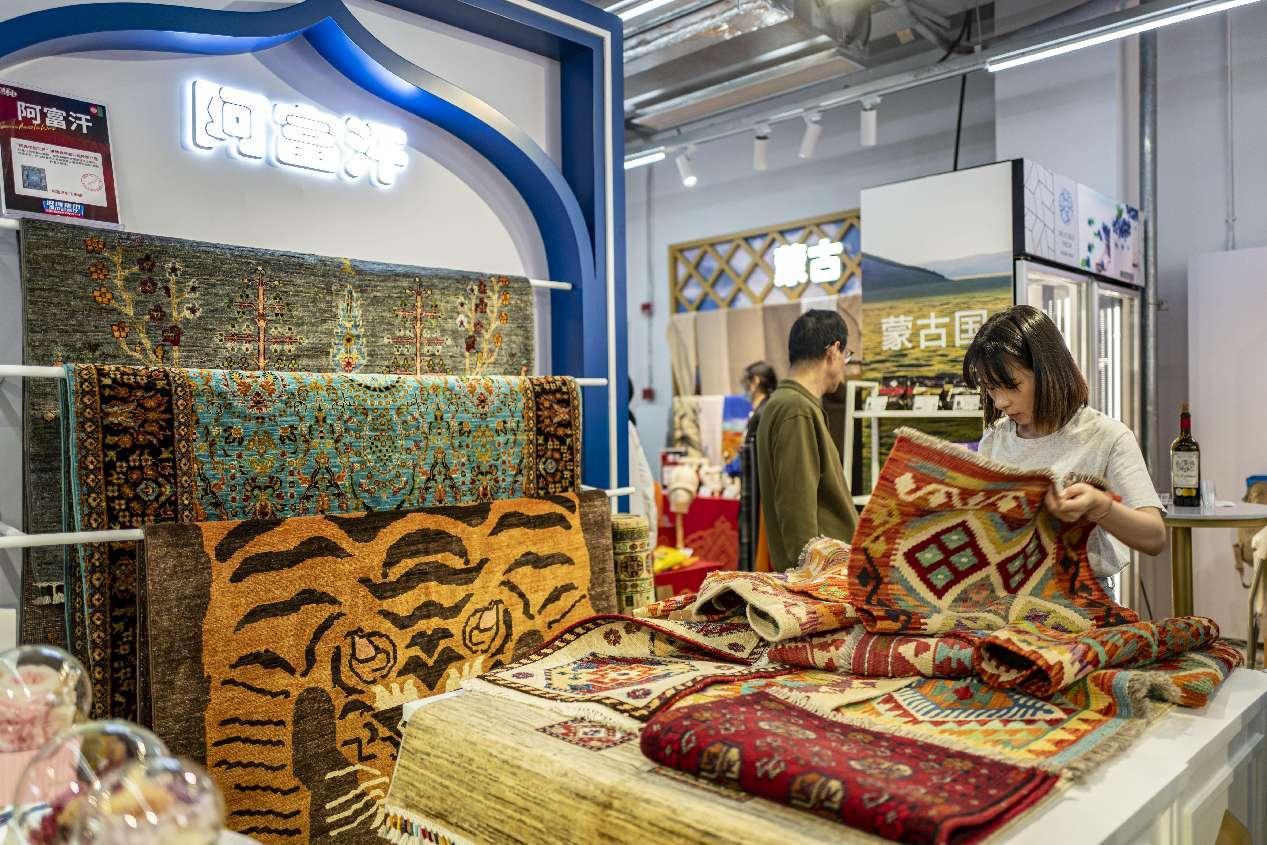
This year’s CIIE fully resumes offline activities, and is expected to welcome guests from 154 countries, regions, and international organizations. So far, 69 countries and three international organizations have confirmed their participation in the Country Exhibition. Over 3,400 exhibitors and nearly 410,000 professional visitors have registered for the event, with a record number of Global Fortune 500 companies and industry leaders in attendance.

Since the first CIIE, many participating companies have expressed similar sentiments, speaking of the tremendous appeal of the event. Some said they would bring their best and latest products to the event, and some promised to introduce their countries’ specialties. For them, the CIIE brings not just orders, but also the future and hopes.

The achievements of the past five editions of the CIIE have been remarkable: 131 countries and international organizations participated in the Country Exhibition; over 15,000 exhibitors joined the Business Exhibition; the cumulative number of registered visitors exceeded 2 million; the cumulative intended turnover amounted to $350 billion.

The CIIE not only attracts multinational companies, but also gathers upstream and downstream enterprises, providing opportunities for cooperation for various industries to reorganize and optimize themselves on a global scale. Many exhibitors said that at the CIIE, they can deepen exchanges with companies and partners in the same industry or even across industries, and discuss cooperation prospects together.

The previous five sessions of the CIIE have seen debuts of around 2,000 new and innovative products, technologies and services, including intelligent mobile hospitals, hydrogen-fueled concept cars, direct-injection digital printers, and vertical farms. It has become an incubator for technological innovation with global impact.

The CIIE also provides free standard booths and fee reduction measures for the least developed countries. It has been joined by enterprises from 43 least developed countries in the previous five sessions.

With the help of the CIIE, products such as coffee from Timor-Leste, pine nuts from Afghanistan, and cashews from Cambodia have achieved unprecedented sales in the Chinese market.

The “CIIE effect” continues to amplify. The Hongqiao Import Commodity Exhibition and Trading Center provides a permanent exhibition and sales platform for small and medium-sized enterprises participating in the CIIE. Since the first CIIE, Shanghai has recognized a total of 60 “6+365” trading platforms and introduced nearly 270,000 types of exhibits, with a cumulative import value of over 323 billion yuan ($44.22 billion).

German multinational glass company Schott AG said the CIIE presents a vivid and lively representation of the entire Chinese market. The company participated in the first CIIE with a “give it a try” attitude. From then on, it attended the expo every year, increased its investment and even established new factories in China.

The head of Schott China stated that with the expo, the company has achieved unparalleled growth, and continuing to invest in the Chinese market is a strategic choice for the future.

Thanks to the CIIE, exhibits have turned into commodities and exhibitors have become investors. An increasing number of multinational corporations are deeply integrated into China’s industrial and innovation networks.

Since the beginning of this year, multinational companies have continued to increase investment and expand production in China, with projects progressing at a faster pace. Global refrigeration industry giant Danfoss has put into operation a global refrigeration R&D testing center, German chemical giant BASF’s integrated base has started construction on its syngas facility in Zhanjiang, south China’s Guangdong province, and Airbus has begun construction on its second final assembly line for the A320 series aircraft in Tianjin.

In the first nine months of this year, China has established 37,814 new foreign-invested enterprises, with a year-on-year increase of 32.4 percent.

The CIIE mirrors the resilience and vitality of the Chinese economy, to deepen reform and pursue high-quality development through greater openness.

For some time now, the global economic recovery has faced headwinds, but China has withstood the pressures and continued its rebound, with its economic growth among the highest in major economies worldwide.

China is steadfastly pushing for higher-level opening up, and actively expanding imports. It has remained the world’s second-largest import market for 14 consecutive years. With a population of over 1.4 billion and a middle-income group of over 400 million people, China constitutes the world’s second-largest consumer market and the largest online retail market.

Kenneth Jarrett, president of the American Chamber of Commerce in Shanghai, noted that many companies with global markets need to achieve economies of scale, and if they don’t come to China, they won’t be able to reach the economic scale needed to maintain global competitiveness.

Chinese President Xi Jinping said that opening up is the hallmark of contemporary China. In his keynote speeches and addresses delivered at the previous five sessions of the CIIE, the word “openness” was mentioned over 100 times. The measures he announced at the CIIE to expand opening up have been gradually implemented, effectively promoting new progress in high-level opening-up.

China has established the Lingang new area of the China (Shanghai) Pilot Free Trade Zone, implemented an integrated development strategy in the Yangtze River Delta region, released an overall plan for the construction of the Hainan Free Trade Port, further expanded reform and opening up in Shenzhen, continuously improved business environment, and strengthened intellectual property protection.

China has deepened reform by opening up, and conversely, pursued deeper reforms to enable greater openness. This benefits not only China’s own development but also the world.

The CIIE belongs not just to China, but to the world. Looking ahead, China is willing to work together with all countries to practice true multilateralism, build a greater consensus of openness, jointly overcome the difficulties and challenges facing global economic development, and usher in a brighter future for development worldwide through opening up.

Kaduna State Government Praises Arla Foods Nigeria’s Investment in Local Dairy Sector

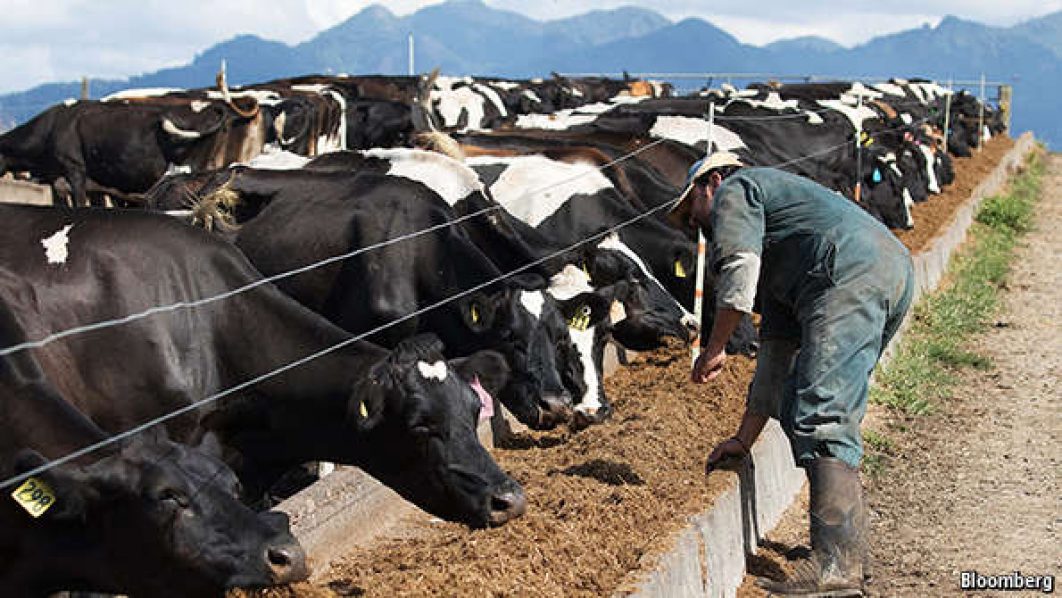
The Kaduna State Government has commended Arla Foods Nigeria for its significant investment in the Arla Farm project, which is poised to enhance milk and dairy production in Nigeria. During a visit to the Arla Farm in Damau, Kaduna State, top government officials expressed their support for the project and its potential to contribute to the sustainable development of the local dairy industry.

Peder Pedersen, Managing Director of Arla Foods Nigeria, described the visit as a strong endorsement of the company’s dedication to the project’s success. He emphasized Arla’s commitment to promoting sustainable dairy farming and fostering the growth of the local dairy sector. Pedersen expressed optimism that, with the right investments and partnerships, Nigeria could achieve self-sufficiency in milk production.

During the facility tour at the farm, Snorri Sigurdsson, Senior Manager of Raw Milk Supply and Production, stated their commitment to making Kaduna State the leading destination for dairy milk production in Nigeria. Commissioner for Agriculture, Kaduna State, Murtala Dabo, commended the impressive progress at the farm and highlighted the potential for increased milk production through improved farming practices and technology, as well as knowledge transfer to local farmers. He anticipated that Kaduna State would soon become a hub for milk production in Nigeria.

The Commissioner for Business, Innovation, and Technology, Patience Fakai, emphasized that the project would positively impact the state’s economy by offering training and job opportunities for youths. Sabiu Sani, Special Adviser to the Kaduna State Governor on Investment and Promotion, expressed satisfaction with the quality of the facilities and Arla’s commitment to enterprise development, noting that the facility would support the government’s household milk farm project.

Tamar Nandul, Managing Director of Kaduna Markets Development and Management Company, praised the partnership with Arla and the company’s $20 million investment in constructing a milk processing plant on the farm. She revealed that the state government, in collaboration with the Central Bank of Nigeria, has allocated N15 billion for infrastructure development around the farm, reinforcing its support for the project’s success.

Nigeria Requires $7.6 Billion for 2.1mbpd Oil Production by 2025

Nigeria is in need of an estimated $7.6 billion to increase its oil production to 2.1 million barrels per day (bpd) by 2025, up from the current 1.3 million bpd recorded in September. Dr. Austin Avuru, Chairman of AA Holdings, emphasized the significance of this investment, which would involve drilling approximately 426 wells with the assistance of 45 rigs to revitalize the country’s oil production. The investment is expected to play a crucial role in strengthening Nigeria’s economy and its position in the global oil market.

At the 41st Nigeria Association of Petroleum Explorationists (NAPE) annual international Conference and Exhibitions, themed “Unlocking Nigeria’s remaining energy potential to fuel economic growth and diversification: opportunities and challenges,” Avuru emphasized the need for increased investment to maintain the balance between supply and demand, particularly due to the substantial decline in existing production.

According to Avuru, the proportion of hydrocarbons in Nigeria’s energy mix may decrease significantly from 82% to about 20% in an extreme case, with renewables increasing from zero to approximately 60% by 2060. In a more likely scenario, hydrocarbons might constitute around 40% of the energy mix, with renewables increasing to about 60%.

James Makinde, General Manager of Gas Business at Seplat Energy PLC, highlighted the potential deficit in gas supply to the market by 2030, which could be as much as 3.1 billion cubic feet per day (BCF/D) if the current approach is maintained. Nigeria’s primary reforms to address gas sector challenges focus on the Decade of Gas initiative, with priority interventions including ensuring attractive returns for investors, supporting essential infrastructure, and enhancing investor confidence.

Makinde also emphasized the importance of incentivizing private sector engagement, gas infrastructure development, and the implementation of the Petroleum Industry Act (PIA) to boost investments and make energy more affordable and reliable in Nigeria.

Booming instant retail brings new experiences to Chinese consumers

By Wang Ke, People’s Daily

Wang Wei, who lives in Yuelu district of Changsha, central China’s Hunan province, is a frequent online shopper. Whenever he needs a refreshing cold drink or urgently requires medication late at night, he simply picks up his phone, opens an app, and places an order.

“Within half an hour, things I need are delivered right to my doorstep,” he said.

Instant retail, which features online real-time ordering and offline real-time delivery, leverages local retail supply to meet local instant demands.

Currently in China, an increasing number of products, ranging from fresh vegetables to bread and beverages, and from electronic devices to cosmetics, are being delivered to consumers faster through this method.

According to data from the Ministry of Commerce, the number of instant retail orders exceeded 40 billion in 2022, with a market size of over 500 billion yuan ($68.32 billion), and the market is expected to treble by 2025.

The final delivery from merchants to consumers is a crucial part of the commercial distribution system. In recent years, with the continuous advancement of China’s commercial distribution system, there has been ongoing innovation and optimization in the field of last-mile delivery. This has been driven by the accelerated integration of online and offline consumption, giving rise to new models of instant retail and allowing consumers to immediately get commodities they purchase.

The rapid development of instant delivery is driven by the significant demand from consumers, especially young consumers. According to a Accenture report, Chinese Gen-Zers place a greater emphasis on the speed of delivery, and over half of consumers born after 1995 hope to get same-day or even half-day delivery. Seven percent of consumers hope to receive their goods within two hours after placing an order.

“Instant retail, relying on internet trading platforms, is not only a new form of retail, but also a new model of consumption,” said Wu Chuanliang, an official with the Ministry of Commerce.

In the first three quarters of this year, China’s online retail sales reached 10.8 trillion yuan, a year-on-year increase of 11.6 percent, 4.8 percentage points higher than the growth of total retail sales of consumer goods.

The steady growth has brought good opportunities for the development of instant retail. Currently, the instant retail industry is showing a growing trend characterized by a wider range of product categories, expanded service areas, an expanding customer base, and increasingly diverse consumption scenarios.

“It was beyond my imagination that I could sell hundreds of thousands of goods a month,” said Liu, who runs a 80-square meter budget store in Tongzhou district, Beijing. Leveraging the delivery services provided by retail platforms, the service radius of this small store has expanded from 1-2 kilometers to 5-6 kilometers. Hundreds of orders are sent from the store every day, driving rapid growth of its sales.

“Technological transformation has brought about significant changes to both the production and consumption ends of the retail industry,” said Zhang Jixing, deputy director of the market research department of the Academy of China Council for the Promotion of International Trade.

New business forms such as social commerce and vertical e-commerce continue to emerge, while instant retail and home delivery models are flourishing. Such development is driving offline retailers to actively embrace online channels, not only providing convenience to consumers but also converting online traffic into new sources of orders.

According to a report by the China Chain Store and Franchise Association (CCFA), with the rapid development of the infrastructure for new business models and urban delivery networks, instant retail characterized by hour or minute delivery has become a new frontier for retail innovation.

An official with the CCFA told People’s Daily that instant retail, by integrating existing offline resources, enables online platforms to collaborate with offline retailers, creating a synergy where “1+1>2.” This is not only a necessity for the development of the industry but also a result of the advancement in cloud computing, big data, Internet of Things, and intelligent technology.

Hong Yong, an associate research fellow at the e-commerce research institute of the Chinese Academy of International Trade and Economic Cooperation, said the development of instant retail helps accelerate the digital transformation of traditional retail, facilitating the convergence of online and offline channels in the retail industry. It is expected to become a new driver of consumption growth, Hong added.

Building a world of common security, lasting peace

By He Yin, People’s Daily

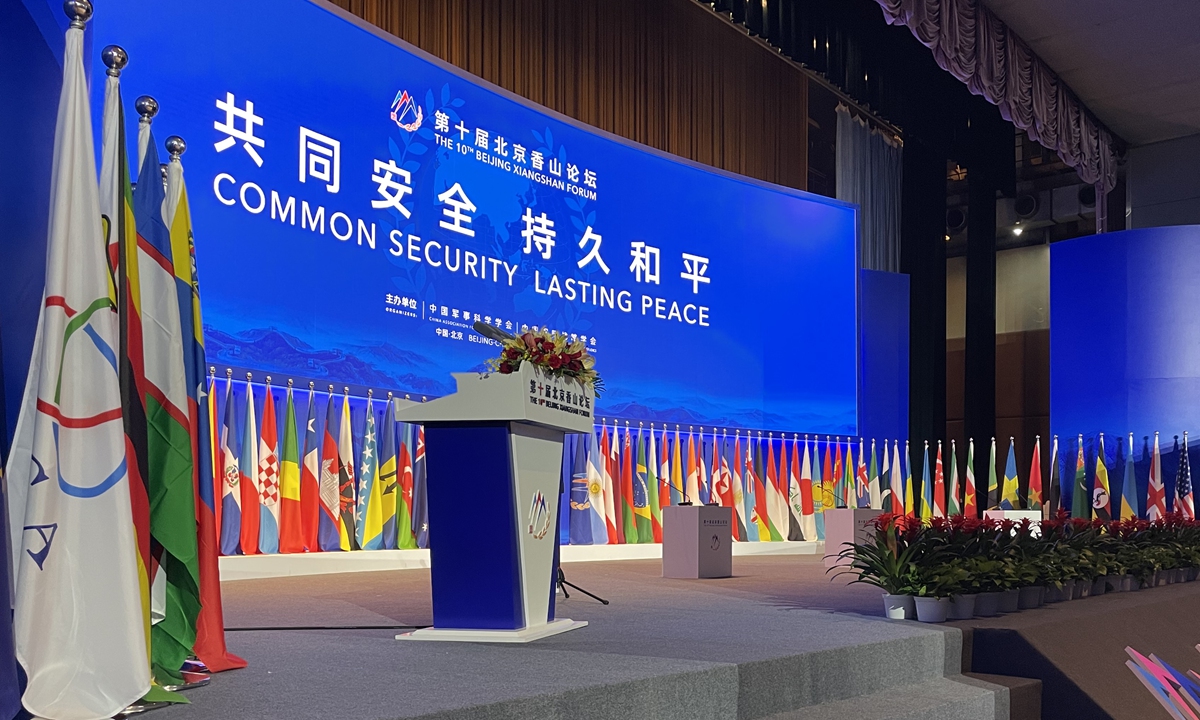
The 10th Beijing Xiangshan Forum, themed “Common Security, Lasting Peace,” concluded in Beijing on Oct. 31.

This year’s session of the Beijing Xiangshan Forum reached new historic highs in both scale and level. It witnessed extensive and in-depth exchanges and even contention between participants, demonstrating the principles of equality, openness, inclusiveness, and mutual learning and achieving the purpose of pooling wisdom, expanding consensus, and enhancing mutual trust.

The continuously growing influence of the Beijing Xiangshan Forum reflects the significance the international community accords to peace and security issues, and embodies various parties’ trust in and support for China’s efforts to promote the implementation of the Global Security Initiative (GSI) and play a leading role in advancing global security cooperation.

In today’s world, security issues are increasingly interconnected, transnational and diverse. Regional security hotspots keep flaring up, local conflicts and turbulence occur frequently, with traditional and non-traditional security threats intertwined.

In the face of global security challenges, it’s imperative that countries strengthen communication and cooperation so as to solve security dilemmas.

Responding to global security hotspots, the topics of dialogues, seminars and other activities at the 10th Beijing Xiangshan Forum, including major-country relations, security in the Asia-Pacific region, artificial intelligence, nuclear risk management and control, a new security architecture in the Middle East and mechanisms for peace in Europe, showed global vision and inclusiveness, providing a broad platform for exchanges between various parties.

The candid exchanges of views between participants as they jointly explored the path to global peace and security are of great positive significance under the current international circumstances.

“I strongly believe that this year’s Beijing Xiangshan Forum is an ideal platform to address the impending issues and to initiate proactive approaches to find solutions to problems, in order to have a stable and secure region,” said Vice-Admiral Piyal De Silva, former commander of the Sri Lanka Navy.

Respecting each other’s reasonable security concerns and ensuring all countries enjoy equal rights to express their security needs is an important prerequisite for building and maintaining a world of common security and lasting peace.

Many arrangements of the 10th Beijing Xiangshan Forum were welcomed by developing countries. For instance, one of the topics at the plenary sessions was “the role of developing countries in global security“; panel sessions and seminars covered topics including “the Global South and global security governance”, “the significance of BRICS membership expansion”, “the expectations of developing countries for globalization”; and representatives of small and medium-sized countries accounted for a considerable proportion of speaking slots at relevant meetings.

One important contribution China has made is making many voices that were not heard by the international community in the past increasingly louder now, said Joseph Kahama, secretary general of the Tanzania-China Friendship Promotion Association.

More and more countries included in the Global South trust China, because China can help relevant countries make their voices heard on the global stage, he noted.

The Beijing Xiangshan Forum represents a significant event hosted by China to implement the GSI.

Calling on countries to adapt to the profoundly changing international landscape in the spirit of solidarity and address traditional and non-traditional security threats and challenges with a win-win mindset, the GSI aims to create a new path to security that features dialogue over confrontation, partnership over alliance and win-win over zero-sum.

It has injected confidence into countries’ efforts to maintain and achieve common and universal security, and is bound to continue helping build a more peaceful and safer world.

In February this year, China released “The Global Security Initiative Concept Paper”, proposing 20 priorities of cooperation under the framework of the GSI and suggestions on platforms and mechanisms of cooperation.

Defense ministers from many countries attending the 10th Beijing Xiangshan Forum fully affirmed China’s contributions to maintaining world peace and promoting regional development.

Belarusian Defense Minister Viktor Khrenin said he hopes the international community will work together to implement the GSI and achieve peaceful coexistence among all countries.

China unswervingly pursues an independent foreign policy of peace. It has always decided its position and policy on issues based on their own merits, and it has strived to uphold the basic norms governing international relations and safeguard international fairness and justice.

It strives to safeguard world peace and development as it pursues its own development, and it makes contributions to world peace and development through its own development.

China has actively participated in and promoted multilateral security cooperation, engaged in mediation diplomacy, made unremitting efforts for the political settlement of hotspot issues, cooperated with other parties in non-traditional security domains such as anti-terrorism, cyberspace, food security, and climate change, and promoted improvement in international platforms and mechanisms for dialogues and exchanges on addressing security challenges.

By carrying out extensive consultation and making concerted efforts with various parties, China has pushed for solid implementation of the GSI, demonstrating its strong sense of duty as a responsible major country.

In today’s interconnected world, all countries are closely connected and humanity shares a common future. The historical trend of peace, development, and win-win cooperation is unstoppable.

China will continue upholding the vision of common, comprehensive, cooperative and sustainable security, and work with all members of the international community committed to peace and development to actively promote the implementation of the GSI, jointly enrich its connotations and practices, and make new contributions to promoting common security of humankind and lasting peace of the world.

China to build 5th Antarctic research station

By Liu Shiyao, Hu Runxin, People’s Daily

China’s 40th Antarctic scientific expedition team, organized by the country’s Ministry of Natural Resources (MNR), set sail from Shanghai on Nov. 1, embarking on a mission that is expected to last more than five months.

The expedition team will build a new scientific research station along the coastal areas of the Ross Sea, which will be the biggest highlight of the expedition. Upon completion, the new station will become China’s third perennial research station after the Changcheng and Zhongshan stations and the first research station dedicated to the Pacific sector. It will also be the country’s fifth research station in Antarctica.

The Ross Sea is the most southward-extending sea among all marginal seas of Antarctica. The top of the bay is located at about 78 degrees south latitude, which is very close to the South Pole.

The unique geographical location of the Ross Sea brings differentiated scientific research value, making it a beneficial complement to China’s Antarctic scientific research layout deserving greater investment for comprehensive scientific observation.

The construction of the new research station is of great significance.

Carrying out surveys, observation and monitoring of marine ecology, sea ice, glaciers, sea level, atmosphere, geophysics, high-altitude atmospheric physics, terrestrial ecology, terrestrial and marine geology, birds and more in this region will provide fundamental support for assessing the Antarctic ecological environment and climate change.

“The Ross Sea region has a strong appeal to scientists because it is like an ‘ice factory.’ It is an important generator of sea ice in the entire Southern Ocean, and a key origin of Antarctic bottom water,” said Sun Bo with the Polar Research Institute of China under the MNR.

The region features multi-circle interactions of the Earth system, including the geosphere, cryosphere, biosphere and atmosphere, which will help researchers explore important scientific issues such as Antarctic changes and global linkages, according to Sun.

The construction of the new station also reflects China’s active efforts to fulfill its responsibilities and obligations under the Antarctic Treaty system.

According to Long Wei, deputy director of Chinese Arctic and Antarctic Administration, a subsidiary of the MNR, China will cooperate with relevant countries in managing the Antarctic Specially Protected Area at Inexpressible Island and conduct ecological monitoring of the Ross Sea region Marine Protected Area, contributing to the protection of the Antarctic ecological environment and supporting China’s participation in Antarctic international governance.

Relying on the new station, China will carry out international cooperation on scientific expeditions and logistical support in Antarctica with neighboring research stations of other countries, striving to make new and greater contributions to the peaceful use of Antarctica by mankind, Long said.

With a building area of 5,244 square meters, the new Chinese Antarctic research station is expected to accommodate 80 expedition team members during summers and 30 members during winters after completion. It is planned to be used for atmospheric, oceanic, glacial, biological and other multidisciplinary observation, monitoring and scientific research.

The philosophy of “green expedition” will run through the entire construction process of the new research station.

While ensuring quality, safety and other basic requirements of the station, relevant personnel will make overall plans and adopt integrated designs for various systems of the station, in a bid to conserve resources and minimize environmental impact during the construction of the new research station.

Customized prefabrication and pre-assembly at home, as well as intensive management of construction materials, will also help the expedition team save energy, water, materials and other resources and protect the environment.

By reducing the disturbed area in Antarctica, cutting the number of temporary facilities and construction personnel, and maximizing control over the scope of construction activities, the expedition team will try to achieve the goal of green and eco-friendly construction.

In addition to the construction of the new station, the expedition team will also investigate the impacts of climate change on the Antarctic ecosystems and relevant consequences, while thoroughly studying the role of Antarctica in global climate change, according to Zhang Beichen, leader and chief scientist of China’s 40th Antarctic expedition.

Collaborative research in the frontiers of international Antarctic science will also represent an important part of this expedition.

During the expedition, Chinese scientists will carry out collaborative aerial surveys of the Enderby Land with their counterparts from countries including Norway and Australia, and explore the ice-ocean-bedrock interactions in the grounding zone of the Antarctic ice sheet, a key data gap region. They will also provide support for accurate assessments of ice sheet mass balance and instability research, and conduct international cooperation on logistical support with scientists from multiple countries.

Flying Tigers spirit represents trust, friendship: Flying Tigers veteran

By Liu Lingling, People’s Daily

The Flying Tigers spirit is a symbol of U.S.-China cooperation, said Mel McMullen, a Flying Tigers veteran, adding that he hopes more young people from the two countries could get to know this period of history and pass on the spirit from generation to generation.

McMullen, 98, made the remarks during an interview with People’s Daily after visiting the Museum of the War of Chinese People’s Resistance Against Japanese Aggression. He was in China to attend an event commemorating the 80th anniversary of the U.S. 14th Air Force’s participation in China’s war of resistance against Japanese aggression in Beijing.

The suits, helmets and photos of the Flying Tigers exhibited at the museum brought the Flying Tigers veteran back to the old days when he fought side by side with the Chinese people.

During China’s war of resistance against Japanese aggression, a large number of young American pilots, led by U.S. general Claire Lee Chennault, formed the American Volunteer Group (AVG), also known as the Flying Tigers. They fearlessly fought alongside the Chinese people against the Japanese fascists. McMullen was one of them.

In 1944, McMullen was assigned to the 308th bombardment group of the 425th Bombardment Squadron of the 14th Air Force, serving as a B-24 “Liberator” bomber’s gunner and assistant flight mechanic. His bombardment group was initially stationed at the Chenggong Airport near Kunming, southwest China’s Yunnan province, and later moved to Chengdu in Sichuan province after a few months.

McMullen told People’s Daily that he was only 18 back then, and he felt that people of all countries shared the same aspiration that they and their families could enjoy peace.

He told the story of how Chinese people saved the lives of endangered American pilots. During that time, many American pilots were protected during the day and escorted to safe zones at night by the Chinese people.

He said the Flying Tigers respect and admire the Chinese people, and he would never forget that during the war, local residents went all out to rescue American pilots, despite the brutal retaliation from the Japanese army, and this saved the lives of many American pilots.

Lately, Jeffrey Greene, chairman of the Sino-American Aviation Heritage Foundation, Flying Tigers veterans Harry Moyer and McMullen jointly wrote a letter to Chinese President Xi Jinping, in which they introduced the efforts of the foundation and Flying Tigers veterans in helping promote China-U.S. friendly exchanges, and expressed their willingness to inherit and carry forward the precious spirit of China-U.S. cooperation.

On Sept. 12, Xi replied to the letter. Recalling the moment he received Xi’s reply, McMullen couldn’t hide his excitement, saying such care is truly precious.

The Flying Tigers spirit represents trust and friendship, McMullen said. During the war, the Flying Tigers trusted the Chinese people and believed that what they were doing would have a positive impact and be something to be proud of.

He said the Flying Tigers believed that if their planes encountered mechanical failures or were hit by the enemy and they had to parachute, the Chinese people would surely find and rescue them. The Flying Tigers and the Chinese people fought side by side in wartime, and in peacetime, they should also be eternal partners, he noted.

Xi said in his reply that in growing China-U.S. relations, the hope lies in the people, the foundation lies among the people, and the future lies with the youth. McMullen said he totally agrees with Xi, hoping that the younger generations from the two countries could pass on the Flying Tigers spirit so that the friendly ties can be passed down from generation to generation.

In 2015, McMullen visited China and participated in commemoration activities to mark the 70th anniversary of the victory of the Chinese People’s War of Resistance Against Japanese Aggression and the World Anti-Fascist War.

According to him, he and his wife have visited China multiple times, and they sincerely admire the tremendous development China has achieved. This time, he came to China accompanied by his wife, son, daughter-in-law, and other relatives. He hopes to promote a better understanding of the Flying Tigers’ story among more young people, and to continue promoting the spirit of the Flying Tigers and fostering the friendship between the American and Chinese people.