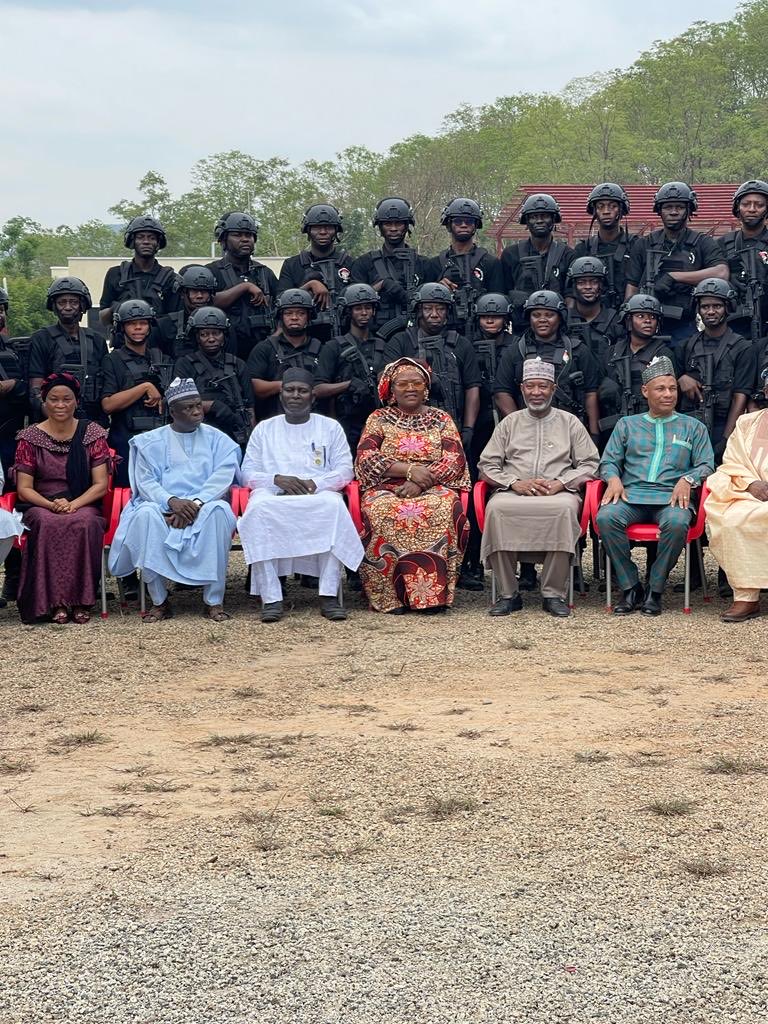
Guber polls: Ombugadu boosts transportation in Nasarawa: Donates vehicles to local groups

In a gesture of goodwill and support for various groups in the community, the candidate of the peoples Democratic Party PDP in the march 18 governorship election Dr. Emmanuel Ombugadu has donated Galaxi Buses to three different groups in Nasarawa.

The recipients of the donation include two religious groups, the Federation of Muslim Women’s Associations in Nigeria (FOMWAN) and the Women’s Wing of the Christian Association of Nigeria (WOWICAN), as well as one ethnic group, the Igbo Cultural Community Association.

According to Ombugadu, the donation of the Galaxi Buses that was distributed yesterday is aimed at improving transportation for the various groups, as well as promoting unity and harmony among different religious and ethnic communities in the area.

Ombugadu expressed his hope that the donation would help the groups to better serve their members and enhance their contributions to the community.

Representatives of the groups expressed their gratitude for the PDP Candidate generosity and pledged to use the Galaxi Buses to further their respective missions and serve their communities to the best of their abilities.

According to reports, the donation was received with enthusiasm and appreciation by members of the various groups and is seen as a positive step towards promoting unity and cooperation among different groups in Nasarawa

Cause of gender equality enjoys sustained, healthy development in China

By Zhou Shanshan, People’s Daily

Women’s status mirrors a country’s social etiquette and civility.

In China, female pediatric intensive care specialist Qian Suyun, who has nearly 40 years of pediatric experience, has brought a ray of hope to numerous children in emergency and critical conditions with her superb medical skills and ethics.

Bi Lixia, a woman that heads a rice farming cooperative in Jianli, central China’s Hubei province, has actively applied technologies in rice growing, contributing her strength to maintaining food security.

They are representatives of today’s females and have proven that women are creators of material and spiritual wealth and represent an important force driving social development and progress with concrete actions. Such progress is inseparable from the high-quality development of the cause of gender equality in China in the new era.

China attaches high importance to the cause of gender equality. In the country, women are able to exercise their democratic rights, participate in economic and social development, and benefit from the outcomes of reforms and development on an equal and legal basis.

So far, it has built a legal system for the protection of women’s rights and interests, which covers over 100 separate laws and regulations. The average life expectancy of women has exceeded 80 years. The gender gap in the nine-year compulsory education has been basically eliminated. Women accounted for over 50 percent of students in institutions of higher education.

As of the end of 2020, the number of women participating in maternity insurance had reached 103 million, and 650 million women participated in basic medical insurance. Women accounted for 40 percent of the labor force and 45.8 percent of the total science and technology personnel across China.

These sets of data reflect the efforts made by China to promote the cause of gender equality, the solid guarantee for women’s rights and interests, the broad rights and interests enjoyed by women, and the increasingly prominent role of women in economic and social development.

Women are gaining increasing senses of achievement, happiness and safety, and their confidence is growing in pursuing their own dreams.

In the report to the 20th National Congress of the Communist Party of China, the country vowed to remain committed to the fundamental national policy of gender equality and protect the lawful rights and interests of women and children, eliminate unjustified restrictions and discrimination that undermine equal employment, and establish a policy system to boost birth rates. It has charted the course for achieving greater gender equality.

The cause of gender equality in China is entering a golden period featuring more benefits for women, a better development environment, and leapfrogging progress.

From finding a balance between work and family to breaking through the glass ceiling in the workplace, Chinese women’s development is supported by the entire society. As relevant parties work together to keep advancing the healthy development of gender equality, the cause will see broader and brighter prospects.

China accelerates modernization of industrial system

By Wang Hao, Qi Zhiming, Ge Mengchao, People’s Daily

Over the recent years, China has thoroughly implemented an innovation-driven development strategy to promote the optimization and upgrading of its industrial structure. Accelerating the modernization of the industrial system remained one of the key focuses of the government work report this year.

China boasts the most complete industrial system in the world, and the demand in its domestic market has the greatest potential globally. Accelerating the industrial structure upgrading and building a modern industrial system that’s independent, controllable, safe, reliable and highly competitive is key to future development.

Traditional industries are the foundation of the modern industrial system. At present, China is vigorously promoting the upgrading of traditional industries.

Traditional industries are moving towards higher-end, exploring new development paths.

Wang Lanyu, general manager of HBIS Group, a Chinese steelmaker, told People’s Daily that the company has been making ceaseless efforts to deepen supply-side structural reform, develop high-end products, and strive for a higher stage of well-adjusted balance where demand drives supply and supply, in turn, creates demand.

“We are exploring the new arena of intelligent connected new energy vehicles (NEVs) and have launched high-end smart electric vehicles to better meet the demand of the market,” said Zhang Xinghai, vice chairman of the All-China Federation of Industry and Commerce and chairman of Seres, a Chinese electric vehicle manufacturer.

China has fastened its steps on a new path to industrialization as the industrial structure is optimizing and the quality of products keeps improving. High-tech manufacturing and equipment manufacturing accounted for 15.5 percent and 31.8 percent of the total value added of industrial enterprises above designated size, respectively. China has maintained the world’s largest producer and seller of NEVs for eight consecutive years.

Traditional industries are becoming intelligent and more competitive.

Only by grasping the opportunities of digital upgrading can enterprises stand out in fierce market competition, said Zhang Zhuang, mayor of Liuzhou, south China’s Guangxi Zhuang autonomous region. He noted that Liuzhou supports enterprises in digital transformation and is actively building national-level pioneering zones for connected vehicles and intelligent manufacturing.

“Digital technologies enable precision workshops to respond to every abnormal situation and reduce the processing period of core parts by 20 percent, which further lowers cost and improves efficiency,” said Ma Bing, an employee of Gentertec Qiqihar No.2 Machine Tool, a manufacturing enterprise for heavy-duty machine tools.

So far, China has built over 2,100 high-level digital workshops and smart factories, and industrial internet has been applied to 45 major categories of the national economy.

Ma suggested that enterprises should keep enhancing their capabilities in the application of digital technologies and software, as well as data management, saying efforts shall be made to guide enterprises to accelerate digital transformation in key links.

Traditional industries are also turning “green” and brimming with new vitality.

Aiming to build a waste-free county, Guangze county in east China’s Fujian province has managed to mix organic matters such as chicken manure and rice husks and turn them into fuel.

“We should promote clean production and circular economy, so as to achieve green and low-carbon development,” said Zhang Yuzhen, president of the Fujian Provincial Academy of Environmental Sciences.

Thanks to synergistic efforts to cut carbon emissions, reduce pollution, expand green development, and pursue economic growth, the country is seeing accelerated development of green and low-carbon production and lifestyles. The share of clean energy in total energy consumption increased from 20.8 percent to over 25 percent over the past five years.

While consolidating the dominant place of traditional advantageous industries, China is also fostering new growth drivers and new strengths.

According to the report to the 20th National Congress of the Communist Party of China, the country will promote the integrated and clustered development of strategic emerging industries and cultivate new growth engines such as next-generation information technology, artificial intelligence, biotechnology, new energy, new materials, high-end equipment, and green industry.

The innovation-driven development strategy cultivates emerging industries. Liao Zengtai, head of Wanhua Chemical Group, told People’s Daily that leading enterprises should cooperate with universities and research institutes to contribute to the development of emerging industries with strategic importance.

“We have made breakthroughs in the optimization of storage technology, which makes the operation of mobile phones smoother,” said Feng Dan, dean of the School of Computer Science and Technology, Huazhong University of Science and Technology in Wuhan, central China’s Hubei province. Industries, universities and research institutes should work together and turn frontier technologies into productivity, she added. “Future industries are an opportunity that we should seize in the next round of scientific and technological revolution and industrial transformation. Efforts should be made to develop core technologies in key sectors such as artificial intelligence and big data,” said Dong Jin, head of the Beijing Academy of Blockchain and Edge Computing.

Chinese chili planting program leads Pakistani farmers to prosperity

By Song Haoxin, People’s Daily

“It’s my first time growing chilies. I was not expecting such a good harvest,” said Wahid, a farmer from Pakpattan, Pakistan, while Chinese expert Zhao Jianhua was instructing him to pick the plants.

Looking at the glowing red chilies, the Pakistani smiled with joy.

The seeds of the chilies planted by Wahid and its planting technology were from Chengdu, southwest China’s Sichuan province, which is thousands of kilometers away from where he lives.

The seeds were brought to Pakistan over three years ago by Chen Changwei, head of the Sichuan-based company Litong & Food, as well as technicians of the company.

After analyzing the climate, temperature and soil in the country, the company established an international agricultural development corporation together with another company in Sichuan, and started massive chili planting in multiple regions in Pakistan, including Hyderabad, Multan, Kasur, Okara and Lahore.

In 2021, the chili planting program started in the village where Wahid lives, and it struck Wahid after he learned that chili planting is a highly profitable business. In November of that year, the man who originally planted corn tested water in chili planting.

The average income of chili planting is three times that of other crops, which stands at around 1,500 yuan ($215.31) per mu, or 667 square meters.

According to Wahid, farmers joining the program would receive seedlings as well as technical support and guidance on management, picking and drying. After the plants are dried by the farmers and pass quality inspection, they will be purchased by the Chinese agricultural company, he told People’s Daily.

Finding that the chili planting business has doubled the previous income, Wahid and several other farmers recently extended their contract for another three months.

During the 2022-2023 planting season, 15,000 acres of chilies were planted by Pakistani farmers in cooperation with the Chinese agricultural company, and the harvest is expected to reach 37,500 tons, said Chen.

According to him, the business will generate export value of $45 million and has created thousands of jobs for the local community. Besides, it has also nurtured more than 100 local experts of chili planting.

On the third meeting of the China-Pakistan Joint Working Group on Agriculture held in September 2022, the chili planting program was included on a list of agricultural projects under the framework of the China-Pakistan Economic Corridor.

Six demonstration farms that joined the program in Punjab and Sindh provinces reported bumper harvests in the past year. At present, chili seedlings are being planted and transplanted in South Punjab, and soon field management will kick off. The planting in Sindh is also advancing as scheduled. These chilies are expected to enter the Chinese market in June this year.

Gu Wenliang, Agricultural Commissioner of the Chinese Embassy in Pakistan, said both China and Pakistan are major agricultural countries, and Pakistan is home to vast fertile and arable land. Over 60 percent of the people in Pakistan are engaged in agriculture-related jobs.

“China has gained rich experience in seed cultivation and crop planting. The two countries see huge potential in agricultural cooperation,” Gu said.

Enhancing South-South agricultural cooperation is an important means to cope with hunger, malnutrition, poverty, inequality, and other global issues.

Over the past few years, China has actively launched South-South agricultural cooperation with other developing countries and practically implemented cooperation projects to help more countries and regions improve sustainable agricultural productivity and promote common progress of developing countries.

China adopts multiple measures to promote high-quality development

By Liu Zhiqiang, People’s Daily

The State Council Information Office held a press conference in Beijing on March 6 about promoting high-quality development to set the stage for building a modern socialist country in all respects.

Zhao Chenxin, vice chairman of the National Development and Reform Commission (NDRC), outlined China’s remarkable economic performance in 2022.

According to Zhao, the country’s GDP exceeded the 120-trillion-yuan ($17.22 trillion) mark for the first time, and the consumer price index only rose by 2 percent while global inflation has surged to its highest level in over 40 years.

Besides, a total of 12.06 million new urban jobs were created last year, exceeding the annual target of 11 million. China maintained a basic equilibrium in the balance of payments, and the scale of the country’s foreign exchange reserves remained over $3.1 trillion as of the end of last year.

China’s development quality saw steady improvement.

Innovation-driven development has played a more important role. China’s total expenditure on research and development (R&D) amounted to 3 trillion yuan for the first time, with the country’s ratio of R&D expenditure to GDP increasing to 2.55 percent. The country has climbed to 11th place in the Global Innovation Index (GII) 2022 Report.

Structural adjustment accelerated in the sectors of industry, investment, consumption and trade. Green and low-carbon development achieved steady progress, and poverty alleviation achievements have been continuously consolidated. The social security system and public services were also improved firmly.

China has constantly consolidated the foundation for safe development.

Fiscal and financial operations were generally stable and sound, and international payments were in basic balance. The country has achieved a bumper grain harvest for 19 consecutive years, and its annual grain output has exceeded 650 billion kilograms for eight years in a row.

It also enhanced the systems of energy production, supply, storage and sales, and the energy supply is maintained at a stable level. The capability to maintain the security of key industrial and supply chains has been continuously improved.

According to the government work report this year, China’s annual growth target is set at around 5 percent.

Zhao explained that as a developing country, China still takes development as its top priority. To achieve the targets set at the 20th National Congress of the Communist Party of China, the country needs to maintain reasonable economic growth to boost employment, improve people’s livelihoods, and prevent and defuse risks, Zhao added.

The 5-percent growth target, which is conducive to accelerating the creation of a new development paradigm and promoting high-quality development, is in line with current economic momentum, and will guide all sectors to focus on improving the quality and efficiency of development, Zhao said.

Besides, regions across China all have strong confidence in their development prospects, which lays a solid foundation for the country to achieve the annual growth target.

Zhao said the country will strengthen macro policy regulation, maintain the continuity and consistency of macro policies, make them more effective and targeted, enhance the integration and coordination of policies and ensure that all policies are consistent with the direction of macro policies.

The country will ensure that the implementation of the strategy to expand domestic demand is integrated with efforts to deepen supply-side structural reform, further unleash the potential of household consumption, boost investment, and implement the innovation-driven development strategy in an in-depth manner, and accelerate the building of a modern industrial system.

It will also build a high-standard socialist market economy and promote high-level opening up to constantly energize development. It will coordinate development and security, properly handle and defuse risks in areas such as property sector, finance, and local government debt, and practically enhance security capacity building in food security, energy resources and key industrial and supply chains.

Besides, China will thoroughly and effectively implement the employment-first policy, strengthen basic public services and constantly guarantee and improve people’s livelihood.

Final consumption is a lasting driver of economic growth. Li Chunlin, vice chairman of the NDRC, said that China’s consumer market has shown signs of rapid recovery. Consumption of catering, culture and other industries has rebounded since the Spring Festival holiday, getting the economy off to a strong start, he said.

Li believes that uncertain factors constraining the release of consumption potential are gradually eliminated, and the first half of this year is expected to see a steady increase in the growth of major indicators of consumption.

Consumption will serve as a main driving force boosting China’s economic growth in 2023, Li said.

In 2022, China’s fixed-asset investment increased by 5.1 percent over the previous year. In particular, investments in infrastructure and manufacturing rose 9.4 percent and 9.1 percent, respectively, playing an important role in stabilizing the macro economy.

Yang Yinkai, vice chairman of the NDRC, said China will keep working to expand effective investment this year, advance the construction of major projects, effectively drive investment from the society through government investment and policy incentives, consolidate the sound momentum for stable growth in infrastructure investment and manufacturing investment, and further enhance the key role of investment in optimizing the supply structure.

Application scenarios of new energy keep expanding in China

By Ding Yiting, People’s Daily

A wind farm consisting of 125 smart wind turbines is currently under construction in the Kazak autonomous county of Mori, Changji Hui autonomous prefecture, northwest China’s Xinjiang Uygur autonomous region. Each of the wind turbines has a diameter of 186 meters and they are expected to generate 2.2 billion kWh of clean electricity on an annual basis.

According to Gao Xiang, vice general manager of the company that developed the wind farm, which is also a subsidiary of Huadian Xinjiang Power Co., Ltd., with sensors installed in the parts of the wind turbines and advanced control technology and algorithm, the wind turbines can detect potential variations of the wind to maximize their performance.

Besides, smart equipment in the wind turbines can also monitor the status of the towers and the vibration of the rotors, which helps reduce the loss of possible malfunctions and shutdowns, Gao noted, adding that the operation and maintenance cost of the smart wind turbines is 20 percent lower than that of traditional types.

The new energy sector, represented by wind power, is developing rapidly and gaining increasingly higher competitiveness in China.

As more and more new energy projects are built across the country, which fuels market competition, lowering costs and improving efficiency through digitalization and the application of intelligent technologies have become vital for many enterprises.

Qin Haiyan, head of the Chinese Wind Energy Association under the China Renewable Energy Society, told People’s Daily that the engineering quality and reliability of wind power equipment have been continuously improved over the years, and these pieces of equipment are becoming more digital, intelligent, and customized.

Today, the efficiency of China’s wind power generation is up 30 percent from a decade ago. According to statistics, the levelized costs of energy for wind and photovoltaic power generation in 2021 were down by 48 percent and 70 percent from 2012, respectively. This has laid a solid foundation for the large-scale and market-oriented development of the new energy sector.

In Jiaxing, east China’s Zhejiang province, “super roofs” that are able to generate electricity are employed by a building-integrated photovoltaics (BIPV) project launched by Beijing Energy International Holding Co., Ltd., a leading provider of global eco-development solutions.

Different from the traditional model under which PV panels are installed on mounting systems, the BIPV project adopts multi-layer roofs with built-in solar panels.

“BIPV makes photovoltaic power generation an integral part of buildings,” said Zhong Baoshen, chairman of LONGi, the world’s leading supplier of solar PV solutions based in Xi’an, northwest China’s Shaanxi province. No space for mounting systems is needed, so it is able to fit larger PV panels and thus increase generating capacity by about 15 percent, Zhong noted.

He told People’s Daily that the technology, apart from being promoted among new buildings, also enjoys large development potential in the market of roofing renovation.

Green electricity resources are being employed by a number of areas across China to build zero-carbon industrial parks. In an industrial park in Erdos, north China’s Inner Mongolia autonomous region, 80 percent of electricity consumed comes from local wind and PV power generation systems, while the remaining 20 percent is green electricity purchased from the National Grid.

Apart from the industrial and construction sectors, the vast countryside in China also provides a huge developmen spacet for new energy.

“I had to spend more than 300 yuan ($43.46) per month on the lighting of my cowshed. It is the PV panels on my roof that have reduced my electricity cost,” said Party head of Huatugula village, Tongliao, Inner Mongolia autonomous region, referring to a comprehensive intelligent new energy project in the village, one of the many PV and wind power projects built by the State Power Investment Corporation in the village last year.

Sun Wen from the corporation told People’s Daily that the company has rented local saline and alkaline land and managed to improve the soil quality of it. The land was later contracted to the villagers for free, and PV panels were installed on it.

“The village can also make 100,000 yuan per year from land lease,” Sun said.

Promoting rural wind power and PV development is an important approach to reaching the “dual carbon” goals as well as an effective measure to expand the collective economy of villages and increase farmers’ income.

A plan on renewable energy for the 14th Five-Year Plan period (2021-2025) proposed to vigorously build county-level wind power projects in rural areas, and encouraged the construction of distributed PV panels on the roofs of rural houses meeting the specific standards and designated sites in villages.

“According to estimation, a village can gain an extra 200,000 yuan each year if it spares 200 square meters of land and installs two to three wind turbines on it,” said Qin.

An official with the National Energy Administration told People’s Daily that China will focus on the diversified development of the energy sector during the 14th Five-Year Plan period, promote the integrated development of PV-assisted desert control, PV corridor, offshore wind power, and offshore oil and gas, launch demonstration projects such as massive hydrogen production through renewable energy, and explore new development models under which multiple energy sources complement each other and are comprehensively utilized in multiple scenarios.

Chinese technologies contribute to world’s sustainable development

By Yan Huan, Xu Hailin, People’s Daily

The Mobile World Congress (MWC) 2023 hosted by the Global System for Mobile Communications Association (GSMA) kicked off on Feb. 27 in Barcelona, Spain.

The four-day event, focusing on the new impetus of 5G development, digitalization and financial technology, called for enhanced international cooperation to narrow the technological gap and strive for a sustainable future.

As one of the grand events in mobile communication industry, the MWC was joined by over 2,000 exhibitors from more than 200 countries and regions.

At the event, Chinese communication and tech firms displayed their latest results in frontier communication and electronics technology, attracting high attention.

GSMA CEO John Hoffman told People’s Daily that China has built the world’s largest and technologically leading 5G infrastructure and has the largest number of 5G users in the world. He believes that Chinese enterprises would share more stories and experiences of technological development with the world via this year’s MWC.

Thanks to the in-depth application of 5G technology, virtual reality, augmented reality, metaverse and other futuristic application scenarios based on the technology are bringing profound changes to people’s life and work.

The upgrading of 5G technology and infrastructure is constantly accelerating Africa’s development, said John Omo, Secretary-General of the African Telecommunications Union.

He said China’s Huawei has provided technologies and equipment for the digitalization of South Africa’s mining industry, helping the latter improve its management, productivity and safety.

In a plant producing cardboard boxes in east China’s Zhejiang province, an intelligent industrial cloud base station has been built by China Mobile, one of the largest mobile communication carriers in China and Chinese communication giant ZTE. The base station covers the entire plant with 5G network and connects every production device. The plant employs 5G-guided robots with machine vision to accurately achieve pick-up, delivery and coordination. Images and videos in the plant are sent back to the control end in real time for analysis and management.

China mobile and ZTE have won the 2023 GSMA 5G Smart Production Challenge Award for their exploration and innovation in the application of 5G in manufacturing.

“Today, the role of people working in the communication industry is changing rapidly,” said Wang Xiyu, executive vice president and chief technology officer of ZTE, adding that the evolution of the industry is making the impossible possible and becoming an important driving force for social transformation.

The MWC 2023 was joined by about 150 Chinese communication and tech firms, such as China Mobile, China Unicom, China Telecom, Huawei, ZTE and Xiaomi. Their digital technologies exhibited at the event are empowering the global development, especially the sustainable development of developing countries.

Huawei had a 9,000-square meter exhibition booth at the MWC 2023, which, according to CEO of Mobile World Capital Barcelona Francesc Fajula, is the largest in history of the MWC.

“Chinese companies keep close cooperation with international organizations and communication carriers in many countries, which has not only improved their capability in 5G application, but also created opportunities for these countries in training young talents in digital technology,” Fajula said.

As the world pays more and more attention to carbon emission reduction, Chinese enterprises are joining hands with domestic and foreign partners to contribute to carbon emission peak and carbon neutrality in the communication field.

In Chile, China’s Lenovo is cooperating with local organization Island Conservation and has launched Work for Humankind initiative in the Robinson Crusoe Island. Volunteers with different backgrounds and knowledge came to the island to work with local communities to promote technology upgrades, update education and digital approaches and help with ecological protection as well as cultural preservation.

Lenovo has set up a cutting-edge technology center for the initiative, equipped volunteers and staff members on the island with laptops, augmented reality goggles and smart home appliances. The center also offers online education software for local schools. So far, the center has benefited around 30 percent of residents on the island.

During the 2023 MWC, Huawei announced it has joined the UNESCO Global Alliance for Literacy (GAL) and will work with relevant parties to raise literacy with technology.

Only by enhancing education on digital technology and ensuring no country or individual is left behind can true sustainable development be achieved, said David Atchoarena, director of the UNESCO Institute for Lifelong Learning, adding that Chinese enterprises are offering richer educational resources for young people through cooperation and investment.

China to steadfastly deepen reform, opening up

By People’s Daily

China will never stop its endeavors to pursue reform and opening up.

For the overall development of the Communist Party of China (CPC) and the country, the second plenary session of the 20th CPC Central Committee held recently raised specific requirements for steadfastly deepening reform and opening up.

It stressed that it is important to focus closely on the goal of building a modern socialist country in all respects, introduce a series of strategic, creative and pace-setting reform measures, strengthen the synergy in advancing reform to achieve coordination and high efficiency, and make new breakthroughs in key areas.

Since the 18th CPC National Congress, the CPC Central Committee with Comrade Xi Jinping at its core has comprehensively deepened reform with tremendous political courage. It has carried out critical tasks, enhanced top-level design for reform and removed institutional obstacles in all areas.

It has pursued a more proactive strategy of opening up. It has worked to build a globally-oriented network of high-standard free trade areas and accelerated the development of pilot free trade zones and the Hainan Free Trade Port, so as to promote high-quality development of the Belt and Road Initiative.

The efforts to comprehensively deepen reform and opening up in the new era enabled China to put in place foundational institutional frameworks in all sectors, and achieve historic, systemic, and holistic transformations in many fields. The system of socialism with Chinese characteristics has become more mature and well-defined, and China’s system and capacity for governance have been further modernized.

China has become a major trading partner for more than 140 countries and regions. It leads the world in the total volume of trade in goods, and it is a major destination for global investment and a leading country in outbound investment. Through these efforts, the country has advanced a broader agenda of opening up across more areas and in greater depth.

Reform and opening up is always an ongoing task and will never end. At present, profound changes unseen in a century are evolving rapidly in the world, and a new technological revolution and industrial transformation are advancing. China is facing new strategic opportunities, tasks, stages, requirements and environment.

Only by intensifying efforts to advance reform and explore new ground, remaining steadfast in expanding opening up, and working hard to remove deep-seated institutional barriers can China fully tap into the strengths of socialism with Chinese characteristics, continuously imbue its socialist modernization endeavors with fresh dynamism and vitality, and better translate its institutional strengths into effective governance.

Xi Jinping, general secretary of the Communist Party of China (CPC) Central Committee , stressed the importance of planning a new round of comprehensive reform and opening up centered on developing a high-standard socialist market economy and advancing high-standard opening up at the Central Economic Work Conference held in Beijing last December.

China will uphold and improve its basic socialist economic systems, deepen mixed ownership reform of state-owned enterprises, and optimize the environment for developing private economy.

It will improve the modern corporate system with distinctive Chinese features, put in place a high-standard market system, and improve the system of macroeconomic governance.

It will also strengthen and refine modern financial regulation and reinforce the systems that safeguard financial stability.

The country will promote high-level opening up, steadily expand institutional opening up with regard to rules, regulations, management, and standards, and coordinate reforms in various fields.

China to make greater contributions to world peace, development

By He Yin, People’s Daily

Following a path of peaceful development is a distinctive feature and essential choice of Chinese modernization.

Breaking away from the traditional pattern in which rising powers have always sought to dominate, China is benefiting both itself and the whole world through its development.

China will stand firmly on the right side of history and on the side of human progress. Dedicated to peace, development, cooperation, and mutual benefit, it will strive to safeguard world peace and development as it pursues its own development, and it will make greater contributions to world peace and development through its own development.

Chinese civilization, with a history of over 5,000 years, has always cherished peace. The pursuit of peace, amity, and harmony is an integral part of the Chinese character, which runs deep in the blood of Chinese people.

From the middle of the 19th century, China had long been troubled by foreign aggression and frequent warfare, which brought deep sufferings to Chinese people. Having experienced bitter sufferings in the past, the Communist Party of China (CPC) and Chinese people know the value of peace and development, and see it as their sacred duty to promote the peaceful development of the world.

Chinese President Xi Jinping stressed that China remains firmly committed to peaceful development. No matter how the international landscape may evolve and how strong it may become, China will never pursue hegemony, expansion or sphere of influence.

Besides, China is the only country in the world that has pledged to “keep to a path of peaceful development” in its Constitution., which also indicates the country’s firm determination to follow a path of peaceful development.

China does not subscribe to the outdated logic that “a strong country is bound to seek hegemony.” Some countries, while pursuing modernization, invaded, colonized and plundered others, bringing miseries to the people in developing countries. There are still a few Western countries seeking hegemony and power politics even today, severely threatening world peace and stability.

Chinese modernization never involves military expansion or colonial plunder, but champions the shared human values of peace, development, fairness, justice, democracy, and freedom, advocates win-win cooperation with the world and builds a community with a shared future for mankind.

For 70-plus years since the founding of the People’s Republic, China has never provoked a conflict, occupied one inch of foreign soil, started a proxy war, or joined any military bloc.

Keith Bennett, vice chair of the 48 Group Club, noted that China is not developing by exploiting any other country. It is developing itself and modernizing itself, and at the same time helping other countries to develop and modernize, he added.

Development always remains the top priority of China, the world’s largest developing country. Chinese modernization is independent and self-propelled, and at the same time absorbs Western experiences in modernization in China’s opening up drive. It strives for national development by integrating internal impetus and peaceful exploitation of external resources.

China adheres to the path of peaceful, open, cooperative and common development, and will offer as much assistance as it can for other developing countries. Meanwhile, the country will unswervingly safeguard its national sovereignty, security and development interests. China has never bullied, oppressed, or subjugated the people of any other country, and will never allow any foreign force to bully, oppress, or subjugate Chinese people.

Currently, changes unseen in a century are accelerating, and the world has entered a new phase of turbulence and transformation. Peace and development are faced with severe challenges. China will remain firm in pursuing an independent foreign policy of peace, and commit to its foreign policy goals of upholding world peace and promoting common development.

The China-proposed Belt and Road Initiative has become a global public good welcomed by many countries and an open international cooperation platform. The country’s Global Development Initiative has received support from more than 100 countries and many international organizations, including the UN. China also works to implement the Global Security Initiative and has released “The Global Security Initiative Concept Paper.”

Singaporean Prime Minister Lee Hsien Loong said a strong and friendly China will bring positive impact on the region and the world, and can help small and medium-sized countries achieve common development.

Eduardo Regalado, senior researcher at Cuba’s International Policy Research Center., noted that China’s commitment to peaceful development not only creates a sound international environment for its own modernization, but also makes important contributions to human progress.

China will always be a builder of world peace, a contributor to global development, and a defender of the international order no matter how the international environment may change. It will work with people from all countries in the world to build a community with a shared future for mankind and make greater contributions to world peace and development.

European Commission proposes new hydrogen regulations

By Adepoju Omolara Oluwafunke

The European Commission has proposed detailed rules to define what constitutes renewable hydrogen in the EU with the adoption of two Delegated Acts, required under the Renewable Energy Directive, the Commission announced on Monday (13 February).

The two Acts are part of a broad EU regulatory framework for hydrogen which includes energy infrastructure investments and state aid rules, and legislative targets for renewable hydrogen for the industry and transport sectors. They aim to ensure that all renewable fuels of non-biological origin (also known as RFNBOs) are produced from renewable electricity. The Acts are interrelated and necessary for the fuels to be counted towards Member States’ renewable energy target.

The proposed rules would provide regulatory certainty to investors, the Commission said. The bloc aims to reach 10 million tonnes of domestic renewable hydrogen production and 10 million tonnes of imported renewable hydrogen, in line with REPowerEU.

“Renewable hydrogen is a crucial component of our strategy for a cost-effective clean energy transition and to get rid of Russian fossil fuels in some industrial processes. Clear rules and a reliable certification system are key for this emerging market to develop and establish itself in Europe. These delegated acts provide much-needed legal certainty to investors, and would further boost the EU’s industrial leadership in this green sector,” said Kadri Simson, European Commissioner for Energy.

Unpacking the new legislative proposals
The first Delegated Act defines under which conditions hydrogen, hydrogen-based fuels or other energy carriers can be considered an RFNBO. The Act aims to clarify the principle of “additionality” for hydrogen set out in the EU’s Renewable Energy Directive. As part of this, electrolysers used to produce hydrogen would have to be connected to new renewable electricity production.

This principle aims to ensure that the generation of renewable hydrogen incentivises an increase in the volume of renewable energy available to the grid compared to what exists already. In this way, hydrogen production would be supporting decarbonisation and complement electrification efforts, while avoiding pressure on power generation, the Commission said.

While initial electricity demand for hydrogen production would be negligible, it would increase towards 2030 with the mass rollout of large-scale electrolysers, according to the Commission. The Commission estimated that around 500 TWh of renewable electricity is needed to meet the 2030 ambition in REPowerEU of producing 10 million tonnes of RFNBOs. The 10Mt ambition in 2030 corresponds to 14 per cent of total EU electricity consumption, the Commission said.

The Act also sets out different ways in which producers can demonstrate that the renewable electricity used for hydrogen production complies with the “additionality” rules. If adopted, it would introduce introduces further criteria aimed to ensure that renewable hydrogen is only produced when and where sufficient renewable energy is available (known as temporal and geographic correlation).

To take into account existing investment commitments and allow the sector to adapt to the new framework, the rules would be phased in gradually and designed to become more stringent over time. Specifically, the rules foresee a transition phase of the requirements on “additionality” for hydrogen projects that would start operating before 1 January 2028. This transition period corresponds to the period when electrolysers would be scaled up and come onto the market.

In addition, hydrogen producers would be able to match their hydrogen production with their contracted renewables on a monthly basis until 1 January 2030. However, Member States would have the option of introducing stricter rules about temporal correlation as of 1 July 2027.

The requirements for the production of renewable hydrogen would apply to both domestic producers as well as producers from third countries that want to export renewable hydrogen to the EU to count towards the EU renewables targets. A certification scheme relying on voluntary schemes would ensure that producers, whether in the EU or in third countries, can demonstrate in “a simple and easy way,” their compliance with the EU framework and trade renewable hydrogen within the bloc’s single market, according to a press release from the Commission.

The second Delegated Act provides a methodology for calculating life-cycle greenhouse gas emissions for RFNBOs. The methodology takes into account greenhouse gas emissions across the full lifecycle of the fuels, including upstream emissions, emissions associated with taking electricity from the grid, from processing, and those associated with transporting these fuels to the end-consumer. In addition, the methodology clarifies how to calculate the greenhouse gas emissions of renewable hydrogen or its derivatives in case it is co-produced in a facility that produces fossil-based fuels, the Commission said.

The Acts will now be sent to the European Parliament and the European Council, which both have two months to scrutinise them and to either accept or reject the proposals. At their request, the scrutiny period can be extended by two months. However, there is no possibility for the Parliament or Council to amend the proposals.