China’s reviving outbound tourism boosts global confidence in travel market

By Yin Jie

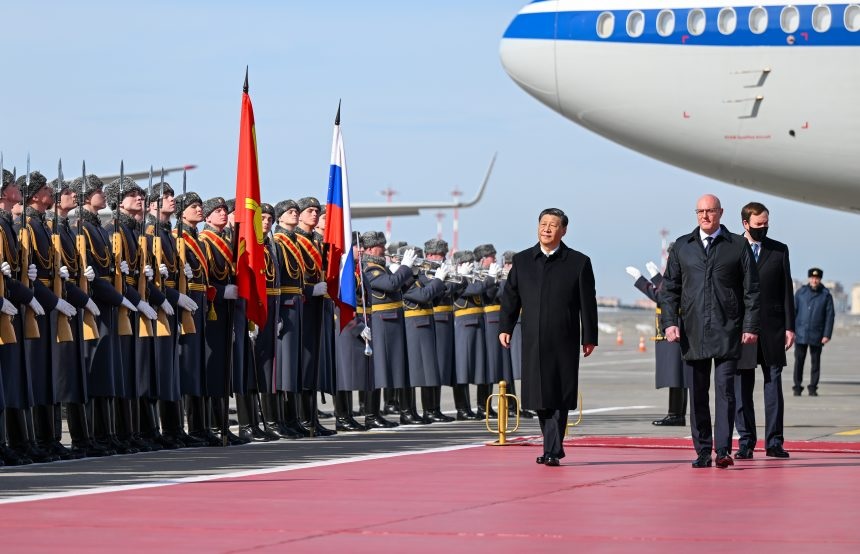
Outbound tourism has been reviving fast in China since the country resumed outbound group travel on Feb. 6.

A Feb. 17 NokAir flight from Zhengzhou, central China’s Henan province, to Thailand, was packed with three Chinese tourist groups.

Seats were booked up in just seconds for the first group tour to New Zealand launched by Chinese travel giant Ctrip after the outbound tourism resumption, which is scheduled to depart from Shanghai on March 18.

Besides, Beijing has been seeing an increasing number of citizens applying for and replacing passports in recent days.

Governments and tourism industry of many countries have extended their warm welcome to the Chinese tourists.

The Pacific Asia Travel Association estimated that Thailand would see the arrivals of 500,000 Chinese tourists in the next two months. The association believes that the tourism industry in the Asia-Pacific region will embrace a strong recovery thanks to the comeback of Chinese travelers.

Through Chinese tourists, the world is seeing the vitality and potential of the economy of China and thus gaining confidence in the revival of the global tourism market.

Most of the 20 countries to which China has resumed group travel are friendly to Chinese tourists in terms of visa application, transport, and entry policies.

The Maldives is one of the hottest island destinations among Chinese tourists. According to statistics released by Alibaba Group’s travel-services platform Fliggy, the search volume for air tickets to the Maldives on the platform surged nearly tenfold after a mutual visa exemption agreement between China and the Maldives officially took effect recently. The page view of the Maldives on Ctrip also doubled in just half an hour.

China had remained as the largest source of tourist arrivals in the Maldives for years before the outbreak of the COVID-19 pandemic. Maldives Minister of Tourism Abdulla Mausoom said the Maldives earlier forecast 1.8 million tourists for this year, and at least 10 percent increase is expected from the original forecast as Chinese tourists who had contributed a lot to the tourism market of the Maldives, are arriving again.

The improved frequency of international flights also contributed to the revival of China’s outbound tourism.

Shang Kejia, an official with the Civil Aviation Administration of China, said at a recent press conference that China has resumed regular passenger flights with 58 countries, adding that the number of international flights is expected to increase further.

Phnom Penh, Bangkok, Sydney, and Kuala Lumpur have become the most popular outbound travel destinations for Chinese tourists.

As more passengers renew their passports, the number of Chinese outbound tourists will hit several other peaks, said Zhao Nan with Umetrip, a popular flight booking app.

The global tourism industry will get a strong boost as China, one of the world’s largest outbound tourism markets before the pandemic, resumed outbound group tours starting from Feb 6, industry experts said.

An employee of a travel agency in Maldives that has started receiving Chinese tourist groups told People’s Daily that he’s happy to see the comeback of Chinese travelers as it is definitely good news for the travel agency and the country as a whole.

“China’s resumption of outbound group travel is crucial to boosting the confidence of the world, especially that of the Asia-Pacific region. China welcomes more countries to share the dividends of its outbound tourism,” said Dai Bin, president of the China Tourism Academy.

He noted that Chinese tourists’ demand has changed after COVID-19, and the tourists now have a preference for quality while focusing on safety. “It’s hoped that destination countries and regions can treat Chinese tourists fairly and offer high-quality tourism products,” Dai added.

This change has been noticed by the tourism departments of many countries and they have tailored new measures for Chinese tourists.

Yang Yu, chief representative of Netherlands Board of Tourism & Conventions in China, said tourism businesses in the Netherlands are constantly improving their services and offering services for Chinese tourists through digital approaches. Mobile payment is now promoted on a wider scale in the country, he added.

South Africa tailored contactless check-in and other digital services for Chinese tourists and rolled out new policies to improve their satisfaction, hoping that Chinese tourists can have safe and relaxing trips in the Rainbow Nation, said Mansoor Mohamed, Hub Head of Asia Pacific for South African Tourism.

It is believed that the list of destinations for China’s outbound group travel will get longer and longer in the near future, and the country will contribute more to the development of global tourism.

U.S. hegemonic, domineering, bullying practices exerting grave harm

By Zhong Sheng, People’s Daily

As the world’s most powerful country, the United States has long been pursuing, maintaining and abusing hegemony under the guise of promoting “democracy,” “freedom,” “human rights” and upholding a “rule-based international order.”

Clinging to the Cold-War mentality, the country has ramped up bloc politics, provoked conflict and confrontation, arbitrarily imposed unilateral sanctions, grossly interfered in other countries’ internal affairs, advanced in infiltration and subversion and willfully waged wars.

The notorious record of the U.S. in the political, military, economic, financial, technological and cultural fields, seriously threatens world peace and stability, and the well-being of all peoples.

Recently, the indifference of U.S. hegemony was once again exposed as Syrian people, who have been severely impacted by deadly earthquakes, failed to receive timely assistance due to U.S. sanctions.

To maintain its hegemony, the U.S. has long been attempting to mold other countries with its own values and political system.

In the name of “promoting democracy,” it has pushed for the “Neo-Monroe Doctrine” in Latin America, instigated “color revolutions” in Eurasia, and orchestrated the “Arab Spring” in West Asia and North Africa, bringing chaos and disaster to many countries.

Over the recent years, it fabricated a false narrative of “democracy versus authoritarianism,” assembled a so-called “value alliance,” and formed exclusive clubs. Such hegemonic practices have created division in regions, stoked confrontation and undermined peace.

The high military spending for long and wanton use of force have indicated the U.S. military hegemony.

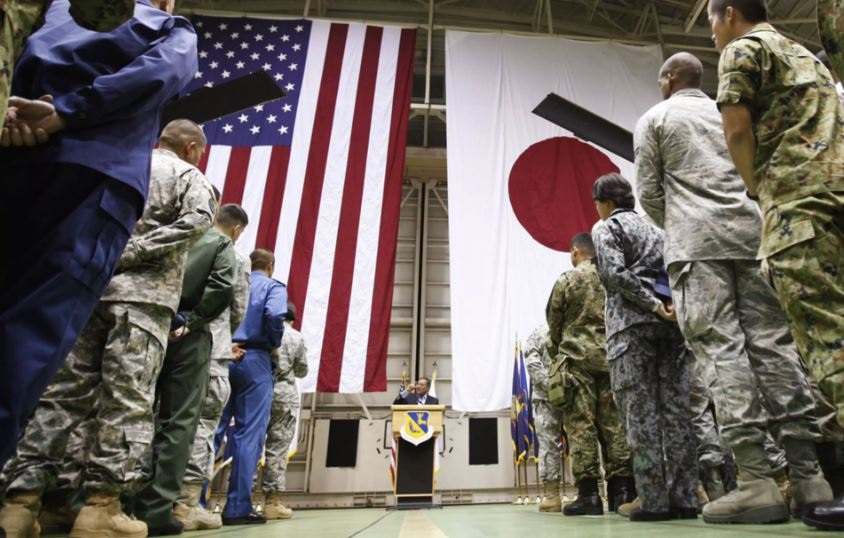
The U.S. has about 800 overseas military bases, with 173,000 troops deployed in 159 countries. According to a Tufts University report, the U.S. undertook nearly 400 military interventions globally between 1776 and 2019.

The U.S. military hegemony has led to humanitarian tragedies around the world.

The wars and military operations launched by the country in the name of fighting terrorism have claimed over 900,000 lives. The U.S. has created 37 million refugees around the world. More than 10 million Afghans were displaced. It has also left Libya in incessant civil unrest.

Looting and exploitation with its economic hegemony is a customary trick of the U.S.

By taking advantage of the dollar’s status as the major international reserve currency, it is basically collecting “seigniorage” from around the world. It costs only about 17 cents to produce a 100-dollar bill, but other countries had to pony up 100 dollars of actual goods in order to obtain one.

During the COVID-19 pandemic, the U.S. abused its global financial hegemony and injected trillions of dollars into the global market, leaving other countries, especially emerging economies, to pay the price.

With its control over international economic and financial organizations, the U.S. imposes additional conditions to their assistance to other countries. In order to reduce obstacles to U.S. capital inflow and speculation, the recipient countries are required to make their economic policies fall in line with America’s strategy.

The United States also suppresses its opponents with economic coercion, doubling down on unilateral sanctions and “long-arm jurisdiction.”

So far, the U.S. had or has imposed economic sanctions on nearly 40 countries across the world, affecting nearly half of the world’s population. Its economic and financial hegemony has completely become a geopolitical weapon.

The U.S. seeks to deter other countries’ scientific, technological and economic development by wielding monopoly power, suppression measures and technology restrictions in high-tech fields.

It monopolizes intellectual property in the name of protection. Overstretching the concept of national security, the U.S. mobilized state power to suppress and sanction enterprises of other countries. It weaponizes technological issues and uses them as ideological tools.

The U.S. has put “democracy” and “human rights” labels on high-technology, so as to fabricate excuses for its technological blockade against other countries. Besides, it also abuses its technological hegemony by carrying out cyber attacks and eavesdropping.

The U.S. worships hegemonic, domineering and bullying practices, and has long left behind fair competition and win-win cooperation.

Just as French entrepreneur Marc Lassus said in his book The Chip Trap, the U.S. values of the so-called “free market” and “full competition” are pure hypocrisy.

The U.S. has often used cultural tools to strengthen and maintain its hegemony in the world. William Blum, an American expert on U.S. foreign policy, once described ideology as a major force fueling the U.S. ambitions to rule the world.

American values and lifestyle are a tied product to its movies and TV shows, publications, media content, and programs. The country thus shapes a cultural and public opinion space in which American culture reigns and maintains cultural hegemony.

It also pours staggering amounts of public funds into radio and TV networks to support their ideological infiltration. U.S.-dominated Western media has a particularly important role in shaping global public opinion.

The U.S. uses misinformation as a spear to attack other countries, and has built an industrial chain around it: there are groups and individuals making up stories, and peddling them worldwide to mislead public opinion with the support of nearly limitless financial resources.

While a just cause wins its champion wide support, an unjust one condemns its pursuer to be an outcast. The hegemonic, domineering, and bullying practices of using strength to intimidate the weak, taking from others by force and subterfuge, and playing zero-sum games are exerting grave harm. Such practices have drawn growing, intense criticism and opposition from the international community. The country must critically examine what it has done, let go of its arrogance and prejudice, and quit its hegemonic, domineering and bullying practices.

NEV engineers indispensable to China’s soaring NEV development

By Han Xin, People’s Daily

China’s production and sales of new energy vehicles (NEVs) reached 7.06 million and 6.89 million units respectively in 2022, up 96.9 percent and 93.4 percent year-on-year, and NEV exports grew 120 percent from a year ago.

During the past decade, China has witnessed a rapid development of its NEV industry, ranking first in the world for eight consecutive years in terms of NEV sales. The country holds over 30,000 relevant patents, or 70 percent of the world’s total. It is making constant progress in the development of NEV technology.

The Chinese NEV industry has grown big and strong in just a few years. This couldn’t have been achieved without NEV engineers, a group that’s gradually expanding.

NEV engineer Zheng Shuhao of a Chinese carmaker returned to work just after the Chinese New Year holiday. “We delivered 34 percent more NEVs last year than a year ago, and our sales will hit new highs after the mass production of two new models this year,” Zheng told People’s Daily.

Motor control unit, or MCU, is like the central nervous system of NEVs. Optimizing MCU’s algorithm can make the motor run at lower cost and thus extend the range of the vehicles.

Zheng and his team has upgraded their MCU for over 100 times, extending the range of an NEV from 500 kilometers to 510 kilometers.

“Every effort contributes to the competitiveness of a product. Even a single kilometer of range extension is worth the effort,” Zheng said.

Vehicles are turning not only electric but also connected. Over-the-air update of MCU makes electric vehicles more intelligent and functional.

Different from the cabin and in-vehicle infotainment systems that are appreciable, MCU software is like a “backstage hero” that, through deep learning, better connects drivers and passengers with the vehicle, Zheng explained.

Thanks to the increasingly robust development of MCUs, the ecology of NEVs is getting better and better.

“A new model we launched at the end of last year was equipped with a series of smart connection functions, as well as a second-generation MCU that we developed. This has not only further optimized the vehicle’s energy consumption but also created a better experience for drivers and passengers,” Zheng said.

Chinese NEVs are being exported at a faster pace. According to statistics, one in every 10 NEVs in Europe comes from China.

Zheng told People’s Daily that his company has started presales of multiple new models in Germany and the Netherlands, built a 10,000-square-meter battery plant in Hungary, and installed 10 battery swapping stations in Europe.

Zheng attributed the big sales of Chinese NEVs in the overseas market to their competitiveness, though cheap and cheerful products are an advantage of “made in China.”

He believes that only world-leading MCUs can help China gain an edge in global competition.

“We finally received international safety certification for our second-generation electric-drive platform after experiencing dozens of rounds of validation in the past two years,” said Zheng, adding that the new products of the company will surely set new records in the overseas market.

The engineer is committed to his career in the NEV industry. “Developing NEVs is the only way for China to upgrade from a big vehicle-manufacturing country to a strong one. With strong supportive policies and a vigorous market, we are in the best era of NEV development. ” Zheng noted.

Nasarawa Speaker, hails INEC for early distribution of materials, casts vote in Umaisha says Tinubu sets for landslide victory

Speaker Nasarawa State House of Assembly Rt. Hon. Ibrahim Balarabe Abdullahi has cast his vote at Galadima B polling unit in Umaisha, Toto LG.of Nasarawa State.

The Speaker Balarabe Abdullahi who cast his vote at Galadima B polling unit Umaisha at 9: 35 O’clock this morning was surrounded by his supporters amidst cheers and high ovation.

The Speaker Balarabe Abdullahi commended INEC for early distribution of Electoral materials and called for its sustenance just as he urged his people to come out massively to exercise their civic rights as well as conduct themselves peacefully during and after the exercise.

He was optimistic that Bola Ahmed Tinubu the APC Presidential candidate will emerge victorious with landslide.

“we as APC have went round all nocks and crannies of our constituency and mobilized for our party, I am very sure we are going to win massively”

Similarly, the Ohimege Opanda HRH Alh Usman Abdullahi has also cast his vote in Galadima A polling unit in Umaisha calling for a peaceful exercise, understanding and sportsmanship by candidates and their supporters throughout the period.

“God gives power to whomever he wishes at his appointed time, we will do our part as people and vote for good leaders and the candidates should accept outcome in good faith as the will of God”

The First Class Traditional Ruler hailed INEC for be up and doing in the process and called for its sustenance.

It was reported that the Royal Father HRH Alh Usman Abdullahi along side his two wives cast their votes in Galadima A polling unit Umaisha and the process was smoothly conducted.

GAC MOTOR, FILM HOUSE CINEMAS PARTNER TO TRANSFORM ENTERTAINMENT INDUSTRY

GAC Motor Nigeria and Film House Cinemas has announced the signing of a Memorandum of Understanding (MOU).

The MOU marked the beginning of a strategic partnership that will transform the Nigerian entertainment industry by promoting local content amplification, art-driven sustainable development, and international exposure and collaboration with the Nigerian Movie industry, especially in China.

The event took place Thursday at the GAC Motor’s G Style showroom, Ligali Ayorinde Street, VI, Lagos.

The event was graced by notable personalities, such as the Director of Filmmaking at Filmhouse Mr. Remi Adeyemi, Mrs. Lolu Desalu the Chief Marketing Officer for Film House, Mr. Jubril- GM Commercial CIG Motors, Mr. Manish- Group CEO, CIG Motors, and top entertainers in the movie industry including Stan Nze, Deyemi Okanlawon, Sophie Alakija, Eku Edewor, Lolo, Seyi Awolowo, and Mr. Hyenana.


The partnership will see the launch of a groundbreaking initiative; ‘Project G Star’ (My G for the creative industry), aimed at supporting the creative industry and promoting local content amplification in the country. Leveraging the resources and expertise of both organizations to nurture and promote local talents in the entertainment industry, providing a platform for them to showcase their skills and creativity.


GAC Motor’s commitment to Nigeria’s Art for sustainable development is a significant aspect of the partnership. The partnership is another of GAC Motor’s missions in Nigeria to discover Nigeria, showcasing the country’s beauty and culture to the world through the lens of the entertainment industry.


Movie collaborations and partnerships are also integral to the partnership between GAC MOTOR Nigeria and FILM HOUSE CINEMAS. The two organizations will work together to produce high-quality movies that reflect the rich cultural heritage of Nigeria, providing opportunities for actors, directors, and producers to showcase their talents to the world.


This initiative will create opportunities for Nigerian movie producers and actors to showcase their talents in China, a rapidly growing market for the entertainment industry.

Two Months After Production, Kano Based Company Exports Tiles Abroad

For the first time in many decades, the first ceramics company that is into tiles production in the core of Northern Nigeria has begun operation in Kano state.

The company is located at Dakatsalle, a town 55 kilometres along the Kank-Zaria expressway in the Bebeji Local Government area of Kano state.

According to the company’s Marketing Manager, Peter Chen, NB Ceramics has so far recruited over a thousand direct jobs, mostly from the local and neighbouring communities, and several other indirect jobs.

He explained that with the company’s commitment and resources on the ground, it was determined to become one of the major suppliers of wall and floor tiles in the entire Northern Nigeria, and even beyond.

Peter Chen, also said within the two months since they started production in full capacity, their products are already on their way to many parts of Nigeria, and even to neighbouring Niger Republic, Cameroon, Chad and even the Central African Republic.

As part of its corporate social responsibility to its host community, Chen also said the company has already embarked on some projects in the area, including roads and water projects.

“We have already drilled two boreholes, built Jumuat mosque for them and a road for them, and several other projects are also on their way,” the Marketing Manager added.

He also said, “Since the early 1980s, there was no strong tiles production company in northern Nigeria, until our company came on board. We started operation in November 2022.

“The company presently has over 100 dealers and suppliers to different parts of the country, especially in the north.

The Village Head of the host community has described the presence of the company as a great asset Speaking to journalists, the Village Head of Wak, in Dakatsalle, Yusha’u Ibrahim, said NB Ceramics’ presence is a great development, not only in their immediate community but to the entire state as well as the country.

He said so far, a substantial number of the company staff are from his area, thereby creating job opportunities.

“We see it as a great blessing. Apart from job creation for our people, it has also brought some development projects to us.

“Even before they start production, we had an agreement that they will donate some projects to us, and thank God, they have been able to keep to their words.

“Even before they start operation, they have already drilled boreholes for us which now addressed our water challenge.

“We also have a very cordial relationship with them. Up till now, we do not have any problem with them,” the Village Head added.

We are the major beneficiaries – Villagers

Isyaku Aliyu Wak, a resident of the area, said initially they were sceptical of the company’s presence because it bought their farmlands, but they now see it as a great blessing.

“Apart from compensating us for our farmlands, now, a good number of our people have gotten jobs here. They don’t have to travel to other places in search of it.

“Personally, I would want to work here too, one day,” he prayed.

On his part, Aliyu Muhammad, a tea vendor beside the company, said he has now developed his business into a full shop owner.

“Courtesy of this company, I now make a lot of sales, and I hope to grow my business even bigger by the time the company’s production increases beyond this.

“This shop I occupy, with all its structure, was given to me by the company free of charge,” Muhammad said.

We are treated with respect, dignity – Staff

Contrary to what obtains in other places, the staff of NB Ceramics say they enjoy a good working relationship with the company.

Murtala Muhammad Isyaku, a staff who works as a driver in the company right from its construction process, said they enjoy working there.

“I have worked for about 18 months here, that is, right from the construction of the company.

“We are grateful to God, the company takes very good care of us to the best of their ability. Our salary is attractive and we also have a good place to sleep,” he said.

On his part, Isah Yusha’u Isah, a staff with the Production department of the company, who has also been working there right from its construction, said he has gathered a lot of experience there.

“We are also in charge of the offloading of finished products in this department. Most of us here didn’t have jobs before the coming of NB Ceramics, now we are all employed,” Isah added.

Group Call For Visa Restriction Against EFCC-Boss Abdulrasheed Bawa, Others

Coalition of Pro-democracy and Human Rights Group, in same vein with other civil society organisations cut across the country, has called for visa restriction against the Executive Chairman of the Economic Financial Crimes Commission, Abdulrasheed Bawa, others over contempt of court.

The spokesperson of the group, Comrade Ibrahim Bakori, in a statement signed and made available to newsmen on Friday, emphasized that “To know what is right and not to do it is worst cowardice.”
“The angst against the cowardly and disgraceful disobedience to the several orders of Nigerian courts of competent jurisdiction as a punishment for Abdulrashed Bawa of EFCC for his contempt of court is a clear sign-post that Nigerians are no longer willing to allow law breakers disguising as law enforcement agents to get away with their recklessness.
“It evokes questions why it is the same Bawa of EFCC associated with crude tactics of fighting corruption, selective prosecution and in certain instances persecution of suspects, is the person refusing to obey the laws of our land, undermining himself and exhibiting gross disobedience to the orders of Nigerian courts. It is high time the Presidency saw the dangers posed to the laws of our country when unelected government appointees are acting with above-the-law swagger. Particularly if the day light contempt of court hanging around his neck becomes the features among government officials!
“The fundamental questions is how can government officials disobey court orders in a cynical and very contemptuous manner, and yet expect the ordinary Nigerians to respect their glaring acts of impunity, high-handedness and biased handling of corruption cases? This is the time to drive sanity into the service psyche of Bawa and other law breakers in the ‘Emefielization’ of the Nigerian laws and even the Constitution.
“It was quite an amateurish reaction on the part of Bawa’s EFCC when his mouth-piece recently said he doesn’t know what his Principal has done to draw these protests from far and near for his removal and fears for the sponsoring the civil society groups against the lawless conduct of the Commission under the stewardship of Bawa which everyone knows is pure fallacy and mischievous because the EFCC has failed Nigerians in all its ramifications.
“The EFCC spokesperson failed to see the hand-writing on the wall that they have stepped on so many wrong and innocent personalities across the length and breadth of the country. It seems Bawa’s atrocities against innocent citizens have made him develop insomnia to the level of not remembering the several people he has offended via instrument of selective prosecution.
“Let us state that since the incorporation of Nigeria as a country not even EFCC a product of National Assembly law, the most endemic threat to her growth and stability has been disobedience to court orders by minions using the cover of their good offices for the entrenchment of contempt in flagrant disregard and disrespect to our courts.
“This obnoxious culture of disobedience to court orders idealized by the Bawa’s of this world, had permeated almost all facets of our national lives spreading like wild fire from the Presidency to the Emefiele’s CBN.
“The same Bawa has been accused of abandoning his prosecutorial prowess in the face of massive looting and corruption by some of his privileged associates.
“Several international institutions have genuinely and consistently expressed reservation that Bawa’s selective fight and continued disobedience to court orders in our country must be rebuked. If not, the consequences may translate to similar disobedience to the activities of the EFCC as an anti-graft agency on the part of the Nigerian people as a replica to the lawlessness of the Commission.
“ Bawa’s EFCC is at the moment occupying a damnable position in the chart of government agencies violating court orders in the African continent. Bawa came with pomp and pageantry and was expected to ‘heal our land and wipe out corruption’.

“Unfortunately, he became infected himself by the cancer! Obviously, disobedience to court orders is much more cancerous than corruption. The conduct of Bawa is pure case of ‘anti-corruption campaign in detention’ or better still “democracy in detention.” Should it therefore, not be thrilling news and a great public relief if visa restriction is placed on Bawa and members of his cycle? With glaring evidence against Bawa’s contemptuous behaviour, we implore the members of diplomatic missions in Nigeria to have the courage to do the needful.” He added.
The group, however urged the international community to place visa restriction against Bawa and members of his cycle for the dwindling the rating of the outfit via his continuous violation of human rights, selective anti-corruption campaign, high-handedness and disobedience to court orders.

What will be brought by China’s cancellation of registration mechanism for foreign trade business operators?

By Kong Dechen

Since this year, Jiang Meixia, an official with the foreign trade management office of the Chongqing Municipal Commission of Commerce, has been receiving fewer and fewer calls at work.

“In the past, I got many calls asking about the registration requirements for businesses engaged in foreign trade activities every day, but now the requirements have been canceled,” Jiang told People’s Daily.

The registration mechanism for operators of foreign trade businesses had been in place since 2004. According to the mechanism, enterprises entering or preparing to enter the foreign trade sector must have their information registered before they officially started foreign trade businesses.

To optimize the business environment, the country officially canceled the mechanism on Dec. 30 last year. Companies and individuals no longer need to undergo registration and filing with local commerce authorities and will automatically obtain the right to import and export products to and from China.

This marks a major reform to foreign trade management and is an important step in promoting trade liberalization and facilitation.

The cancellation of the registration mechanism will bring tangible benefits to enterprises.

Sun Yuanxin, chief expert of the Collaborative Innovation Center of China Pilot Free Trade Zone, Shanghai University of Finance and Economics, told People’s Daily that in the past, applicants had to visit multiple departments and the registration usually took four to five days.

“The cancellation of the mechanism means that enterprises can directly enjoy foreign trading rights,” Sun said, adding that this not only saves enterprises’ time and costs and improves efficiency, but also encourages more private enterprises to go overseas and expand both domestic and international markets.

According to statistics released by the State Administration for Market Regulation, the number of market entities in China had grown to 169 million as of the end of 2022, up from 110 million in 2018. Both the numbers of enterprises and individual businesses crossed the 50 million and 100 million marks. Private enterprises are now major players in China’s foreign trade sector.

“Canceling the registration mechanism aims to better serve enterprises. This means a lot for small- and medium-sized enterprises that are fresh in the foreign trade sector or planning to do foreign trade businesses in the future. It makes the market more transparent and has further lifted the level of informatization,” said Zhang Jianping, deputy director of the academic board of the Chinese Academy of International Trade and Economic Cooperation.

Many experts said that it’s a common practice around the world to cancel registration requirements for businesses engaged in foreign trade activities, and the cancellation conforms to China’s active strategy of opening up and meets the country’s demand to grow from a major trading nation to a leading one.

This year, China will take more concrete measures to better serve foreign trade enterprises.

Li Xingqian, director general of the Department of Foreign Trade of the MOFCOM, told People’s Daily that China would roll out new trade policies this year to help enterprises lower cost, expand benefit and tackle challenges as well as improve the comprehensive competitiveness of Chinese foreign trade.

According to him, the country will build closer relations between suppliers and purchasers to stabilize exports. A number of export exhibitions, including the Canton Fair, will resume offline exhibitions. Besides, China will fully support foreign trade enterprises to join overseas exhibitions so as to gain more opportunities.

China will also build closer ties with its trading partners, give play to its advantages as a super-large market, and expand quality imports from other countries, so as to stabilize the global supply chain.

The country will promote the sustainable, rapid, and healthy development of new business forms such as cross-border e-commerce and overseas warehouses. In addition, China will reinforce the industrial foundation for foreign trade, continue optimizing the structure of the foreign trade sector, and encourage processing trade to shift to the central, western, and northeast regions while strengthening general trade.

According to statistics, China’s foreign trade in goods for the first time crossed the 40-trillion-yuan mark and reached 42.07 trillion yuan last year, up 7.7 percent from 2021.

“China’s foreign trade enjoys a sound structure and has expanded its circle of friends,” Zhang said.

The cancellation of the mechanism is an inevitable result of China’s institutional opening up, he noted, adding that the country will keep working to stabilize foreign trade and investment, enhance foreign trade facilitation, and build a better institutional environment for the development of foreign trade.

To ensure that the global economy grows on right track

By Huan Yuping, People’s Daily

Recent reports issued by the United Nations (UN), the International Monetary Fund (IMF) and other organizations pointed out that the world economy will face greater downward pressure and increasing risks of recession because of the tightened monetary policies adopted by major economies such as the United States and Europe, geopolitical intentions, and continuous food and energy crises.

Faced with challenges, the international society is in urgent need to improve the effectiveness of global economic governance. In particular, major economies should enhance macroeconomic policy coordination, jointly contribute to safeguarding an open world economy and make concerted efforts to maintain long-term and stable economic development in the post-pandemic era.

To balance inflation control and stabilizing growth is a prominent challenge facing the world economy this year.

Some reports believe that high inflation, which has bothered developed economies, is not likely to be completely coming down this year, so these economies’ will keep tightening their monetary policies, which increases the risk of economic recession.

The IMF attributed the possible slowing growth this year to advanced economies, whose growth is projected to decline from 2.7 percent in 2022 to 1.2 percent in 2023.

Advanced economies’ maintaining deflation would create negative spillover effects, which might bring higher debt and financial risks to emerging markets and developing countries.

Growing trend of unilateralism and protectionist policies adopted by a few countries remain another major challenge facing the world economy.

For political purposes, a few major countries that are of huge influence over the world economy, have long followed irresponsible policies and measures that are against the market law and hinder cooperation and development. It triggered concerns from the international community that the world economy, which is in sluggish recovery, may face higher risks if such practice continues.

A severe fragmentation of the global economy after decades of increasing economic integration could reduce global economic output by up to 7 percent, but the losses could reach 8-12 percent in some countries, if technology is also decoupled, the International Monetary Fund said in a new staff report.

IMF Managing Director Kristalina Georgieva noted that economic integration has helped billions of people become wealthier, healthier, and better educated. “This peace and cooperation dividend should not be squandered”.

Modern history reminds the world that major countries should practically take their responsibilities and enhance mutual coordination, which is of vital importance for the world economy to maintain stable progress amidst raging torrents.

At present, it is widely expected around the world that a few major countries should reclaim their sense of responsibility and play a constructive role in promoting the strong, sustainable, balanced and inclusive growth of the world economy.

The world economy has come to a crossroads. Only through enhanced coordination and cooperation can its anti-risk capability be raised.

It’s important to see that this round of inflation has multiple reasons. Apart from the supply-side factors, the world needs to enhance international cooperation, address both the supply and demand sides, fix industrial and supply chains and pay close attention to energy and food security.

While controlling inflation, advanced economies should work to reduce the negative spillover effects caused by their adjustment in monetary policies and practically safeguard the stability of the international financial system.

Building an open world economy serves the common interests of the international society. All parties should build consensus and make joint efforts. Major countries, in particular, should maintain the stability of the global economic system, rules and foundation with concrete actions, rather than taking the lead to hinder international economic cooperation or divide global economy.

Crises and opportunities always emerged simultaneously in the history of world economy.

While effectively coping with risks, countries should take active and appropriate management measures to release more benefits of economic globalization and to rebalance the process of economic globalization.

They should focus more on development issues, jointly work to make global development more inclusive, beneficial to all and resilient, and accelerate the implementation of UN 2030 Agenda for Sustainable Development.

They should also strengthen international cooperation on tackling climate change and push for a comprehensive green transition in economic and social development.

As the world’s largest economy, China is picking up speed in its own economic recovery and committed to improving global economic governance. The country will keep injecting confidence and positive energy into global economic development.

The historical trend of openness and development will not reverse course, and the world’s shared desire to meet challenges together through cooperation will remain as strong as ever.

All parties should join hands with each other and proceed with confidence, so as to ensure that the global economy grows on the right track.

Gun violence an indelible stain on U.S. human rights record

By Zhong Sheng, People’s Daily

Gun violence is one of the acutest social problems in the U.S.

According to the latest data by Gun Violence Archive (GVA), an American nonprofit group with an accompanying website and social media delivery platforms, 72 mass shootings have taken place in the U.S. so far this year.

Frequent shootings have seriously violated people’s right to life, leaving an indelible stain on the country’s human rights record.

The U.S. is the country with the most civilian-held firearms. In 2017, about 393.3 million guns were privately owned in the U.S., which means 120.5 firearms for every 100 people. The country ranks first in the world in terms of both individual gun ownership and the number of guns per capita.

A study reveals that the U.S. is in the midst of a massive gun-buying boom that shows no signs of abating. From 2000 to 2020, the annual production of firearms in the country almost tripled, with a dramatic increase in the past three years in particular.

According to the U.S. National Shooting Sports Foundation, the U.S. conducted 21 million background checks for gun purchases in 2020, surpassing the previous record in 2016 by 5.3 million.

Social problems such as the widening wealth gap, serious racial discrimination, as well as frequent looting and riots have aggravated social insecurity, thus leading to more purchases of guns for self-defense.

Individual ownership of a large number of guns has triggered incessant violence, putting social security in the U.S. at greater risk.

GVA statistics indicate that gun violence has already caused 44,309 deaths in the U.S. in 2022. Over the recent years, the number of mass shootings, or gun violence incidents in which four or more people are injured or killed, has been rising rapidly. According to GVA, both mass shootings and deaths in the U.S. have surged about fourfold since 2013. More than 600 mass shootings occurred in the country each year since 2020, and the number even reached 692