Abuja-Kaduna train service to resume next week amidst tight security

The Minister of Transportation Mu’azu Jaji Sambo, has disclosed that full train service on the Abuja-Kaduna rail corridor will resume in a week’s time.

The Minister disclosed this on Sunday during an inspection tour of the Abuja-Kaduna rail line in preparation for the full resumption of the train service which has been shut down for over seven months.

Sambo, stated that passengers who refuse to provide their National Identification Number (NIN) will not be able to purchase tickets.

Speaking on the reason for the inspection, he said “I traveled from Idu to Rigasa to assess the state of readiness of train service between Abuja and Kaduna.

“Several measures have been put in place to ensure that lives and properties will be secured when we resume services and I am satisfied with what I have seen. Of course, there are one or two areas that need to be addressed and we are going to address them immediately.

There are increased numbers of security personnel and without mincing words, some of the security personnel may not be in uniform to guarantee the safety of the traveling public. There are other sensitive measures that we have deployed which I will not reveal”, he noted.

Speaking further on plans ahead of the full resumption, the Minister said, “Also, on every journey, the train is monitored every second on a screen and the train driver can see up to a certain distance if there is any threat on the track, that will enable him to match the brakes long before getting to the perceived threat.“On the issue of whether the train service will start tomorrow or not, we have not said the train services will start tomorrow. I want to be very categorical about that”, he explained.

Furthermore, the Minister disclosed that a new system has been introduced to ensure that before passengers purchase tickets, they will be required to provide a phone number and National Identification Number (NIN) for profiling which is the beginning of the security checks.“If you don’t have NIN you are not going to board our train. It is as simple as that. If you are a minor, an adult will pay for you and will register for you and an adult can only register for not more than four minors.“The NIN will take care of racketeering and it is one of the reasons we introduced it. Only one human is entitled to a NIN and I don’t see how one person will get multiple NINs. In any case, at the point of the departure lounge, the profile of the person will have to show and if it is not shown, you don’t get access. It is as simple as that. So, if you get 20 tickets, 19 will be useless and your money will be wasted.

“Now, we want to give sufficient time for the Nigerian public to listen to these and assimilate this new system because if we start tomorrow, a lot of people will be disgruntled. They will ask; why didn’t they tell us? Is this the new way of doing it? Why didn’t they give us adequate time to do it? So we want to give adequate time, certainly not more than a week.”Furthermore, Sambo announced that the number of trips will be reduced while advising passengers to prepare for an increase in fares. According to him, “The number of trips will be reduced. Naturally, you should expect that a certain number of passengers will not be comfortable boarding the train for obvious reasons. So, we will reduce the number of trips and as the traveling population picks up, we will increase the number of trips but we will certainly not travel at night for now.“Please, expect an increase in fares. I am having final consultation with the management of NRC and the management of the ministry to see whether it will be immediate or we will take a little time.“We all know that prices of things have gone up, even airfares have gone up and we have not heard anybody cry about it. Why is it that it’s only when it is train fares that people are reactive? I can assure you that the poor masses will be taken care of and considered because we are a very sensitive government”, he said.

That New Sheriff at NPA

By Odumu Igbudu

The name Mohammed Bello Koko might not ring a bell at the slight. But it is doing wonders at the strategic Nigerian Ports Authority. In record time, the revenue drive and operations of the agency improved tremendously. And Nigerians wondered what happened.

I have been an ardent critic of the operations of the NPA, describing it as an inept agency lacking leadership and operational efficiency. I believe this position was corroborated by a large section of the population, especially those in the maritime sector.

Those of us in this category were pleasantly surprised with the turn of events in recent times with Mohammed Bello Koko at the helms of affairs. Initially, I saw him as one of them that would do nothing to improve the agency’s fortunes. But I was wrong and remained so.

Today’s NPA reflects purposeful leadership, improved fortunes and rapid transformation in port operations across the country. One of the indicators of what to expect at the NPA was the efforts at revitalizing port operations in the eastern part of the country and the partnership with the Lagos State government on taming the gridlock on the access roads to the two busiest ports in Apapa.

Mohammed Bello Koko justified his appointment by implementing sustainable reforms in the nation’s seaports. This is on the heels of the strategic import of seaports in revenue generation in the country.

For example, the NPA generated a total of N172, 285,626,312.00 (One hundred and seventy-two billion, two hundred and eighty-five million, six hundred and twenty-six thousand and twelve naira only) from its operations in the first half of 2022. In the same period, the NPA remitted N78, 496,966,862.20 (Seventy-two billion, four hundred and ninety-six million, nine hundred and sixty-six thousand, eight hundred and sixty-two naira and twenty kobo) to the Consolidated Revenue Fund (CRF) of the Federation. This is indeed brilliant and a feat in the annals of the agency.

I wasn’t surprised by these notable achievements recorded in the NPA. As a first, Mohammed Bello Koko is a thoroughbred professional whose grasp of port operation was manifest when he was first appointed as the acting managing director and subsequently as substantive managing director. According to reliable insider sources, he hit the ground running, and one of the areas he focused on was blocking revenue leakages. And it paid off handsomely.

Today, the revenue of the NPA recorded a 5.38 percent increase. According to the managing director, this was an expression of the ports’ operational performance. I could not agree less with this position.

Also, his sterling performance has led to unprecedented growth, improved operational efficiencies that led to a significant increase in container traffic to Onne Port, and the demonstrated resolve to open up the Eastern Ports of Warri, Calabar and Rivers. This culminated in the successful berthing of MV Lady Jane vessel in Onne Port, Rivers state.

These and many more initiatives of the agency geared toward repositioning the eastern ports for productivity are yielding results, and that Onne Port Complex is fast becoming an attraction for container vessel traffic is an indication of the leadership drive of the NPA under Mohammed Bello Koko to optimize port operations across the country for greater efficiency and productivity.

There is, therefore, no doubt that the NPA helmsman is restless and eager to implement a complete turnaround in port operations in the country. And in doing this, he is leaving no stone unturned. His leadership of the agency has brought about improved productivity in its workforce. Also, there has been an array of technological improvements in operations across seaports in the country.

This has led to efficient port services in a safe, secure and customer-friendly environment. Various stakeholders in the maritime sector attested to his efforts at repositioning port operations in the country. Today, port operations in Nigeria have adorned a new look.

The NPA digitization project has also received considerable action from the Mohammed Bello Koko-led administration. The smart port transformation agenda of the agency, aimed at the enthronement of paperless, time-saving and cost-efficient port operations by 2025, is a move many industry watchers have commended. If implemented, I gathered that this project would address critical challenges in port operations in Nigeria.

Mohammed Bello Koko is indeed the new sheriff at the NPA. His exemplary leadership reminds me of the famous quote on leadership by John Maxwell, “A great leader’s courage to fulfil his vision comes from passion, not position.” This is what Mohammed Bello Koko exudes at the NPA. He has touched on those critical areas of the NPA operations that need to be rejigged. And it was easy to see results in a short period due to his passion for the job.

Is he relenting? It doesn’t seem like it from feelers gathered from stakeholders in the maritime sector in Nigeria. They have described him as the Apostle of Change that revitalized port operations in Nigeria in a short period. One can only imagine what to expect in the future.

I am impressed with his drive and passion for the job. He is indeed a thoroughbred administrator who has successfully combined influence, initiative, and responsibility to turn the fortunes of the NPA around for good. He is also a lesson in public service that should be emulated. He must be encouraged to sustain the reforms introduced in port operations in Nigeria.

Igbudu wrote this piece from Abuja.

Echono And His Midas Touch At TETFUND

By Abubakar Sani

The Federal Government of Nigeria established the Tertiary Education Trust Fund (TETFUND) in 2011 to disburse, manage, and monitor education tax to public tertiary institutions in Nigeria.
TETFUND is an essential part of Nigeria’s education sector, whose success is highly dependent on a robust, transparent and accountable system that ensures resources are appropriately allocated towards achieving public service delivery in the education sector.
In recent times, the activities of the agency have continued to elicit commendation from critical stakeholders in light of the visible improvements in the fulfilment of the operational mandate of the agency. In some quarters, this has been ascribed to the exploits of its Executive Secretary, Arc. Sunny Echono.

I recall when President Muhammadu Buhari approved the appointment of Arc. Sunny Echono as the executive secretary of TETFUND, many positives were expected of the former Permanent Secretary whose performances in the Education sector had been stellar. It was expected that he would bring to the table wealth of experiences spanning diverse sectors.
A reformer to the core, his ascension to the TETFUND leadership, was another opportunity for him to showcase the instrumentality of transparency and accountability in delivering excellent results. And so far, he has not disappointed. With in-depth experience in civil service and administrative positions, Arc Echono’s obsession with exceptional service delivery has never been in doubt.
Soon after taking over the affairs of TETFUND, Echono sort to consolidate and improve upon the reforms initiated by his predecessors. He is currently addressing the challenges associated with building a solid relationship between academia and other sectors. The Echono-led administration has created an endless source of the academic workforce needed for national development through strategic innovations and programmes. To his credit, TETFUND brokered top local and international partnerships and initiated initiatives and programmes beneficial to achieving excellence in Nigeria’s Tertiary institutions.
Under Arc. Sunny Echono, TETFUND had entered strategic partnerships with notable institutions, including “The University of Brazil, Vicosa, for the training of more Nigerian professionals in agriculture, secured transnational cooperation with the government of Britain, Forum for Agricultural Research in Africa (FARA), Nigerian Economic Summit Group (NESG) as well as the African Union (AU) in areas of research and collaboration that would aid the growth and development of tertiary education in Nigeria.
To protect the academic integrity of educational institutions and academia, it was reported that TETFUND initiated a Digitization Project Steering and Coordinating Committee with the mandate to create a national research bank to serve as a repository for academic work and to generate an extensive collation of local institutional research into Digital Repositories in line with international standards in public tertiary institutions across the country. Also, under his watch, TETFUND set up a Coordinating Secretariat to operationalize the partnership between the government, private sector and academia.
The TETFUND boss believes that transparency and accountability are also crucial in addressing some of the challenges in the operations of the agency. He argues that through greater accountability, the leaky pipes of corruption and inefficiency will be repaired, and funds will be channelled more effectively towards initiatives and programmes that will produce more significant and visible results.
True to his words, transparency and accountability have been entrenched in the operations of TETFUND. He initiated practical reforms aimed at promoting prudent spending, curbing financial leakages and wastages, and ending programmes or projects that were not productive to the agency or tertiary institutions across the country.
Arc. Echono has so far shown great courage; he does not shy away from stepping on toes in his determination to provide purposeful leadership. It is on record that the era of frivolous programmes and initiatives without benefits to the operational mandate of the agency has been discontinued and replaced with laudable programmes with an impact on the promotion of focused and transformative intervention in public Tertiary Institutions in Nigeria.
Also, in line with his agenda of accountability and transparency, Arch Echono reviewed the agency’s procurement processes to conform to standard practices and extant laws. He also championed the ongoing reorientation of the agency’s workforce through seminars and workshops to acquaint workers with the new practice. This ultimately discouraged the deployment of unethical practices within the agency.
The awards have poured in celebration of an astute administrator who has demonstrated passion and commitment to service delivery. His passion is infectious. This is evident in the improvement in workers’ morale at the agency. At TETFUND today, there is a breath of fresh air. Staffers are well motivated and it is indeed a regime of productivity at its best.
Arc Sunny Echono is silently revolutionizing TETFUND; these various stakeholders have corroborated. The position of stakeholders is that the operations of TETFUND have been rejigged and positioned for optimal results. For example, the Council of the Nigerian Institute of Management (NIM) extolled the high level of professionalism demonstrated by Arc. Sunny Echono and his sound management principles and practices in running the agency affairs.

Without a doubt, Arc. Sunny Echono has provided credible leadership, which must be commended in service to the country.

Sani wrote this piece from FUT Minna.

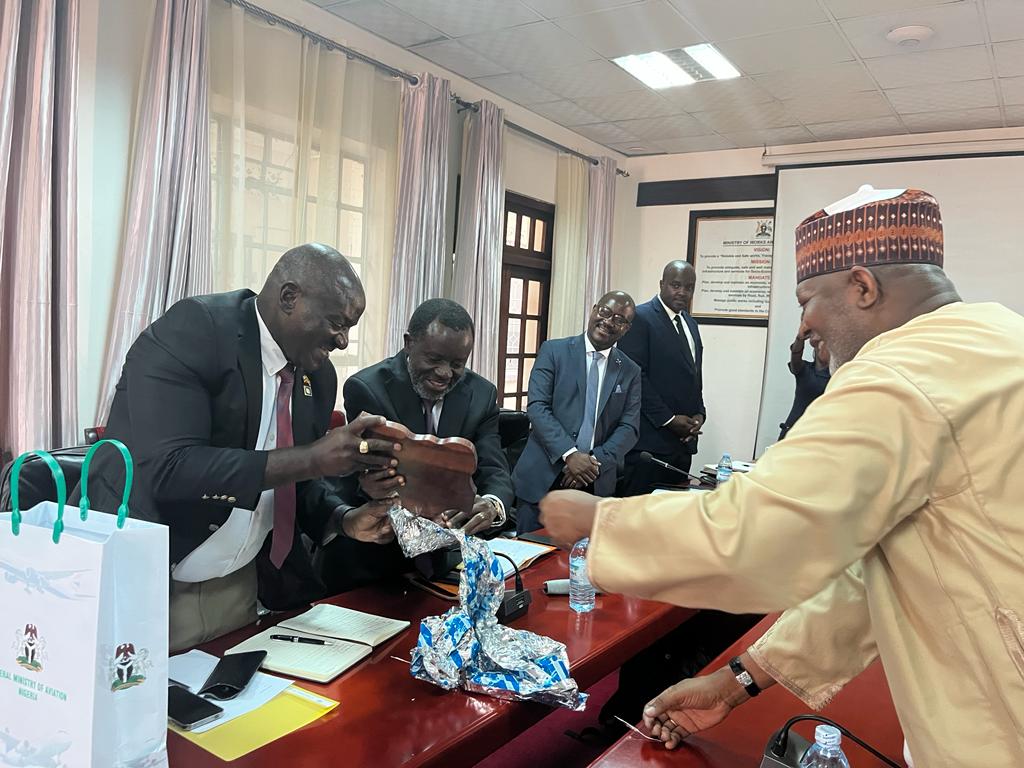
Transportation, Aviation stakeholders to discuss economic rescue measures at ATACA annual seminar

The Ministers of Transportation and Aviation, alongside renowned experts in the aviation, rail and maritime sectors have been lined up to speak on measures required to rescue the Nigerian economy through the country’s various modes of transportation.

The industry professionals are to outline these measures at the 2022 Annual Seminar of the Abuja Transport and Aviation Correspondents Association (ATACA), coming up on December 5, 2022, in the Federal Capital Territory.

The seminar, with the theme: “Nigeria’s Troubled Economy: Aviation, Rail, Maritime As Rescue Sectors.” is being organised by ATACA with its industry partners to proffer necessary measures to tackle the country’s current economic quagmire.

In a statement signed by the ATACA Chairman, Chris Agabi, he explained that the seminar was part of the association’s efforts to create an avenue for stakeholders to discuss strategies through which the transportation sectors would significantly impact and rescue the Nigerian economy.

The Minister of Aviation, Hadi Sirika, and Minister of Transportation, Mu’azu Sambo, are the chief hosts for the seminar, while the Minister of State for Transportation, Prince Ademola Adegoroye, is the host.

The Chief Economic Adviser, Cross River State, who once served as Private Sector Specialist for the African Development Bank, Dr. Francis Ntamu, is the guest speaker at the all important seminar.

The rise in NIgeria’s inflation coupled with the crash of the local currency against the United States dollar and the plunge in the country’s oil production due to massive oil theft, have led to economic instability nationwide.

There have been calls for economic diversification and the need to explore other avenues of growing the nation’s earnings in order to address the instability in the economy.

Experts have stated that the transportation sectors could support in rescuing the troubled economy if the right measures are adopted.

It is therefore in this regard that a body of journalists covering the sector has deemed it necessary to engage the relevant stakeholders and industry players in both public and private sector to brainstorm on the way forward.

The seminar will also witness inciteful presentations from the Nigerian Shippers Council, Federal Airports Authority of Nigeria, Nigerian College of Aviation Technology, Maritime Academy of Nigeria, Nigeria Ports Authority, Nigeria Railway Corporation, among others.

Xi’s trip demonstrats China’s role as a rational, confident and responsible major country

By He Yin, People’s Daily

From Nov. 14 to 19, Chinese President Xi Jinping attended the 17th Group of 20 (G20) Summit in Bali, Indonesiaand attended the 29th APEC Economic Leaders’ Meeting in Bangkok, Thailand, as well as visited Thailand.

The trip, as the first one paid by the Chinese President after the successful conclusion of the 20th National Congress of the Communist Party of China (CPC), drew global attention.

During his six-day trip, Xi participated in more than 30 events, which has sent out a loud voice for promoting global development and leading global governance, demonstrating China’s role as a rational, confident and responsible major country.

While addressing multilateral meetings and talking with leaders of other countries, Xi elaborated on the 20th CPC National Congress, Chinese modernization, win-win cooperation between China and the rest of the world, and championed bright prospects of China’s high-quality development and high-standard opening up, sending a strong signal that China will always advance world peace and development and deepen opening up and cooperation with other countries.

It has helped other countries better understand and be more receptive of the CPC’s governing strategy and China’s path and vision.

French President Emmanuel Macron commended the Chinese path to modernization and Singaporean Prime Minister Lee Hsien Loong noted that a strong and friendly China will bring positive influence to the region and the world.

New Zealand Prime Minister Jacinda Ardern called China a major force for promoting the world’s future development and prosperity.

The G20 summit has brought together world and regional major countries and is also a platform for international economic cooperation. It shoulders heavy responsibilities in responding to global economic challenges.

At the 17th G20 Summit, Xi said it is imperative that all countries embrace the vision of a community with a shared future for mankind, and advocate peace, development, and win-win cooperation.

He said all countries should replace division with unity, confrontation with cooperation, and exclusion with inclusiveness, and make global development more inclusive, beneficial to all and more resilient.

He called on all countries to join hands together to answer the question of the times — “what is wrong with this world, what we should do about it.”

China’s important ideas and proposals concerning international economic cooperation were included in a joint leaders’ declaration adopted at the end of the 17th G20 Summit, and 15 cooperation projects and initiatives proposed by China were incorporated in a list of practical cooperation made by the summit. It fully indicated China’s support for multilateralism and contributions to G20 cooperation.

It is believed by international personages that China, advocating solidarity and win-win cooperation, has played a constructive role in making the summit a success.

The APEC is the most important regional economic cooperation platform in the Asia-Pacific. At the APEC CEO Summit, Xi summarized the successful experience achieved in Asia-Pacific economic cooperation, saying the world should follow a path of peaceful development, openness and inclusiveness, and solidarity.

He also encouraged the Asia-Pacific region to bolster the foundation for peaceful development, take a people-centered development approach, pursue higher-level opening-up, strive for higher-standard connectivity, build stable and unimpeded industrial and supply chains, and promote economic upgrading.

At the 29th APEC Economic Leaders’ Meeting, he stressed that the Asia-Pacific region needs to continually deepen the Asia-Pacific partnership featuring mutual trust, inclusiveness and mutually beneficial cooperation, build an Asia-Pacific of peace and stability, bring about prosperity for all in the Asia-Pacific, ensure a clean and beautiful Asia-Pacific, and make itself a region where all are ready to help each other.

Xi’s remarks mirrored China resolution and vision in driving the future development of the world with its own progress and leading global recovery with the recovery of the Asia-Pacific.

After the 29th APEC Economic Leaders’ Meeting, APEC economies issued a declaration and endorsed an outcome document on Bio-Circular-Green Economy, which reflected China’s proposals in building an Asia-Pacific community with a shared future and the country’s new development philosophy.

During Xi’s visit this time, Xi and his U.S. counterpart Joe Biden had their first face-to-face meeting in three years. The two presidents had a candid and in-depth exchange of views on issues of strategic importance in China-U.S. relations and on major global and regional issues.

The international community believes that the meeting will help China-U.S. relations steer clear of disruptions and get back to the right track of development.

China and Indonesia furthered their consensus on building a China-Indonesia community with a shared future; China and Thailand announced to build a China-Thailand community with a shared future for enhanced stability, prosperity and sustainability. It indicated that the vision of building a community with a shared future is taking roots and yielding fruits in the neighboring countries around China.

During the trip, Xi met with over ten leaders of foreign countries and international organizations. The compact schedule and fruitful trip once again proved that cooperation, dialogue, and win-win results represent a momentous trend of the times and are the right way to go, and the Cold War mentality and bloc confrontation cannot win public support.

More and more countries have come to realize that China’s development expands the strength of peace and progress, and that China is a reliable friend and partner that they must cooperate with.

The historical trend of peace, development, cooperation, and mutual benefit is unstoppable. The will of the people and the general trends of our day will eventually lead to a bright future for humanity.

Embarking on a new journey in the new era, China will always stand on the right side of history and on the side of human progress.

It will pursue its own development as it strives to safeguard world peace and development, and make greater contributions to world peace and development through its own development, so as to make constant contributions to building a community with a shared future for mankind.

China provides solution for building secure, stable world

By Seymur Mammadov

Azerbaijan is one of the earliest countries to show support for the Belt and Road Initiative (BRI). The initiative promotes the synergy between the development strategies of China and participating countries, promotes the economic development of participating countries and the region as a whole, and promotes global connectivity and international trade.

It has improved and will continue improving the livelihood of the people in the countries along its route, marking an important contribution made by the Communist Party of China (CPC) to world peace and development.

The global economic recovery remains sluggish due to the COVID-19 pandemic and other factors. China, responding to COVID-19 and pursuing economic and social development in a well-coordinated way, has provided meaningful experience for other countries.

I agree with what Chinese President Xi Jinping said that to understand China today, one must learn to understand the CPC. China has set a successful example in the development of socialism, and the leadership of the CPC is the key to China’s achievements.

The CPC is dedicated to the people and forever puts their interests first. Meeting the people’s expectation for a better life is its goal. Under the leadership of the CPC, China has succeeded in eradicating absolute poverty, meeting the target set out in the United Nations 2030 Agenda for Sustainable Development ten years ahead of schedule.

The Chinese civilization values a holistic concept and systematic thinking, and champions mutual learning and exchanges. Drawing wisdom from the fine traditional Chinese culture, the CPC has chosen a development path that best suits China’s national conditions and always marched in the correct direction.

The country has achieved unprecedented success since the reform and opening up. It is always committed to safeguarding world peace and promoting common development in foreign exchanges.

I have read through the book “Xi Jinping: The Governance of China”, which comprehensively demonstrates the new governance philosophy and strategy of the CPC and helps foreign readers to get a full picture of China’s development path and governance model.

President Xi said in a speech he delivered at the CPC in Dialogue with World Political Parties High-Level Meeting that “As all of us human beings live on the same planet, no country should maintain its own security at the cost of others’ security. A threat to another country may turn out to be a challenge of your own.” This left a deep impression on me.

President Xi proposed the vision of building a community with a shared future for mankind, the Global Development Initiative and the Global Security Initiative. He advocates coping with global challenges based on peace and solidarity and creating a security environment featuring fairness, justice, joint participation and shared benefits.

His ideas transcend the concepts of confrontation and Cold War mentality, providing Chinese solutions for building a secure and stable world.

The vision of building a community with a shared future for mankind has been written into multiple bilateral and multilateral documents including UN resolutions, gradually becoming a consensus recognized by the international community.

At present, the world is facing severe challenges, such as food security, climate change, geopolitical conflicts and financial risks. None of these can be solved by one or a few countries.  They call for collaboration from all countries.

The international community needs peace and stability more than ever before. China, by upholding the vision of building a community with a shared future for mankind and pursuing mutually beneficial cooperation and common development, will constantly maintain the stability of the international situation.

(Seymur Mammadov is the director of the international expert club EurAsiaAz and editor-in-chief of Azerbaijan news agency Baku Tribune.)

Gov. Sule approves contracts for rural electrification in Gadabuke Dev. Area, says Hon Shafa

“… as 5 communities which includes karmo, tudu-uku, loko-goma, nakuse and gwargwada are benefiting in the first phase…”

Governor Abdullahi Sule of Nasarawa State has approved contract for rural electrification in five communities of Gadabuke Development Area in Toto Local Government Area of Nasarawa State.

This was part of the present APC administration in the State to ensure that rural dwellers enjoy more dividends of democracy and boost socio-economic activities among the rural populace.

Member Representing Toto /Gadabuke at the Nasarawa State House of Assembly Hon. Usman Labaran Shafa revealed this today in Umaisha while speaking to newsmen shortly after he visited the Speaker of the Nasarawa State House of Assembly Alh Ibrahim Balarabe Abdullahi.

“it is with joy and full sense of commitment and appreciation that His Excellency Engr. Abdullahi Sule has graciously approved contract for rural electrification in five communities of my constituency”

“This no doubt was part of the government commitment, zeal and determination to better the lots of our people, we are highly indebted to the Governor”

“Already, the Engineers handling the work has been mobilized to site to kick start the job immediately and five Villages to benefit are KARMO, Tudu-Uku, Loko-Goma, Nakuse and Gwargwada” Hon Shafa added.

“I want to sincerely appreciate and thank His Excellency Engr. Abdullahi A Sule for his magnanimity and concern for our people”

Shafa (APC Toto/Gadabuke) said the project if completed will enhance development of the people and boost business activities in the area.

Nasarawa Assembly Commences 2023 Budget Defence, pledges enhance synergy with Govt. to achieve global education best standard

“.. as NSUK, COAST, COE appear before education committee friday… “

Nasarawa State House of Assembly, has today commenced the 2023 budget defence exercise with continuous commitment to effectively synergize with the State Government to achieve global best standard in the education sector of the State.

Hon Daniel Ogazi, the Chairman, House Committee on Education, Science and Technology made the pledge when Management of College of Agriculture, Science and Technology ( COAST) Lafia , College of Education ( COE) Akwanga and Nasarawa State University, Keffi ( NSUK) appeared before the committee for their 2023 budget defence at the Assembly Complex in Lafia.

Ogazi said that the importance of the education to societal development could not be overemphsized, hence the need of the committee’s readiness to leave no stone unturned to achieve global education standard in the State.

The chairman while welcoming managements of tertiary institutions on their budget defence described budget defence exercise as one of the constitutional responsibilities of the state lawmakers.

” We have invited you to come to defend your institutions 2023 budget proposals as His Excellency, Gov. Abdullahi Sule on November 22, 2022 has presented the 2023 budget to this House for consideration and approval.

” And the budget has already scaled first and second readings at the floor of this House and Mr Speaker has committed the budget to the House Committee on Finance and Appropriation to work on it and report back to the House, hence the need for this exercise.

” Budget defence is one of our constitutional responsibilities and I believe that you are well equipped with all the necessary documents for the defence.

” Your are to tell us the challenges facing your institutions with the view of addressing them.

” We will work together and partner with you as we are doing our best for the overall development of your institutions and the State at large,” he said.

Ogazi commended the institutions for their good budget presentations and urged them to continue to do more in the area of revenue generation for the overall development of their institutions and the State at large.

He assured that the committee would continue to oversight the activities of their institutions to ensure that right things are done and for the betterment of the education sector.

The chairman also commended Gov.Abdullahi Sule for prioritizing the education sector while assuring of the committee’s readiness to support the state government in its efforts in the education and other sectors.

Earlier, Dr Yahaya Musa Maikafi, the Provost College of Agriculture, Science and Technology, Lafia thanked the committee for always supporting its activities to succeed.

” I want to thank His Excellency, Gov. Abdullahi Sule and this Honourable Committee for giving our institution the much needed support to succeed.

He disclosed that the institution would commence engineering programmes in the 2023 academic session.

On his part, Dr Jonathan Thani, Provost, College of Education Akwanga also appreciated the committee for being up and doing in ensuring improve standard of education in the institution.

He assured of his readiness to continue to key into good policies and programmes that would improve on the standard of education in the instituction.

The provost, however, appealed to the state government for the implementation of 4 years outstanding promotions of academic and non academic staff of the institution.

Also, Prof. Suleiman Bala Mohammed , the Vice Chancellor of the Nasarawa State University, Keffi appreciated the committee for the role it has played in ensuring the taking over of the university staff salaries by the state government.

The Vice Chancellor, who was represented by the Deputy Vice Chancellor ( Administration) Prof. Sa’adatu Liman thanked Gov. Abdullahi Sule for taking over the salaries of staff of the university among other efforts he made for the development of the university.

The vice Chancellor assured of his readiness to maintain academic standard in the institution at all times.

China committed to building Asia-Pacific community with shared future

By He Yin, People’s Daily
On Nov. 17, Chinese President Xi Jinping delivered a written speech at the Asia-Pacific Economic Cooperation (APEC) CEO Summit in Bangkok, Thailand.
On Nov. 18, he attended the 29th Asia-Pacific Economic Cooperation Economic Leaders’ Meeting and delivered an important speech.
Focusing on the major questions of where the world is headed and what the Asia-Pacific should do, Xi profoundly reviewed the historical experiences of the development of the Asia-Pacific and expounded on China’s solution to build an Asia-Pacific community with a shared future and the global significance of Chinese modernization. He has set a direction and boosted confidence for the region in coping with challenges and jointly breaking new ground in development.
Over the past decades, robust economic cooperation in the region has created the “Asia-Pacific miracle” admired across the world.
Today the world has come to another historical crossroads, and this has made the Asia-Pacific region even more important and prominent in its standing and role.
The Asia-Pacific region should stay committed to promoting development and draw experiences from history.
Only by following a path of peaceful development can the region share a solid foundation for development.
History proves that bloc confrontation cannot solve any problem and that bias will only lead to disaster. The Asia-Pacific is no one’s backyard and should not become an arena for big power contest. No attempt to wage a new Cold War will ever be allowed by the people or by the times!
Only by following a path of openness and inclusiveness can the region enjoy constant momentum for development.
Openness and inclusiveness are vital for human prosperity and advancement. Any attempt to disrupt or even dismantle the industrial and supply chains formed in the Asia-Pacific over many years will only lead Asia-Pacific economic cooperation to a dead end.
Only by following a path of solidarity can the region navigate the surging tides of the global economy.
The Asia-Pacific miracle has been created by all regional economies working hand in hand and overcoming difficulties and obstacles. The Asia-Pacific has entered a crucial stage of post-COVID recovery. Only by strengthening cooperation and supporting and helping each other can the Asia-Pacific be a leader in boosting global economic recovery.
In the written speech delivered by Xi at the APEC CEO Summit, he encouraged the Asia-Pacific region to bolster the foundation for peaceful development, take a people-centered development approach, pursue higher-level opening-up, strive for higher-standard connectivity, build stable and unimpeded industrial and supply chains, and promote economic upgrading.
At the 29th Asia-Pacific Economic Cooperation Economic Leaders’ Meeting, he said the Asia-Pacific region should uphold international fairness and justice and build an Asia-Pacific of peace and stability, stay committed to openness and inclusiveness and bring about prosperity for all in the Asia-Pacific, strive for green and low-carbon development and ensure a clean and beautiful Asia-Pacific, and bear in mind its shared future and make itself a region where all are ready to help each other.
What Xi said contributed a Chinese solution to building an Asia-Pacific community with a shared future.
When the peace and development of the Asia-Pacific region are facing severe challenges, the Chinese solution shows a clear way for regional economies to jointly safeguard regional peace and stability, which has created conditions and injected momentum for the long-term and stable Asia-Pacific cooperation.
China, as a member of the Asia-Pacific, has benefited much from the region. In return, it has shared its development gains with others in the region.
Embarking on a new journey, China will advance a broader agenda of opening up across more areas and in greater depth, follow the Chinese path to modernization, put in place new systems for a higher-standard open economy, and continue to share its development opportunities with the world, particularly with the Asia-Pacific region.
The modernization of China, a country with over 1.4 billion people, will be of epoch-making importance in human history. The country will continue to take the people-centered approach with a goal to increase the middle-income population to more than 800 million in the next 15 years and promote the sustained growth of its super-sized market.
It will keep raising people’s living standards and enriching their lives, hold dear humanity’s common values and promote human advancement along a balanced, positive and upward trajectory. The country will pursue all-round green transition in economic and social development and build a community of life for humanity and nature.
China will strive to safeguard world peace and development as it pursues its own development, and it will make greater contribution to world peace and development through its own development.
A China marching toward modernization will bring more opportunities to the world, inject stronger momentum for international cooperation, and make greater contribution to human progress!
Building a clean and beautiful Asia-Pacific of peace and stability, as well as prosperity for all, where all are ready to help each other, conforms to the common interests of all members of this region.
China will unswervingly join hands with other members of the region to build an Asia-Pacific community with a shared future and take Asia-Pacific cooperation to a new height, so as to further improve the wellbeing of the peoples in the region.

Full text of Xi’s remarks at Session I of G20 summit in Bali

Chinese President Xi Jinping delivered a speech titled “Working Together to Meet the Challenges of Our Times and Build a Better Future” here Tuesday at the first session of the 17th summit of the Group of 20 (G20).

The following is the full text of the speech:

Working Together to Meet the Challenges of Our Times and Build a Better Future

Remarks by H.E. Xi Jinping

President of the People’s Republic of China

At Session I of the 17th G20 Summit

Bali, 15 November 2022

Your Excellency President Joko Widodo,

Colleagues,

It gives me great pleasure to attend the G20 Bali Summit. At the outset, I wish to thank President Joko Widodo and the Indonesian government for making these thoughtful arrangements for the Summit. I also salute the Indonesian presidency for its important role in promoting G20 cooperation.

We meet at a time of momentous changes unseen in a century, changes that are consequential to the world, to our times, and to history. The COVID-19 pandemic still drags on with cases surging here and there. The world economy is getting more fragile. The geopolitical environment remains tense. Global governance is seriously inadequate. Food and energy crises are compounded with one another. All this poses formidable challenges to our development.

Faced with these challenges, it is imperative that all countries embrace the vision of a community with a shared future for mankind, and advocate peace, development, and win-win cooperation. All countries should replace division with unity, confrontation with cooperation, and exclusion with inclusiveness. All countries should join hands together to answer the question of our times — “what is wrong with this world, what we should do about it” — so as to tide over difficulties and create a better future together.

All G20 members should take the responsibility inherent in being major international and regional players, and should lead by example in promoting development of all nations, improving the well-being for the whole mankind, and advancing progress of the entire world.

— We should make global development more inclusive. Solidarity is strength, but division leads nowhere. Living in the same global village, we should stand with each other in the face of risks and challenges. Drawing ideological lines or promoting group politics and bloc confrontation will only divide the world, and hinder global development and human progress. With human civilization already in the 21st century, the Cold-War mentality has long been outdated. What we need to do is to join hands together and elevate our win-win cooperation to a new height.

Countries should respect each other, seek common grounds while reserving differences, live together in peace, and promote an open world economy. No one should engage in beggar-thy-neighbor practices, building “a small yard with high fences,” or creating closed and exclusive clubs.

I always believe that the G20 should stay committed to its founding purpose of unity and cooperation, carry forward the spirit of solidarity, and uphold the principle of consensus. “Sugarcane and lemongrass grow in dense clumps.” This Indonesian proverb well captures the value of solidarity. Division and confrontation serve no one’s interest. Only solidarity and common development is the right choice to make.

— We should make global development beneficial to all. Development is real only when all countries develop together. Prosperity and stability cannot be possible in a world where the rich become richer while the poor are made poorer. Every nation aspires for a better life, and modernization is not a privilege reserved for any single country. Frontrunners in development should sincerely help others develop, and provide more global public goods. All major countries should perform their due responsibilities, and do their best for the cause of global development.

The Global Development Initiative (GDI) that I proposed is aimed at meeting the long-term objective and immediate needs of common development of the world, fostering international consensus on promoting development, cultivating new drivers for global development, and facilitating common development and progress of all countries.

Within one year, more than 60 countries have joined the Group of Friends of the GDI. China has established the Global Development and South-South Cooperation Fund, and will increase its funding for the China-UN Peace and Development Fund. We will make a list of items for practical cooperation, set up an open-ended pool of GDI projects, and draw up a roadmap for GDI implementation. We are working with 100-plus countries and international organizations on the GDI, thus providing new impetus for the implementation of the 2030 Agenda for Sustainable Development. China has submitted 15 projects to the “G20 Action for Strong and Inclusive Recovery,” and has participated in five other projects within this framework. We will work with fellow G20 members to deliver on these projects.

— We should make global development more resilient. Economic globalization is encountering headwinds, and the world economy is at risk of recession. Everyone is having a hard time, but developing countries are bearing the brunt. It is therefore more imperative than ever for us to focus on the issue of development. The theme of the Bali Summit, “Recover Together, Recover Stronger,” sends a positive message of the G20’s commitment to supporting the growth of developing countries and preventing divergent and unbalanced global recovery. We need to build a global partnership for economic recovery, prioritize development and put the people at the center, always keep in mind the difficulties faced by developing countries, and accommodate their concerns. China supports the African Union in joining the G20.

All parties should continue to deepen international cooperation against COVID-19, and raise the accessibility and affordability of vaccines, medicines, and diagnostic and treatment methods in developing countries so as to create a sound environment for economic recovery. We should curb global inflation, and defuse systemic economic and financial risks. In particular, developed economies should mitigate the negative spillovers from their monetary policy adjustment, and keep their debts at sustainable levels. The IMF should speed up the on-lending of SDRs to low-income countries. International financial institutions and commercial creditors, which are the main creditors of developing countries, should take part in the debt reduction and suspension for developing countries. China is implementing the G20’s Debt Service Suspension Initiative (DSSI) in all respects, and has suspended the largest amount of debt service payment among all G20 members. Meanwhile, China is working with some G20 members on the debt treatment under the Common Framework for Debt Treatment beyond the DSSI, thus helping relevant developing countries navigate through the difficult time.

Global trade, digital economy, green transition and fighting corruption are key factors driving global development. We should continue to uphold the WTO-centered multilateral trading system, actively push forward WTO reform, enhance trade and investment liberalization and facilitation, and promote an open world economy. China has proposed the G20 Action on Digital Innovation and Cooperation. We look forward to working with all parties to foster an open, fair, and non-discriminatory environment for digital economy so as to narrow the North-South digital divide. In tackling climate change and transitioning toward green and low-carbon development, the principle of common but differentiated responsibilities must be upheld. It is also important to provide funding, technology and capacity-building support for developing countries and promote cooperation on green finance. International cooperation is very important for fighting corruption. G20 members must maintain zero tolerance for corruption, step up international cooperation on fugitive repatriation and asset recovery, and refuse to provide “safe havens” to corrupt individuals and assets.

Global development would be impossible without a peaceful and stable international environment. With this in mind, I have put forward the Global Security Initiative (GSI). Our goal is to work with all parties to champion the spirit of the UN Charter, act on the principle of indivisible security, uphold the vision of common, comprehensive, cooperative and sustainable security, advocate the resolution of conflicts through negotiation and settlement of disputes through consultation, and support all efforts conducive to the peaceful settlement of crises.

Colleagues,

Food and energy security is the most pressing challenge in global development. The root cause of the ongoing crises is not production or demand, but interrupted supply chains and international cooperation. The way out of this is for all countries to, with the coordination of the UN and other multilateral international organizations, enhance cooperation on market supervision and regulation, build partnerships on commodities, develop an open, stable and sustainable commodities market, and work together to unclog supply chains and stabilize market prices.

We must resolutely oppose the attempt to politicize food and energy issues or use them as tools and weapons. Unilateral sanctions must be removed, and restrictions on relevant scientific and technological cooperation must be lifted. In reducing the consumption of fossil fuel energy and transitioning toward clean energy, we need to give balanced consideration to various factors, and make sure that the transitional process does not hurt the economy or people’s livelihood. Developing countries face more acute risks in food and energy security. The G20 should keep this in mind, and provide necessary support in production, collection, storage, funding and technology. Since the UN has established the Global Crisis Response Group on Food, Energy and Finance, the G20 should voice its support for it.

Over the years, China has made major contribution to global food and energy security. This year, China has proposed, together with six partners including Indonesia and Serbia, the Initiative of International Cooperation on Resilient and Stable Industrial and Supply Chains, joined other countries in calling for the establishment of the Global Clean Energy Cooperation Partnership, and put forward the International Cooperation Initiative on Global Food Security in the G20. We look forward to deepening cooperation with all parties in these areas.

Colleagues,

The Communist Party of China has recently convened its 20th National Congress, laying out the goals, tasks and guiding policies for the cause of the Party and the country in the next five years and beyond. China will stay committed to the path of peaceful development, stay committed to deepening reform and opening-up, and stay committed to promoting national rejuvenation on all fronts through a Chinese path to modernization. A China marching toward modernization will bring more opportunities to the world, inject stronger momentum for international cooperation, and make greater contribution to human progress!

Thank you.