Smuggling, politics fuel Boko Haram in Borno -investigation

Terrorists activities in Borno State has refused to abate due to the flourishing but illegal business of smuggling in some local councils in the state as well due to the interests of some politicians who benefit from the lingering crisis, investigations have revealed.

Terrorists activities by Boko Haram which started in 2009 has refused to die down completely in Borno State despite the heavy military clampdown on their activities over the years. 

The military had in 2010 routed the terrorists and arrested their leader, Mohammed Yusuf and handed him over to the police which sent the sect underground for almost two years before the resurfaced.

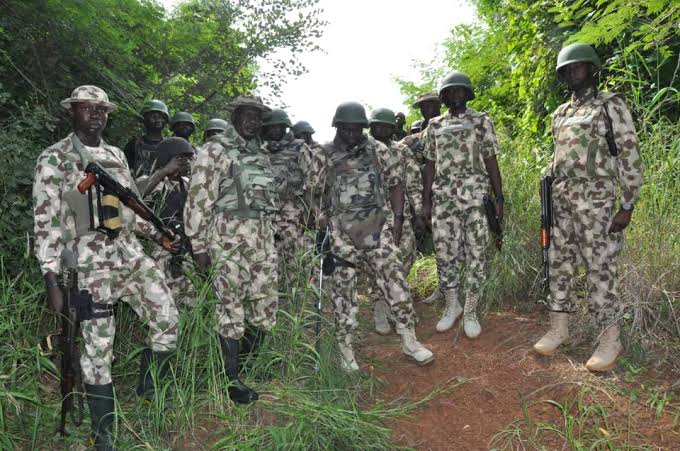
The military since the coming of the current administration has been able to defeat the terrorists and overrun their operational base at Sambisa forest while recapturing 20 local councils spread across Borno, Adamawa and Yobe States. 

The Nigerian military had between April and July also killed more than 1500 of the terrorists including over 30 of their top commanders and arrested more than 40 of their informants. 

But while the activities of the terrorists have been curtailed in the Northeastern states of Adamawa, Gombe, Bauchi and to a large extent, Yobe, they have continued to regroup around communities in Borno around the Chadian border where they sometimes launch attacks on communities.

The terrorists had in July attacked a community in Gubio where they killed about 80 persons including women and children.

Investigations by our correspondents have shown that the activities of the terrorists in the other states outside Borno were checked through sustained collaboration with the political class in those states and the effective manning of border points.

Residents of border towns in those states raise alarm when they detect any suspicious movements and close ranks with security agencies to nip the situation at the bud.

The situation is however different in Borno State where the political class h refused to cooperate with the security agencies and some businessmen prefer to sustain the reign of terror due to their political and business interests. 

At stake, our correspondents discovered, is the thriving illegal business of smuggling from where tonnes of rice and other banned items are smuggled into Nigeria while millions litres of fuel are transported into Chad and other neighbouring countries. 

The route has also become the hub of illegal arms importation due to the withdrawal of most security agencies from the area for fear of being attacked by the terrorists.

A source at the Banki axis who prefers not to named, told our correspondents that the business works both ways for terrorists and the smugglers.

“While the insurgents are able to smuggle arms through these routes, the other businessmen ship contraband with little or no fear of being apprehended.”

He said while the fear of Boko Boko Haram drives away other competitors, those who are deep into the business prefer to sustain it as the volume of their smuggling activities has intensified.

The major smuggling route is along Gamboru-Banki and Gaidam axis of Borno State.

Nigeria’s Ministry of Interior, had a time disclosed that there are over 1,499 illegal and 84 legal officially identified entry routes into Nigeria.

The ministry confirmed that the existence of the illegal routes permit illicit transnational arms trafficking and that terrorists and smugglers take advantage of this leakage to smuggle small arms and light weapons (SALWs) into Nigeria, as a result of which over 70 percent of about 8 million illegal weapons in West Africa have found their ways to Nigeria.

Several arrests have been made in the past by the Police  and Customs but these have not deterred the smugglers. 

A Custom official told our correspondent that they have apprehended smugglers of  assault rifles who hide them in sacks of maize several times. 

The Borno-Yobe Command of the Nigeria Customs Service (NCS), had at a time seized a truck conveying 300 bags of imported rice in Borno.

The Zonal Controller of the Command, Abdullahi Biu, who made the disclosure, said the truck was intercepted by men of the command along Bama-Banki Road following intelligence report that it was conveying imported rice concealed with animal feeds and charcoals.

Nigeria is a diverse country covering 923, 768 square kilometers with more than 36, 450 kilometers of land and 

maritime borders, shares 770 kilometers of land borders 

with Benin Republic in the West, 90 kilometers with Chad 

and 1,500 kilometers with Niger in the North, 1,700 

kilometers with Cameroon in the East and shares 853 

kilometres of maritime border with the Atlantic Ocean 

known as the Gulf of Guinea along the southern coast line. 

On the whole, Nigeria is bounded by a total of 4,910 

kilometres outstretch of borders.

A recent independent study on border crime has shown that the phenomenal rise in smuggling of goods, money laundering and drug trafficking and other trans-border crimes within the border areas with Borno State has become a major source of worry, more so as it is growing in scale and momentum without a corresponding clear and coordinate strategy for dealing with it.

Problems caused by porous borders in Borno State over the years, almost put the economy of the country to a halt, the study concluded. 

On the political turf, there are indications that many of the politicians in Borno do not want the insurgency to end because it serves their interests in various ways.

The terrorists according to our findings have scared away many top politicians from the state who would have given their local counterparts a good run for their money.

Such politicians hardly stay beyond two days and hurriedly leave while many have not been to their communities for years.

The politicians on ground see this as working in their favour and prefer the situation perists.

The insecurity also shields public office holders especially at the local government levels from accounting for the resources allocated to them and provides them with good excuses not to do any project. 

A source told our correspondents that, “The local government funds have become an all purpose funds that can be disbursed without scrutiny.”

These have made the stakeholders reluctant to sit down and find a lasting solution to the problem and sometimes antagonize the military for doing its job.

One of the top politicians however denied the allegation saying the reason they sometimes don’t raise their voices against the terrorists is due to fear of being attacked.

Politics not military responsible for Boko-Haram resurgence, Ebute writes NGF

Third Republic Senate President, Senator Ameh Ebute, says a lack of political collaboration and not sabotage on the military’s part is behind renewed Boko Haram/ISWAP activities in the country. 

The elder statesman made this known in an open letter to the Nigerian Governors Forum (NGF) on Wednesday.

According to Senator Ebute, while Boko Haram/ISWAP threats have almost vanished in neighbouring states, it persists in Borno due to the unwillingness of political leaders to partner and support the military. 

The erstwhile lawmaker urged the NGF to call their counterpart from Borno, Babagana Zulum, to order, adding that his administration hasn’t been cooperative with authorities towards ending the Boko Haram scourge. 

“If the truth must be told, with the way and manner the political authorities in the state are treating the threats posed by Boko Haram, we might experience the worse soon,” the letter reads in part.

“In our opinion, it is an anomaly to assume that the task of securing Borno State is the exclusive preserve of the Federal Government alone.

“The case of Borno state is unfortunate because it has remained the unresolvable base of the insurgency not because the Federal Government has not lived up to expectations, but because the current government in the state has not deemed it necessary to support the military in their operations.

“Has the state government been cooperative with the military authorities towards ending the Boko Haram scourge? These questions are because all we see in the media is either the state Governor is attacking military commanders at checkpoints or his Deputy speaking to our selfless men and women in a very derogatory manner.”

Ebute further advised Zulum to take a queue from governors of Yobe, Bauchi, Adamawa and Gombe states, all of whom, according to the ex-Senate President have always been on the side of the troops. 

The reverse, he said, has dampened the morale of the troops and in turn, bolstered criminal activities. 

His words: “The governors of Yobe, Bauchi, and Adamawa and Gombe states have indeed set examples worthy of emulation for their continuous support towards ensuring there is no resurgence of Boko Haram in their domains. This they have achieved by working day and night with the military.”

Challenging the governors to avail more resources for the military, Senator Ebute, however, reiterated that the troops must be encouraged and appreciated to continue to give in their best in the task at hand. 

“Governors as Chief Security Officers are aware that resources are needed in security operations. As such, they must advocate for more resources for the military to aid their operations,” he said. 

“The military must be encouraged and appreciated to continue to give in their best in the task at hand. The psychological implication of these cannot be overemphasized.”

Insecurity: Centre seeks improved synergy to double military’s past successes

The Save Humanity Advocacy Centre (SHAC) has called for enhanced synergy, consultation and less conspiracy among political leaders and relevant stakeholders to double the Armed Forces’ successes recorded in the last five years. 

According to SHAC, the strategies being deployed by the military hierarchy has been effective despite sabotage by International Non- Governmental Organizations and the political actors within the theatre.

The centre made this known in its abridged strategic report on the Boko Haram crisis in Nigeria from 2010 till date and the effectiveness of the Nigerian Military strategies towards addressing the threats posed by the Insurgency. 

In the report signed by its Executive Secretary, Abubakar Ibrahim, on Wednesday, the SHAC analysed the genesis of the Boko Haram crisis, the approach of previous governments and what the current administration is doing differently. 
Among others, the centre recalled that the military headquarters was moved from Abuja to Maiduguri, funding for operations drastically increased and new military leadership were appointed. 

This, according to the report, has resulted in a significant turnaround in the prosecution of the Boko Haram war in favour of the Nigerian troops who are edging closer to the end of its clearance operations. 

In order to sustain the momentum, the centre, however, urged stakeholders to join hands with the federal government.

While calling on religious and community leaders to support the troops, SHAC advised political leaders to desist from undermining their efforts. 

Read the abridged report below:

Introduction:

The Boko Haram crisis in Nigeria has claimed thousands of lives and displaced millions of people. It has been estimated that the cost of the damages in North-East Nigeria is in the region of $9billion since 2009 when the group began its violent campaign in Nigeria.

Since 2009, the Boko Haram insurgency and the government’s military response have killed tens of thousands of civilians and displaced millions across the Lake Chad region, which straddles Cameroon, Chad, Niger, and Nigeria.

Boko Haram re-emerged in 2010 under the leadership of Abubakar Shekau, carrying out sporadic attacks across the northeast. Its clandestine tactics gradually grew more sophisticated, but the Nigerian government was slow to recognize the extent of the crisis. Then-President Goodluck Jonathan instead framed Boko Haram as a terrorist organization with ties to international jihadist networks, thereby laying the ground for a narrow counterterrorism response.

In 2013, the Nigerian Military intensified its campaign against Boko Haram. Yet its indiscriminate tactics failed to degrade the group’s capacity and deeply alienated the region’s civilian population. A state of emergency imposed on Borno, Yobe, and Adamawa States only deepened the cycle of violence.

In April 2014, Boko Haram’s kidnapping of 276 female students from the town of Chibok made worldwide headlines, drawing greater policy attention to the crisis. Several Western governments—including the United States—offered technical assistance and intelligence-sharing to help find the girls.

In 2015, a renewed military offensive began making headway against the group. The Nigerian MilitaryMilitary seized back most of the territory previously held by Boko Haram. Although major military campaigns in 2015–2016 succeeded in degrading the group’s territorial control, Boko Haram has proven remarkably adaptable in its tactics: Since early 2017, military gains and improved security in parts of north-eastern Nigeria have spurred a greater focus on conflict stabilization measures.

The Issues: 2010-2015

From 2010 onward, Boko Haram started launching a series of attacks on security structures and military installations in the North-Eastern part of the country. For example, on September 7 2010, Boko Haram attacked and overrun a prison in Bauchi, freeing over 700 inmates in the process. Between 2010 and 2015, Boko Haram attacks became more daring and brazen. Never in the history of political violence in Nigeria had any group deliberately targeted not just military structures but military formations and barracks. The attacks launched on Giwa Barrack and Baga military base in Borno State in 2014 and 2015 are cases in point. In the two encounters, over 500 lives were lost. What became noticeable in the course of the confrontation was that the adversaries simultaneously employed asymmetric and conventional tactics and strategies in waging war.

The fact lends credence to the lackadaisical approach by previous administrations towards addressing the threats posed by the Boko Haram group. It was stated in several fora that the Goodluck Jonathan administration saw the emergence of the Boko Haram group as a ploy by the North against his administration following the death of President Umaru Yar’Adua in 2010. Consequently, the government paid little attention to the activities of the group now led by a radical Abubakar Shekau. The group, therefore, grew in strength and sophistication and continued to wreak havoc in North-East Nigeria.

Another factor that was of significant concern was that lack of professionalism in the Armed Forces occasioned by mass corruption that saw monies meant for the purchase of arms and ammunitions ending up in private pockets. This fact consequently led to casualties of immeasurable proportion on the side of the Nigerian troops, and also the Boko Haram group capturing territories on Nigerian soil.

The government in Nigeria between 2010 to 2015 exhibited a lack of political will to end the Boko Haram crisis. This nonchalance put the Nigerian MilitaryMilitary under strain and lacking in the right motivation and equipment to confront the Boko Haram terrorist group headlong. This also led to near incapacitation of the Nigerian MilitaryMilitary that came under heavy bombardment from the Boko Haram insurgent group with no meaningful response from the Nigerian Military.

The 2015 Baga Massacre is an example of how incapacitated the Nigerian MilitaryMilitary were in dealing with the threats posed by the Boko Haram group. Boko Haram overran a military base that was the headquarters of the Multinational Joint Task Force containing troops from Chad, Niger, and Nigeria. The terror group then forced thousands of locals from the region and committed mass killings.

Aside from this, the country was generally unsafe with countless Boko Haram attacks on crucial government infrastructures such as the headquarters of the Nigerian Police Force and the Headquarters of the United Nations in Nigeria. Public places such as motor parks, places of worships were not spared either as Boko Haram imposed a regime of absolute fear in the country. The government seemed clueless on ways to address the threats posed by the Boko Haram group, so much, so it blamed members of the opposition, while the country continued to bleed.

2015-2020

The change of government in May 2015, has brought about a significant difference in the prosecution of the Boko Haram war. Upon assumption of office, President Muhammadu Buhari promised to take the issue of security.

President Muhammadu Buhari has made some modest reforms to improve the Military’s effectiveness against Boko Haram. He moved the Military’s headquarters from Abuja to Maiduguri, increased funding for operations in the area, and appointed new military leadership.

Among his earliest acts in office was to replace the heads of the army, navy, and air force. The new army chief by many accounts has taken a more proactive approach than his predecessors toward countering the group. For example, they moved the army’s operational headquarters from Abuja to Maiduguri and have deployed more long-range patrols in the region. Experts suggest that the Military is now conducting more strategically-focused operations, such as those that target Boko Haram’s logistics routes.

According to reports, morale within the army has improved under the new leadership. The government has arrested several former senior officials on corruption charges, including former President Jonathan’s National Security Advisor, who has been charged with fraud over a $2 billion arms deal for equipment that was reportedly never delivered. Jonathan’s former chief of defence has been accused of stealing $20 million from the air force, and, as of late March 2016, some 300 individuals, including army officers, and companies were under investigation for the embezzlement between 2011 and 2015 of an estimated $240 million in fraudulent or overpaid defence contracts.

Under the present administration, Nigeria has sought military support from its neighbours, who increasingly suffered attacks during Boko Haram’s upsurge. Since 2015, Cameroon, Chad, and Niger have deployed thousands of troops as part of a multinational force authorized by the African Union. The coalition has been credited with helping the Nigerian MilitaryMilitary retake much of the territory claimed by Boko Haram and reduce violence linked to the group to levels seen before 2014.

The Nigerian Army has introduced various counter-insurgency strategies that have recoded multiple gains.

Aside from the reclaiming of territories once under the control of the Boko Haram group, the Nigerian Army also displaced the group from their operational headquarters in Sambisa forest.

The period from 2015 to date has also witnessed a transformation of the Nigerian MilitaryMilitary from a force in disarray to a professional fighting force fighting within the rules of engagement and respect for human rights.

Conclusion:

This report concludes that the period between 2010 to 2015 could be regarded as one of the lowest points in the history of the Nigerian Military because of the inability to deal with the threats posed by the Boko Haram group. The period was also occasioned by the dearth of arms and ammunitions in the Nigerian Military as well as a high rate of lethargy amongst the officers and soldiers in the prosecution of the war against Insurgency.

It is indeed a statement of fact that with the advent of the Muhammadu Buhari administration in 2015 the fortunes of the Nigerian Military changed as evident in the prosecution of the war against terrorism in Nigeria. A cursory look at the available indices indicates that there have been substantial gains in the fight against Boko Haram terrorist group.

This period has seen their ranks broken, and they have resulted in aiming at soft targets in women and children, going on rampages in villages and causing destructions to paint a picture of a potent fighting force. However, in truth, they are in disarray. The troops have displayed the right mental balance in the prosecution of the war, and this has led to the tangible gains recorded so far. All of these gains are attributable to the commitment of President Muhammadu Buhari to address the various threats posed by the Boko Haram group.

Recommendations:

After extensive study of the Boko Haram crisis from 2010 to date, the following recommendations are made:

All stakeholders must join hands with the federal government in the war against terrorism in Nigeria.

The political leadership in the country must desist from attempting to undermine the efforts of the Nigerian Military by engaging in acts that are counter-progressive in the war against terrorism.

The religious and community leaders in the North-East must continue to support the Nigerian Military in its operations in a bid to bringing to an end the Boko Haram crisis.

2023: Mamman Daura qualified to speak on Nigeria’s future – Group

The Coalition for Nigeria (CN) says it is in order for President Muhammadu Buhari’s nephew, Mamman Daura, as an elder statesman, to speak on the future of Nigeria.

Speaking at a press conference on Wednesday in Abuja, Patriot Sabo Ode, President of the Coalition expressed total support for the veteran journalist’s vision for a new Nigeria. 

Daura had in a recent interview aired by BBC Hausa Service dismissed the issue of zoning and rotation of the nation’s presidency.

He had argued that competence, not geography, should determine the next president of Nigeria in 2023, stressing that: “This turn-by-turn was done once, twice, and three times. It is better for this country to be one it should be for the most competent person and not for someone who comes from somewhere”. 

And according to CN, the outrage that trailed Daura’s assertion is “unnecessary due to the noble and patriotic goal it is capable of achieving for the country”.

The group added that Daura’s preference for competence over parochial considerations should be applauded, especially as he did not in any way favour any region or zone. 

The Coalition, however, advised the Ohanaeze Ndigbo and others that is high time the country moves away from parochial sentiments and submit to the dynamics of modern time. 

The group further said it is 100 per cent behind Daura in his quest to ensure that qualitative and best form of leaders for the country emerge in 2023 and beyond. 

Read the full statement below:

Gentlemen of the press, we are delighted to address you on a matter that has recently stirred unnecessary controversy on the basis of the misinterpretation given to it.

We are of the view that the controversy evoked by the statement from one our most respected elder statesman in the country, Malam Mamman Daura, is not only misplaced but unnecessary due to the noble and patriotic goal it is capable of achieving for the country.

Besides, it is our considered opinion that if the context of the statement made by Malam Daura can be viewed objectively and without sentiments, the nation would be spared all the uproar and set on the right path to true and quality leadership. 

The Issue

Malam Mamman Daura, who is known to be one of the closest persons to President  Muhammadu Buhari, had on Tuesday, stated in the course of an interview with the BBC Hausa Service, that competence, not geography should determine the next president of Nigeria in 2023 and beyond.

He was quoted to have said that, “This turn-by-turn (presidency), it was done once, it was done twice, and it was done thrice… It is better for this country to be one. It should be for the most competent and not for someone who comes from somewhere.”

This statement if viewed objectively implies that since Nigerians have tried the rotational presidency three times already, it would be better to go for the most qualified candidate in 2023 irrespective of whether he comes from the North or the South.

But this trite and wise statement has however been given various interpretations by sections of the country, who view it as an attempt by the North to deny other regions in the country the opportunity to have a shot at the presidency as the eight-year tenure of the current administration ends in 2023.

Reactions

The apex Igbo socio-cultural group, Ohanaeze Ndigbo, for instance, condemned the call by Malam Daura, saying it is the turn of the South, particularly the Southeast, to produce the president in 2023.

Ohaneze in its reaction said Mr Daura’s statement was self-serving and views it as part of a plot to deny the Sout, and in particular the Southeast, the Presidency.

Said Ohanaeze, “They ganged up to push President Jonathan aside because they believed it was the turn of the North to produce the President”.

“Having benefited enormously from his nephew being the President, he now wants it jettisoned because it is the turn of the South”.

The organization then warned that equity should not be sacrificed on the altar of parochialism since it was the rotation sentiment that produced the present incumbent.

It said, “Talking about competence or most qualified, was President Buhari the most qualified Nigerian when he ascended the presidency? Has he proved to be the most competent? Are the service chiefs the most competent among their colleagues to warrant they’re being retained beyond their tenure?”

“Now that it is the turn of the South, precisely South East, he is mouthing most qualified and competent. Equity is a constant flagship for peace and good governance. Without it, there will be continued agitation and crisis.”

The Afenifere on its part said the Daura’s interview had exposed the deceit of the North and its selfish agenda.

The group said, “It is amusing to see those, who were singing zoning or tearing down of Nigeria before 2015, now becoming the apostles of competence after taking eight years. This is the most selfish orchestra.

The Niger Delta socio-cultural group, the Pan Niger Delta Forum (PANDEF) also condemned Daura’s position and described Daura’s statement as not only insensitive but ‘most unfortunate and unarguably capable of creating unnecessary tension in the country.’

Other groups and individuals also spoke in a similar vein with most latching high on emotions while leaving the substance of the issue addressed by Malam Daura.

The crux of the matter

It is at this juncture that we wish to put in proper perspective, the issue raised by Malam Daura and to situate the statement in its proper context.

First and foremost, Malam Daura did not say any region should be favoured for the presidency in 2023.

His comment did not in any way show favour to any region or zone, neither did he exclude any region or zone as not being competent to provide credible leadership for the country in 2023 and beyond.

He only sought to emphasise the merit of competence over parochial considerations.

What his statement implies is that if the best candidate happens to be from any zone in the country, whether the person is from the South-south, Northeast, Southeast, Northcentral, Southwest or Northwest, that person should automatically qualify to be president of Nigeria. 

This means that if competence is lacking in any of the candidates from any zone including the North where Daura hails from, then that persons should not be given the chance to rule Nigeria.

How that implies that he is favouring the North beats one’s imagination as nowhere was that implied in the statement.

Another thing is that Malam Daura’s statement seeks to place merit above all other considerations for the leadership recruitment process in Nigeria which is what all well-meaning Nigerians have been hankering on as opposed to a situation where sentiments are allowed to be the overall guiding principle. 

Addressing some of the concerns 

Having said that, it is pertinent to address some of the issues raised by these groups and individuals.

To say that Malam Daura is raising the issue now because the North would be expected to leave power in 2023 is akin to trying to railroad other Nigerians into believing there was an agreement entered into for some zones not to contest in 2023.

In 2015 as well as 2019, political parties fielded candidates from different zones in the country without exclusion. This presupposes that all qualified Nigerians were eligible to contest irrespective of the zones they hail from hence what would be the basis to assume that a particular should be excluded in subsequent elections?

Again, to say that President Muhammadu Buhari is a product of zoning is one of the cheapest lies anyone can weave in contemporary history.

Recall that when Buhari declared his intention to run as Nigeria’s President in 2001, it was on the platform of the ANPP and the party at that time had not provisioned for zoning in its Constitution.

The APP which later became ANPP,  if you will recall, had given its ticket to Olu Falae in the 1999 election and Falae was expected to pick the form in the subsequent election but did not show up.

Rather, it was people like Rochas Okorocha, Harry Kande etc that contested in the primary of the party with Buhari.

The fact that the other aspirants were from other zones in the country showed that the party never gave zoning any primacy but allowed each individual to run on merit.

This had been the principal Buhari stood for as he consistently ran for elections irrespective of the perception in the then ruling Peoples Democratic Party, PDP, of where the presidency was zoned to.

This shows that President Buhari has been strong believer incompetence and merit from the beginning and had always used himself as an example to encourage others.

The slant that going on merit is meant to deny the Southeast a chance at the presidency is an insult on the enterprising spirit of the average southeasterner who prefers to work hard for what he desires rather than beg to be given.

It is therefore surprising that Ohanaeze Ndi’Igbo, which should be at the forefront for enthroning hard work and enterprise should be the one positioning the region as waiting for hand out.

The truth is that, at no time did other Nigerian decide that the presidency should go to a particular zone.

In 2015, then President Jonathan contested with Buhari for the presidency on different platforms of political parties.

Then, we did not hear the Ohanaeze saying Jonathan should pull out of the race since the perception is that the North should have it.

If Jonathan had won in 2015, we wonder whose turn it would have been in 2019 as there are at least three other zones in the North and two others in the South that might be interested.

It is surprising that in the 21st century that any right-thinking person should prefer sectional privileges to merit when we should all be striving for the best.

Bringing the issue of the service chiefs or others who are appointees of the President is neither here nor there as these people were chosen at the discretion of the President and we believe that Ohanaeze which is a socio-cultural organisation, lacks the necessary credential to judge whether they’re the best for their fields or not.

Way Out

It is high time the country moves away from parochial sentiments and submit to the dynamics of modern time which trumps competence over sectional considerations.

What is required to achieve that is for the parties to come up with high standards for the selection of their candidates so as to appeal to the electorate. 

This we believe is the way forward if the country is to get it right in its quest for good leadership.

We, therefore, support Mamman Daura 100 per cent in his quest to ensure the qualitative and best form of leaders for the country in 2023 and beyond.

This genuine and patriotic desire for the country should be commended by all well-meaning Nigerians. 

Support for Military: Pro-Buhari group hails Senator Ekwunife, asks APC legislators to lead

The Network of Friends and Supporters of Buhari (NFSB) has saluted the lawmaker representing Anambra Central in the National Assembly, Uche Ekwunife, for putting aside politics to show solidarity with the military in the war against insurgency. 

In a statement signed by Publicity Secretary, Comrade Silas Giwa, on Wednesday, the pro-Buhari group challenged legislators in the ruling party to follow her “sterling example”. 

Despite being a member of the opposition Peoples Democratic Party (PDP), Senator Ekwunife rated the military highly in their fight against Boko Haram/ ISWAP terrorists in the northeast, calling on Nigerians to render maximum support in their final clearance operation.

“Our military has so far been performing well and securing numerous victories against the insurgents within the limits of the resources at their disposal,” she said. “They have been neutralising and containing many fronts.”

Commending the Senator, the Network of Friends and Supporters of Buhari said it is unfortunate that APC lawamkers have instead resorted to distracting and castigating the military at the slightest instance. 

According to the group, Ekwunife chose the ” right course of action by supporting the military and imploring ways and strategies to savage the situation”, adding that her 

“position on the solution to the insurgency is profound and reassuring considering that she is a member of the opposition”.

The NFSB, however, advised other lawmakers that have gone rogue and switched allegiance to terrorists instead of pursuing the good of the country at all times in line with the oath they swore to change. 

The group also called on state governors from the northeast, relevant stakeholders and Nigerians to join hands with President Buhari and the service chiefs to put a final end to Boko Haram. 

Read full statement below:

The Network of Friends and Supporters of Buhari is elated to note that there are still Nigerians in position of authority that are capable of evaluating national issues from broad perspectives as recently demonstrated by Uche Ekwunife (People’s Democratic Party, PDP, Anambra Central), who discarded narrow interests to acknowledge that the Armed Forces of Nigeria are doing a good job with fighting terrorism. 

We acknowledge Senator Ekwunife for her forthrightness in the interview she granted to a national newspaper in which she commended the Nigerian Army for the excellent job it has done in fighting the enemies of Nigeria even though she also pointed out the shortcomings that could be improved upon by that institution. 

Our position is informed by the unwholesome activities of some lawmakers, many of them from the ruling party, who have turned their presence in the National Assembly into opportunity for distracting and castigating the military in order to get at President Muhammadu Buhari. It is most of unfortunate that these critics are the ones that have been caught harbouring Boko Haram operatives, financing terrorists or stealing from the money earmarked for combating the insurgency.

For us, what the Senator did is true activism and a sterling example of how to represent a constituency. The eloquence she blended with logic and facts in the interview is a model that we highly recommend for other federal lawmakers that have gone rogue and switch allegiance to terrorists instead of pursuing the good of the Federal Republic of Nigeria at all times in line with the oath they swore.

Her position on the solution to the insurgency is profound and reassuring considering that she is a member of the opposition. She has shown a  hich is something that some lawmakers in Mr. President’s own party have shown they are incapable of.

We advise members of the National Assembly, particularly those that are in the habit of sponsoring questionable motions, to a cue from Senator Ekwunife and learn what true nationalism is. Where they had sown division, she blazed the trail of bipartisanship that is devoid of ethnic and sectarian posturing.   

We urge Nigerians including her colleagues in the National Assembly to support Mr. President win the war on insurgency, which is ordinarily what all Nigerians would be expect members of the All progressives Congress (APC). 

We had for long been forlorn that members of parliament refused to complement Mr. President’s anti-terrorism efforts while rather embarking on clandestine meetings to frustrate the efforts of the Service and Security Chiefs. But Senator Ekwunife has shown us the flicker of hope that has revived in us the possibility that the Commander-in-Chief may yet enjoy the needed legislative support if lawmakers like Senator Ekwunife can penetrate the hard heartedness that lack of patriotism has sown in some of her colleagues. 

The realization that all Nigerians must be involved in the war against terrorism, coming from Senator Ekwunife, an opposition Senator, shows that Nigeria still have people with conscience. We call on the Senate, the House of Representatives and state Governors from the northeast to join hands with President Buhari and the service chiefs to put a final end to Boko Haram’s insurgency and banditry in Nigeria.

As we salute the courage of Senator Ekwunife for daring to say the truth at a time when many are jumping on the bandwagon of uninformed criticism, we are paying Oliver Twist by appealing to her to organize focal group discussions with her colleagues so that she can enlighten them on how to set aside narrow interests to embrace what serves the collective good of Nigerians. 

Who is Afraid of Sadiya Farooq?

By Ernest Attah

I have watched in absolute disbelief the series of coordinated attacks on the personality of the Honourable minister of Humanitarian Affairs, Disaster Management and Social Development. At some point, I got confused and wondered what her sins were and whether it was worth the scathing attacks on her person.
First and foremost, I must add that we are a country in need of help with the way and manner we have elected to destroy people and institutions whenever we are pursuant of our selfish desires, not minding whose ox is gored.
This is mainly responsible for the rot in the system because everybody wants a share of the national cake. Should you dare to stand out of the crowd by doing the right thing, you can be assured that your head would be used for sacrifice to the demons that have held this country down for so long.
I empathized with President Muhammadu Buhari when during the interaction with journalists after the Sallah prayers, he stated that there had been a betrayal of trust in some of the agencies that have come under public scrutiny of late. I could not but agree with him because trust is indeed a burden.
For these individuals that have betrayed the public trust, the society sees nothing wrong with their actions. But those that have elected to maintain that trust in service to the country, are indeed viewed as the villains that must be crucified at all cost. This is the starkness of reality before our own very eyes.
I have longed asked the question of who is afraid of Sadiya Farouq since I noticed the orchestrated attacks on her personality right from the lockdown period where she led her ministry to ensure the proper distribution of palliatives as well as the conditional cash transfers to vulnerable groups in the country.
I began to smell the rat from that period. I suspected that she ensured a transparent process and monies and food items didn’t end up in private pockets as it is the norm and for daring to do things right she must be crucified at all cost.
The recent one is by one Emmanuel Onwuibiko of the Human Rights Writers Association of Nigeria (HURIWA) where he made all manner of allegations against Hajia Sadiya Farouq. I was worried not because of the half-truths, but with the fact that the majority of us have been blinded by filthy lucre that we elected to sell our souls to the demon.
The Emmanuel Onwuiboko treatise was very despicable even though he cleverly tried to veil his intent from the word go. He tried to come from the angel of a concerned Nigeria whose work at HURIWA revolves around the interest of the people. While in truth, it is evident that he has recently been conscripted into the bandwagon of those that have been detailed to demonize Hajia Sadiya Farouq.
The series of coordinated attack is coming from a high place because of the financial implication of sustaining such a campaign week in and week out. I know what it takes to maintain such campaign of calumny in Nigeria today with the likes of Emmanuel Onwuiboko involved. I challenge him to prove me wrong as history is replete with tales of how the same HURIWA under Emmanuel Onwuibuiko has been the darling of agents of cheap blackmail.
I would guess that her towering credentials and impeccable track record has become a source of worry to some highly placed Nigerians, especially those who benefited from the old regime in the management of social intervention for citizens. These individuals might be livid that it is no longer business as usual, and as such, they must get their pound of flesh from the woman that has proved a hard nut to crack.
I think that the government should design a strategy where it would protect some of its star performers against the hawks that have fed fat from the system. If this is not done, I can bet that some of those that are passionate about service to the country might either get overwhelmed or join the bandwagon and open the treasury pot for hawks and vultures to feed fat while the rest of the citizens suffer in abject poverty.
If not for anything, the campaign against Hajia Sadiya Farouq has made her resolute in the discharge of her duties. I say this because the attacks have not deterred her. She remains active and carryout out her duties with such finesse to the chagrin of those that have vowed to pull her down by all means necessary.
As strange as this might sound, I also have a feeling that there might be some insider conspirators in the campaign to discredit the minister. I say this because of how things work within the civil service circle. It’s either they do not like the transparent way she has handled the affairs of the ministry or somebody or group somewhere has eyes in the social intervention funds and the only way they can access it is either to blackmail the minster into submission or get her out of the way outrightly. This is the order of the day, and it’s the new normal because those with the interest of the country are few and the likes of Hajia Sadiya Farouq are also few in this country.
Back to Emmanuel Onwubiko and his marauding gang. He must retrace his steps at the risk of him bagging the title of strategic blackmail consultant. I say this because thinking that Nigerians cannot distinguish between the presentation of facts and character assassination would be the height of foolery.
Yes, I know his argument rests in the fact that he can ask questions which ordinarily should elicit a response. But a situation where you have drawn your conclusion before asking the question makes you the judge in your case. This is what Emmanuel Onwubiko has attempted to do by misleading the public through his HURIWA platform that begins and ends with him.
I must add that sadly, a large chunk of the members of the unsuspecting general public might believe his half-truths about Hajia Sadiya Farouq. But again, that is the price you pay when you elect to stand upright in service to the country. The scavengers would come for you with their fangs and not until they draw blood, they won’t let go.
I can only but empathize with the Hajia Sadiya Farouq as she receives the bashing of her life for daring to be different. My candid advice to her is to stay strong and focused. However, the day she buckles and plays ball with these individuals and groups that would be the beginning of the end of a once glorious chapter in service to the country.
On a final note, throwing stones at the minister is uncalled for and unacceptable. Even the pull-Down syndrome, in this case, has been taken too far hence the need for caution. If there is evidence to back up claims, the rational thing to do is to present to the relevant agencies of government and not this vicious campaign of calumny. Those afraid of Sadiya Farouq must be afraid of her.

Attah writes for TheNigerian News, London.

HURIWA chasing wild goose against Humanitarian Affairs Minister – Group

The New Initiative for Credible Leadership (NICL) says Human Rights Writers Association of Nigeria (HURIWA) is chasing after wild goose over allegations of corruption by the Humanitarian Affairs Minister, Hajiya Sadiya Farouq. 

Rubbishing the claims as untrue, NICL stated that HURIWA’s motive is to undermine the minister’s various social intervention programmes which were acclaimed as tranparent. 

In a statement signed by its National Coordinator, Rev. Steven Onwu, on Monday, the group accused HURIWA of following the script of their paymasters hell-bent on blackmailing Hajiya Farouq. 

The New Initiative for Credible Leadership, however, advised the human rights writers to seek proper clarification before going to town to make weighty accusations. 

It further urged the public to disregard HURIWA’s quest to squeeze the minister into submission so they can have access to funds meant for social intervention programmes. 

Read the full statement below:

The New Initiative for Credible Leadership is in receipt of a statement credited to the Human Rights Writers Association of Nigeria (HURIWA) alleging that the Humanitarian Affairs Ministry is a Bastion of Spectacular Corruption.  

The content of the statement is at best a puerile attempt to undermine the efforts of the ministry in the implementation of the various social intervention programmes of the government towards alleviating the plight of the less privileged and vulnerable groupings in the country. 

HURIWA tried in vain to malign the character of the Honorable Minister, Hajia Sadiya Farouq by making unsubstantiated allegations that lacked every form of objectivity and laced with hatred and the utmost disdain for her personality as well as her commitment to the entrenchment of transparency in the affairs of the ministry and the various social intervention programmes that are currently implemented across the country.  

That HURIWA could describe the ministry as a cash guzzling machine, and a financial disaster indicates that it is not in tune with reality and not conversant with the term social intervention, but instead reading the script of their paymasters that are hell-bent on blackmailing the honourable minister into dancing to their whims and caprices in the disbursement of funds for the various social intervention programmes across the country.

The New Imitative for Credible Leadership frowns at situations where individuals and groups delve into areas they are ignorant about all in exchange for pecuniary gains. One of such groups is the Human Rights Writers Association of Nigeria. 

We wish to state that HURIWA delved into an area that is alien to it as evident in its disjointed postulations about the implementation of the various social intervention programmes of the federal government through the ministry of humanitarian affairs, disaster management and social development.  

It should be noted that HURIWA as an organization is not in proper stead to ask critical questions on the implementation of policies of government because of its track record of fraternizing with individuals and organizations of questionable motives in Nigeria over the years. 
It is expected that HURIWA should have done enough research to realize that the points it raised in its statement were illogical in all ramification and most importantly lacking in every form of credibility. 

We state that the likes of HURIWA are known for their cash and carry policy which is the hallmark of their operations over the years as it has successfully gained notoriety for aligning with the opposition towards discrediting successive governments in Nigeria. 

It, therefore, comes as no surprise that it has elected to brandish this tendency once again through its wild goose chase against the Humanitarian affairs minister who has been outstanding in the discharge of her duties.

The New Initiative for Credible Leadership wishes advise HURIWA to seek proper clarification before going to town and must be circumspect in the kind of briefs it collects from its paymasters in the future as not all are worth the amount of money on the table. 

We consequently wish to inform members of the general public not to be deceived by the antics of HURIWA and its sponsors in their despicable plot to blackmail the honourable minister of humanitarian affairs into submission so they can have access to funds meant for social intervention programmes that would have an impact on the lives of the less privileged and vulnerable groupings in the country.  

HURIWA should do well not to insult the sensibilities of Nigerians as it is not in the proper stead given the antecedents of its promoters that are known to have built considerable expertise in fanning the embers of discord in the polity. 

The general public is consequently advised to view with a pinch of salt statements from HURIWA and other organizations with the same motives that are scattered all over Nigeria. 

The New Imitative for Credible Leadership states in unequivocal terms that there is no iota of truth in the postulations by HURIWA, needless to say, HURIWA acted in exchange for monetary rewards.  

HOW ZULUM IS WORSENING THE SECURITY SITUATION IN BORNO STATE

By Imamudeen Abba

Two persons have governed Borno since the advent of the Boko Haram insurgency in Nigeria. Ali Modu Sheriff and Kashim Shettima who governed the state within the period, used different approaches in tackling the menace though they also have their faults.

While Sheriff can be accused of not taking the necessary steps that would have nipped the Boko Haram scourge in the bud, his approach in handling the issues definitely did not exacerbate the security situation in the state.

If anything, he cooperated fully with the federal troops which enabled the Yar’adua administration to clamp down on the terrorists that led to the capture of their leader, Mohammed Yusuf and made them go underground for more than two years.

Shettima on the other hand handled the matter with maturity and also cooperated fully with the military, though he at one time alleged that the terrorists were more equipped than the military.

But his comments which caused uproar then, showed sympathy to the troops as he was only wishing they had more weapons to fight the terrorists with. But the current governor of Borno State, Prof. Babagana Zulum who has the benefit of learning from the experiences of his predecessors, seem not ready to do that as he seems more absorbed with playing to the gallery.

Prof. Zulum, unlike Sheriff and Shettima, who would rather be discreet and allow the military to do the talking about the security situation in the state, has become loquacious, using every platform and occasion to go gibberish about security issues

He has done that one time too many that he is beginning to sound like a broken record talking from both sides of the mouth. This is a complete departure from the norm in security circles where discretion is seen as the better part of valour. Worse still, his stock in trade has been to openly accuse the military of one act infraction or the other.

This has gone on for some time that many are beginning to suspect his public outing on security issues.

His first major gaffe was in January when he accosted military men on check point duties and accused them of extorting travellers. He drew his conclusions based on hearsay without giving the military the benefit of fair hearing.

Days after he made that blunder, the Maiduguri- Damaturu road, which used to be the safest in the state became impassable as the military not wanting to be seen as benefiting from check points as accused by the governor, momentarily withdrew. He was later to apologise saying the swiftness with which the army announced readiness to immediately investigate conducts involving stop and search of passengers in Maiduguri was commendable.

He said the speedy response from the army headquarters only reaffirms what every Nigerian already knows about the exceptional leadership credentials of the Chief of Army Staff, Lt. Gen. Tukur Buratai, and many others that have done so much for Borno and Nigeria. But before the apology, many hapless travellers have fallen victims of the insurgents.

About a month later when there was an attack on Auno, near Maiduguri, Zulum accused soldiers of abandoning residents at the mercy of Boko Haram insurgents alleging further that soldiers meant to secure the community desert the people around 5pm on a daily basis. The military replied that the troops were conducting clearance operation at other locations when the attack happened and that it will not deliberately allow people to be killed by insurgents. But by then, the harm has been done.

Zulum seems to have a different understanding of his role as the chief security officer of the state as he interprets that to mean he must be in confrontation with the military. Before Zulum became governor, the military had dome excellently well in its field operations recapturing 11 local governments hitherto captured and placed under the authority of the insurgents.

The military had also killed a vast number of the insurgents making many of them to flee to other countries. It was the sustained efforts of the military that made it possible for elections to take in place in Borno state and for Zulum to be elected governor. Even after Zulum became governor, the military did not relent in its efforts

When the Chief of Army Staff, Gen. Tukur Yusufu Buratai relocated to the Northeast in April, Nigerian troops within a short time were able to sustain repeated onslaught against the terrorists.

Between April and July when the Chief of army Staff went to present reports to the President, the military had killed over 1400 of the insurgents including not less than 20 of their top commanders while many of their informants were arrested.

Many of the terrorists also surrendered having come under superior fire power. The height of the victory was when the Boko Haram leader was heard crying in an audio message about how he and his men have been overwhelmed by the troops.

But the Zulum vituperations undermines all that. It portrays the military as lacking in discipline and professionalism that a civilian had to be the one intervening to remind them of how to go about doing their jobs. For instance, the governor has even threatened that after Sallah that he is going back to Kukawa and that if the military are not ready that he will use hunters. He said, “After Sallah, we will go back to Kukawa. We will give time to the military; but if they will not clear Baga, we will mobilise our hunters and vigilantes to recapture Baga… we can’t continue like this. People have taken their destiny in their hands.”

This is mere playing to the gallery as everybody knows that hunters lack the sophistication to engage terrorists.

Such comments from the governor are totally unnecessary and amount to asking the people to ignore the military and take laws into their hands.

Such statements should not come from a governor who has sworn an oath to defend the constitution.

Abba wrote this piece from Maiduguri.

Boko Haram/ISWAP: Who is after the military?

By Sani Muhamamdu

The seeming recent castigation of the military by Borno State Governor Babagana Zulum has revived new posers in Nigeria’s grapple with terrorism. That poser is: who is the Nigeria military fighting in its anti-terrorism war? The answer to this poser would be instructive in how Boko Haram’s campaign of terror would be ended.

The Borno State Governor’s convoy had come under attack from gunmen as he made his way to go distribute relief materials in a part of the state. The jury is still out as to whether that attack was the handwork of Boko Haram or something more insidious that could herald new variables in the security breaches that are plaguing the Lake Chad Basin.

If these new variables do arise, they will not be quite new in the sense that the people of Borno state and environ are no strangers to treachery from people who should ordinarily protect them by virtue of the responsibility imposed by their office. These leaders however turn around to be the very thorn in the flesh of their constituents. Scholars have traced the root of Boko Haram to the political class, which empowered fanatical hoodlums to advance their political fortunes; they engaged in treacherous acts like promising the strict implementation of Sharia code to impassioned youth just so that they can use these urchins to deal with political opponents, something that is not quite possible in a country governed by a secular constitution, only to walk back on the same promise when they have gained office.

It bears mentioning that opportunities were lost to tame the genie that was set free from the bottle in the early days of Boko Haram. Rather than owning up to the crime they have committed in producing the conditions that created the terrorists, politicians in Borno misled the whole of Nigeria until the terror group was born. Latter efforts by the military and security agencies to clear the state of these criminal met with all manners of resistance. Some of these politicians went as far as providing shelter for wanted Boko Haram members and this is not forgetting that under the previous administration, the political class in Borno state freed scores of high-profile terrorists by simply citing orders from above whenever troops arrested them.

The tantrum thrown by Governor Zulum is therefore worrisome because it flags other prospects in the nation’s anti-terrorism war. Just who is the Nigerian Army, the entire military, fighting in Nigeria’s northeast? This question is pertinent because there is more than meets the eye if the governor of Borno state is the one verbally, and even actively, putting the military down for terrorists. It raises the possibility that while the officers and men of the Nigerian Army and the other military branches are patriotically laying down their lives to defeat Boko Haram, politicians, with some as high ranking as the governor, are actually interested in sustaining the insurgency. Only such interest will make Governor Zulum diss the military to the point where he thinks local hunters could do the job.

Whatever support Governor Zulum plans to give local hunters to protect his state from terrorists would certainly lead to the total eradication of Boko Haram if same is extended to the Nigerian military. A quick note here is that support in this sense does not refer to buying Armoured Personnel Carriers (APCs), feeding allowance or mundane material support because giving those to hunters will not yield much. One can safely infer that the kind of support that Zulum has in mind when he mentioned hunters as alternatives will involve rallying the traditional and religious institutions behind them in addition to rapidly rebuilding communities so that the people will have the sense of purpose that will empower them to reorganize into societies that will contribute to defeating the insurgency.

But Zulum is not doing any of these in support of the government troops, rather he is pursuing an agenda that has all the markings of being inimical to the collective desire for peace by Nigerians. His attempt to set the troops up by crying about sabotage in the military when he is not the President or the Chief of Army Staff smells foul. It shows that something is wrong and curiously it appears he was given a script to act by those that have decided against the run of play that the service chief must leave office on the erroneous impression that they must be converted into civil servants, a position that has now been dismissed by better informed Nigerians.

The politicization of the terrorist activities in Borno state has taken a dangerous direction in that the politicians have become vociferous in attacking the military even when it is apparent that is they who need lessons in patriotism because if there is anyone that wants the crisis to continue it is Borno politicians with their associates and not a patriotic military. The extent to which they have thrown caution to the wind is such that one of them, Zullum’s cabinet member went on record to accuse that the the military is in Baga to trade in fish. While nothing can be farther from the truth than this, the damage is nonetheless done because the local population will withhold support from the military on account of spurious tales like this. It seems Governor Zulum’s outburst was not a spontaneous reaction but something that has been rehearsed to further sour relations between the local population and the military. He will have to prove that he did what he did without malice.

Even when malice has been ruled out for Zulum, his associates and the political class in the state, it becomes necessary to interrogate if and how they benefit from the insurgency. At the start of the insurgency, the political class had hired these terrorists to snuff the life out of opponents, they had used their “boys” to commit copycat opportunistic crimes that were attributed to terrorists, politicians have benefitted from violence keeping people away from voting so that they can win elections in which they are not popular, they have gained from collecting allocations that they not have to account for since they can use Boko Haram violence as justification for not executing contracts for which they and their cronies have taken money. None of these political criminalities diminished under Zulum, who may now be aiming to worsen the insurgency so that the political class of that state may further rape its treasury. Maybe unknowingly, the governor is caving into a political class that prefer that the state continue to remain in perpetual chaos than the peace which the military has continued to fight to gift Nigerians.

Unfortunately, this same military is now being accused of sabotaging government’s efforts in Borno State. One would be right to ask, “what efforts?” Can Zulum show his administration’s blueprint towards ending the insurgency? He should ask the neighbouring states what they did to make their states unattractive to Boko Haram terrorists. He should think of calling for a summit of Borno sons and daughters to debate the issues.

The Governor cannot take such proactive step as long as he continues to fraternize with Borno’s political class, the cause of the problem and fuel that has kept its fire burning. For him to marshal the bravery needed for such shift he must first stop his predisposition to blame game and addiction to lamentation. Borno might have been suffering for long but the solution lies within Zulum’s grasp alongside his associates in the state. Additionally, he must accept that the military, other security agencies and the Civilian JTF alone cannot solve the problem. There must be leadership and public mobilization against the Boko Haram terrorists and that is where he comes in as the Governor, in whom the electorate have entrusted the mandate to restore their lives to normalcy.

For the sake of the people of Borno state and families that have borne the brunt of the insurgency, let us all hope that Zulum does not get his wish of having the military leave Borno state for him and his hunters. Should that happen, Zulum will not have the luxury of staging an attack on himself because the beasts that the political class of his state has reared will tear him to shreds.

What the Governor should do is to play his own part, which includes learning to keep quiet and shun theatrics while calling his associates to order so that the military will know what enemies it is fighting on behalf of the nation.

Muhammadu is a public affairs analyst and wrote this piece from Abuja.

Corruption: Frank accuses NASS Minority Caucus of silence on Malami, Magu, others

A political activist and former Deputy National Publicity Secretary of the All Progressives Congress (APC), Comrade Timi Frank, has accused the leadership of the Minority Caucus of the National Assembly of unnecessary silence and indifference amid allegations of corruption against top government officials and some heads of Ministries, Departments and Agencies (MDAs) of Government.

Frank specifically said that the recent allegations of corruption against the Attorney General of the Federation and Minister of Justice, Abubakar Malami, the suspended acting chairman of the Economic and Financial Crimes Commission (EFCC), Ibrahim Magu and stolen crude worth $2.5billion from the nation’s oil giant ought to have caught the attention of the minority caucus if nothing was fishing.

He noted that Magu now suspended and being investigated, had levelled multiple accusations of alleged corruption against the AGF, Malami, over recovered assets and called on the presidential panel and the Independent Corrupt Practices and other Related Offences Commission (ICPC) to investigate the AGF.

One of Magu’s lawyers, Tosin Ojaomo, had reportedly referred to a media report linking Malami to the alleged illegal sale of recovered assets, the sale of vessels, among others for which he (Malami) had threatened legal action against the news medium that reported his alleged complicity.

In a statement made available to newsmen on Tuesday in Abuja, Fank revealed that a motion expected to be read before the Eid-el-Kabir festivities was submitted to the minority caucus of the National Assembly but no action was taken by the members.

Frank said he is in possession of reliable intelligence that the AGF had prevailed on the leadership of the National Assembly minority caucus, especially in the House of Representatives, to drop a motion ought to have been moved on the need to probe his (Malami) activities since 2015.

The Bayelsa-born political activist, however demanded that the minority caucus under Hon. Ndudi Elumelu, should break its silence and quickly act like a vibrant opposition voice in the National Assembly.

Frank said: “We have watched keenly the performances of the opposition caucus in the National Assembly and it has been nothing to write home about.

“Opposition lawmakers are the voice of the voiceless but the supposed voices in the National Assembly appear to have lost their voice to intimidation, fear and personal gains.

“I hereby call on the Hon. Elumelu not to compromise the trust reposed in him as the leader of opposition in the House of Representatives.

“Now that Ndudi’s party (PDP) has pardoned him and recognized his minority leadership of the House, it is a responsibility he must justify.

“Opposition lawmakers in the National Assembly should know that Nigerians are watching them on how they will distinguish themselves among the rubber stamp members of the hallowed chamber.

“The emerging corruption allegations especially as they affect the Attorney-General of the Federation, Abubakar Malami, must be brought to the limelight by the opposition lawmakers, the stolen fund in the NNPC should not also be swept under the carpet, among other allegations of corruption rocking the APC’s administration.”

The outspoken activist asked the Elumelu minority caucus’ leadership to immediately call for a Public Hearing and propel the National Assembly to embark on thorough investigation of all the allegations against some top members of the President, General Muhammadu Buhari’s administration.

He also called on reputable Civil Society Organisations (CSOs), known human rights activists, Labour unions and student bodies not to keep quiet any longer on the malfeasance of the present administration.

He added that posterity will not forgive those who are deliberately keeping quiet and refuse to speak out for the betterment of Nigeria at this critical juncture in the nation’s history.