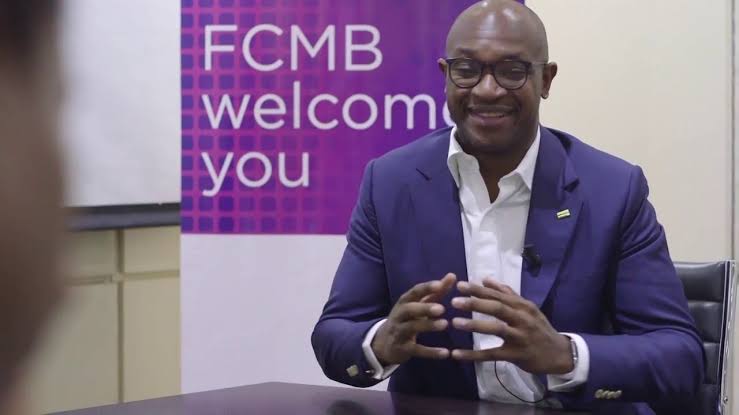
Magu: Group calls for arrest, prosecution of FCMB chairman

Good Governance and Accountability Monitors Group has called for the arrest and prosecution of the Chairman of First City Monument Bank, FCMB, Ladi Balogun.

The group in a statement issued Tuesday in Abuja by its Coordinator, Opeolumi Adeniyi and Secretary, Isaiah Moses, alleged that the chairman allowed his bank to be a platform that is used in aiding and abetting corruption especially in our banking sector.

The group’s demand was necessitated by revelations in the ongoing investigation of the embattled former anti corruption czar, Ibrahim Magu of the Economic And Financial Crimes Commission (EFCC), where the bank was caught in the middle of shoddy transaction.

The Executive officer of the First City Monument Bank, Ahmed Nuru, during his appearance before the Justice Ayo Salami Presidential panel, said his bank ‘mistakenly paid the sum of #473m into the account of pastor Omale’.

The group said the fact that somebody of the position of Ibrahim Magu, who before his disgraceful fall, was head of the nation’s anti-corruption agency can be found wanting for financial malfeasance, speaks volumes.

“As Nigerians and stakeholders in the drive to rescue our beloved country from the precipice it is being pushed into, we are worried that Mr. Ladi Balogun would shamelessly and without considerations to the fight against corruption, expose the FCMB to such ridicule and then claim that his bank mistakenly credited an account with such humungous amount of money and, only realized after four years that such an amount was paid into the wrong account.

“We are therefore, compelled to demand from the Nigerian Government; especially the Presidency that it compels Mr. Ahmed Nuru that he provides answers to these questions.

“Who provided the account details that the said #573m (five hundred and seventy three million) was paid into and, who approved the transaction?

“Who was the officer that verified the account?

“Is Ladi Balogun telling Nigerians that his bank did not carry out internal and external audit of its accounts and banks since 2016?

“Why did it take Ladi Balogun and his board, four years to realize that his organization credited a wrong account with such a huge sum?

“Whose bank account was the amount debited and how is it that the owner of the said account failed to notice such a huge withdrawal and transaction?

“Is this not a self-indictment of the management of the capabilities of the Ladi Balogun owned FCMB that it is involved in money laundering and financial crimes?”

The group further called on President Muhammadu Buhari to protect the banking sector by ensuring that funds are protected.

He should immediately direct the EFCC, NFIU, DSS to instigate an immediate probe of Mr. Ahmed Nuru.

“We also call on both Houses of the National Assembly; the Senate and the House of Representatives to immediately, on resumption hold a Public Hearing to look into this criminality against the collective well-being of Nigerians as it affects the sacredness of our financial institutions that have now been turned into a conduit pipe for the laundering of our resources, the Ladi Balogun run FCMB.

“Also, the Minority Leaders in both Houses of the NASS should, as a matter of national emergency, ensure that this financial sleaze by the FCMB, under the eyes of Ladi Balogun is thoroughly investigated and all those involved and found culpable, be prosecuted immediately.”

Buhari, Current Service Chiefs Still the Best for Nigeria – Igbo Traditional Ruler

A prominent traditional ruler in the Southeast, Igwe Friday Imoko of Effium, in Ebonyi State, has described President Muhammadu Buhari and the current set of Service Chiefs as the best for the country.

The Traditional Ruler said while speaking with newsmen at Abakaliki during the launch of the Nigerian Army Reference Hospital, that if one is to go by uninformed comments about the fight against insecurity in Nigeria, one may be misled into thinking that the President and the military are not doing enough. 

The Igwe cautioned against what he described as herd mentality in the assesment of the ongoing bid to address the security challenges in Nigeria stating that what is being reported in most media houses does not capture the reality on ground. 

He said from the close interaction he has had with the military recently, he has been able to do his own assesment of the situation and has come to appreciate the much the military is doing to address all the security challenges facing the country. 

“If you go by the herd mentality, you will think that the service chiefs are just sitting down and doing nothing and you may try to justify calls for their removal.

“But if you’re privileged to observe as I’ve done lately, the efforts of the military at a close range, then you’ll come to understand what is happening and the level of sacrifice by the military,” he stated.

The Igwe said from what he has observed of the military of recent, that they are committed not just to ward off external aggression, but are ready to defend the territorial integrity of the nation as well as collaborate with the civil authority to check other forms of crime.

He described the current set of service chiefs as the best the country has had saying the success of troops over banditry and insurgency is a reflection of the professional sophistication of the army.

He said, “The Nigerian military has never been tasked to this extent since independence. They are all over the country either fighting to defend the territorial integrity of Nigeria or enforce peace or fight criminals. 

“They are in the Niger Delta, the Southwest, Southeast, Northcentral, Northwest and Northeast at the same time”

He said apart from the insurgency in the Northeast, there are other challenges like banditry, terrorism, kidnapping, cattle rustling and communal clashes that the military is dealing with that Nigerians should appreciate. 

The Igwe particularly commended the Chief of Army Staff, Lt. General Tukur Yusuf Buratai for going to the Northeast to stay in the trenches with troops saying that is a sign of good leadership.

The Traditional Ruler expressed surprise that the army could still find the time to embark on projects at a time they are contending with many security issues from different parts of the country

He said, “I am surprised that the army could still find time and embark on projects for communities like the Army Reference Hospital in Abakaliki which they’re building. 

“This is a good gesture and we appreciate it because that is what we need here especially in this era where medicare is of utmost importance to people “

The Igwe blasted  those  who have continued to say negative things about the country and the military saying they do not  mean well for the country adding it is high time people begin to appreciate the President’s commitment towards making Nigeria a peaceful and secured place to live in.

Igwe Imoko , said he and many traditional rulers had come to Abakaliki to thank the Chief of Army Staff for considering Abakaliki for the good work he is doing on security and for the siting of the Army Reference Hospital in Abakaliki.

He said though they did not meet the army chief in person but were still happy with the kind gesture and prayed for the good health and wellbeing of Buratai and the other sevice chiefs.

The Chief of Army Staff was represented at the occasion which held in Abakaliki last week.

The Army Reference Hospital is expected to serve the host community as well as the entire Southeast in the provision of medical health services.

Nigerian Army as agent of development

By Hyacinth Ogbu

Worldwide, the Army traditionally plays the role of securing the sovereignty and territorial integrity of nations. Excitingly, in Nigeria, the Army has gone a notch higher by establishing its imprimatur as a strong agent of development through the provision of awful and charming infrastructural facilities and social amenities to various communities in the country which play host to them.

Never in the recent history of Nigeria has the country been troubled by multifaceted insecurities than what it is experiencing at the moment. To say, civil security has been overwhelmed by these orchestrated insecurities is stating the obvious. However, the Nigerian Army has never belched each time it is called for intervention; but rescues the endangered Nigerians.

And almost always, the Nigerian Army has been the last resort and proved its mettle as the guardian angel of the Nigerian people. In the Northeast, Northwest, Southeast and North Central, the Army has shadowed as great and admirable emancipators of a people trapped by a vicious circle of violence and bloodbath.

Even with the resurgent insecurities, the Army has risen to task, especially in containing the acts of armed banditry and other criminalities troubling the Northwest. The launch of “Operation Sahel Sanity” by the COAS and leader of the counter-insurgency operations, Lt. Gen. TY Buratai has landed with resounding success; restoring peace and security.

President Muhammadu Buhari has never flinched on his responsibility of deploying the Army to assist civil security to provide security and to ensure that there is peace in every part of Nigeria.

But sometimes, appreciation from beneficiaries of an effort or project is difficult and rare. It is normal with human beings. In any case, one part of Nigeria that deeply appreciatives and excited with the Nigerian Army is the Southeast. This is a region once held captive in their fatherland by armed criminal elements.

These evil men masterminded gruesome murders, violence, constantly sealed up the Southeast unlawfully and recklessly in exercise of barbaric might. Citizens were subjected to untold hardships in the region. Innocent and law-abiding Nigerians became targets of molestations, harassments and intimidations by the criminal elements assembled into various gangs. Many Ndi’gbo and our visitors were even afraid to travel home to celebrate yuletide and new yam festivities because these elements laced the killings with armed robbery and kidnappings.

Nonetheless, the Chief of Army Staff, Lt. General TY Buratai launched the first military exercise code named “Operation Python Dance I” (Egwu Eke I), spanning from November 27 to December 27, 2016. The one-month military exercise crushed the season of armed robberies, kidnappings, cultism, inter-communal clashes, herdsmen-farmers clashes and associated violence in Nigeria’s Southeast region. The Army patrols, road blocks and checkpoints restored instant peace, tranquility and security to a people immensely troubled by bands of armed criminals, ethnic militias, miscreants and hoodlums.

Similarly, a repeat edition of the “Operation Python Dance II” (Egwu Eke II) was also conducted in the Southeast a year later, in 2017. It recorded similar positive impacts in securing the lives and property of law-abiding Nigerians in the region. Largely, the Nigerian Army has been able to rescue a region once in the jaws of armed men, tormentors and killers. Every part of Nigeria has experienced the saving interventions of the Army.

But apart from performing its natural and constitutional obligations, the Nigerian Army has marketed itself uniquely under the Buhari Presidency and its leadership by Gen. Buratai for introducing a third mandate in its operations. The Nigerian Army today is vigorously pursuing the agenda of Corporate Social Responsibility (CSR) in various sectors in host communities across Nigeria.

Anywhere there is the presence of the Nigerian Army, the host communities have had the special privilege of benefitting from water, road, electricity projects or health services. It is a deliberate strategy by Gen. Buratai to win the heart and minds of host communities as well as endear them to the Army. These critical capital projects have immensely supported civilian populations.

Therefore in 2017 in the Southeast, the 82 Division, Nigerian Army built an over N200 million water plant at its Abakpa Cantonment Enugu. It was personally commissioned by Gen. Buratai. The water treatment plant with a capacity of over one million litres per day was conceptualized to serve the military personnel of the Abakpa cantonment and the members of the host community of Abakpa.

Strikingly, though, the primary source of the water plant is the Ekulu River, but the efforts of the Nigerian Army in constructing the water treatment plant is the first time the Abakpa community accessed treated, portable and hygienic water in the history of their existence. The residents were faced with the severe problem of availability of water. The natives usually go to distant places in search of water to perform domestic chores. But the Army had ended the era of suffering over water.

And the Army has not rested on its oars in pursuing the agenda of repositioning the Army as well as consolidating on CSR gestures and benevolence to host communities. A few days ago, Gen. Buratai performed the ground-breaking ceremony of the Nigerian Army Reference Hospital at Nkwagu Cantonment, Abakaliki, Ebonyi state.

The Army Reference Hospital is conceptualized as a world class and state-of-the-art hospital designed to serve both the Nigerian Army personnel and the civil populace in the South-East region of the country generally. Access to quality healthcare has been a major problem in most communities in Nigeria. This is where the excitement over the project is derived.

Therefore, the decision of the Nigerian Army to avail the people of the Southeast this rare health facility is commendable and a legacy the people will enjoy for generations. It is an indication that the Army leadership, does not only think about security of the people, but also the health and physical wellbeing of Nigerians.

An elated Ebonyi state Governor David Umahi was full of eulogies for the Nigerian Army. The action of the Army leadership in establishing the Nigerian Army Reference Hospital, Abakaliki has for the umpteenth time confirmed to the Governor that the Service Chiefs are indeed committed to defending the territorial integrity of the country and fond of the Nigerian people.

This latest action by the Army has compelled Gov. Umahi to stoutly dispute the National Assembly (NASS)on sack of the Service Chiefs. Speaking at the groundbreaking ceremony of the Nigerian Army Reference Hospital, Gov. Umahi hotly disputed the position of the NASS demanding for the sack of the Service Chiefs in the wake of resurgent insecurities.

The Governor rather canvassed for more support and funding to security agencies. Particularly, Umahi echoed that the Nigerian Army is not only appreciated in the region, but a blessing to the Southeast.

His words; “I want to disagree with the National Assembly in my own view about the change of service chiefs. One thing I have realized is that we like change too much in this country. We want everybody to taste every seat. That is not what we need at this critical time of our security challenges. What we need is cooperation with the security agencies. The Chief of Army staff is also a very committed person. Very friendly to the civil society.”

Interpreting the issue with the eye and wisdom of an elder and a true leader, Gov. Umahi aligned with the position of President Buhari by insisting that “I will be suggesting to Mr. President in support of his retaining the Service Chiefs that we should increase their funding of the Armed Forces, we should increase their logistics, we should increase the programme that will bring information to the security agencies.”

He added; “So, I support Mr. President that instead of changing the Service Chiefs he should rather increase their funding and increase the frequency of his meetings with them. And also encourage civil society to come up with information that will assist the security agencies.”

Clairvoyant minds have sighted the capacity of the Nigerian Army and believe that with a little support by government and the civil population, Gen. Buratai’s leadership of the Army will surmount all insecurities soonest. Gen. Buratai’s leadership of the Army has seamlessly continued to win more converts for the Buhari administration, in degrees even far more than the core politicians.

The latest verdict of Nigerians in the Southeast is crystal that the Service Chiefs, particularly the COAS are all performing excellent jobs. Gen. Buratai particularly has brought uncommon values and panache to the Army such as professionalism, discipline, loyalty and patriotism. Even the doubting Thomases are now beginning to see the wisdom of President Buhari in insisting on still keeping the Service Chiefs in office. The effects are palpable, as seen by everyone from the activities of Operation Sahel Sanity in the Northwest to now the Southeast. #

Ogbu PhD wrote this piece from Ebonyi State University,
Boko Haram : Understanding Why Borno Elites Must Do More

By Pita Agbese

No insurgent group can operate for long by relying exclusively on its own resources. To operate beyond a few weeks, an insurgent group requires external resources such as money, territory, weapons, intelligence, materiel, and new recruits. It may also need ideological support derived from common ethnic, religious or regional identities. These resources may be given voluntarily, or the insurgent group may acquire them forcefully through looting and pillage. For instance, the insurgent group may be able to raise a huge sum of money from groups in the diaspora with which it shares bonds of ethnicity or religious identities. Such an avenue of funding from Palestinians living outside the Israeli-occupied territories has been crucial for the survival of the Palestinian Liberation Organization (PLO). Without cutting off its sources of funding, it is difficult if not impossible to defeat an insurgent group. Thus, the resiliency of an insurgent group is the function of its support base.
Boko Haram, an insurgent group based largely in the North East geopolitical zone and using terrorism as its main insurgent strategy, has been terrorizing Nigeria and its closest neighbors, Chad, Cameron and Niger, since its violent phase began in 2009. It has survived, despite military and diplomatic onslaught by Nigeria and its neighbors, for more than eleven years. Part of its ability to survive has been its clever adaptability to changing circumstances, For instance, by establishing linkages with Islamic terrorist organizations such as Al Qaeda in the Islamic Maghreb and the Islamic State, it has been able to draw on weapons, funding and fighters. As important as foreign assistance has been to Boko Haram’s resiliency, it could not have operated without assistance, voluntary or coerced, from its immediate geographical area of operation. It first, much of this assistance was coerced. Boko Haram would raid a village and steal food, looting banks and pilfering other essential commodities. It also killed people, abducted women and children and conscript men and young boys as fighters. Boko Haram has relied on assassinations of targeted individuals and those opposed to its ideology. Terrorizing people in the North East Zone and pillaging their resources allowed Boko Haram to sustain itself. Terrorism and pillaging were particularly useful to the terrorist organization when it seized a large swathe of Nigerian territory even before receiving outside help. Today, it no longer controls much of any territory. The thirteen local government areas that it had seized have been taking away from it.
Although Boko Haram no longer controls any definable territory of the Nigerian federation, it is still able to launch deadly attacks on the Nigerian population and the Nigerian armed forces. As military operations against the terrorist group has mounted, it has resorted to ambushing Nigerian soldiers. It is no longer able to launch spectacular attacks as it did in bombing police headquarters and UN offices in Abuja, but it remains a very deadly force. It has killed scores of Nigerian soldiers in the last few months. Much of its successes against the soldiers has derived from its ability to gather actionable intelligence on troop movements.

There are speculations that Boko Haram gains intelligence on troop movements because of saboteurs within the armed forces. While such rumors cannot be dismissed with flippancy, it must be noted that Boko Haram cannot gather such intelligence and operate with deadly accuracy without some open or tacit support from the local communities where it operates. Whether such support is voluntary or coerced, it must be recognized that military actions alone, short of a scorched-earth policy, would not eradicate the scourge of Boko Haram. As frustrating as it is not to unleash every firepower in the arsenal of the Nigerian armed forces against Boko Haram, that frustration must be tempered with the reality that fighting against Boko Haram in ways that violate Nigerian and international law would be counterproductive.

The only viable option is to engender greater cooperation from the communities where Boko Haram operates. First, it must be clearly demonstrated to the communities that despite sharing ethnic, religious and regional affinities with Boko Haram, Boko Haram’s goals are antithetical to the welfare, peace and security of the zone. What does Boko Haram want and how are its goals and objective in direct conflict with the interests of the people in the region? The terrorist group has spelt out its goals and objectives. It has also vividly made clear through extreme violence, the strategies it uses and intends to use in achieving its set goals and objectives.
Boko Haram’s aims and objectives are quite clear. Its’ leader, Abubakar Shekau, has publicly stated what the group stands for. As he puts it, “we are an Islamic caliphate. We have nothing to do Nigeria. We don’t believe in this name.” Among the most fundamental of Boko Haram’s goals and objectives are following: the overthrow of the Nigerian government and its replacement it with an Islamic State; the rejection of Westernization, including forbidding any participation in Western-style political activity such as voting in elections and running as candidates; and prohibition against engagement in social activities. Boko Haram also rejects Western-style secular education and it seeks to replace secular education with an unspecified Islamic education. The terrorist group is particularly vehemently opposed to girls receiving Western education and it has demonstrated its disdain and its total rejection of Western education by killing students, abducting them and forcefully marrying off the female students, and bombing schools as well as assassinating teachers. Boko Haram rejects the Nigerian government labelling its leaders, even if they are Muslims, as infidels.
Until March 2015 when Boko Haram was forcibly driven out of the Nigerian territories that it had seized, Boko Haram had established what it called an Islamic State in those territories. We therefore have a clear idea of the type of society Boko Haram would create if its goal of overthrowing the Nigerian government was met. It would be a deadly and an ultra-conservative and highly theocratic state. Although it would be said to be an Islamic state, it would have very little resemblance to Islam. While Islam reveres learning and knowledge, Boko Haram’s Islamic caliphate would be anchored on abhorrence to learning and knowledge. It would be a caliphate steeped in ignorance and fear of knowledge. Boko Haram’s caliphate, from what we saw of the territories that it briefly administered, would be a highly autocratic state. It would not be rooted in justice, even for its Muslim population. It would also be a state anchored on prejudice as the non-Muslim population under its control would be subjected to extreme oppression, brutality and brigandage. Shekau himself has justified the abduction of non-Muslim girls proclaiming that Islam gives him right to enslave such abductees.

Most of the victims of Boko Haram’s capricious rule would be Muslims. This is already quite clear. Although proclaiming that it was fighting for Islam, most of Boko Haram’s victims have been Muslims. Yes, Boko Haram has attacked churches and killed hundreds of Christians but a large majority of its victims, in terms of those assassinated and bombed out of existence, have been Muslims. Thus, for Muslims openly and tacitly supporting the terrorist group, the sobering lesson is that if Boko Haram succeeds in its objectives, Muslims would be the worse for it. Muslims would not receive any education at all because while Boko Haram makes vague references to Islamic education, the contents of such education remain inchoate. Moreover, where are the teachers who would provide Boko Haram’s style of Islamic education?
Second, the fact that Boko Haram is willing to bring in foreign terrorists to help it overthrow the Nigerian government should be of concern to people in Boko Haram’s major theater of operation. If Boko Haram succeeds, it would deprive the people of their Nigerian identity without being able to provide a better identity for its inhabitants. A Boko Haram caliphate over Nigeria would be a pariah state. It cannot count on cooperation among its neighbors. It would have to deal with the Western countries whose culture and whose education Boko Haram has rejected, from a very weak position.

What Must Be Done

The Nigerian military needs maximum cooperation from communities in the North-East Zone to be able to decimate, and ultimately, eliminate Boko Haram. Some of the communities have set up vigilantes in the form of civilian joint task forces. This is commendable. Some members of these outfits have paid the supreme sacrifice as they have been killed by Boko Haram. While this level of cooperation is appreciated, it is not enough. The military needs other forms of proactive cooperation. It needs prompt and effective intelligence on Boko Haram to enable it launch attacks on the group and in helping to forestall attacks by Boko Haram. The military also requires the communities to stop aiding and abetting Boko Haram and from shielding Boko Haram leaders and fighters from justice.

It is equally important for people in the North-East Zone to recognize that Boko Haram cannot overthrow the Nigerian government or over-run the entire country. At best, Boko Haram may succeed in capturing and holding a swathe of the country but its ability to extend its territorial control beyond a few local government areas in the North-East is highly circumscribed. We have seen the dastardly acts that pass for Boko Haram’s administration of a conquered territory. I do not think that most people in that part of Nigeria would look forward to that type of violent, oppressive and capricious governance.

While some people may be taken in by Boko Haram’s trenchant criticisms of the Nigerian government as corrupt, it should be noted that Boko Haram does not present any viable alternative to corruption in Nigeria. In fact, a Boko Haram administration, as we have seen in the brief period it governed the occupied territories, is far more corrupt than the Nigerian government whose corruption Boko Haram condemns. It is corruption for the Boko Haram leadership to send young men, other people’s children, to die while Boko Haram leaders stay away from the battlefield.

Communities in the North-East must refrain from cooperating with Boko Haram, openly or tacitly. They also stop seeing members of Boko Haram as their own people. Boko Haram does not see them as their brothers and sisters, fathers and grandfathers and mothers, sisters and aunts. They just see them as objects to be sacrificed to attain their atrocious and immoral goals and objectives.

Prof Agbese is a scholar at the University of Northern Iowa, USA.

Zulum’s North-East Parley and Why Charity Must Begin at Home

By Adamu Bulama

The recent appointment of the governor of Borno State, Prof Babagana Zulum as the Chairman of the newly created North East Governors Forum is indeed a welcome development. It can only be hoped that the vision behind the creation of the forum is achieved given the security challenges in North-East Nigeria.

I have longed advocated for a body that would assist in finetuning strategies that would lead to the implementation of policies that would address the security challenges in the region as well as bring about the much-needed reconstruction of a region that has witnessed phenomenal destruction since the Boko Haram insurgent group began its violent campaign in 2009.

I do not know whose brainchild is this. However, if the motive behind the establishment of the forum is indeed for the best interest of the people and not an avenue to score political gains, then North-East Nigeria would be better for it.

I recall that in some forums, it has been speculated that one of the challenges of the region is the lack of commitment from the political authorities in the fight against the Boko Haram insurgency. It was also posited that there had been a lack of cooperation from the governments of the states in the region with the military authorities in the prosecution of the war against Boko Haram insurgency.

I am glad the North East Governors Forum is coming up now even though there hasn’t been any clear cut mission statement other than the fact that the governor of Borno State was elected as its pioneer chairman for a period of two years and the headquarters of the forum situated in Maiduguri, Borno state.

Suffice to mention the meeting was attended by governors of Adamawa- Ahmadu Umaru Fintiri, Gombe- Mohammed Inuwa Yahaya, Borno- Prof. Babagana Umara Zulum, Bauchi- Sen. Bala Mohammed, Deputy Governors of Taraba- Engr Haruna Manu and Yobe, Idi Barde Gubana.

Like I mentioned earlier, this is a fantastic initiative but in all honesty, not the way to go because this is not the time for political grandstanding of any sort given the myriads of challenges in North-East Nigeria, with Borno State the worst hit.

I had expected that the emphasis should be more on asking critical questions on why the activities of Boko Haram insurgents have continued to fester in Borno state, unlike other North-Eastern states that have recorded fewer cases of Boko Haram attacks in the past years. We must ask critical questions because nothing happens in a vacuum. We must also ask questions as to what the governors of other states in the North-East states did that reduced activities of the Boko Haram group in their domains drastically.

Make no mistake, that Borno state remains the only state where Boko Haram has continued to operate raises a red flag. While some have questioned the political authorities in the state, some have also alluded to the fact that there may be some level of conspiracies that have continued to bolster the activities of the terror gang in the state.

This is my challenge and why I have issues with the governor of Borno State, who seems to be more interested in media grandstanding that facing the real issues on the ground. I expected that as a professor, he should have deployed his intellectual proficiency to researching on why Borno State has remained the haven for Boko Haram insurgents.

I also expected that the governor of Borno State ought to have done more by convoking a parley where Borno elites and technocrats would be in attendance to deliberate on the issues affecting the state and proffering a solution to it because as they say all politics is local.

I make bold to state that one of the reasons why the Boko Haram activities has festered in Borno State is a function of misplacement of priorities and living in self-denial. This is on the heels that other states in North-East Nigeria that experienced the nefarious activities of the Boko Haram insurgent group have been able to galvanize the needed support and resumed their normal lives while Borno State continues to make headlines for the wrong reasons.

The fact that the governors of Yobe and Taraba states sent in representatives indicate that they probably have moved on to other ventures in the task of delivering the dividends of democracy to the people. In contrast, Borno State has remained the epicentre of the Boko Haram insurgency despite the efforts of the Nigerian military.

My take is this: Governor Babagana Zulum and others of the Kanuri ethnic stock have either by commission or omission refused to come to terms with reality to understand that the task at hand is to ensure that Borno State becomes uninhabitable for the Boko Haram insurgents, just like other states in North-East Nigeria.

It must be realized that indeed charity must begin at home and home is Borno state because it is no longer tenable why other states in North-East Nigeria have nipped in the bud the activities of Boko Haram, while the state continues to make headlines for the wrong reasons. It is either the governor is accusing the military or undertaking ventures that does not address the issues at hand.

We cannot run away from our shadows because the Boko Haram members are not spirits. We cannot also walk before crawling. That would be the height of self-deceit and essentially my grouse with the governor of Borno State.

I had expected a more proactive approach that would translate the hopes and aspirations of the millions of Borno indigenes that have been displaced by the Boko Haram insurgency. I had also expected that the governor would have drawn from lessons from other states to find a lasting solution to the threats posed by the Boko Haram insurgent group in the state.

Charity must indeed begin and this much governor Babagana Zulum must come to terms with as the Chief Security Officer of the State. I dare say that the solution to the Boko Haram crisis in Borno State lies in Borno State and this much the political elites must admit. They must also acknowledge that the people have suffered untold hardship hence the need for the sincerity of heart and purpose in the governance of the state. I don’t want to believe that the political authorities do not know what to do in the state with regards to bringing the activities of the Boko Haram group to an end.

As mentioned earlier, the establishment of the North East Governors Forum is a good start but not the way to go for now. In my opinion, it should be the overarching medium for the entrenchment of peace and development in the North East region, but not after the Boko Haram insurgency has been adequately addressed in the state and the region.

The various stakeholders in Borno state should begin the process of convoking a summit to address the issues at hand. The religious and community leaders must be called to question, and they must justify the positions they hold in the state. The political leadership must also put the interest of the people at heart in the governance of the state. They must act where they need to and admit their shortcomings over the years instead of engaging in a blame game that serves no good to the deprived and famished people of Borno state.

They must also take a position to end the Boko Haram conflict in the state. Not after all of these are in place, nothing else would make sense to the people of the state that have witnessed years of sorrow, tears and blood. This is possible if only the governor spearheads the process of rebirth. He should look no farther because charity must indeed begin from home. This is my take.

Bulama is a UN trained peace facilitator based in Damaturu.

Insecurity, Corruption: Inter-Faith clerics unite behind Buhari in prayers

The National Inter-Faith Religious Organizations for Peace (NIFROP), on Saturday, said it is united in prayers behind President Muhammadu Buhari in his quest to rid the nation of criminal elements and corrupt individuals.  

According to the Christian and Islamic clerics, the president is the target of “evil forces” unhappy with his progress in the anti-graft campaign and the war against insurgency. 

The religious leaders made this known at the grand finale of the 21 days Inter-Faith Prayer and Intercessory programme at the Unity Fountain, Abuja.

In his address, Deputy National Coordinator, Sheik Abdullahi Muhammad, revealed that there is a gang up to discredit the current administration. 

“Nigeria is a great country, and it is a known fact that the forces of darkness are not happy with the great efforts of President Muhamadu Buhari toward addressing the various challenges in the country,” his statement reads in part.

“These individuals and groups have been very ferocious in their evil desire against Nigeria. This is why the Unity Church and the Unity Masjid has been praying for the past 21 days for Allah’s protection on our leaders as well as the people. 

“My brethren, we have all been faithful to the Nigerian cause. On previous occasions, we have organized ourselves in prayers for our dear president when his life was under constant threats and attacks. Our prayers were answered, and today our president is hale and hearty and discharging the functions of his office to the benefit of all Nigerians and the chagrin of those that were after his life.”

Assuring the president of total  support “spiritually” in the numerous battles facing the country, Sheikh Muhammad, however, charged 

all Nigerians to imbibe the habit of praying for leaders and country. 

He adddd that in no distant time these individuals and groups will be exposed.

“We are going to pray for Allah to expose them no matter how highly placed they are. They would be put to shame, and Nigeria shall be free at last for the forces of darkness that have ganged up against our peace and progress,” he added. 

On his part, National Coordinator, Bishop Sunday Garuba, said Nigerians owe it a duty to show gratitude for the preservation of the president’s life despite the avalanche of conspiracies against him and his administration.

According to Bishop Garuba, Nigerians are “proud of the modest achievements of our security agencies so far, and that is why we have not relented in offering prayers continually such as this gathering for God to continue to deliver victory to our troops in battle”. 

Amidst the plots by “agents of darkness”, Bishop Garuba called on Nigerians to rise and take the battle to the adversaries.

His words, “I want to tell us today that God has revealed to us all the plots against the life of our President. On numerous occasions, there had been grand plots to kill President Muhammadu Buhari by the forces of darkness that are not happy with the way he is leading Nigeria steadily on the path of greatness. 

“They are also not pleased about the fact that it has not been business as usual as what was obtainable in previous administrations. They also tried in vain to eliminate the President because he is a man of truth. But we thank God for His intervention in preserving the life of President Muhammadu Buhari.”

The respected preacher, however, warned: ” those that have been sponsoring acts of violence in the country to be beware of the wrath of God upon them”. 

APC: PGF boss canvasses constitional review, valid membership list

…Says APC becoming worse than PDP

The Director-General, Progressives Governors Forum (PGF), Salihu Lukman, said to resolve the internal squabbles in the All Progressives Congress (APC), the governor Mai-Mala Buni Caretaker/Convention Working Committee has to setup a constitution review committee and present proposals for amendments to the Extraordinary National Convention.

Lukman said this in a statement Sunday in Abuja that beyond proposals for constitutional amendment, there is the urgent need to consider developing proposed code of conduct for elected and appointed officials of the party as byelaws to regulate conduct of party leaders.

He said the code of conduct is necessary in order to prevent situations whereby officials of the party will not abuse their office and conduct themselves in manners that could undermine the party’s commitment to the principles of public accountability or even get stretched to issues bordering on criminal conduct and the probable extension of strategies of political bullying to include the deployment of state law enforcement machinery and officials against fellow citizens and party members.

The PGF boss said the Buni Caretaker/Convention Working Committee needs to be given every support within the party and by extension patriotic Nigerians sympathetic to the APC to be able to put the party on the part of progressive politics.

He said: “As it is today, APC is the only party with the potential of promoting progressive politics based on ensuring that the party is able to put in place credible and verifiable membership register as basis for membership and citizens’ participation. The management of the membership must be such that it makes it easy for records to be updated and accessed.

“For the party to guarantee participation, processes of leadership emergence should be transparently democratic involving wider scope of members. Beyond electing leaders, the internal rules of the party should be strengthened to ensure that all party organs are made functional and the conduct of party leaders, including elected and appointed officials, are regulated to ensure that they project truly progressive conducts and credentials.”

Lukman asserted that, being progressives should mean that APC leaders are taking all the measures required to ensure seamless political contests within the party as a result of which political conflicts are giving way to healthy political contests.

“This would suggest reversal in the process of decline of the party. Should this become the new reality, the APC then could begin to transform itself into a mass-oriented party with expanded membership, developing relationship with organised interest groups.

“Are these going to be the issues for
debate as we move towards having a national convention to elect new leaders of the APC? Or are we going to submit ourselves as party members to the antics of political bullies whose only mission is to force every party member to silence and allow structures of the party to be manipulated to produce candidates for 2023? Time will tell.

“The struggle to make APC a progressively democratic party must not be surrendered to forces of reaction acting as political bullies”, he said.

Lukman also observed that APC is being corrupted by every passing day and therefore becoming more and more closer to PDP and in some cases even worse than PDP.

According to him: “Unlike PDP however, it needs to be recognised that in terms of accommodating dissent within the party, APC is more liberal, largely because President Buhari truly ‘belong to everyone and belong to no one’.

“Many have criticise the liberal disposition of President Buhari when it come to the issue of internal party management and present it as the problem of the party. This is wrong and instead, in fact, it is the democratic strength of the APC, which is making it to stand out as the only party in the country with political contests taking place.

“The major issue is that instead of manifesting as political contests, we are having political conflicts. How can we ensure that what we are having in the APC is political contests and not political conflicts? This is the big task ahead of APC leaders to ensure that the party is truly a progressive party.

“It was because of the very singular liberal disposition of President Buhari that made it possible for the struggle against the arbitrary conduct of the Comrade Oshiomhole-led NWC to get to the level of democratically dissolving the NWC and appointing the Mai Mala Buni Caretaker/Convention Working Committee. But is that enough to guarantee that the APC will be opened up to wider participation of members?.”

He further said: “Given that the most important mandate of the Mai Mala Buni Caretaker/Convention Working Committee is to organise a National Convention where a new leadership will be elected, what are the steps required, which the Mai Mala Buni Committee should take to ensure that the national leadership of the party that will emerge are not nominees of potential Presidential candidates?

“The best way to check whether new leaders are nominees of potential Presidential candidates could be perhaps whether they emerge from electoral contests. How fair was the contest and to what extent could the issue of credible and verifiable membership register support the process of electing the new leadership of APC at the coming national convention? A very credible process should be recommended to sprout from membership registration/verification.

“This should mean that immediately following the membership registration/verification, party Congresses at ward, local governments and state levels hold to elect new leadership. This will have the advantage of ensuring that some levels of political negotiations are activated within the party to facilitate the emergence of new leaders.

“It is possible that, the process may still tilt in favour of some of the emerging power blocs within the party. However, if managed very well, it will be almost impossible for any single power bloc in the party to comfortably dominate the structures of the party across all the 36 states of the country and FCT. This will help to humble all the potential aspirants especially for the 2023 Presidential election, thereby democratising power in the APC. Because power is democratised, no one person can monopolised leadership and therefore impose himself/herself as presidential candidate of the APC. As a result, the issue of monopolising membership register such that it is the candidates that produce party members will begin to be minimised. Also, the party can bounce back and become appealing to citizens.”

Insecurity: Diaspora Nigerians charge Borno Gov, representatives on youth sensitization

Some Nigerian professionals in the diaspora have called on Governor Babagana Zulum and other elected officials from Borno State to embark on community-to-community sensitization to deter youths from joining terrorists. 

This and others were part of the recommendations made by the Association of Nigerian Professionals in Europe (ANPE) as the missing piece that could potentially end insurgency in Borno. 

In a communique signed by its president, Dr. Agwu Onyeke and 13 others, issued after an emergency extraordinary virtual meeting, ANPE reasoned that the remnants of terrorists would have been eliminated by the troops had the political class shown the same zeal. 

From its study, the Nigerians in diaspora said it discovered a
a huge bridge between Zulum, other top politicians in Borno and the community.

The group, however, advised the state government to engage critical stakeholders as well as extend support to the military. 

It further charged Zulum to educate “community and religious leaders on the need to ensure that their subjects are not brainwashed into joining the Boko Haram group and other militant groups”. 

While calling on elected representatives to reconnect with their constituents, ANPE added that there is need for a sensitization programme at the community levels to discourage youths from joining terrorist groups as well as engaging in other acts of criminality

Read full communique below:

Introduction: 

The Association of Nigerian Professionals in Europe is an organization of Nigerians that have distinguished themselves in their various endeavours in Europe. The organization has amongst its strategic objective to put to bear the knowledge and expertise garnered in service to Nigeria through advisory services and other efforts that are beneficial to sustainable growth and development in Nigeria.

The Association of Nigerian Professionals in Europe has over the years contributed immensely to policy initiatives of previous administrations in Nigerian in critical areas of governance, including the security of lives and properties of Nigerians.

It is on the heels of the above mentioned that the leadership of the organization convoked an extraordinary general meeting to deliberate on ways the Nigerian Government can defeat the Boko Haram insurgency as well as other security threats in the country.

Consequently, the extraordinary general meeting was attended by all members of the association that logged in via zoom and members were divided into committees to deliberate on the issues at stake before presentation to the general assembly.

The Issues: 

Various issues were raised on the efforts of the Nigerian Military in the prosecution of the Boko Haram insurgency as well as the role of the critical stakeholders in ensuring that the threats posed by the Boko Haram group, as well, as other criminal elements are neutralized. 

Members deliberated on committee levels and made presentations at plenary. Some of the issues raised are: 

What has been done, what needs to be done, what more can be done, what the Diaspora community must do, as well as the role of other critical stakeholders in curtailing the Boko Haram insurgency. 

After extensive deliberations, the various committees presented their reports at the general assembly, after which they were put to scrutiny before the general meeting.

The Deliberations: 

There were extensive deliberations by the generality of members through painstaking efforts to ensure that the position of the association would indeed be valuable to the Nigerian authorities. During proceedings, the following was observed:

That the Nigerian Government has been proactive in the war against the Boko Haram insurgency in North-East Nigeria.

That since 2015, there has been a noticeable improvement in the operational effectiveness in the activities of the Nigerian troops in operation in North-East Nigeria.

That there seem to be a disconnect between the political authorities and the Military in some states experiencing conflict

That federal Government has not tasked the civil police to rise to the occasion in the areas of internal security operations.

That the Military has been stretched with its involvement in internal security operations.

That other Para-military organization in the country has been lacking in the performance of their core responsibilities.

The deliberations also touched on other vital areas of security with the bulk of the focus on the rising cases of kidnappings and banditry, especially in North-West Nigeria and other parts of the country. The members were unanimous in their resolutions that were presented at plenary and ratified by the assembly. 

The Resolutions: 

After extensive deliberations, the following resolutions were made by the general assembly: 

That commendation should be extended to the leadership of the Armed Forces in Nigeria for its significant efforts at addressing the various threats posed by the Boko Haram group in North-East Nigeria.

That there is some element of political patronage with the spate of insecurity experienced in some parts of the country ( North West)

That the Government must engage critical stakeholders continuously to get their buy-in the war against insecurity in the country.

That the Government must task the civil police as well as overhauling their operations to reposition it for internal security operations in the country 

That the Government through the Nigerian Diaspora Commission should regularly engage Nigerians in the Diaspora and leverage on its contact base in sourcing for the support of the international community towards addressing the challenges of insecurity in the country. 

That Nigerians in Diaspora must continuously provide advisory services through their various associations to the Nigerian Government on ways; it can handle the various security challenges in the country.

That the Government of Borno State must task the community and religious leaders on the need to ensure that their subjects are not brainwashed into joining the Boko Haram group and other militant groups. 

That the political authorities in states affected by the Boko Haram insurgency must extend support to the Nigerian Military where necessary. 

Agencies such as the National Drug Law Enforcement Agency must ensure the strict monitoring of the influx of hard drugs in areas, especially in areas with a known history of conflict and drug abuse.

Conclusion: 

The Association of Nigerian Professionals in Europe hereby makes the following conclusions at the end of the emergency extraordinary general virtual meeting which was convoked to render assistance on the war against insecurity in Nigeria.  

The avalanche of security issues in the country requires that all citizens must join hands with the Government by cooperating with the Nigerian Military in their various operations. 

Nigeria’s elected representatives must reconnect with their constituent to win the fight against insecurity.

Recommendation:  

The Association of Nigerian Professionals in Europe hereby makes the following recommendations to the Nigerian Government in its bid to win the war against insecurity in the country.

The Government must avail the Nigerian Military more funding for their operations.

The Government should strengthen ties with the diaspora community in the areas of accessing the support of the international community.

There should be a sensitization programme at the community levels to discourage youths from joining terrorist groups as well as engaging in other acts of criminality.  

N10bn TSA Fraud: Frank wants Osinbajo, AuGF probed

A political activist and former Deputy National Publicity Secretary of the All Progressives Congress (APC), Comrade Timi Frank, on Sunday, urged the President, Major General Muhammadu Buhari, to urgently constitute a panel of inquiry to investigate the illegal withdrawal of N10billion from the Treasury Single Account.

Frank in a statement in Abuja, said that such a panel must of necessity be given a clear mandate to unravel the involvement of the Vice President, Yemi Osinbajo and the Auditor General of the Federation (AuGF), Anthony Ayine, in the brazen illegality.

He noted that for Osinbajo, it appears to be a season of one month one corruption scandal.

The political activist said has become extremely worrisome that the nation is sinking deeper into corruption, with multiple fraud scandals, at a time Nigerians expected to see tangible dividends of the anti-corruption war, which is the foremost object of this regime.

He also called on Osinbajo to explain his role in the various corruption allegations that have been trailing him since 2017 rather than always running to court to divert attention.

He called on the National Assembly not only to probe the N10bn TSA heist, but to act on their report by initiating impeachment proceedings against Osinbajo, if found wanting.

“Since after the 2019 general elections, Osinbajo has been enmeshed in one corruption allegation or the other, and it is high time an official probe is ordered to unravel the truth.

Frank said: “First, Osinbajo was linked to N90bn said to have been funneled to him by the Federal Inland Revenue Service (FIRS) to prosecute the 2019 general elections in the Southwest.

“The Vice President was also said to have received the sum of N4bn from the suspended acting Chairman of the Economic and Financial Crimes Commission (EFCC) which is still questionable.

“Besides, the House of Representatives Committee on Emergency and Disaster Preparedness had indicted Osinbajo for approving the sum of N5.8 billion for emergency intervention of food security to the northeast in June 2017, when he was acting president.

“This is why the present allegation of illegal withdrawal of N10billion from the TSA made against the VP has become one scam too many.

“It is only a thorough and unbiased investigative panel that can either confirm or disprove these allegations and the time to order such a probe by Buhari is now.

“Osinbajo as an elected public official, and he owes Nigerians an inalienable obligation to explain his part in all these corruption allegations against him.

“Going to court and seeking to use legal gymnastics to intimidate and harass whistle blowers is at best diversionary.

“On his part, the AuGF should be suspended from office to allow for unhindered investigation of this illegality and gross abuse of office.

“The ongoing probe of the suspended acting chairman of the EFCC should serve as a template for the unraveling of this mind-boggling looting of the nation’s treasury.

“Nigerians expect the National Assembly to rise up and defend democracy and ensure that the nation’s resources are not being brazenly plundered in this sordid manner.

“It is high time the lawmakers jettison their rubber stamp attitude, conduct diligent investigation and ensure that those found to have abused their offices are booted out, through impeachment or otherwise, and equally prosecuted to serve as a deterrent to others.”

Buhari’s charming gestures to the South-East through Nigerian Army

By Stanley Ogbu 

President Muhammadu Buhari is fast enchanting the hearts of South-Easterners with some improbable gestures through the Nigerian Army. Even the worst critic of the president is falling for his allure. Who wouldn’t? In the last five years, President Buhari has brought steady development and progress to the region, unmatched by his predecessors. 

The groundbreaking ceremony of the Nigerian Army Reference Hospital in Nkwagu Military Cantonment, Abakaliki, Ebonyi State is the latest. While this innovation has attracted widespread compliment, it is just another in a long list of numerous projects to alleviate the plight of the masses in the region.

Since assuming office in 2015, President Buhari has succeeded in changing the ill-perception of sentiment and bias driven against a particular zone. In the South-East, in particular, some forecasted that the president would chastise the region for not supporting his re-election.  

Not minding such intuition and criticisms, however, President Buhari like the true nationalist that he is, has continued to provide succour to the vast majority of the populace and drive projects that would have meaningful impacts on the lives of Nigerians irrespective of region.

The Army Reference Hospital in Abakaliki, according to the Acting Director, Army Public Relations, Col. Sagir Musa, is designed to provide easily accessible and adequate health care services to Nigerian Army personnel and their families as well as the host communities.

This means the medical facility will not be for the exclusive access of military personnel, rather would serve the entire host community. 

As a strong critic of the Buhari administration and one who fervently opposed his election, I must admit that the passion this administration has shown in the development of the South-East made me swallow my words, without water. 

I vehemently opposed Buhari’s presidency for three major reasons. Like many others, I was made to believe that his only agenda for the South-East is to deny it of any tangible project and to further make the region insecure, something of revenge for not supporting him.

I was one of those who had misinterpreted the president when he said those that gave him five per cent cannot be expected to be treated equally with others that offered more. Clearly, I blew the statement out of proportion.

However, with the ongoing projects in the South-East under this administration, I admit misjudging the president, hence I’ve begun to review my stand. 

Apart from the Second Niger Bridge which work has gone far and looked promising for delivery, the Buhari administration has shown that it has the interest of all at heart. 

Like the Army Reference Hospital in Abakaliki which construction is to start in earnest, the interventions of the administration in the region through the military, particularly the Nigerian Army, have been most remarkable. 

For one perceived to loathe the South-East, I was shocked when the same president approved the payment of the entitlements of war veterans that fought during the civil war.

The president is using the Army as a tool to touch more Nigerians. The South-East and indeed other parts of Nigerian have profited immensely from its Corporate Social Responsibility since the appointment of Chief of Army Staff, Lt.Gen Tukur Yusuf Buratai. 

The Nigerian Army, in the past half-decade, provided basic social amenities aplenty in the region just as in other parts of the country.  Chiefly among them, potable drinking water, construction of bridges, the establishment of health centre res, provision of clothing and food items to communities. 

According to the Chief of Army Staff, these projects and services are meant to strengthen the existing civil-military relations and turn the minds of Nigerians towards the positive actions of the Nigerian Army towards providing security and development in the country.

More impressive, though, the ventures cut across religious and ethnic barriers in the six geopolitical zones of the country. In the South-East, for instance, Central Primary School in Akpochiro and medical centres in Mbaito, both in Imo State were renovated.

The Nigerian Army took this Corporate Social Responsibility to another level by inaugurating four solar-powered water projects in different settlements in Obeititu autonomous community of Mbaise Local Government Area of Imo State.

A glut of intervention programmes in the six geopolitical zones of the country has aided the army to provide other essential services in the region which includes assisting civil authority initiatives in the provision of essential services like petroleum product distribution, telecommunications, medical and educational services.

The Nigerian Army, in a bid to ensure peace and security in all parts of the country also stepped ahead to settle disputes and conflicts in the South-East. It held a stakeholders peace meeting involving traditional, religious, political and youth leaders with the conflicting communities of Azuofia Edda, Okpuitumo, Ofomana in Osopong community of Abakaliki Local Government Area in Ebonyi State and their counterparts in Ogorude and Ofumuna communities in Obubra Local Government Area of Cross River State. 

On top of that, the Nigerian medical and other corps have also been rendering invaluable services to communities thereby alleviating the suffering of the masses. And in the bid to enhance the cordial relationship with the civil populace, the military commissioned an Armed Forces Radio for swift dissemination of information. The army then established a team to monitor and report human rights violations by soldiers.

Further to that in 2016, it set up a desk to prevent human right violations while ensuring close monitoring of such allegations. More are in the pipeline. For now, let Ndi’Igbo cut the president some slack. He deserves our support. 

Ogbu is a legal practitioner based in Abakaliki.