Fake news more dangerous than Boko Haram – Abubakar

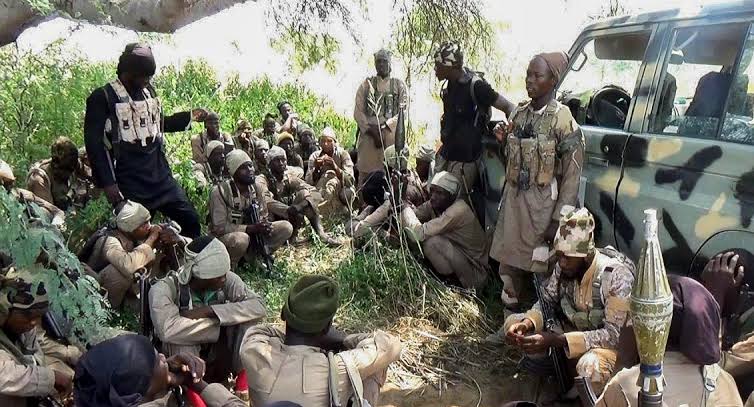
A human rights activist, Comrade Ibrahim Abubakar, has raised an alarm over the rise in fake news in the country, describing it as a “higher threat than terrorism”.

Mr Abubakar made this known on Thursday at a one-day workshop/presentation of assessment report on the impact of fake news on the war against terrorism organised by the Centre for Social Justice and Transparency (CESJET).

In his paper presentation, Mr Abubakar, president of Save Humanity Advocacy Centre (SHAC) revealed that fake news “ is inimical to national security; hostile to the morale of the troops, and by and large, it is one of the demoralizing factors making the counter-insurgency operation more difficult.”

According to him, fake news, over the years, has proven to be an undermining factor in countering terrorism engagement as well as a sponsor and promoter of acts of terror in Nigeria today.

The human rights activist added that “the rampant spread of fake news and its efficacy in relegating the real story to the bottom discourages the counter-insurgency efforts of the Nigerian Military both tactically, psychologically, and otherwise.”

To curb further wreckage, Mr Abubakar recommended that:

“ The Nigerian media should report and analyse terror as a matter of international priority. Yet striking the right balance between informing the public without unnecessarily stoking fear or giving disproportionate publicity and attention to a terrorist organization has proven to be more difficult than it should because of the rapid spread of fake news about insurgency and counter-insurgency efforts that are most times exploited by Boko Haram.

“CSOs should mount sustainable pressure on broadcast Media that gets easily distracted by shiny ratings, which usually come with the spread of fake news, to desist from promoting contents that are fake and harmful to national development. CSOs should continually encourage reliable broadcast Media to regularly get factual information out, especially those associated with national security, even if it feels like it is falling on deaf ears amid widespread fake news.

“ The people should also be taught how to use and rely upon vital fact-checking organizations even as they also cite sources as to what they post or tweet, making sure those sources are reliable. CSOs, instead of undermining the work of the military in countering terrorism in Nigeria, could be instrumental in limiting the spread of fake news that aggravate terrorist activities by raising the populace awareness towards boycotting news media and its relatable sponsors.”

Breaking: Appeal Court clears APC for Bayelsa governorship election

A Court of Appeal sitting in Abuja has cleared the All Progressives Congress (APC) to participate in Saturday’s Governorship Election in Bayelsa State.
In a ruling document obtained by the APC’s Principal Counsel, D. D. Dodo SAN,  in Abuja on Thursday, the appellate court panel led by Justice Steven Adah also cleared the APC Deputy Governorship candidate, Sen. Biobarakuma Degi-Eremienyo for the November 16 election.
According to the statement, this followed stay of execution granted by the Appeal Court on a Nov. 12 High Court order disqualifying the APC Deputy Governorship candidate.
It stated that at the Court of Appeal,
the APC Deputy Governorship candidate was represented by D. D. Dodo SAN
The Appeal Court granted and made the following orders:
That the status quo ante bellum which existed on or before the 19th September, 2019 when the suit was filed be maintained pending the hearing and determination of the Motion on Notice.
An interim order for stay of judgment of the lower court delivered on 12th November, 2019 pending the hearing and determination of the Motion on Notice.
The Motion on Notice to be heard on 20th November, 2019 and the Respondents to be served with the Motion on Notice and and copy of the Court Order.

Sowore: Before we crucify the secret Police

By Idoko Ainoko

The recent attacks on the Department of State Service (DSS) with regards to the handling of the demonstrators demanding the release of the publisher of Sahara Reporters, Omoyele Sowore, is at best uncharitable. I say this for the fact that the demonstrators acted out of ignorance, and as usual, some segment of the country that does not see anything right with this present administration went to the market.

They were quick to cast aspersion and attempt to crucify the secret Police. This is somewhat not surprising in the sense that the nation has witnessed the upsurge of individuals and organizations that are hell-bent on causing unrest in the country. And the free Sowore protesters fall under this same category.

We must get the issues in proper perspectives and counter the harmful intentions of those that are hell-bent on causing unrest in the country. The Omoyele Sowore issue is a case of an attempt to instigate the people against the constituted authorities and by extension effecting a change in government by calling for a revolution. If this is not a treasonable offense, I don’t know what else to call it unless the gang of monetarily induced protesters would feign ignorance to the consequences of calling for a revolution that would see to the overthrowing of a democratically elected government.

Let us make no mistakes; national interest should always surpass personal interest if we are desirous of making progress in this country. We must learn to call a spade and spade in the interest of the sensibilities of over 180 million Nigerians who have nowhere to call home other than here.

I also wonder how some individuals’ would think they can attempt to cause mayhem in the country and walk away scot-free. Even in civilized climes, there are consequences for our actions and inactions. Can an Omoyele Sowore go to the United States and call for a revolution and street protest if he has some reservations about the effectiveness of government? The answer is a huge no. And so, the question is why such anomaly should be tolerated in Nigeria?

That aside, when an individual is viewed as a high risk to societal peace, would it be wise to have such an individual in circulation to cause more damage? There are cases of such individuals in Nigeria that, for the sake of National interest, they must be kept outside circulation till the determination of their cases by a court of competent jurisdiction.

This, in a way, explains the case of former National Security Adviser, Sambo Dasuki, as well as the founder of the Islamic Movement in Nigeria, Ibraheem El-Zarzarky. You would agree with me that these individuals, as well as Omoyele Sowore, are high-risk individuals and by extension, agents of destabilization.

The law is clear on this, and this much we must come to terms with. I am quite sure that if the revolution that Omoyele Sowore had planned succeeded, the bulk of the people clamouring for his release under various nomenclatures would have been greatly affected. Again, just maybe they either by omission or commission refused to see the disservice in that revolution agenda. And just perhaps, they thought calling for violent change would do Nigeria and Nigerians any good.
My opinion has been this, and it won’t change anytime soon. There are decent ways of expressing grievances if such grievances are genuine. But to call for violence is a no and would remain one, especially in a democratic setting. The wounds of the civil war in Nigeria are still fresh in our minds, and to think someone somewhere would opt to set Nigeria once again on that dangerous path is most despicable.

So, just before we elect to crucify the secret Police, we should task our conscience to understand that an offense was committed in the first place, and that gave rise to the actions taken by the government in the overall interest of the generality of Nigerians. Some might want to argue that a court had granted him bail and he was refused bail. But what they failed to understand was that there were conditions that must be fulfilled before bail would be granted. And is it on record that his bail conditions were met and the secret Police refused to release him?

We should not be deceived by the antics of some people who are gifted in the art of spreading fake news to win public sympathy. Some also argued that the bail conditions were stringent, and my answer is: calling for violence to set the country on fire is grave enough for strict bail conditions to be issued.

I believe that the government must act decisively to serve as a deterrent to others. This is the case with Omoyele Sowore. And my advice for those that pursue public causes blinded is that they should employ objectivity and sound reason because National interest is the watchword, and no individual is bigger than the country. Nigeria cannot afford any attempt at truncating its nascent democracy. We must call a spade a spade.

Ainoko wrote this piece from Kaduna.

Boko Haram: CESJET identifies fake news, foreign actors as major distractions to the Army

Fresh revelations have emerged on the real reason the remnants of Boko Haram terrorists are yet to to be cleared from north eastern part of the country by the Nigerian Army

According to a special report by by the Centre For Social Justice, Equity And Transparency (CESJET) fake news, foreign actors are major distractions to the Army in clearing remnants of Boko Haram elements operating in the north east.

This was made known at a workshop organized for Presidents and Secretaries of CSOs, NGOs, Social Media influencers, stakeholders by the Centre for Social Justice, Equity and Transparency (CESJET) held at the International Conference Centre, Abuja.

The report further tasked the media, citizens and all stakeholders to be patriotic in identifying and exposing fake news targeted at derailing the war against Nigeria’s enemies.

The full report signed by its Executive Secretary, Isaac Ikpa, below.

The menace of fake news in Nigeria is a time bomb waiting to explode. This is on the heels that misinformation and hate speech has threatened the peace, unity, security and the corporate existence of Nigeria.

The relevant authorities in Nigeria have strived to educate the populace on the demerits of fake news and how its continued patronage has aided the spread of terrorism in the country.

The Centre for Social Justice, Equity and Transparency, in carrying out one of its core mandate consequently commissioned a special report to look at the menace of Fake News in Nigeria in an attempt to bring to the fore the various factors responsible for the spread of Fake news in Nigeria, as well as measures the relevant authorities needs to put in place to curtail the spread of fake news in the country.

The Centre for Social Justice, Equity and Transparency x-rayed the origin of fake news in Nigeria and took a systematic approach in highlighting the impact on the Nigerian polity. It also looked at the various mediums through which fake news is propagated. The focus of the report was 2015 to 2019 to cover the years that fake news gained prominence in Nigeria. The choice of 2015-2019 was also informed by the numerous efforts of the relevant agencies in Nigeria towards arresting the menace of fake news in the polity.

Terrorism is now a major feature of the international political system in the 21st century. Terrorism in the 21st century has gone beyond its traditional conception both in the motivations, objectives, tactics, techniques and territorial aspiration of its actors. Traditional terrorism uses kidnappings, suicide bombings (human and vehicle borne), hostage-taking, improvised explosive devices (IEDs) and armed assaults to achieve mostly political objectives. Terrorism in its present incarnation has expanded from the physical (geographical regions) into the virtual (cyberspace) and its techniques now include the use of technology-driven devices such as unmanned aerial vehicles, Twitter, Blogs Youtube and Facebook. Terrorists’ objectives have gone beyond such abstract concepts as instilling fear, creating awareness for a particular cause and forcing governments to change specific policies, to tangible and disruptive aims like the creation of viable political, administrative, religious and territorial units.

Terrorism has been around since the beginning of recorded history. What have changed are the dissident groups’ capability of inflicting harm on an ever-larger number of people, their ability to organize through the Internet, and, thanks to the media, a heightened concern, bordering on paranoia, among the populace about their own security. Domestically, nations, are deeply concerned about the radicalization of the youth along the entire ideological spectrum. Increased migration from the war-torn areas and failed states is not only putting strains on the nations’ resources but is also fomenting xenophobic reactions among native populations.

There are also fears of terrorist cells among immigrant minorities, isolated in their enclaves. To this volatile mix, we must add the internecine warfare with deep historical roots in the Middle East, Africa, and Asia. Thus, fake news is an enhancer of terrorism and terrorist activities around the world.

Fake news and its Terrorism Influences
Media and terror are inextricably linked. The media is expected to report and analyse terror as a matter of international priority. Yet striking the right balance between informing the public without unnecessarily stoking fear or giving disproportionate publicity and attention to a terrorist organisation is a complex task. To make matters even more complicated, since the emergence of new media, social media in particular, ‘traditional’ media has had to adapt to and compete in an accelerated news cycle of reporting, commentary and analysis.

Digital platforms such as Blogs, Twitter and Facebook have changed the flow of information in a way that enables unverified user-generated content (UGC) to appear alongside media outlets’ fact-checked content. Unlike traditional media, UGC isn’t subject to strict editorial, ethical or practical guidelines and the speed and scale at which this information is created and disseminated is hard to contain. This presents challenges to news reporting on terror, such as the spread of misinformation and ‘fake news’.

There has been an increasing focus on violent activities in social meda and what would traditionally be categorised as criminality has increasingly branded as ‘terrorism’ as event unfolds and before all of the facts can be ascertained and a judgement made upon factual evidence. The use of social media and other media sources contributes in part to the premature categorisation of these events and creating unnecessary hype.

The use of language, labelling coupled with unsubstantiated or grossly inaccurate facts before an event has been analysed, can result in misinformation and heighten the public fear unnecessarily.

The difficulty is thus separating the fake news about terrorism, the over-exaggerations and untruths from what unfolds. In doing so this creates confusion, fear and unnecessarily intensifies events at a time when the focus should be primarily on dealing with an incident and helping the victims, whether injured or deceased, and those directly affected by the event. A further problem arises which is event fatigue: individuals becoming desensitised to images of pain and suffering and the acceptance of a new norm.

The question then becomes what can we do to ensure the accurate flow of information and the correct categorisation of events. The other interesting question is that terrorist groups or cells manipulate criminals and mettaly ill persons to carry out criminal attacks to ensure that they take credit for these events.

Terrorism is generally defined , as action or intimidation to perpetrate an outcome for the furtherance of a political, ideological or religious objective. There is, however, legal uncertainty regarding the links between the action and the objective of serving further ideological objectives.

This becomes blurred in the case of terrorism where an individual may carry out an attack and hold the flag of a known terrorist group or chant a statement purportedly to link their activity to a bigger cause, to effectively promote themselves as martyrs serving a greater cause when in fact they are criminals.

The problem with the labelling or semantics of these attacks when loosely employed, allowing for a known terrorist group to claim the event was their responsibility, is that this feeds into the objective of that group in increasing publicity. Instead, a more careful control over the labelling of an event and assessment of the facts will limit the media publicity of known terrorist groups. Instead of allowing fake news, fear and hype feed into the objectives of these groups.

Media outlets should remain grounded in facts in the aftermath of an attack, rather than speculating about the perpetrator and their potential terrorist links. A disproportionate response to terror only cultivates further chaos and fear. Violent extremists across the spectrum have capitalised on the spread of misinformation that creates knowledge vacuums and pushes myths and rumours into mainstream society. Media outlets have a responsibility to dispel such myths and rumours, to minimise harm—both physical and rhetorical—when reporting on terror.

Recommendations
Communicating accurate information and minimising the spread of rumours and conspiracy theories is vital to supporting the public during a time of crisis. News media outlets and social media platforms should play complementary roles in this process: news media must try to ensure that correct information is disseminated, and social media platforms should be more vigilant in preventing bots and propagandists from flooding online platforms with misinformation. The role of independent, nuanced and responsible journalism has never been more important—and yet there’s a growing distrust of mainstream media’s reporting on terror. This stems from Trumpian rhetoric and accusations of fake news, as well as from public perceptions of media bias when reporting on attacks.

It is important for our security experts to remain vigilant. The reduction of misinformation and the accurate use of terrorist terminology relating to events, foiled plots and threats will not detract from the overall objective of public protection but rather will strengthen and focus this goal. Clear information and a common focus on ensuring accurate information is disseminated can be complemented by the accurate and honest acknowledgement of the real threat and the due recognition of the excellent job which the security industry has done to date to abate attacks and minimise the potential for any future events.

Similarly, the general population, while rightfully expressing anguish and grief, must refrain from excessively circulating news in these times, given the possibility that even media channels do generate fake news. The presence of fact checkers, as third parties and separate teams within news channels, is important to ensure that such news is not peddled to an unsuspecting public. Ultimately, it must be noted then that fake news and rumours are frequently spread by various parties despite their intentions and that media and the general public must remain vigilant at this time. In this regard, politicians too have an added and urgent responsibility to prevent both rabble-rousing and circulation of rumours.

States and non-state actors including terrorist groups use misleading information in order to try and influence values and the action of the populace. As such, protection against false information and hostile propaganda is to critically appraise the source,” it continues. “The way to do that is to ask questions like ‘Is this factual information or opinion?’ or ‘Is the source trustworthy?'” It goes on to advise seeking out information from more than one source in order to verify it.

In this age of social media, the spread of misinformation, or ‘fake news’, has made the job of journalists much harder. There are examples of sincere efforts to maintain journalistic integrity, but there are many challenges to overcome, especially related to UGC on social media. Calling for greater government control or a ‘content watchdog’ to police online platforms is a good approach to the above percieved problem. It echoes precisely the ‘Orwellian’ sentiments that tech companies are pushing back against. Rather, as a first step, it should be in their own interest for online platforms to work with news media outlets to develop appropriate ethical, editorial and practical guidelines, and then to regularly adapt and revise those guidelines.

The Nigerian government has made effort to inject sanity into the social media space which, today is totally out of control, contrary to insinuations, the government had no intention of muzzling the media or stifling free speech, the campaign was against fake news and hate speech. Fake news has proven to possess the capaility of inflicting untold damage on Nigeria’s national unity. They represent a clear and imminent danger to the survival of the nation.

Acknowledging that fake news and hate speech is not only a threat to democracy but also to peace, security and cooperate existence of Nigeria. Fake pictures and videos have also contributed their parts in stoking conflicts in Nigeria. All of these interfere with choices of the people and stoke conflicts in the midst of peace as they are being deliberately peddled to cause division and tension in the polity to put Nigeria backward.

Nigeria must find a way to ensure that its national newspapers and TV stations are sustainable to practice quality journalism that will be acceptable to people. When you do that successfully, you will consider good independent regulation of the media; with this will reduce the attention that the fake media get and penalty should be given for maliciously published items.

PDP, Dickson responsible for Nembe mayhem

The All Progressives Congress (APC) said it has been vindicated with the violent outcome of the political rally held by the Peoples Democratic Party (PDP) at Nembe Local Government Area, on Wednesday where souls were lost and several others injured, saying the Bayelsa state government and its party should be blamed and held responsible.

The APC accused the PDP campaign team of mobilising armed thugs to the Nembe rally.

In a statement made available to newsmen on Thursday in Abuja by the APC’s Deputy National Publicity Secretary, Yekini Nabena, said it has earlier raised the alarm that the PDP government in Bayelsa state were planning to cause Mayhem to create atmosphere of war at the stronghold of the APC.

“We had alerted the security agencies and the general public on the secret release of about 100 awaiting trial inmates from Okaka Prison in the state capital, Yenagoa by the state government. We also exposed the plot by the PDP-led government in the state to lure voters with N20,000 each, deploy fake Police and Military uniforms, clone Permanent Voters Card (PVCs) among others to allegedly rig the governorship election.

“The manifestations of some of the concerns we raised three day ago seem to have started. If not, PDP will not mobilized armed thugs to its rally to kill and cause mayhem, having realised that the people of this area had made up their minds to vote the APC.

Mr. Nabena said having realised the strength and popularity of the APC in Nembe Local Government, “the PDP decided to unleash armed thugs, fake military and para-military men in uniforms to cause unrest in the area, ultimately to create fear in the minds of our potential voters.”

While condemning the act of violence in Nembe, the APC, however, called on the security agencies to up their game and quickly identity those who responsible for the violence and bring them to book.

“Just three days ago, we told the world that fake Navy, Army and Police uniforms have been procured to kit political thugs recruited by the PDP-led government in Bayelsa state. We have been vindicated with the display of desperation at Nembe Local Government by the PDP.

“It is now clear to all that the outgoing Governor Seriake Dickson, has become chaotic in the face of rejection of his party by Bayelsans as well as the soaring popularity of the APC in the state, and the governor has now resorted to violence.

“For the avoidance of doubt, the APC had peaceful, decent and clean rallies all over the state and nobody was harrassed, Bayelsans were not coaxed or force to attend our rallies but the did because they have embraced APC. How the PDP, who is the ruling party in the state could not be decent in the conduct of its political rally at Nembe?

“We believe that the failed plan is to kill and injure as many as possible of our supporters in some of our strongholds, Nembe inclusive but we believe that the people of Bayelsa will not fall to the PDP devilish trick,” Nabena stated.

While commiserating with families of those who lost their lives at the unfortunate incident at Nembe, Nabena also called on the International Community, local observers and all lovers of democracy “to call Governor Dickson to order not to set the state ablaze for the selfish ambition of his handpicked PDP candidate,” Nabena stated.

AMVCA Set for 2020 7th Editions Award

The AMVCA awards have announced for submission of films ahead of the 7th edition of the Africa movie awards which is scheduled for March 2020.

According to Pulse, the organisers announced that entries are now being accepted from Wednesday, November 13, 2019, till Friday, December 13, 2019.

The 6th edition of the AMVCAs held on September 1, 2018 at the Eko Convention Centre inside the Eko Hotel and Suites in Lagos, Nigeria.

At the 6th edition, Jade Osiberu won the Best Film in West Africa and Best Overall Film while Omotola Jalade Ekeinde won the award for Best Actress for her role in ‘Alter Ego’.

Wangi Mba-Uzoukwu, channel Director Of Africa Magic said: “It’s been a long wait, but we are pleased to finally announce that the seventh edition of the AMVCAs is here and set to once again celebrate film and television talent across Africa. Every year the industry continues to grow in leaps and bounds and we are proud to be a part of its success story through the AMVCAs. The AMVCAs remain Africa’s most prestigious awards and most reputable celebration of talent in front and behind the camera”.

However, The organisers stated that all films, made-for-television movies or television series are eligible to enter for the AMVCA if they are broadcast or publicly screened or exhibited during the period of April 1, 2018 to November 30, 2019.

Senate to Pass 2020 Appropriation Bill by November

The Senate on Tuesday, revealed their plan to pass the 2020 Appropriation Bill on November 28.

The senate President, Ahmad Lawan disclosed the plans to pass the appropraition bill by November on Tuesday.

President Muhammadu Buhari had presented N10.33trillion budget estimates to a joint session of the National Assembly on October 8.

Lawan said the Senate Committee on Appropriation is expected to lay its report on November 26.

The Senate president said: “All the committees have done their work so well within the defined parameters and therefore we expect the Appropriations Committee to galvanise into action and produce the report to be laid here on the 26th November next two weeks before the Senate.

“I believe this will be the same thing in our sister chamber, the House of Representatives so that we can pass the 2020 Appropriation Bill on the 28th of November.”

Air transport contributes 6.2m jobs, $55.8bn to Africa GDP – ICAO

African aviation industry is one of the fastest growing today and currently supports 6.2 million jobs and contributes $55.8 billion to Africa’s gross domestic product (GDP).

President of International Civil Aviation Organisation (ICAO) Council, Dr. Bernard Aliu stated this at the 50th anniversary celebration of the African Civil Aviation Commission (AFCAC) in Dakar Senegal.

“In Africa today, air transport supports 6.2 million jobs and 55.8 billion dollars in Gross Domestic Product (GDP), and the African aviation market is one of the world’s most promising in terms of its overall growth potential, due largely to your emerging industrial sectors and steadily increasing population figures” he said.

According to him “in accordance with ICAO’s long-term traffic forecasts, passenger traffic for the Africa region is expected to grow by 4.3 per cent annually up to 2045, while freight traffic should also expand faster than world average, at 3.9 per cent annually over the same period.”
A statement by Director Public Affairs, Federal Ministry of Aviation, James Odaudu noted that “these increases should see aviation-related employment in Africa increasing to roughly 9.8 million jobs by 2036, and its air transport GDP impacts almost tripling to $159 billion over the same period.”

Certainly, these trends he said underscore the tremendous potential of well-managed and ICAO-compliant air transport growth to lift this continent into a new era of promise and prosperity.
“Air connectivity is a unique and indispensable catalyst for socio-economic growth, and one which facilitates mobility and contributes to the development of trade, tourism, and services both within Africa and between it and the world” he noted.

The direct routes air transport establishes between international destinations and markets has been recognized for its critical contn’butions to State’s achievement of the United Nations Agenda 2030 Sustainable Development Goals, in addition to the implementation of the African Union’s (AU’s) Agenda 2063 he explained.

Mr. Aliu however noted that “we must also recognize and act upon the fact that the current status of connectivity on this continent is still sub-optimal, and thus hindering the realization of the aviation benefits now awaiting African societies.

He said in January of 2017, Africa began addressing this situation comprehensively through the establishment of the Single African Air Transport Market (SAATM), a flagship initiative under the AU’s Agenda 2063. ICAO continues to support this initiative alongside the implementation of the Yamoussoukro Decision, the 20th Anniversary.

He proffered solutions on what Africa needs to do to reap the benefits further. I would like to leave you with five key calls to action which will be instrumental to how effectively Africa optimizes its aviation capacities and potential in the years ahead – increase air connectivity, updating of the common African Civil Aviation Policy (AFCAP), States to adopt aviation infrastructure development and related priorities, strengthen and support the African Civil Aviation Commission (AFCAC) and better-trained personnel.
Also commenting, Mr. Gabriel LESA President of AFCAC Fifty years is a major milestone in the life of an organization, as it is for any individual.

“Our commemoration is not so much a festivity, but a serious occasion to pause and introspect on this fifty-year AFCAC journey. AFCAC had a modest but important beginning, unable to manage its own secretariat, but with the guidance of the African Union (OAU) then and under the able management of ICAO, AFCAC grew to wean itself from ICAO and is growing into a maturing organization that we are all very proud of today” he noted.

“It has taken AFCAC along time to be able to effectively run its affairs, to the chagrin of most stakeholders at times and even longer to engender confidence and provide assurances in the discharge of its mandate” he noted.

“Today everyone can see and experience a glimmer of hope of the promise that moved our founding fathers in creating AFCAC. The accident rate trajectory over the years having been falling due to the interventions of AFCAC, the Effective Implementation of ICAO Standards across Africa are fast improving, holding promise for improving safety and security of civil aviation. Aviation safety and security are cardinal to the growth and contribution of civil aviation to Africa’s socio-economic development” he said.

Reward For Gallantry and Gen. Buratai’s Leading Example

By Robert Audu

“For them to perceive the advantage of defeating the enemy, they must also have their rewards.” – Sun Tzu

A great leader motivates and inspires his followers. He continuously craves for excellence and erects favorable templates or incentives to compel and induce hard work. Rewards are the oyster of performance in any workplace. And leaders conscious of success imbibe the policy of reward for hard work, dedication and exceptional performance as bait for outstanding productivity.

Nigeria’s Chief of Army Staff ( COAS) and emperor of the anti-insurgency operations in Nigeria, Lt. Gen. Tukur Yusufu Buratai is a perfect leader in this sense. Though, it is the natural and constitutional duty of the Army to fight wars, but he knows soldiers need to be emboldened to go the proverbial extra-mile in battles.

The job of a soldier is quite a difficult one. A soldier in the battlefield is perpetually under the threats of death or life deformities. He is the bulwark of nations and citizens against deadly enemies in peace or war times.

Gen. William T. Sherman of the American Army captures the dreariness of war in these scary words; “It is only those who have neither fired a shot nor heard the shrieks and groans of the wounded who cry aloud for blood, more vengeance, more desolation. War is hell.”

War is really hellish, but the life of a soldier is confined to it. Besides the era of the unfortunate Nigerian civil war of 1967-70, Gen. Buratai is presiding over the Nigerian Army in the country’s second most difficult phase in history. The age of ravaging Boko Haram insurgency is certainly not a storm in a tea cup. Terrorism has proven to be an obstinate malignant turmoil on souls of nations and successive leaders of Nigeria.

But President Buhari has made the difference. Under Gen. Buratai as the helmsman of the counter-insurgency operations, Nigerian troops have performed exceedingly commendable. The Army boss has vanished the spirit of spinelessness, soldiers’ feminine retreats from the frontlines and the remonstrative balking of troops before enemy forces in tales of mutiny at the battlefield.

Joyfully, the years of gloom, hesitance and frustrations to battle insurgents by Nigerian troops have eclipsed. Gen. Buratai has reactivated the reward system for his troops fighting Boko Haram insurgency in the country. He rewards gallantry, but punishes indolence or dereliction of duty.

Like the US war veteran and diplomat, Collin Luther Powell, the Nigerian Army Chief has inculcated in soldiers that “All work is honorable. Always do your best because someone is watching.” And rewards in special promotions’ have been Gen. Buratai’s perfect weapon in bolstering the performance ego and strides of Nigerian troops battling Boko Haram.

Chinese war veteran, Sun Tzu once echoed that “Rewards for good service should not be deferred a single day.” So, Gen. Buratai does it promptly and indiscriminately once any soldier earns it by dint of gallantry, valour and hard work.

Iconic warlords have theorized on the reverence of soldiering. Gen. George S. Patton Jr for instance says; “The soldier is the Army. No army is better than its soldiers. The Soldier is also a citizen. In fact, the highest obligation and privilege of citizenship is that of bearing arms for one’s country.”

Therefore, Gen. Buratai has consistently elevated deserving soldiers to stimulate what Collin Powell clarifies with his timeless and immortal philosophy in positing that; “The healthiest competition occurs when average people win by putting above average.”

From the outset, part of Gen. Buratai’s intrinsic vision and policies sighted reward for gallantry and hard work. Barely weeks after assumption of duty in 2015 as COAS and leader of counter-insurgency, headquarters of Operation Lafiya Dole Command Theatre went agog in wild celebration. Gen. Buratai effected the promotion of over 5,000 soldiers fighting insurgency in the Northeast and allied operations in the country.

He took the action to boost their combat readiness and willingness to serve fatherland. The promotion was a pledge made to the soldiers by his predecessor. Gen. Buratai stated at the opening session of the 2015 COAS Third Quarter Conference, in Army Headquarters Abuja that; “Since we came on board, we have introduced several measures aimed at encouraging our troops to give their best in the service of their nation. “

“The approval of the accelerated promotion of 5,000 soldiers was to redeem the promise made by my predecessor to the troops fighting insurgents in the North-East. It is my belief that this promotion, coupled with other incentives, will encourage our troops to fight for our country,” he added.

And the leader of counter-insurgency operations has kept faith his vision and pledges of reward for gallantry and exceptional impact in the course of battling insurgencies and insurrections in the country. It is outside his implementation of normal promotions timely and promptly to soldiers, like he caused the promotion of 34 senior Army Generals last week.

Therefore, in August 2017, Gen. Buratai also splashed special promotions for 3,729 troops of Operation Lafiya Dole who participated in “Operation Deep Punch II” in Sambisa Forest.

The then Army’s spokesperson articulated in a public statement that the Army Chief specially rewarded the gallant troops in recognition of their valour and uncommon commitment to duty during the “Operation Deep Punch.” It was an operation that laid to rest the ghost of the much dreaded Sambisa forest.

So, 223 Staff Sergeants were promoted to the rank of Warrant Officers, 511 Sergeants promoted to the rank of Staff Sergeants; while 994 Corporals were promoted to the rank of Sergeants. Others are 1064 Lance Corporals promoted to the rank of Corporals, while 932 Private soldiers were appointed Lance Corporals. Such magnitude of special promotions were seldom in the Army until Gen. Buratai reactivated it as morale booster for troops.

Later the same year, during one of his frequent visits to the frontlines in Bama, Borno state, Gen. Buratai, also gave special automatic promotion to two soldiers for their gallantry in fighting Boko Haram.

The COAS visited troops of 21 Brigade at Bama and was impressed with their performance against Boko Haram. Troops of the brigade had liberated Bama from Haram terrorists after hours of fierce battle. Many terrorists were neutralized during the encounter, and a cache of arms and Improvised Explosive Device, IED, making materials were recovered from insurgents. Therefore, Corporal Thomas Orim of 202 Battalion and Corporal Abubakar Usman Usman of 150 Task Force Battalion were rewarded with this special promotion.

To Gen. Buratai, it is inconsequential whether it is a single soldier or bunch of soldiers who demonstrates acts of valour or gallantry and merits a reward. A soldier, Master Warrant Officer, Garba Abdullahi of 159 Battalion, Nigerian Army was elevated to the rank of Captain in recognition and reward for his outstanding military professionalism, gallantry, courage and selfless service and enjoyed the special privilege of Executive Commission.

The then Director army public relations officer, Brig. General Sani Kukasheka explained; “Garba Abdullahi’s leadership qualities endeared him to his Commanding Officer who deemed it fit to assign him a higher responsibility as platoon commander of one of the arrow head sub-units of the Battalion, the role he played excellently to the admiration of both his superiors and subordinates alike

“Under his able leadership, his platoon achieved great exploits of daring bravery and courage for which the Battalion was reputed. The 159 Battalion is of one the rugged and most experienced cohesive fighting unit that make up Operation Lafiya Dole…the Battalion primarily occupies a blocking position from where it conducts Counter Terrorist and Counter Insurgency operations to defeat Boko Haram terrorists, deny them freedom of action….”

Gen. Buratai has sustained the string of special elevations, rewards and promotions of deserving officers and soldiers to date. Even in October 2019, he recommended for accelerated promotion to President Muhammadu Buhari two Army Generals and a Subaltern of the Nigerian Army as reward for their gallantry and exemplary leadership.

Acting Director, Army Public Relations,Col. Sagir Musa explained that the soldiers earned the President’s approval for the special promotion for their “extra-ordinary feats, courage, exemplary leadership, loyalty, uncommon commitment and valour in the counter insurgency operation in the Northeastern part of the country.”

The benefitting two senior officers were Maj.Gen. L.O Adeosun, the Chief of Training and Operations at Army Headquarters, who was also promoted to the rank Lieutenant General; Brig.-Gen. A.B Biu, General Officer Commanding 7 Division and Commander, Sector 2, “Operation Lafiya Dole” Maiduguri was decorated with the rank of Major General and the subaltern, Lieutenant A.J Danjibrin of 211 Demonstration Battalion, Bauchi was elevated to the rank of a Captain.

Also, Lt. Col. Mohammed Abu Ali (aka BH killer) who commanded the Army’s 272 Tank Battalion under “Operation Lafiya Dole” enjoyed this rank for the recognition of his outstanding efforts in blighting the fire of insurgents under his area of jurisdiction. Shortly afterwards, he was killed in an ambush by Boko Haram.

The quantum of special rewards and promotions extended to soldiers in the counter-insurgency operations in the Northeast is an apt indication that Gen. Buratai meticulously picks his postings of officers and soldiers. He ensures only his best and competent hands are deployed to every area of military operation.

In the counsel of Collin Powell, “There are no secrets to success: don’t waste time looking for them. Success is the result of perfection, hard work, learning from failure, loyalty to those for whom you work, and persistence.” So, through Gen. Buratai Nigerian soldiers clearly understands that hard work and loyalty is beneficial.

Audu wrote this piece from Abuja.

Kogi election: Police teargas IGP, INEC chair as thugs disrupt stakeholder meeting

An on-going stakeholders’ meeting in Lokoja, Kogi State capital, has been disrupted by suspected political thugs.

The meeting — the second in the series — had in attendance the Inspector General of Police Mohammed Adamu, and National Chairman, Independent National Electoral Commission, Prof. Mahmood Yakubu.

Trouble started when the governorship candidate of the Social Democratic Party was prevented from entering the event hall of Idrinana Hotel venue of the meeting, which resulted in altercation between SDP governorship candidate Natasha Akpoti and security personnel at the entrance.

The security personnel tried to prevail on her to go back — a plea which she rejected, saying she was duly invited for the meeting.

It was at this point that the Police released tear gas to disperse the surging crowed, while all those at the high table, including the Inspector General of Police and INEC chairman, ran for cover.

The Chairman of SDP, Mouktar Atimah, was manhandled and beaten up while trying to mediate.

Speaking shortly after the incident, Atimah said what happened showed “the extent to which our society had got rotten.”

He appeared too weak to talk extensively when our Correspondent sought to speak with him. – PUNCH