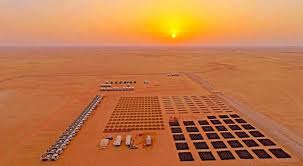
Desert transformation: county in Xinjiang finds prosperity in sands

By Jiang Yunlong, People’s Daily

“As a child, my dream was to escape Makit and distance myself from the Taklimakan Desert,”recalled Reyhan Ehmet.

Born in 2001 in Makit county, Kashgar prefecture in northwest China’s Xinjiang Uygur autonomous region, Reyhan remembers a childhood dominated by sandy landscapes.”Spring rarely brought greenery—instead, everything indoors and outdoors was shrouded in a yellow haze, with the acrid taste of sand lingering in the air,” she added.

Makit county,surrounded by the Taklimakan Deserton three sides, spans an area where 90% of its land is desert.

After graduating from university, Reyhan worked in Ningbo, east China’s Zhejiang province. In February 2024, she returned to her hometown and was stunned by its transformation, prompting her to settle there permanently.

“Coming back, I now realize that we can manage, develop, and make good use of the Taklimakan Desert,” she said.

Along the roadfrom the county seat into the desert, a vast greenbelt of thriving trees extends for dozens of kilometers. This constitutes part of a 3,046-kilometersand-blocking barrier encircling the Taklimakan, which Makit county has cultivated as its primary ecological defense system.

Since 2012, over 3 million residents have participated inMakit’sdesertification controlinitiatives,resulting in the creation of 1.176 million mu (approximately 78,400 hectares) of desert reclamation projects, including 460,000 mu of shelterbelt forests. To date, more than 260 million trees have been planted, including diversiform-leaved poplars, Xanthoceras sorbifolium, Euphrates poplars, Russian olives, tamarisks, and saxauls.

“The Taklimakan Desert I see today is unrecognizable from the desert of my childhood,” Reyhan said.The shift extends beyond environmental recovery to a broader cultural shift in how locals perceive development, prioritizing sustainability over exploitation.

“Many tourists from outside want to experience the desert up close,” said Wang Jiangpeng, deputy director of the Makit county bureau of culture, sports, radio, television and tourism. While some visitors did come in the past,inadequate tourism facilities meant most only snapped photos at the desert’s edge before leaving. In recent years, however, the county has revitalized its infrastructure and visitor services thanks to strong support from local governments, enterprises, and community stakeholders. This has boosted both its reputation and capacity to accommodate growing numbers of tourists.

“Last yearalone, we received 400,000 tourists, and we anticipate surpassing 500,000 this year. Desert tourism is becoming a key driver of the county’s economic growth,” said Wang.

Encouraged by the boom in desert tourism, Reyhan decided to stay in Makit and joined a tourism development company. She now leads tourists on in-depth desert excursions deep into the Taklimakan.

Though she grew up on the desert’s fringes, Reyhan never imagined it could evolve into such a lively destination.

During peak season, most tourists arrive around sunset. After trying out desert off-road driving and other activities, they return to the campsite to enjoy local song and dance performances and experience traditional flatbread-making. By night, they gaze at the desert’s star-strewn sky, and at dawn, they climb towering dunes to witness the sunrise.

Even in the off-season, the camp is far from quiet. Tender green branches sprout from desert poplars, and Reyhan has “hosted” visits from curious jerboas and fluffy little foxes. One time, a colleague excitedly told her that a rareyellow sheep had appeared near the campsite.

The desert tourism area sits next to a populus euphratica forest park and the Tangwang Lake National Wetland Park in Makit.

“Tourism development must not compromise the desert’s ecosystem, so we incorporated protective measures from the very beginning,” Reyhan said. Alongside expending water, electricity, and internet infrastructure to the campsite, they also built nearby facilities for wastewater treatment and waste managementfacilities to ensure no waste is left in the desert.

Grabbing a handful of fine sand, she let it fall onto her pants, then gave them a shake – the sand was so clean that her pants were spotless again. “The sand here is very clean, and we must take good care of it,” Reyhan said.

“For Makit, desert tourism brings jobs and increases incomes. By balancing desert conservation, ecological restoration, and sustainable development,we’ve forged a model that harmonizes environmental protection with economic progress,” said Wang Faqiang, deputyhead of Makit county.

“Desert tourism is a rich resource. As China’s largest desert, the Taklimakan is expected to draw more and more visitors through the integrated model of ‘desert control + industry + employment + tourism,'” Wang Faqiang added.

Why does China, a developing country, remain committed to carbon reduction?

By Cheng Chen, People’s Daily

At a time when some developed countries are retreating from their climate commitments, why does China, as a developing country, remain steadfast in pursuing carbon reduction?

The most immediate answer lies in the growing threat global warming poses to human survival and the future of human civilization.

Greenhouse gases such as carbon dioxide, methane, and nitrous oxide are primary culprits of climate change. In this context, “carbon” refers broadly to these greenhouse gases.

The United Nations has repeatedly warned that there is a direct link between increasing emissions and increasingly frequent and intense climate disasters.

The planet is warming at an alarming pace. The World Meteorological Organization has confirmed that 2024 is the warmest year on record, marked by a surge in extreme weather events. Record-high monthly precipitation values were 27 percent higher than for the baseline period, while daily precipitation extremes were 52 percent more common in 2024 than during 1995-2005.

No country can remain immune to the impacts of global warming. According to China’s National Climate Center, the Chinese national average reading in 2024 stood at 10.9 degrees Celsius, the highest since 1951. The average temperature in China that year was the highest since 1961, when the country began compiling complete meteorological observation records. Meanwhile, average precipitation across the country reached 697.7 mm, 9 percent more than the annual average. These climate anomalies have disrupted agricultural production, endangered lives, and caused property losses.

Beyond these immediate concerns, China’s commitment to carbon reduction is also driven by deeper international and domestic considerations.

On the international front, China’s carbon reductioncommitment reflects both its responsibility as a major country and the pressing need to build a community with a shared future for mankind.China’s experience and practices in carbon reduction can help other developing countries enhance their capacity to address climate change, thereby contributing to the global transition toward a sustainable future.

As an important participant, contributor, and leader in global ecological progress, China is deeply engaged in global environmental governance and continues to increase its influence and voice in the global environmental governance system. The country has built the world’s largest and most complete new energy industrial chain. In 2023 alone, its export of wind and photovoltaic products helped reduce carbon emissions by around 810 million tons in recipient countries.

On the domestic front, carbon reduction contributes to China’s green, low-carbon transformation and sustainable development.It helps improve China’s ecological environment and promotes the harmonious coexistence between humans and nature.

China has made significant adjustments to its energy mix, with robust growth in hydropower, nuclear, wind and solar power.These shifts have reduced emissions of both greenhouse gases and pollutants including PM2.5. Between 2015 and 2023, the average PM2.5 concentration in Chinese cities at the prefecture level and above dropped by more than 30 percent. From 2013 to 2022, while GDP in China’s Beijing-Tianjin-Hebei region grew by 60 percent, PM2.5 concentrations fell by more than 60 percent.

Carbon reduction also helps address resource and environmental constraints, enabling sustainable development. China now leads the world in installed capacities for wind, photovoltaic, hydro, and biomass power. Over the past decade, the share of coal in China’s energy consumption has dropped by 12.6 percentage points. Between 2013 and 2023, China has supported average annual economic growth of 6.1 percent with a 3.3 percent increase in energy consumption. In 2023, renewable energy accounted for roughly one third of China’s total electricity consumption.

In line with the trend of technological development, carbon reduction helps drive economic structure transformation and upgrading. China has phased out over 150 million tons of outdated steel production capacity and completed ultra-low emission upgrades for 134 million tons of steel capacity. The country boasts the world’s largest, most comprehensive and most competitive clean energy industrial chain, accounting for over 80 percent of global output in polysilicon, wafers, solar cells and modules, as well as 60 percent of global wind turbine manufacturing capacity.

At its core, the question of why China continues to reduce carbon emissions is inseparable from the broader question of how it defines development.

Even as some countries waver in their climate commitments, China remains resolute, as the development path it pursues is one that truly responds to people’sgrowing aspirations for a better life and is underpinned by the new development philosophy.

Green development is the defining feature of China’s high-quality development, and carbon reduction is essential to achieving it. In advancing carbon reduction, China is also transforming its development model.

China-SCO AI forum charts path toward inclusive digital development

By He Yin, People’s Daily

Themed “Intelligence Converges in China, Wisdom Benefits SCO,” the China-SCO AI Cooperation Forum was held in north China’s Tianjinrecently.

The event aimed to strengthen cooperation between China and SCO member states in technological research, talent development, and industrial applications. It encouraged joint efforts to tackle key technological challenges, accelerate the industrialization of AI technologies, and share the benefits of AI development, so as to inject fresh momentum into regional prosperity and development.

Advancing economic transformation through AI aligns with the shared aspirations of SCO countries. China has actively embraced the wave of intelligent transformation, vigorously promoting innovation in AI science and technology, fostering industrial growth, and accelerating the integration of AI across a wide range of sectors.

At the same time, it has worked to establish a sound regulatory framework and has built a relatively complete AI industrial ecosystem.

As of April 2025, China’s AI patent applications had surpassed 1.5 million in number, accounting for nearly 40 percent of the global total, ranking first worldwide.

The AI-driven large models developed by Chinese companies – characterized by open-source access,cost-effectiveness, and high efficiency – are offeringSCO countries new paradigms and perspectives for advancing their own AI capabilities.

Experts from SCO member states noted that China has demonstrated strong innovation capacity and enormous growth potential by applying AI broadly in both commercial and scientific fields, while also cultivating a large pool of highly skilled professionals.

As the world’s largest and most populous regional organization, the SCO holds extensive data resources and diverse application scenarios. Enhanced AI cooperation presents new development opportunities among member states.

China has joined hands with fellow SCO countries to address key technological challenges, foster continuous innovation in AI, expand the scope of real-world applications, and steadily unlockthe benefits of intelligence.

Concrete examples of such cooperation are already visible. At a photovoltaic power facility in Samarkand, Uzbekistan, a Chinese enterprise has introduced intelligent cleaning robots to safeguard solar panels around the clock, significantly improving their efficiency and longevity. In the wheat-growing regions of Punjab, Pakistan, a China-Pakistan smart agricultural project now enables local farmers to precisely manage irrigation and fertilization through smartphone-based systems.

At the forum, China proposed a four-point plan to enhance policy coordination, expand technological cooperation, promote application empowerment, and strengthen AI security governance. It also released a plan to build an AI application center and extended an open invitation for joint participation, underscoring its commitment to openness, multilateral cooperation, and shared scientific and technological advancement.

China is a strong advocate for the fair and inclusive development of AI on a global scale and a strong proponent, facilitator, and pioneer in strengthening international cooperation on AI capacity building.

In 2024, the 78th UN General Assembly adopted a China-led resolution on enhancing international AI cooperation. China also launched the AI Capacity-Building Action Plan for Good and for Al and initiated the Group of Friends for International Cooperation on AI Capacity-Building. These efforts are aimed at fostering broad partnerships so as to make sure that the benefits of digital transformation are enjoyed by all, and that no country and no one is left behind.

Recently, the second AI Capacity Building Workshop was held in Beijing, drawing participants from nearly 40 countries and international organizations, including multiple SCO member states.

The fair and inclusive development of AI can illuminate the path of technological progress and contribute to a brighter future for humanity. Guided by the Shanghai Spirit, China will continue to work together with other SCO member states to deepen exchanges and cooperation, share the dividends of AI, and ensure that the benefits of AI better serve global development.

China always committed to safeguarding peace, security in Asia-Pacific

By He Yin, People’s Daily

At the 22nd Shangri-La Dialogue held recently, China reaffirmed its commitment to upholding common security and shared prosperity in the Asia-Pacific together with regional countries, injecting strong momentum into the long-term stability in the region.

This constructive approach has been widely recognized and strongly endorsed by countries in the region. Many noted that China’s vision of security, rooted in the purposes and principles of the UN Charter, and its longstanding commitment to mutually beneficial cooperation, openness, and inclusiveness have contributed positively to regional peace, stability and shared development.

The world has entered a new period of turbulence and transformation, with multiple crises compounding one another. The basic norms governing international relations are being eroded, and the UN-centered international system faces mounting challenges. Geopolitical tensions are intensifying, economic globalization is encountering headwinds, and non-traditional security threats are growing in complexity.

Facing a fluid and turbulent world, the international community is calling more urgently than ever for solutions to global security dilemma, with a growing consensus on the need for dialogue and cooperation.

Improving global security governance and addressing security challenges require the guidance of sound and forward-looking concepts. China advocates the vision of common, comprehensive, cooperative and sustainable security, firmly supports the central role of the UN in safeguarding global peace and security, makes unremitting efforts to build a world of universal security, and contributes constructively to the political settlement of international and regional hotspot issues.

China is deeply engaged in global security governance and actively advances security cooperation in emerging fields. TheGlobal Security Initiative (GSI) proposed by China has become an international consensus and a platform for win-win cooperation. As of the end of 2024, the GSI had received support and appreciation from 119 countries and international organizations and had been incorporated into 123 bilateral and multilateral political documents.

Many participants at the 22nd Shangri-La Dialogue observed that in a world undergoing an accelerating transformation unseen in a century, the security public goods that China provides, including the GSI, help the international community respond to challenges through unity and coordination, build trust and cohesion, and improve the global security governance system.

As a region of vital strategic importance in the global landscape and a major driver for global economic prosperity, the Asia-Pacific has long cherished peace, stability, and development. Dialogue and consultation remain the preferred means of resolving differences and disputes.

However, regional security is increasingly threatened by the actions of a few countries seeking hegemony and advancingthe so-called “Indo-Pacific strategy” that stokes tensions and disrupts regional harmony. Such behaviors have drawn sustained concern from many countries in the region.

Malaysian Prime Minister Anwar Ibrahim said at the 22nd Shangri-La Dialogue, “The more we act together, the harder it becomes to be pulled apart by external gravity.” His words echoed the common desire among Asia-Pacific countries to strengthen solidarity in the face of external interference.

The facts speak for themselves: attempts to create division by inflating perceived “threats” and reshaping the regional security order through bloc confrontation are doomed to fail.

China’sdevelopment began in the Asia-Pacific, was enabled by the Asia-Pacific, and contributes to the Asia-Pacific.Regardless of how the international landscape evolves, China remains committed to building a community with a shared future for mankind. Guided by the three global initiatives, China will continue upholding the Asian values of peace, cooperation, openness, and inclusiveness, practicing true multilateralism, and advocating sincere dialogue and consultation.

It is working to pursue the Asian security model that features sharing weal and woe, seeking common ground while shelving differences, and prioritizing dialogue and consultation. Through concrete actions, it has been actively promoting regional security, properly managing and resolvingconflicts and disputes, working to de-escalate regional tensions, and joining hands withother countries to maintain peace and stability.

As AristyoRizka Darmawan, a lecturer in international law at the Faculty of Law UniversitasIndonesia, noted, China’s call to abandon Cold War mentality, power politics, and bloc confrontation, and to reject seeking one’s own security at the expense of others, provides a constructive path for Asiato address regional security challenges through cooperation and to advance inclusive development. At this historic moment when mankind have to choose between peace and war, prosperity and recession, unity and confrontation, China will, as always, stand on the right side of history and on the side of human progress. It will continue pursuing peaceful development, shouldering its responsibility as a major country, and working with all parties to safeguard peace and tranquility, so as to inject more certainty and stability to the world

Okpella Kingship: Ukhomunyio Leaders Storm Government House, Benin Palace, Reject Sado as Okuokpellagbe

In a powerful show of unity and resistance, traditional leaders, youths, women, and persons living with disabilities from the Ukhomunyio village in Okpella, Etsako East Local Government Area of Edo State, staged a major protest today against what they described as an illegal and undemocratic imposition of Michael Sado as the Okuokpellagbe (traditional ruler) of Okpella.

The demonstrators first marched to the Edo State Government House in Benin City, where they submitted a strongly worded petition to Governor Monday Okpebholo, before proceeding to the Palace of the Oba of Benin, where they sought the monarch’s intervention in the unfolding traditional leadership crisis.

Holding placards with inscriptions such as “Okpella Tradition Must Be Respected”, “No to Illegal Installation”, and “Ukhomunyio Demands Justice”, the protesters condemned what they called the “kangaroo process” that led to the purported selection and presentation of the staff of office to Mr. Michael Sado.

The group, speaking under the banner of the Concerned Citizens of Ukhomunyio, described Sado’s emergence as Okuokpellagbe as a “travesty and a blatant violation of both the traditional selection process and the extant customary laws governing succession in Okpella.”

In their official statement titled “Re: Position of Ukhomunyio Concerned Citizens on the Selection of the Okuokpellagbe of Okpella”, the group expressed deep disappointment over what they described as the state government’s failure to uphold the law despite earlier assurances.

“The Okpella community received the Governor’s April 30, 2025 press release with joy and hope. It promised a credible process anchored on the extant law. Yet, a select few ignored this directive and unlawfully installed Michael Sado,” the statement read.

They cited specific violations of the Declaration of Customary Law Regulating Succession to the Traditional Title of Okuokpellagbe of Okpella, particularly the failure to allow the Ukhomunyio branch of the Oteku Ruling House, whose turn it is to produce the next Okuokpellagbe, to properly nominate a candidate.

According to the protesters, “No meeting of adult males of the appropriate branch was convened. No Kingmakers were involved. Instead, a theatrical selection process led by a non-existent electoral body allocated scores arbitrarily, with Mr. Sado reportedly awarded 16 points and other so-called candidates given none.”

They also reminded the Governor that any action contrary to the Declaration of Customary Law and the Traditional Rulers and Chiefs Edict of 1979 is unlawful and void, emphasizing that “the issuance of staff of office to Michael Sado constitutes a breach of both law and tradition.”

The group urged Governor Okpebholo to immediately:

  1. Cancel the appointment of Michael Sado.
  2. Direct the Ukhomunyio branch of the Oteku Ruling House to begin a proper, lawful selection process.
  3. Uphold justice and the rule of law to restore faith in government and traditional institutions.

The delegation also made an emotional appeal to the Oba of Benin, describing him as the custodian of Edo traditions and a father figure whose moral authority could help guide the resolution of the crisis.

“We are not against the institution of the Okuokpellagbe,” one of the leaders High Chief Julius Ederefo, said. “We are fighting for the sanctity of our culture and the rule of law. A traditional ruler imposed without due process cannot command the respect or loyalty of the people.”

As the protest ended peacefully, the community said it awaits official response from the state government and the Oba’s palace.

Philanthropist Donates Hilux Truck, Other Items to Curb Insecurity in Benue Community

A philanthropist, Joseph Aondoana, has donated a Hilux truck, 5 motorbikes and a police station to Aondoana community in Gwer-West Local Government Area (LGA), of Benue State, as part of efforts to curb insecurity occasioned by herdsmen attacks.

The donation of the items, including bags of Rice, maggi, salt and jars of palm oil to members of the community followed a recent attack on Aondoana by armed herdsmen, wherein 15 persons, including a two-year old child was hacked to death.

Aondoana, also appealed to the political class in the state to stop the bickering that had left them divided, close ranks and works towards bringing an end to the incessant killings in the state.

Therefore, he called on the State Governor, Rev Fr Hyacinth Alia, as well as other politicians to follow his footsteps and donate to communities affected by herdsmen attacks, stressing that with their contributions the fight against insecurity in Benue communities would register major successes.

Addressing the people of the community, Aondoana, stressed that he would do anything possible within the ambit of the law to ensure that their security was guaranteed.

While he pledged that he would assist with certain logistics for the upkeep of the security personnel posted to the area, he promised to fuel and maintain the vehicles and bikes, for effective service delivery.

The philanthropist who charged members of the community to take ownership of the items, informed that even though he had donated the vehicle and bikes, they actually belong to the community.

Furthermore, Aondoana, laid the foundation of a Police post in the area, adding that he would ensure that the structure, with staff quarters were completed and handed over to the police in under three months.

He appealed to members of the community to endeavor to provide the necessary information to security agencies at all times, so as to enable them tackle the insecurity in the area.

Also speaking at the event, the Divisional Police Officer (DPO), in charge of Naka, headquarters of Gwer-West LGA, Chief Superintendent of Police (CSP), Charles Gadzama, identified with the people of the community for the pains they were going through.


The DPO who pledged to put in his best to address the insecurity in the LGA, however solicited the support of the people of the area, noting that he cannot do it alone.

He urged them to be resilient; put their trust in him and he would in turn trust them to provide him with credible intelligence and believed that together they would weather the storm and restore the peace that has eluded them.

Receiving the items, the Ter Nagi, HRH Chief Daniel Abomtse, represented by the Kindred Head, Puuanakaa, Zaki Jen Ukura, thanked Joseph Aondoana, for the step he has taken to ensure that his people were secure.

He further advised them to at all times provided credible intelligence that can be put to use.

China launches Tianwen-2 for asteroid sampling

By Yu Sinan, Li Yi, Zhang Wei

In the early hours of May 29, China successfully launched its first asteroid sample-return mission, Tianwen-2, from the Xichang Satellite Launch Center in southwest China’s Sichuan province, an endeavor designed to shed light on the formation and evolution of asteroids and the early solar system.

The Tianwen-2 mission aims to achieve multiple goals over a decade-long expedition: collecting samples from the near-Earth asteroid 2016HO3 and exploring the main-belt comet 311P, which is more distant than Mars.

The mission includes 13 flight stages and will reach a distance of approximately 150 million to 500 million kilometers from Earth, marking a major step forward in China’s deep space exploration endeavors.

Known as a quasi-satellite of Earth, the asteroid 2016HO3 orbits the Sun and appears to circle around Earth as well, remaining a constant companion to our planet. Its relatively stable orbit requires lower energy requirements for spacecraft to reach it, while enabling a viable scenario for subsequent exploration of the main-belt comet 311P.

Scientific research suggests that the asteroid 2016HO3 may preserve primitive materials from the early solar system. Investigating this asteroid could yield valuable insights into the composition, formation, and evolutionary history of the solar system’s early materials.

The second target, 311P, a celestial anomaly discovered in the mainasteroid belt between Mars and Jupiter, occasionally spews out materials and resembles a comet with tails. While it exhibits compositional traits with traditional comets, it maintains the orbital characteristics of an asteroid. Exploring this unique object will deepen human understanding of the composition, structure, and evolutionary mechanisms of small celestial bodies.

Tianwen-1 marked China’s first Mars exploration mission, successfully achieving orbiting, landing, and roving operations in a single mission. Tianwen-2, however, has a different set of objectives and faces new technical challenges.

First, the Tianwen-2 mission will conduct sampling under weak gravity conditions. Observational data suggest that the asteroid 2016HO3, with an average diameter of about 41 meters, exists in near-zero gravity and rotates rapidly. Given these complex conditions, it is extremely challenging for the probe to achieve stable attachment with the asteroid and sampling within a limited time.

Second, the mission involves vast distances. Asteroid 2016HO3 is located about 18 million to 46 million kilometers from Earth, while the main-belt comet 311P lies approximately 150 million to 500 million kilometers away. The immense distance from Earth imposes stringent requirements on the probe’s communication system, trajectory design, power management, and the capability to maintain highly reliable long-term operational performance.

Furthermore, there is uncertainty regarding the exploration target. Current observations of the asteroid 2016HO3 provide limited information on its rotational behavior and surface characteristics, which significantly complicate the design of both the spacecraft and its sampling methods.

Tianwen-2 is equipped with 11 scientific instruments, including cameras, a visible and infrared imaging spectrometer, a thermal emission spectrometer, and a detection radar, all designed to facilitate scientific data collection during the mission.

In previous missions sending payloads into the Earth’s orbit, a rocket is required to achieve a separation velocity equal to the first cosmic velocity, or approximately 7.9 kilometers per second.

However, this mission requires a separation speed exceeding 11.2 kilometers per second, known as the second cosmic velocity, to escape the Earth’s gravitational influence, necessitating high speed and energy.

After evaluating the rocket’s payload capacity, performance capability, and reliability, Long March-3B was chosen as the dedicated vehicle for the Tianwen-2 mission.

As the primary launch vehicle for China’s high-orbit launches, the Long March-3B has completed 108 missions, including key lunar missions such as Chang’e-3 and Chang’e-4.

Experts noted that asteroids are characterized by their small size, low mass, and weak gravity, making them challenging to capture and requiring exceptional precision in the rocket’s trajectory. During this launch, the rocket reached a speed of 11.2 kilometers per second, with a permitted speed deviation of no more than one meter per second, which could otherwise lead to a positional error of up to one million kilometers.

“Achieving such trajectory precision is akin to shooting a basketball from Shanghai to hit a hoop in Beijing, while ensuring the ball’s angle and speed upon entering the hoop are correct,” said Wei Yuanming, an expert with China Aerospace Science and Technology Corporation.

To tackle this challenge, the rocket design team spent two years completing multiple design iterations so as to achieve seamless “handoff” between the rocket and the probe, Wei added.

IOMedadvances international rule of law through innovation, improves global governance

By He Yin, People’s Daily

On May 30, the signing ceremony of the Convention on the Establishment of the International Organization for Mediation (IOMed) was held in Hong Kong. High-level representatives from 85 countries across Asia, Africa, Latin America, and Europe, and nearly 20 international organizations attended the event. Among them, 33 countries signed the convention on-site, making them the founding members of the IOMed.

The establishment of the IOMed marks an innovative step in international rule of law and a major initiative by the Global South to jointly promote global governance reforms and improvements. It has great significance in the history of international relations and fully demonstrates China’s commitment to contributing wisdom and solutions to global development and progress.

The establishment of the IOMed is an actualization of the purposes and principles of the UN Charter. It serves as an important public good in the field of the rule of law for better global governance.

Mediation, as is clearly stated in Article 33 of the UN Charter, is one of the first means that should be tried in seeking peaceful solutions to international disputes. However, prior to theIOMed’screation,no dedicatedintergovernmental legal organization existed to addressinternational disputes through mediation.

The IOMed fills this institutional gap by mediating in disputes between states, between states and investors in other countries, and international commercial disputes at the will of all parties. This represents a significant advancement in the development of the international rule of law.

Drawing upon the strengths of major legal systems, the IOMed respects the autonomy of the parties concerned and offers advantages of being more flexible, cost-effective, convenient, and efficient. It complements and forms synergies with litigation, arbitration, and other existing international dispute settlement mechanisms, thereby enhancing their overall effectiveness.

As the world is entering a new period of turbulence and transformation, the global demand for timely and effective conflict resolution and the need to safeguard long-term cooperative relations is growing stronger.

The proposal to establish the IOMed has received broad international support and active response, reflecting China’s consistent commitment to promoting peace and resolving conflicts on the international stage.

From facilitating the reconciliation between Saudi Arabia and Iran in Beijing, to promoting intra-Palestinian reconciliation talks and the signing of the Beijing Declaration on Ending Division and Strengthening Palestinian National Unity, and to playing a constructive role in promoting the political settlement of the Ukraine crisis, the Palestinian-Israeli conflict, and issues related to the Korean Peninsula and Myanmar, China has long maintained that differences should be handled in the spirit of mutual understanding and accommodation. It advocates building consensus through dialogue and consultation, promoting development through win-win cooperation, and solving problems with a vision for the future, offering Chinese wisdom for countries seeking peaceful solutions to conflicts and differences.

The principles of resolving disputes through dialogue and mediating differencesare universally embraced across civilizations. Chinese civilization, deeply rooted in the value of harmony, has long advocated peaceful coexistence. Its legal tradition values reconciliation and the non-violent conflict resolution,which aligns closely with the principles of modern international law for the peaceful settlement of disputes.

The IOMed does not impose binding rulings but instead provides an impartial platform for voluntary negotiation among parties. It upholds the principles of voluntary participation, equal consultation, and mutual benefit, respects the legitimate concerns of all parties, and strives for win-win outcomes, vividly illustrating the wisdom of harmony and peaceful coexistence.

In the long run, the birth of the IOMed can help transcend the “you-lose-I-win”zero-sum mentality, promote the amicable resolution of international disputes, and foster more harmonious international relations.

The IOMed is a legal public good for improving global governance contributed by countries of the Global South. It will make a significant contribution to upholding international equity and justice.

As the trend toward a multipolar world and greater democracy in international relations gathers momentum, the Global South has transformed from a “silent majority” in international politics to an important force in maintaining peace, driving development, and improving global governance.

Countries from the Global South have actively supported and participated in the establishment of the IOMed, widely recognizing it as consistent with the purposes and principles of the UN Charter and reflective of the values of respect, mutual trust, fairness, and harmony. The IOMed is broadly viewed as an effective measure for strengthening multilateralism.

Looking ahead, the organization will uphold the true spirit of the rule of law, strike a balance between procedural justice and substantive justice, expand the participation of developing countries, and steer international dispute settlement mechanisms toward greater equity and inclusiveness, thereby increasing the representation and voice of the Global South in global governance.

The preamble to the UN Charter solemnly states the commitment “to practice tolerance and live together in peace with one another as good neighbors, and to unite our strength to maintain international peace and security.”This aspiration captures the common vision of the international community.

Looking to the future, as long as all parties make good use of mediation and approach disputes with mutual understanding, they can turn conflict into cooperation, replace confrontation with dialogue, and move forward on the path toward building a community with a shared future for mankind.

Outdoor activities fuel new growth in rural China

By Zhou Renjie, People’s Daily

During this year’s May Day holiday, outdoor sports and travel captured wide public interest and participation across China.

At Shijiu Lake in Nanjing, east China’s Jiangsu province, a young visitor transitioned from a fishing lure session tostargazing through a telescope.Nestled in the Aba Tibetan and Qiang autonomous prefecture, southwest China’s Sichuan province, the Siguniang Mountain scenic area launched over 10 outdoor adventure routes, including hiking, mountain trekking, and rockclimbing, catering to outdoor enthusiasts of all ages.

In China, over 400 million people engage in outdoor activities. The development of outdoor sports delivers wide-ranging societalbenefits. It fulfills the growing public demand for physical wellness, advances the Chinese national fitness campaign, stimulates associated industries, and presents vast potential for future development.

A growing number of outdoor sports events and leisure experiences are taking root in scenic destinations across the country.

In Shangri-la, southwest China’s Yunnan province, a network of hiking and cycling trails serves as venues for prominent events such as the Tour of Yunnan International Road Cycling Race and the Yunnan Plateau Lakes and Mountains Series.

In Nanxun, Huzhou, east China’s Zhejiang province, visitors enjoy activities ranging from nocturnal fishing and hot-air ballooning to orienteering through ancient towns.

In Chongli, Zhangjiakou, Hebei province in north China, night skiing enables thrill-seekers to race down snow-covered slopes under a star-filled sky, evoking the sensation of flight just above the earth..

These diverse outdoor experiences act as a powerful engine for transforming picturesque natural environments into sources of sustainable economic development.

China is steadily promoting the development of outdoor sports destinations to ensure the timely achievement of its goal to build around 100 high-quality outdoor sports destinations by 2030. With itsvast territory and spectacular landscapes, the country is well-positioned to leverage its world-class natural resources in this endeavor.

Outdoor tourism development also dovetails with China’s comprehensive rural vitalization strategy. In Xishui county, Huanggang, Hubei province, a rural triathlon combining swimming, road cycling, and cross-country running was held. The event catalyzed economic activity, with online and offline sales of agricultural products exceeding 5.8 million yuan ($807,737), a year-on-year surge of 230 percent.

In the scenic Canglu Valley in Yunnan province’sDali Bai autonomous prefecture,surrounded by lush mountains, a tourism development model centered on outdoor leisure and lifestyles attracted more than 70,000 visitors in 2024, generatingaround 3 million yuan in consumption.

Traditionally, rural areas dense with forests, rivers, and mountains weredeemed economically unsuitable for agricultural or industrial development. Today, many of these regions are leveraging their natural endowments to develop premium outdoor destinations, thereby creating new opportunities for local growth.

High-quality outdoor destinations not only stimulate local cultural and tourism development, but also help expand related industries.

The Chinese outdoor apparel industry, for instance, is experiencing rapid growth. In Zhejiang, a “three-hour supply circle” for manufacturing outdoor jackets has emerged: composite fabrics from Jiaojiang in Taizhou, waterproof zippers from Linhai, fleece liners from Keqiao in Shaoxing, and final assembly in Sanmen. This close-knit supply chain exemplifies how the integration of sports and commerce is accelerating industrial synergy, with supply and demand mutually reinforcing.

In the Guangdong-Hong Kong-Macao Greater Bay Area, novice surfers ride the waves under professional guidance. Along the Yellow River, rally races deliver pulse-pounding excitement. In Hubei province, adigital outdoor sports map is enhancing smart infrastructure and services. What were once niche or fringe activities are now becoming part of everyday life.

By turning “small sports” into “big industries,” and combining proactive government support with dynamic market mechanisms, China is turning innovative concepts into tangible benefits.

Qingdao manufacturers embrace dual standards to boost trade integration

By Wang Pei, People’s Daily

On a factory floor in Qingdao Xihai’an (West Coast) New Area, east China’s Shandong province, workers at Qingdao YG-1 Tools Co., Ltd. carefully monitor grinding wheels as they move through a production line – machining, packaging, and preparing them for shipment.

“These grinding wheels are produced on the same production line for both export and domestic sale. For a company, walking with two legs allows you to go farther, ” said Jin Chengxun, head of the grinding wheel production department of the company.

Yet catering to both markets simultaneously poses significant challenges, particularly given the divergent technical standards between domestic and international buyers. The question arises: how can a single production line fulfill two distinct sets of rules?

In 2020, the Shandong Administration for Market Regulation introduced a policy encouraging companies to adopt unified production lines – employing the same processes and quality control protocols – to manufacture products that comply with both domestic and international standards. This policy formed a cornerstone of Qingdao’s broader efforts to integrate domestic and foreign trade. Seizing this opportunity, YG-1 Tools took steps to align with this dual-standard model.

“Recent shifts in global trade and consumer demand have prompted a reevaluation of market strategies. Overseas demand has slowed, while domestic industries – especially automotive and electrical manufacturing – are growing fast and creating strong demand for grinding and cutting wheels,” Jin said. “Shifting focus to the domestic market came at the right time.”

With exports to over 80 countries and regions and certification under the ISO 9001 quality management system, YG-1 Tools was well positioned for global business. However, transitioning to the domestic market proved unexpectedly difficult. The company encountered elevated defect rates – ranging from 15 to 20 percent – prompting customer complaints, product returns, and monthly domestic sales that struggled to exceed 400,000 yuan ($55,706). Rather thanexpanding, the company’s reputation within China was adversely affected.

The core issue lies in incompatible technical standards. “Take this grinding wheel, for example. The hardness scale runs from F to Z. A hardness level categorized as K by an overseas client might be evaluated as L or even M under Chinese standards,” explained Jin.

Faced with this challenge, the company considered whether adapting to the domestic market would require a complete overhaul of its production line — a move that would involve substantial financial investment. In January 2023, after becoming aware of the company’s challenges, the local market regulation authority in Qingdao Xihai’an (West Coast) New Area invited certification experts to work directly with the factory and explore alternative solutions.

“Industrial products are typically standardized, making it difficult to produce goods that satisfy multiple standards on a single line.But by making targeted adjustments to raw materials and processing methods, it’s possible to meet both without rebuilding the production system,” said Liu Hui, a senior staff member of the market regulation bureau of Qingdao Xihai’an (West Coast) New Area.

Following this guidance, the company’s technical team upgraded the grinding wheel formula to ensure compatibility with both domestic and international hardness criteria. Adjustments were made to raw material ratios, the mixing process, and kiln parameters, including temperature and firing time. Through repeated testing and fine-tuning, the company succeeded in aligning its products with dual standards.

“In addition to technical adjustments, we created a hardness conversion chart for quality inspectors, revised our factory inspection standards, overhauled the quality management system, and enhanced oversight of both in-process and final inspections,” Jin noted.

After obtaining an official certification to produce industrial products for both domestic and overseas markets, the company significantly reduced its defect rate to below one percent. It is now anapproved supplier for several major Chinese automobile manufacturers. Monthly sales have surged to over 1.2 million yuan, with domestic and international markets each contributing approximately 50 percent – and the domestic share continuing to grow.

Qingdao now hosts 100 enterprises certified for dual-standard manufacturing. Among them is Qingdao Shunchang Food Co., Ltd., which acquired a domestic food production license to expand its presence in the Chinese market. “We process vegetables for export to Japan, South Korea, and the European Union. Our product quality exceeds both export and domestic standards, and our production lines can switch seamlessly between the two,” said Zhang Qin’e, the company’s general manager.