Weekly Cement Prices: Dangote, BUA, Lafarge Rates in Nigeria

The rising price of cement in Nigeria continues to impact consumers and the construction industry significantly. Economic challenges like inflation, currency fluctuations, and high production costs have caused cement prices to climb.

Supply chain disruptions have further strained the market, as raw materials become more costly, and foreign exchange fluctuations impact the import-heavy cement production sector. Additionally, increased labor and inflationary pressures have led to further price hikes from manufacturers and wholesalers, creating challenges for individual homebuilders.

Here’s an update on the latest prices from major cement producers:

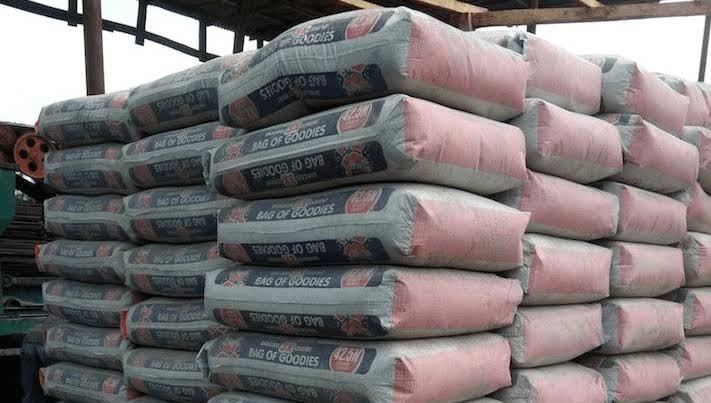
  • Dangote Cement: ₦8,800 per 50kg bag (varies by location)
  • BUA Cement: ₦8,500 per 50kg bag
  • POP Cement (Plaster): ₦10,500 per bag
  • Lafarge Cement: ₦8,500 per bag
  • Abro Roofing Cement: ₦32,000 per 4-liter container

With the current trends, consumers and developers are feeling the weight of these rising costs, especially as additional hikes are predicted in the coming weeks.

Today’s Black Market Dollar to Naira Exchange Rate – November 12, 2024

Curious about the Dollar to Naira rate in Nigeria’s black market? Here’s the latest update:

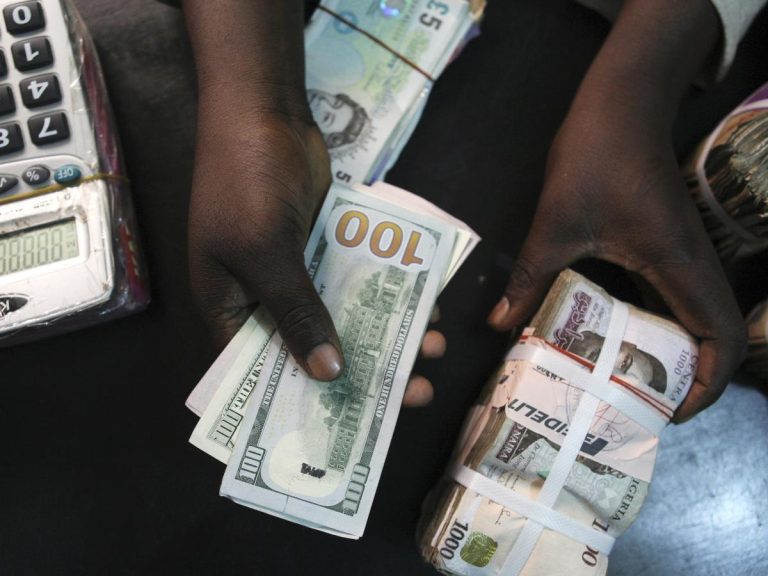
As of November 10, 2024, black market traders in Lagos buy a dollar for N1725 and sell it at N1735. It’s worth noting that the Central Bank of Nigeria (CBN) does not officially recognize these parallel rates and advises individuals seeking foreign exchange to use authorized banks.

Exchange Rates Summary:

  • Black Market Rate
  • Buying: N1725
  • Selling: N1735
  • CBN Official Rate
  • Buying: N1654
  • Selling: N1655

Additionally, financial expert Bismarck Rewane has forecasted a potential surge in petrol prices up to N1,200 per liter and a naira value of N1,550 to the dollar by January 2025. He attributes this to potential global crude price shifts, which may impact fuel distribution costs and forex revenue.

Rewane also commented on the anticipated role of the Dangote Refinery, clarifying that while it might improve availability, it may not bring immediate price stability due to its global pricing model.

Top Nigerian Headlines: Key News for Tuesday, 12th November 2024

Good morning, Nigeria! Here’s a roundup of today’s top news stories:

  1. President Tinubu Acknowledges Hard Times, Assures Hope
    President Tinubu has recognized the country’s difficulties, assuring Nigerians of better times ahead, emphasizing patience as policies take effect.
  2. Tinubu Calls for Ceasefire in Gaza at Arab-Islamic Summit
    Speaking at the Arab-Islamic Summit in Riyadh, Tinubu urged an end to Gaza conflict and reiterated Nigeria’s support for a peaceful, two-state solution.
  3. IPMAN and Dangote Partner for Direct Fuel Supply
    IPMAN and Dangote Refinery have struck a deal for direct fuel supply, aiming to boost affordable fuel distribution and economic stability across Nigeria.
  4. Former Gov Shekarau Urges Better Intelligence on New Terrorist Threats
    Shekarau criticizes the lack of intelligence following the rise of the Lakurawa group, stressing the need for improved security measures.
  5. Atiku Criticizes Tinubu’s Policies as Harmful
    Atiku Abubakar claims President Tinubu’s policies are worsening the nation’s economic crisis and calls for a focus on governance rather than political rivalry.
  6. IGP Denies Arresting Minors in Protests
    The Inspector General of Police clarified that only criminal offenders were detained during the #EndBadGovernance protests, not peaceful demonstrators or minors.
  7. Economist Labels Government Refineries ‘Dead Assets’
    Economist Kelvin Emmanuel stated that government-run refineries are beyond repair and called for alternative solutions to Nigeria’s fuel challenges.
  8. Okupe Refutes Comments on Tinubu’s Re-election Prospects
    Doyin Okupe denied claims that he doubted Tinubu’s chances in 2027, affirming his support for Tinubu’s administration.
  9. Aregbesola Advocates for Return to Parliamentary System
    Former Osun Governor Aregbesola argues Nigeria should revert to a parliamentary system for more balanced governance.
  10. NNPC Reaffirms Support for Local Refineries
    NNPC CEO Mele Kyari assured no sabotage of local refineries, noting plans to enhance gas supply and energy sustainability in Nigeria.

Stay updated with these stories and more on Naija News. See you tomorrow for more top headlines.

Kano State Governor Presents ₦549 Billion “Budget of Hope” for 2025, Focusing on Education and Economic Growth

Governor Abba Kabir Yusuf has unveiled the Kano State 2025 Appropriation Bill, valued at ₦549.16 billion, before the State House of Assembly. Dubbed the “Budget of Hope, Human Capital, and Economic Development,” it aims to bolster education, infrastructure, and human capital.

Key Highlights:

  • Budget Distribution: 57% for capital projects, 43% for recurrent expenses.
  • Sector Allocations:
  • Education: ₦168.35 billion (31%)
  • Governance: ₦98.24 billion (17.57%)
  • Health: ₦90.6 billion (16.50%)
  • Infrastructure: ₦70.68 billion (12.87%)
  • Agriculture: ₦21.04 billion (3.83%)
  • Other allocations cover water, rural development, security, and transportation.

Governor Yusuf emphasized that the budget is designed to enhance economic growth and lessen dependence on federal funds, with a focus on efficient public service and governance. The Speaker of the Assembly, Alhaji Falgore, commended the governor for the prompt budget submission and indicated that budget reviews will begin shortly.

NiMet Predicts Dust Haze and Rainfall Across Nigeria Over the Next Three Days

The Nigerian Meteorological Agency (NiMet) has forecasted a mix of dust haze and scattered rainfall across various parts of Nigeria from Monday to Wednesday. According to the agency’s report, the northern region will see slight dust haze on Monday, with visibility limited to between 2 and 5 km. Similar hazy conditions are expected in North Central areas.

In southern Nigeria, inland regions will likely experience sunny skies with light haze, while Lagos, Akwa Ibom, and Cross River may have morning rains and thunderstorms. Thunderstorms are expected by afternoon in southern Ondo, Ogun, Lagos, Edo, and the coastal areas of Cross River, Akwa Ibom, Bayelsa, Rivers, and Delta.

On Tuesday, slight dust haze will continue in the north and North Central, with hazy skies and some cloud patches expected in southern coastal areas. Wednesday’s forecast includes slight dust haze in the north and North Central, with hazy skies inland and potential thunderstorms in coastal regions later in the day.

NiMet advises the public, especially those with respiratory conditions, to exercise caution due to suspended dust particles and possible strong winds accompanying thunderstorms in affected regions.

Kano Judiciary Commission Sanctions Eight Staff Members Over Misconduct

The Kano State Judicial Service Commission (JSC) has enforced disciplinary measures against eight judiciary staff members over various misconduct allegations. Following investigations by the Judiciary Public Complaints Committee (JPCC), the JSC issued suspensions, warnings, and indefinite removals from duty.

According to Baba Ibrahim, spokesperson for the Kano State Judiciary, Magistrate Nasir Ado faced disciplinary action for conducting court proceedings without proper documentation and falsifying records. Consequently, Ado was removed from his judicial role for gross misconduct.

In a separate case, Sharia court judge Yusuf Kawu was found to have unlawfully released a convicted individual. His defense was deemed insufficient, leading to his indefinite recall from judicial duties.

Magistrate Sanusi Atana received a warning for exceeding his jurisdiction by taking on a premises recovery role in a criminal case and granting bail prematurely. Finance Registrar Salisu Nayola was mandated to retire for soliciting bribes, while his associate, Alkali Abdulmuminu Nuhu, was recalled for two years.

Other sanctions included a warning to Alkali Abubakar Abdullahi for jurisdictional overreach and a four-month suspension for court messenger Shuaibu Bello due to corrupt practices, including overcharging fees.

These actions, as emphasized by the JSC, aim to uphold integrity and ethical standards within the Kano State Judiciary.

Nigeria’s Youth Minister Urges African Leaders to Embrace Holistic Youth Development

Nigeria’s Minister of Youth Development, Ayodele Olawande, has called on his counterparts across Africa to prioritize the development of youth in their nations. Olawande emphasized the importance of equipping the continent’s youth with the skills necessary to compete in the global economy and contribute to national growth.

Speaking at the YouthConnekt Africa Summit held in Rwanda over the weekend, Olawande, represented by Permanent Secretary Mr. Olusanya Olubunmi, highlighted the various youth-focused initiatives being spearheaded by President Bola Tinubu’s administration. These initiatives aim to empower Nigerian youth with the skills and opportunities to drive economic development and productivity.

During the Ministerial roundtable focused on rural youth entrepreneurs’ access to finance, Olawande reiterated Nigeria’s commitment to fostering youth employment, entrepreneurship, and leadership. He urged African youth leaders to adopt Nigeria’s “One Youth, Two Skills” approach, which seeks to equip young people with multiple skills for greater employability and global competitiveness.

The Youth Minister pointed out that building a skilled youth generation would not only increase productivity but also enable young Africans to take on leadership roles in driving economic growth across the continent.

Olawande also expressed Nigeria’s commitment to promoting sustainable youth development and strengthening regional collaboration, noting that Nigeria’s membership in YouthConnekt, which began in 2022, demonstrates the country’s dedication to the cause. He emphasized that Nigeria’s efforts to establish a YouthConnekt Hub will continue to support youth development and foster collaboration between African nations.

Building Materials Prices Double in a Year, Impacting Nigerian Construction Industry

The prices of essential building materials, including cement, blocks, and paint, have surged over 100% in the past year, creating hurdles for developers and homeowners. This steep increase, noted in a recent report, is putting pressure on the construction sector, with many large projects facing delays or budget challenges. In response, the House of Representatives has issued a warning to cement manufacturers, urging for measures to stabilize the prices of these critical resources.

Black Market Dollar to Naira Exchange Rate Today, 11th November 2024

Dollar to Naira Black Market Exchange Rate for 11th November 2024

The exchange rate for the dollar to naira at the black market has remained volatile. As of today, 11th November 2024, players in Lagos’s parallel market are buying dollars at ₦1735 and selling them at ₦1740. Despite fluctuations, the Central Bank of Nigeria (CBN) advises the public to approach official banks for forex transactions, as it does not recognize the parallel market.

Official CBN Rate Update
Today, the CBN’s official rate shows a buying price of ₦1664 and a selling rate of ₦1665 for a dollar, which differs from the rates found in the black market. Please note that forex rates can vary across locations and sellers, so these figures may not match all transactions.

NDIC’s Assurance to Unpaid Heritage Bank Customers
In other financial news, the Nigeria Deposit Insurance Corporation (NDIC) has invited former Heritage Bank customers to submit account details for processing unpaid funds, aiming to protect depositors and reinforce financial stability.

Yancheng making “green generators” with “green electricity”

By Yao Xueqing, People’s Daily

As the sea breeze rushes toward a wind farm on the shores of the Yellow Sea, at a speed of 7.6 meters per second, the blades of towering wind turbines start spinning.

These turbines convert mechanical energy into electrical energy, and in an instant, the “green electricity” is transmitted through undersea cables to the land, where it is fed into the power grid.

Over 70 kilometers away from the wind farm, machines in a turbine general assembly factory are running tirelessly, powered by the “green electricity” from the sea. Nacelles and hubs are assembled here and then transported offshore to join with blades and towers to form gigantic “windmills.”

Yancheng, located on the coast of east China’s Jiangsu province, boasts the country’s largest offshore wind power industrial cluster and a huge capacity of offshore wind power. It has developed a comprehensive offshore wind power industrial chain that integrates research and design, equipment manufacturing, resource development, and operational services. It is using “green electricity” to produce “green generators.”

In a lab in the general assembly factory of Goldwind Science and Technology Co., Ltd. in Dafeng Economic Development Zone, Yancheng, a prototype of a 10 MW wind turbine was being tested, with real-time data flashing on a large screen.

“Research and design, as well as prototype testing, are the starting point for wind turbine manufacturing,” said Lu Jinhong, deputy director of the lab.

According to him, the company would first collaborate with suppliers to produce a prototype based on blueprints, and then send it to the laboratory and a test field for hundreds of integrated tests. After third-party certification, the prototype then enters mass production. The entire process takes about a year.

The general assembly factory of Goldwind Science and Technology Co., Ltd. primarily assembles the structural components of nacelles and hubs. As a facility that started with producing 2 MW offshore wind turbines, it is now able to manufacture turbines up to 11 MW, with an annual production capacity exceeding 1,200 units, 30 percent of which are exported.

Deputy general manager Ning Haifeng attributes the company’s growth to the efforts made by the local industry to strengthen and extend the industrial chain.

A wind turbine comprises a nacelle, a hub, blades, and a tower. It has thousands of components manufactured by over 300 first-tier suppliers.

Most of the large components can be sourced in Dafeng Economic Development Zone, while key parts are available from suppliers in Yancheng. About 95 percent of all components can be found in Jiangsu province, where a supply chain that enables delivery within three hours is developed.

In recent years, Yancheng has gathered 41 enterprises above the designated size, building the largest offshore wind power industrial cluster in the country, with the total production capacity accounting for approximately 40 percent of the national output.

Yancheng boasts a coastline of 582 kilometers, with an average annual wind speed of 7.6 meters per second at a height of 100 meters above the sea level, and annual full-load hours exceeding 3,000.

Since 2016, Yancheng has established 23 offshore wind farms, with a total installed capacity of over 5.54 million kW, accounting for 46.9 percent of Jiangsu province’s total and 14.9 percent of the national total.

In the city’s Binhai county, 75 virtual wind turbines were displayed on a large screen at the central control center of a smart wind farm. Real-time parameters, such as wind speed and rotation speed, would be revealed with just a click on any of these virtual turbines.

“To make the turbines turn, we first need to know where the wind is coming from,” said Yang Rong, deputy general manager of the Jiangsu Offshore Wind Power Company, State Power Investment Corporation.

Each turbine’s nacelle is equipped with a yaw system that can accurately predict wind direction and speed each hour, helping adjust the turbine’s orientation – similar to how sunflowers always face the sun – to maximize their exposure to the wind.

Yang told People’s Daily that the blades can rotate at a maximum speed of 12 revolutions per minute. It is seemingly slow, but given their length of about 100 meters, the tips can reach speeds of up to 300 kilometers per hour. The blades drive the gearbox to rotate at 1,600 revolutions per minute, enabling the conversion of wind energy into electrical energy through electromagnetic induction in the machine.

In 2023, Yancheng’s offshore wind farms generated 14.807 billion kWh of “green electricity,” all of which was integrated into the power grid. Of this, 12.16 billion kWh was consumed locally, while the remainder was transmitted to other regions.

The three offshore wind farms in Binhai county have a total installed capacity of more than 1.1 million kW, generating 3.079 billion kWh of electricity annually, which accounts for 95.6 percent of the county’s total electricity consumption. In Dafeng, this figure stands at 70.24 percent. It means that most of the electricity used in the production of wind turbines by companies like Goldwind comes from the turbines themselves.

Today, it’s becoming a reality that wind turbines are generating electricity, and that same electricity is being used to produce more turbines.