Chinese automakers keep investing in R&D

By Xu Peiyu

Chinese automakers are enjoying robust growth and rising market shares, as revealed by semi-annual reports recently released by multiple automobile groups.

According to statistics from the China Association of Automobile Manufacturers (CAAM), from January to September, Chinese automakers sold nearly 11.92 million passenger vehicles, up 20.5 percent from a year ago, with a market share of 63.8 percent. Notably, the market share of new energy vehicles manufactured by Chinese automakers exceeded 80 percent.

Industry experts attribute the rapid rise of Chinese automotive brands to their sustained increase in R&D investment, as it gives them the ability to make technological breakthroughs and deliver innovative products.

BYD is the leading car manufacturer by sales volume in China. It is also the biggest investor in R&D among Chinese automakers. According to statistics, in the first half of this year, BYD’s R&D expenditures ranked first among over 5,300 A-share listed companies, amounting to 20.2 billion yuan ($2.84 billion), a 42 percent increase year on year and a record high. This figure was 6.6 billion yuan higher than BYD’s net profit during the same period.

New entrants in the automotive market have also shown impressive R&D investments. Li Auto invested over 6 billion yuan in R&D in the first half of the year, marking a 42 percent increase compared to the previous year, while NIO also spent over 6 billion yuan in R&D. Both companies’ management teams revealed that they plan to maintain quarterly R&D investments of around 3 billion yuan.

It is noteworthy that in the first half of the year, R&D investments from companies like BYD, Geely, Changan, and Seres exceeded their net profits.

Since 2011, BYD’s investment in R&D has surpassed the company’s net profits in 13 out of the past 14 years, sometimes reaching several times the amount of net profit in the same period. To date, BYD’s cumulative R&D investment has approached 150 billion yuan.

Substantial investments have enabled automotive companies to develop independent R&D capabilities.

Currently, BYD employs over 100,000 R&D personnel, making it the carmaker with the largest R&D workforce globally. It has filed more than 48,000 patents and has over 30,000 patents granted.

In the first half of this year, Seres saw a rapid increase in its patent applications and approvals. It filed 1,812 patent applications, including 1,313 invention patents and 300 utility model patents.

Chinese automotive brands are constantly making technological breakthroughs. For instance, BYD’s e-platform 3.0is the world’s first intelligent control platform that features a function that integrates and controls independent drive of three motors and rear-wheel steering technology. It combines the advantages of BYD’s fifth-generation DM (dual mode) technology and the e-platform 3.0 Evo, enhancing driving experience for users.

Through technological innovation, automotive companies have gained unique competitive advantages. BYD’s Blade Battery marks a significant innovation in the new energy vehicle sector, known for its high safety, high energy density, and long cycle life. Seres’ superrange-extender system achieves thermal efficiency of 45 percent and a power-to-fuel conversion efficiency of 3.65 kilowatt-hours per liter. In the first quarter of this year, Seres’ range-extenders maintained the highest industry adoption rate, and the company has reached cooperation agreements with 12 partners.

The pace of new product launches has also been accelerating. This year, companies like Seres and Changan have introduced multiple new energy products to meet the diverse needs of consumers.

A recent report from the Information Technology and Innovation Foundation, a think tank based in Washington, D.C., revealed that Chinese electric vehicle companies are 30 percent faster than automakers from other countries in developing and launching new models.

Chinese EV makers offer models for sale for an average of 1.3 years before they are updated or refreshed, compared with 4.2 years for foreign brands, the report said.

Am executive of Seres said that in the context of increasingly fierce competition in the global automotive industry, independent R&D is a key way for Chinese brands to secure core competitiveness.

Driving industry innovation through technological advancement is particularly important, especially by leveraging disruptive and cutting-edge technologies to guide the industry toward high-end, intelligent, and green development, the executive added.

An expert said that the emphasis Chinese automakers place on R&D reflects a trend of consumption upgrading in the Chinese automotive market. Consumers are increasingly inclined to choose cost-effective and technologically advanced products manufactured by Chinese carmakers.

In the future, Chinese automotive companies will continue to strengthen their R&D efforts. Currently, BYD’s intelligent driving development team comprises nearly 5,000 engineers, and the company plans to invest 100 billion yuan in smart technologies, including generative AI and large model.

By continually enhancing R&D and innovative technologies, Chinese automakers are driving the entire industry toward greater efficiency, environmental sustainability, and intelligence, while also contributing to the sustainable development of the global automotive industry.
Yunmeng county in Central China’s Hubei taps into rich cultural relics to develop cultural tourism

By Qiang Yuwen, People’s Daily

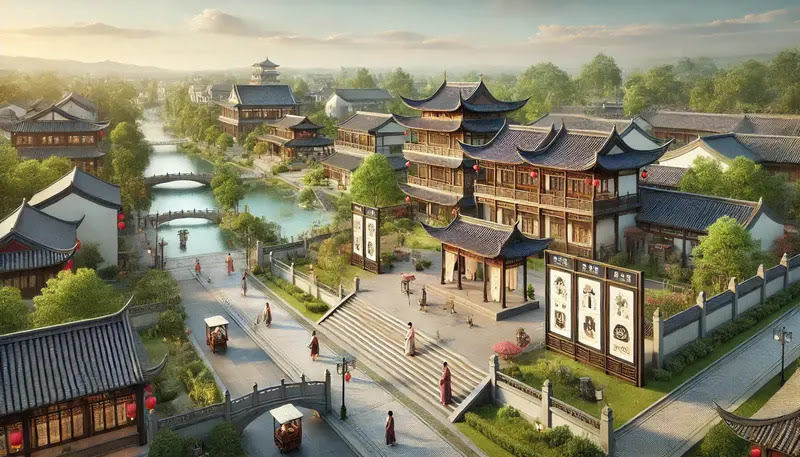
Yunmeng county in central China’s Hubei province is leveraging its rich historical and cultural resources to boost the development of cultural tourism.

The local authorities have explored a new path to drive cultural tourism with cultural heritage, with concrete measures such as establishing a research station for cultural relic protection, promoting innovations in preserving and carrying forward traditional arts like shadow puppetry, and developing cultural tourism projects.

Although Yunmeng county is the smallest county in Hubei province, it is home to over 5,000 pieces of cultural relics, including those recognized as Chinese national treasures.

At the end of 1975, 12 tombs dating from the late Warring StatesPeriod (475 B.C.-221 B.C.)to the Qin Dynasty (221 B.C. – 207 B.C.)were unexpectedly unearthed during the excavation of a water channel in Shuihudi, Yunmeng county.

In Tomb No. 11, several piles of bamboo slips caught the attention of archaeologists, who then meticulously collected, numbered, and cleaned over 1,000 bamboo slips from the tomb.

Soon after, experts identified these bamboo slips as historical records of the period when the seven states during the Warring States Period were unified under the Qin Dynasty, meticulously recorded by an official named Xi in over 40,000 neatly written Qin characters.

A major part of the records, in particular, is eighteen categories of Qin laws, which is considered the earliest and most complete legal code discovered in China to date, indicating that over 2,200 years ago, ancient China’s legal system had already been systematically established.

So far,a total of 36 Chinese national first-class cultural relics have been unearthed in Yunmeng, making it a favored destination for archaeologists.

In addition to thebamboo slips, the other cultural relics unearthed in the county include numerous precious woodcarvings, wooden lacquerware, and two family letters inscribed on wooden tablets, which were written by brothers Heifu and Jing to their brother in “Zhong” during the end of the Warring States Period, believed to be the world’s oldest family letter.

The Yunmeng County Museumhouses over 5,000 pieces of cultural relics, including 18 Chinese national first-class artifacts, making it a prominent one among county-level museums in China.

The raw lacquer for wooden lacquerware is highly valuable, involving intricate crafting processes. The large quantity of lacquerware unearthed in Yunmeng county attests to its past prosperity.

Li Lan, a researcher with the Hubei Provincial Museum, has been designated to dehydrate and reinforcethe newly unearthed lacquerware, as well as mending anyexisting damages.

Thetask is extremely complex.The dehydration process alone takes at least one to two years, and for larger pieces in better condition, it may even take over five years.

Previously, the Yunmeng County Museum, due to inadequate facilities, had to transport restoration-requiredartifacts to cities like Wuhan and Jingzhou in Hubei province.

The long-distance journey risked inflicting damage on the cultural relics, with even a slight mishap possibly causing significant harm.

The establishment of the Yunmeng workstation, a major research center for the protection of unearthed lacquerwareunder China’sNational Cultural Heritage Administration, has notably improved the conservation and restoration efforts in Yunmeng county.

Now, Li spends much of her time training local technicians in artifact restoration techniques.

To better preserve and inherit traditional culture, Yunmeng has consistently worked on innovatingboth the methods and content of cultural presentation.

Inspired by the story of the Qin Dynasty official Xi, Li Shenghua, president of the sports association of a residential community in Chengguan township, Yunmeng county, has led the local dance team in creating a show named “ink dance of Qin bamboo slips.”

In the performance, dancers dressed in traditional Chinese attire hold bamboo slips and use water sleeves to imitate the scene of historians recording events on bamboo slips with a brush.

The show won an award at a municipal-level competition during its first performance, and the team was even invited to perform it overseas.

In ashadow play theater in Chengguan township of Yunmeng county, innovative shadow puppet shows are staged tobring the audience closer to China’s history and cultural heritage.

One of the shadow puppet shows,created based on eighteen categories of Qin laws, is particularly popular.

In the show, an official in charge of law enforcement earnestly persuades his father not to burn straw, and brings the “village bully” harming the ecological environment to justice, eliciting frequent laughter from the audience with witty lines.

The show reveals to the audience that the culture contained in the Qin bamboo slips, spanning thousands of years, remains relevant tothe daily lives of people today.

Out of a passion for the arts and a desire to preserve culture through shadow puppetry, Liu Junming, a member of the Yunmeng county committee of the Chinese People’s Political Consultative Conference, has teamed up with localintangible cultural heritage inheritor Fang Dingmin and shadow puppet artist Qin Ligang to create a shadow puppet skit called “play within a play about Qin law.”

QinLigang is a Chinese national-level inheritor of Yunmeng shadow puppetrydedicated to the innovative development of this traditional art form.

Not confined to fixed music scores, Qin excels at incorporating current events into his performances.

“We must not only learn the old plays but also create new ones that capture the attention of young people,” Qin said.

The protection of traditional arts is like a rescue mission against “forgetting”, according to Qin, who noted that the more novel and relatable the art, the more likely it is able to impress the audience.

“Only by being remembered can it be passed down through generations,”he said.

A few years ago, Qin took on a “steel apprentice” – an intelligent robot equipped with sensors all over its body.

In 2017, Qin and the robot performed the classic play “Wu Song Fights the Tiger”in the Palace Museum in Beijing. During the performance, the robot led a shadow puppet tiger with its mechanical hand, executing lifelike movements programmed into it, capturing the attention of young audience.

“With the combination of artificial intelligence and our innovation, we won’t have to worry about traditional craftsmanship being lost,” Qin remarked.

Extracting unique cultural traits from its historical heritage, Yunmeng is exploring better ways to coordinate the relationships between cultural relic preservation, tourism, and commercial operations.

In recent years, the county has established an intangible cultural heritage exhibition hall,built a Qin bamboo slip memorial park, and improved its libraries and cultural centers, earning the title of the “hometown of folk culture and arts in Hubei province.”

Delving into its profound cultural heritage, this thousand-year-old small county is now radiating new charm.

Central China’s Hubei speeds up efforts in building beautiful, harmonious countryside

By Tian Doudou, Li Xia, Fan Haotian, People’s Daily

In Baishuitang village in Babao township, Songzi city, central China’s Hubei province, a river runs through the community, with well-maintained pathways and green belts stretching along both sides, creating a picturesque rural scene with golden wheat fields in the distance.

“In the past, wastewater was discharged directly into the river, causing an unbearable smell in summer,”said Li Zhaoyu, an official with the village, as he patrolled along the riverbank with a straw hat on his head.

Every 30 meters along the way, there is a sewer inspection manhole. He occasionally lifted the cover to check if the drainage at the bottom was clear.

Arriving at a sewage treatment facility, he opened the equipment control box to ensure that everything was running smoothly.

In 2022, Baishuitang village successfully establishedsewage treatment facilities, linking all household wastewater to an underground pipeline network for centralized treatment, said Li.

The treated water can be reused for irrigation in farmland, achieving cyclic utilization, he added.

With the implementation of sewage interception, dredging, and water replacement, the river’s water quality has seen a notable improvement.creating a clear and clean environment that offers villagers a good place to relax and take a walk.

Li has been given the responsibility of managing and maintaining the sewage treatment facilities by the local villagers’ committee, inspecting and patrolling the equipment on a regular basis.

“With centralized sewage treatment facilities, every household in our village has removed old-fashioned septic tanks, methane-generating pits, and abandoned pigsties. They are using clean and environmentally friendly toilets, which further improves the village environment,” said a villager named Shi Wenqin.

The changes in Baishuitang village mirrors Hubei’s efforts to comprehensively promote rural revitalization.

In recent years, Hubei haspicked up its pace increating alivable, business-friendly, harmonious, and beautiful rural environment,taking a range of measures such as enhancing the layout of townships and villages, pursuing the coordinated development of rural infrastructure and public service systems, and improving the living environmentin rural areas.

In Liuxiao village, Louhe township, Xiantao city, Hubei province, villagers have transformed the idle land around their houses into small courtyards, using old bricks and tiles that were leftover from dismantling activities.

After removing old sheds, they built fences and planted flowers, fruit trees, and medicinal herbs, turning the idle land into nice gardens and orchards.

“In our rural development, we place great emphasis on formulating plans. While building the villages, we avoided large-scale demolition and construction, used local materials, and customized our approaches to fit the specific needs of every household. Now we have accomplished the planning for 106 villages,” said an official with the bureau of agriculture and rural affairs of Xiantao city.

Xiantao city has encouraged residents to plant fruit trees, vegetables,flowers, and other plantsaround their housesto develop small-scale and quick-yielding courtyard economy, which not only beautified the environment but also increased villagers’ income, the official explained.

Hubei aims toensure basic access to sanitary toilets throughout the provinceby completing the construction and renovation of environmentally safe sanitary toilets for the identified 2.48 million households by 2025.

It also plans to have an additional 4,600 administrative villages in the province undergo simultaneous upgrades in rural sewage treatment and toilet facilities, thereby leading to a significant transformation of the living environment in rural areas from “clean, tidy, and orderly” to “tidy, beautiful, and livable.”

In addition to the beautiful living environment, Hubei has also achieved notable improvement in its capabilities of providing basic public services.

Currently, Hubei is accelerating the building of rural elderly care service systems, developing rural mutual-assistance elderly care facilities such as activity centers and elderly care institutionsaccording to local conditions.

The province plans to increase the proportion of nursing beds incounty-level elderly care institutions to over 60 percent and the proportion of such beds operated by private business entities to over 50 percent by 2025.

In 2019, a man named Wu Youyuantransformed several farmhouses into an elderly care center in his hometown, namely Maoci village in Shuangxiqiao township, Xian’an district, Xianning city, Hubei province, with the support of the local government.

Now, there are over 30 elderly residents living here.

“I moved here a few years ago. There are people cooking and doing laundry for us, and friends to chat and entertain with, which brightened my mood a lot,”said Wu Chuanyao, a senior resident who is over 90 years old, while practicing drumming with a few other elderly people in the canteen of the care center.

In an effort to continuously strengthen the weak links of public services in rural areas, such as elderly care, medical services, and education, Hubei has channeled resources of basic public services to rural areas.

In recent years, the province has implemented innovative projects including one that introduces multiple college graduates into each villageto deliver public services, allowing the elderly to live in comfort and the young to pursue their careers.

By the end of 2022, Hubei had equipped villages with 9,128 doctors with college degree through targeted training and social recruitment.

Itplans toensure that each village has at least one doctor who has received higher education by 2025.

In the clinic of Pengbei village, Tingsiqiao township, Xian’an district, doctor Chen Shi was examining the health condition of a senior resident. As one of the college graduates returning to hometowns at the call of the local government, she secured a position as a village doctor in her hometown in 2017.

“After the renovation and upgrading of the clinic, the working environment and hardware conditions have improved a lot. We can handle common illnesses here, and for serious cases, we promptly refer them to higher-level hospitals,” Chen said.

China achieves steady progress in human rights

By Chang Jian

At the recent 57th session of the United Nations Human Rights Council (UNHRC), over 100 countries voiced their support for China’s position and opposed the politicization of human rights, in response to a few countries’ attack on China’s human rights record driven by political motives.

The voice of justice made by the international community fully proves that the historic achievements of China in human rights protection are widely recognized, and the political manipulation by a few countries garner no support.

The Communist Party of China (CPC) and the Chinese government always put the advancement and protection of human rights on an important position. Applying the principle of universality of human rights to China’s national conditions, China has blazed a path of human rights development that is consistent with the trend of the times and suits the nation’s conditions.

Especially since the new era, China has made a series of historic achievements in human rights. The country followsa people-centered human rights philosophy, and believes that living a life of contentment is the ultimate human right. It advocates safeguarding human rights with security, promoting human rights with development, and advancing human rights with cooperation.

As the world’s largest developing country, China always takes the rights to subsistence and development as the basic human rights of paramount importance, making them a priority in its strategy of human rights development.

China has found a historic solution to ending absolute poverty and steadily improved its ability to ensure basic living needs. In 2023, the urban-rural per capita disposable income ratio was reduced to 2.39. Minimum living allowances were granted to 6.64 million urban residents and 33.99 million rural residents. Besides, the country provided care services to more than 4.72 million individuals with special needs and temporary assistance to 7.42 million people.

Today, China’s average life expectancy has reached 78.6 years; the maternal mortality ratio has dropped to 15.1 per 100,000; the infant mortality ratio has dropped to 4.5 per 1,000 – all at historical bests.

China makes coordinated efforts to promote all people’s rights, takes all human rights as interdependent and inseparable, and promotes the coordinated development of economic, social and cultural rights as well as civil and political rights.

A total of 250 million people in China have received higher education. The average years of education for the workforce aged from 16 to 59 reached 11.05 years. The percentage of days with good air quality across China stood at 85.5 percent, and the proportion of good quality (Class I-III) sections of national surface water was 89.4 percent.

The Legislative Affairs Commission of the Standing Committee of the National People’s Congress  has set up 45 local legislative outreach offices, in addition to a network of over 6,500 such offices nationwide for the provincial and city-level legislatures.

China deeply recognizes the fundamental role of economic development in advancing human rights protections. It pursues economic development as its central task and promotes human rights with development.

In 2023, the operational mileage of the country’s rail network reached 159,000 kilometers, including 45,000 kilometers of high-speed rail. China has also made significant progress in internet infrastructure, with 1.17 billion broadband access ports and a total of 67.12 million kilometers of fiber optic cable as of June 2024, and cumulative mobile internet traffic reaching 160.4 billion GB. The country has nearly 1.1 billion internet users and an internet penetration rate of 78 percent. These achievements provide a solid foundation for enhancing human rights protection.

The rule of law is the most effective guarantee for human rights. China has applied the principle of respect and protection for human rights throughout the processes of lawmaking, law enforcement, justice administration, and observance of the law, to strengthen legal protection of human rights.

In 2004, China included the concept of human rights in its Constitution, adding the line “The state respects and safeguards human rights.” Based on this constitutional principle, China has enacted, amended, and repealed a series of relevant laws and regulations. Local governments have also made corresponding adjustments to regional laws and regulatory documents, shaping a legal framework for human rights protection with Chinese characteristics.

China upholds the banner of multilateralism, firmly safeguards the purposes and principles of the UN Charter, actively engages in global human rights governance, promotes democracy and rule of law in international relations, and works to enhance the representation and voice of developing countries in international human rights affairs.

China follows the principle of mutual respect and equal treatment in international human rights exchanges, opposes the politicization of human rights and “double standards,” opposes interference in other countries’ internal affairs under the pretext of human rights, and makes global human rights governance more just, equitable, and inclusive.

China actively promotes dialogue and exchanges in the field of international human rights, advocating for equal exchange and mutual learning among countries and civilizations for common progress.

China has established human rights dialogue or consultation mechanisms with over 20 countries, engaging in human rights dialogues or exchanges with Western countries and regional organizations such as Germany, Switzerland, Hungary, Greece, and the European Union. It has also conducted human rights consultations with developing countries and regional organizations such as Russia, Egypt, South Africa, Brazil, Malaysia, Pakistan, Belarus, Cuba, and the African Union.

Chinese social organizations are actively engaged in and participating in international human rights dialogues and exchanges in areas such as poverty alleviation, environmental protection, education, health, and women and children’s development, hosting international conferences such as the Beijing Forum on Human Rights and the China-Europe Seminar on Human Rights, to enhance mutual understanding among different countries on human rights issues.

Stable China-U.S. relationship serves two countries’shared interests

By Zhong Sheng, People’s Daily

On November 7, Chinese President Xi Jinping extended congratulations to Donald Trump on his election as president of the United States.

Xi noted that a stable, sound and sustainable China-U.S. relationship serves the two countries’ shared interests and meets the aspiration of the international community.

He expressed the hope that the two sides will uphold the principles of mutual respect, peaceful coexistence and win-win cooperation, strengthen dialogue and communication, properly manage differences, and expand mutually beneficial cooperation. He urged the countries to find the right way to get along in the new era, so as to benefit both countries and the wider world.

Xi’s congratulatory message reflects China’sstable and consistent policy toward the U.S. As one of the world’smost important bilateral relations, China-U.S. ties should be considered and planned with a broad vision, so as to benefit the people of both countries and demonstratethe responsibility for human progress.

No matter how the international landscape evolves, China always manages the bilateral relations with a sense of responsibility for history, for the people and for the world based on the principles of mutual respect, peaceful coexistence, and win-win cooperation.

History has already proved that the China-U.S.relationship, though experiencing ups and downs, has always moved forward through twists and turns. Since the “ice-breaking” of bilateral relations in 1971, China and the U.S. have worked hand in hand to bring tangible benefits to both countries and the world.

Mutual respect, peaceful coexistence and win-win cooperation are the lessons learned from 50 years of China-U.S. relations and the conflicts between major countries in history, which should be the direction of joint efforts between the two countries.

Just as mutual respect is a basic code of behavior for individuals, it is fundamental for China-U.S. relations. Peaceful coexistence is a basic norm for international relations, and is even more of a baseline that China and the U.S. should hold on to as two major countries. Win-win cooperation is the trend of the times, and it is also an inherent property of China-U.S. relations.

Win-win cooperation between China and the U.S. is in line with the fundamental interests of both countries and their peoples, as well as with the trend of the times. China’s rapid and constant development has been facilitated by its open cooperation with countries around the world, providing sustained growth momentum and a vast market space for countries including the U.S.

Since the establishment of diplomatic relations, bilateral trade between China and the U.S. has seen an over 200-fold expansion, accounting for approximately one-fifth of global trade. Today, China is the third-largest market for exports of U.S. goods, while the U.S. is China’s third-largest trading partner. More than 70,000 U.S.companies have invested and operated in China, with exports to China alone supporting 930,000 Americanjobs.

Last year, 1,920 new American companies were established in China, and 80 percent of American companies plan to reinvest profits generated in China this year. These facts haveproved that China-U.S. cooperation has brought tangible benefits to the people of both countries, and the two countries’ respective success is an opportunity for each other.

China and the U.S. jointly advancing mutually beneficial cooperation can provide opportunities for both sides to better address their respective challenges and achieve development.

The two countries have broad common interests in a wide range of areas, including traditional areas such as the economy, trade and agriculture, as well as emerging areas such as climate change and artificial intelligence (AI).

Under the current circumstances, the common interests of the two countries have not decreased, but increased. China is pursuing high-quality development, and the U.S. is revitalizing its economy. There is plenty of room for bilateral cooperation, and the two countries should help rather than hinder each other’s development.

Both China and the U.S. should make the cooperation list longer and the pie of cooperation bigger, helping each other succeed and achieving win-win outcomes. They should focus on the larger picture, and nurture a sound atmosphere and stable relations for cooperation.

As the international situation continues to be turbulent and fast-changing, and humanity faces numerous global challenges, the world increasingly needs a stable China-U.S. relationship.

China and the U.S. should assume the vision, shoulder the responsibility, and play the role that come along with their status as major countries. As permanent members of the United Nations Security Council and the world’s top two economies, China and the U.S. should be a source of stability for world peace and a propeller for common development.

Over the past year, China-U.S. diplomatic, financial, law enforcement, climate change teams, and both militaries have maintained communication, sending positive signals to the world.

Currently, promoting world economic recovery and settling international and regional issues require China and the U.S. to coordinate and cooperate with each other.

Both sides should step up coordination and cooperation on international and regional issues, providing more public goods to the world and contributing to addressing the ever-emerging global challenges.

China and the U.S. stand to gain from cooperation and lose from confrontation. Oppressing and containing China’s development cannot solve the problems that the U.S. is facing. The two countries need to strengthen dialogue in a mutually respectful way, manage differences prudently, advance cooperation in the spirit of mutual benefit, and step up coordination on international affairs in a responsible way.

China’s foreign policy is open and transparent and its strategic intentions are aboveboard, both of which have been highly consistent and stable. China will keep viewing and handling China-U.S. relations based on the principles of mutual respect, peaceful coexistence and win-win cooperation.

At the same time, China has interests that must be safeguarded, principles that must be upheld, and red lines that must not be crossed. Only by meeting each other halfway can the two countries with different civilizations, systems, and paths find a right way to coexist in peace and achieve common development on this planet, so as to make their due contributions to building a community with a shared future for mankind.

The world is big enough for the two countries to develop themselves and prosper together. To strive for a more stable, better and forward-going China-U.S. relationship is the right choice responsible for history, for the people and for the world.

(Zhong Sheng is a pen name often used by People’s Daily to express its views on foreign policy and international affairs.)

CIIE boosts mutually beneficial cooperation, shares Chinese opportunities

By Huan Xiang, Meng Xianglin, Gong Ming, People’s Daily

The 7th China International Import Expo (CIIE), the world’s first import-themed national-level expo, being held in Shanghai from Nov. 5 to 10, is seeing its “circle of friends” continuously expanding, playing a more and more important role in international procurement, investment promotion, cultural exchange, and open cooperation.

International attendees to the event told People’s Daily that CIIE’s upgrades and expansion created valuable opportunities for deepening mutually beneficial cooperation and advancing common development, making economic globalization more inclusive and open.

This year, the Business & Enterprise Exhibition will maintain its massive scale of over 360,000 square meters, hosting 3,496 exhibitors from 129 countries and regions, both numbers surpassing those in the previous year. Notably, 297 Fortune Global 500 and industry-leading companies are participating in the event, marking a new record. A total of 186 exhibitors and organizations are joining the expo for the seventh consecutive time.

“The CIIE not only fosters further openness of the Chinese market but also creates broader opportunities for global cooperation across diverse fields,” said Paul Hudson, CEO of French multinational pharmaceutical company Sanofi.

“Our company has been deeply rooted in China for over 40 years, making China one of our primary markets. We greatly value the scale and pace of innovation in China and look forward to continuing our support for China’s healthcare development to benefit more people,” Hudson said.

Japanese company Kao Corporation has participated in all seven sessions of the CIIE. It has launched multiple products in the Chinese market that debuted at the expo.

“The CIIE has become a vital link for Kao in connecting with the Chinese market,” said Takeyasu Masaru, chairman and president of Kao (China) Holding Co Ltd. “The expo showcases China’s commitment to sharing its vast market opportunities with the world. We look forward to continuing to expand our ‘circle of friends’ through this open platform.”

“To move forward with China is to move forward with the future and opportunities,” said Pontus Erntell, president and chief sustainability officer of Ikea China. The Chinese market, with its enormous size, vitality of innovation, and favorable business environment, provides strong support for the growth of numerous multinational companies, he added.

CEO of Singapore’s Nipsea Group Wee Siew Kim noted, “The number of exhibitors at this year’s CIIE has reached a new high. As a first-time exhibitor, we are excited about the ‘CIIE effect’ and eager to collaborate for mutual success, sharing opportunities from both China and the world.”

The Innovation Incubation Special Section of this year’s CIIE has made improvement in both its size and quality. For the first time, it will focus on the four main themes of digital economy, green and low-carbon solutions, life sciences, and manufacturing technology. A range of exhibits representing the forefront of new quality productive forces will make their global or China debut at this section.

Philips is showcasing new products in areas such as ultrasound, image-guided therapy, and personal health care, with several items making their Asia or China premiere. CEO of Royal Philips Roy Jakobs said, “China is accelerating the development of new quality productive forces, with its innovation speed and capacity continuously advancing. The resilience of China’s economy, potential of the Chinese market, and advantages in the industrial chain and talent pool make China highly attractive for international companies to invest and grow.”

“In the past six years, we have showcased over 260 innovative products and cutting-edge technologies at the CIIE, including several first launches of new products and solutions,” said Gu Chunyuan, chairman of ABB (China) Limited. He added that China’s active drive for industrial upgrading and energy transition has provided new growth opportunities for the company.

This year’s expo sees the participation of 37 least developed countries, with the organizers providing over 120 free exhibition booths. The African product zone at this year’s CIIE is significantly expanded, and a sub-forum titled “Sustainable Development of Global South and China-Africa Cooperation”has been hosted. These efforts aim to open new doors of opportunity for least developed countries and other developing nations.

“The CIIE offers a platform for the least developed countries to showcase their products, attract investment, and integrate into global value chains, helping boost their international visibility and expand trade,” said director-general of the United Nations Industrial Development Organization (UNIDO) Gerd Muller. 

Since the 1st CIIE, UNIDO has consistently supported the event, which mirrors the two sides’ strong partnership in areas such as South-South cooperation and trade facilitation.

“As one of this year’s guest countries of honor, Tanzania has brought a range of new products, including specialty agricultural goods and handcrafted items, to further unleash our development potential and showcase our cultural heritage,” said Latifa M. Khamis, director general of Tanzania Trade Development Authority.

“The CIIE offers developing countries greater access to global markets and shared growth opportunities. It is crucial for us to achieve sustainable development and advance poverty reduction,”Khamis added.

Petrol Landing Cost Drops by 20%, Yet Retail Prices Continue to Soar

The cost of landing Premium Motor Spirit (PMS), or petrol, in Nigeria has dropped by 20.34% to ₦971.57 per litre over the past three months, driven by shifts in the global oil market and supply chain adjustments. However, despite this decrease, retail petrol prices in Nigeria have spiked significantly, reaching ₦1,060 per litre at NNPCL outlets and up to ₦1,180 at independent stations.

Data from the Major Energies Marketers Association reveals that in August, oil marketers imported petrol at ₦1,219 per litre, but by November, the landing cost had decreased to ₦971.57 per litre. Yet, due to factors like market deregulation, exchange rate volatility, and inflation, the pump price remains high.

The Nigeria Labour Congress (NLC) criticized fuel marketers, claiming they are inflating prices excessively, adding to the financial burden on Nigerians already struggling with economic hardship. The NLC’s recent communique condemned the rising retail prices as exploitation, urging a review of current policies that are exacerbating poverty.

NNPP Condemns Kwankwaso’s Visit to Governor Otti Amid Growing Internal Tensions

The New Nigeria Peoples Party (NNPP) has criticized former presidential candidate Rabiu Musa Kwankwaso’s recent visit to Abia State Governor Alex Otti, labeling it a “deceptive ploy” tied to a court ruling affecting the party’s leadership. During an emergency meeting in Lagos, the NNPP’s National Working Committee (NWC) condemned the November 9 visit and stressed that Kwankwaso, along with other expelled members, no longer holds any official position within the party.

The NNPP has been grappling with internal strife, highlighted by the expulsion of Kwankwaso, Kano State Governor Abba Yusuf, and the Kwankwasiya faction. Recently, the Abia State High Court directed the Independent National Electoral Commission (INEC) to recognize the NNPP’s Board of Trustees (BoT), led by party founder Dr. Boniface Aniebonam, as its legitimate leadership under the party’s 2022 constitution.

In a statement by NNPP National Publicity Secretary Abdulrasalam Abdulrazaq, the party warned Governor Otti against involvement in its internal disputes and accused Kwankwaso of attempting to “destabilize” the party ahead of the 2027 elections. The NWC also criticized Kwankwaso for his recent address to new police officers in Abia, calling his plea for a “fear of God” hypocritical in light of his alleged attempts to “hijack” the party.

The NWC reaffirmed Dr. Aniebonam’s position as BoT chairman and stated that the expulsions of Kwankwaso and his supporters are final, marking a step toward restoring peace in the NNPP. The committee emphasized that INEC alone has the authority to challenge the court’s decision and urged Kwankwaso to pursue legal avenues rather than political strategies.

Nigeria News Roundup: Top Headlines for Monday, 11th November 2024

Good morning, Nigeria. Here is a summary of the top news stories across the nation for Monday, 11th November 2024.

  1. Tinubu Tells Atiku to Abandon ‘Illusions’ and Focus on PDP Challenges
    President Bola Ahmed Tinubu has advised former Vice President Atiku Abubakar to cease efforts to undermine his government, urging Atiku to focus on the internal issues within the PDP.
  2. President Tinubu Attends Arab-Islamic Summit in Saudi Arabia
    President Tinubu, along with top officials, has arrived in Riyadh, Saudi Arabia, to participate in the Arab-Islamic Summit, which will focus on Middle Eastern issues, particularly calling for peace amid the Israel-Palestine conflict.
  3. Army Chief Appeals to Sokoto Residents to Support Security Efforts
    Lt. Gen. Olufemi Oluyede, Acting Chief of Army Staff, visited Sokoto, urging community support for military operations aimed at combating Lakurawa terrorists in the region.
  4. Presidency Outlines 15 Benefits of Tinubu’s Proposed Tax Reform
    The Tinubu administration has highlighted numerous advantages of the new tax reform bill, including youth empowerment, reduced VAT on essentials, and the elimination of nuisance levies.
  5. Bode George Criticizes Sanwo-Olu Over Trader Harassment
    Former PDP Deputy National Chairman Bode George condemned the Lagos government’s treatment of traders, urging Governor Sanwo-Olu to adopt more constructive approaches to street trading.
  6. Rivers Governor Sees Recent Crisis as Opportunity for Political Growth
    Governor Siminalayi Fubara has described the recent challenges in Rivers State as divinely orchestrated for political and economic growth, reaffirming his commitment to governance guided by faith.
  7. Analyst Urges Northern Leaders to Apologize to Goodluck Jonathan
    Mahadi Shehu, a public analyst, has called for Northern leaders to apologize to ex-President Goodluck Jonathan, recognizing his efforts to reform the region’s education system.
  8. Defence Chief Warns Soldiers Against Bribery and Extortion
    Chief of Defence Staff Gen. Christopher Musa denounced Nigerian soldiers involved in bribery or extortion, urging the public to report any misconduct.
  9. Dismissed Minister Questions Tinubu’s Reasoning
    Ex-Minister Abdullahi Tijjani Gwarzo expressed dissatisfaction with his dismissal, claiming it was unjustified and suggesting political motives behind the decision.
  10. FCT Minister Wike Pledges to Continue Shanty Demolitions Despite Protests
    FCT Minister Nyesom Wike vowed to persist in clearing illegal structures, emphasizing that protests would not deter the development agenda for Abuja.

China-Latin America investment cooperation brims with new vitality

By Li Jiabao

Following the reconstruction efforts post-earthquake, Eloy Alfaro International Airport in the Ecuadorian city of Manta has been successfully restored to operational capacity, reconnecting Manta with the world.

In Mexico, the section 2A of the Mexico City Metro Line 1 has been renovated, promising locals a more comfortable, intelligent, and convenient transit experience.

In Antigua and Barbuda, the newly expanded St. John’s Harbor is poised to bolster the country’s ambitions of emerging as a key regional shipping hub.

These transformative infrastructure projects, supported by Chinese investment, are commonly seen in Latin American countries.

Driven by the Belt and Road Initiative (BRI), investment cooperation between China and Latin America is flourishing across various sectors. Latin America is the second-largest destination for Chinese overseas investment, while China is Latin America’s third-largest source of foreign investment.

Infrastructure is a focal point in China-Latin America investment cooperation. According to incomplete statistics, as of September 2023, China had undertaken over 200 infrastructure projects in Latin America and the Caribbean, building thousands of kilometers of roads, railways, and light rail; more than 100 schools, hospitals, and sports venues; nearly 100 bridges and tunnels; dozens of airports and ports; and over 30 power stations and energy facilities, creating close to a million jobs in the region.

In recent years, China-Latin America investment cooperation has been upgraded in quality, with new highlights emerging in sectors such as green energy, digital economy, aerospace, artificial intelligence, and cross-border e-commerce.

Chinese companies are rapidly increasing their green investments in Latin America. According to a report by the Brazilian government-led research organization Institute of Applied Economic Research, between 2019 and 2022, the photovoltaic power capacity invested by Chinese companies in Latin America quadrupled, rising from 363 MW to 1.4 GW. Similarly, the wind power generation capacity funded by Chinese firms doubled, increasing from 1.6 GW to 3.2 GW.

Chinese electric vehicles (EVs) are gaining popularity in Latin American markets, with several Chinese automakers accelerating their investment in countries like Brazil and Mexico.

Additionally, lithium mining – a crucial resource for EV batteries – has become a key area for China-Latin America cooperation on energy transition, drawing more and more Chinese investors to the lithium-rich “lithium triangle” region of Argentina, Bolivia, and Chile.

In the realm of digital economy, Huawei and other Chinese tech firms are advancing 5G infrastructure in Latin America and developing data centers and cloud computing facilities as part of the region’s digital foundation.

Some Chinese telecommunications and e-commerce companies are promoting “smart city” and “digital village” initiatives. So far, multiple Chinese cross-border e-commerce platforms have entered Latin American markets.

This year marks the 10th anniversary of the Forum of China and the Community of Latin American and Caribbean States. Over the past decade, friendly cooperation between China and Latin American and Caribbean countries has flourished within this framework, providing a solid foundation for investment partnerships.

Statistics show that by the end of 2022, China’s direct investment stock in Latin America and the Caribbean reached $596.2 billion, nearly seven times higher than that at the end of 2013.

Earlier this year, a report by the Inter-American Dialogue think tank highlighted the evolving focus of Chinese companies’ investments in Latin America – from mineral extraction to large-scale infrastructure construction, and now increasingly to innovation sectors, including information and communication technology, renewable energy, and other emerging industries.

Jorge Heine, former Chilean Ambassador to China and professor at Pardee School of Global Studies, Boston University, noted that this investment approach aligns closely with Latin America’s urgent need for economic transformation, with China poised to play a key role in injecting the region with much-needed development momentum.

“China and Latin American countries are both developing nations. Their shared interests and mutual needs drive investment cooperation,” said Yuan Dongzhen, deputy director of the Institute of Latin America and professor at Guangdong University of Foreign Studies.

Yuan believes that China’s strengths in infrastructure, manufacturing, new energy, and digital technology position the country well to support Latin American countries’ economic transition and reindustrialization through investment partnerships. This aligns with Latin American countries’ aspirations to attract foreign investment and boost their economies.

Gonzalo Gutierrez, secretary-general of the Andean Community, noted that China’s direct investment in Latin America and the Caribbean is widely welcomed, as it plays a crucial role in generating employment and stimulating economic development in the region.

“Today, the collective rise of the ‘Global South’ is a defining feature of a changing world order. Seeking peace, pursuing development, and promoting cooperation are common aspirations for countries in the Global South,” said Yuan.

He added that strengthening investment cooperation between China and Latin America fosters mutual benefit and shared prosperity. As China-Latin America relations enter a new era, the two sides’ investment cooperation will continue to expand into new fields and spaces.

China’s investments in Latin America are characterized by equality, mutual benefit, innovation, openness and more benefits for the people. These investments come with no political strings attached, nor does China impose its will, setting a model for South-South cooperation.