NEC Urges Rethink on Tax Reform Bill, Advocates for Decentralized Power Solutions to Stabilize Grid

In a move to ensure stakeholder alignment, the National Economic Council (NEC) has recommended that the federal government withdraw the recently proposed Tax Reform Bill from the National Assembly. NEC’s decision, led by Vice President Kashim Shettima, reflects concerns raised by key stakeholders, including regional leaders, over the bill’s potential economic impact, especially on Value Added Tax (VAT) distribution.

Push for a Decentralized Energy System

Amid ongoing power supply challenges, NEC also announced initiatives to decentralize the national power grid, aiming to improve stability and resilience. Vice President Shettima advocated for the establishment of mini-grids and increased use of renewable energy sources, including solar power and wind turbines, particularly for regions heavily impacted by recent blackouts. He emphasized that implementing the Nigeria Energy Sector Implementation Plan (NESIP) could allow states greater autonomy to manage and stabilize power in their areas.

Shettima highlighted the strategic importance of leveraging diverse energy sources, stating, “We must harness regional energy strengths, from northern Nigeria’s solar resources to southern gas reserves, to create a stable and inclusive energy system.”

Broadening Revenue through Tax Reforms

In discussions surrounding the tax reforms, Shettima emphasized that President Tinubu’s initiatives aim to diversify Nigeria’s revenue base, thereby reducing the economy’s dependence on any single sector. However, he acknowledged that the VAT distribution model, a key component of the bill, has sparked regional concerns and needs further review to ensure equitable state funding.

Prioritizing Human Capital Development

The NEC meeting also underscored the need to address Nigeria’s low ranking on the Human Capital Index, pointing to critical issues such as life expectancy, maternal and child mortality, and education. Shettima called for a concerted effort across various sectors, backed by government and development partners, to improve Nigeria’s standing and overall human development metrics.

NEC’s recommendations reflect an integrated approach to refining Nigeria’s fiscal policies, stabilizing the energy sector, and enhancing human capital investment to drive sustainable economic growth across the country.

Tinubu to Withdraw Tax Reform Bill Amidst Widespread Opposition

President Bola Ahmed Tinubu’s administration is set to withdraw the Tax Reform Bill presented to the National Assembly two months ago, following significant backlash. The opposition, led by northern governors and traditional rulers, centers on concerns about proposed changes to the Value Added Tax (VAT) distribution, which they believe could disproportionately affect the North’s economic interests.

Backlash from Northern Leaders

The proposal faced strong resistance from governors of Nigeria’s northern states, accompanied by prominent traditional rulers, who raised concerns that the VAT distribution model would favor regions where companies are headquartered rather than where products are consumed. Gombe State Governor Inuwa Yahaya, chairman of the Northern Governors’ Forum, criticized the proposed model, stating it would place the North at an economic disadvantage.

In a communiqué, northern leaders highlighted the need for tax reforms to be fair and avoid regional marginalization. They emphasized their support for reforms benefiting the entire nation but underscored the importance of equity in national policy.

National Economic Council’s (NEC) Intervention

On October 31, Vice President Kashim Shettima chaired a NEC meeting that recommended the bill’s withdrawal, reflecting the governors’ and traditional leaders’ concerns. Oyo State Governor Seyi Makinde, alongside Governors Charles Soludo (Anambra) and Babagana Zulum (Borno), emphasized NEC’s commitment to achieving consensus on tax reform. Makinde pointed out that the administration seeks broad-based consultations to ensure all voices are represented.

Presidential Response and Clarifications

Special Adviser on Information and Strategy, Bayo Onanuga, clarified that the bill’s goal was to make VAT allocation fairer by shifting towards a consumption-based model. He explained that under the current VAT distribution, funds go to areas where businesses are headquartered rather than where goods are actually used, thus disadvantaging regions providing essential goods for the whole country.

The administration plans to reintroduce a modified version of the Tax Reform Bill after further consultations to ensure a balanced and inclusive approach to tax reform.

Rivers State Government Debunks Claims of Governor Fubara Shutting Down NNPCL and Oil Companies

The Rivers State government has dismissed as false the circulating claims that Governor Siminalayi Fubara has ordered the shutdown of the Nigerian National Petroleum Company Limited (NNPCL) and other oil companies operating in the state. This clarification follows a social media report alleging that Fubara had issued such a directive.

In a statement issued by Commissioner for Information and Communications, Warisenibo Joe Johnson, the state government labeled the report as “false” and a form of “concocted propaganda” with no basis in fact. The statement called on Rivers residents to ignore the misleading claim, emphasizing that Governor Fubara has not made any such decision.

“The attention of the Rivers State Government has been drawn to a spurious news item circulating on social media regarding ‘Gov. Siminalayi Fubara shutting down NNPCL and all oil companies in Rivers State,’” the statement reads. “The report is false, a product of the imagination of the author and detractors of the state.”

The government reaffirmed Governor Fubara’s commitment to lawful governance, distancing him from any “unconventional and crude approaches” to addressing state issues. The statement urged the public to disregard the rumor and assured that there was no directive to shut down any part of the oil sector.

Governor Fubara’s administration remains focused on advancing the state’s economy through lawful and transparent governance practices, rejecting any misinformation that seeks to disrupt public order.

FG Announces Dollar Deposit Program with No Penalties or Taxes, Grants Nine-Month Window

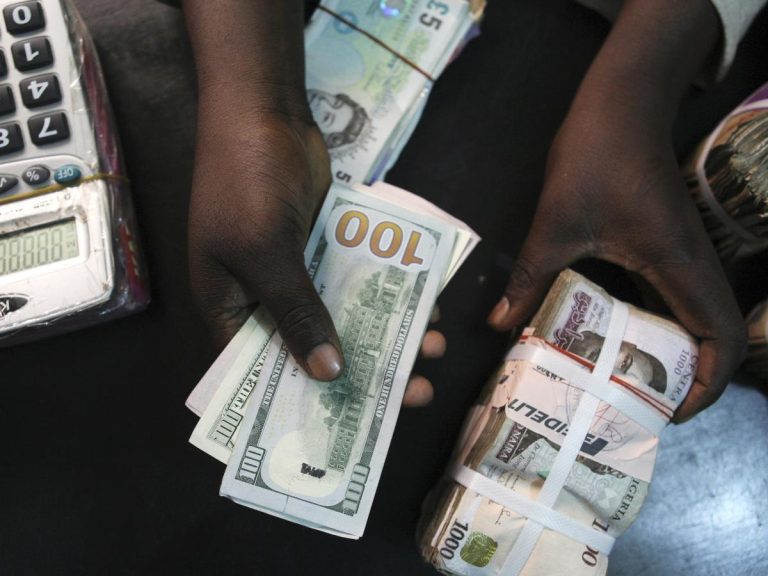
The Federal Government of Nigeria has introduced a new policy granting Nigerians a nine-month window to deposit dollar bills held outside the formal banking system without facing penalties, taxes, or scrutiny. Speaking after the National Economic Council (NEC) meeting in Abuja, Finance Minister and Coordinating Minister of the Economy, Wale Edun, outlined the policy as part of ongoing efforts to improve financial security and integrate funds outside the banking system into the formal economy.

Minister Edun clarified that individuals holding dollar cash can deposit it safely in Nigerian banks, provided it does not originate from illicit sources. “There will be no penalty; there will be no taxes, and there will be no questions,” he stated, emphasizing that the policy aims to secure these funds within legal and safe channels.

The program, in partnership with the Ministry of Finance and the Central Bank of Nigeria, starts immediately and will conclude after nine months. Individuals must only meet standard “Know Your Customer” (KYC) requirements to ensure the funds’ safety and alignment with regular economic activities.

Additionally, Edun highlighted that 25 million Nigerians have benefited from various federal social protection programs, including microenterprise loans, digital outreach initiatives, and sector-focused support in energy, agriculture, manufacturing, health, and compressed natural gas initiatives.

This initiative represents a move by the government to boost economic activity by encouraging the use of formal financial systems and supporting Nigeria’s broader economic stability and growth efforts.

EFCC Moves Against Former Governors, Ministers in Corruption Crackdown

The Economic and Financial Crimes Commission (EFCC) has taken decisive legal action against four former governors and two ex-ministers over corruption allegations in the past year under Executive Chairman Ola Olukoyede’s leadership.

At a press conference in Abuja, EFCC Director of Public Affairs, Wilson Uwujaren, highlighted the agency’s successes in asset recovery and fraud prevention. The former governors charged include Yahaya Bello (Kogi), Abdulfatah Ahmed (Kwara), Willie Obiano (Anambra), and Darius Ishaku (Taraba), all accused of misappropriating billions in state funds. Bello, for instance, faces allegations involving over N190 billion, while Ishaku’s case involves N27 billion. Ahmed and his finance commissioner are accused of mismanaging N10 billion, and Obiano is alleged to have laundered N4 billion.

Former ministers Saleh Mamman and Olu Agunloye also face charges for alleged misappropriation related to the Mambilla Hydroelectric Power Project, totaling N33.8 billion and $6 billion. Additionally, Hadi Sirika is under investigation for suspected fraud involving N5.8 billion, and the recently dismissed Minister of Humanitarian Affairs, Betta Edu, is under ongoing scrutiny.

EFCC has reported significant financial recoveries under Olukoyede’s tenure, totaling N248.75 billion and $105.4 million in foreign currencies, alongside asset reclamation including 14 properties returned to Enugu State. The agency has also repatriated $180,300 and 53 vehicles to Canada, and €5,100 to Spain.

With a focus on prosecuting financial crime, the EFCC achieved 3,455 convictions within the year. Olukoyede noted the agency’s commitment to tackling electoral corruption despite challenges in prosecuting electoral offenses, emphasizing the EFCC’s role in ensuring electoral integrity in recent elections.

Since assuming office on October 18, 2023, Olukoyede’s administration has been active in various sectors, including the mining sector, with broad-reaching anti-corruption efforts and ongoing vigilance against electoral offenses.

Black Market Dollar to Naira Exchange Rate Today – 1st November 2024

Dollar to Naira Black Market Exchange Rate Today – 1st November 2024

Here is the latest information on the Dollar to Naira exchange rate at the black market, commonly referred to as the parallel market (Aboki fx).

For Thursday, 1st November 2024, sources from Bureau De Change (BDC) in Lagos indicate that the Dollar is being bought at N1745 and sold at N1750 in the parallel market.

Please note that the Central Bank of Nigeria (CBN) does not officially recognize the black market and advises individuals needing foreign exchange to approach their banks directly.

Dollar to Naira (USD to NGN)Black Market Rate
Buying RateN1745
Selling RateN1750

In contrast, the official CBN rate differs, reflecting N1650 for buying and N1651 for selling.

Dollar to Naira (USD to NGN)CBN Official Rate
Buying RateN1650
Selling RateN1651

The exchange rate may fluctuate slightly, so rates may vary depending on location and time of transaction.

Economic Impact: Companies Leaving Nigeria Due to Economic Instability

Nigeria’s economic challenges, including currency instability and high operational costs, have led to an increase in companies exiting the market. Recently, South African retailer Pick n Pay announced its departure from Nigeria, selling its 51% stake after only a few years of operation. Since 2020, over 20 companies have closed or relocated operations due to ongoing economic difficulties, reflecting broader concerns within Nigeria’s business landscape.

NAFDAC Urges Nigerians to Avoid Recalled Nivea Deodorant Over Safety Risks

The National Agency for Food and Drug Administration and Control (NAFDAC) has issued an alert to Nigerians, cautioning them to stop using the recently recalled batch of Nivea Black & White Invisible Roll-on deodorant (50ml).

The product recall aligns with a warning issued by the European Union Rapid Alert System for Dangerous Non-Food Products. NAFDAC disclosed that the recall specifically affects batch number 93529610, which contains the banned chemical 2-(4-tert-Butylbenzyl) propionaldehyde. This ingredient is prohibited in cosmetics due to its potential to cause reproductive harm, risks to unborn children, and skin irritation or burns.

The recalled deodorant, promising 48-hour protection, was manufactured in Germany and bears the Bar Code Number 42299882. NAFDAC urges importers, distributors, retailers, and consumers to be vigilant, ensuring that this specific batch is neither sold nor used.

Public members in possession of the affected deodorant batch are advised to halt usage immediately and submit remaining stock to the nearest NAFDAC office. NAFDAC encourages healthcare professionals and consumers to report any adverse reactions related to regulated products through pharmacovigilance@nafdac.gov.ng, the E-reporting platforms on www.nafdac.gov.ng, or the Med-safety app for Android and iOS.

Kaduna State Approves ₦72,000 Minimum Wage and Free Transport Scheme for Workers

Governor Uba Sani of Kaduna State has announced the approval of a new minimum wage of ₦72,000 for the state’s civil servants, set to take effect in November 2024. This wage increase, confirmed in a statement by the governor’s Chief Press Secretary, Ibrahim Musa, underscores the administration’s commitment to improving worker welfare and supporting vulnerable populations in the state.

Beyond the wage hike, Governor Sani is also launching a Free Transportation Scheme for civil servants, which will see 100 CNG buses deployed to ease transportation for workers commuting to and from work. This initiative, managed by a Joint Management Committee with representatives from organized labor groups (NLC and TUC) and the state government, aims to reduce transportation burdens and enhance productivity.

The Kaduna State Government reaffirmed its commitment to social welfare initiatives, with Governor Sani emphasizing a dedication to transforming the lives of underserved communities and ensuring that Kaduna sets a benchmark for worker welfare in Nigeria.

Governors and Ministers Gather as Shettima Leads 145th NEC Meeting

Vice President Kashim Shettima chaired the 145th National Economic Council (NEC) meeting at the Council Chamber of the Presidential Villa in Abuja on Thursday. The gathering brought together state governors, ministers, and other stakeholders to discuss strategies for tackling Nigeria’s current economic challenges.

This marks the seventh NEC meeting of 2024, with a focus on developing effective economic solutions amid rising national concerns.

In other news, Labour Party presidential candidate Peter Obi criticized Borno State Speaker Abdulkareem Lawan’s recent call for a new aircraft for Vice President Shettima. Lawan cited safety concerns due to recurring issues with the existing presidential aircraft, which led to Shettima’s last-minute cancellation of his Commonwealth Summit appearance in Samoa.

Peter Obi responded to Lawan’s demand on X, pointing out that such luxury considerations are insensitive in the face of Nigeria’s economic struggles. He urged leaders to prioritize initiatives that address the needs of the masses over personal luxuries.

Special Needs News, Abuja Special Needs Therapy Host Training on Early Dyslexia Detection

As Nigeria joins the global community to mark the International Dyslexia Day 2024, experts have emphasized the importance of early detection and intervention to support children with dyslexia—a specific learning disability that primarily affects reading and writing.

International Dyslexia Day, celebrated annually on October 8, highlights its impact on literacy and learning.

According to the British Dyslexia Association, dyslexia is a specific learning difficulty that hinders reading skills and the ability to process and retain information seen or heard.

Speaking at an event organized by Special Needs News in collaboration with Abuja Special Needs Therapy Limited in Abuja, the CEO of Special Needs Therapy Limited, Happy Maram shared evidence-based methods to address the condition.

Maram underscored the need for heightened awareness, noting that dyslexia affects millions of children worldwide.

“Early detection is key,” Maram stated, detailing methods to identify children at risk. These include monitoring linguistic development such as difficulties with pronunciation and rhyming, observing struggles with recognizing letters and considering family history, as dyslexia often has a genetic component.

“It is not a disease but a reading difficulty,” Maram explained, “affecting a child’s ability to manipulate linguistic sounds and understand new words.” She cited statistics revealing that one in five children have dyslexia, with 80-90 percent of children with learning disabilities being dyslexic. Left undiagnosed, it can lead to challenges in school, low self-esteem, anxiety and depression.

Maram highlighted the benefits of early intervention, noting that 70 percent of dyslexic children who receive help in kindergarten or first grade develop proficient reading skills and discover other talents.

Ladi Patrick-Okwoli, founder of Special Needs News, called on government, policymakers, parents and educators to unite in creating and implementing policies to address dyslexia nationwide. “Many communities lack adequate support for children with learning disabilities. Our mission is to bridge that gap through awareness and training for families and educators, ensuring that every child receives the understanding and support they need,” Patrick-Okwoli noted.

She identified public figures such as Richard Branson, Anderson Cooper and Jennifer Aniston, whose success demonstrates that individuals with dyslexia can excel.

Parents and educators expressed gratitude for the training, with many reporting a greater understanding of dyslexia’s impact. “Before today, I did not know what dyslexia was or how it affected learning. Now, I feel more confident supporting my students and communicating with parents who might not understand why their child struggles with reading,” Jumai Makama, a local teacher said.

The event also underscored the importance of community partnership, with representatives of Lugbe Community pledging to support similar programmes. By fostering understanding and facilitating early intervention, this training marks a step forward in enhancing educational inclusion for children with learning disabilities in Lugbe and beyond.

Following this success, Special Needs News and Abuja Special Needs Therapy Limited plan to expand these initiatives to more communities, promoting inclusive education and improving awareness of dyslexia and other learning disabilities across Nigeria.