Inbound tourism boom highlights more open, accessible China

By He Yin, People’s Daily

During the New Year holiday, China’s inbound tourism market experienced robust growth, with ticket bookings rising by 110 percent year on year and reservations for experiential leisure activities surging more than thirtyfold, according to data from research institutions.

The rapid growth underscores the dynamic interplay between tradition and modernity in China,  offering international visitors a glimpse into the enduring vitality and brilliance of Chinese culture.

New business models and new tourism products are delivering fresh experiences while injecting new momentum into development. 

Following the launch of island-wide special customs operations, Hainan has seen a surge in popularity for a tourism model that combines duty-free shopping with seaside vacations. A panda-themed tourist train takes travelers across Sichuan, Chongqing and Guizhou, showcasing cultural landmarks such as the Sanxingdui Ruins and Qianhu Miao Village. In Fujian in southeast China, diverse themed routes offer visitors a chance to experience the legacy of the Maritime Silk Road and the rich traditions of Minnan culture. 

As “China travel” continues to integrate more deeply with culture, sports and agriculture, overseas visitors are moving beyond brief sightseeing toward immersive experiences. Road trips, rural tourism and tours of historical architecture have become standout attractions for them. 

Online travel platforms report that in 2025, bookings by inbound travelers for immersive activities such as intangible cultural heritage workshops, folk performances and urban life explorations jumped by 300 percent year on year. 

China’s abundant cultural and tourism resources are fostering broader and deeper people-to-people exchanges, enabling overseas visitors to experience a more vivid and multifaceted China.

Spontaneous, hassle-free travel to China has become a reality thanks to strong policy support. China has rolled out a series of measures to facilitate inbound travel, including unilateral visa-free entry or mutual visa exemptions for citizens of 76 countries. The 240-hour visa-free transit program now applies to travelers from 55 countries and is available at 65 entry ports. 

These continuously optimized visa measuress, combined with policies such as instant tax refunds and the integration of international bank cards to domestic payment platforms, have created a convenient and appealing environment for visitors.. Shopping and dining in China have become new trends. 

In the first three quarters of 2025, China recorded 20.89 million visa-free inbound visits by foreign nationals, up more than 50 percent year on year. Since China launched the 240-hour visa-free transit program more than a year ago, the number of inbound foreign visitors through ports nationwide reached 40.6 million, a year-on-year increase of 27.2 percent. 

The World Travel & Tourism Council predicted that China’s tourism industry will grow at an average annual rate of 7 percent over the next decade, positioning the country to become the world’s largest tourism market by 2031. 

The U.S.-based Travel and Tour World magazine in the United States noted that China’s tourism industry, supported by well-developed infrastructure, enabling policies and a steadily rising reputation as a top global destination, is poised to reach new heights in the coming years.

Deeper recognition of China’s image among overseas visitors is further fueling the sustained popularity of “China travel.” An article on the UK-based Tourism Review website highlights how foreigners are dispelling long-held stereotypes through their experiences of China’s friendly, convenient and efficient services. 

A safe and harmonious environment, a warm and welcoming atmosphere, vibrant and trend-setting culture, and smart, efficient daily life—many overseas visitors remark that today’s China feels “more modern, more convenient, and easier to connect with.” 

According to the World Tourism Cities Development Report (2024–2025) released by the World Tourism Cities Federation, five Chinese cities rank among the world’s top 20 in tourism safety, while another five place in the global top 10 for smart tourism. Positive travel experiences and  China’s dynamic image are directly contributing to its growing appeal as a destination for inbound tourism.

A more open, higher-quality and more welcoming inbound tourism market is acting as a vital bridge for global travelers to connect with China’s pulse. As the potential of “China travel” continues to be unleashed, people-to-people exchanges will further deepen, enabling people around the world to encounter a China that is real, multidimensional and fully alive.

Huishan in E China accelerates its shift toward new growth drivers

By Yan Bingsong

Recently, Elon Musk, founder of U.S.-based SpaceX, commented several times on social media about Zhuque-3, a reusable rocket independently developed by Chinese aerospace company LandSpace, drawing global attention from the space sector.

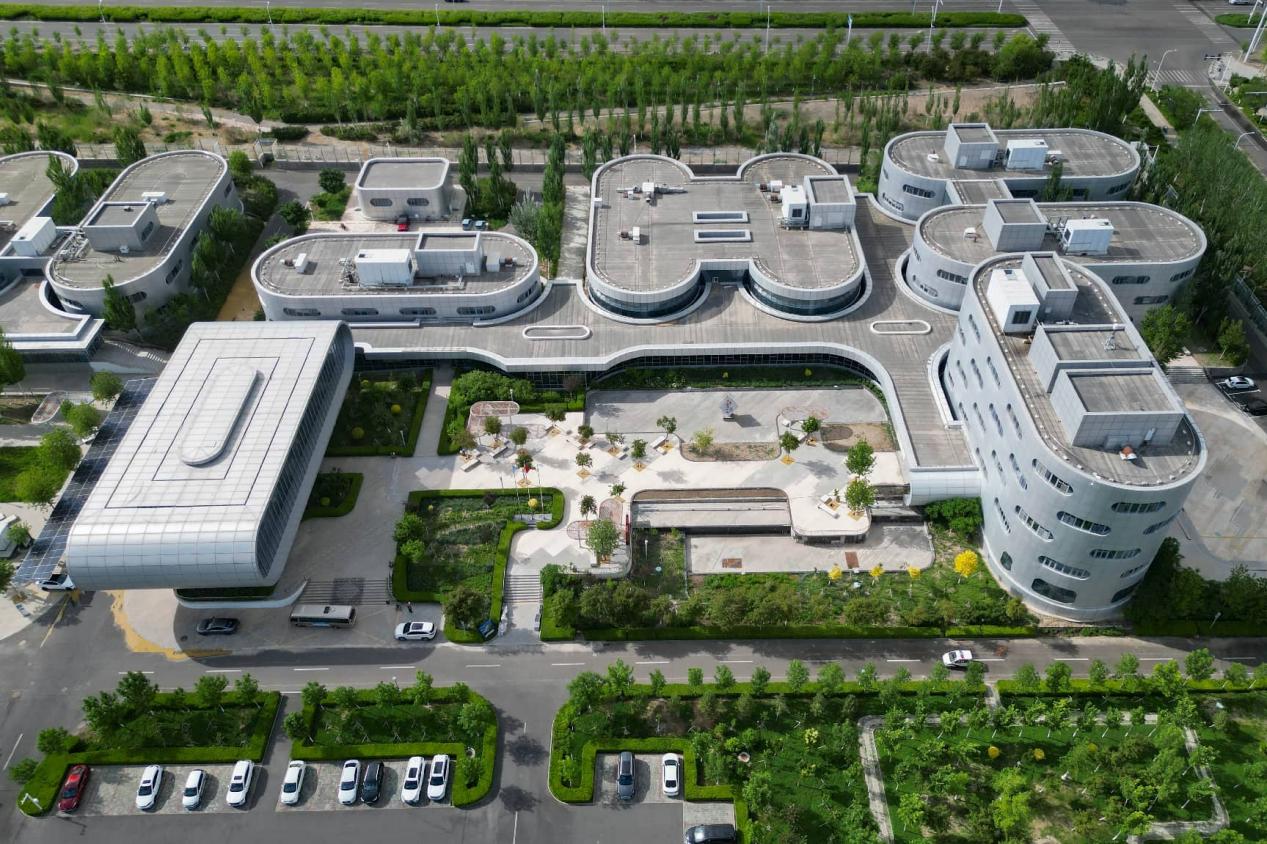
At the same time, construction of LandSpace’s future main manufacturing base for the Zhuque-3 rocket has entered its final phase in Huishan High-Tech Zone in Wuxi, east China’s Jiangsu province.

Why did LandSpace choose Huishan High-Tech Zone for its production base? According to a company executive, “After evaluating multiple cities, we found that within a 50-kilometer radius of the zone, all the necessary raw materials and component suppliers are readily available. In particular, local suppliers can provide 90 percent of critical engine production materials.”

Huishan High-Tech Zone has grown out of Luoshe township in Huishan district, Wuxi, a traditional industrial township with a solid manufacturing foundation and a complete range of industries. In 2021, Luoshe was approved to establish Huishan High-Tech Zone. That same year, it set its sights on emerging industries and launched the Wuxi Aerospace Industrial Park.

LandSpace is not the only company here that aspires to space exploration. JTSPACE, a private company in the burgeoning commercial space market, has built a production base in the zone for key components of synthetic aperture radar (SAR) satellites. By adopting integrated, standardized and modular design concepts, the company has made satellite manufacturing as efficient and streamlined as home-appliance production, helping commercial satellite production shift from small-batch, bespoke builds confined to laboratories to standardized, large-scale assembly-line manufacturing.

In orbit, commercial meteorological satellites operated by Tianjin Yunyao Aerospace Technology Co., Ltd. circle the Earth once every hour and a half, monitoring global weather patterns. Li Fenghui, chairman of the company, said the company placed its meteorological satellite R&D, manufacturing and data-application projects in Huishan because of the district’s efficient administrative services and high-standard facilities. “In less than a month, we recruited nearly 20 professionals in meteorology,” he noted.

While the aerospace industry continues to push toward space and near-space frontiers, the low-altitude economy is steadily integrating into everyday work and life. At the Asia-Pacific headquarters showroom of Magnus Aircraft in Huishan High-Tech Zone, a Fusion 212 aircraft stands out. This two-seat light sport aircraft features a lightweight carbon-fiber airframe, with a top speed of 256 kilometers per hour. According to the company, more aircraft models, including the Fusion 212, are expected to produced at he Huishan facility. .

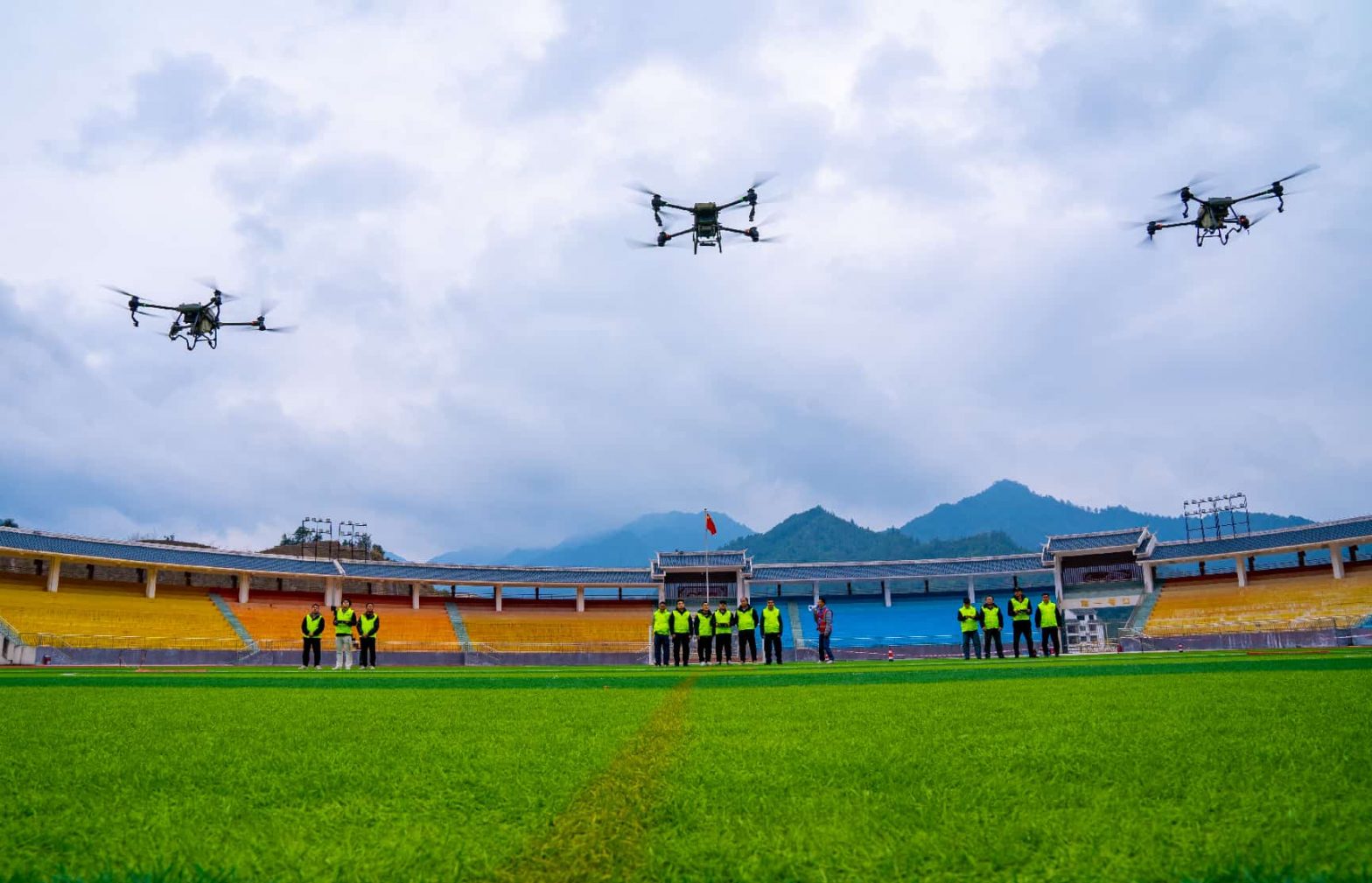
Applications of the low-altitude economy are becoming increasingly diverse in Huishan. A drone-based blood delivery route now links Wuxi Central Blood Station with Wuxi Huishan District People’s Hospital. 

By integrating artificial intelligence and drone technologies, the route, with a blood cold-chain management system and a blood dispatch platform, addresses inefficiencies and traffic-related disruptions in ground transport. 

As a result, emergency blood delivery time has been reduced from around an hour to just over 10 minutes, significantly enhancing medical support capacity and securing patients’ precious “golden rescue time.”

Along this path toward renewal, traditional manufacturing in Huishan is accelerating its transition toward intelligent production. Miracle Automation, once a small mold-making factory, has grown into an internationally-recognized manufacturer of intelligent automotion. In recent years, the company has made embodied intelligent robotics a key strategic focus, reaching cooperation intentions with several leading new-energy vehicle manufacturers on robotics applications. 

Recently, an embodied intelligent robotics industrial data center built by Miracle Automation was put into operation. Covering about 7,000 square meters, the center integrates multiple functions, including real-world application training, simulated environment training, data collection, and multi-modal large-model training. In its initial phase, it can support the simultaneous training of more than 100 robots, providing a strong platform for the next stage of intelligent manufacturing development.

Huishan in E China accelerates its shift toward new growth drivers

By Yan Bingsong

Recently, Elon Musk, founder of U.S.-based SpaceX, commented several times on social media about Zhuque-3, a reusable rocket independently developed by Chinese aerospace company LandSpace, drawing global attention from the space sector.

At the same time, construction of LandSpace’s future main manufacturing base for the Zhuque-3 rocket has entered its final phase in Huishan High-Tech Zone in Wuxi, east China’s Jiangsu province.

Why did LandSpace choose Huishan High-Tech Zone for its production base? According to a company executive, “After evaluating multiple cities, we found that within a 50-kilometer radius of the zone, all the necessary raw materials and component suppliers are readily available. In particular, local suppliers can provide 90 percent of critical engine production materials.”

Huishan High-Tech Zone has grown out of Luoshe township in Huishan district, Wuxi, a traditional industrial township with a solid manufacturing foundation and a complete range of industries. In 2021, Luoshe was approved to establish Huishan High-Tech Zone. That same year, it set its sights on emerging industries and launched the Wuxi Aerospace Industrial Park.

LandSpace is not the only company here that aspires to space exploration. JTSPACE, a private company in the burgeoning commercial space market, has built a production base in the zone for key components of synthetic aperture radar (SAR) satellites. By adopting integrated, standardized and modular design concepts, the company has made satellite manufacturing as efficient and streamlined as home-appliance production, helping commercial satellite production shift from small-batch, bespoke builds confined to laboratories to standardized, large-scale assembly-line manufacturing.

In orbit, commercial meteorological satellites operated by Tianjin Yunyao Aerospace Technology Co., Ltd. circle the Earth once every hour and a half, monitoring global weather patterns. Li Fenghui, chairman of the company, said the company placed its meteorological satellite R&D, manufacturing and data-application projects in Huishan because of the district’s efficient administrative services and high-standard facilities. “In less than a month, we recruited nearly 20 professionals in meteorology,” he noted.

While the aerospace industry continues to push toward space and near-space frontiers, the low-altitude economy is steadily integrating into everyday work and life. At the Asia-Pacific headquarters showroom of Magnus Aircraft in Huishan High-Tech Zone, a Fusion 212 aircraft stands out. This two-seat light sport aircraft features a lightweight carbon-fiber airframe, with a top speed of 256 kilometers per hour. According to the company, more aircraft models, including the Fusion 212, are expected to produced at he Huishan facility. .

Applications of the low-altitude economy are becoming increasingly diverse in Huishan. A drone-based blood delivery route now links Wuxi Central Blood Station with Wuxi Huishan District People’s Hospital. 

By integrating artificial intelligence and drone technologies, the route, with a blood cold-chain management system and a blood dispatch platform, addresses inefficiencies and traffic-related disruptions in ground transport. 

As a result, emergency blood delivery time has been reduced from around an hour to just over 10 minutes, significantly enhancing medical support capacity and securing patients’ precious “golden rescue time.”

Along this path toward renewal, traditional manufacturing in Huishan is accelerating its transition toward intelligent production. Miracle Automation, once a small mold-making factory, has grown into an internationally-recognized manufacturer of intelligent automotion. In recent years, the company has made embodied intelligent robotics a key strategic focus, reaching cooperation intentions with several leading new-energy vehicle manufacturers on robotics applications. 

Recently, an embodied intelligent robotics industrial data center built by Miracle Automation was put into operation. Covering about 7,000 square meters, the center integrates multiple functions, including real-world application training, simulated environment training, data collection, and multi-modal large-model training. In its initial phase, it can support the simultaneous training of more than 100 robots, providing a strong platform for the next stage of intelligent manufacturing development.

Umahi Inspects Lekki Corridor’s 7th Axial Road Project, Expresses Confidence in CHEC

Minister of Works Senator Dave Umahi over the weekend inspected the progress of the 7th Axial Road project in the Lekki Corridor of Lagos.

The project, located behind the Dangote Refinery, is a crucial cargo handling route for the Lekki Deepwater Port and connects the Lekki Corridor with the Sagamu route.

The Minister expressed confidence in China Harbour Engineering Company Limited (CHEC), the project’s contractor, citing its successful delivery of the Lekki Deepwater Port and high-quality progress on the Makurdi-Enugu road reconstruction and expansion project. Umahi instructed that the roadbed filling work for Project LOT1 be completed by the end of April and directed the project team to accelerate resource input and tangible works to meet the deadline.

The 7th Axial Highway is expected to synergize with key infrastructure projects like the Coastal Road, Dangote Road, and Lekki Port, creating a comprehensive transportation hub model and boosting Nigeria’s port economy and industrial corridor. Umahi emphasized the need for environmental protection agencies to ensure efficient construction and steady progress while maintaining ecological safety.

A representative of CHEC who spoke during the inspection stated that the company would maintain a high level of resource input, implement the Minister’s directives, and coordinate safety, quality, and environmental protection to ensure the project’s timely and high-quality completion in other to unluck its port relief and regional economic benefits.

APC South-South Says Rivers Assembly Impeachment Plot is Retaliation Against Fubara for Rejecting Fictitious Projects in 2026 Budget

The All Progressives Congress (APC) South-South Group has accused Rivers Assembly lawmakers loyal to FCT Minister Nyesom Wike of instigating impeachment threats against Governor Siminalayi Fubara after he refused to approve fictitious projects in the state’s 2026 budget proposal.

The group made the allegation on Friday in Port Harcourt while responding to claims by members of the Rivers State House of Assembly that Fubara breached the peace agreement brokered by President Bola Ahmed Tinubu to end the protracted political crisis in the state.

Addressing journalists, Comrade Freedom Amadi, coordinator of the APC South-South Group, said the impeachment move was not rooted in any violation of the peace accord but was a calculated retaliation against the governor for resisting pressure to inflate the budget with questionable line items.

“What is unfolding in Rivers State is not a constitutional dispute but a deliberate attempt to punish a sitting governor for refusing to mortgage public finances for private political interests. Governor Siminalayi Fubara did not breach the President’s peace accord; rather, he refused to add fictitious projects to the Rivers State budget, and that refusal is now being weaponised against him,” Amadi said.

Members of the Rivers assembly had accused the governor of acting in bad faith and undermining the Tinubu-brokered deal, arguing that his conduct justified impeachment proceedings. Some lawmakers also claimed that presidential intervention could not stop the legislature from carrying out its planned impeachment of the governor.

The APC South-South rejected that position, warning that such statements amounted to open defiance of presidential authority and posed a threat to democratic stability.

“When legislators publicly declare that not even the President can restrain them, they are not asserting independence; they are advertising institutional insubordination. President Tinubu intervened in Rivers State as the elected President of the Federal Republic of Nigeria, not as a partisan actor, and his peace initiative is not optional or disposable,” Amadi declared.

According to the group, the peace deal was intended to restore stability and allow governance to proceed without coercion, not to subject the governor to political control through the legislature.

“The agreement brokered by Mr President was about restoring calm and respecting constitutional roles, not about handing Rivers State over to political enforcers. Any attempt to twist that agreement into a tool for intimidation or impeachment is a distortion of its spirit and intent,” he announced.

The APC South-South also pointed to the central role of Wike, arguing that lawmakers driving the impeachment process were acting in alignment with the former Rivers governor, now minister of the Federal Capital Territory.

“It is impossible to separate the current impeachment threats from the political influence of Minister Nyesom Wike. The lawmakers pushing this agenda are his loyalists, and their actions reflect a coordinated effort to retain control of Rivers politics through legislative intimidation,” he said.

The group noted that Wike’s continued silence, despite serving in an APC-led federal government, raised serious questions about loyalty to the President who appointed him.

“President Tinubu extended trust and political goodwill by appointing a PDP member into his cabinet in the interest of national unity. That trust is being abused if a serving minister allows his loyalists to openly undermine a presidential peace initiative. You cannot sabotage peace and still claim allegiance to the authority that brokered it,” Amadi noted.

The APC South-South warned that using impeachment to settle political scores would erode public confidence in democratic institutions and weaken legislative credibility.

“Impeachment is a grave constitutional mechanism, not a political cudgel. What we are witnessing in Rivers State is not oversight but vendetta, not accountability but retaliation against a governor who chose fiscal responsibility over political obedience.”

The pro-APC group called on the Rivers State House of Assembly to suspend all impeachment actions and urged the National Assembly to intervene to prevent what it described as legislative excesses.

“Legislative impunity in one state endangers democratic order across the federation. Rivers State does not belong to any individual or faction, and its budget is not a private ledger for political godfathers,” the group maintained.

NIGER EAST 2027: WHY THERE IS NO ALTERNATIVE TO 313

By Mohammed A. Mohammed

In Niger East, a quiet revolution began in 2019 when Senator Mohammed Sani Musa—known across the district as 313—stepped into the Senate with a resolve forged from a deep understanding of his people’s struggles. He had walked those dusty roads himself, seen the dim eyes of children denied education, heard the silent pleas of mothers in ill-equipped clinics, and felt the frustration of youths with talent but no tools.

But 313 did not come to lament; he came to act. With deliberate sacrifice and focus, he channelled his resources, influence, and personal fortune into lifting his people. Boreholes sprang up where water was once a daily battle. Health centres rose where sickness meant long, perilous journeys. Scholarships carried sons and daughters to India and China to become doctors and engineers.

Roads opened markets. Empowerment turned dreams into enterprises. What began as a mandate became a movement—a personal covenant between a leader and his people, delivered not in words, but in enduring works. Today, that covenant stands as the highest standard in Niger East politics.

In the build-up to the 2027 election, it is no surprise that several aspirants are emerging with ambitious permutations and declarations. Yet, for the discerning people of Niger East, the choice of who should represent them boils down to one irrefutable standard: the exceptional record set by Senator 313.

While new names throw their hats into the ring with enthusiasm, none have yet demonstrated the depth of commitment, proven impact, or visionary intentionality that defines his tenure. Senator 313 has consistently delivered verifiable, life-changing results across infrastructure, education, healthcare, agriculture, and human empowerment. He has rehabilitated rural roads, constructed solar-powered motorised boreholes, established state-of-the-art ICT centres, and empowered countless students through comprehensive scholarship programmes.

In healthcare, he facilitated the construction and equipping of two modern 50-bed hospitals in Sarkin Pawa (Munya LGA) and Kuta (Shiroro LGA), bringing quality medical care closer to underserved communities. Women and youths have been prioritised through inclusive empowerment initiatives, with Senator 313 distributing resources such as tricycles, motorcycles, grinding machines, sewing machines, deep freezers, and generators to over 500 beneficiaries, fostering economic independence.

Remarkably, no emerging aspirant has matched this level of competence, capacity, or selfless dedication. Without concrete policy blueprints or comparable track records, it remains difficult to envision any alternative filling Senator 313’s formidable shoes. The people of Niger East are wise and discerning. They are prepared to pose critical questions to all contenders: What specific, actionable policies do you propose to tackle our district’s pressing challenges?

What verifiable achievements can you showcase that prove your ability to deliver? Does your vision truly align with the aspirations and needs of our communities? Until these questions receive substantive, convincing answers, Senator 313 remains the unmatched benchmark for effective representation and sustainable development.

His legacy is one of proven worth—a leader who prioritises education as the bedrock of progress by constructing and renovating classroom blocks, building ICT centres (such as the one in Ija Gwari, Tafa LGA), and sponsoring scholarships at all levels. A passionate grassroots mobiliser, he distributed 4,050 bags of fertiliser (1,000 urea and 3,050 NPK) across the nine local government areas, enhancing agricultural productivity and ensuring food security.

Believing firmly that today’s youths are tomorrow’s pillars of society, Senator 313 has championed youth development through sports and skills acquisition, constructing modern mini stadiums in Minna and Kuta while investing millions in training and equipping young entrepreneurs. Unlike many, he has driven numerous community-led initiatives, promoting unity, democratic growth, and inclusive progress.

In a groundbreaking move, he launched a fully funded international scholarship programme, sending 100 talented indigenous students to study medicine in India and another 100 to pursue engineering, Artificial Intelligence, and robotics in China—investments that will yield doctors, innovators, and leaders for generations. As a compassionate philanthropist, Senator 313 executed a deliberate financial intervention, disbursing N143 million to 2,868 constituents, with each receiving at least N50,000 to alleviate hardships.

His transformative leadership has reshaped Niger East, converting dusty paths into roads of opportunity, vibrant markets into economic hubs, and ordinary lives into stories of empowerment. These indelible legacy projects mobilise communities and stand as proof of his unwavering service. Senator Mohammed Sani Musa embodies the true face of responsive democracy in Niger East—a leader who cannot be replaced. His signature achievements are not mere projects; they are determinants of continuity and a powerful antidote to any alternative.

As 2027 approaches, the people of Niger East will once again look to the man who did not wait for applause to serve, who sacrificed personal comfort for communal progress, who measured success not by titles but by transformed lives. They will remember the leader who personally invested millions to train youths, who funded foreign education for 200 of their children, who built hospitals and stadiums and roads—not for votes, but because it was right.

In Senator 313, they have found not just a representative, but a rare servant-leader whose actions have earned unbreakable trust. When the ballots are cast, that trust will speak louder than any campaign promise. The people know: true leadership is proven, not proclaimed. And in Niger East, only one name has proven it beyond doubt. There is indeed No Alternative to 313.

Mohammed wrote this piece from Suleja.

Energy governance group faults ADC, says Tinubu’s approval of NNPC legacy balance reconciliation restores fiscal transparency, not revenue loss

The Centre for Energy Governance and Public Finance Accountability (CEGPFA) has dismissed claims by the African Democratic Congress (ADC) that President Bola Ahmed Tinubu’s approval of the reconciliation and removal of certain Nigerian National Petroleum Company Limited (NNPC Ltd) legacy balances from the Federation Account was unconstitutional or financially harmful to states and local governments.

Speaking on Friday at a press conference held at the Transcorp Hilton, Abuja, the centre said the allegations ignored the historical, legal and fiscal realities surrounding the disputed balances, describing them as “unfounded” and “misleading”.

Dr Julius Osagie Eromonsele, executive director of the centre, said the balances in question were not fresh revenues generated under the current administration but long-standing legacy entries accumulated over several decades, many of which predated the Petroleum Industry Act (PIA).

“It is crucial to note that the balances in question are not recent revenues generated under the current administration. They are long-standing legacy entries accumulated over decades, many of them arising before the enactment of the Petroleum Industry Act,” Eromonsele said.

He explained that the disputed figures stemmed from unresolved production sharing contract disputes, domestic crude supply obligations under the former fuel subsidy regime, royalty assessment disagreements and reconciliation gaps between NNPC, regulators and revenue agencies.

According to him, these balances had remained on the Federation Account books for years despite repeated audits that questioned their accuracy, legal enforceability and collectability, creating a distorted picture of public finances across all tiers of government.

Countering claims that the balances were arbitrarily written off by presidential fiat, Eromonsele said the approval followed a formal reconciliation process involving relevant fiscal and regulatory institutions, with presentations made to the Federation Account Allocation Committee (FAAC).

“Official records show that approximately $1.42 billion and N5.57 trillion were removed from the Federation Account books after reconciliation established that these figures were either duplicated, overstated, unsupported by verifiable documentation, or no longer legally recoverable,” he said.

He stressed that the directive applied strictly to legacy balances accumulated up to December 31, 2024, adding that reconciliation should not be confused with the cancellation of valid revenue.

“Reconciliation is a recognised public finance practice. It is not the same as cancelling valid revenues. Rather, it is the process of aligning records to reflect economic and legal reality,” Eromonsele said.

He also clarified that no cash was removed from the Federation Account and that no allocations to states or local governments were reversed.

“The funds in question were not sitting as cash in the Federation Account. What occurred was the correction of inherited accounting distortions that had long outlived their practical relevance,” he added.

Addressing constitutional concerns raised by the ADC, the centre said Section 162 of the Constitution applies only to revenues that are lawfully due and payable, not to disputed or extinguished claims.

“Public finance administration requires constant reconciliation to ensure that only valid, auditable and legally enforceable revenues are presented for distribution,” Eromonsele said.

He argued that sustaining false receivables undermines budgeting, fiscal discipline and revenue predictability for subnational governments, noting that credible and realistic revenue flows are more beneficial than inflated figures that never materialise.

The centre said the reconciliation aligns with reforms introduced by the PIA, which repositioned NNPC Ltd as a commercial entity operating under international accounting standards.

Concluding, the centre commended President Tinubu for approving what it described as a difficult but necessary decision.

“Writing off long-standing, unverifiable legacy balances required political will and a commitment to fiscal honesty over convenience. It sends a clear signal that Nigeria is prepared to confront the structural weaknesses of its energy revenue system rather than perpetuate them,” Eromonsele said.

He urged politicians and stakeholders to approach the issue responsibly and support reforms that strengthen transparency and accountability in Nigeria’s public finance system.

Full speech attached

BEING FULL TEXT AT A PRESS CONFERENCE ORGANISED BY THE CENTRE FOR ENERGY GOVERNANCE AND PUBLIC FINANCE ACCOUNTABILITY ON THE RECONCILIATION OF NNPC LTD LEGACY BALANCES AND THE FEDERATION ACCOUNT HELD AT TRANSCORP HILTON, ABUJA, ON FRIDAY, JANUARY 10, 2025

Ladies and gentlemen of the press, distinguished stakeholders, and fellow Nigerians, the Centre for Energy Governance and Public Finance Accountability has convened this important press conference to respond to unfounded claims by the African Democratic Congress (ADC) concerning President Bola Ahmed Tinubu’s approval of the reconciliation and removal of certain legacy balances attributed to the Nigerian National Petroleum Company Limited (NNPC Ltd) from the Federation Account.

The debate has been framed as a constitutional crisis and a deliberate deprivation of revenue due to states and local governments. Given the gravity of such allegations, it is important to ground this conversation in facts, law, and the historical context of Nigeria’s petroleum revenue administration.

BACKGROUND

It is crucial to note that the balances in question are not recent revenues generated under the current administration. They are long-standing legacy entries accumulated over decades, many of them arising before the enactment of the Petroleum Industry Act (PIA). These entries stem from unresolved production sharing contract disputes, domestic crude supply obligations under the fuel subsidy regime, royalty assessment disagreements, and persistent reconciliation gaps between NNPC, regulators, and revenue agencies.

For years, these balances remained on the Federation Account books despite repeated audits and reviews that questioned their accuracy, legal enforceability, and collectability. Treating such disputed figures as assured income created a distorted picture of public finances and fostered unrealistic revenue expectations across all tiers of government.

WHAT THE PRESIDENTIAL APPROVAL ACTUALLY MEANS

Contrary to claims of an arbitrary executive write-off, the President’s approval followed a formal reconciliation process involving relevant fiscal and regulatory institutions, including presentations made to the Federation Account Allocation Committee (FAAC).

Official records show that approximately $1.42 billion and N5.57 trillion were removed from the Federation Account books after reconciliation established that these figures were either duplicated, overstated, unsupported by verifiable documentation, or no longer legally recoverable. The directive applied strictly to legacy balances accumulated up to December 31, 2024.

Reconciliation is a recognised public finance practice. It is not the same as cancelling valid revenues. Rather, it is the process of aligning records to reflect economic and legal reality. Revenues that are not collectible cannot be distributed, and carrying them indefinitely on public accounts does not create wealth—it merely postpones fiscal clarity.

It is also critical to note that the funds in question were not sitting as cash in the Federation Account. No existing allocations to states or local governments were reversed or withdrawn. What occurred was the correction of inherited accounting distortions that had long outlived their practical relevance.

CONSTITUTIONAL AND FISCAL IMPLICATIONS

The ADC has cited Section 162 of the Constitution to argue that the President lacks authority to approve the removal of these balances. However, Section 162 applies to revenues that are lawfully due and payable to the Federation. It does not compel the perpetuation of disputed or legally extinguished claims as revenue.

Public finance administration requires constant reconciliation to ensure that only valid, auditable, and legally enforceable revenues are presented for distribution. Without this, the Federation Account would become a repository for accounting fiction rather than a transparent reflection of national income.

Furthermore, the Federation Account is administered collectively through FAAC, which includes representatives of the federal, state, and local governments. The reconciliation process was not unilateral, secretive, or detached from institutional oversight.

From a fiscal standpoint, sustaining false receivables undermines planning, budgeting, and fiscal discipline. States and local governments are better served by predictable, credible revenue flows than by inflated figures that repeatedly fail verification and never materialise in cash form.

This reconciliation also aligns with the reforms introduced by the Petroleum Industry Act, which repositioned NNPC Ltd as a commercial entity subject to international accounting standards. Legacy balances accumulated under a fundamentally different governance structure cannot be allowed to distort the post-PIA fiscal framework indefinitely.

CONCLUSION

In conclusion, the Centre for Energy Governance and Public Finance Accountability affirms that the reconciliation and removal of NNPC Ltd’s legacy balances from the Federation Account does not constitute a constitutional violation, nor does it deprive states and local governments of legitimate revenue.

Rather, it represents a necessary and responsible step toward restoring transparency, credibility, and realism to Nigeria’s public finance system—particularly in the oil and gas sector, which has long suffered from opaque accounting and inherited distortions.

The Centre acknowledges and commends President Bola Ahmed Tinubu for approving this difficult but necessary decision. Writing off long-standing, unverifiable legacy balances required political will and a commitment to fiscal honesty over convenience. It sends a clear signal that Nigeria is prepared to confront the structural weaknesses of its energy revenue system rather than perpetuate them.

True fiscal federalism cannot be built on numbers that exist only on paper. It must rest on transparent accounts, enforceable obligations, and a shared commitment to accuracy and accountability.

We urge all politicians and stakeholders to approach this issue with responsibility and restraint, and to support reforms that strengthen, not weaken, the integrity of Nigeria’s public finances.

Thank you.

[Questions]

Signed:

Dr Julius Osagie Eromonsele

Executive Director,
Centre for Energy Governance and Public Finance Accountability

China shares AI-based early warning solutions to strengthen global climate resilience

By Li Hongmei, Jiang Xuehong, People’s Daily

Extreme weather events occur daily across the globe. In Afghanistan, severe convective weather may bring damaging hailstorms, while Uganda might experience convective storm systems with intense rainfall. These sudden, localized events remain challenging for forecasters worldwide.

China’s AI technology now enables early detection of such threats in both nations. This capability facilitates timely evacuations and damage mitigation through the MAZU initiative — a people-centered early warning system launched by the China Meteorological Administration (CMA) in response to UN priorities. M stands for Multi-hazard, A for Alert, Z for Zero-gap, and U for Universal.

The cloud-based MAZU platform deploys specialized AI “toolboxes” that provide end-to-end solutions for meteorological risk management: from monitoring and forecasting to warning dissemination and emergency response. Each toolbox is customized to national needs:

In Pakistan, a joint CMA-Pakistani system addresses glacial lake outburst floods, monsoon surges, and torrential rains occur frequently(operational since October 2025).. Mongolia’s system integrates FY-2H meteorological satellite snow data with localized alerts for blizzards, sandstorms, and dzud (winter disasters). “The workflow prompts generate practical guidance in our language,” noted a Mongolian meteorological official.

Today, the platform’s capabilities continue expanding. Two AI-based meteorological forecasting systems — Fengqing and Fengshun — released by CMA in June 2024, have now been fully integrated into the MAZU cloud platform.

Applications are also expanding, covering a wider range of meteorological hazards as well as risk scenarios in cities, agriculture, and other sectors.

“MAZU currently operates in five countries with 43 others testing across Asia, Africa and Oceania,,” said Zeng Qin, director of the Department of International Cooperation of CMA.

Alongside its global technological contributions, China is fostering “soft” cooperation through comprehensive capacity-building efforts. This includes targeted training programs, visiting scholar initiatives, and other measures designed to cultivate professional talent in partner countries.

Specifically, between 2025 and 2027, CMA is expected to provide more than 2,000 short-term training opportunities for developing countries in areas such as early warning, risk assessment, and climate change, along with scholarships for 100 master’s and doctoral students and funding for 50 long-term visiting scholars.

The global appeal of the MAZU solution stems directly from China’s accelerated modernization of its meteorological science and technology capabilities. Continuous progress has been made in meteorological satellites, weather radar, numerical forecasting, AI applications, and big data, with observation and forecasting systems advancing in a tightly integrated manner and overall capacity steadily strengthened. 

Today, virtually every weather process on Earth—especially extreme events such as typhoons and torrential rains—can be observed, forecast, and serviced by China’s meteorological system.

China’s independently developed AI meteorological models are now recognized as being at the global forefront, alongside those developed in Europe and the United States.

Their performance speaks for itself. For example, generating a global forecast at a 10-kilometer grid resolution takes about two hours using traditional numerical models, while Fengqing delivers results in just half an hour, matching the performance of leading international meteorological models. 

Severe convective events featuring strong winds, small hail, and short-duration heavy rainfall pose major challenges for conventional forecasting, yet Fenglei can detect warning signals an hour in advance. During the 2025 flood season outlook, Fengshun successfully identified the distribution patterns of China’s major rain belts a full month ahead.

These advanced AI meteorological models are made open-source on MAZU’s cloud-based technical platform, providing services to users worldwide.

By transforming cutting-edge technology into tangible, accessible disaster-risk reduction outcomes, China’s meteorological AI is crossing mountains and seas. The Chinese solution is becoming a vital force in strengthening global early warning, helping countries around the world build safer and more resilient communities.

No country has the right to act as the world policemen

By Zhong Sheng, People’s Daily

At the beginning of 2026, the international order suffered severe disruption due to hegemonic actions. The United States launched military strikes against Venezuela, sent forces to seize Venezuelan President Nicolas Maduro and his wife. 

On Jan. 5, the UN Security Council convened an emergency meeting addressing the crisis. Representatives of many countries condemned the U.S. actions and stressed the need to uphold international law, including the UN Charter.

By unilaterally interfering in Venezuela’s internal affairs, the United States has fully exposed the power politics underlying its approach to international affairs, particularly in Latin America. Such conduct not only gravely undermines the rule of law in international relations, but also poses a serious threat to regional peace and security. 

According to the UN Charter, the relationship among UN members shall be based on respect for the principle of sovereign equality. Besides, all members shall refrain in their international relations from the threat or use of force against the territorial integrity or political independence of any state, or in any other manner inconsistent with the Purposes of the United Nations.

These principles form the cornerstone of moder international relations. Yet the United States has disregarded international law and the fundamental norms governing international relations, challenging justice with brute force and trampling fairness for private gain, brazenly dragging the law of the jungle into 21st-century international affairs.

The U.S. side has even openly declared that it will “run” Venezuela and allow major U.S. oil companies to enter the country. This blunt declaration of plunder has torn away its last veil of disguise. 

France’s Le Monde observed that the strikes on Venezuela marked “the return of U.S. predatory imperialism.” Britain’s Guardian noted that Washington’s actions resembled the Iraq war and followed its long-standing pattern of seizing other countries’ resources. 

From Afghanistan and Iraq to Libya and Syria, and now Venezuela, whenever a country or region becomes designated U.S. foreign policy priority, conflict and disaster often follow. Hegemonic powers depart at will, leaving prolonged instability while their domestic interests profit.

“Today it’s Venezuela; tomorrow it could be any country,” Chilean President Gabriel Boric remarked, reflecting widespread concern within the international community. 

The hegemonic conduct by the United States is constitutes a primary source of global instability. A genuine international order must be built on principles of equality and mutual respect. When the law of the jungle supplants international rules, the interests of every member of the international community are jeopardized. 

A world where brute power overrides justice inevitably becomes one of perpetual unrest and insecurity. UN Secretary-General Antonio Guterres has warned that U.S. actions against Venezuela had set a “dangerous precedent.”

Contemporary global dynamics no longer permit unilateral hegemony. The course of history, the awakening of peoples, and evolving geopolitical realities demonstrate that unilateralism, self-centeredness, and reckless hegemonic behavior run counter to the will of humanity. 

From Venezuela to Latin America to the broader international community – including voices within the United States – widespread condemnation of hegemonic actions has erupted. 

The governments of Colombia, Brazil, Chile, Mexico, Uruguay, and Spain issued a joint statement on the situation in Venezuela to express deep concern and rejection, noting that unilateral military actions against the country constitute an “extremely dangerous precedent” for peace and regional security, and violates international law and the basic principles of the UN Charter. 

French Foreign Minister Jean-Noel Barrot stated that the U.S. military action violates the principle of non-use of force upon which international law is founded. The European Union stressed that international law and the principles of the UN Charter must be respected under all circumstances.

No country possesses the authority to act as the world policemen or self-appointed arbiter of international law. Venezuela is a sovereign country whose rights must not be inviolable, and whose people deserve protection from externally imposed turmoil. 

The United States must heed the international community’s call for justice: immediately release President Maduro and his wife; cease attempts to overthrow Venezuela’s government; and resolve issues through dialogue and negotiation.

Permitting hegemonic expansion to proceed unchallenged erodes the foundations of global stability. All countries rejecting the law of the jungle must steadfastly uphold international law and UN Charter principles, taking unequivocal stands against unilateral aggression. This constitutes not merely a defense of global justice, but an investment in the future of world peace.

(Zhong Sheng is a pen name often used by People’s Daily to express its views on foreign policy and international affairs.)

Homestays catalyzing rural and tourism growth in Huangshan

By Luo Shanshan, Xu Jing, People’s Daily

Homestays are increasingly integrated into China’s rural tourism and cultural industries, with Huangshan in east China’s Anhui province as a pioneering model. By embedding homestays within village ecosystems rather than operating them as standalone businesses, the city has transformed these accommodations into vibrant sources of rural revitalization.

At 7:30 p.m., drumbeats signaled the start of an evening gala at the activity center of Shiting village in Yixian county, Huangshan. Visitors from Shanghai and local villagers took turns performing, creating a lively and convivial atmosphere.

“These Shanghai visitors share a passion for singing, and the villagers regularly stage performances. Bringing them together was a natural fit,” explained Huang Zhiyong, founder of the Shiting Huayi homestay and initiator of the event.

For Shanghai visitor Ling Ling, this marked her third stay at the homestay within three months. “I’m drawn to this place,” she said. “I want to immerse myself more deeply in the experience.”

Yixian county hosts 46 nationally recognized traditional villages, including UNESCO World Heritage sites Xidi and Hongcun. Often described as a “living landscape painting,” the area is one of the birthplaces of Huizhou culture and is renowned for its well-preserved Ming-Dynasty (1368-1644) and Qing-Dynasty (1644-1911) architecture, as well as its distinctive blend of natural and cultural heritage.

After years of working away from home, Huang returned to Yixian in 2012 with plans to open a homestay. He was immediately captivated by a traditional Huizhou-style courtyard in Shiting Village during his location scouting.

“Huizhou culture is richly multidimensional – encompassing not just architecture but also opera and craftsmanship,” Huang said. “I envisioned the homestay as a gateway for visitors to experience this cultural beauty.” He emphasized that long-term success requires homestays to take root in village life and draw nourishment from local cultural traditions.

In recent years, Chinese consumers have shown growing demand for culturally immersive experiences. This shift has transformed the homestay sector from merely providing accommodation to fulfilling higher expectations for aesthetic appeal, cultural enrichment, and emotional resonance.

Huangshan now hosts over 3,200 homestays across more than a dozen distinctinctive clusters. “Avoiding homogenization and offering differentiated products and services” has become a shared understanding among many local homestay operators.

A prime example is Yunshang Homestay in Huangshan’s Tangkou township, nestled within a bamboo-forested valley. Owner Cheng Xinfeng, a travel and culinary enthusiast, explains: “We position ourselves as a boutique retreat focused on comfortable spaces and healthy food.” She maintains an on-site garden for vegetables, poultry, and fish, while seasonally sourcing tea, honey, and dried bamboo shoots from nearby villagers.”These are products I genuinely like and feel confident sharing with guests,” Cheng said, adding that many guests would continue ordering local produce from her online.

Sun Min, an 80s-born entrepreneur who to his hometown, targets travelers aged 18 – 40 at his  Wujiujiu Cultural and Creative Homestay within Yixian county’s Tachuan National Forest Park. Capitalizing on younger travelers’ desire for photogenic experiences, the property features views of rice fields and Chinese tallow trees. “I want every guest to capture photos they truly cherish,” Sun emphasizes.

Alina Garden Homestay in Huangshan is jointly run by a cross-cultural couple: Huang Qiong from Shenzhen and her husband, born in Australia. “With the expansion of visa-free entry policies, we’ve seen more international visitors over the past two years, and that’s an opportunity for us,” Huang said. “We hope to serve as a bridge for foreign guests to better understand Huangshan.”

The homestay now specializes in Huangshan hiking and tai chi sessions, with guests invited to participate daily. “International visitors are genuinely interested in Chinese culture,” Huang said. “They want to participate, not just admire the scenery from a distance.”

“Many of Huangshan’s homestays are located in rural areas, and they have become a key driver of comprehensive rural revitalization,” said Wang Weizhi, an official with the rural tourism division of the Huangshan municipal bureau of culture and tourism. To support operators, the city introduced a dedicated regulation on the promotion and management of homestays last year. The regulation clarifies policies on land use, financial support, and licensing, giving operators greater certainty and confidence.

Compared with hotels, homestays are small in size, but they still need to come with front-desk services, housekeeping, catering, and, in many cases, customized cultural and recreational activities—all of which depend on skilled professionals.

To address this need, local authorities have offered support for Huangshan University and Huangshan Vocational Technical College in establishing programs dedicated to homestay management and operations. The city has also organized training courses for homestay managers at both municipal and county levels. To date, 335 participants have obtained nationally recognized vocational skill certificates.

Xiao Hongxia, secretary-general of the Huizhou homestay association in Huangshan, believes the next step is to foster integrated ecosystems centering on the homestay business. “If operators can work together, share resources, and build ecosystems, the entire sector will become healthier and more sustainable,” she said.